
Yet Another Good Week
How do you describe the realness of a good week? My life's as full as can be. Living as a daily maker all of my life might well set me apart these days; rarely will my life compare with that of others. No college or university degrees in furniture design and furniture making. No computer-aided software for design and no CNC equipment ripping and planing wood with four and five-head cutters and moulders. Just "an ordinary bloke working at a bench with ordinary hand tools." No. My life will likely be different to yours. I'm decidedly the most fortunate man who managed to live life without making enough to live on, without working twelve-hour days in the day-to-day for six decades and treating that as normal. And it's in this one thing, since age fourteen, my latest autobiography writings tell me, that I chose to live my life in craft this way and never strayed from it either. Back then, it wasn't called a 'profession' as such or even a career, it was merely a trade; more accurately, the job by which I felt anchored to but for me, it was never 'just' a job; choosing a life making at so young an age would be alien to most any youngster now. Would, or could it even be an option? Parents are often shocked or even shamed by a child who doesn't go to university. Work like mine wasn't referred to as a 'calling', though it did ultimately prove to be so for me. And though I did take up and tack on other things, I never swerved even slightly from making, and never avoided a day's making for anything that tries to substitute for it.

When the end of my first week's work arrived, I realised for the first time in my then very young life what it was to feel any sense of completeness in a wholesome way; not until then, anyway. School life was always bitty, 40 minute compartmentalisation in sachets, blocks of 40 minute concepts unrelated to anything of real life. The classrooms were four dead walls of dread, and so too every single bullying teacher I met and knew there. They made accusations that were rarely true and used caning and strapping to instil a fear-controlled environment and pitched anger at low achievers like me who had learning difficulties but didn't know it. Leaving school aged 15 and starting work was the happiest day of my life bar none. Back then, at the end of my first week's real work, as it was this week and 60 years since then, and likely will be next, I volunteered every part of my being into my week. You see, I'm a strong believer in volunteerism, in an altruism that defies any kind of compensation surrounding the benefit of pay or even social standing, feel-good feelings or whatever when it comes to work. If you don't look forward to going to work, to achieving something far beyond pay, etc, from the consumerist and material worlds, you likely have yet to find what we once referred to as our "calling". If, in the course of each working day, you find yourself clock-watching for the day's end, or boredom dominates minute by minute in the same way doom-scrolling can only keep its hook to draw you in throughout the days ahead, or maybe work just gets in the way of what you really want to do, then it might be a good time to try to rejig your whole life, if indeed that's even possible.
If life has become little more than a monthly pay cheque, the reward facilitating the ability to pay your bills and then too the mere filling in of gaps of emptiness, it could be life's way of disabusing you of false hopes in an unplanned future. As a full-time amateur, I've now had 3,050 weeks of making since that first week. Imagine, 18,300 full and long days knowing the rewarding work of making, yes, but more than that, it's the high demand that goes far beyond in the negotiating realms that takes me into. Few know such a thing these days. That's why I feel such high levels of the fulfilment I speak of. But coupled with all of that comes the purest of joys, creating enhancement that adds such great value in the day to day of making. Those early so-called learning years prior to work were the very dullest of my life, five or so years with no imagination in the lives of my dull and dulling teachers were an absolute waste of space, for me, a waste of time and effort except that I have learned since then that most often in life you must do something for a period to see both what it is and what it is not. It wasn't so much that I wasn't for school, but more that the teachers were not for me. That said, I did find two teachers that provided a few stepping stones through the miry clay of 1950s and 1960s education. Though these years were punishing years for me, I made it through the embarrassments and awkwardnesses of never learning anything by abstract rote and repetition.

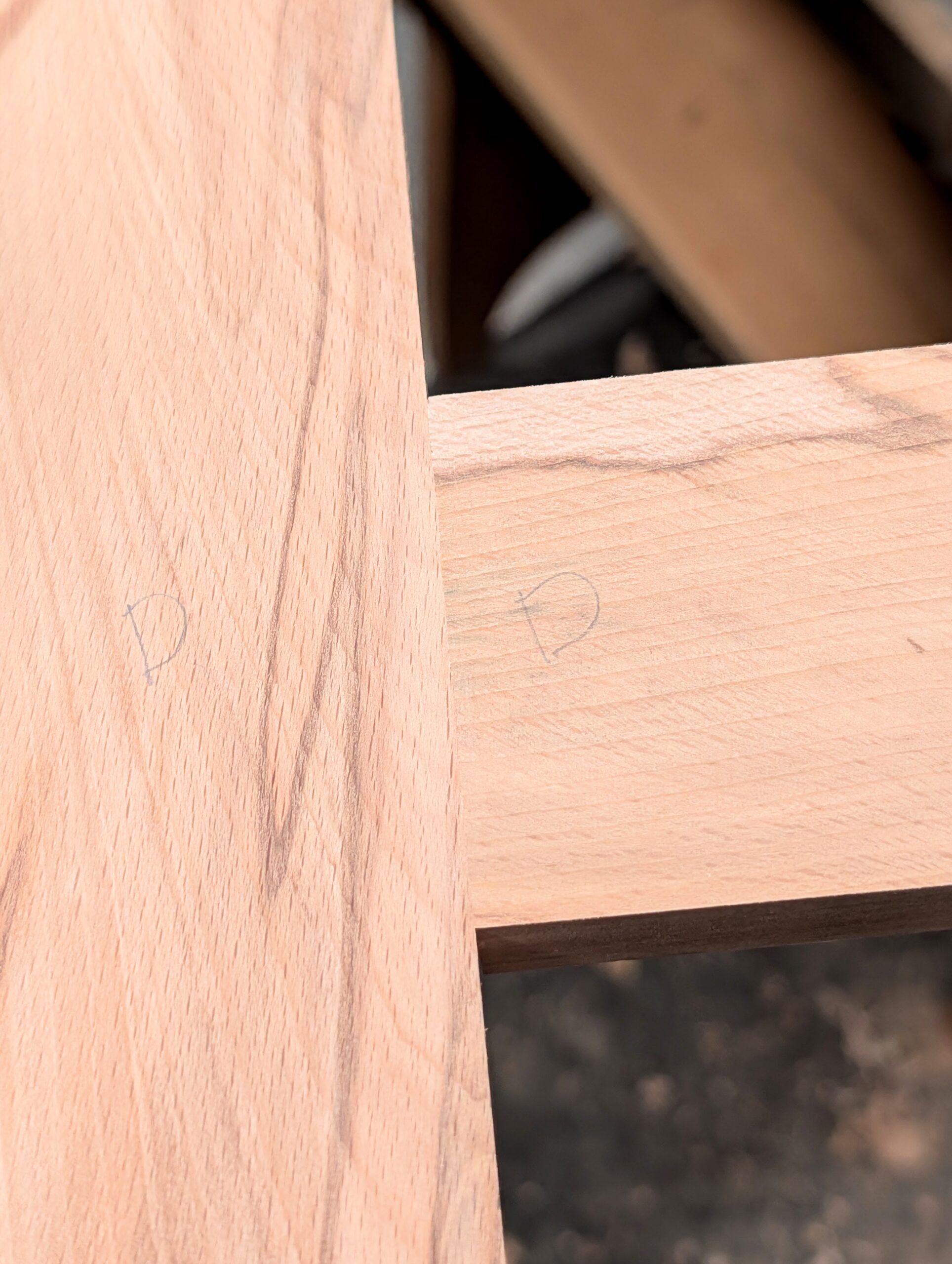
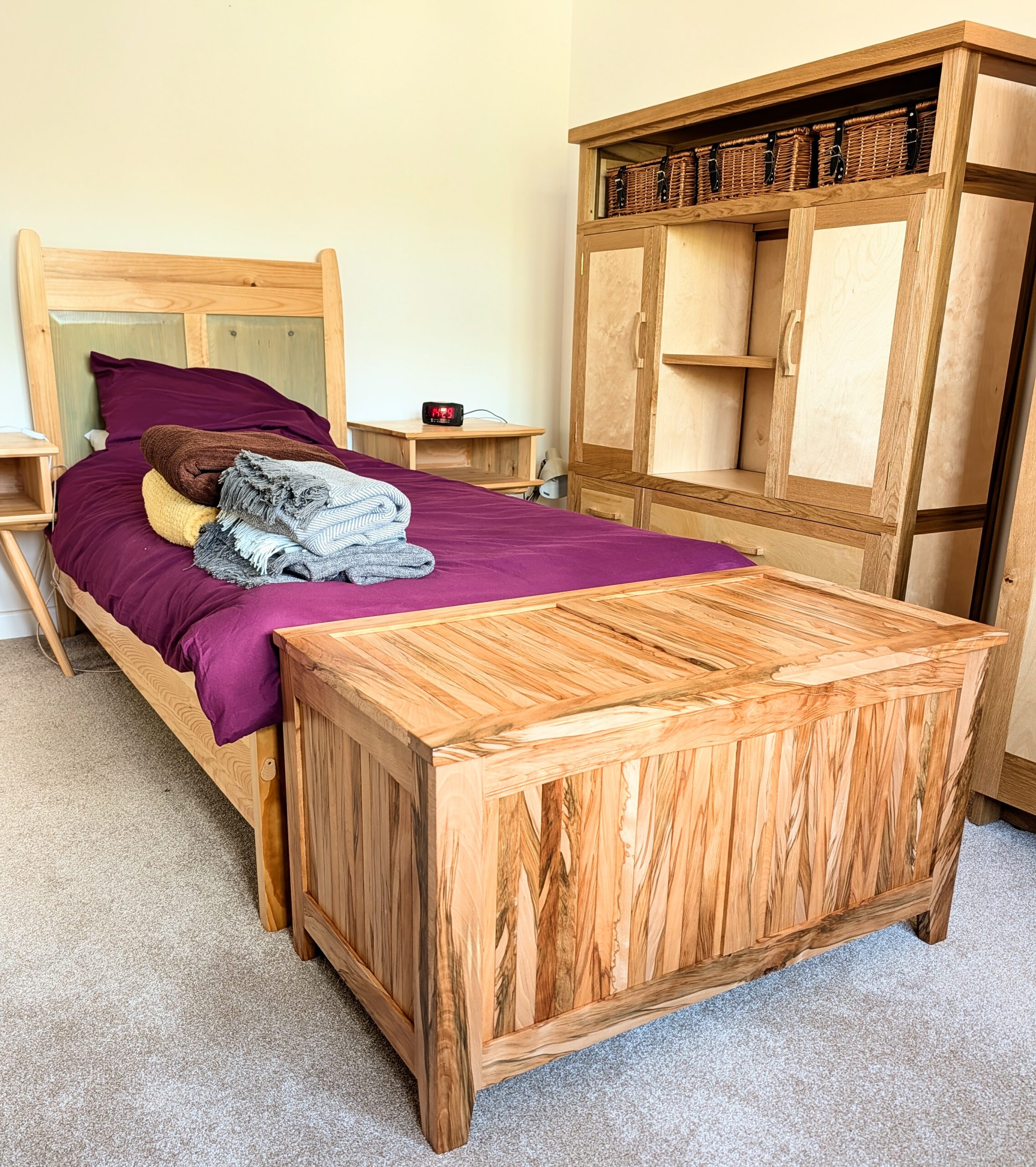
This week, right at 61 years later, I just completed a week's work and enjoyed every one of my hard days of purely creative making. This week my fifty hours of work brought wood and tools and writings and drawings together and in clear focus where I hand sawed, planed, ploughed and chopped my mortises and tenons in my spalted beech rails to make frames in the latest blanket chest project I just delivered to the upstairs bedroom of the Sellers' house. But it is not all hand work stood at the bench. My day's work combined drawing and writing, planning, sorting and tidying in a great lump of work. I feel far from overworked, I'm feeling thoroughly satisfied, and the difference these days is that my body starts to slow down at around five in the evening. I find nice slots of time for my grandchildren, and enjoyed a piano class she takes once a week. I spent time with a cocker called Rosie in my shop and then chasing a ball in the open air. I sketched out three new drawings and wrote six full pages of cursive text outlining life and ideas. I usually write a blog post most days, and many if not most of them are never published and likely never will be, but they might well go elsewhere. At one time they would have made decent articles, but articles have the unfortunate hook of belonging to commercial advertising, which I distanced myself from 15 years ago or more. My autobiography is closing in for my part; hence this blog writing here. There is a mid-section span of it, that caused me to stumble into recalling my living within the negative influence of religious leaders with cultic influence and ambition. That period seemed in some ways more to negate my freedom in pursuing the self-restricted and disciplined life it takes to be a maker, and one I already had and was living.
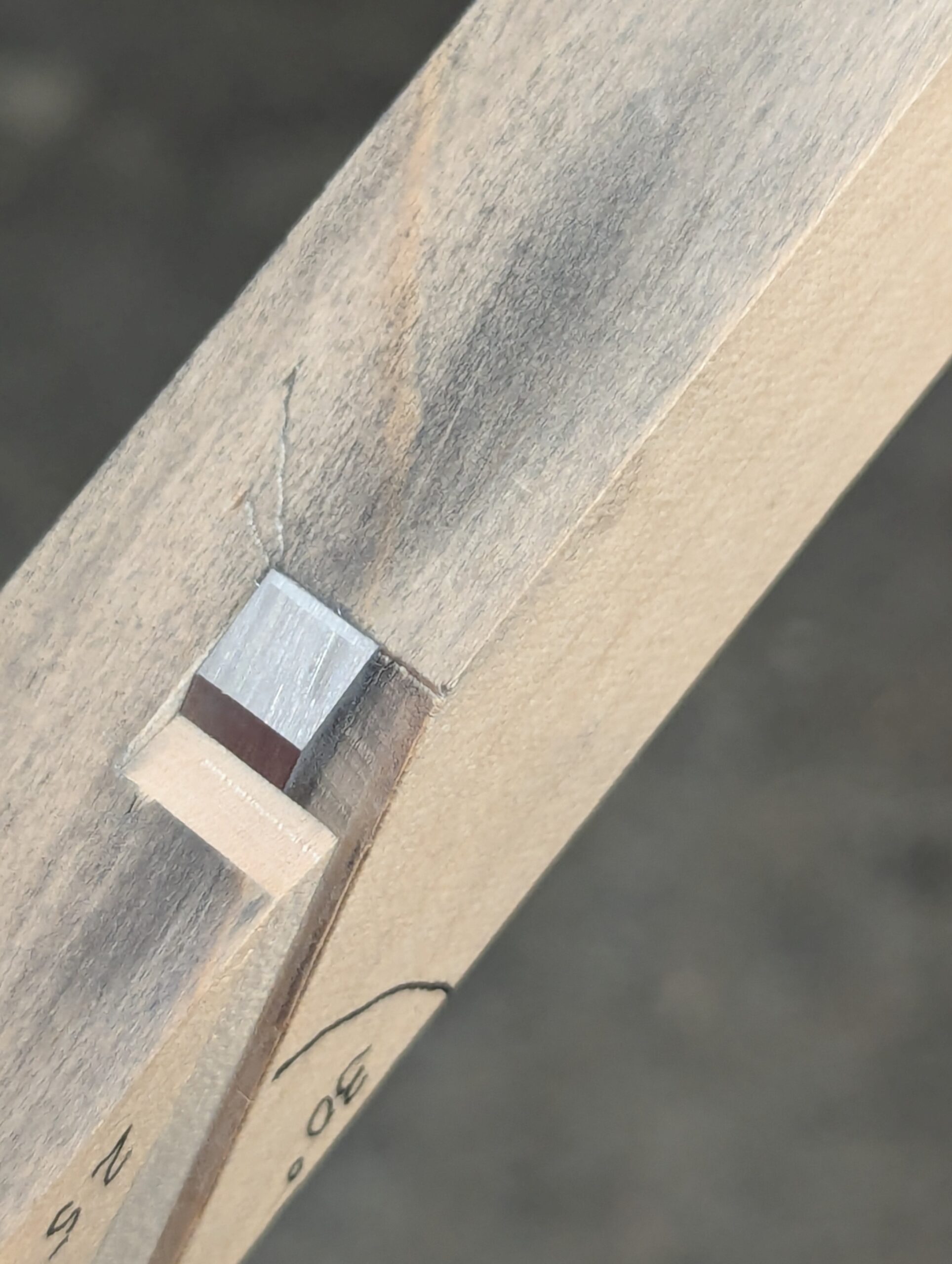
My working is as much an inventive process of mixing crafts and more than simply lifting existing tools to task. Sometimes a tool does not exist, so I have to both design and make it...additionally, nowadays, I might well have to make something happen for an audience waiting for the next episode in making the project too. It could be a 1/16" chisel or a honing guide for narrow blades that always defy being sharpened dead on square. Often I hear people say that the best tools are your own two hands. That's altogether quite wrong and borders on silliness outside of my lived realness; of course it is because, it's just not true. The tools we use become a mere extension of our hands to facilitate an action that expedites our work more effectively and therefore efficiently. The hands themselves cannot accomplish too many tasks without picking up a tool of some kind, be that a pair of scissors, the spanner (wrench USA), the plane and saw, chisel or awl, all of which exponentially increase our potential and likelihood of success. And it's this that sets us apart from all the other animals in the world. We are toolmakers and tool holders and users. We alone were created to make, to be a solution and to be builders. We cannot sever fibres and plane material smooth, or poke a hole to start screws or indeed turn the screw beyond the merest of indents with just our fingers.
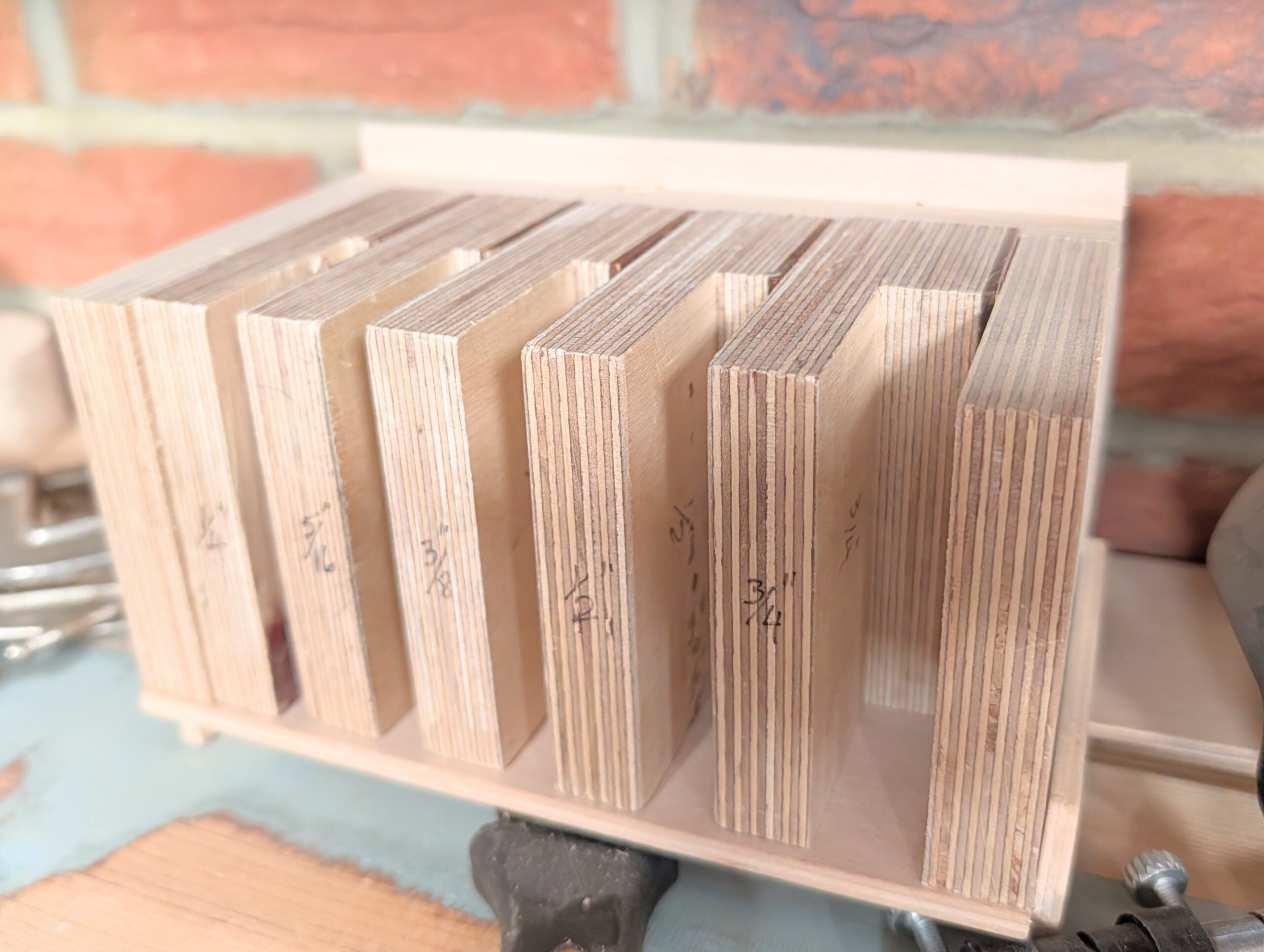
My inventiveness on this particular week, now a few weeks ago, required me to cut an arch and to groove said arch a quarter of an inch deep with the alacrity of running a plough plane along a straight edge. I went through four iterations with complexities before realising I was over-engineering for the need. In the end, my new tool took about five minutes to make as an adjustable version, all for the sake of loosening and tightening a single woodscrew. My other unique and inventive 'invention' was another version of my poor-man's router plane. Simply cutting a 55º degree cut with a saw to part a 5" long block 2" by 1" into two angled and matching opposites along its length gave me a bed-angle to angle a chisel to the workpiece; using the same chisel I would ultimately install in the poor man's plane came then to work as the cutting iron to level the bottom of the groove for the chisel in said plane and then too my now arched grooves. These things follow my theory that we woodworkers adopt or adapt what already exists to do a work there was no tool for before. In my world of non-machining as much as possible, I have adopted and adapted many things to expedite work that would be nigh on impossible otherwise.
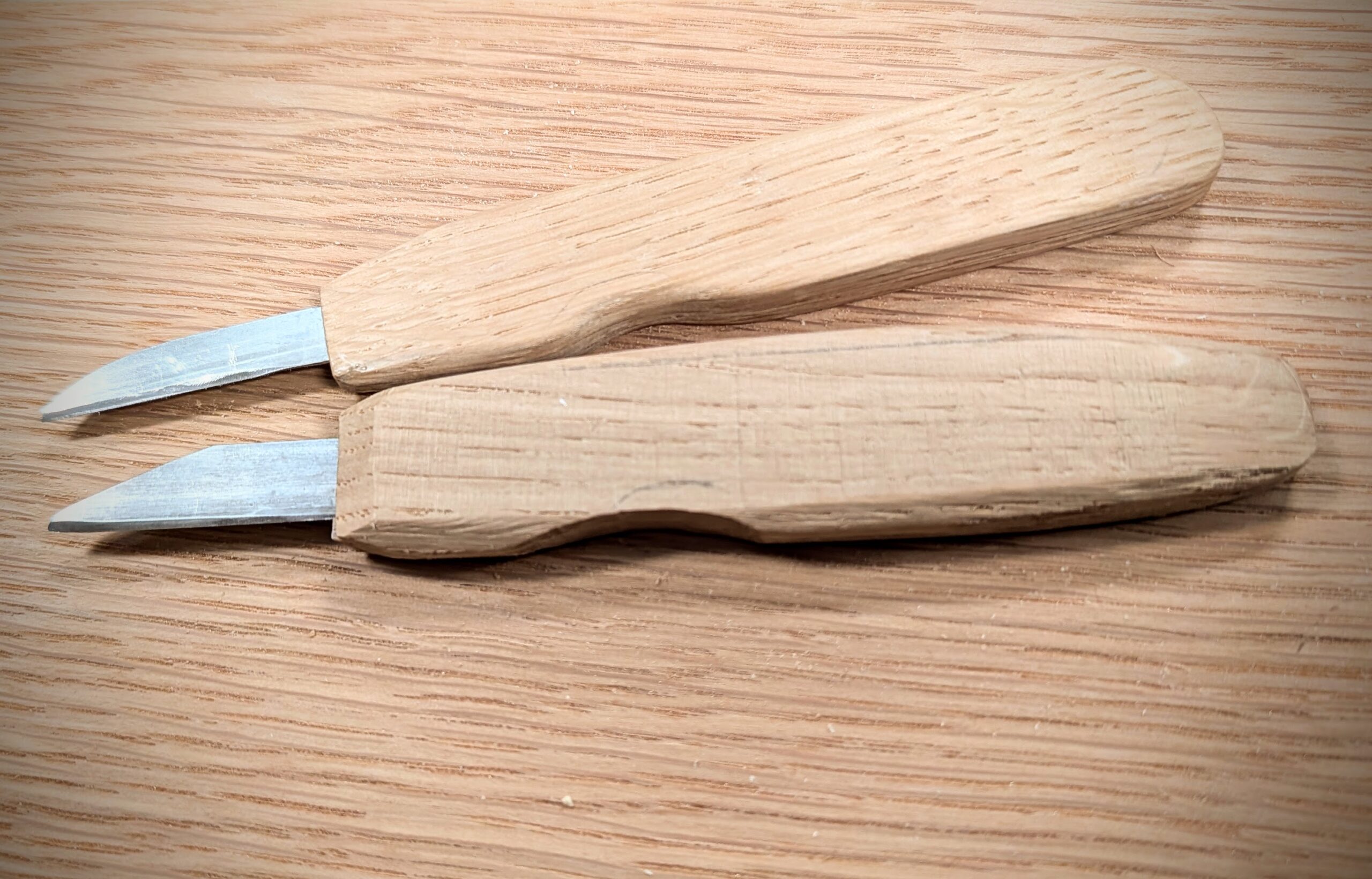
My work goes far beyond making things 3D. I draw and write, compose, design from thought into models and then make constructively. It's a practical world where a knife comes from a dulled bandsaw blade that's otherwise useless, or an alternative saw blade can be made to follow the curve I just spokeshaved to shape in a wooden rail. Many such inventions are made not for my good, but for the good of my audience, who study to make themselves excellent in their work. The guides are often a support as they develop the muscle memory yet to be developed to freehand their work more and with newfound confidence. Often, it's about slowly weening them off their total and absolute dependency on machining wood but additionally helping them to believe in themselves; I believe that everyone can develop and use the skills I have if they could just believe more in themselves and less in the machines that always, always substitute for their development as skilled makers. I have trained myself to become inventive. When I owned a black plastic box emblazoned with the famed maker's name holding a 3 1/2 HP power router and a router bit with a bearing equal to the task of routing the arch pristinely, I turned instead to an old bandsaw blade, a 10" flat file and a triangular saw file to make a curved saw blade 4" long. Ten, maybe fifteen minutes later, my tool was ready to cut. It worked. First off, I looked at the problem, secondly I imagined the possibility of a tool, and thirdly I made it. Imagine!
My techniques too are my own, although I don't actually claim them too aggressively or protectively because, well, simply put, there is nothing new under the sun in terms of revelation. Multiple millions of furniture makers and woodworkers in other high-demand aspects of craftwork have gone before me and will have developed their own ideas for progress. They lived in a world where the trade was passed on and down through word of mouth. Our age has changed all of that, and not always for the better. What I might invent without influence from elsewhere may well have been made a century before without my knowing of it. Rarely do I ever copy the idea of another, even if it is a good idea. Invention as an altruism of caring for others carries a dynamic power to volunteer into the lives of others. There is the essential element of volunteering that keeps it pure; hence I take no sponsorship from businesses that contact me regularly to position their products in the background of my sites or even promote the use of them for a kickback figure or product freebies...never! Yes, it would give me a very decent retirement figure, ease any financial burden to always reinvest in the future providing ongoing training, but I would lose the true freedom of simply and honestly being myself.
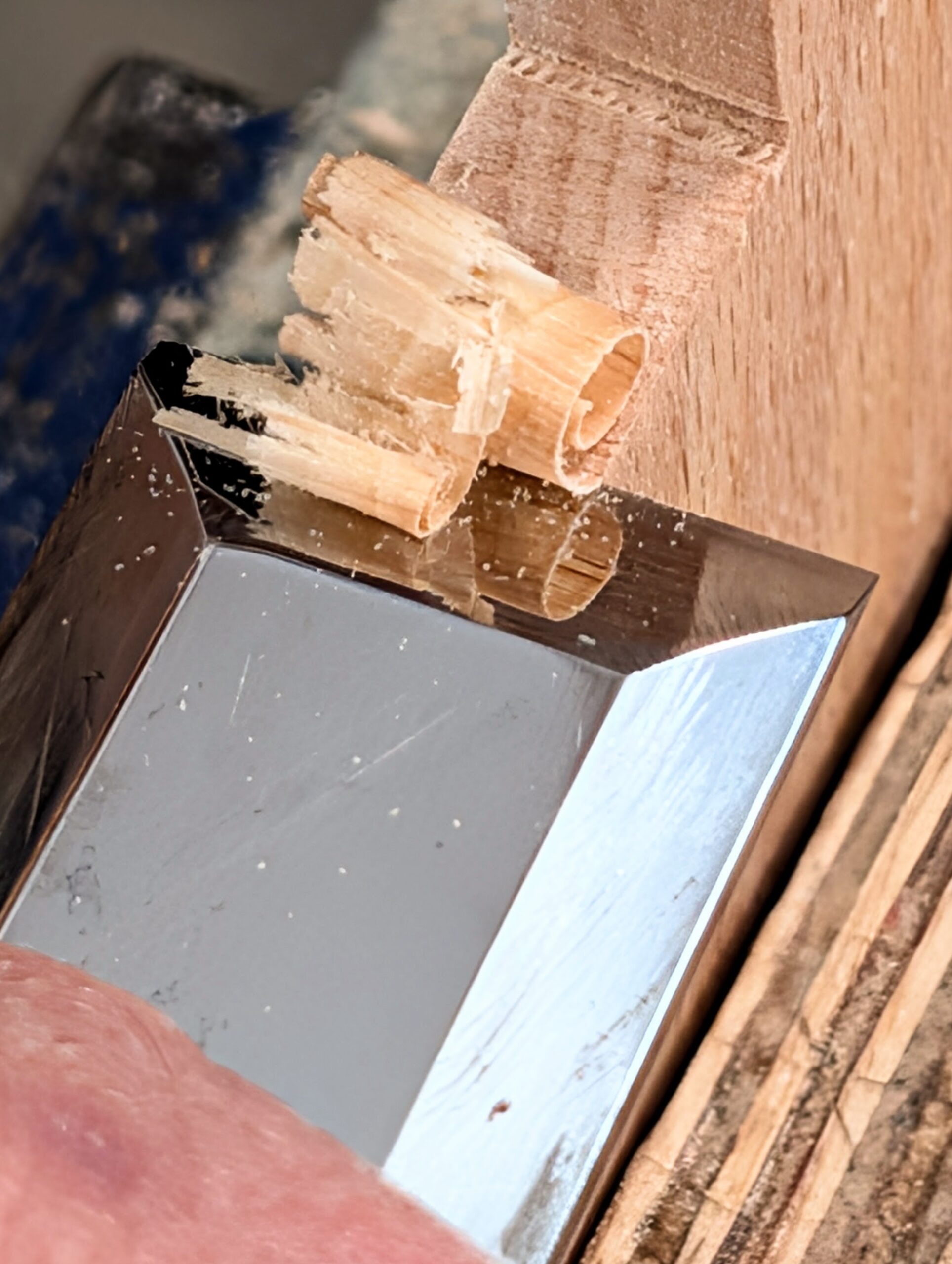
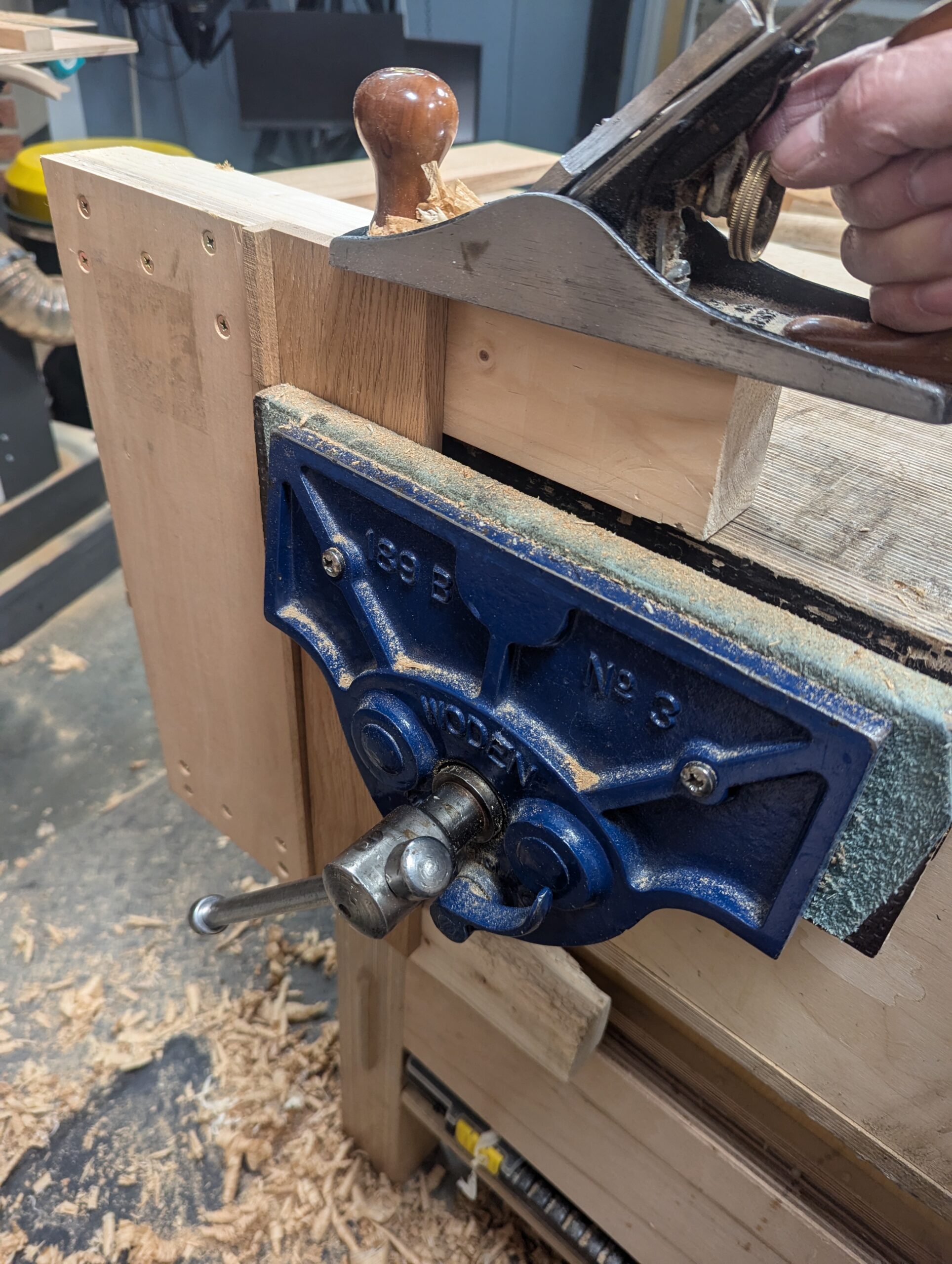
Some of you might think you know how I get 40 dead-square and dead-true shoulder lines inside and out to tenons without machining a single one of them in any way, but I know you really don't know of a particular methodology I use when accuracy goes the extra mile in a piece. When this is so very critical to something I am particularly intent on, my method takes a fraction longer, but no other hand method matches it. I haven't shared the whole of this technique anywhere yet, but it's certainly not in using a fancy shoulder plane, nor with any machine. Some things will always be a trade secret, and I doubt anyone, especially those we refer to as being 'in the trade', even knows of this one.

Comments ()