
Greater Expectations!
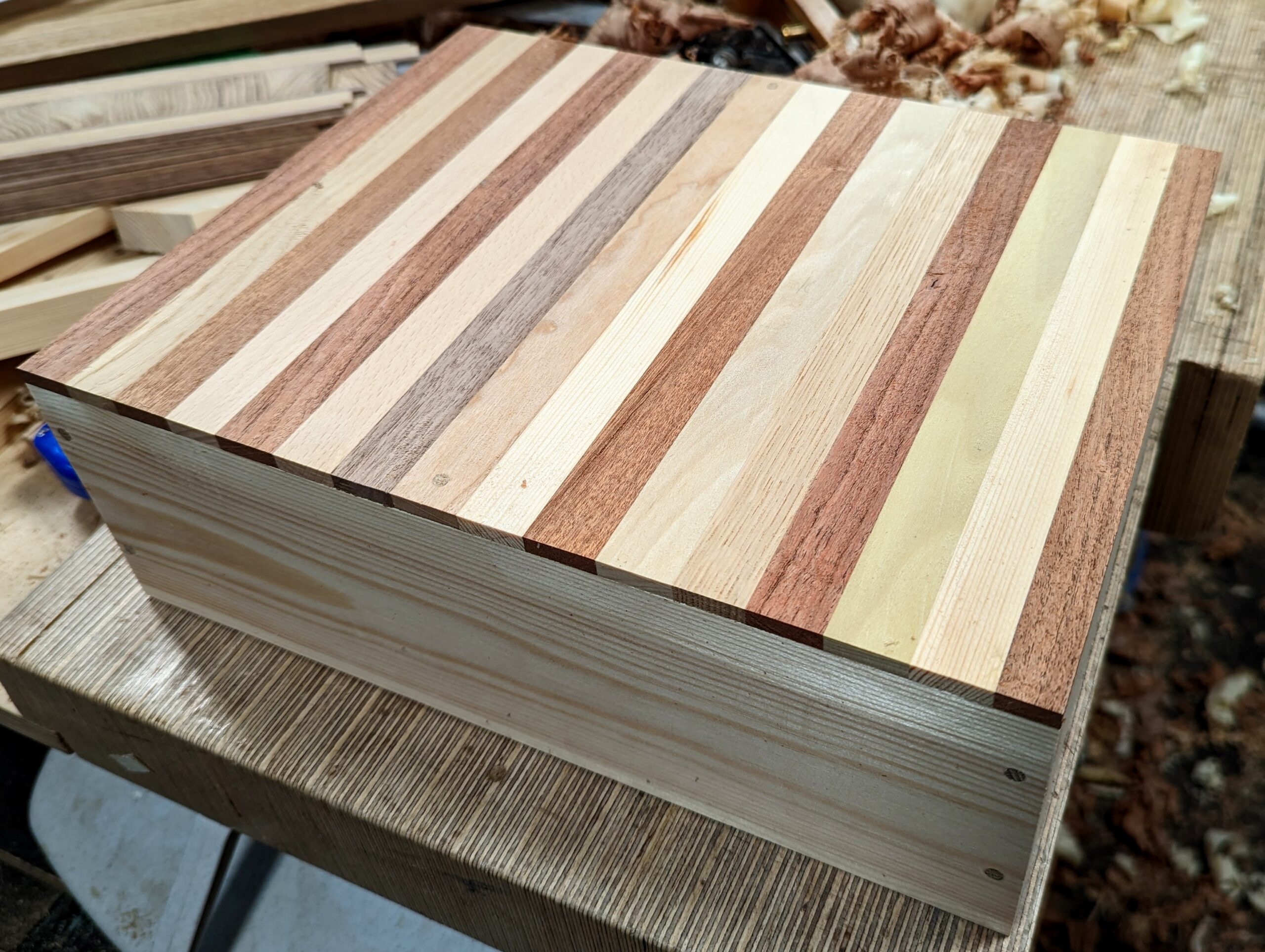
Her hands handled things differently this time. She's taller, stronger, more able and fully aware. That's because she's on the cusp of being seven in a few days time. There was an inner expectation that what she was about to do would work for her the same as it did for me; three years ago, she had the same expectation as in the first time she was cognisant of me working with the same tools she held on to today. We've progressed a lot since then. Now her body is more capable, but so too, her mental acuity. Now she knows she can do it so she does it. Is her expectation the same as the one she had in times past when she was three and four? She's gained the experience with the expansion of muscle and weight through growth spurts little ones go through as they grow. This day something was very different. Somehow, her expectations were realistic and as such the results were remarkable. Without my hands on hers to add weight, strength and direction, the felt energies of the past translated into her own working knowledge of just what to do when and the how of it were hers by ownership.
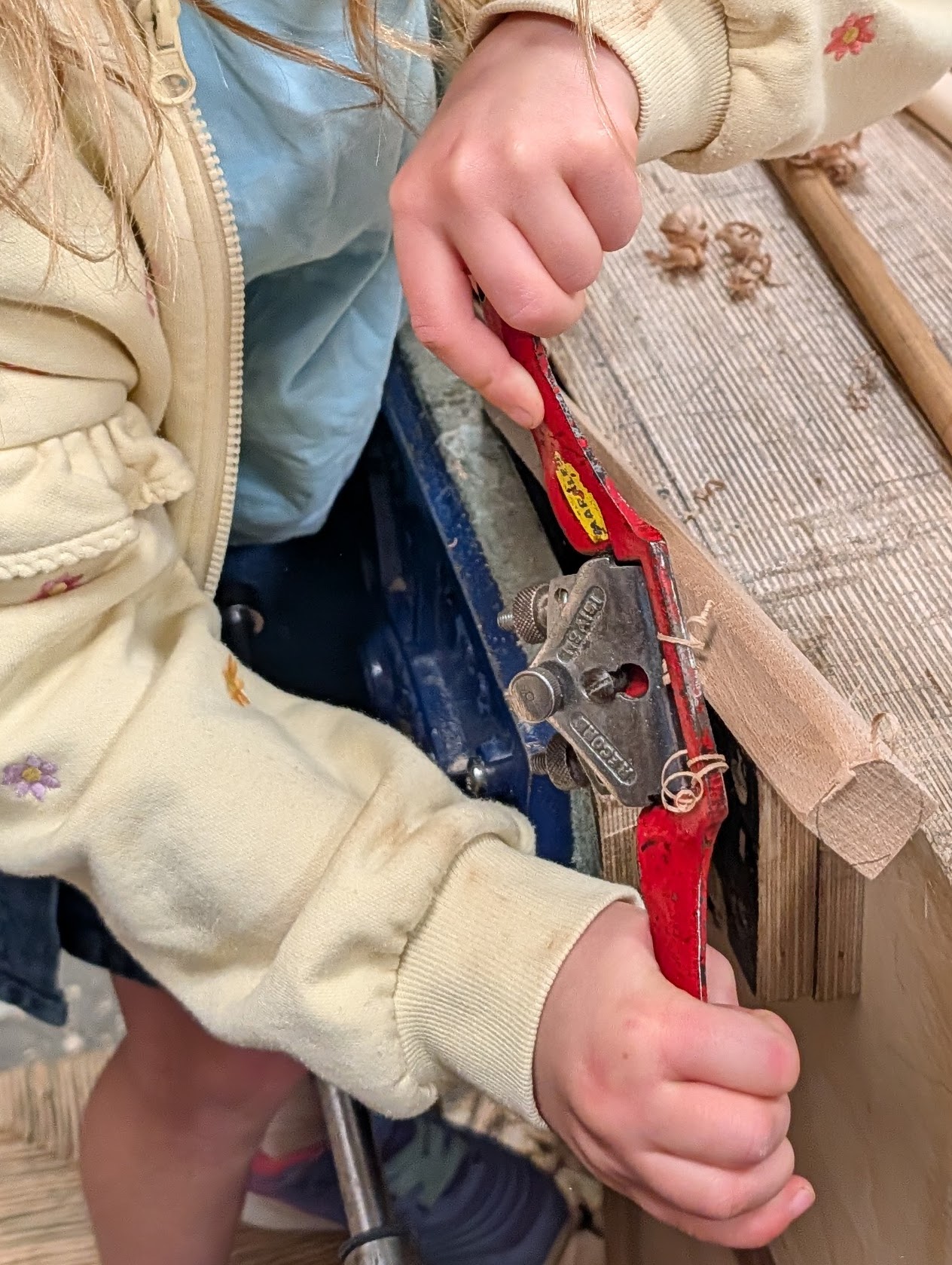
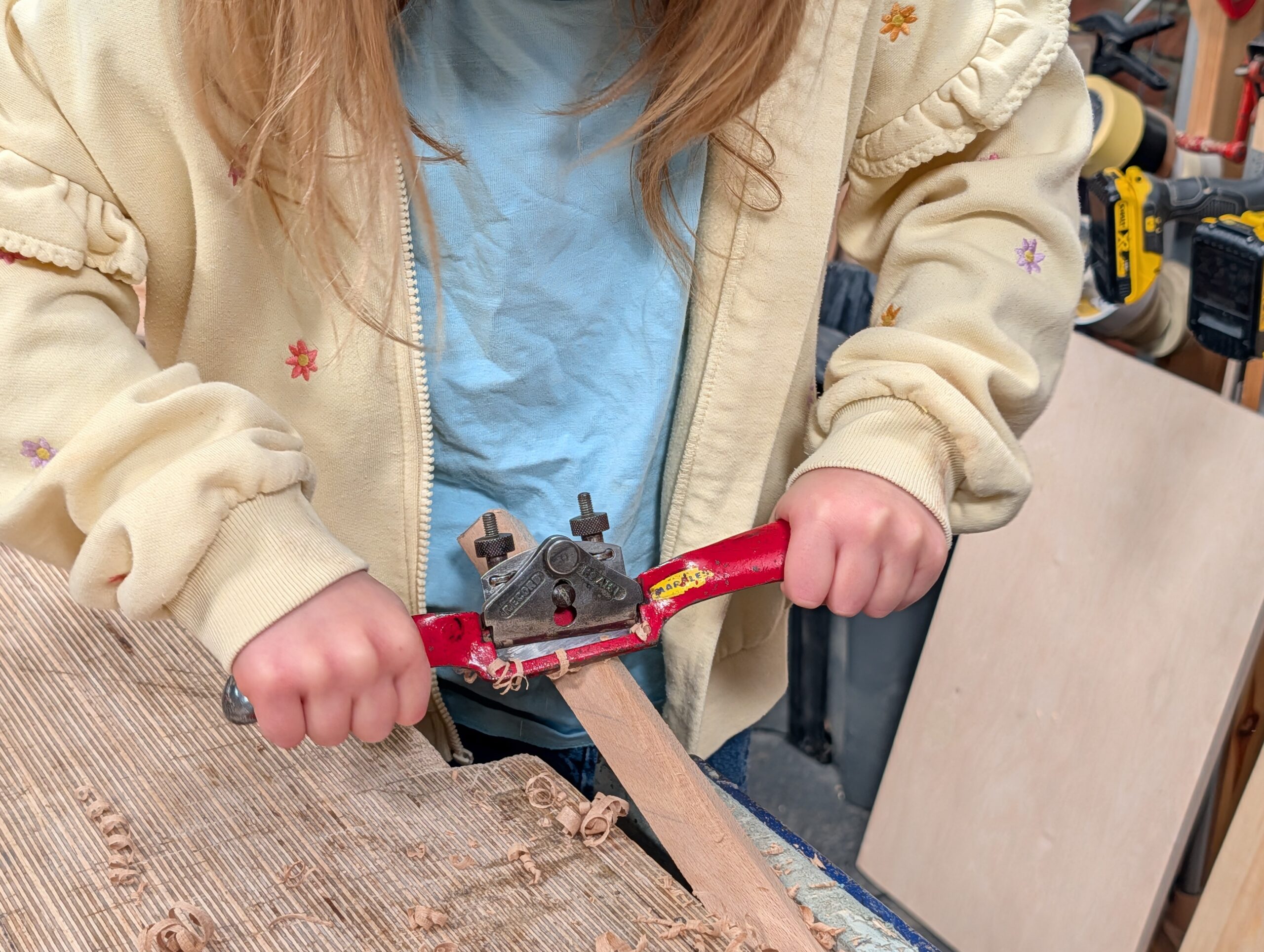
She aptly shifted direction, angled the spokeshave and rolled it to engage the cutting edge to take long shavings she could hear see and feel those few inches from her face. The outcome of early expectations matched her intention stroke on stroke; she peeled away the shavings one after the other by the dozen, but instead of focussing the tool on one spot she moved it rotationally to even out her work of creating a round dowel from a square stick. Without any hesitation, she now knew what to do and how she would do it. For my part, it wasn't pride in her newfound ability, but joy in her discovering that perseverance and fortitude brought results. This then released the reality that we could and did talk back and forth for hours as the brace turned, the spokeshave shaved and shaped, and the card scraper refined the planed wood beneath her still small hands. Woodworking was working, and it was wholly her own energy, her direction and her earned working knowledge of wood and tools that produced the results 99.99% of all the children in the world will never know of in their lives.
And you might ask, 'Paul, that's quite a sweeping comment. Why?'
Well, it's because I've seen the demise for decades and believe it's been true and worsened through each of those years; and though we may all actually know it, and for the obvious reason, no one wants to speak it out. Machining wood took our children out of the workshop, and that's because the majority, yes almost all woodworkers, no longer have hand tool skills. Truisms like this might seem like they are unnecessary, but in this case, no one's admitting the reality of it anywhere else in the world, so I do it from time to time lest that voice be lost. The majority of machinist and machine-only woodworkers really have nothing to offer to children's involvement in woodworking. So, just what is a truism? A truism is a widely accepted statement that is obviously true and thereby doesn't need to be said or deserving of further discussion.
Woodworking became dead to children decades ago and, at that time especially, no magazine editor or manager in the world of woodworking ever admitted it because, well, they were the main contributors to the problem. Magazines were all advert-led, advertiser driven and by advert income they were controlled by the bigger spenders, i.e., manufacturers of machines and a mass of related equipment whether static or hand held; hence a 100-page magazine had 70% of its pages dedicated totally to selling machines and all that supports them––usually safety protection, but then you do need a hundred router bits, dado cutters and jigs to match. The advertisers were machine makers along with the middle men and machine makers knew that their equipment was unsafe, no matter how many safety features they built into their machines, SawStop included, woodworking machines were never intended for children, thankfully. Factor in this too: Yes, there will be some idiots out there who tell me their child was using this or that power equipment when they were this or that ridiculous age––you can't really speak to them and that's not the point. Any responsible parent will see what I am saying here is true. It was not that I couldn't have let my children use the machines I owned and used in my business, but that I wouldn't. I could never have lived with myself if a child of mine lost a finger, a hand, eyes, a limb and such horrific things knowing it was my fault. The other thing that I have learned is that with teenagers, not all of the synapses are fully developed or even available to them. It's as if their thumb wasn't there, you see, but the synapses are not always visible. Try picking up a pin without your thumb. There is a mental acuity and a physical development yet to be developed that results in spacial awareness, reaction ability, and then too the ability to respond appropriately with pressing panic buttons in the brain that freeze them.
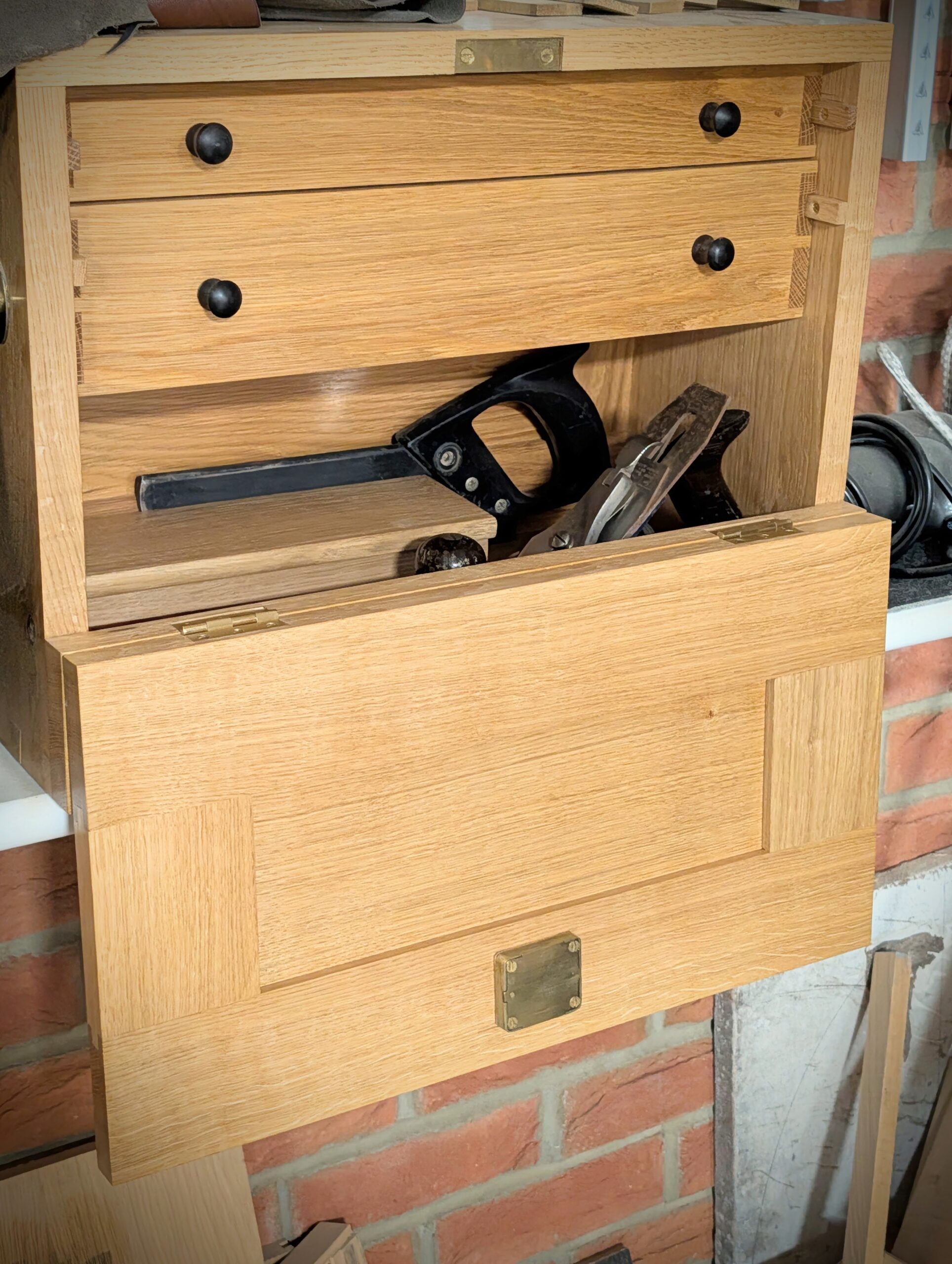
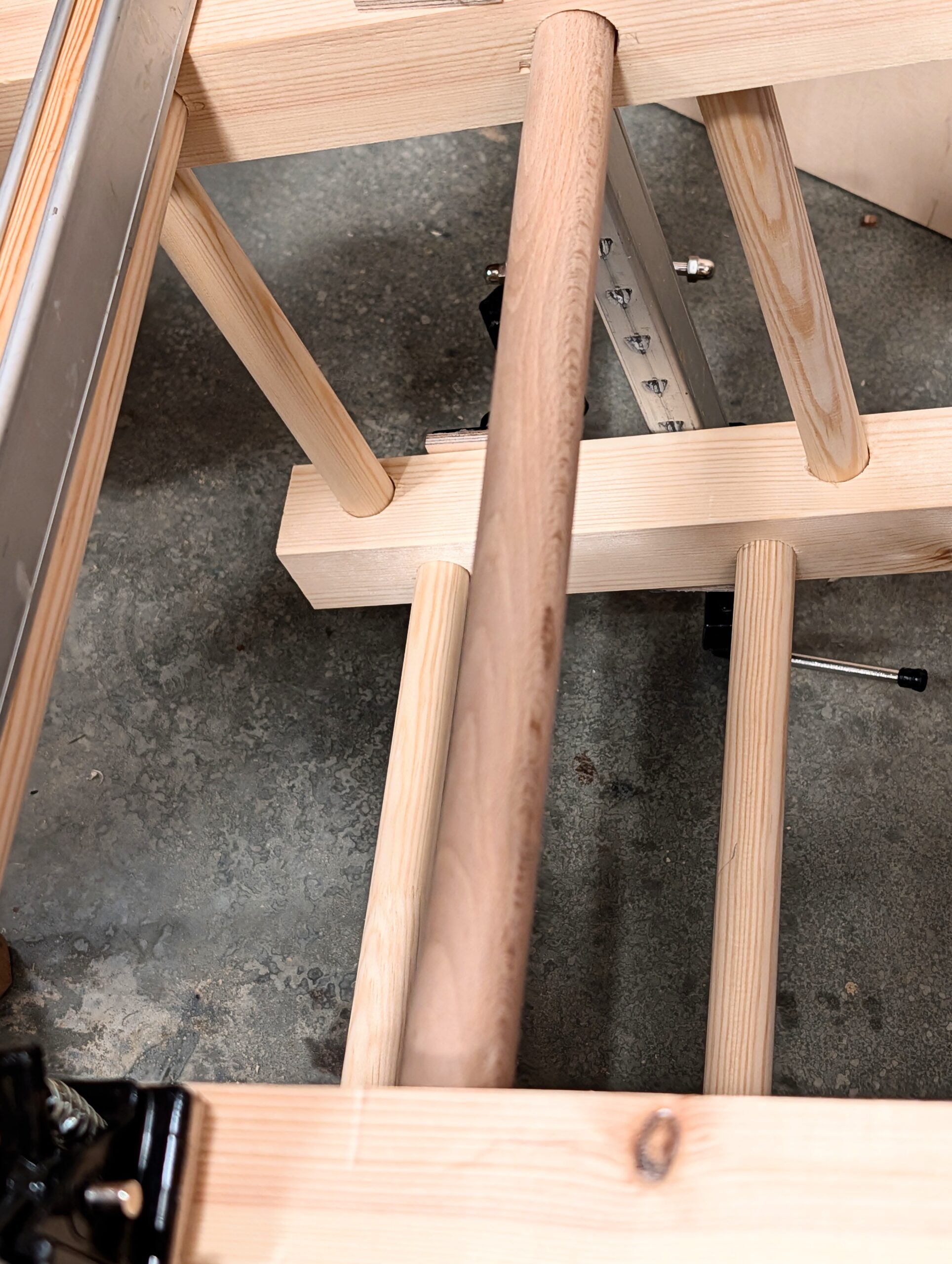
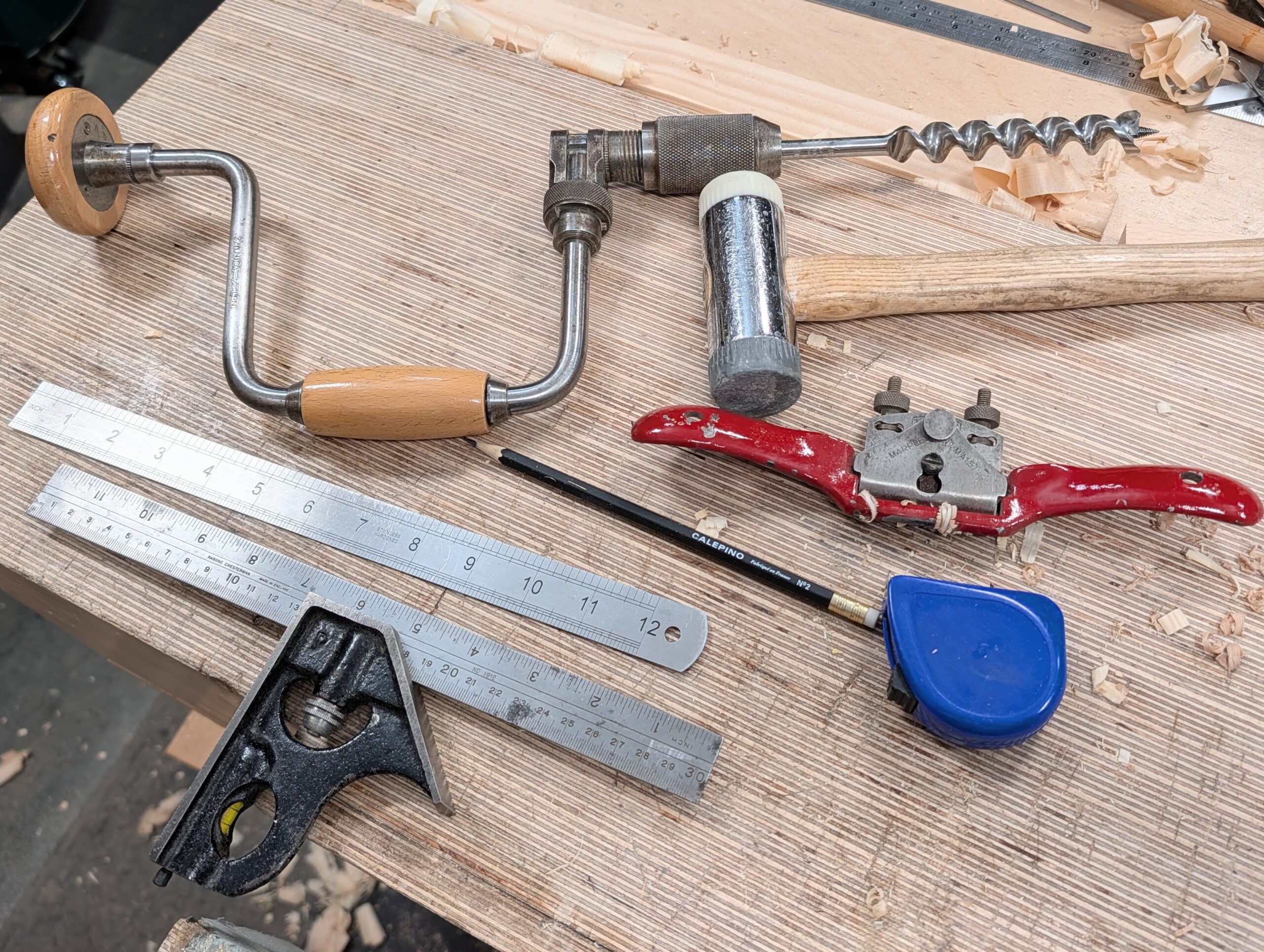
But it was the pure association that reawakened the same awareness of teaching and training my own boys when they were the same age as my granddaughter this last Thursday but then some. The pure freshness of time we spent together at my bench with a combination of the tools she now owns and a few of mine. We chatted throughout the time we took to make her stool. She's standing on one of mine as she makes hers. We've created terms like, "finger cleanout" where her small fingers can pluck out the shavings from a 20mm hole. "First the finger cleanout." she says after each of the sixteen holes she just bored with the swing brace (bit brace USA).
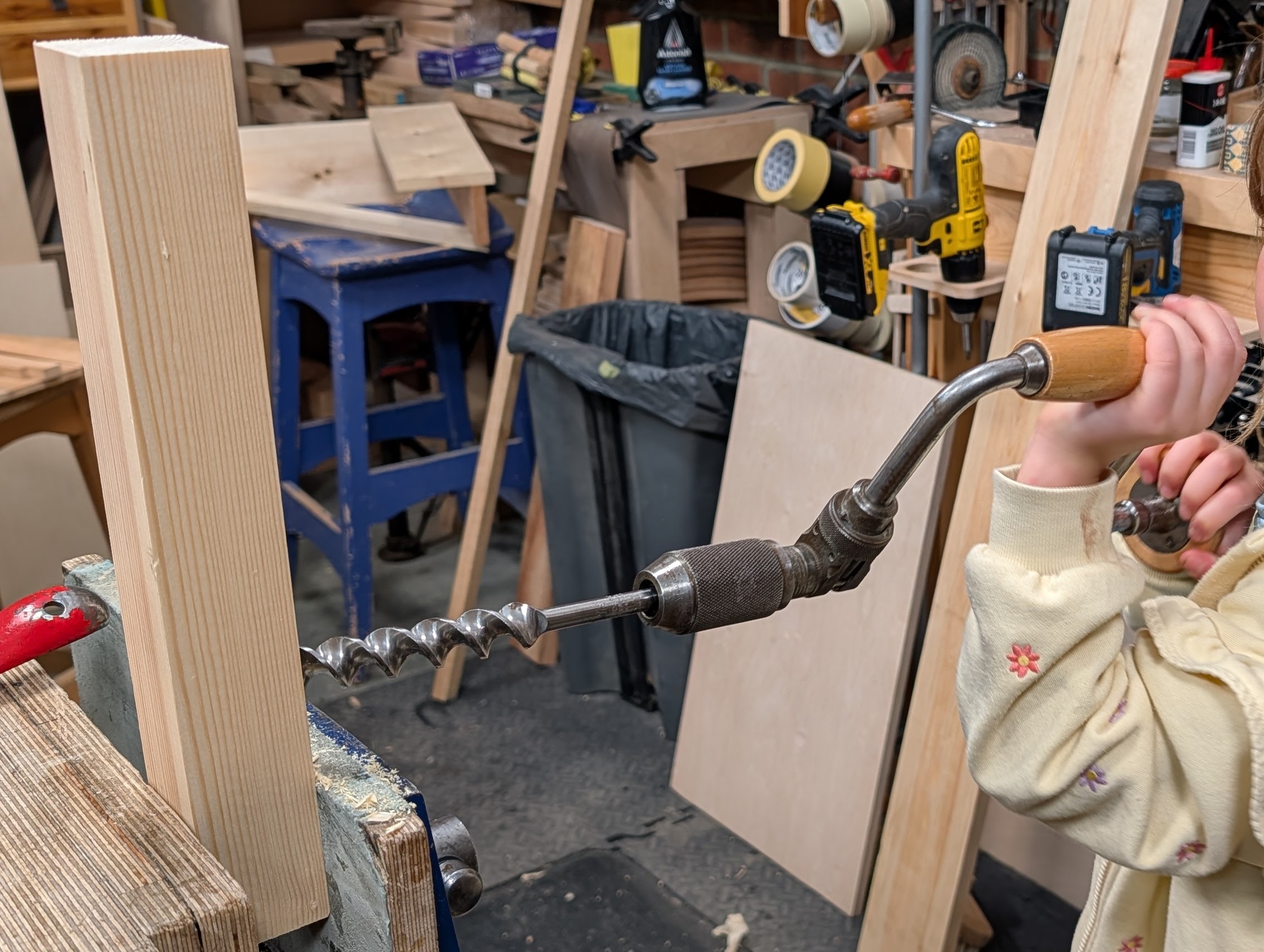
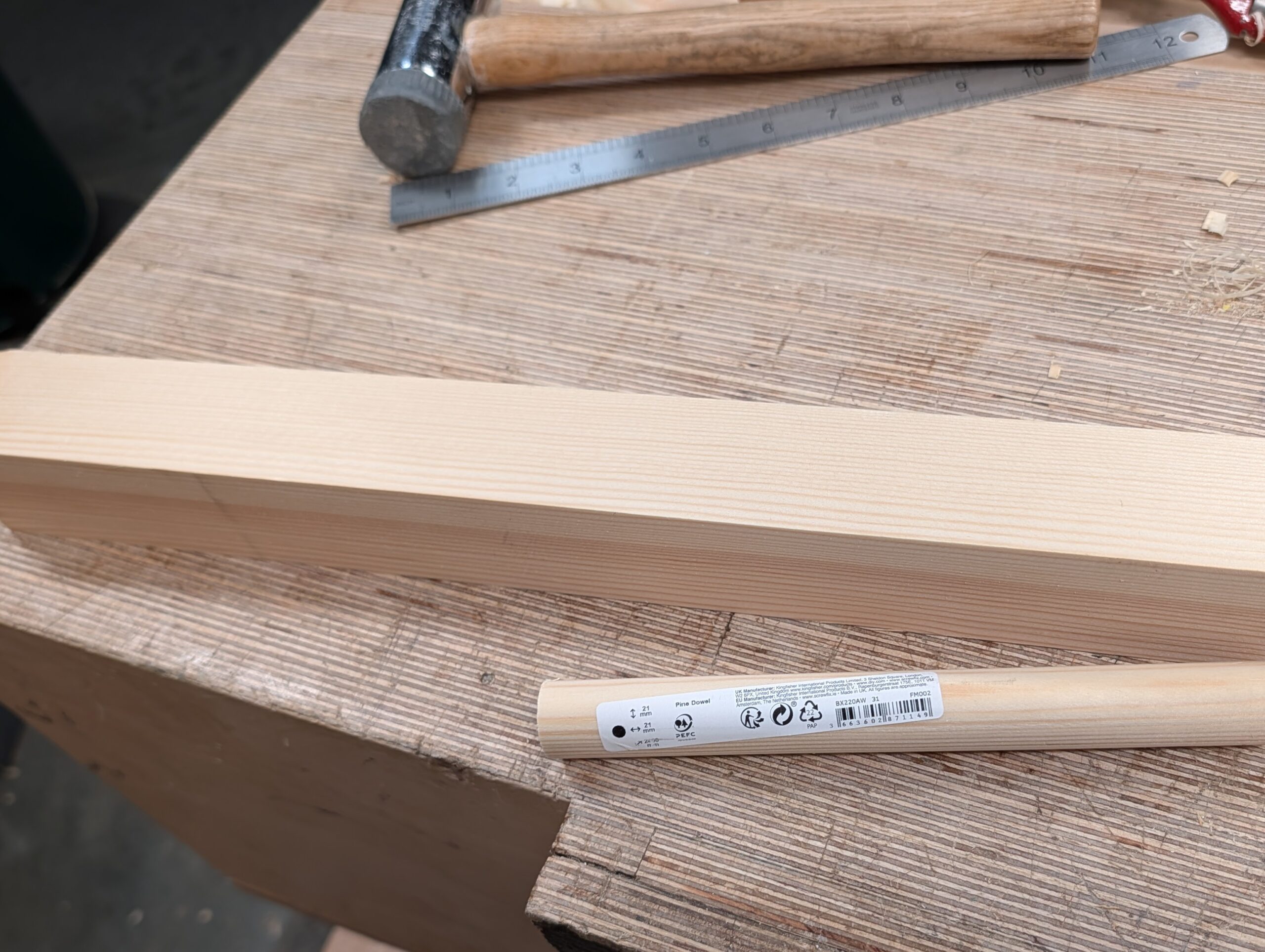
How remarkable is this? We had used a pine extension pole as a 22mm dowel for the rails of her stool and had enough for seven of the eight rails. "Hmm" I said, "We're short a rail. Oh, dear." She dropped from her stool and started scouring the workshop scraps in the corners of the garage until she found a stick of roughly 22mm by 22mm beech, a foot long. "This'll do, I think. Will it granddad?" she said? Then she went to her tool box, an oak one I had made to teach and train my audience on woodworking masterclasses a decade or so ago, and pulled out a small wooden case.
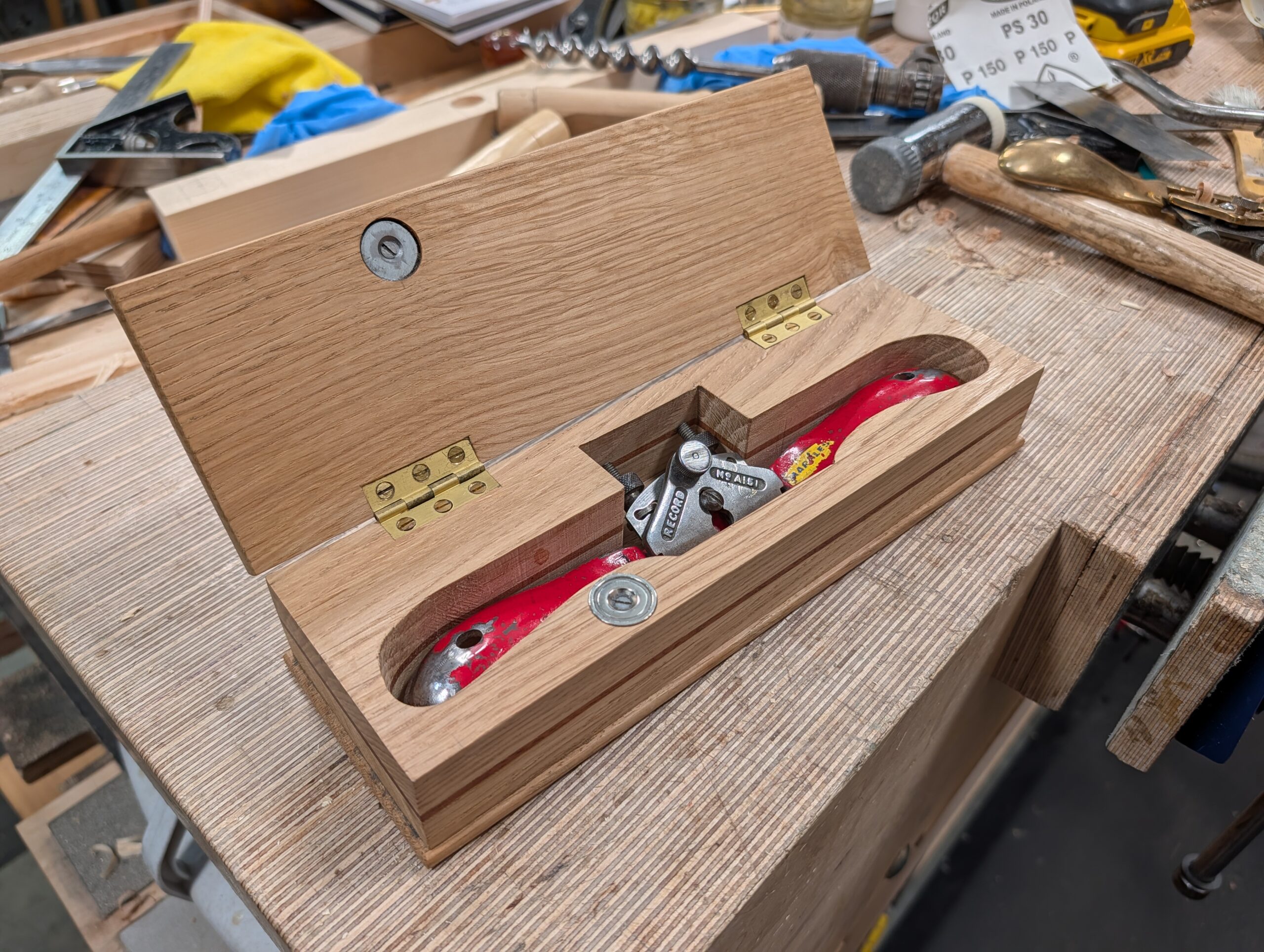
She took out her own Marples spokeshave, a birthday present from me when she was four, locked the stick of beech in the bench vise and started to reshape the square stock to round with her own spokeshave, her unrelenting determination and her expectation that she could indeed make a 22mm piece of square stock into a decent version of a dowel... which she did!
Expectation and high demand is a parental input into children. A comment from my daughter-in-law a few years ago went something like this: "When Joseph needs something, the first thing he does is consider whether he can make it and resolve the problem in a timely way. He can make the tool!"
So: we have a very narrow window of time with our children, and all the more when devices become the all consuming entity in their lives, as they do in our present age. Oh, and here is something interesting: The root of device actually refers now to 'obtaining administrative "root access" on an Android device,' which allows someone to gain complete control over the operating system to make deep customisations. The process involves overriding the limitations set by the manufacturers to run specialised apps, modify system settings, remove pre-installed bloatware or even replace the operating system entirely. Of course, there are risks involved. Whereas it offers more freedom and functionality, it also carries with it the possibility of voiding the product's warranty and potential security.
Oh, well. My woodworking has never been divisive, so I'm good.
Power to the people!
Comments ()