
Anonymisation (with an Anglicised S)
I remember we men in the 70s signing parts of the work we'd made as a team with a soft pencil and doing it somewhere discreetly. Whether you spell it with an 'S' or a 'Z' is of little consequence, that simply gives the continental divide and the common divergence from one English to an American one, the meaning's the same, regardless.
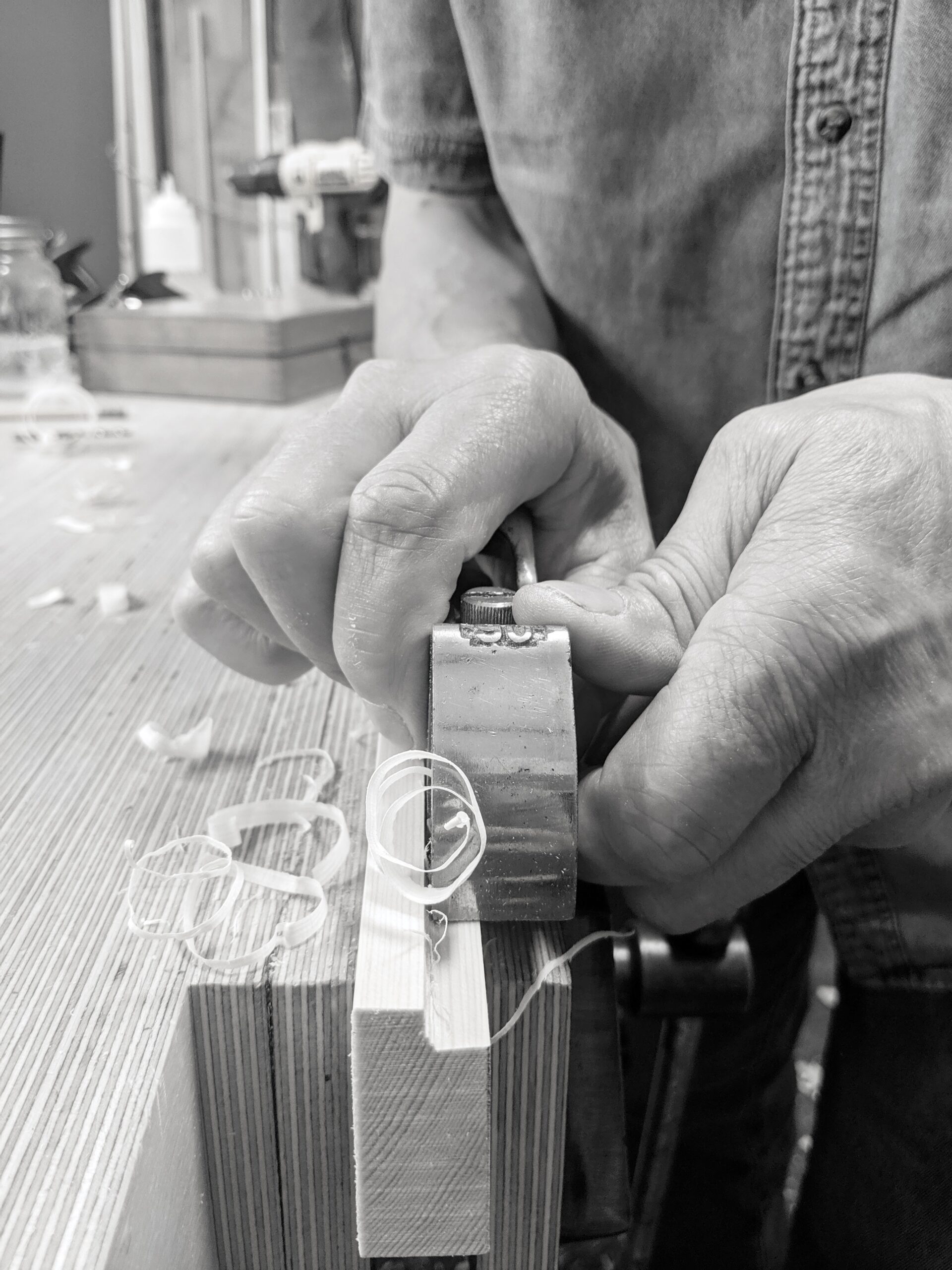
I'm not so much the anonymous maker these days, and though 90% of my works past will indeed remain unsigned and thereby anonymous, having videographers filming you and having a few hundred thousands watching your every-day working and making, kinda puts you out there. It's in defence of makers past that I lament the sad loss to our today. And that's all the more in the current age of mass information, where our ability to process and allocate appropriate amounts of attention is always, always in deficit every split second. My mother, a seamstress making expensive dresses for rich people by trade, made a lovely hand embroidered picture some 30 years ago. It was unsigned beyond her ability as a lifetime seamstress to be identified by the stitching itself; I never saw her without ultra-sharp scissors, a needle and thread and a thimble. I was glad to see it go to one of my children. For now, though it remains unsigned, the knowledge of its origin goes with it, and I am sure it will be passed down. But no, it's the multiple billions of pieces of handwork, fancy and ordinary, works of art we might handle, walk on, walk through and create life with when all is said and done, that survive through decades and centuries that I find greatly lamentable. How nice it would be to see a maker's identification mark or signature, a trademark, if you will, a mark that at one time would be recognised by fellow makers as craftsmen and craftswomen.
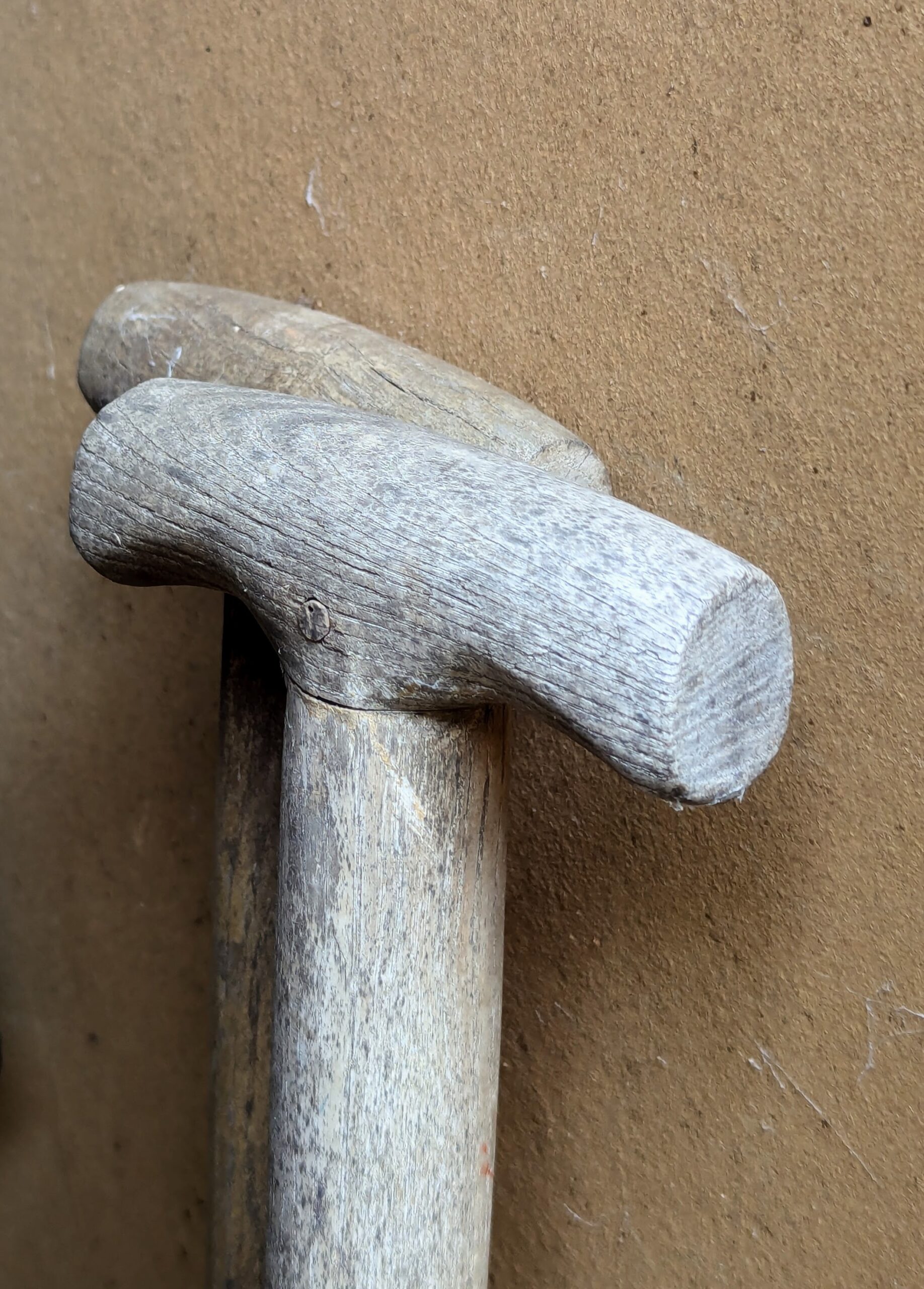
Throughout my history, I have discovered pencilled signatures on pieces, mostly discreetly hidden, modestly written, some dated, but rarely. I once found a note by a maker from late in the 1800s, I was twenty or so, so that note was close to a hundred years old. The note stated the maker's name, his address, age and home address. He briefly told of his business as a carpenter, and the note was slipped under some floorboards. I lost it. The men I worked with, though, would often identify their work with anything from a single chisel cut or three or so in a row or then again an India ink signature with an ink pen. That soon stopped as work sped up and so too life. It was nice. But even so, the thing was, back then, the older men reacted under a remnant of them feeling they were owned by their bosses. I doubt that anyone feels that way any more, even though many are.
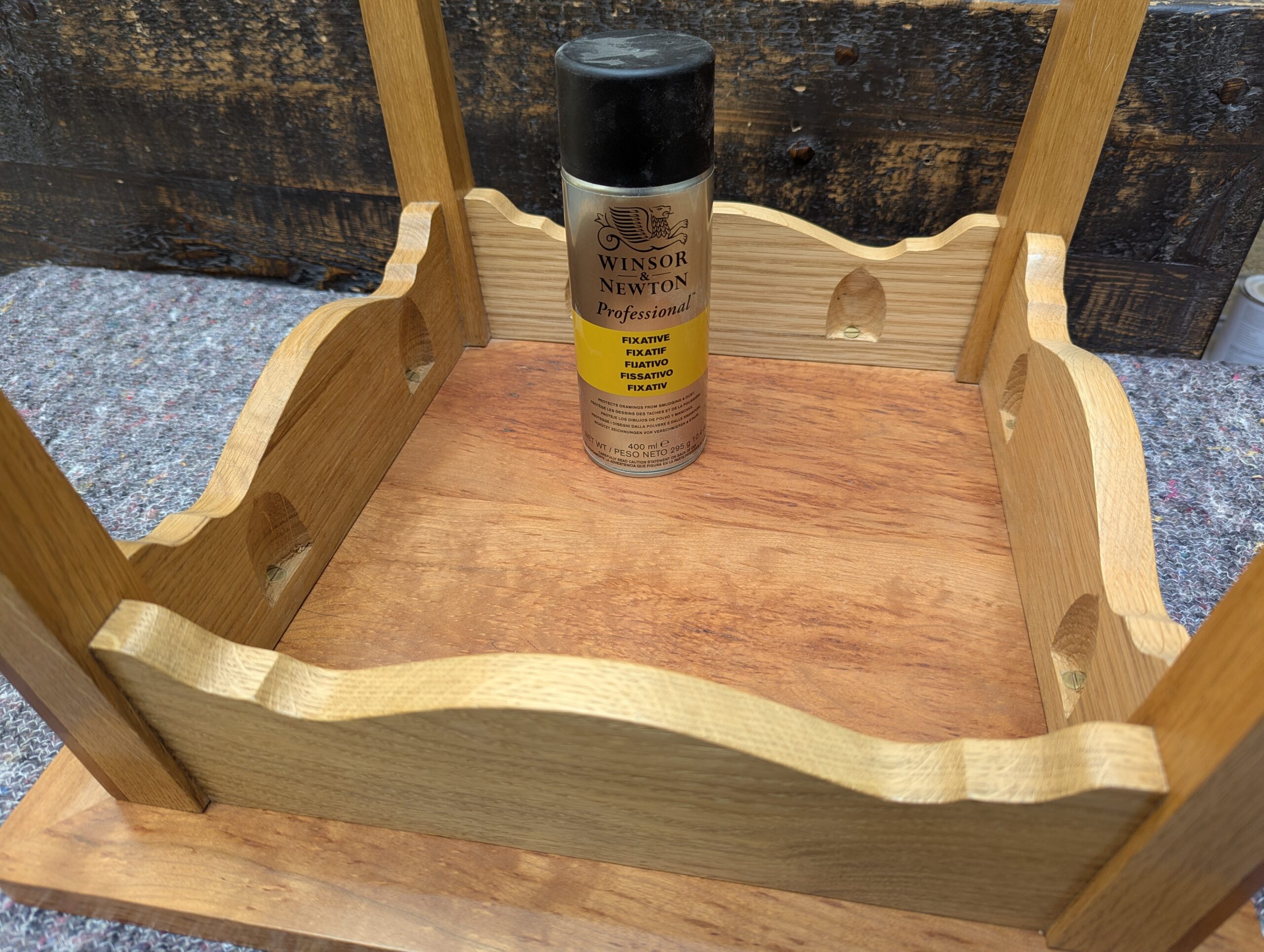
Pencil is a good way to identify your work, especially if you seal it in with a fixative or wood finish. I own a can of fixative for pencil drawings to stop the graphite from shifting with opening and closing my journal. Some wood finishes can erase pencil sometimes, so you do need to watch for that. I remember us all signing the White House cabinets we made for the Cabinet Room in 2008/9. Taking our turn, ready to write on the mesquite. Seven of us altogether, I recall. We used a fine, black Sharpie on the underside of the tops, before permanently attaching them.
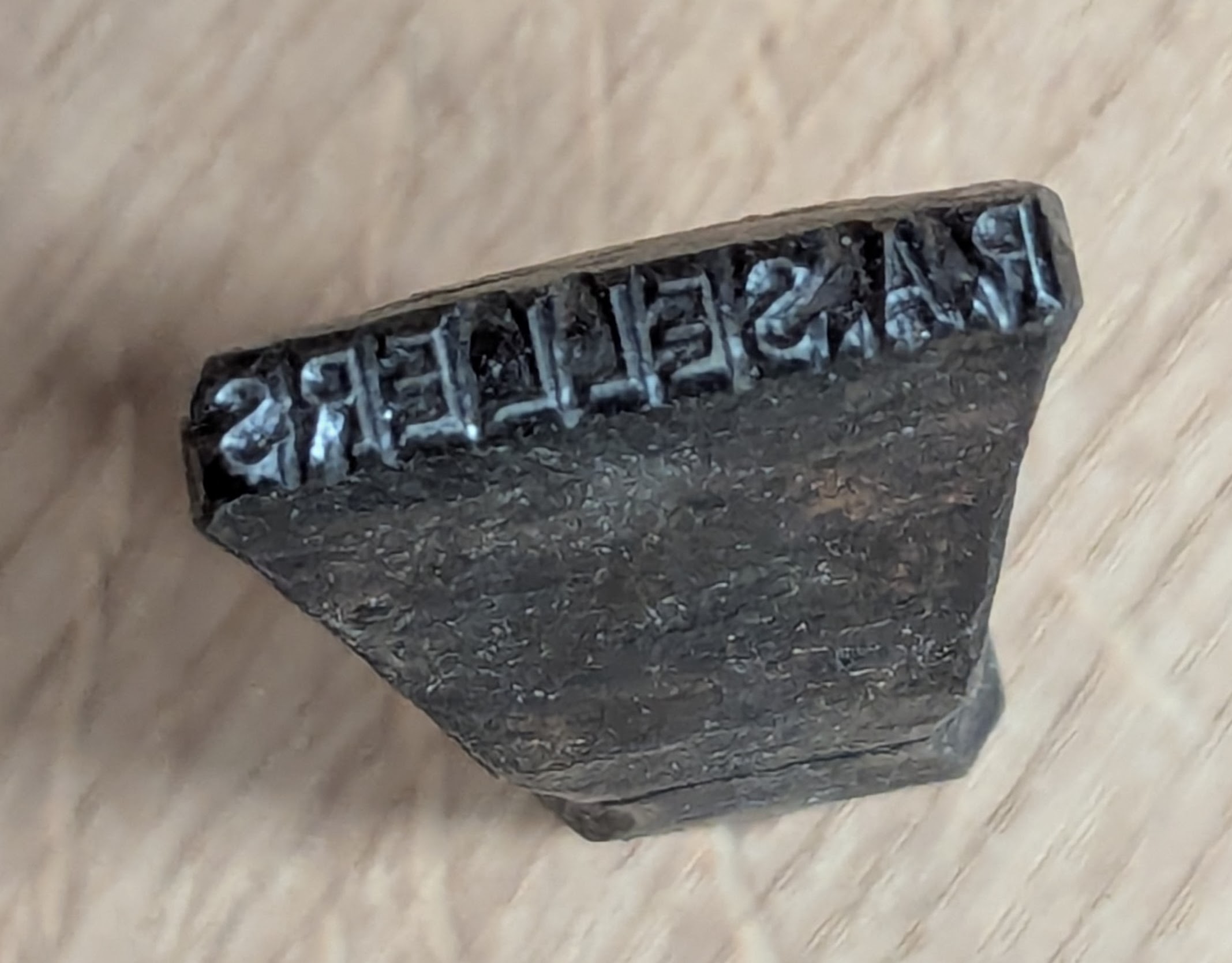
I should say here that being anonymised and being anonymized is one and the same thing, and it means to remove any identifying information intentionally from something like a retrieval system or a page so that it is no longer linked to a specific person. This happens in many spheres to protect individuals and information, remove influence that might otherwise cause prejudice one way or another, and so on. It's a relatively new verb, and all the more in this age of mass-information and the need for data protection and such. But back in history, artisans that were satisfied and relaxed in their own skin needed no validation because the work they did spoke for itself, not like we braggarts of today who make all sorts of spurious claims. I do think that in times past there might well have been superiors who disabled the lowly workmen and women lest they get above their station in life, but equally so the ragged trousered philanthropists from within the working classes who kept control from within the ranks.
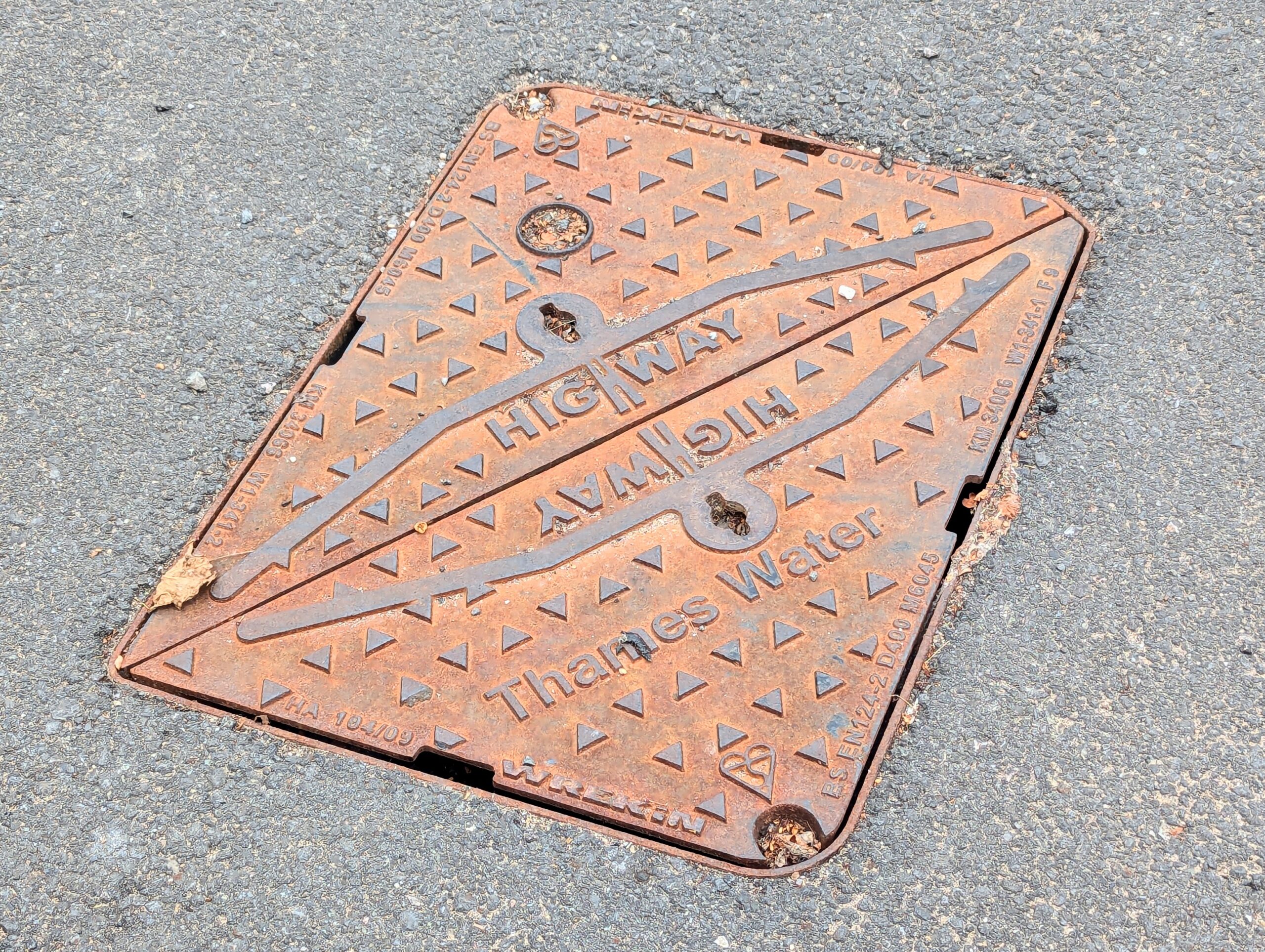
I look at the ordinary of life, solidly made cast iron drain pipes, a lawn roller left now to rust in all weathers, and the textured manhole covers in the hundreds I pass every day on my bike and wonder at one or two of the decorative designs––form follows function––the sculpted anti-slip surfaces give grip to the treads of car and bikes alike, trucks and other commercial vehicles but then footwear too.
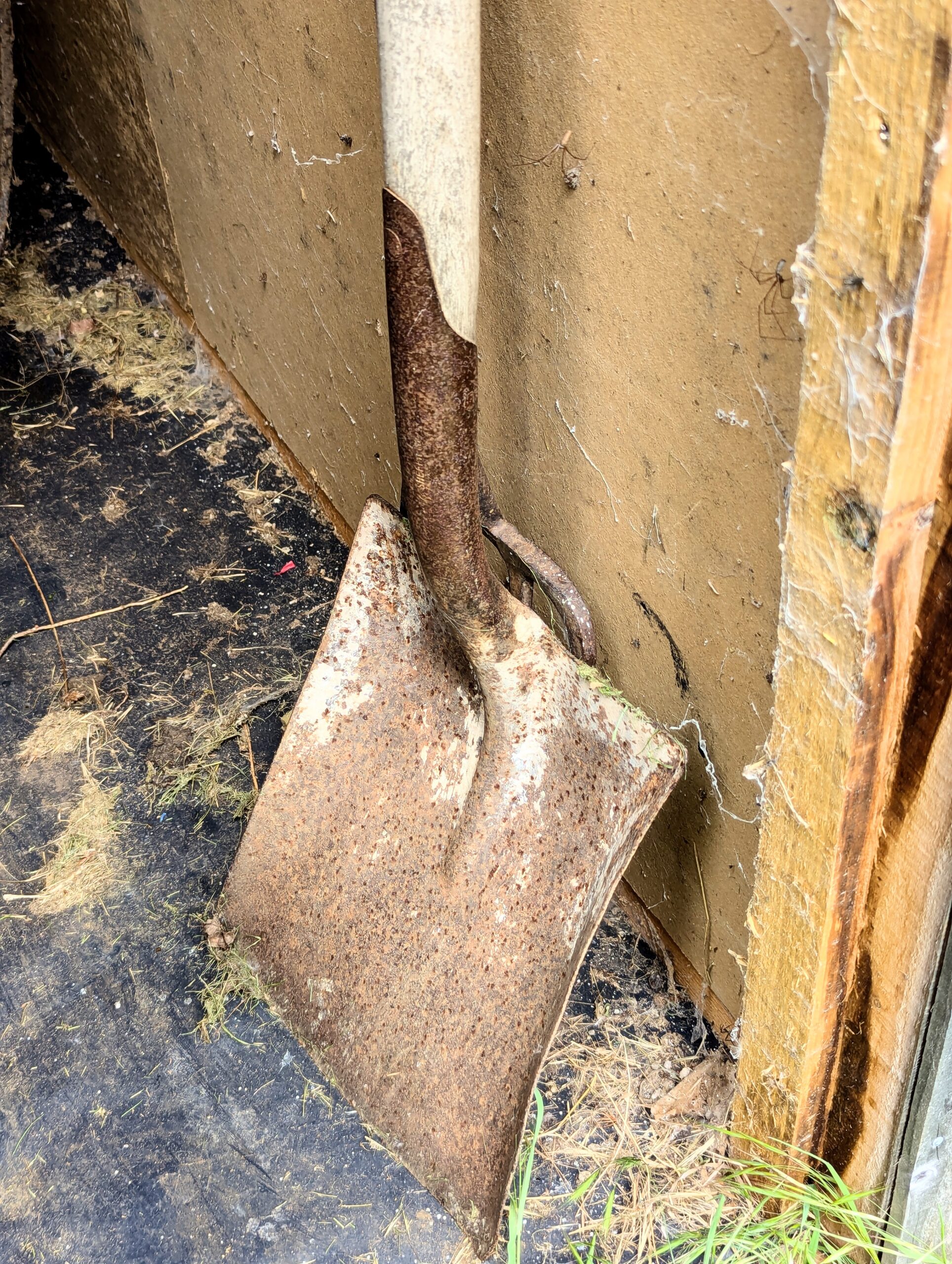
In times past, we would buy something forged by a smith in the local smithy, much before my time though one or two still existed in my youth, a hoe, a rake, knives and cookware. Those makers just made and sold, they didn't have internet promotion nor create the mere image of themselves for others to admire their flexing of muscle and sinew and how they thought they should look the part, rather than being and living it. There was something, well, just honest about that era of making. No split jeans torn for effect. At some point in our fashioning appearances, we adopted the fake without even realising it.
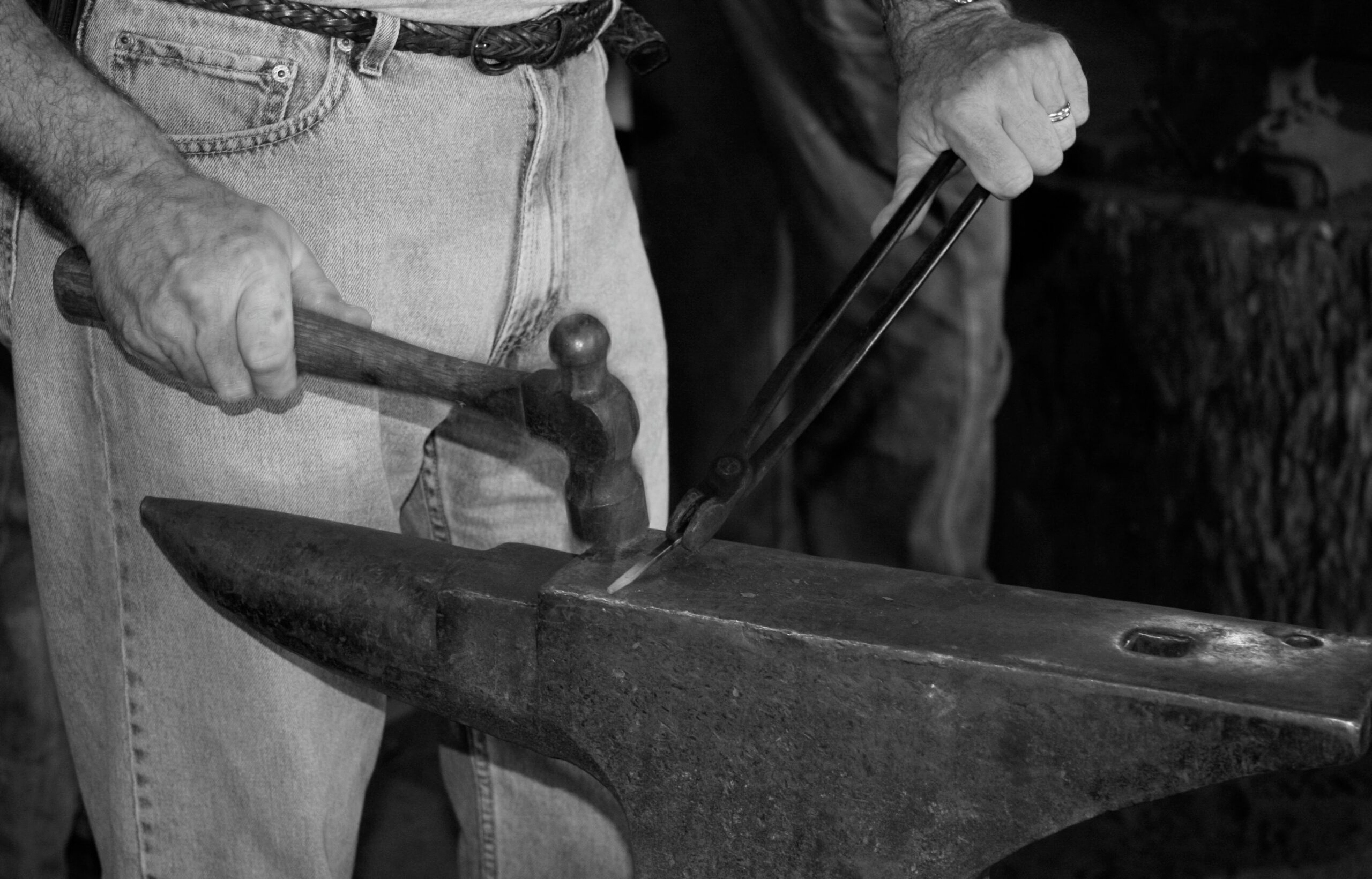
Time-lapsed videos show lapses in cognisance. They complete the illusion by speeds too fast in hyperactivity cognitive abilities, etc and so compound the illusion of super-efficiency, choreographied to bemuse and set the tone for fast-paced nothingness. We are given the very merest snapshot in parts of parts of part-bytes, and yet we are so captivated by the mesmerising of minimality and minimally skilled work by mechanised activity. On the other hand, the potter and the blacksmiths, past and some present, lived and live the real life in fashioning the unmade into the made by self-controlled hand pressure and consolidation to express themselves through the work they create with very little beyond their owned and possessed great skill.
The work of common makers through the decades has just about always gone unnoticed. I think that that is because any labour was paid for in a bought manner, so the owners of businesses employing the labourer, whether highly creative and skilled or not, owned what they produced. They were effectively told what to make, where to work, when to work and how to make whatever was needed. The labourers, be that furniture makers, engineers or whatever, were practically owned by the bosses and would therefore go unrecognised for anything they made individually or corporately.
Social reformer, Elizabeth Garnett, recognised the anonymity of all workers and then too those considered to be unskilled, such as field workers adopted as navvies in the excavation of canals and railroad passages. She especially recognised the work of common labourers and spoke highly of navvies building the canals and railroads of Britain, of which she wisely and reverently said: “Certainly, no men in all the world so improve their country as navvies do England. Their work will last for ages and, if the world remains so long, people will come hundreds of years hence to look at and to wonder at what they have done.”
Skilled work surrounds us in the everyday, no matter where we live. Having the eyes to see will enrich our lives with the textures and work and lives of the ancients.
Comments ()