
Coat Cabinet: Making Sliding Dovetails...
...demands a precision we might find intimidating. We shouldn't. Though it's hard to define what levels of accuracy we actually achieve in our hand work, we are always striving for a precision that's not dialled in or programmed through a computer, work that defines us as remarkable makers. Additionally, we actually (there's that word again) want challenges to our versatility through the developed skills hand work with hand tools alone demands.
With hand tools, our way of working with wood all the time, we don't so much dial in digits, slide fences and depth stops so that we can precisely guarantee, angles, distances and such that set the train lines of ultimate control. We want to own our own total self-control as much as possible. By this high self demand we govern everything from the sharpness of dozens of cutting edges to saws, chisels and planes and then our spokeshaves, knives and brains too. According to our laying down of knifewalls, we remove waste in chops and saw cuts, the shavings of continuous ribbons down to thousandths of an inch define our work as quality output and then too the paring cuts that set the parameters, such things like this are chosen––we volunteer into it with our whole body and mind. Machining wood is in no way the same high-demand energy, and it never will nor can it ever be. Machining wood works majorly to presets and lockdowns. Without this, the machining work would be ten times more dangerous than it already is. In this world, we must be all the more self protecting the whole time. This protocol separates us from the wood and the working of it. Every cut made is prefaced by tightening a threaded knob or an aluminium lever cam, the donning of eye, ear and mouth and nose protection. With hand tools, we have no such interference. Our control comes from synapses in split second-by-second neurotransmission as the brain engages muscle and sinew, a flex here, a pressure there. Everything we do relies on pressure points through a thumb, finger and palm. The grip brings emphasis to twist or turn this way are that, and by this, we disallow being taken over by legality and rigidity. The most important thing for us then is flex and flexibility. Our whole being knows and welcomes levels of intensity users of other methods shun. For in the moving of our body we gain the release of brain chemistry, knowing we are exercising both body and brain in diversely different ways. When it comes to sliding dovetails, we enter a new level of engagement that takes us beyond the common joints we generally rely on into a world that results in true mastery.
Exact sizing where the two opposing components fittingly match perfectly is just not it. The offering of the first part to the second must not fit straight off because the whole joint ultimately relies on a lock-tight fit resulting less from exactly matched sizing as in from exact angles, but more the consolidation of fibres and then the addition of fibre compression. It seems at first that this joint defies the precision of exact cutting to matched component sizes, but only in the making can you actually fully understand how it really works, I'm afraid. Within two walls and a recess bottom of the housing, we ultimately want to set up for the fibre compression we want to add resistance through a variety of lockabilities. We have the dovetail channel, the dovetailed wall sides, channel and corresponding piece, and then we have the surface fibres we cannot see along with the swelling of the whole by using water-based glue. How to get that level of precision is a trade secret about to be revealed throughout this project. In my most recent project on woodworking masterclasses and sellershome.com, our newest project is the coat cabinet. I brought together some sliding dovetails with different elements, both to challenge and teach how to get precision in the three joint types. I think it will encourage you to step out of your comfort zone for sure. Oh, and dump your power router and bits. My approach is likely to be much more engaging, quicker, better and more rewarding.
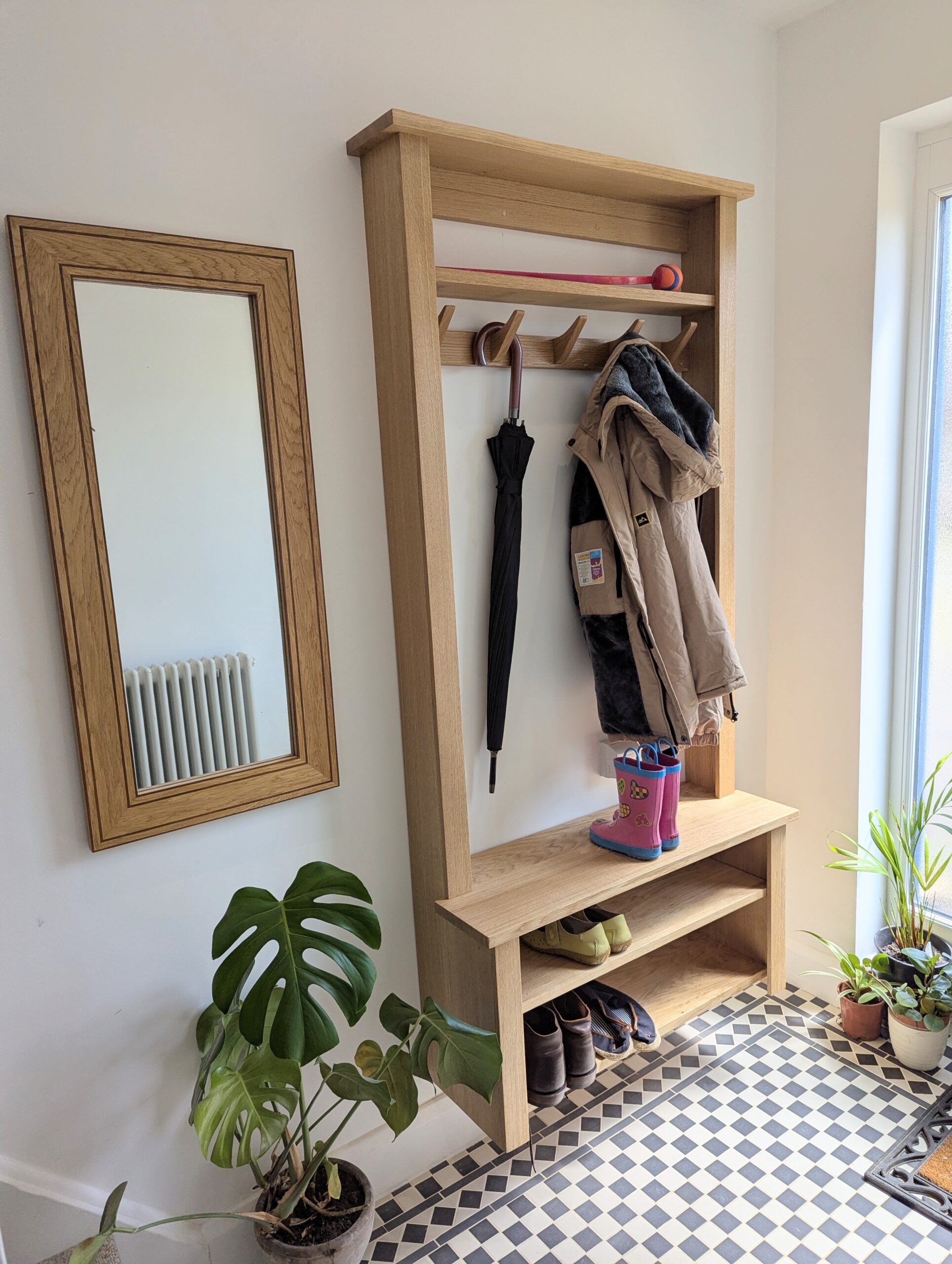
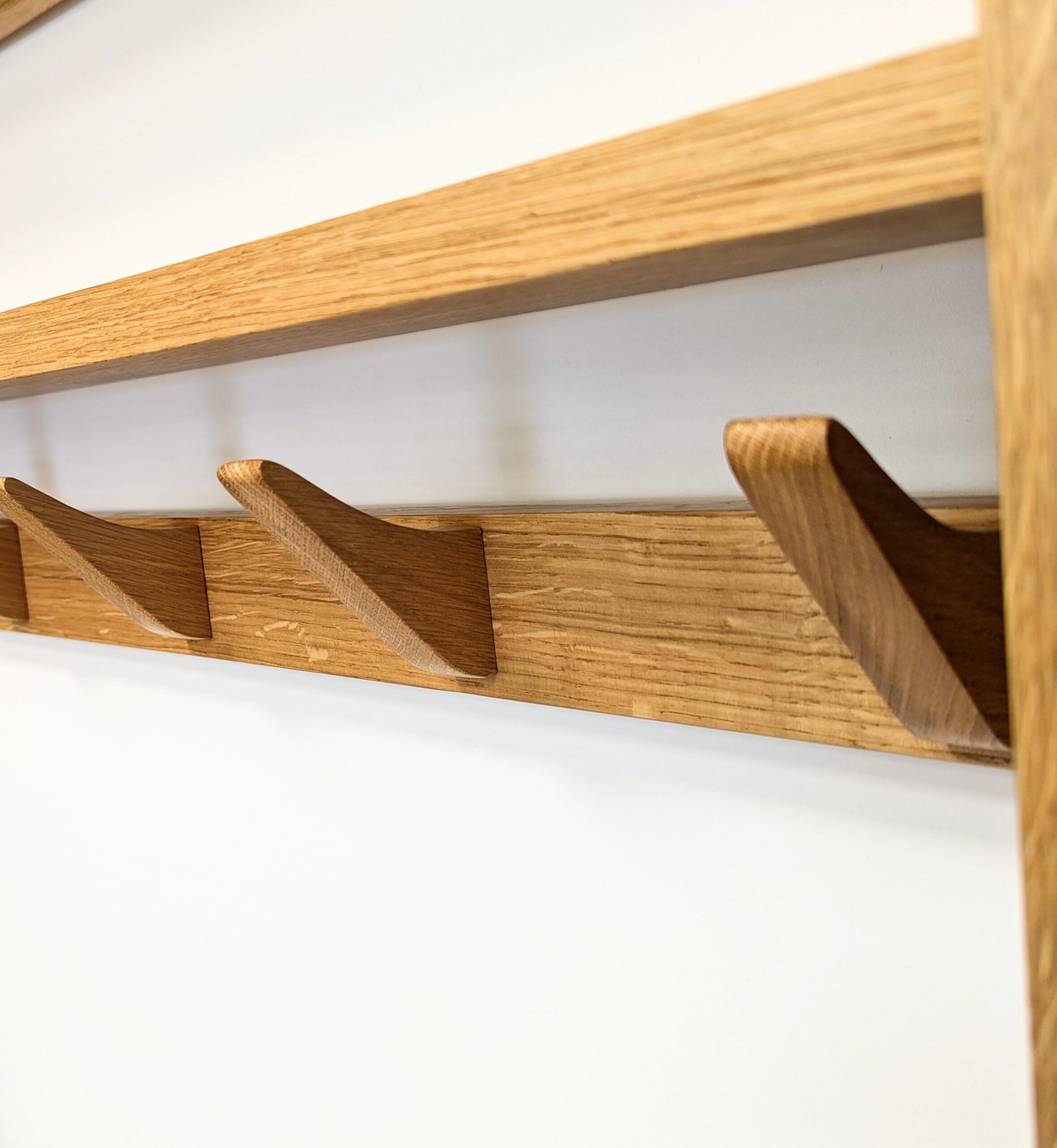
My working on sliding dovetails throughout my most recent project, the wall-hung coat cabinet for the hallway of the house, was to encourage others to discover high levels of mastery with the making of sliding dovetails. In the design, I wanted the overall appearance of a cloak cupboard as an enclosure, but not an actual cupboard with doors closing. That said, you could easily add some doors, deepen the depth and scale to your own home or preference if you want that. In this project, I am making six through-sliding dovetails and four single-sided stopped versions and then four double-sided stopped versions enclosed from four sides that fully hides the whole joint altogether. They all have a common theme, and so elements are transferrable from one type to another. There are also a couple of regular housing dado joints and a rail that's dovetailed either end to take sliding dovetailed coat pegs. The final unit will hang from a French cleat.
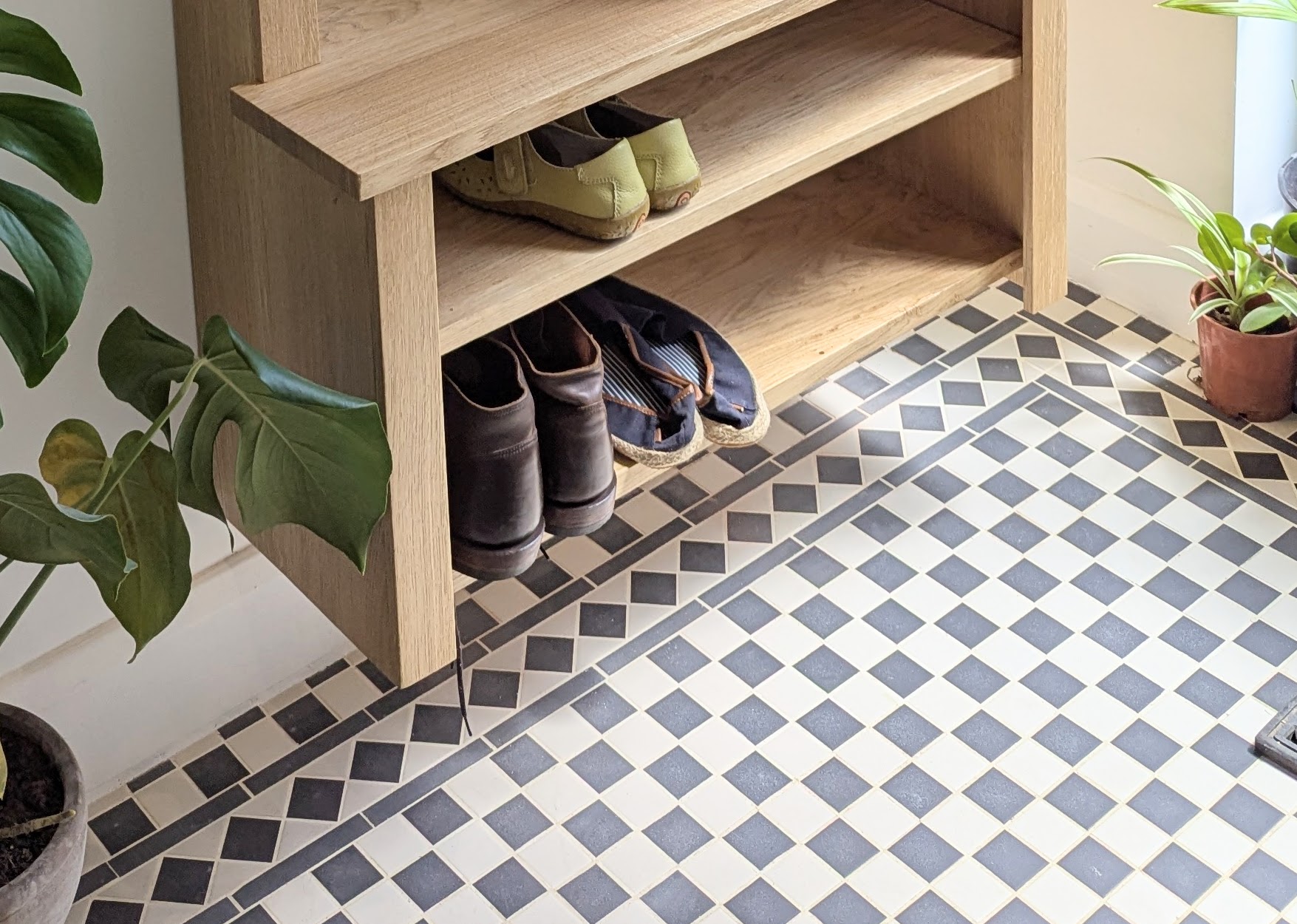
I wanted the unit to hang from the wall so that beneath the unit will be clearspace of the floor beneath by eight inches or so, and so, no plinth or kick/toe board. Part of that decision surrounds my not wanting to break into the lines of the geometric floor tiling I had done when we reworked the house interior and installed the checker-pattern tiles with its neat border.
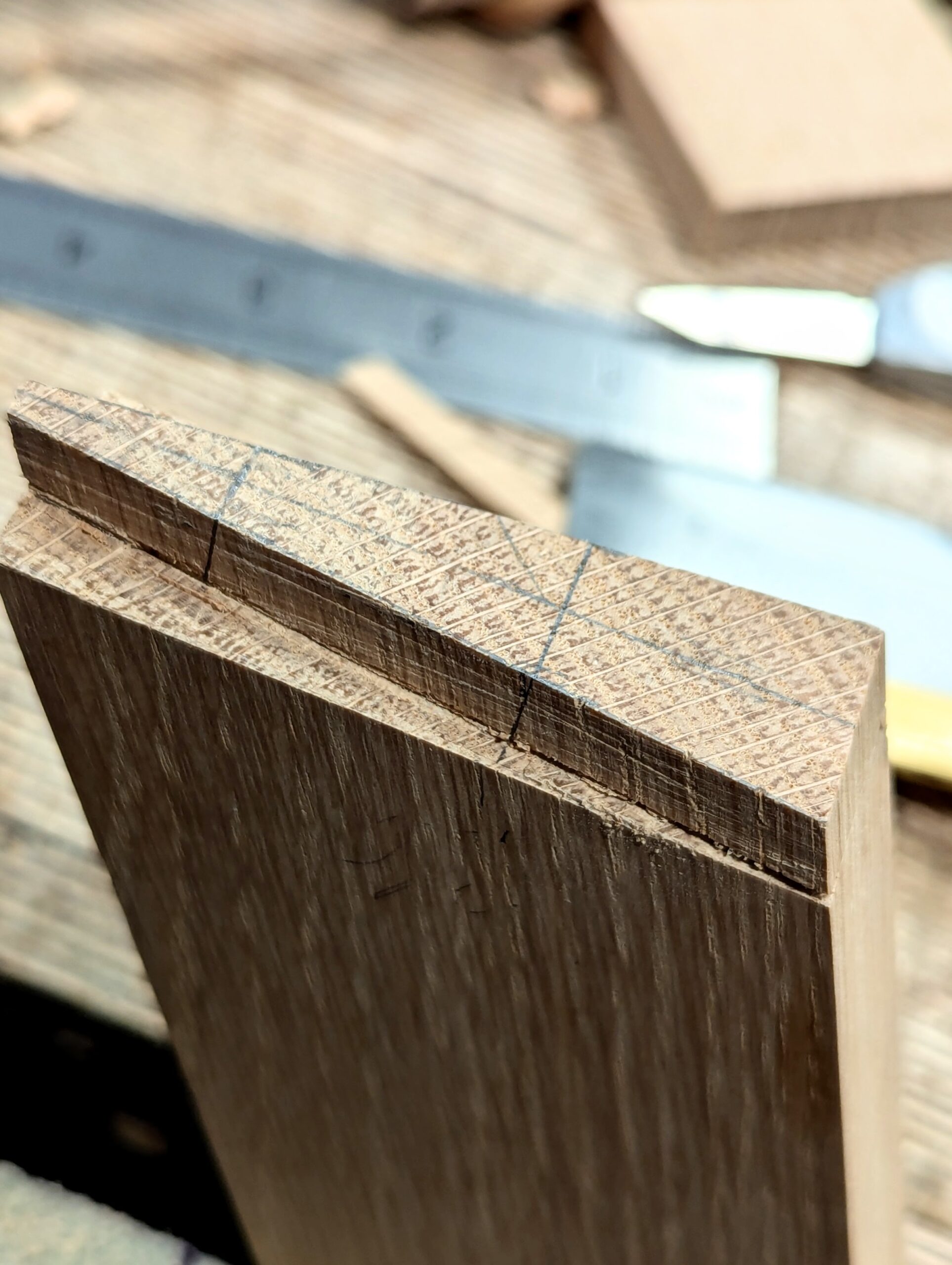
Sliding dovetails can seem laboursome, difficult and daunting to get them exactly right and tightly so, but as it can be with many joints in joinery, the insert part can be made slightly fat and trimmed to fit. I hasten to add here that my belief in general dovetailing, half-lap (or as some say, blind) and common or through dovetails, is that they come best straight from the saw and without excess to be trimmed with chisels after sawing if possible. 98% of my dovetails are made without excess, so straight from the saw. I'm not talking about a minor tweak here and there, I'm talking about intentional creeping up on the finish line. Sliding dovetails, because of the taper, the consolidation of fibres and compression gives this joint its unique characteristic. Don't be daunted. I can make one of these joints in about fifteen minutes.
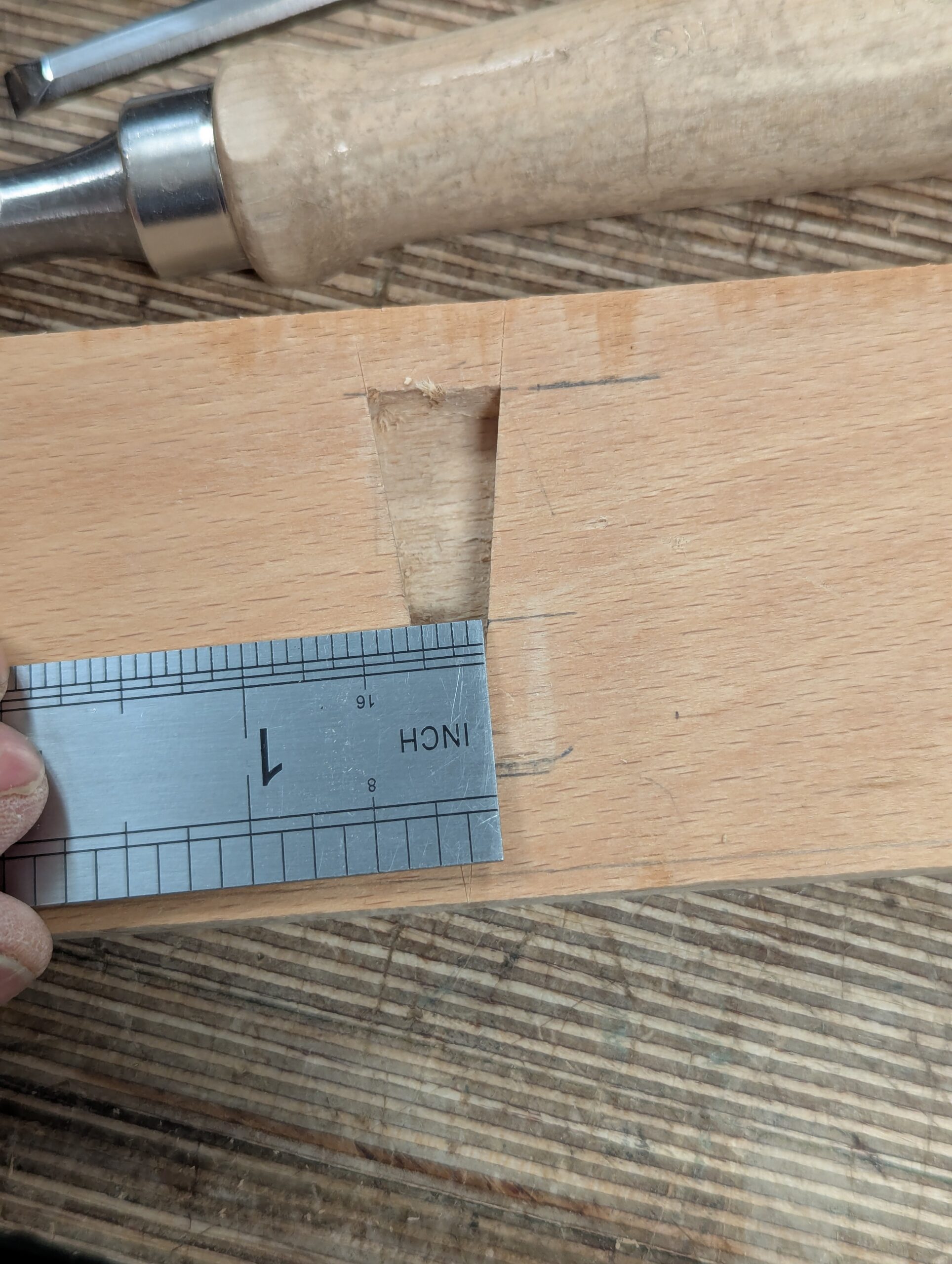
All of the sliding dovetails I have ever seen, and that is mostly those made by the ancients of the 1800s and early 1900s, have been sawn; that's sawn shoulders, sawn angles and sawn walls to the dado parts. I know too that the angles were more guestimates because there was too much discrepancy in the meeting dovetailed angles. Did that matter, not too much. They still felt secure and in line, and dismantling them can be a chore. Additionally, the sliding dovetails seemed always to be nailed at some point or points on the inside corners, through the dovetailed piece into the shoulders of the recess part, often from both underside and topside too. A sort of dovetailing with nails, belts and braces approach, guaranteeing long-term security. Well, back in the earlier days, before force drying, air dried wood was less determinate, less controllable, and there was no accurate way of measuring the levels of moisture retained in the core fibres of the wood. Whatever moisture was in the surrounding atmosphere was what level would be in the wood. Shrinkage could therefore loosen the long sliding dovetail.
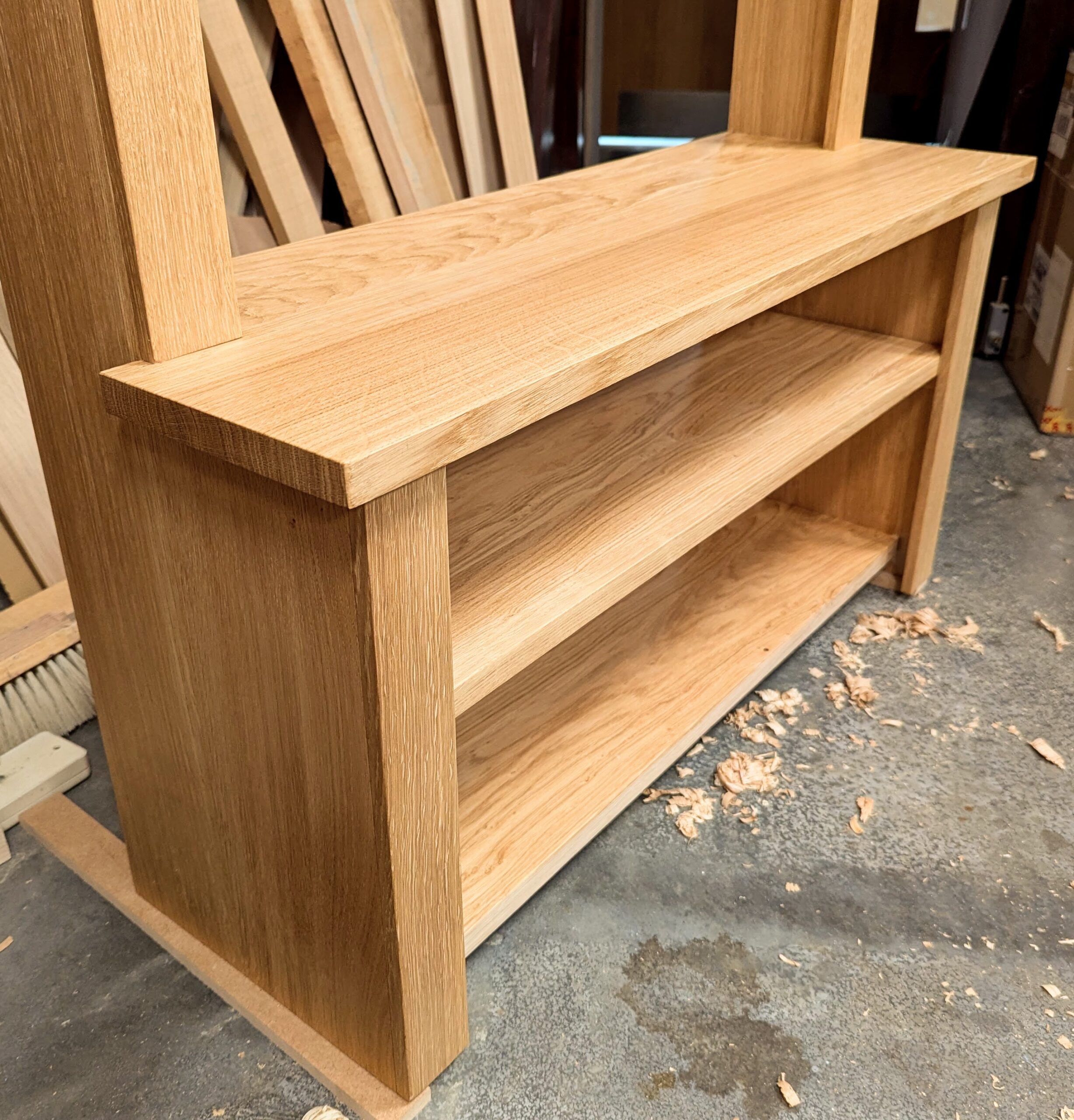
I have thee types of sliding dovetail in my Coat Cabinet. The first two types are single-sided and are the simpler ones to make whether you use my angle guide are freehand the cuts. The joint is really different than when making dovetail joints. We actually want the joints to tighten through compression through the final hammer taps. The reality is that the sliding dovetail remains loose until the last one or two taps settles them securely. Both the end grain of the recess walls and the long grain secured inside the recessed part consolidate from the compression. Once in place, hammer driven and with some significant force, the glue in the joint swells the fibres, they interlock inside the joint and nothing will separate them. We rely on the consolidation, the compression and the swelling to establish the integrity of what is a mechanical joint that knows no equal. No biscuit, dowel or domino comes close to this truly remarkable joint.
My opening paragraph was intended to provoke more thought into why hand tools will always give us more than machining wood, and I understand that that's mainly if we allow ourselves the learning curve to mastery in woodworking. The majority will choose the other way, the path well travelled. I'm looking deeper, I suppose, much deeper. I'm considering the primary brain chemicals associated with satisfaction and feelings of well-being, which are dopamine, serotonin and oxytocin. We rely on these neurotransmitters to perform their essential roles in our reward system, mood regulation, and even things like social bonding. Now that's not to say people don't get the benefit of these chemistries too, I just wonder if it is one and the same for both sectors, machinists and hand tool woodworkers? No matter.
Why does this work differently?
Dopamine:
Dopamine is released in response to pleasurable experiences and reinforces positive behaviours. Yes, in our early development we might not feel a drift from the line or a staggering plane swipe to be pleasurable, but with determination we can master the plane to a point where just about every cut does exactly what we want it to do. And it's at this point when the dopamine release boosts our morale and our brain's reward system kicks in to motivate us on to seek all the more insight and wisdom for our craft, which in turn gives us enthusiasm, confidence, and motivation.
Serotonin:
Serotonin is quite different, but high-demand hand tool woodworking works in our brains to influence our mood and behaviours and along with that, wait for it, learning. This in turn goes much deeper. Serotonin regulates our sleep, appetite and things like body temperature. Serotonin extends into deeper levels of fulfilment and even or especially happiness.
Oxytocin:
Without putting too much flakiness into this blog post, this hormone, oxytocin, provides the hormone we amateurs live and strive for in the reality of the word amateur––amateur = amore = love. The joinery of it, the word, gives us the root word in the Greek, which is 'harmos' from which we derive our word harmony. It's oxytocin that gives us the ability to socially bond and rely in a trusting way on one another, trust is intrinsic to all team work, and then too we rely on our ability to empathise too. Oxytocin's main role comes in relationships and social interactions, contributing to feelings of satisfaction, fulfilment and connection. Hence, when we work together on major projects, our interactions as a team are greatly enhanced to enable interdependency. In the past, this might have been how I felt in my youth working alongside George, who mentored me in craft for six or so years and continued in friendship beyond that. Thinking back to my designing and making the White House Cabinets for the Cabinet Room of the White House relied on our companionable team work. Yes, we had many long and arduous days to complete in time for our deadline, but we had many laughs and jokes along the way. Today, I love being with the creatives in our garage studio, for it's in this small space that we have made thousands of training videos to reach 1.9 million woodworkers around the world. The small cluster of us behind and in front of cameras get our daily dose of oxytocin because of our various creative gifts.
Comments ()