
Understanding the Chair
i say anyone can have the skills i have in just a few weeks of woodworking if they are serious about it.My recent blog post on chairs was my attempt to bridge a gap or two in the age-long passage of chair making. Just how did we end up with faults through mass-making the builds in a certain unintentional obsolescence by the original designer? Whether you buy a vintage Michael Thonet from the late 1800s or a new design from IKEA, it's never likely that the chair was a terrible design with built-in faults and flaws leading to a fast breakdown. Most likely it's often the effect of unseen workmanship that no amount of quality control can cover because the unseen practices of corner cutting at the quality control end of the conveyor belt don't show and are not evident in the first year under the one-year warranty offered as a general practice. Add to that the reality that most of us do not take products back after we've used them for a while, it's never a convenient thing and especially online, and we see how manufacturers can "get away with it." Most people do not take a product back, and especially is this so if they binned the receipt or lost the warranty months back. Furthermore, the cost factors into this too. If you paid a cut-price price for something, you tend to comfort yourself with, "Well, you get what you pay for."
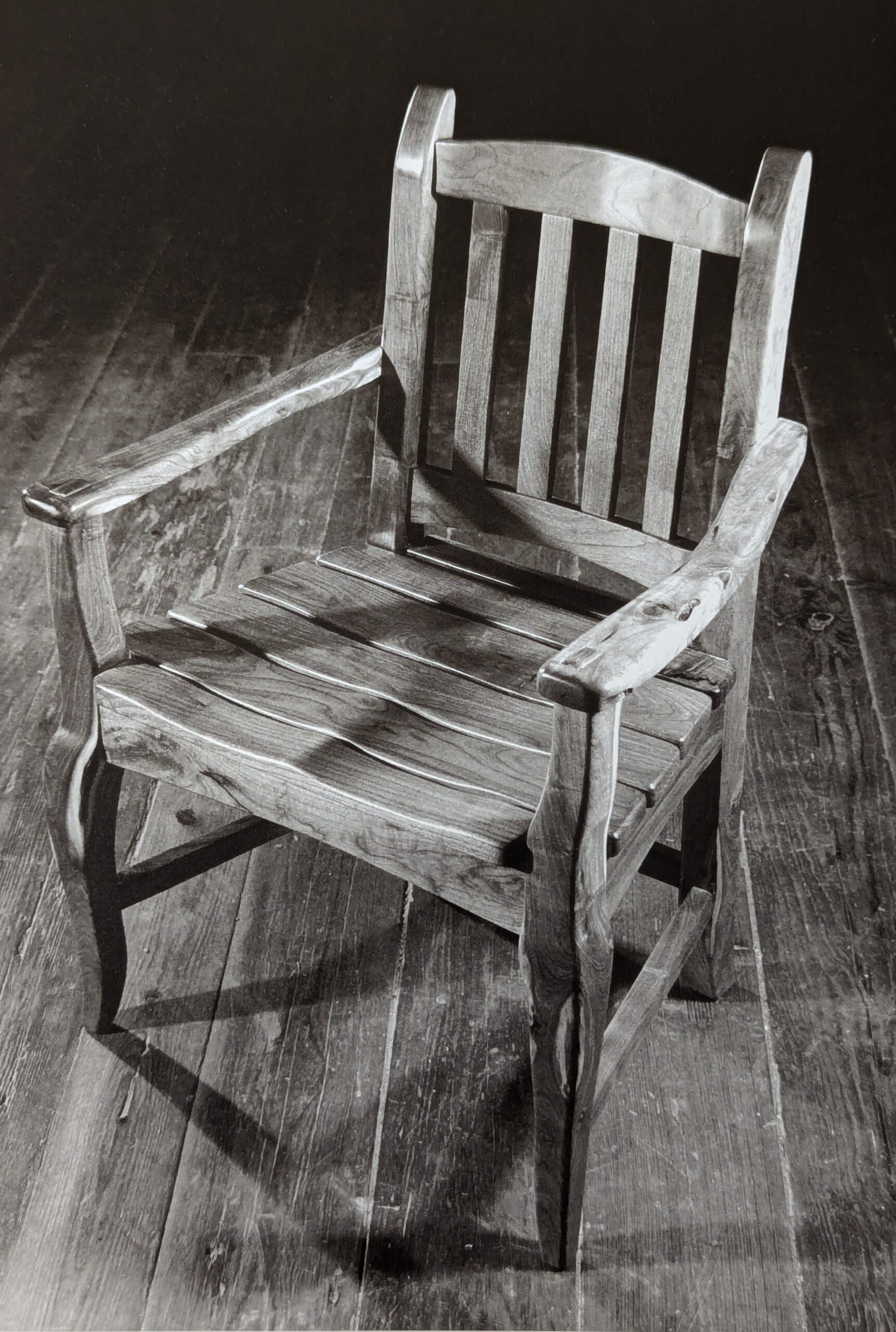
As makers, amateur or living wholly or partly from what we make, we need to look more deeply at what makes our chairs work. Café chairs are one thing, chairs for the home are another. Dining chairs are chairs that we not only dine from, but often work from too. Consider dining to be more working the chair. We move around on it, stand, sit, scoot, hook our legs around the legs, lean back, bend forward and even stand on it. I know that I spend more time working from a regular dining chair than I do dining from it––perhaps ten times more. After breakfast and dinner, I usually pull out my journal or my computer and work at the table for an hour.

Looking at the anatomy of a dining chair, for the main part, we joiners are not looking for Windsor-type chairs to make, though we might enjoy the idea of spending a few hours or days in a woodland hefting a chainsaw, a sledgehammer and a bag of iron wedges––searching out the ideal oak stem can take time and then dropping the straightest-stemmed version always results in twenty times more canopy wood on the ground that once formed the crown than the stem itself. All of this with the hope of making our classic chair from it suddenly becomes totally prohibitive.
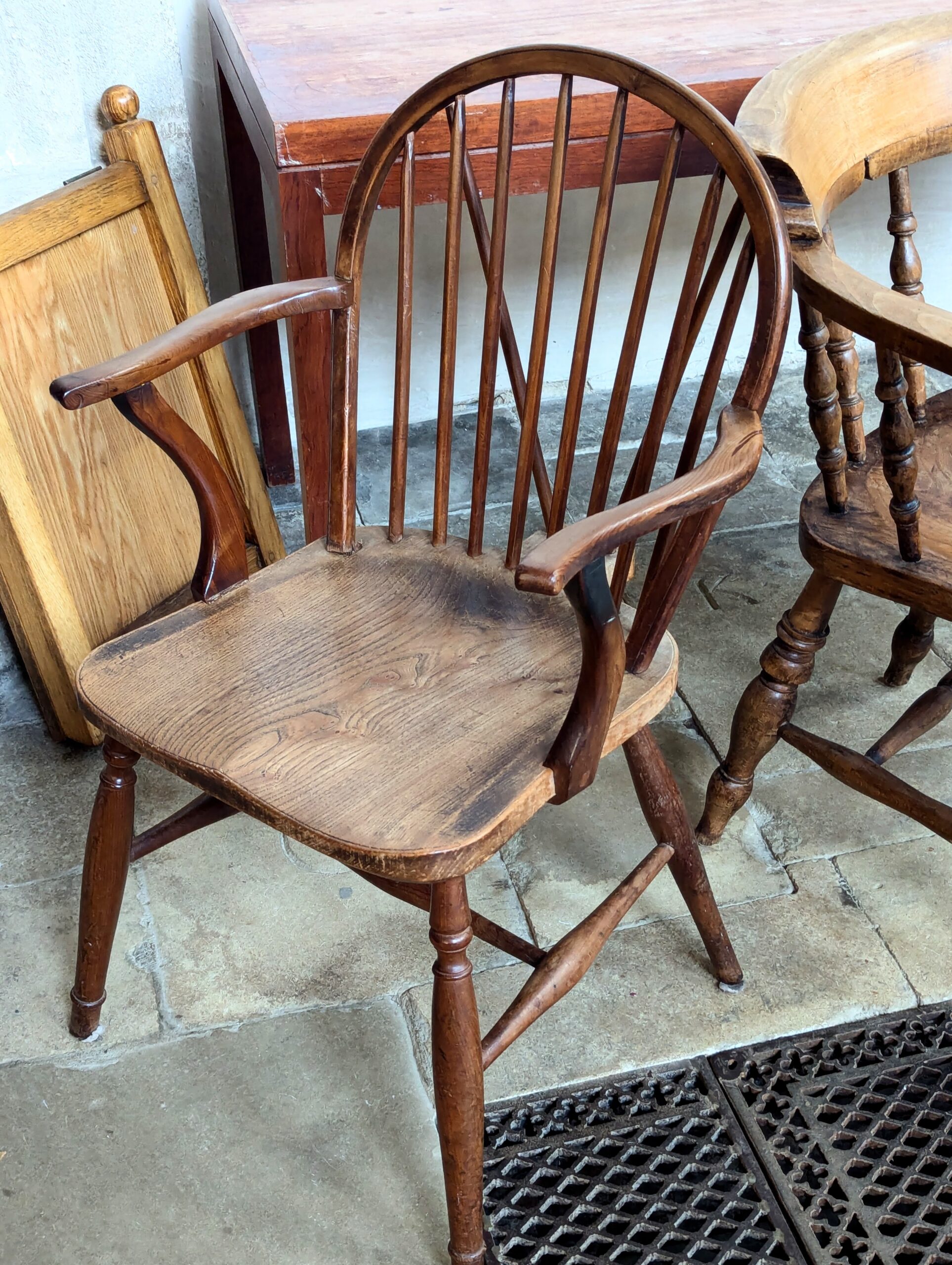
But something inside us can no doubt enjoy the sledge on the wedge approach to splitting the stem into eight, turning the legs on a lathe, be that electric, treadle or pole and splitting the staves for the back spindles, rails and bracing to say nothing of a possible yew crinoline stretchers coming off a draw knife and steam bending some components. I'm going to rule the Windsors and others of that type out. In reality, it's far too impractical for time-strapped woodworkers. It's not that they are not an interesting challenge, more that getting wood from tree to chair for time-strapped woodworkers becomes highly prohibitive, and all the more if you want a dining set. I'm more interested in encouraging joinery and joinered chairs. It makes the craft of chair-making approachable using just about any readily available wood.
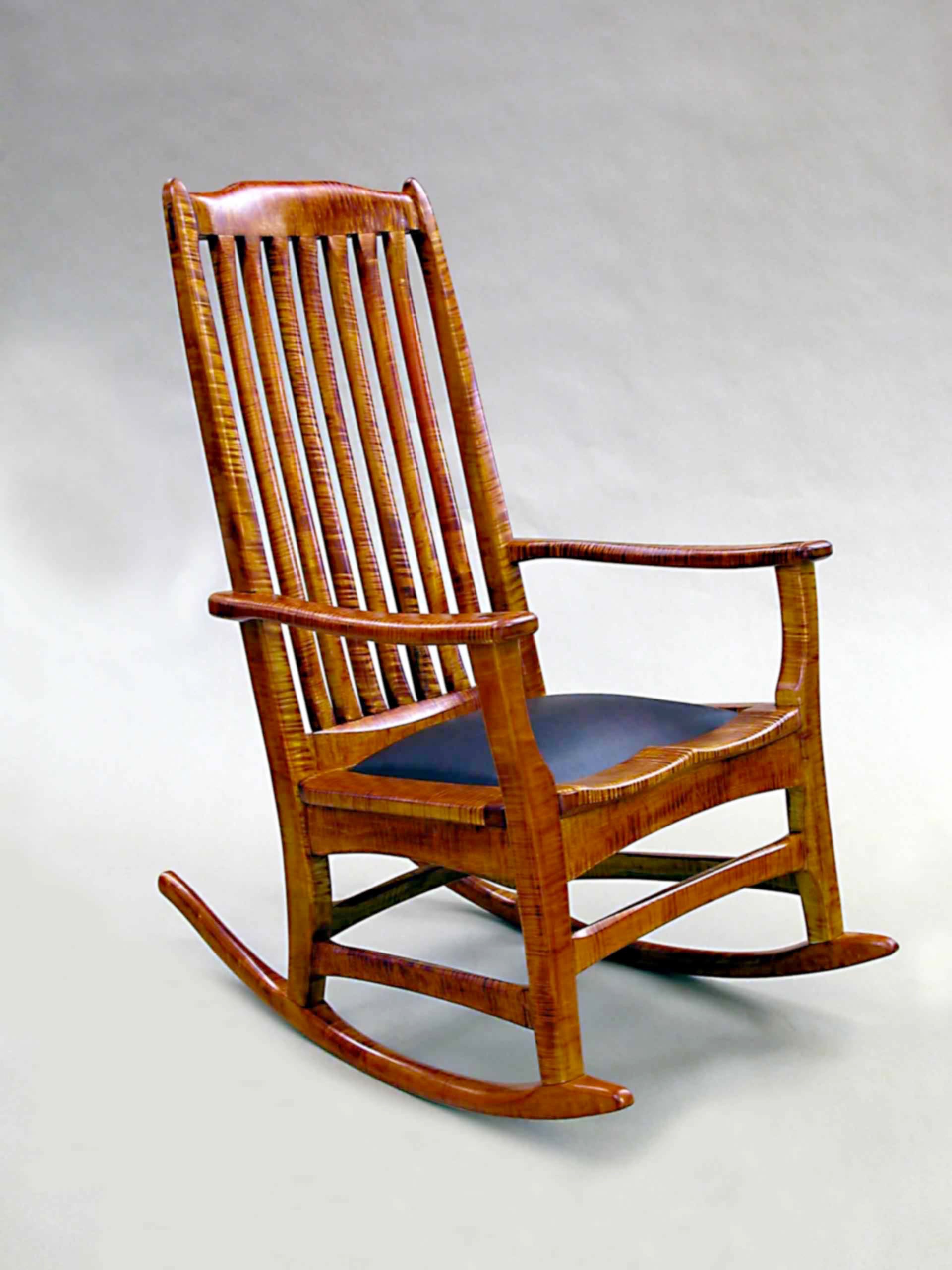
In this, I will also remove any need of a lathe using and relying on turned components. A large percentage of lathe work is practical and fast, as well as being decorative. I look once more for simplicity without the expense of a lathe and turning tools, plus the space these occupy in an average garage space. Anyone wanting decorative features simply needs to factor in the addition of turnery.
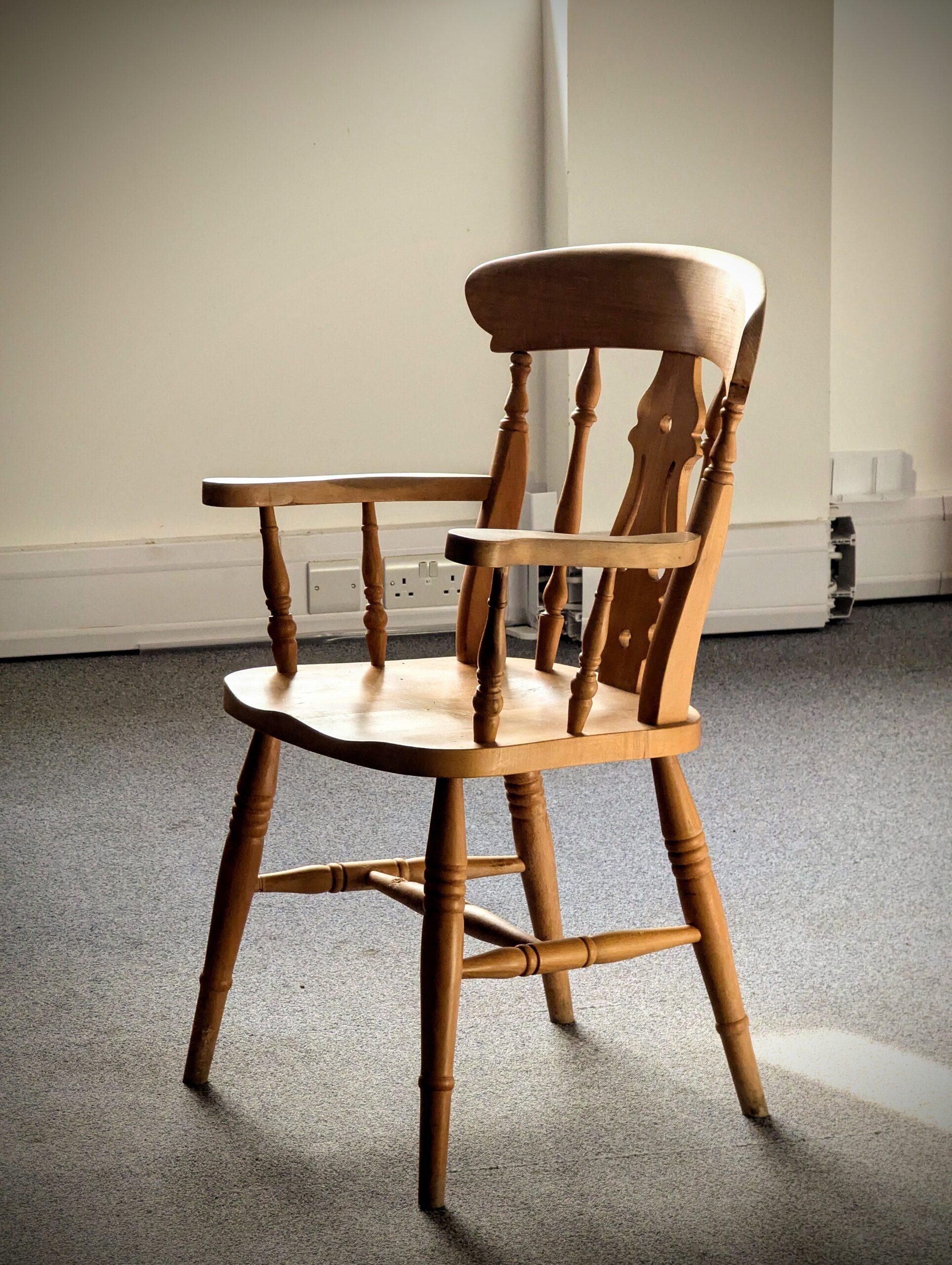
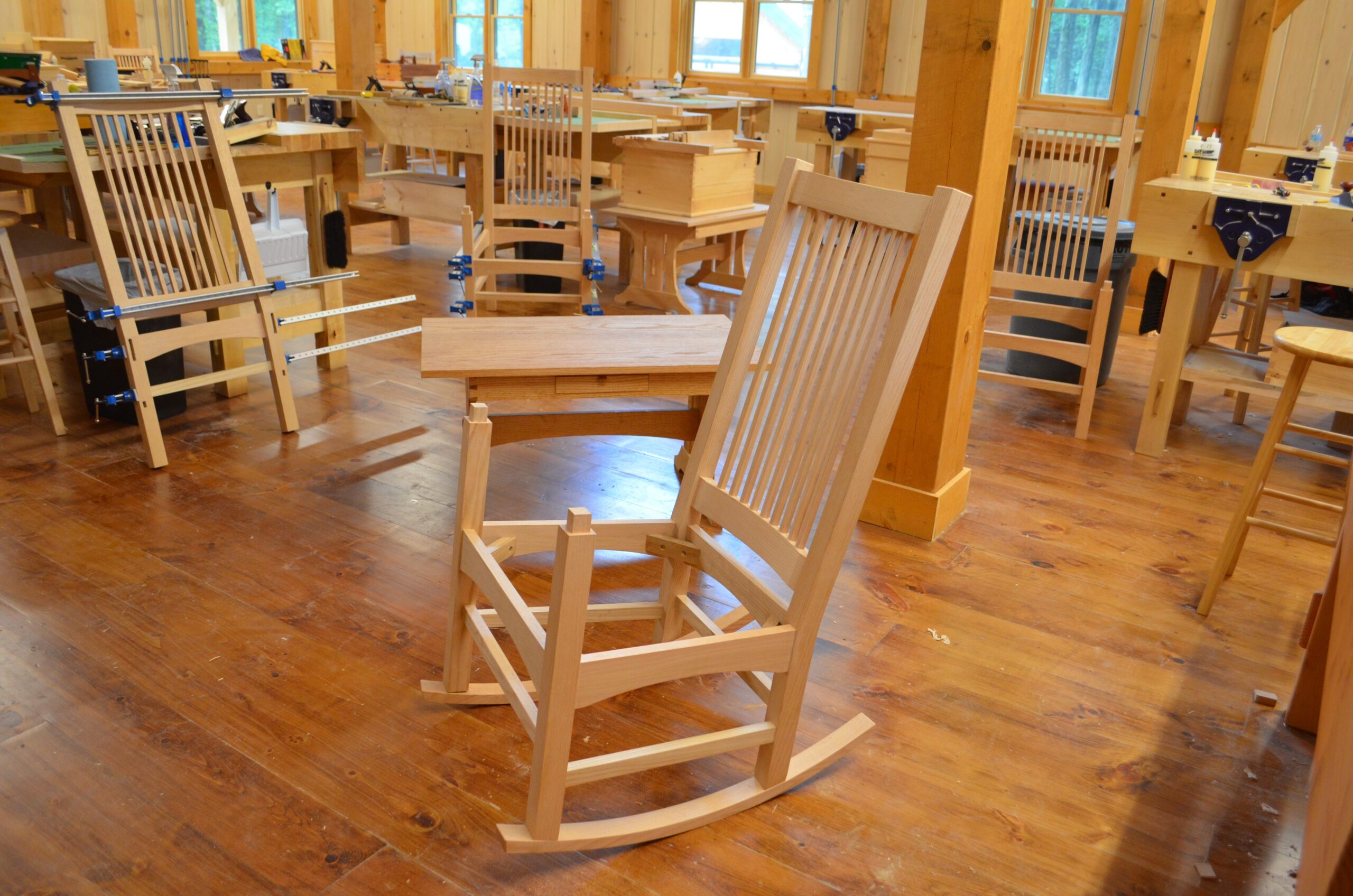
The anatomy of any chair can be divided into one of a couple of types. It's worth looking closely and considering any dining chair and deciding for yourself which category best suits one over another. Some chairs rely on fully jointed angular sections, forming a box-kite-like construction with four corner posts and cross rails connecting the legs at various points by being symmetrically placed. These chairs can have round rails that fit into bored holes, but don't have proper jointed joinery. With this chair, the legs and rails fit into one another as basic dowels, bored holes receive them and there are no shoulders to the rails. This type of chair requires only modest amounts of skill, mostly surrounding getting the angle right. Using a brace and bit, a drill driver or a drill press, they are quick and simple to make. It makes a lightweight and sturdy chair. Instead of relying on shoulders up against legs, it relies on tight-fitting dowelled ends that fit into the deeper holes to resist tensions.
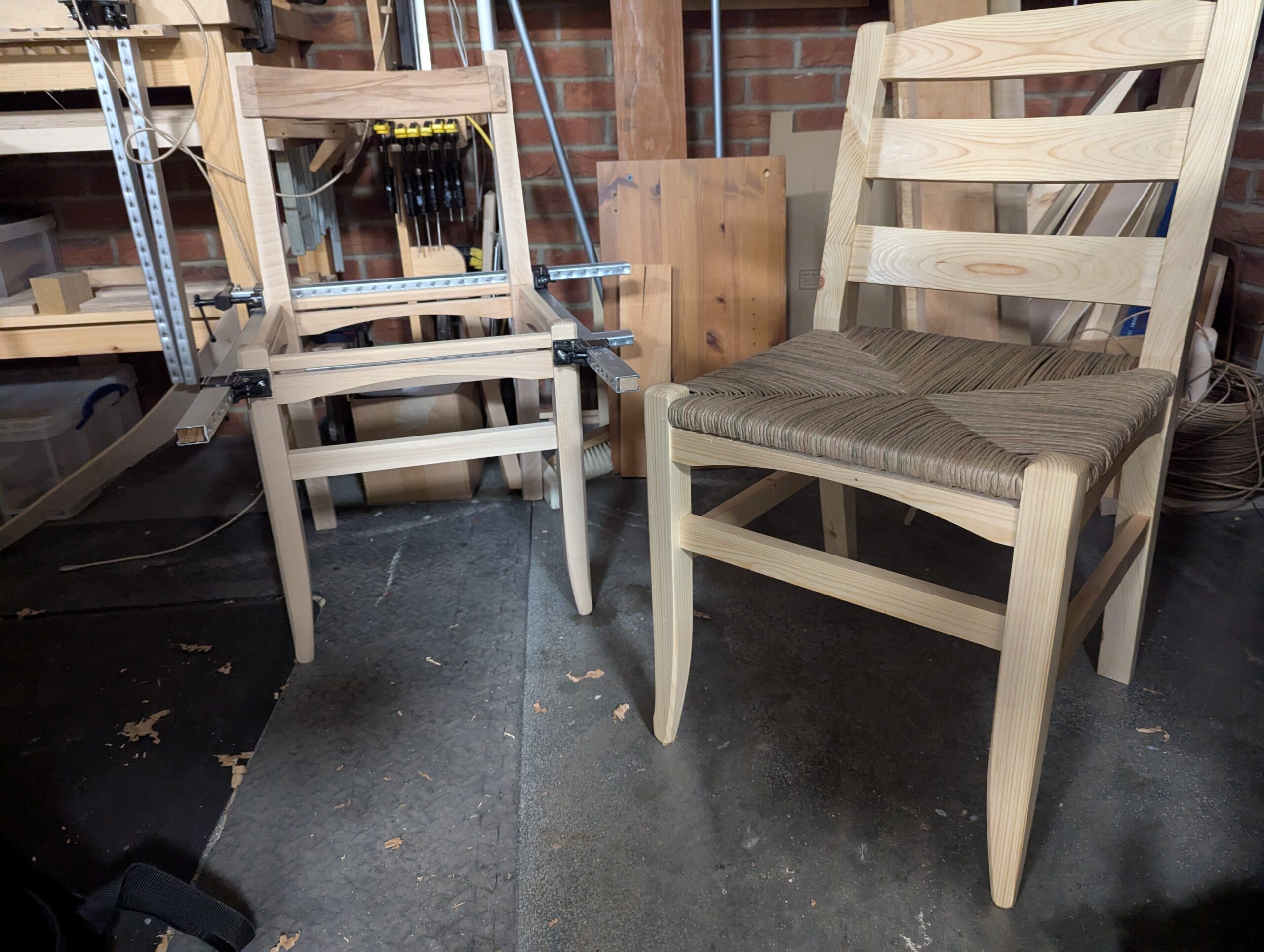
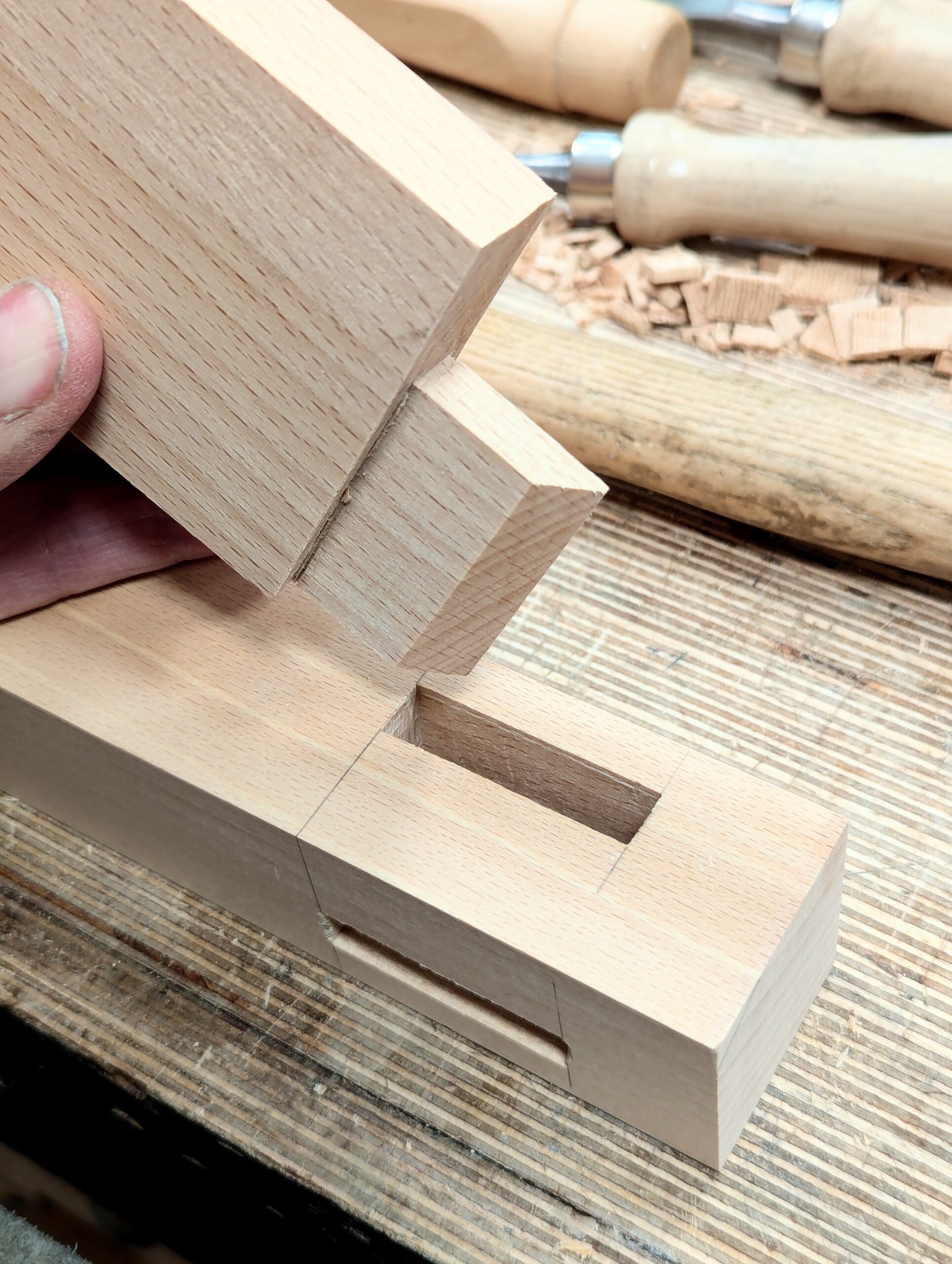
Then there is the box-kite-like construction made from all rectangularly symmetrical components formed with mortise and tenon joinery, shouldered tenons into rectangular mortises.
Of course, aside from the now more ancient and classic design of Thonet's café chair, many café chairs have emerged as a style designed according to their particular café brand for them. This Starbucks' chair is well-made from solid beech and I have noticed many others combining plastic 'half-bucket' shapes atop crossing rails like a perch into scallops.
And of Michael Thonet and His Designs
Michael Thonet gave us the bentwood chair. The design knows no equal in some ways, not the least of which is that it was the first lightweight, flat-pack furniture that would stand the rigours of time under any stress and strain you cared to throw at it. It's not like any other chair in that there is no central hub but a series of bentwood curves that interplay with one another in various sweeps that give the chair its stability, strength and most importantly, its light weight. There is absolutely no wooden joinery, no dowelling, and I suspect it has been the most adopted chair ever made with a history that now spans 165 years. There are many other designers and makers that influenced the wide expanse offered as antiques or replications today. The subject is too big but can still be narrowed to what I am saying here. So many family makers of the past produced chairs prolifically and into the hundreds of thousands from raw woodland supplies of wood and still-growing trees. We are more likely to be sitting on an Asian chair today, when we visit friends or a café or restaurant. But it doesn't stop us from seeing the differences in chairs when we come across them.
This chair type reduces the reliance on anything but the very simplest of joinery and wood use. Four tapered legs, two cross-rails, six simple and basic joints give the chair its undergirding and the rest is just moulded plastic hot off the press with some added cushioning.
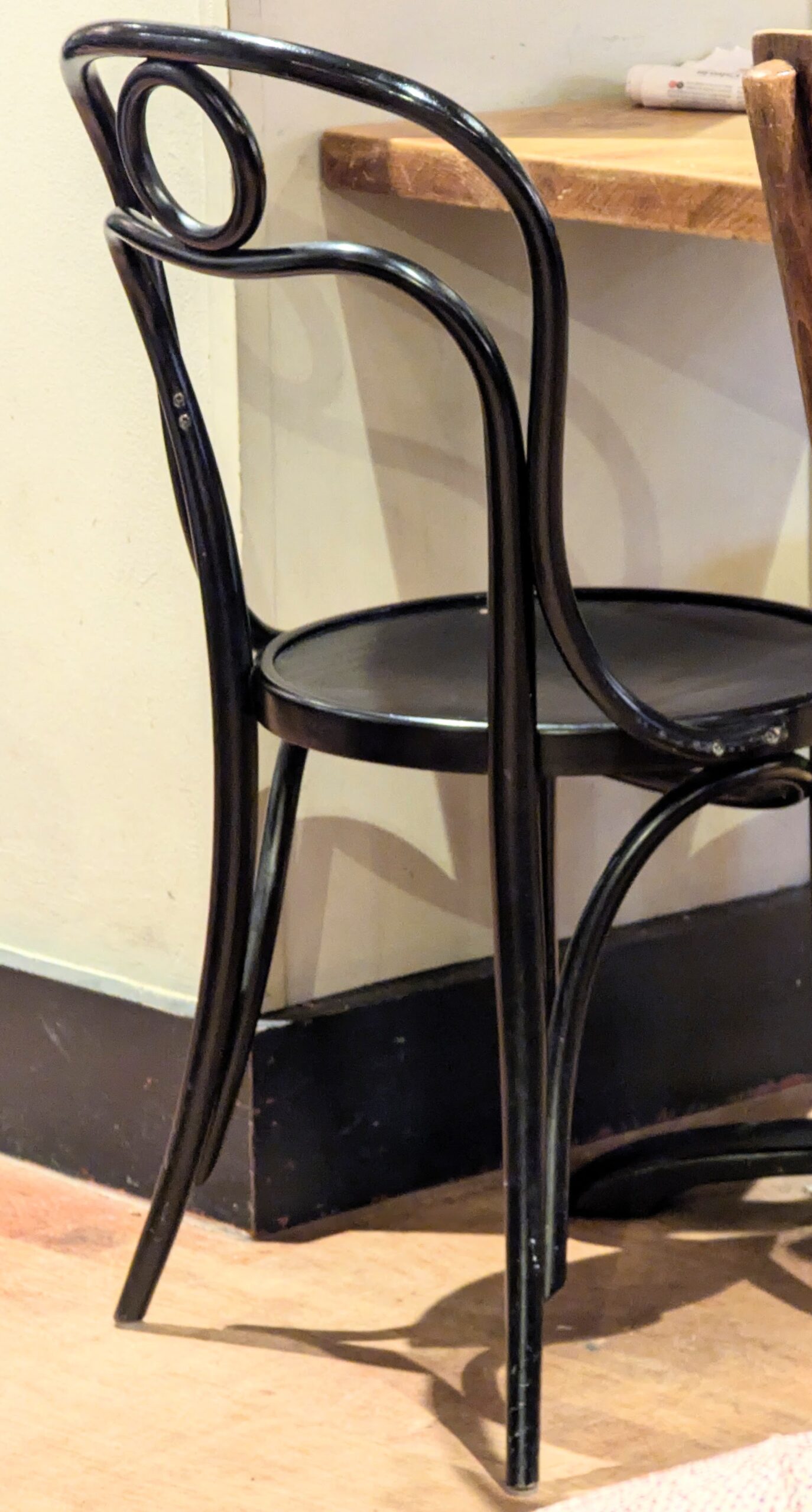
The Thonet is so unique and remarkable a chair, I would say it knows no equal. The whole of it is jointless, and, dare I say, skilless? How about that? Can a jointless chair with no real joints last for decades? Well, it has and it still does. I love this chair for obvious reasons, and so have millions of owners through the last 165 years of production and steady, steady use. There is nothing disparaging about me using the term 'skilless', in this case, though it can come across that way. The skill was in the mind of the original designer, refusing to jump through hoops by creating hoops for the design. The unique bends, the industrial steaming of wood and bending equipment gave a uniqueness to his vision that brought to the world a hitherto unseen and unknown mass-production product design. The balloon back supports on some of his chairs took six bends in a series of sequential bends before tying off to dry. But the chairs rely on bolts and screws, something often eschewed by purists but not me. These fastenings have their place, whether for dismantleability or temporary clamping until the glue goes off. I'm not a traditionalist by any stretch of the imagination, I just don't fix what ain't broke and in my view there isn't a biscuit, a domino or a dowel that favourable displaces a mortise and tenon or a dovetail or anything else for that matter. If I get to 80 (five years away) and never use any one of them to replace a tenon or any other true joint, I will still be very contented but without being self-righteous.
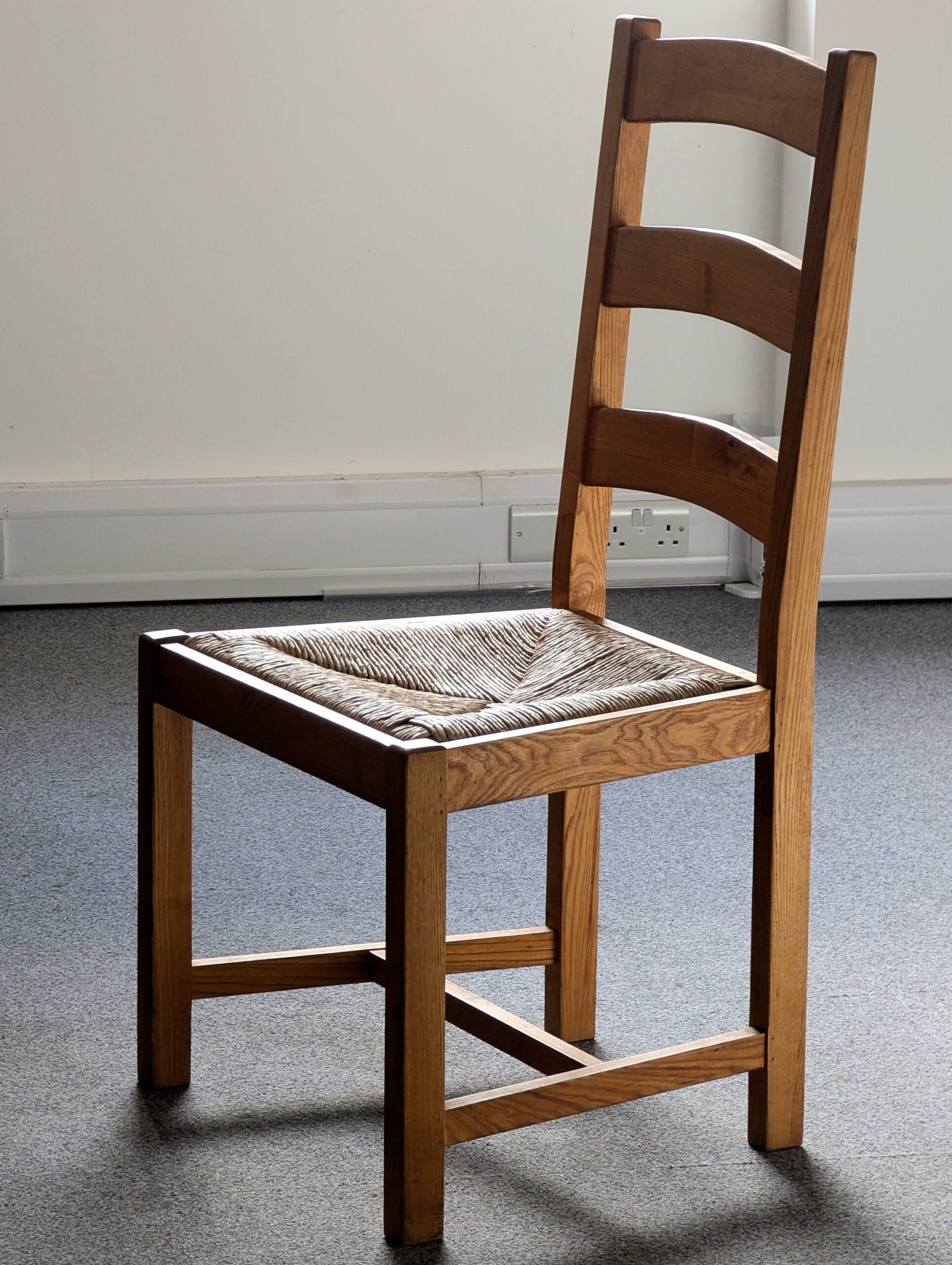
We should recognise every chair design is worthy of its place in our making world.
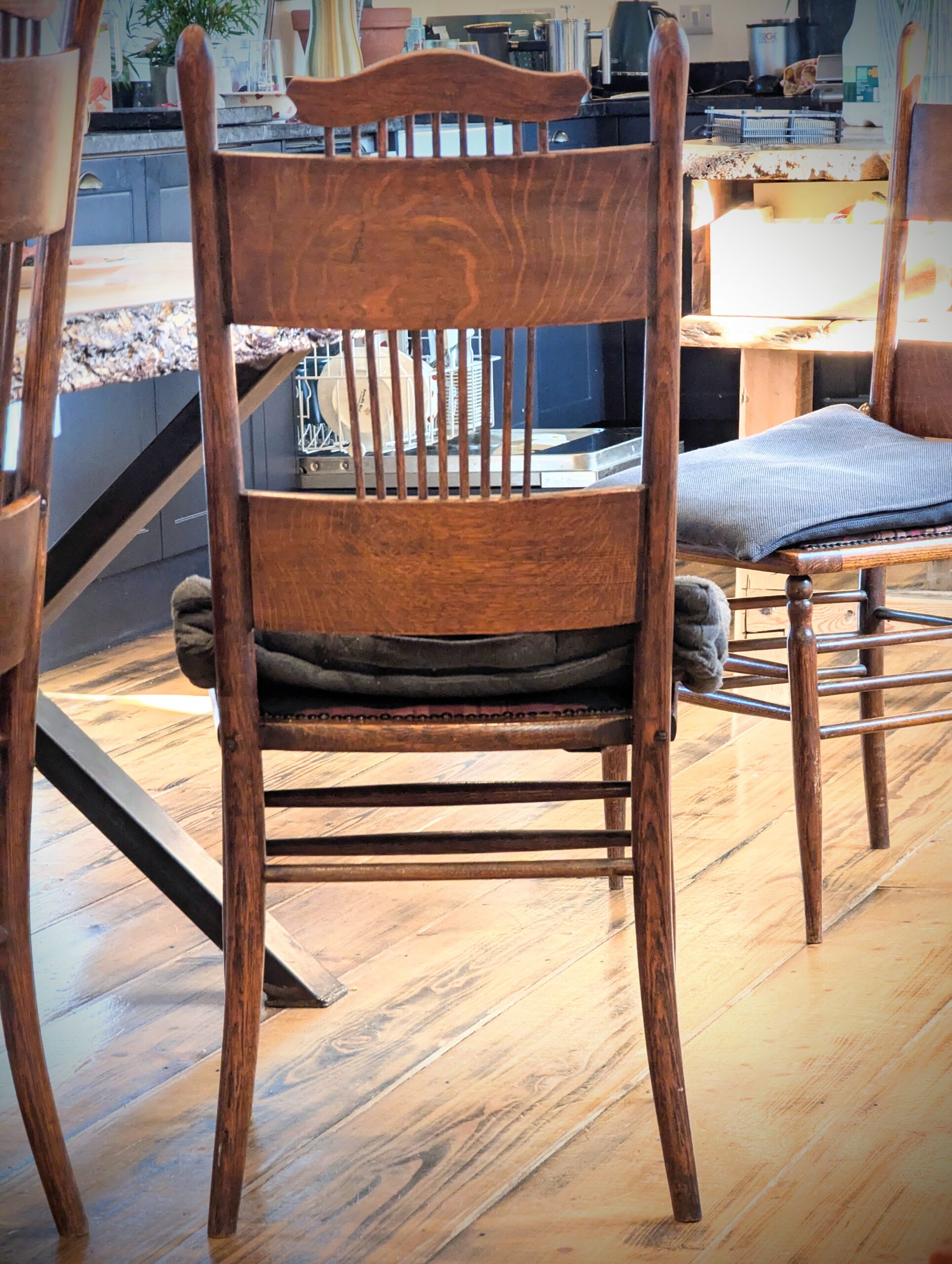
Individual makers made elegant chairs week in, week out for half a century and more. Wide backs bent for comfort and cradling and then too the legs that kicked back and out sideways to counter tipping, toppling and such. On the chairs above, the main chair frame is no more than a mass of bored holes and two recessed back splats. The seat frame is a mortise and tenoned frame that receives the ends of the legs. The back legs simply screw into the seat frame with no joinery as such.
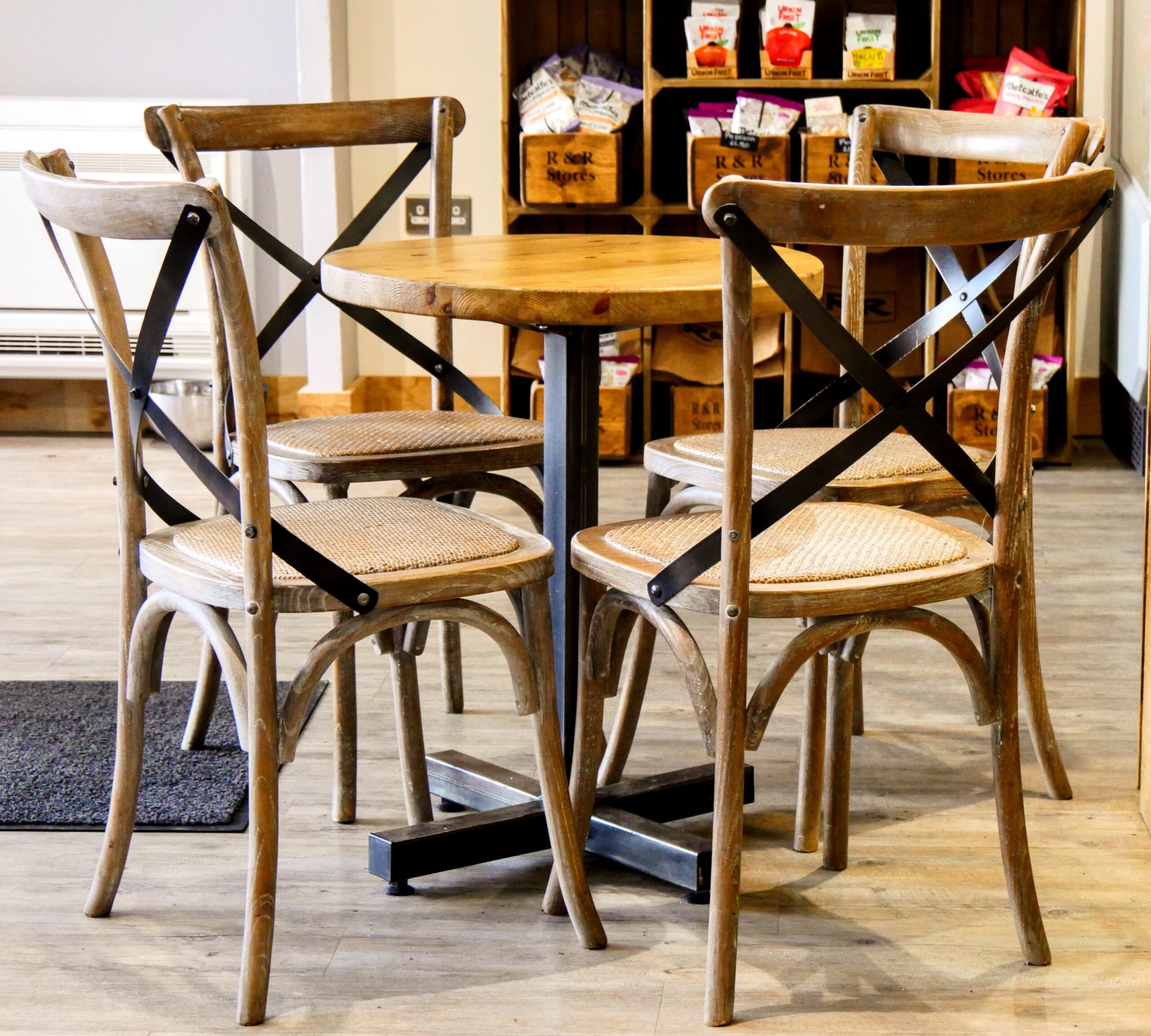
These knock-off Thonet-style chairs are minimalist but still robust in café use. They are in their ninth year of daily use. The bent hoop iron was a clever enough touch, reducing the need for infill bent pieces, yet giving a solid feel when seated.
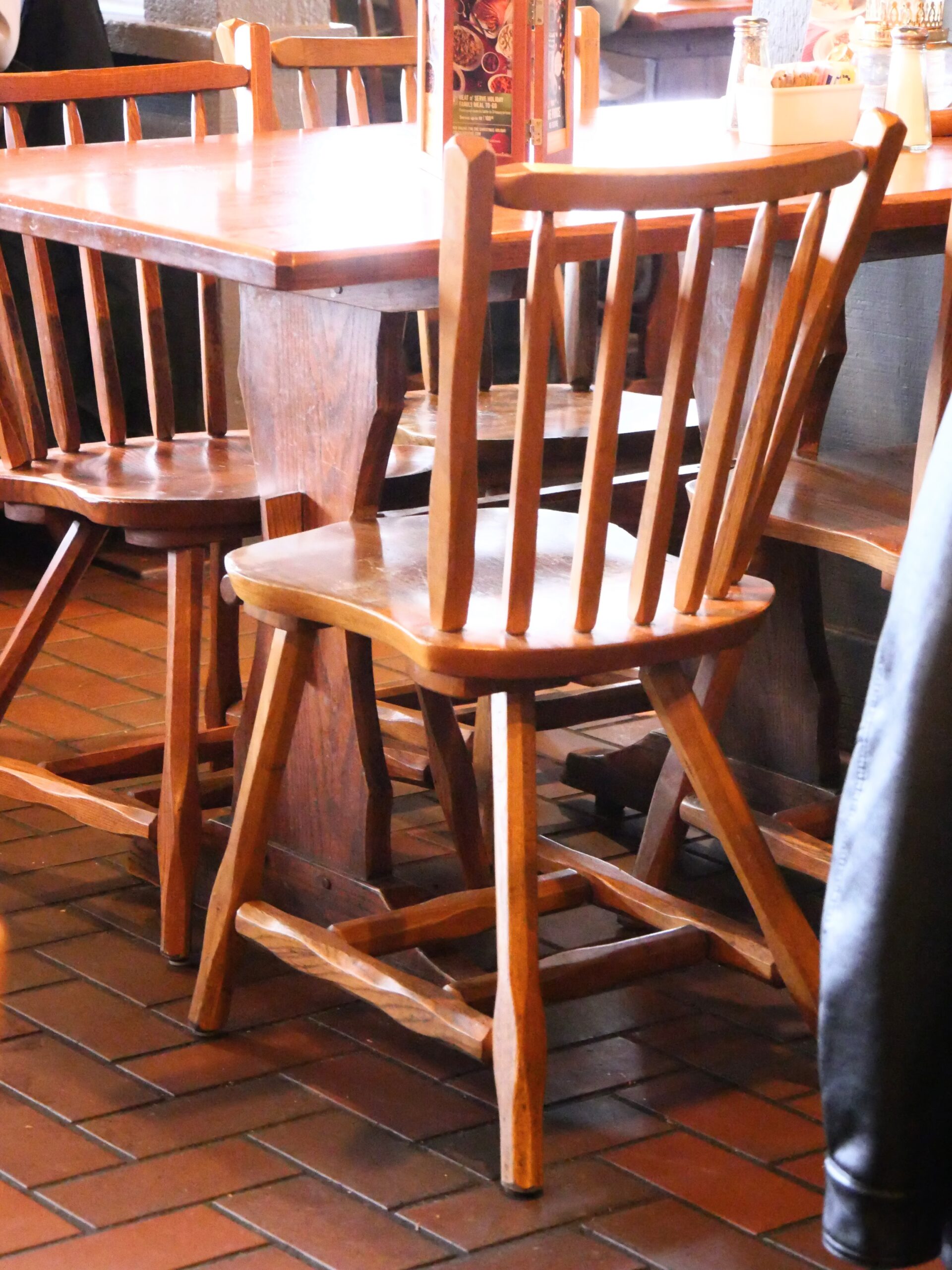
Anyone in the USA familiar with the Cracker Barrel Restaurant chair will know this one. The main focus in construction is the jigging for boring multiple holes, either at the same time or in quick succession. This chair is the classic 'seat-hub' style I speak of, except that the lower frame concludes in cross members that undergird the seat instead of going into bored holes in the corners of the seat.
Comments ()