
The Remarkable Challenge of Wood
There are challenges we can do nothing about, and then there are the challenges we face in the work we do and might choose to present to ourselves on purpose. That curved balustrade that sweeps gracefully between floors up and along many metres, following the sweep of the stairway to the stars, can be complicated, but the art in composure delivers peace and loveliness. Then there's that multi-hipped roof with Chinese windows at awkward angles. This is who we are.

I can heat-bend wood, bend it to an identical shape formed in two identical cauls curved to within the smallest fraction of a millimetre, use wood taken from a side-by-side position from the same plank of wood, steam heat it for precisely the same amount of time in the same pan on the same heat source, bend and hold it in the cauls for the same amount of time too and when I release the two, they recover a percentage of their shape but very, very differently: and then too, they might just decide to break altogether.
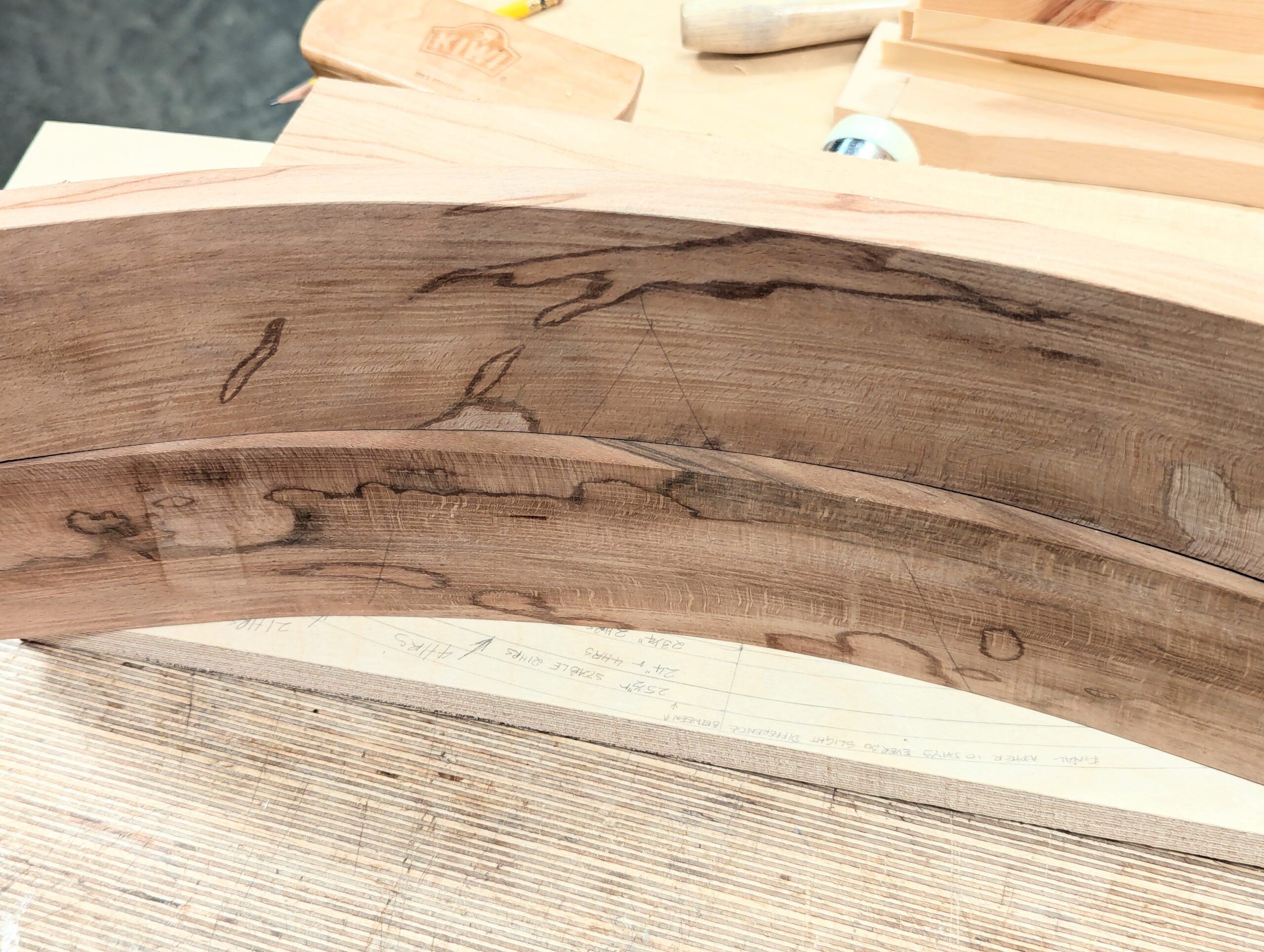
As it is with all things life, we mostly think we did everything right. It often takes courage to face the reality that we didn't. Unfortunately, others, whether trying to be helpful or critical, dive in uninvited with questions, opinions and advice thinking they can help or then possibly to show their superior knowledge. The reality is, most offerings are nothing more than mere opinions. As it was with my wood, all things respond differently. Not everything in wood is predictable, especially after it has been dried and seasoned, whether air-dried or force-dried.
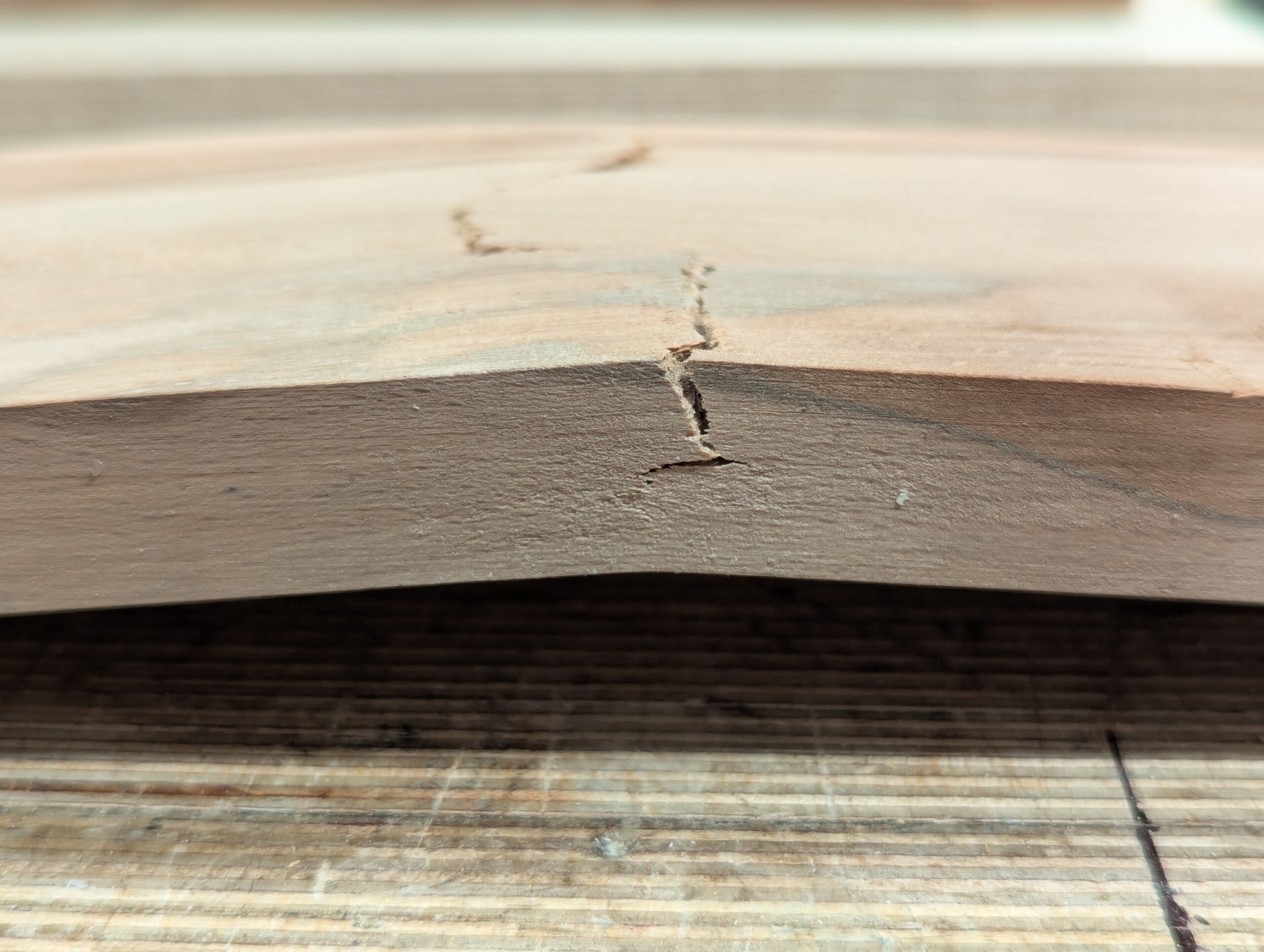
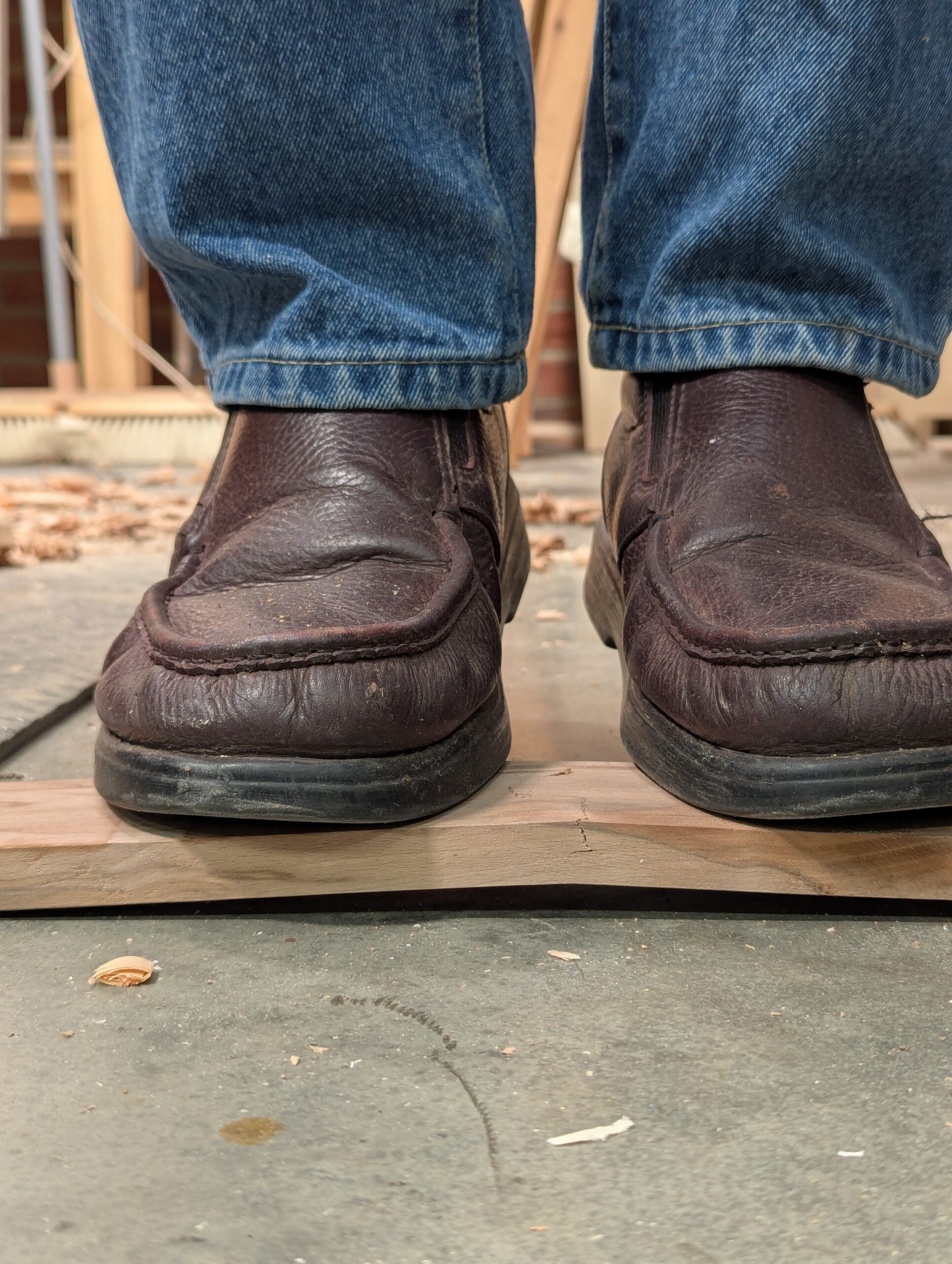
My pragmatic approach to this seemed faultless and yet out of six pieces, three totally failed and another partially but to a point I couldn't use it. Though a crack obviates a weakness and by the evidence it can't be used. But it's not because the bent and broken section is not strong enough for its application. With all of my dead weight of 74.8 kilos (165 lbs), the broken and bent section only closed part way, but then held fine with no sense of failing further.
My breakage was through applying too much pressure too fast, yes, but talking it through with Joseph we considered other complications that are not obviated as in unspalted wood. I could not determine grain straightness and deviation. Experience like this is truly valuable and more important than simply bending with success. When things go well all the time, we don't gain much. I'm convinced of that.
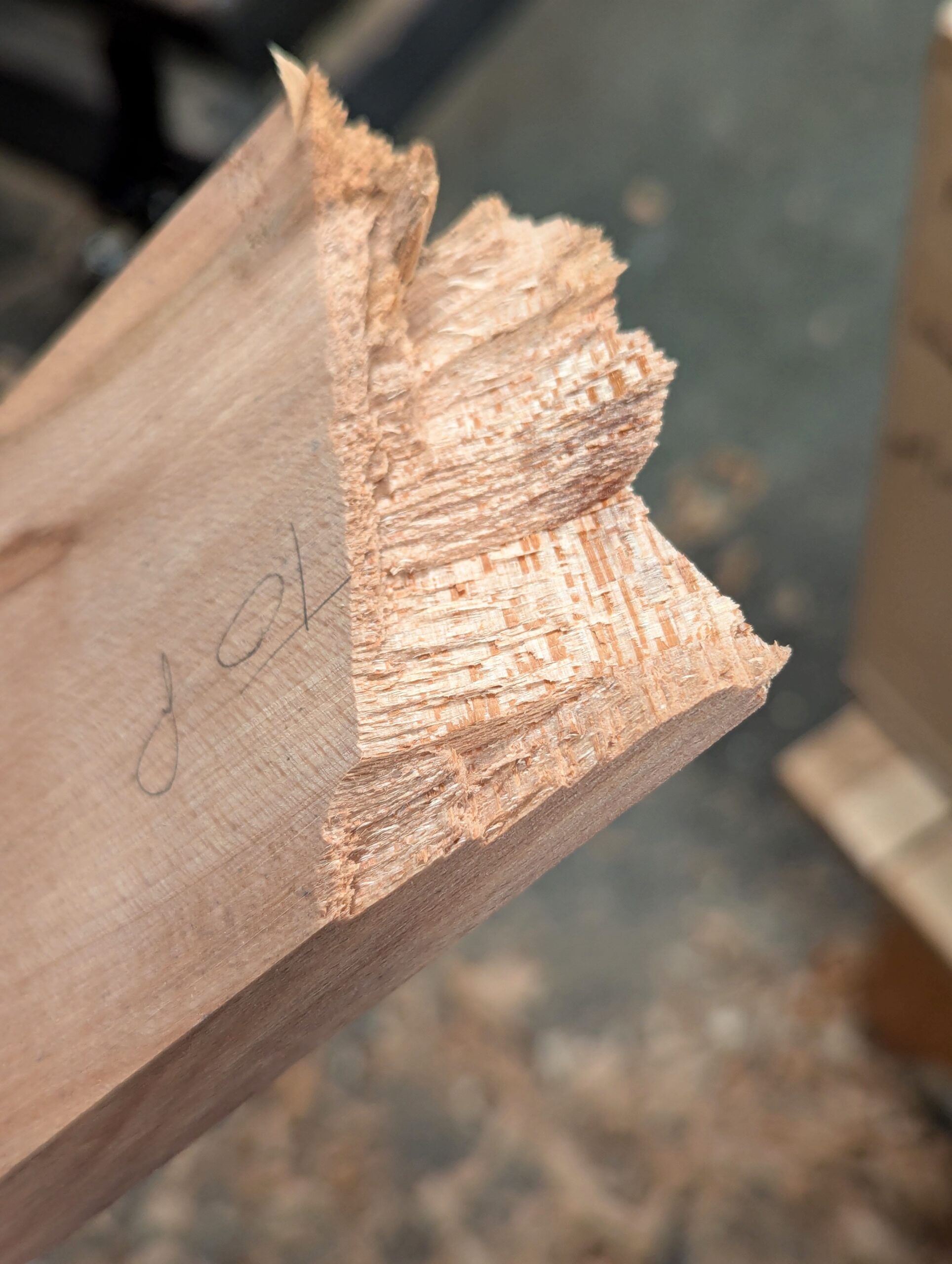
Subsequent bendings began to highlight how I would need to reevaluate my thinking. Whereas I thought I could see grain direction that would favour my intended work, I really could not determine the true grain direction hidden within its fibres, and even though I know beech dips and dives within every inch of that fibre, other factors highlighted by the medullaries show that the weak points of separate as split cells. This section from a later failing highlights what I found. You can see the ray flecks that show deviant grain within so small a section of the wood. The medullary rays only occur in some woods, with beech and oak being the more exemplary versions. These thin, ribbons of broad bands are cells that run vertically through the wood, perpendicular to the growth rings and radiating outward from the pith (the first years growth of the tree dead centre) of the tree.
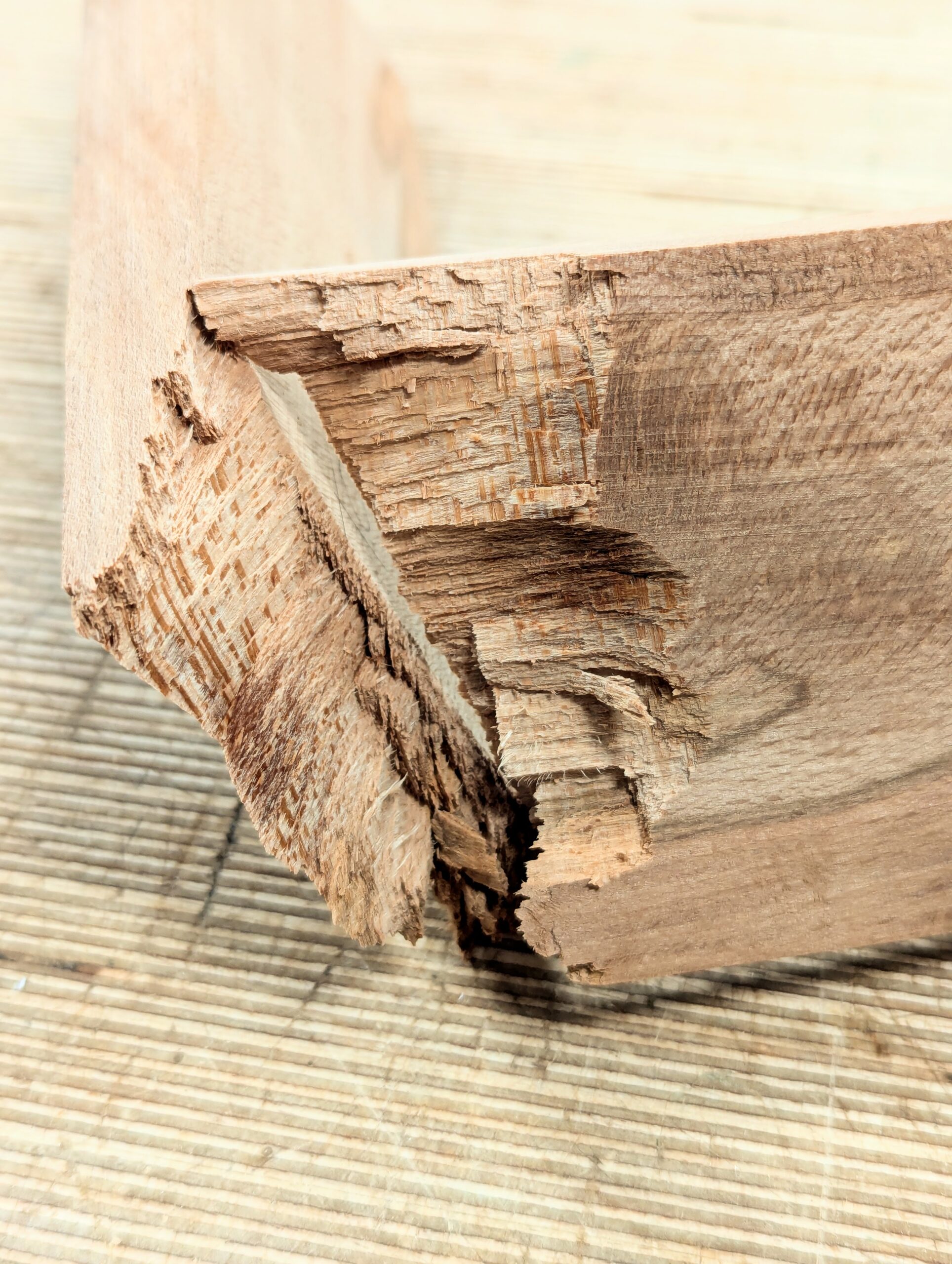
So, now, looking at the same problem (same break) from a different perspective, I get a different point of view. Looking at the grain on the two, flat outer planes but three-dimensionally, there is a lot going on here. Looking at these two facets without being able to see inside the wood before now, it's obvious that not one ounce of this wood has any straightness to it. The tectonic plates would totally disallow my intent in this specific piece of wood. Hardly any of the grain is torn as such, but it simply parted along the diverse grain directions within the fibres. Can I apply a branch of geology outlining a planet's crust, like the earth or the moon with their formation of folds and faults, to my wood? Of course, I can. It's not geotectonic geology working with rocks, but the significant likeness is possibly there to explain an otherwise difficult-to-explain concept.
It's worth noting that when wood is superheated too fast in a kiln, the ray cells I speak of usually separate first at a significant and alarming rate, and will be obviated by gaping 'eyes' in the parting of the medullaries. This is not the case-hardening of forced drying per se. My wood was air-dried for six years, so no possibility of forced anything.
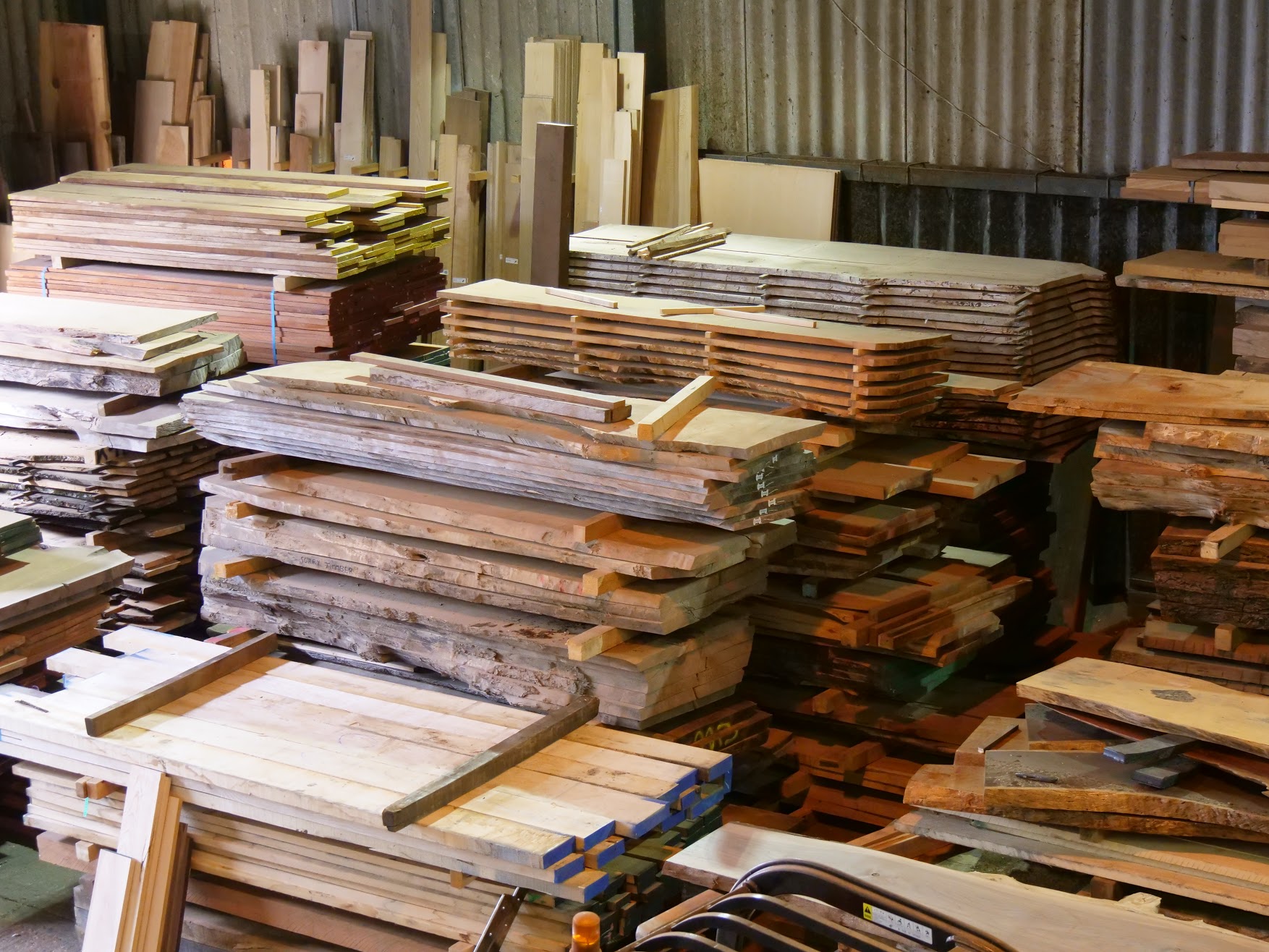
And how often in life do we respond too fast and without thinking enough? This is our modern-day approach to advising others and giving our all-too-often (and not so very) humble opinions. Stepping back from newly acquired knowledge through an active conversation should be our first step, even if only to take a breathful of thoughtfulness, yet all too often we dive straight in with our opinions without thinking and considering because, well, we think we see the issues or have the answer others won't see because of our brilliance. Thus, the tectonic plates start colliding and crashing about a bit. The essence of respect in its truest meaning is to 'look twice', re spect, or look again. Even I, the perpetrator of the faulty outcome, stepped back for ten minutes to think before I said anything at all to myself, 'Well, what did I do differently and did I do something wrong?'
And we learn best from those things that cost us the most. Initially, I lost a piece of wood. Not normally a biggie, except I planed and squared and trued my pieces by hand, and that is quite a bit of work. It wasn't just passing it over and into a couple of machines and a few seconds of skilless work, I worked at it for some time, invested myself into it as I always do. And, then too, it was no ordinary piece of wood. It was spalted beech, with stunning markings of diverse colour that would have truly popped when the finish went on. The markings matched a desk the chair would go with. It cost me. I'll recover, I know I will, but I can't replace that lost piece, and it was a match to the other two adjacent pieces, you see.
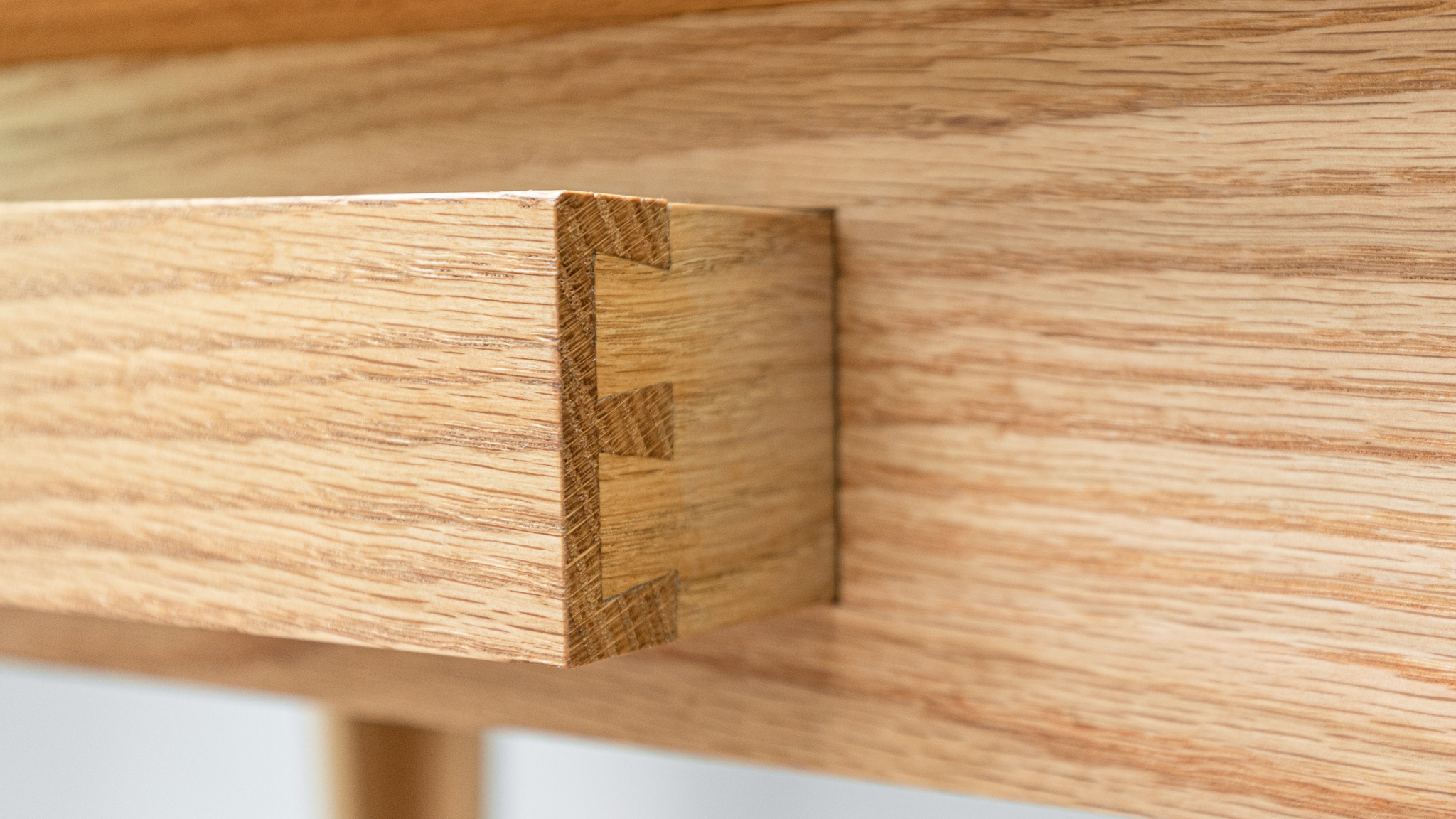
Every piece of work I have done has ingredients like this that develop somewhere along the line, a loose-fitting tenon resulting from but one plane stroke too many, a saw kerf thickness to a dovetail that was intended to show as quality work in a highly refined joint when you already completed the other four to perfection. The less obvious can be the phone call you get that says, "Paul, the drawer won't open!" and the new owner lives two hours away. What to do? Your fault. The tolerances were too tight. It swelled when shut. It will take a crowbar to fix and then some.
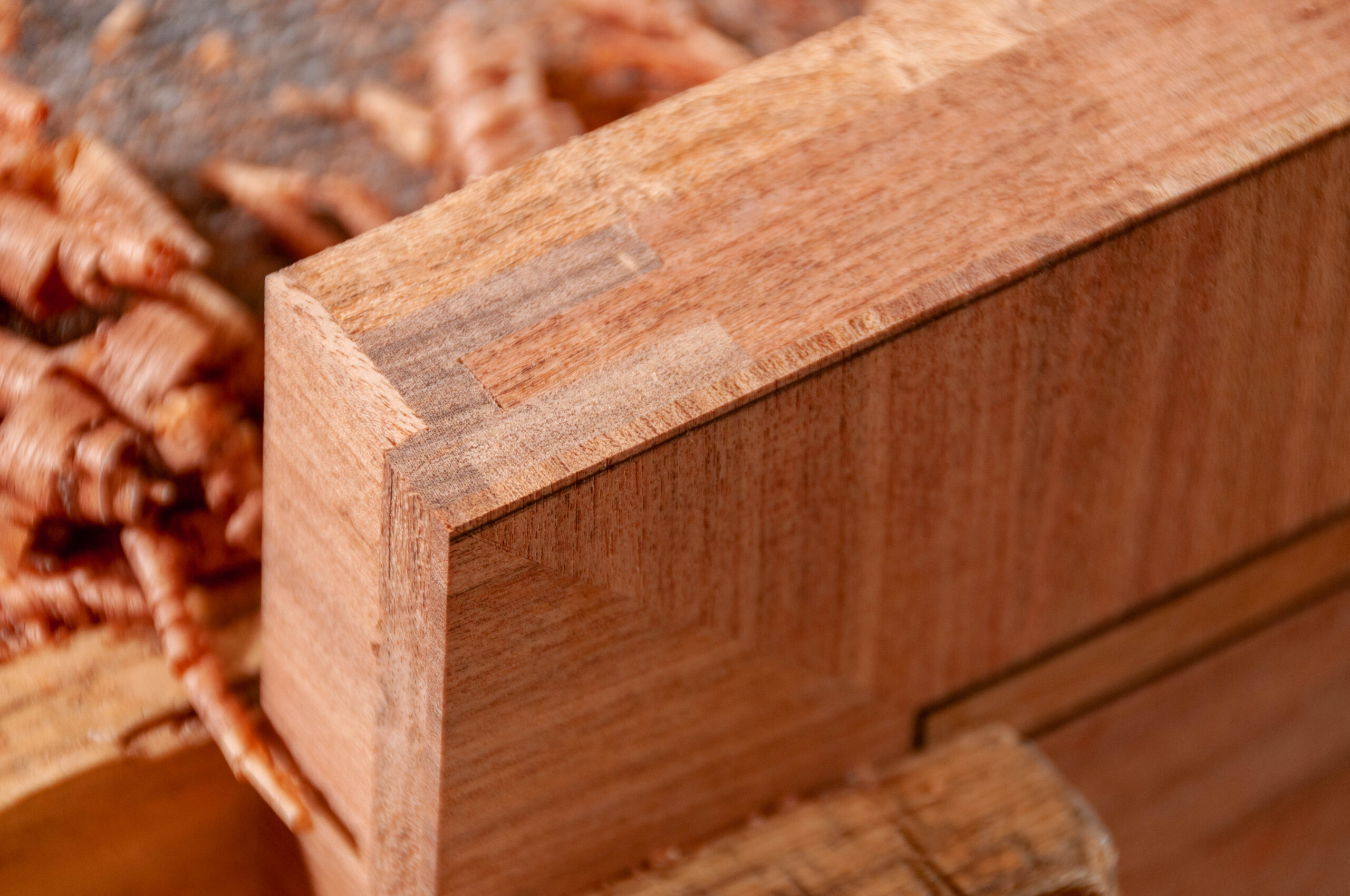
I say all of this because our form of woodworking, the high-demand version I call real woodworking, might well cost us more than it would cost others. We spent so much time in the skilful and creative sphere of our making––the ingredient we purposely intend. The stuck drawer was a very real issue for me. True, I didn't cause the humidity in a different region, but surely, I could have done something to mitigate it. Hence, the use of metal drawer runners and gaps a mile wide all around, face-hung doors and such like that.
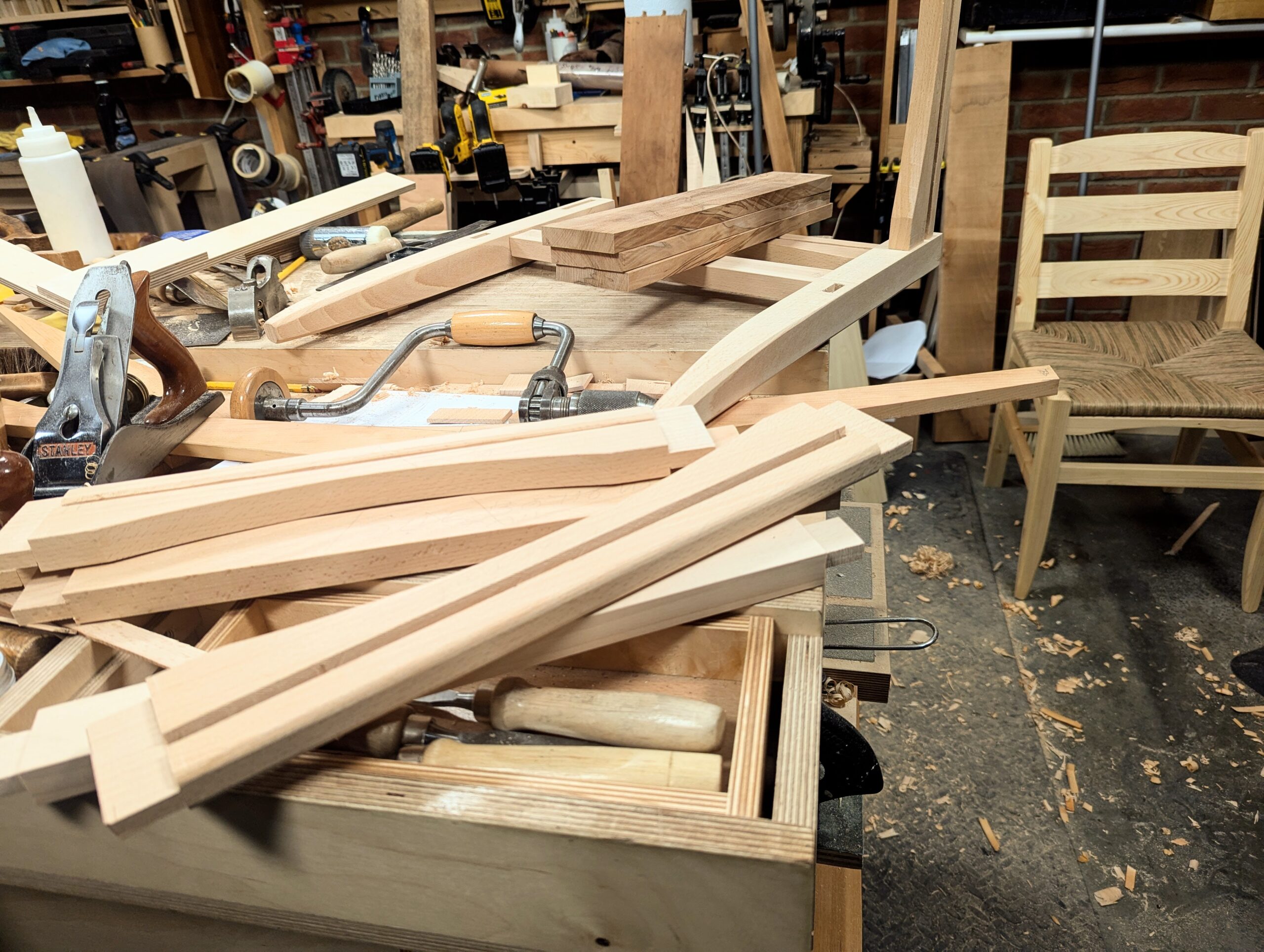
What else went wrong this week? Well, I cut a rail shorter by half an inch and decided to still use. Some of my wood didn't quite make thickness, and I decided it would work anyway. Here's the reality, though. When this happens, there is the knock-on effect. One of these will be that you must keep the discrepancy in your mind because everything else was to the correct size. Compensating for the shortfall will mean equalling out the discrepancy by shortening the tenons, both ends by a quarter-inch. I had to not work my tenons equally and plumb for equidistant front and visible faces, so unequal depth to the shoulders. These things do undermine your peace for a while, but you grit your teeth and get through it.
Comments ()