
Russian Redwood or Scots Pine?
Well, Scots pine is also known as Redwood, Russian redwood and more names than you can shake a redwood stick at. In the sixties, we bought Redwood (Pinus sylvestris) from Russian climes in beams to resaw into vast numbers for a wide range of parts in our work. The smell filled the rafters and wafted around the shop as doors opened and closed and men swept by in their working. For its scent, as we cut through the rich, amber-gold growth rings, no other wood I knew ever equalled it. The smell of resin permeated my every day as I worked, even when no one cut into it for days. When we cut other western woods, oak, ash and such, the smell of pine remained dominant, overpowering all others. It's hard to extol the virtues of this redwood enough. Here in the UK, it remains the predominant wood for finer joinery and carpentry, outseeing others that came and went along the years. It's not a stud wood; too good for that. The value of it is too great, and the strength for such would be an overkill.
I vividly remember my first plane strokes in redwood with George superintending my push strokes with a watchful eye using one of his planes. Even the knots planed well with little or no tear-out either side, as was the case with almost all other woods. George could remarkably anticipate every outcome of my wrong plane positioning and watched for the inevitable. The grain predicted everything. What we wanted was zero sandpapering because no one in the shop wanted the dust from the strafe sander: a strafe sander has a ten-foot bed; a wide table four feet deep over which a six-inch wide 25 foot long belt ran round and round like a huge belt sander. As the belt rotated, the operator moved the sliding table back and forth and pressed a spring-loaded platen down onto the back of the belt, which then sanded the wood beneath. Frames were tricky, tabletops and panels of any size a breeze. With no dust extraction, the shop filled with dust as soon as the machine was cranked up. There was no provision of PPE (personal protection equipment) by the bosses who, though living in the sixties, treated the ownership of their workmen as though they were back in the early 1800s.
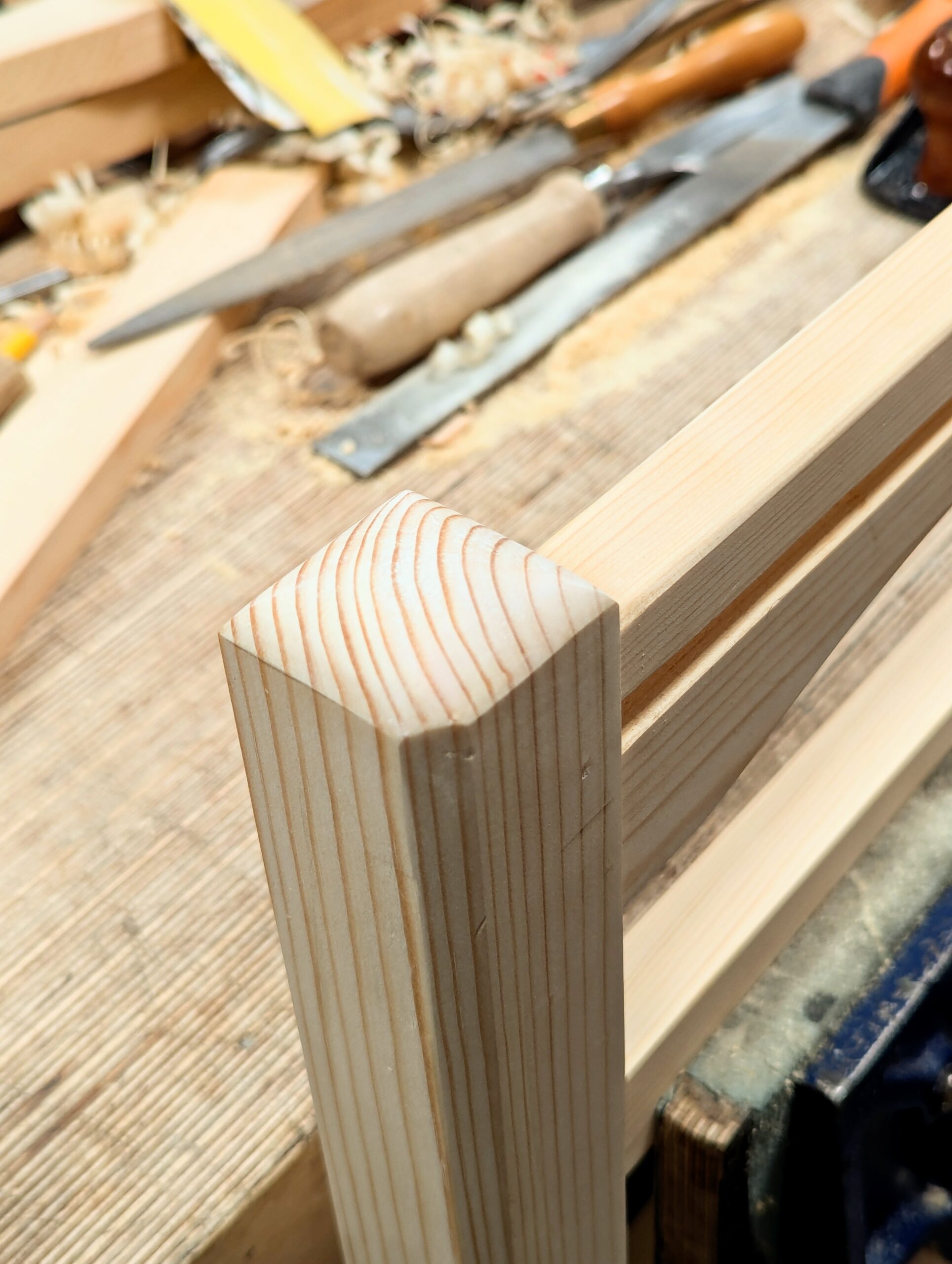
Inside my head, as I planed and worked this Scots pine (Pinus sylvestris), I saw maps, faces, animal shapes and places no one else seemed to see. George would stop me when he saw the tree pith and talk about the core of the tree's first being as a stiff stem. We talked of the soft tissue it was now, but how resilient it was in the early years of life until the trunk layers stood strong surrounding it. "It's called the pith, but what it is is a series of parenchyma cells where the growing stem (the xylem) stores the nutrients and air it needs for growth." he said. Imagine talking of tracheids, pit membranes, primary and secondary cell walls. What about drawing them on wood to explain things. Looking for a scrap example in an offcut pile.
Scots pine? Well, Pinus sylvestris would be the Latin name, the Scots pine (UK), Scotch pine (US), Baltic pine, or European red pine is a species of tree in the pine family Pinaceae that is native to Eurasia. It's the strongest of European softwoods and in the UK the range of uses goes from fence posts and railing to window frames, doors of every kind and then furniture too. Working with it is a dream, and for prototypes it makes life almost effortless with any tool you care to name.
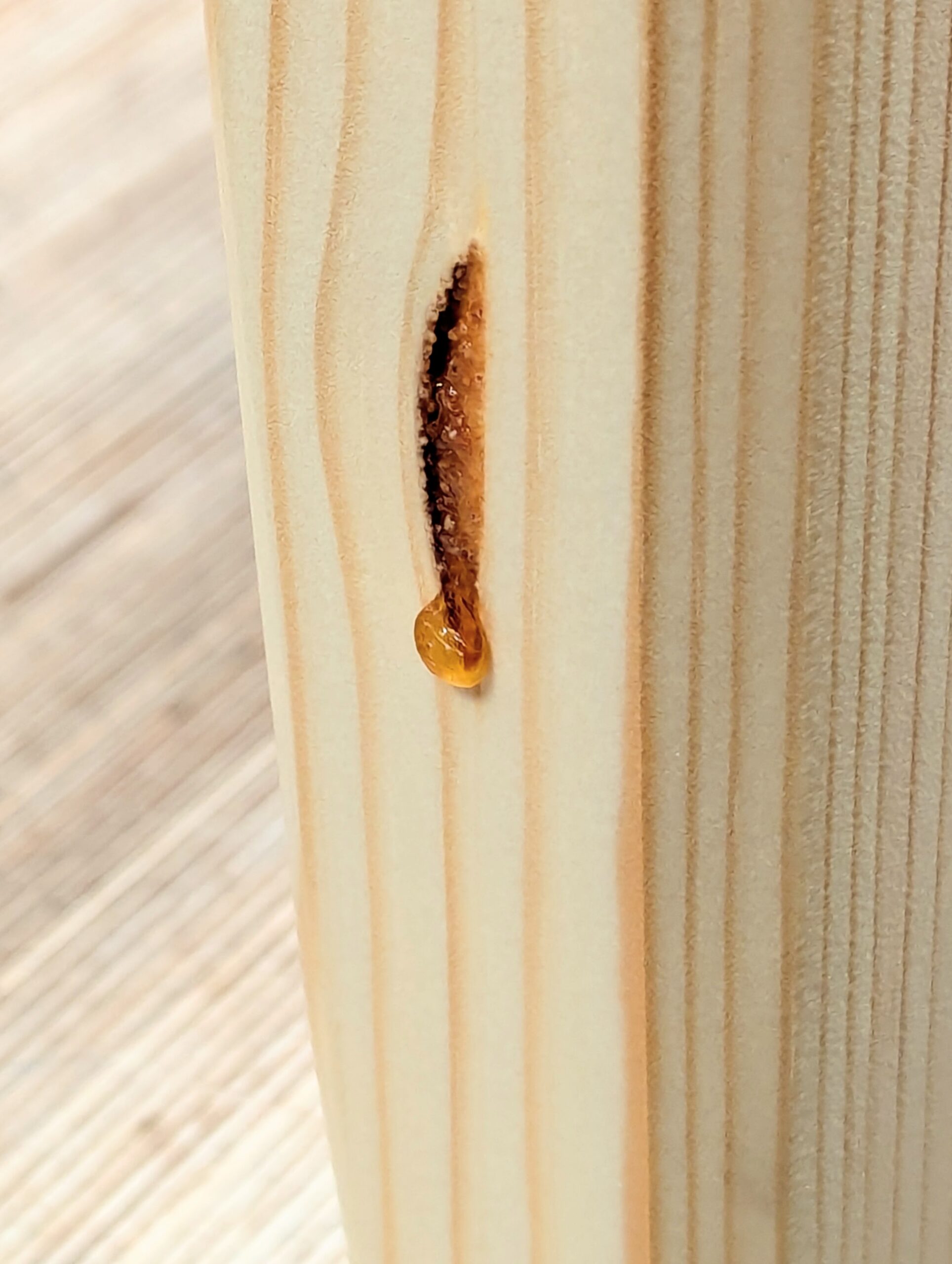
George always indulged my interest that stopped me here and there as we worked. Hitting a spot of resin here and there with the plane and saw is common with European Redwood. Sticky fingers and a plane sole interrupts movement periodically too, but the rag-in-a-can-oiler soon deals with it, which is mostly why it was on the bench in the first place. A quick swipe-wipe and finger wipe worked to remove its smear campaign.
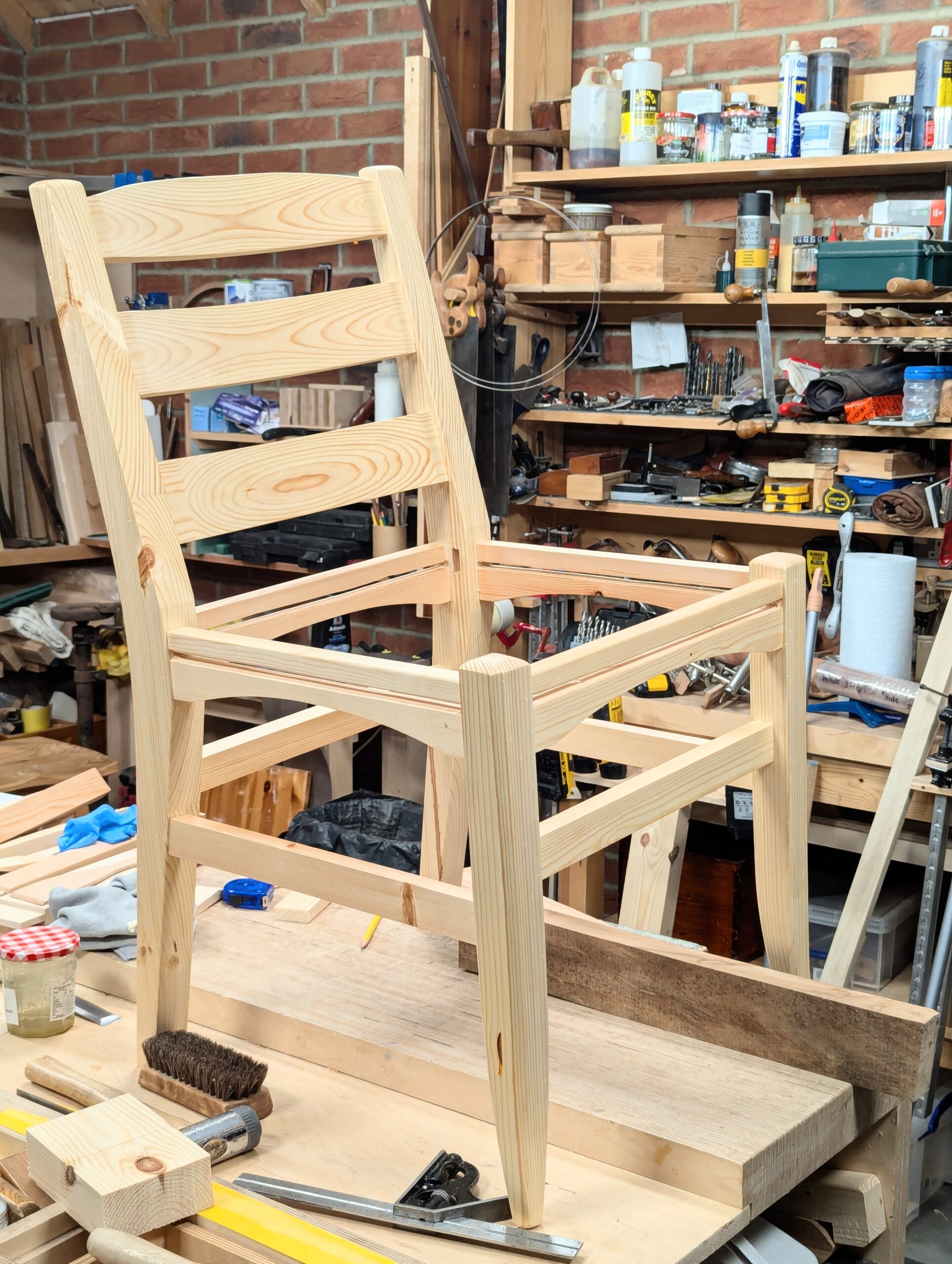
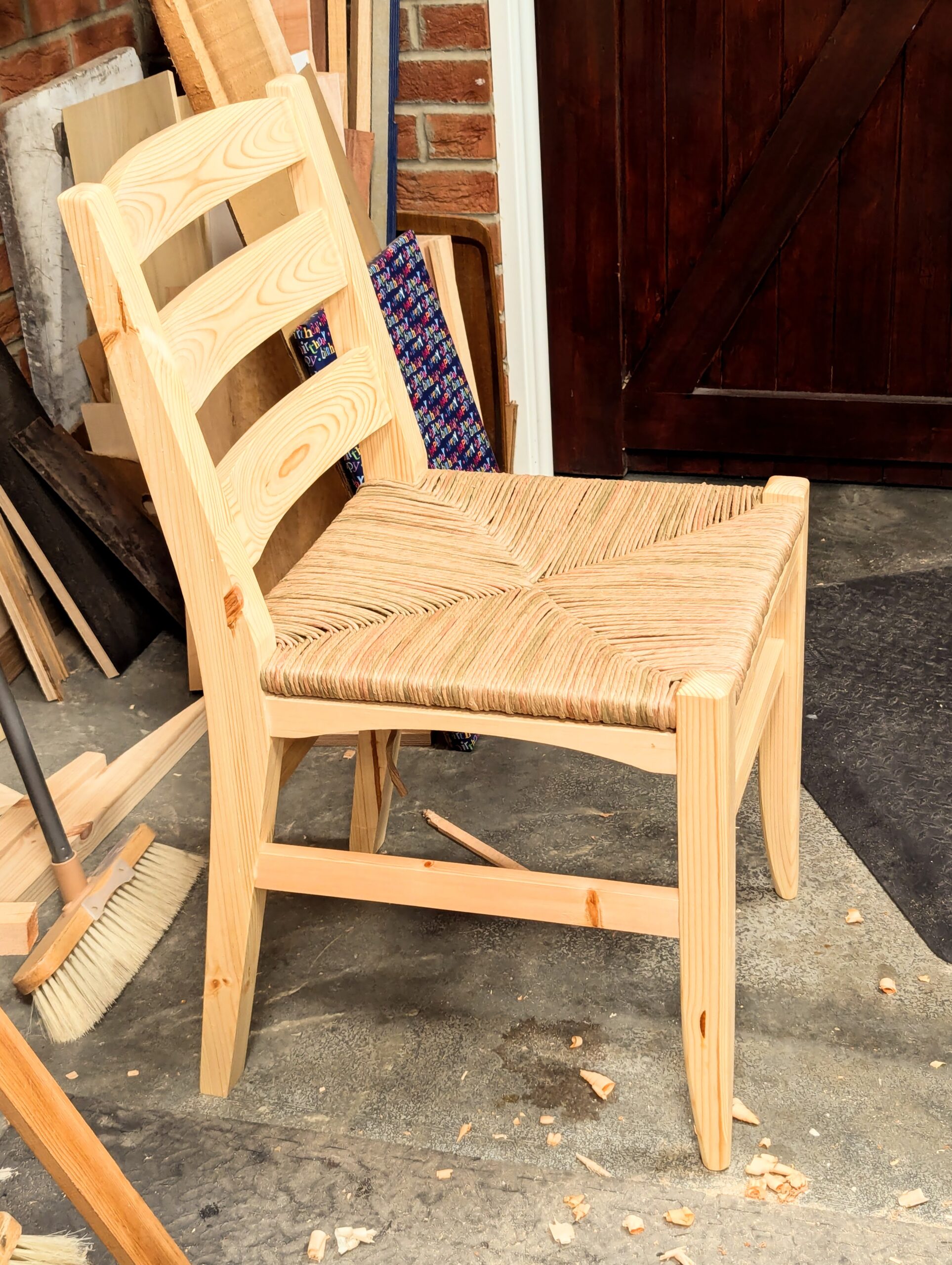
I've just finished the frame for my chair. It's glued up, and considering it's just a prototype, one never intended for use, it came out pretty near perfect as far as the quality and construction goes. The pine cost me £39 including the exorbitant government 20% value added tax. In the United Kingdom, the value added tax (VAT) was introduced in April 1973 by the then prime Minister Ted heath, at 10%, replacing the previous Purchase Tax. Now it's the third-largest source of government revenue after Income tax and National Insurance. I see the benefits of the latter two and pay willingly. The first is more a licence to print money with zero government output, and then call it tax instead of daylight robbery. Were I still in the business of making my living from selling my work, I would then need to price my chair at a saleable price, let's say £300, and then add my customer the VAT of £60 but having claimed back my original 20% of £8 from the tax office. So, the government racks up another £50. I understand that most countries have this tax under the same name or another.
There are one or two North American pines quite like European redwood in some ways and in some parts, but not really anything like in the overall. In terms of density, softer heartwood will be the main difference and some may be less stable, grow at different rates according to climates and such, and this results in ultra-wide aspects of spring and summer growth rings that result in much wider soft aspects of wood The percentage of wood compared to the slow growth and harder area is considerable compared to say Baltic softwoods. USA Eastern white pine (Pinus strobus) is ultra-soft at 380 lbs on the Janka hardness test, with 580 lbs on Scots Pine (Pinus palustris), our Scots or European redwood. Southern yellow pine (Pinus palustris) compares favourably, but snap the bands on a pallet that just arrived in the lumberyard and you'll end up chasing after it; it takes off like a bag full of snakes in every direction. The forests that once covered the Eastern seaboard of the USA, Long leaf pine, was one of the most remarkable timbers in the softwood range ever. It's no longer available. That vast range of multiple millions of acres was deforested over a hundred years to leave the land and the forests utterly decimated. Imagine how such a thing could happen! I have worked boards 12" wide with growth rings 1/32" apart. This vintage, virgin wood was at that time being bulldozed into piles and burned by demolition crews in central Texas until someone said it would make great flooring. Entrepreneurials, that's what they called themselves, capitalised on a new venture with four- and five-head moulding machines to stockpile flooring that floored the homes of the rich and the fairly rich. I won't tell you how they operated their businesses; their business practices were very suspect!
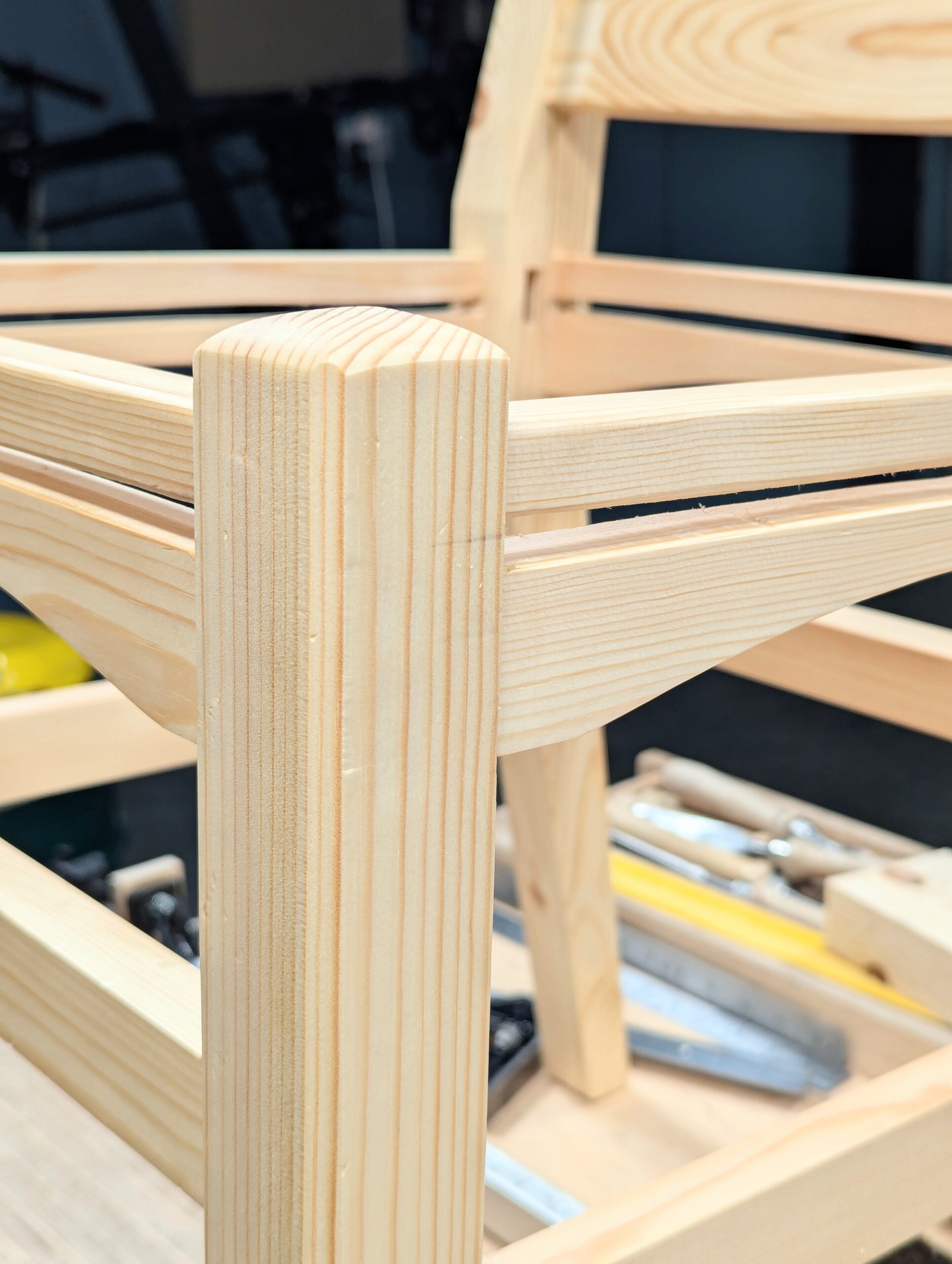
Making my chair in full-on mode would take me about ten hours per chair––longer in a hardwood, which is where I am headed now. Beech is my chosen wood this time. I have some ideas as yet untested but in the pipeline. Prototyping gives me time to make changes, and I have needed to make a few along the way with this one. The important thing for me now will be the comfort of a working sitting position. I like the width and depth of the chair, the angle of the back and the untipability of the chair on the whole. It's squat and the lightweight of pine is actually ideal. Of course, pine is soft no matter the version. Any slight knock will dent it, even small ones, but I would still use pine even so.
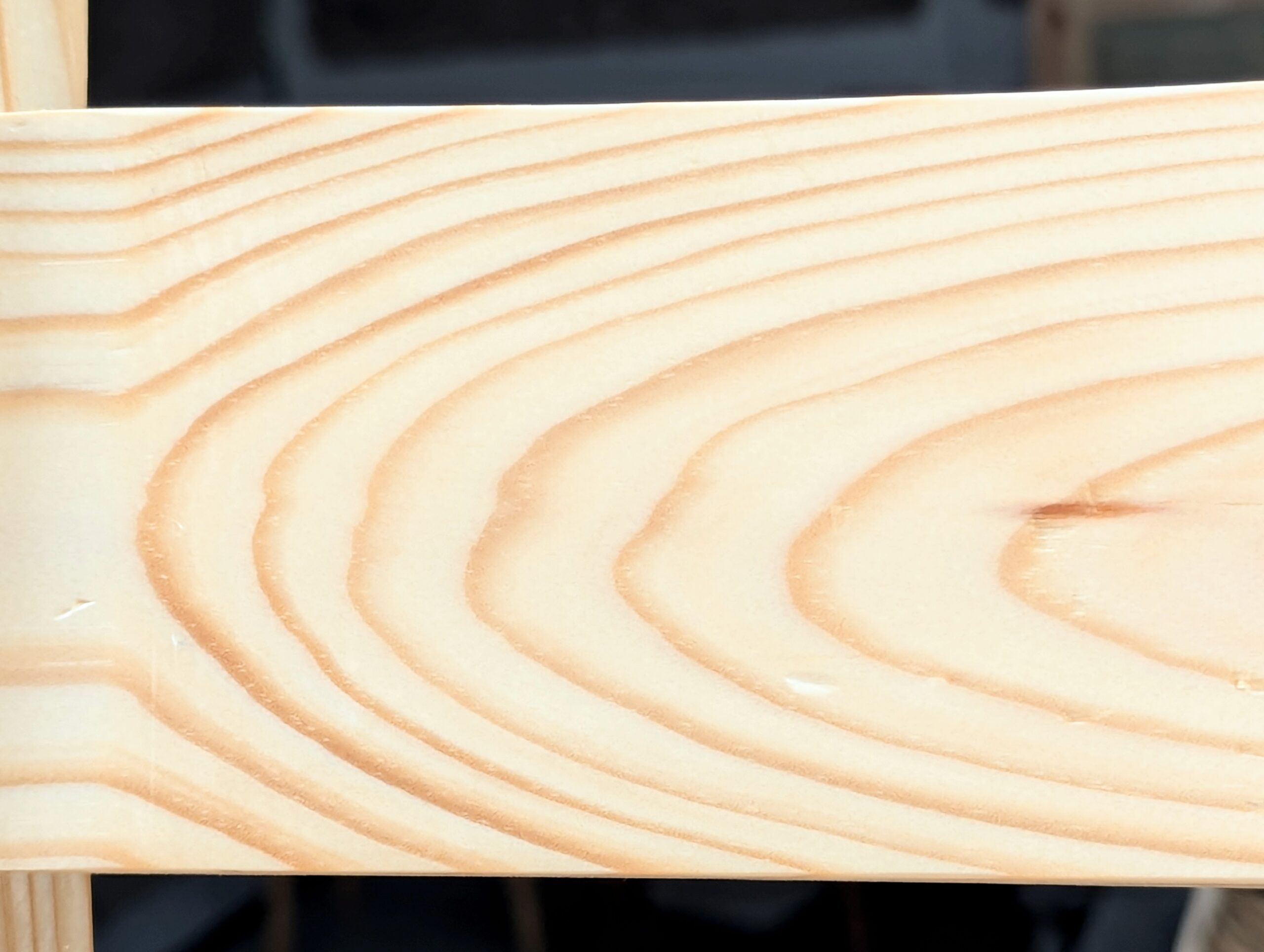
Sharper tools are especially essential to cut through the fibres of soft-grained woods and especially is this so where hard and soft growth aspects of the same rings run side by side, as pine and other softwoods do, because of what we call compression spring-back. Chopping into pine perpendicular to the growth rings always results in the soft aspect layer compressing and then springing back under any of the pressures we apply through the harder aspect of the growth rings either side. Most hardwoods, and there is some variance here, generally, don't have this problem. The compression we apply in pine usually results in torn fibres between the harder aspects of any two adjacent growth rings; a series of growth rings can compress until equilibrium of equal opposite forces is reached and the spring back from compression takes place leaving gaps in the soft growth areas which always looks ugly if and when visible. I'm careful to keep sharpening as I go and in any given period of an hour, I might sharpen three or four times. It takes self-discipline in the flow of our work, but it's a must.
Comments ()