
Hand Tools on Wood
We all have creative ways of entertaining ourselves, but it might be a little more unusual for us to see the contrast between watching as a spectator and creating our way out of one world into another by the doing of things creatively, working with our hands. In my early days, as a new and novice maker as yet incompetent, my work was leading me more to a job for which I would earn my living from with no concept of developing a lifestyle. My progress was progressive and fast-paced because making came naturally to me and I always found handwork absorbing and enjoyable. So, well, these two elements secured my whole attention––I always liked it and never once can I recall shying away from work. As I became evermore competent week on week, year-on-year, I took on designing and making in the uniting sphere of creativity; my life began to unfold differently than it did for those around me. Where they wanted the ease of machining their wood, I wanted to strategise differently. I calculated ways of delivery by thinking through the stages of making without the use of machines, and they always constructed with whatever could be achieved from a cutterhead or a circular saw blade. I think that this was because making was one thing, becoming a creative thinker another; when skills become established, you think differently, we start to see how the importance of considering both how we work and the significant difference between a lifestyle and just a job.
There came a point when I engineered life in its multiple dimensions to meet my criteria of choosing high-demand skill and making over the alternatives, which were still truly valid options. I am glad and thankful for my becoming aware that choosing what many consider ancient and archaic paths could clearly become an adventure I took into an alternative way of living and working in a very real way, no matter how much those considered more progressive contested the validity of my choice. This point in my life, my considering why I did what I did, thinking through where I, personally, wanted to go with my craft, became a more major interruption to take my life in a way that would work for me. My woodworking began to emerge into what I called a lifestyle; it became a way of living by making that goes beyond mere making to embrace a new and living way that expressed the way I thought the whole process, from concept to completion, could go. And it wasn't just a one-off time. We've done it every day for a decade and more of making our videos, but in my world of doing such things, I've managed my life along these lines.
I saw processing differently, far removed from a system of staging assembly work through a series of conveyor-belt stops and starts to become the flow of more seamless phrasing in and out. I saw it in the same way some kinds of music, art, and poetry goes in melding the interplay of notes and words by a series of transition points that resolve to take up the slack between the many diverse elements. When I saw the significance of planning, managing and bringing order and flow to every part of my making process, I was able to maximise the benefits I could achieve by processing my work chiefly with handwork. But much more than that, I found incredible freedoms I never considered significant enough to consider viable and reliable before. The wonderful thing about hand work of the kind I do is that it absolutely and totally disallows any way of vacating from the process, even momentarily, from it. My smartphone often goes untouched for hours when I am making, in the same way it is when I am drawing and writing too. This has become the chief distraction in just about everyone's life, sadly. My working obviously predates the internet and the cellphone. Devices have become highly divisive.
As it is with most woodworkers starting out, I was involved with machine work as soon as I was old enough in the workplace. My knowledge of machining wood parallels my knowledge and expertise with hand tools. But unlike most others, I retained the handwork to remain and allowed it to take over to become the highest form of high self-demand woodworking I could ever come to know. I do it almost every hour of my working day, without exception. It's truly wonderful to find this level of inspiration from my youth through six decades and on now into what is becoming my old age without being an ancient fuddy-duddy. There is nothing eccentric or geeky about what I do and how I do it, but in some ways, back in the 90s, it was seen as archaic, old-fashioned, and dare I say illogical? I survived the blandness of critics of that day, and stood true to what I knew. It's hard to imagine I now reach way past a million woodworkers every month, despite my refusal to take any kind of sponsorship from within or outside my world, who strive to follow in the same steps of deindustrialising the personal and privacy of their creative world.
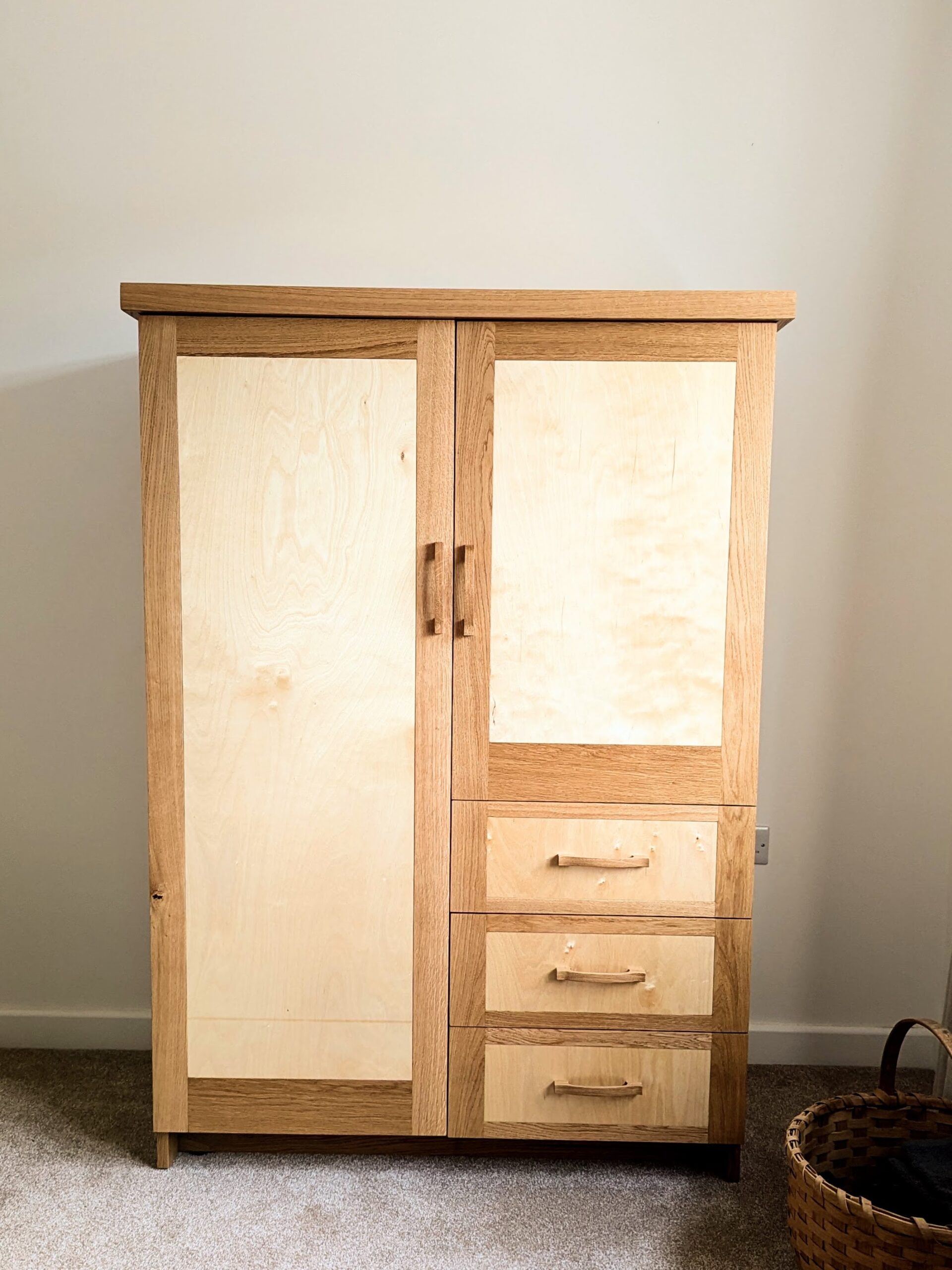
No other method comes close to my choice of hand tool work. If and when I do use a machine for something, I cannot wait to switch it off and divest myself of any protective gear and extraction. Today, the extent of my machinery is the small bandsaw and the lathe. But I do understand others relying on machines to take care of some needs––being time-strapped is one good reason, as is a disability. That does not mean that another method will not be rewarding and satisfying either, just that you are excluding large swathes of physical and mental work, exercising throughout the day, that sort of thing. What I address mostly is the fuller development of true skill that actually works much faster than machine work and factors in the inclusion of better healthcare. Since I got rid of my dimensioning machines like the tablesaw, the jointer and the thickness planer, my ability to dimension small sections of wood at pace has exponentially improved in both quality and speed. As most prep work is the reduction of large stock to small components, material reduction by bandsaw works really well, provided you have mastered setting up your bandsaw to run true with minimal further input. Even with blade changes, my bandsaw runs so well I have no alignment issues and after installation and tensioning of the blade is done it takes me less than a minute to get back to work making. These things must be mastered if your dimensioning is with a single machine. 90% of my audience have no machines.
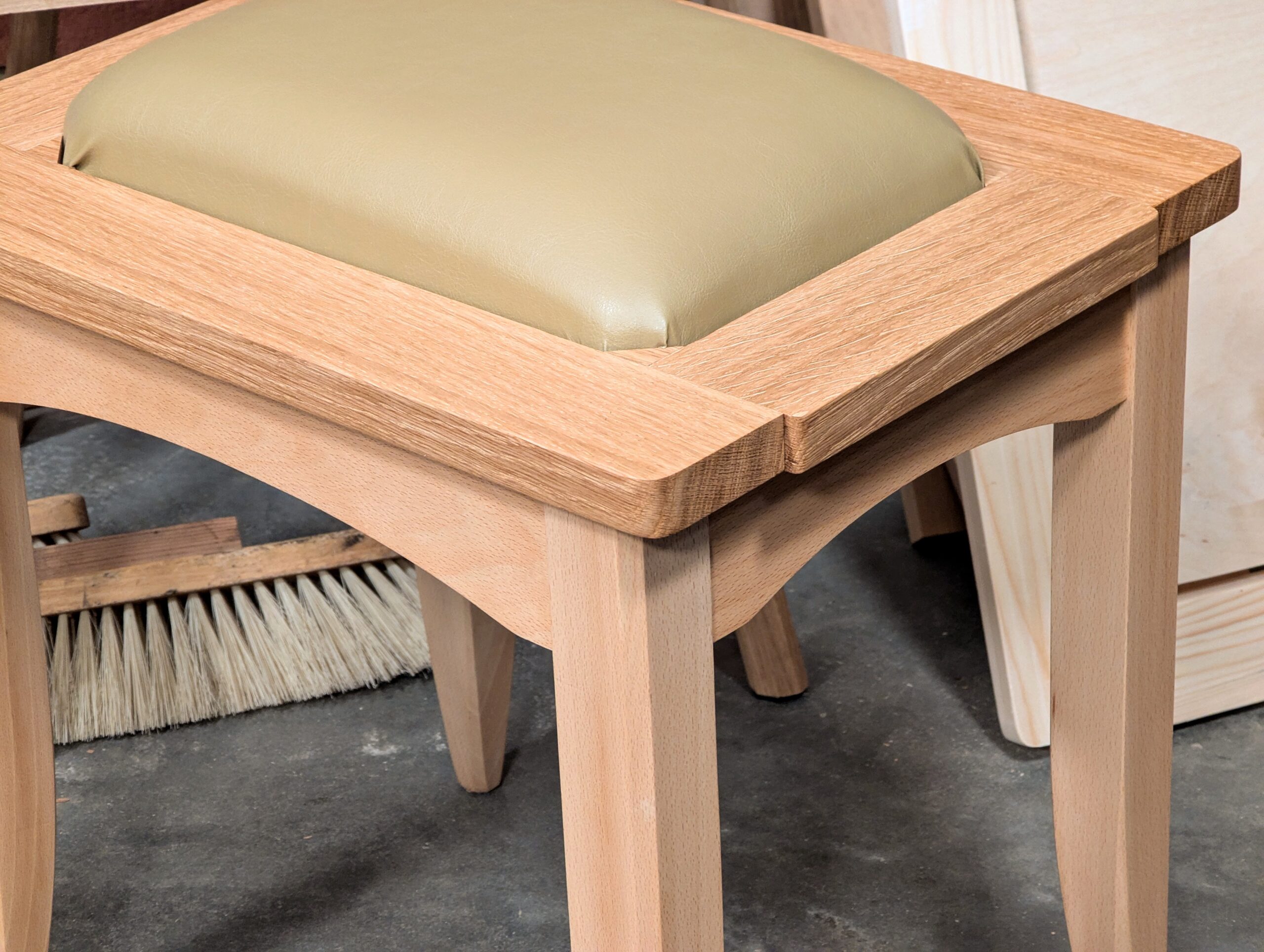
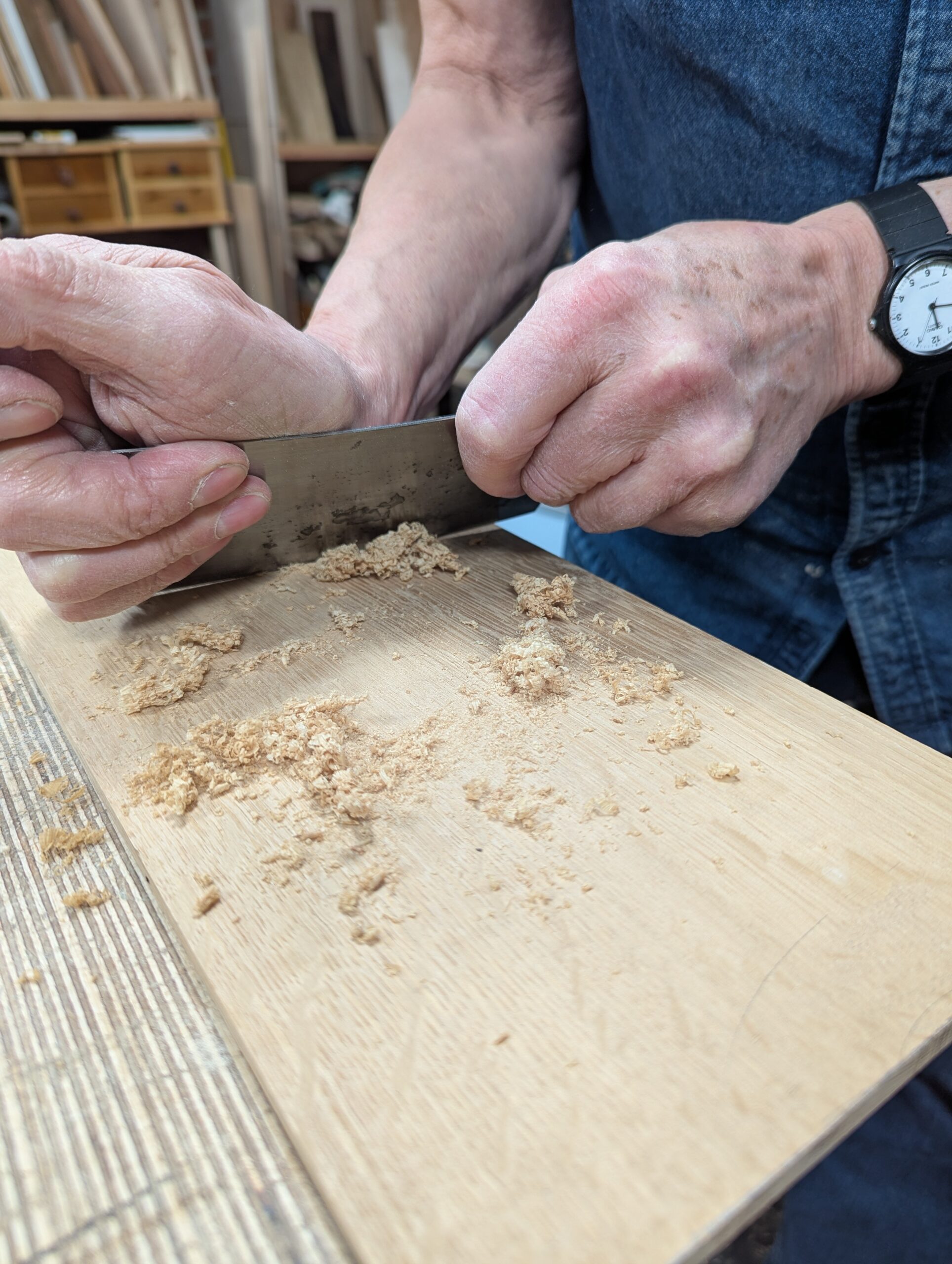
You must consider whether you want to consider handwork as your primary source of power woodworking. Relying on your own physical energy, brain power and skill is something you must decide you want to develop the skill and aptitude for and then work up to it. That takes time, but once you have it, you have it for life. You must then ask yourself what you want from your craft, that's all. For a good half a century, this was never truly considered by just about everyone involved in machining. That is of recent years gradually changing, and that's why I do what I do. Hand tool methods absorb every single second of your making, every fibre of your being, and that is because you are processing every single second of the time you are creating. You are never waiting for a board to pass through a power-fed cutter-head, for you are both power feed and cutter head. The source of all energy is you!
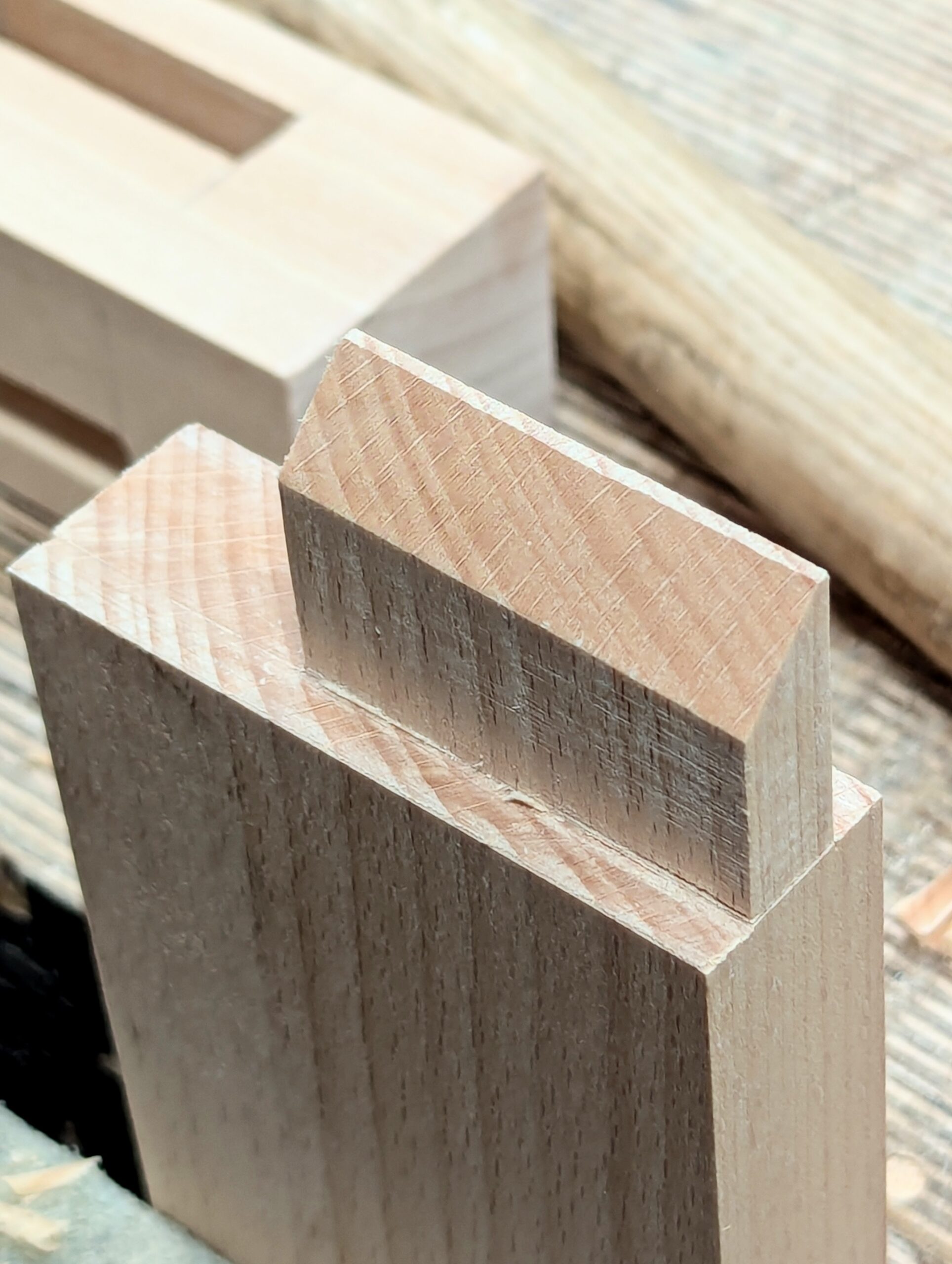
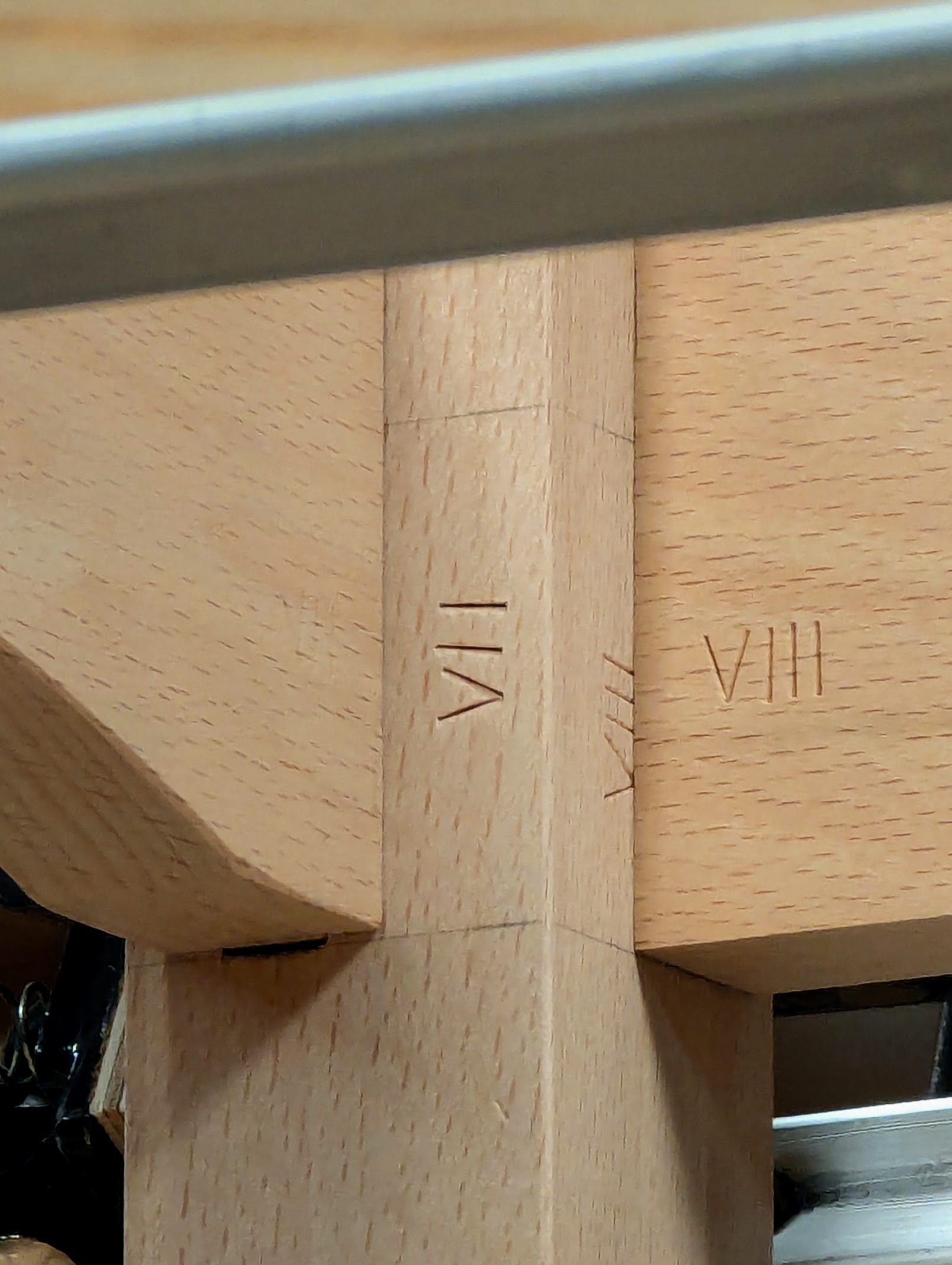
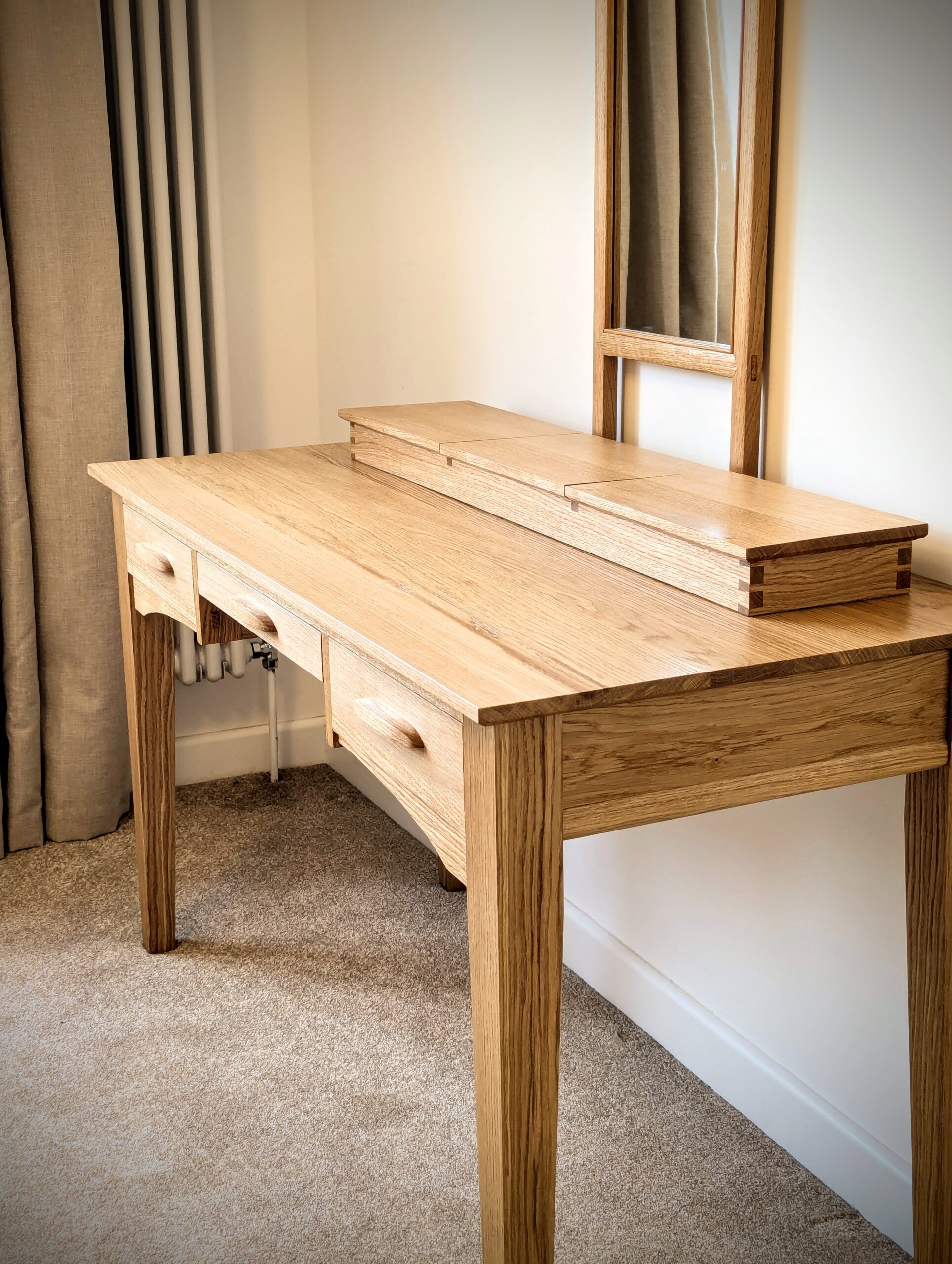
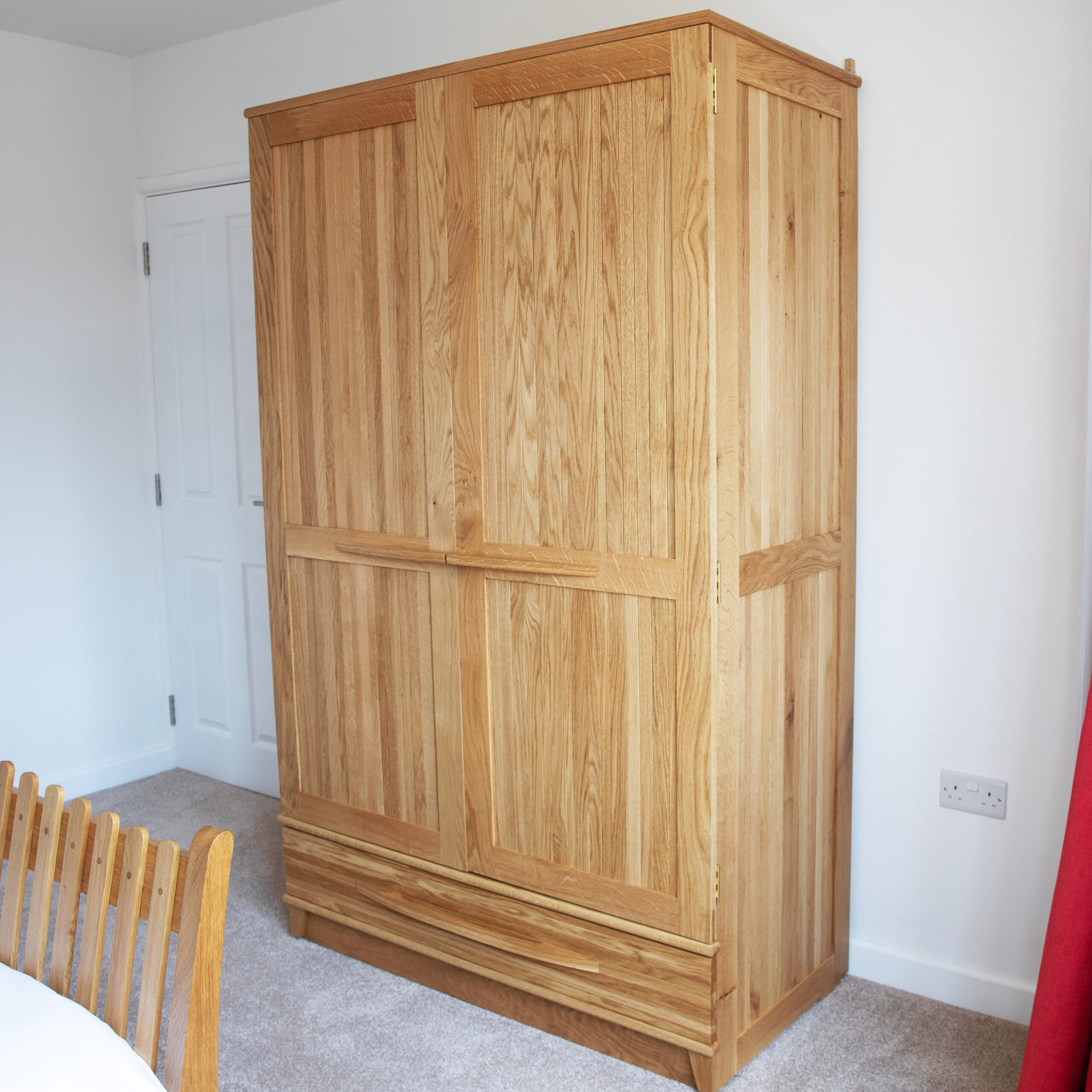
Note: None of the above saw a tablesaw, a power router, drill press, mortise machine or any kind of power planer/thicknesser. The dovetails are always hand cut, and I have never once in my 60 years of daily woodworking full-time used any kind of dovetail guide or power router to cut my dovetails. The reason I do what I do is to encourage you that you too can own the same skills.

I've developed my own capacity to make in my more recent years. Just when you think you've arrived, you experiment and develop a new concept, and you understand why old men in your teen years said, "You never stop learning."
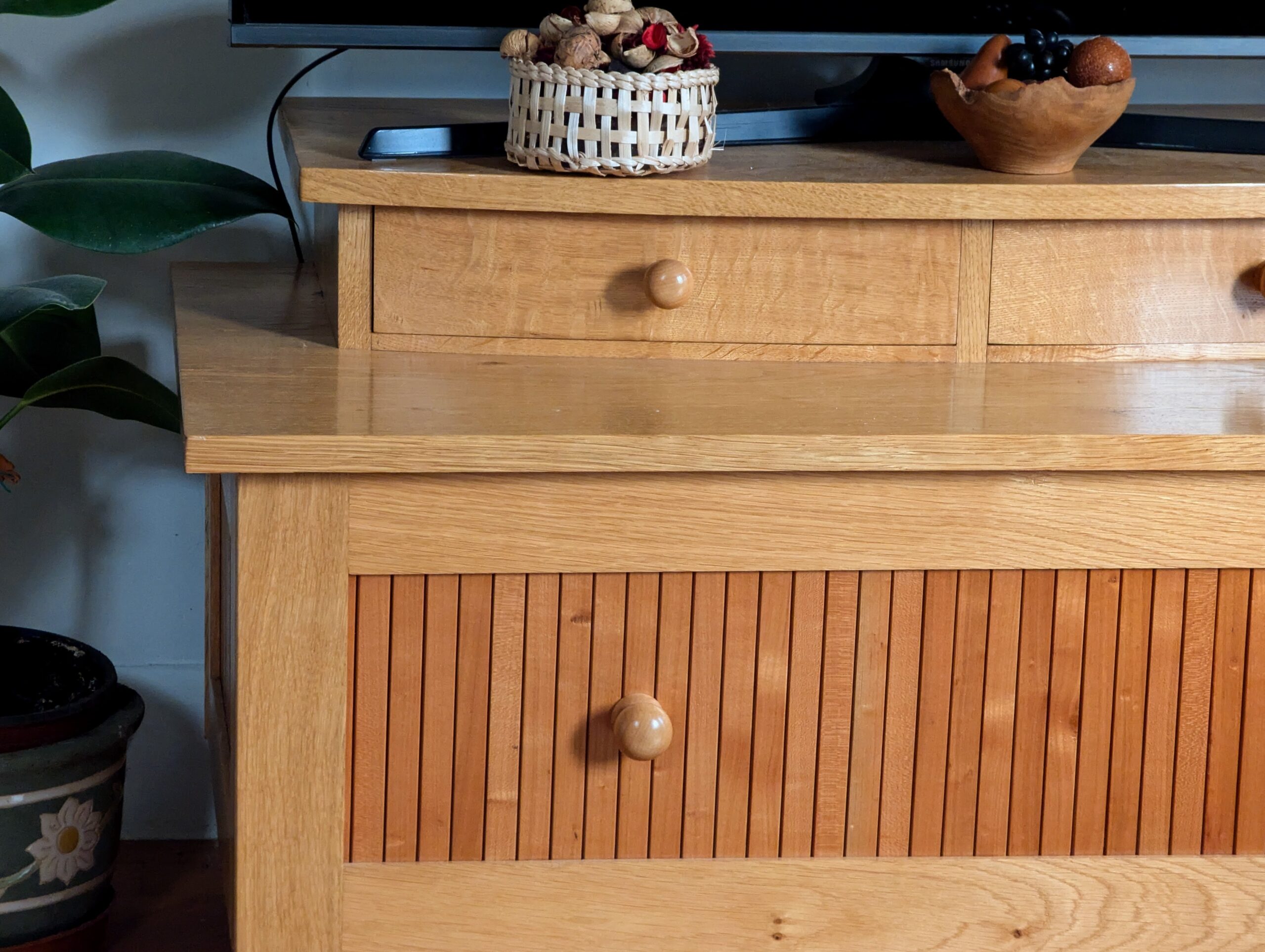
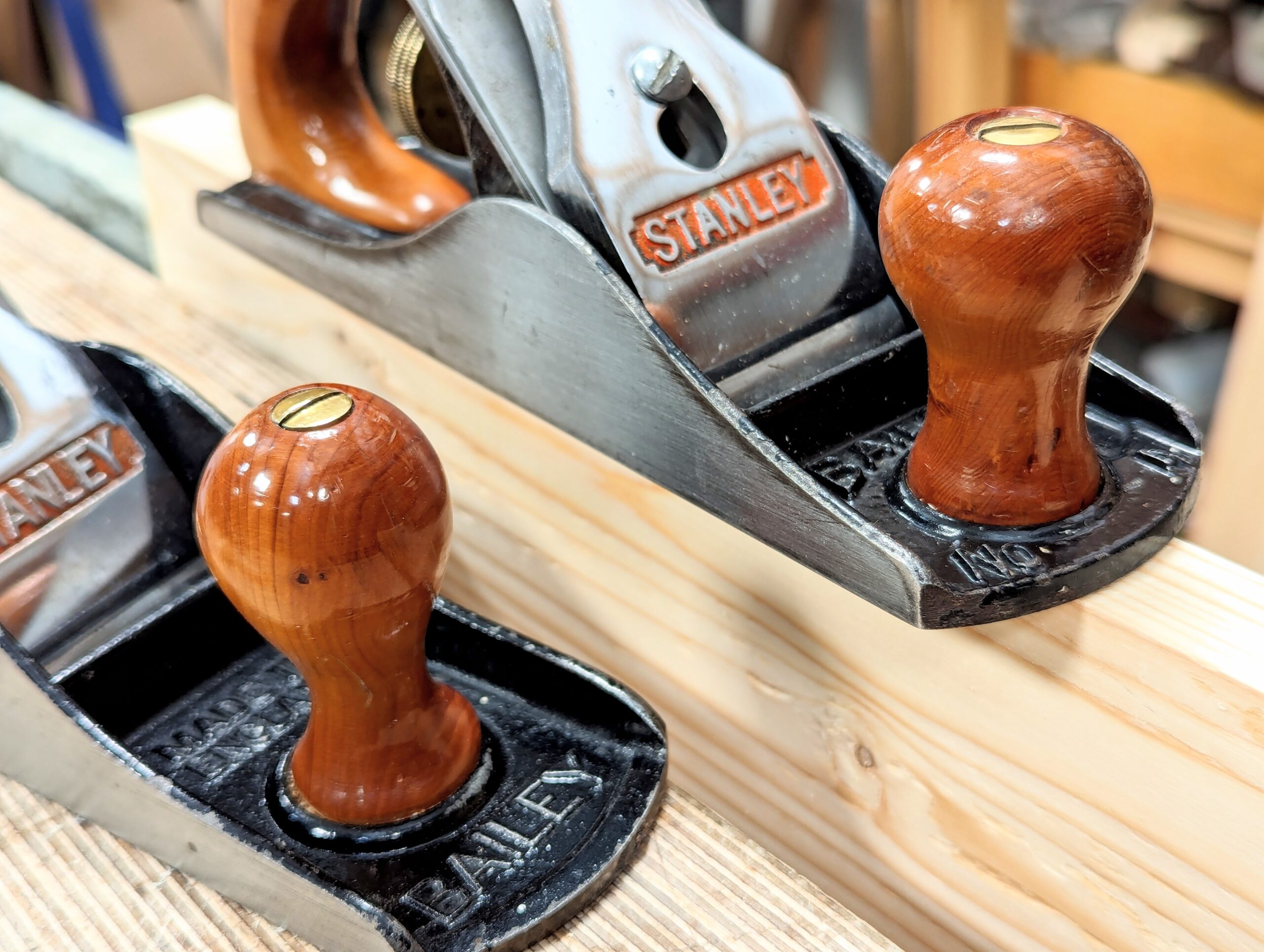
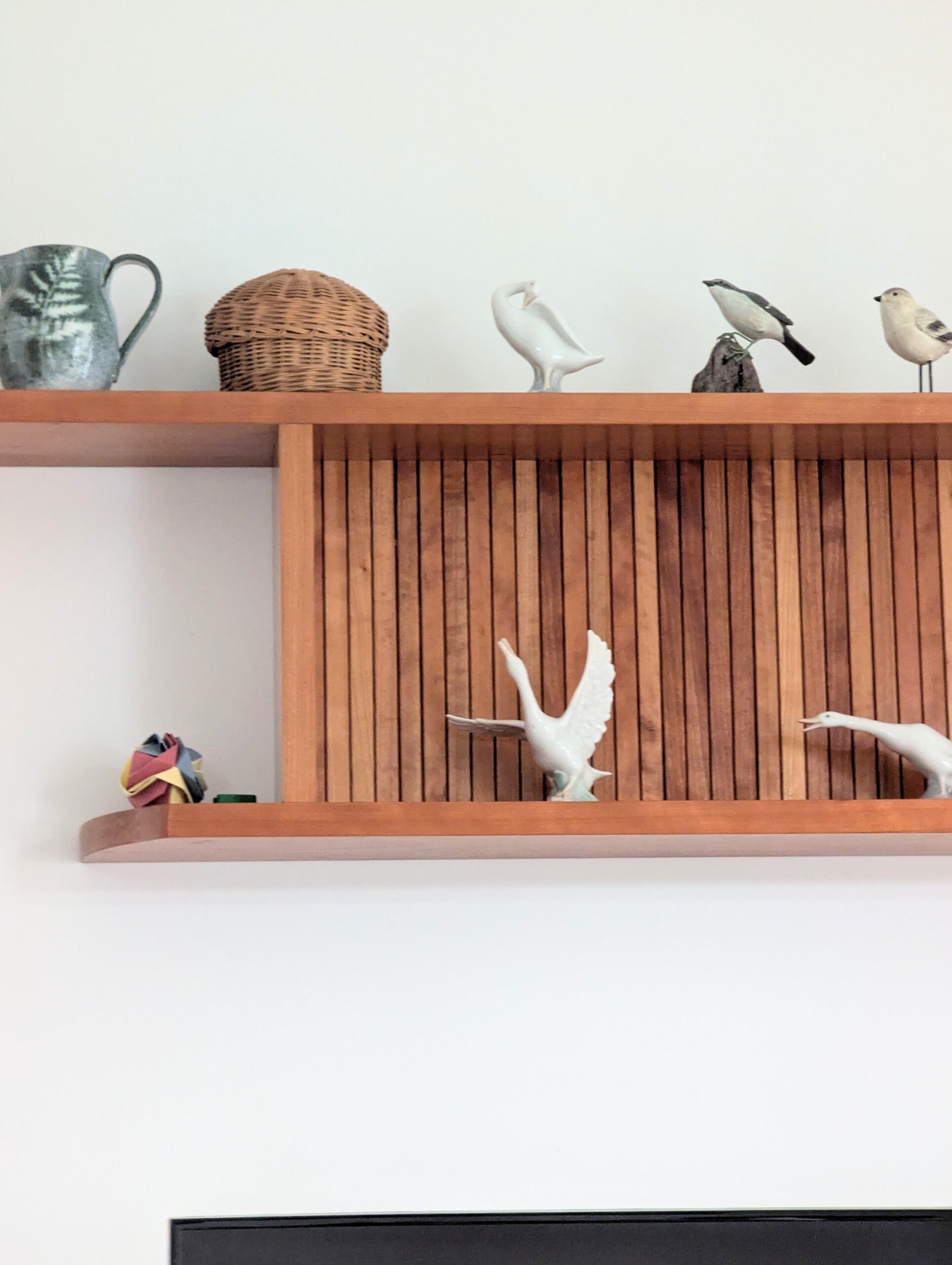
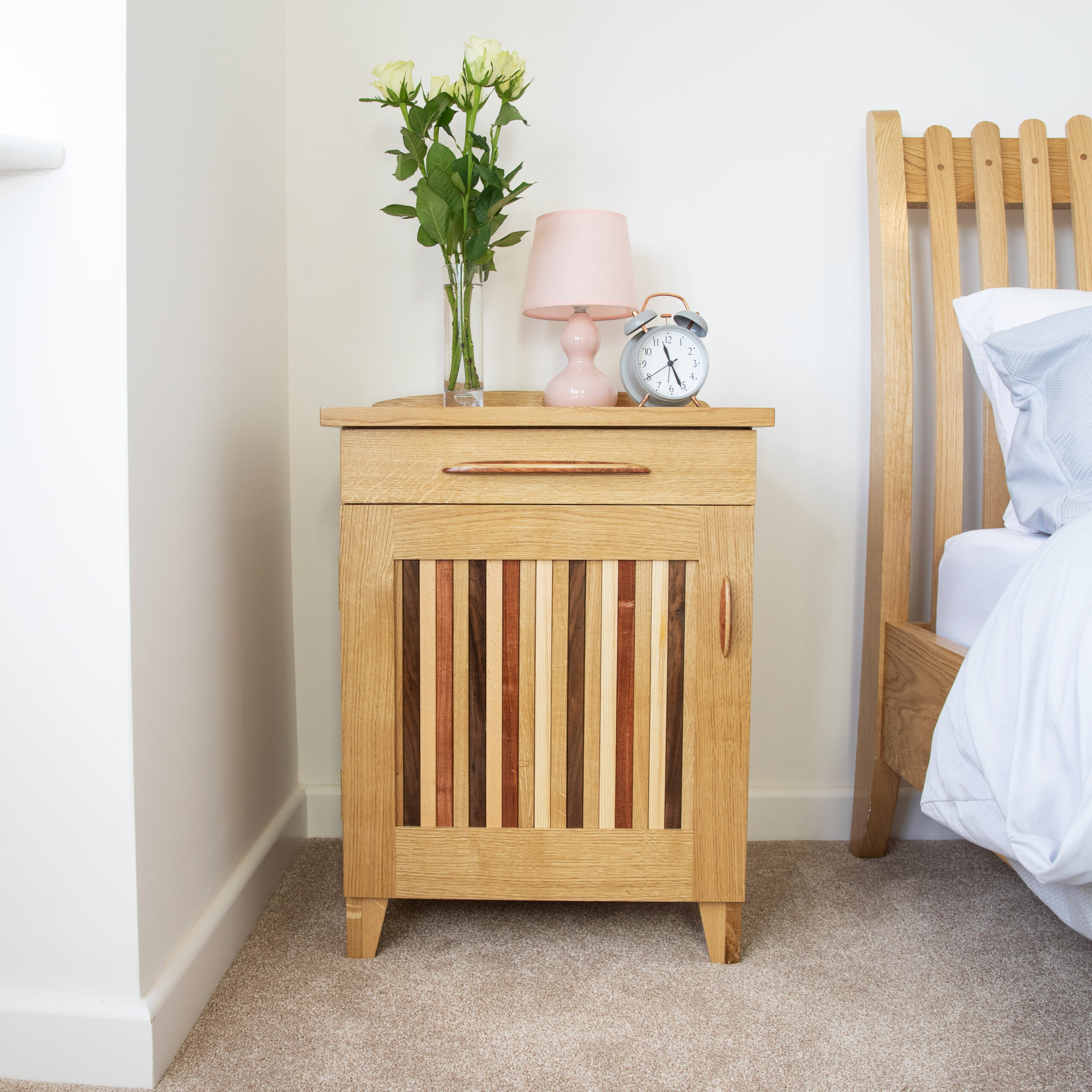
For several of my recent projects, I've been successfully using rippings that were of no use and too many to use, but ones I'd held on to through many months and even years. Instead of fuelling my neighbours' wood fires, I ripped them to 10mm thick and 20mm wide, hand planed the faces and bevelled them with a #4 and housed them in the grooves to create a tambour-look panel. Above and below are some of the projects with every stick and stem hand planed.
Today, as I write in my journal, I wonder where and to what heights some of you will take hand tool woodworking. The future of skilled hand work no longer rests securely in the hands of professional woodworkers but in the hands of amateurs, those that do it for the love of it. Hand tool woodworking is more secure in those hands than it has been. I'm thankful for that.
Comments ()