
Volunteer Making
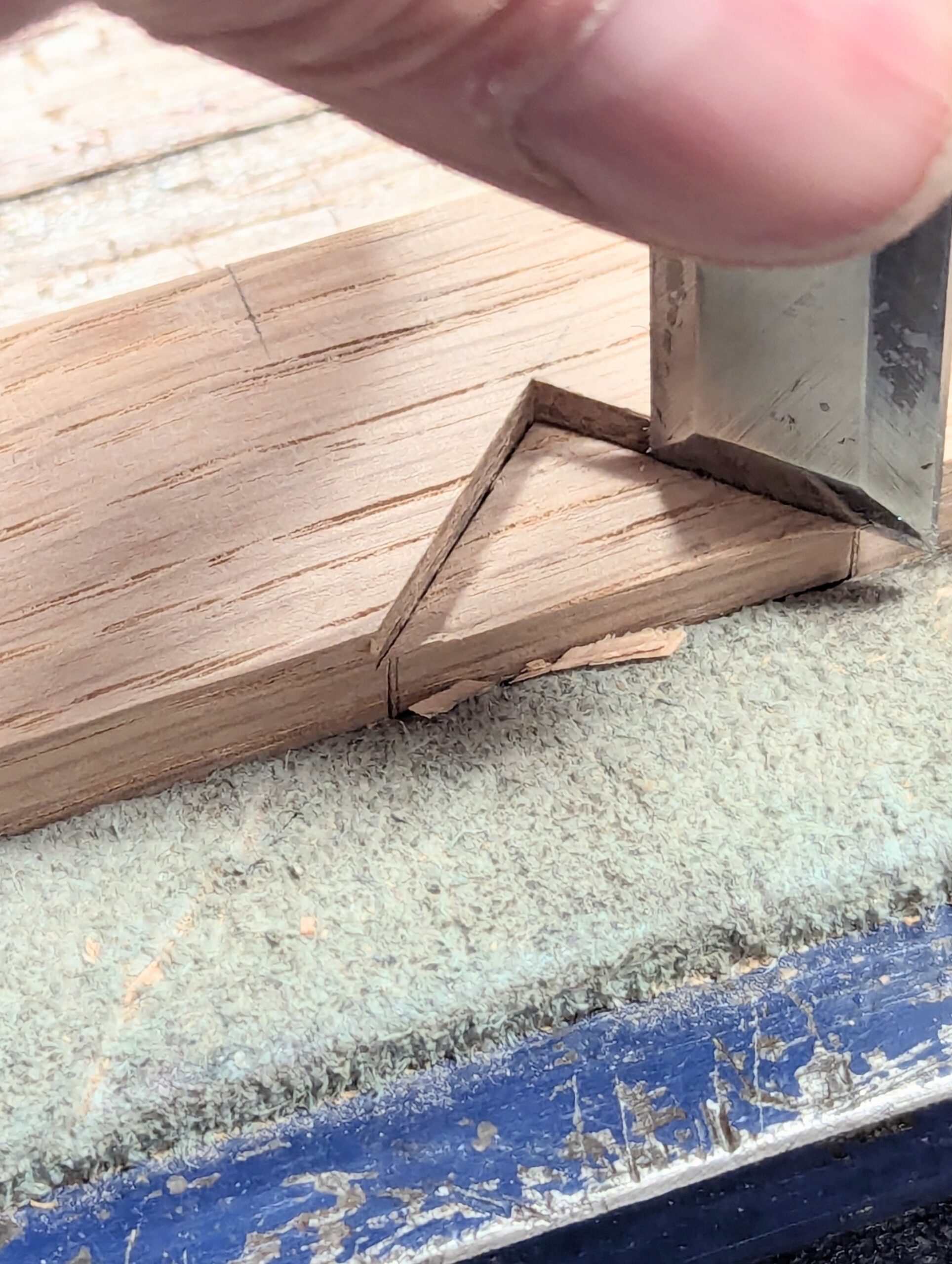
In woodworking, we often encounter multiple components requiring a dozen shoulder lines to joints that must be equidistant within a tight fraction of a millimetre. A pencil mark may well be an adequate first guide, but splitting the line is not definitive enough. T what point do you decide to split the pencil line? Ultimately, it's the knifewall that establishes the unquestionable cut line of absolute demarcation. Against this sharp-cornered edge, there forms a ledge, a ledge that our chisels and saws are placed unquestioningly to, where deepening cuts establish walls of resistance for life. The precision of the knifewalls set our joinery apart. There is no ambiguity, no nudging and fudging. It's definitive and it's unquestionable. We know the knife's sharpness––we just sharpened it, as we always do. My knife is made with disposable, throwaway blades, but I still sharpen it while it's in the handle. It's quick, efficient, easy and repeatable dozens and dozens of times on a single blade. My blades last a year. They're inexpensive, but it's ten times more efficient to sharpen the blade than to remove it and replace it. Three strokes each side on the bevel, and I am done.
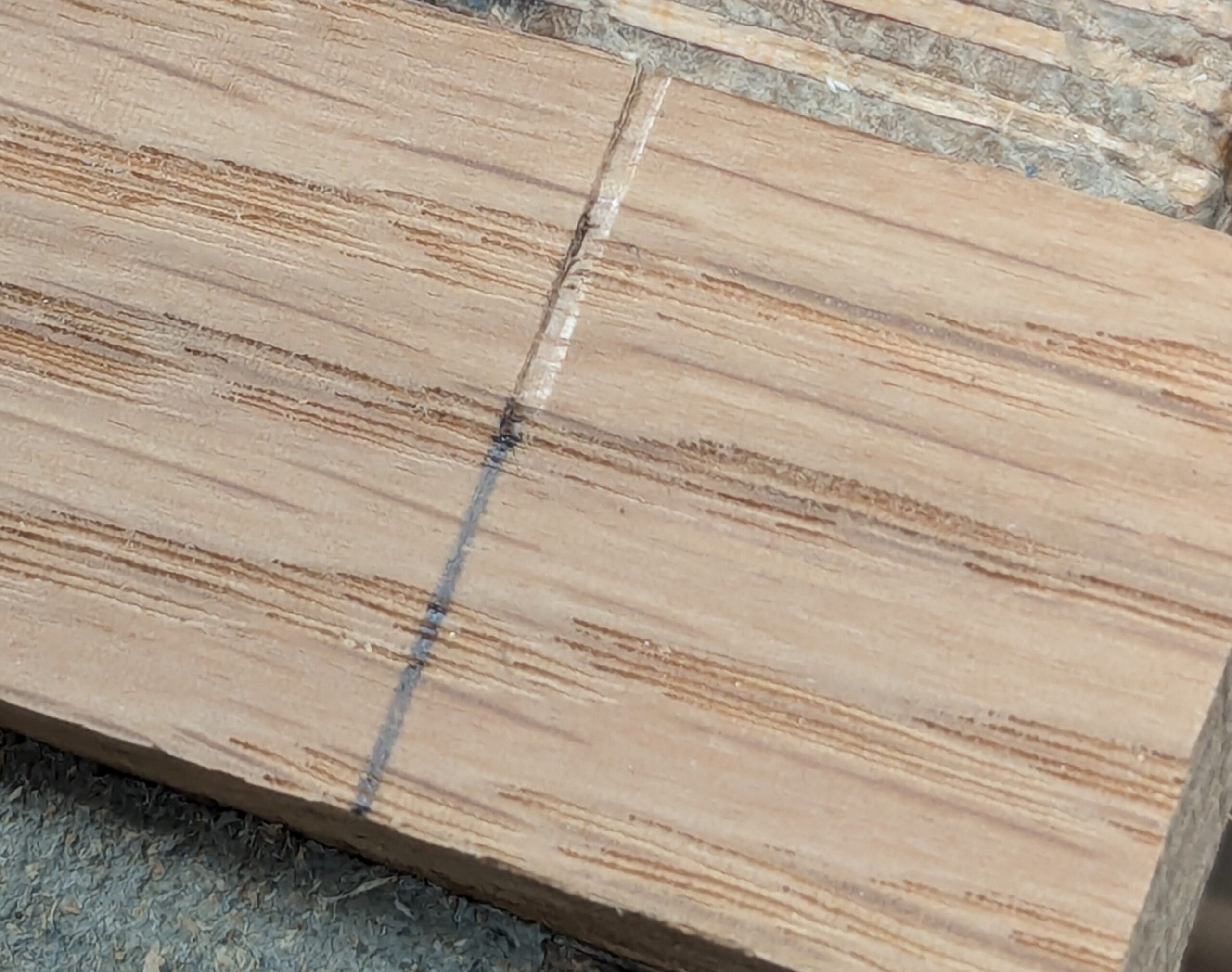
When we have multiples of anything in making, we continually strive for an exactness by using practical systems and patterns passed down through the generations. These patterns ensure replication from a single source. In general joinery and carpentry work, a pencil line is usually close enough. In furniture making and special joinery and woodworking projects, the knifewall is the only way. The one important thing is to make sure that that source is and remains accurate. The last thing anyone wants is to allow any stray from the original. Periodic rechecks are our defence. Remeasuring and checking against an original kept aside for that purpose is a good step to take. I often set the depth of cut on my router plane to a scrap of wood to return to for checking and make notations there too. It costs me nothing. I have some patterns from 30 years ago; the arching for a cello backplate or belly, the arc of a rocking chair rocker or its back frame or seat curve. Repeating a rocker from a drawing works well enough too, but there is a margin there for mistakes to be made, either in a conversion from imperial to metric or a slip in an angle on a sliding bevel or a pair of compasses by half a degree. The solidity of creating templates and patterns of work holds well for us. We also use a board we call a storyboard. Where possible, this board will be laid out full size, but sometimes it might be in sections showing intimate details because of space. I often make the component, even a full-sized prototype, if the work is important enough to demand it, and there is something about pulling it down from storage or a shelf to see exactly what you are aiming to replicate. When I make several units, drawers and drawer parts for instance, doors and so on, these are a good example to keep track of into the future.
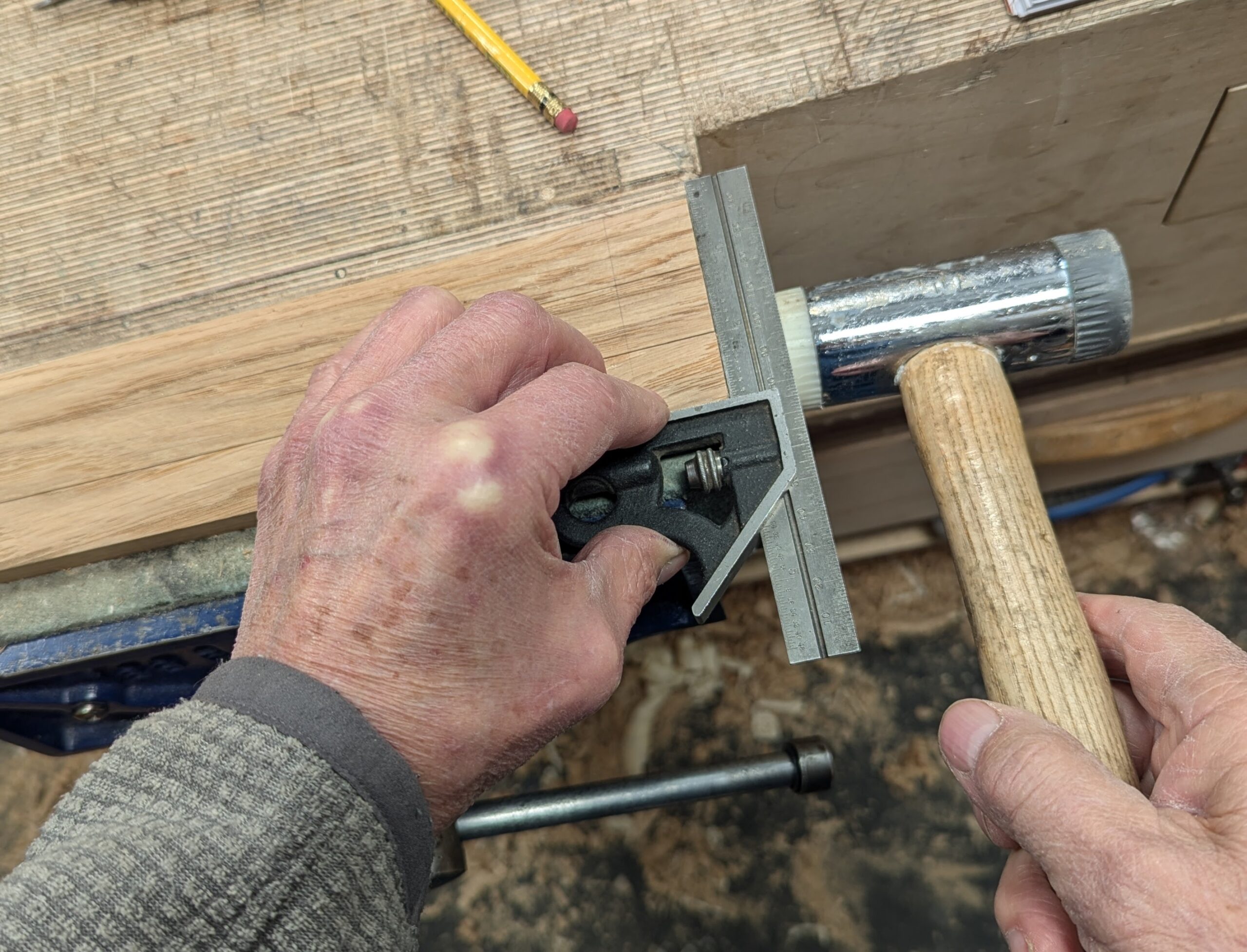
When making multiple parts to the same dimensions, I generally square up the ends to the long axis, clamp them in the vise or with a couple of clamps so that they are ganged up tight together for me to then establish cut lines across all the pieces, which then become my shoulder or cut lines. In some cases, I also mark knifewalls on a single piece to place other components up against it or clamped to it and take off marks directly from it. The important thing in all of this is to be absolutely certain of your accuracy.
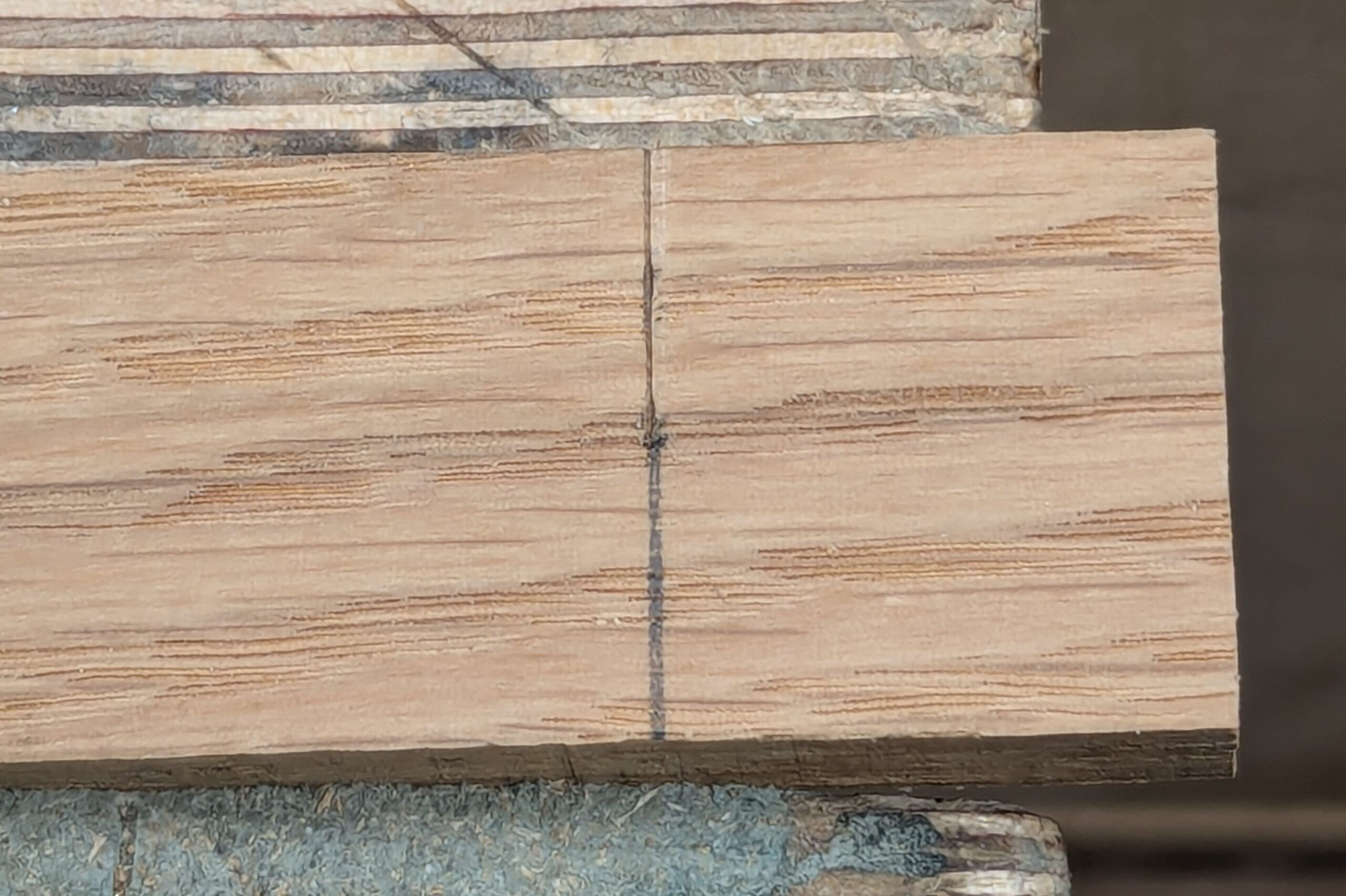
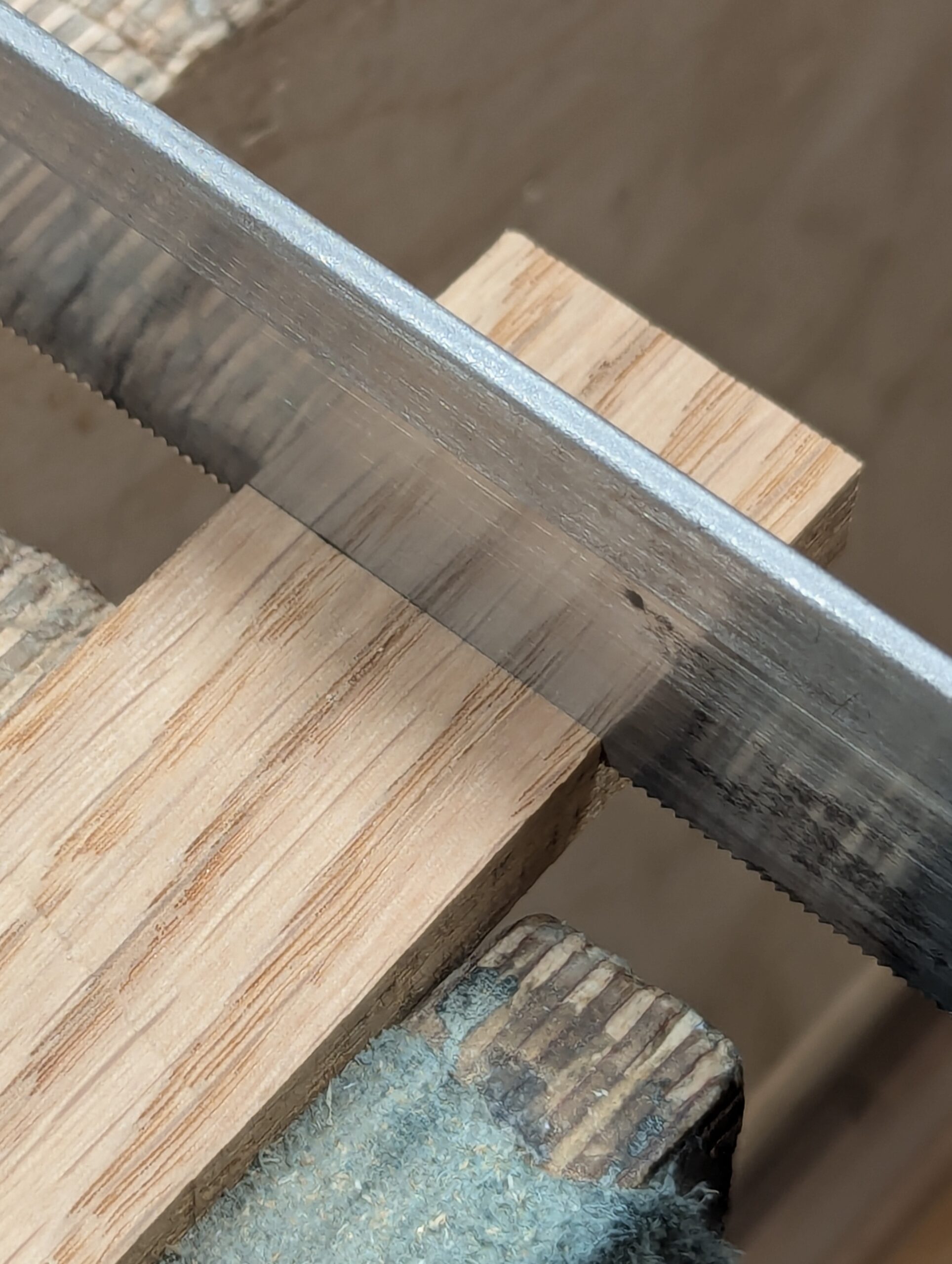
Transferring distances from knife marks is highly accurate and works especially well with thinner boards because they are more stackable and several can be stacked up over a narrower distance. Table legs, when heavy in section, are more problematic even when clamped, simply because of the awkwardness of size. Ganging the legs up for a single strike against a square with a pencil tends to be less accurate. I find it best to lay out one leg to reference to and then place each leg to the original as a take-off constant to reference and mark from. Our work working with hand tools is different than the machinists who set up distance stops, fences and height plunge limiters to pull levers and bump up wood to. In our work, we are limiting ourselves. We saw, plane and chisel to lines and knifewalls using our own internal consciousness, power, direction and control. We often create a small hedge against cutting into the line, and we are prepared to refine the cut with edge tools if we saw cut. Of course, it costs us to do this. In most cases, we have actually chosen this as a safety practise. By that, I mean, yes, we really picked this as a way of life in our day to day. We want it!
I want to say here something that is important. In your life or the life of another, it may well be a matter of expedience to machine some aspects of your work. You might feel surface planing on a jointer establishes the flat and twist-free surface you need to get you started. Hand skills in planing is not an overnight accomplishment. It takes time to both understand and feel what's happening beneath a hand plane. You are constantly micro-adjusting yourself through muscle and sinew to get a flat surface, and all of that sensing is coming to you through a lump of iron and a sharp cutting edge. Passing the board over the platen of a power planer is purely a matter of personal safety. The guards, when in place and correctly set, will give some adequate protection. That said, a friend once lost all of his fingers trailing them at the end of the board as he finalised the planing and neglected to relate where his fingers were in relation to the wood and the spiral cutterhead and on another occasion the SawStop and the anti-kickback feature didn't stop the saw from closing in on the blade and throwing the wood up and into an others face and eyes. There are inherent dangers to any and all machining, just as there are to hand tools.
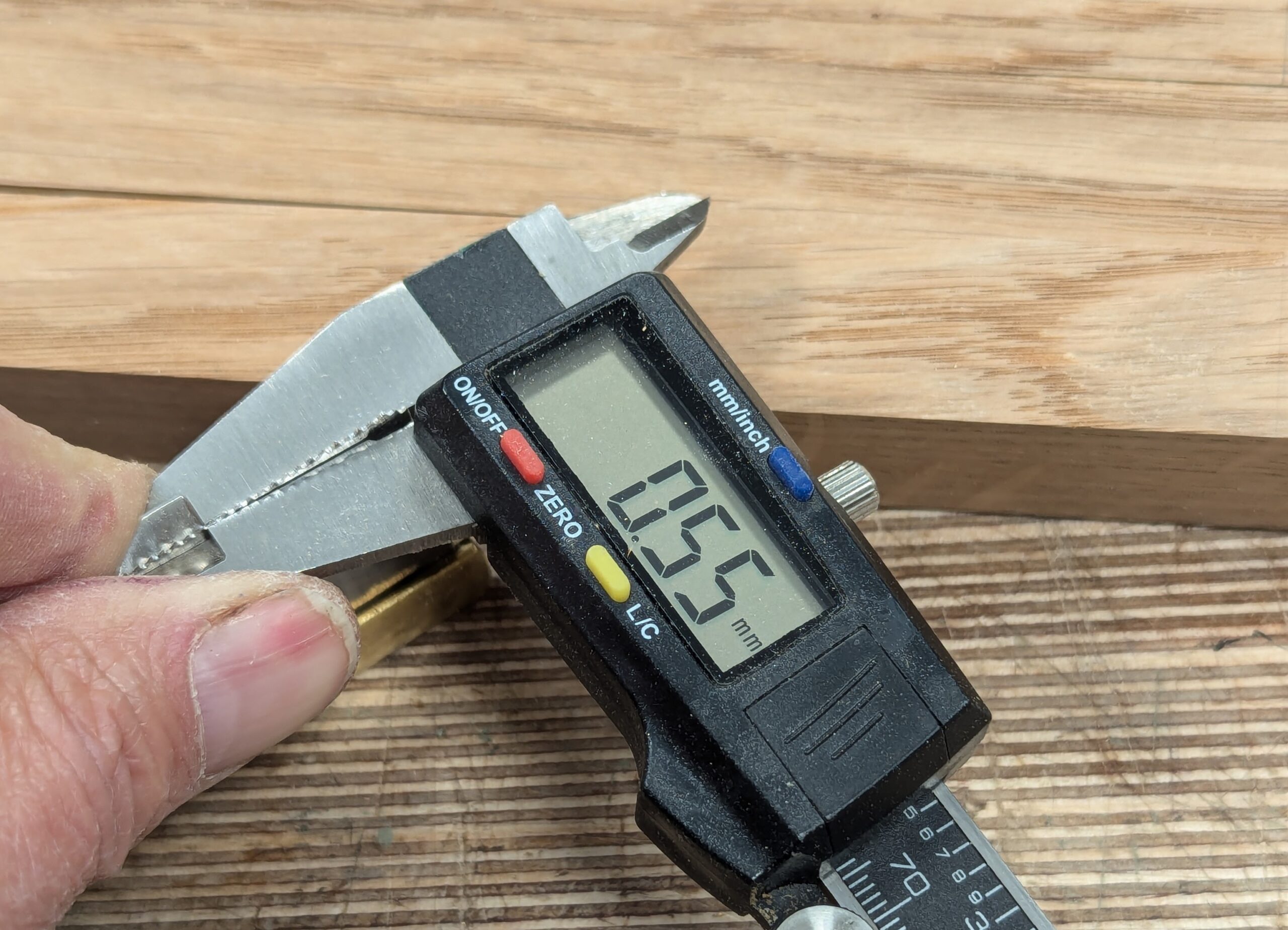
But stops on a cross-cut saw box works really well as a custom-made guide for some work, and I make mine as needed and fit them to which ever saw plate thickness I plan to cut with. Repeat cuts using this gives precision in length and squareness both ways to a range of procedures, but I only do such when I need more than a handful of same-sized pieces. Additionally, remember that we often adapt our tools to tasks they were not intended for. I sometimes make a short rabbet (rebate, English), by simply using my tenon saw to cut the two aspects of a rabbet. This saves setting up a #78 plane. And remember that I adapted a spare #78 to work as a scrub plane. These adaptations and adoptions are what we hand tool woodworkers do. For a really fine cut with a small saw, you can remove all or part of the set for special occasions, and then reset when you need set at some point later. This gives us versatility in our hand working. We adopt and adapt tools intended for other tasks to suit different aspects of our work to work alternatively according to the advantage we need and strive for.

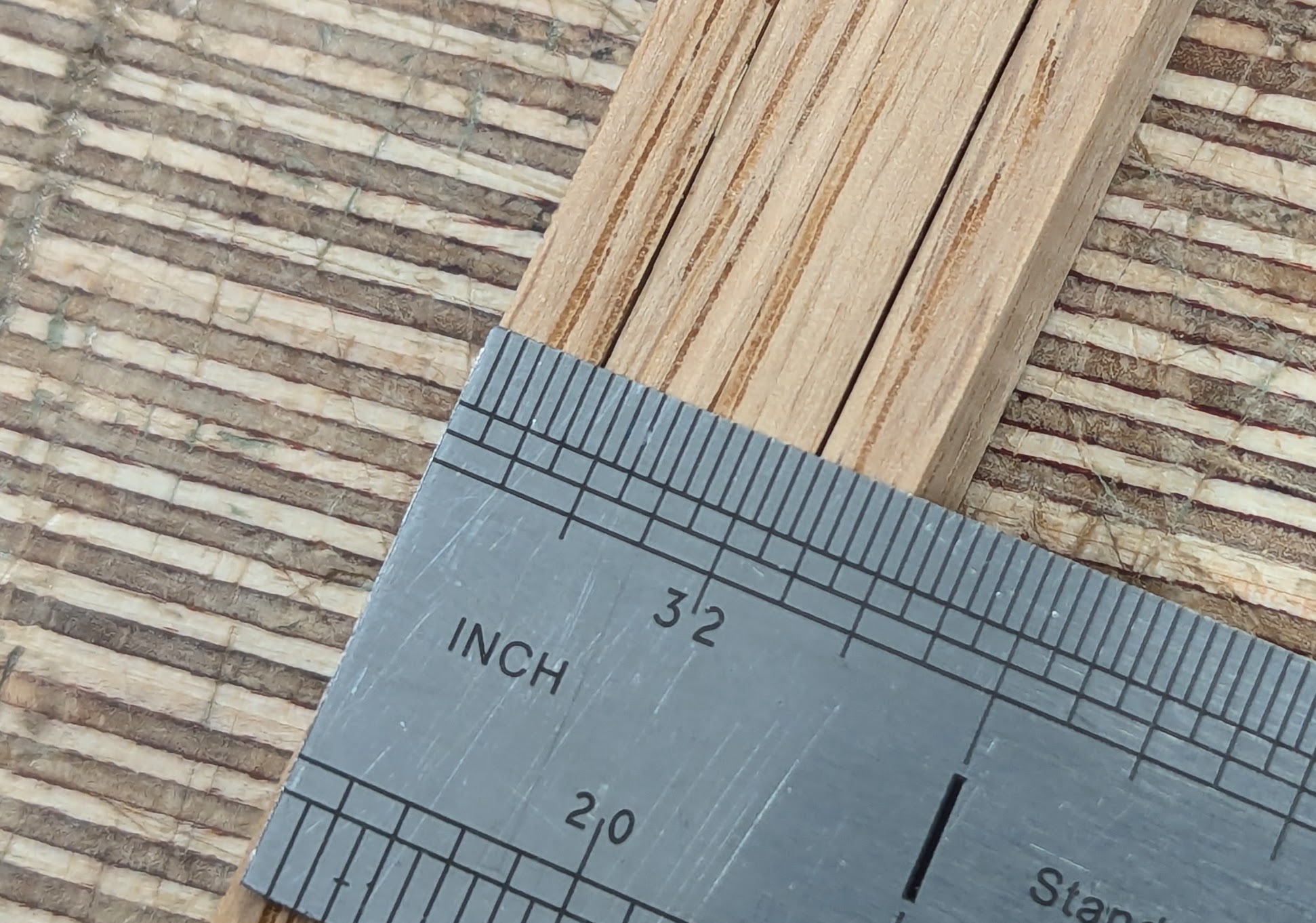
In machining practices, the presets are around the main rotary cut and axis of the machine's rotary cut via fences, depth stops, distance stops and then some added components with flip up, flip down elements that allow movement along or in elevation with linear movement or motion for further intermittent cuts etc, etc in the form of many, many jigs and guides. I have enjoyed this kind of working in the past but could never enjoy it now. But that is more to do with the lack of challenge. Making a jig for machine work is rarely too challenging if it's challenging at all, but making your body move, the eyes to align and then the linkage from fingertip to scapula and then the whole upper body to the lower limbs and toes to expedite the kind of exactness for that perfect saw-cut stroke on stroke, well, now that's challenging, high-demand energy that creates dynamism and there is no substitute for it with skilless jigging to eliminate it.
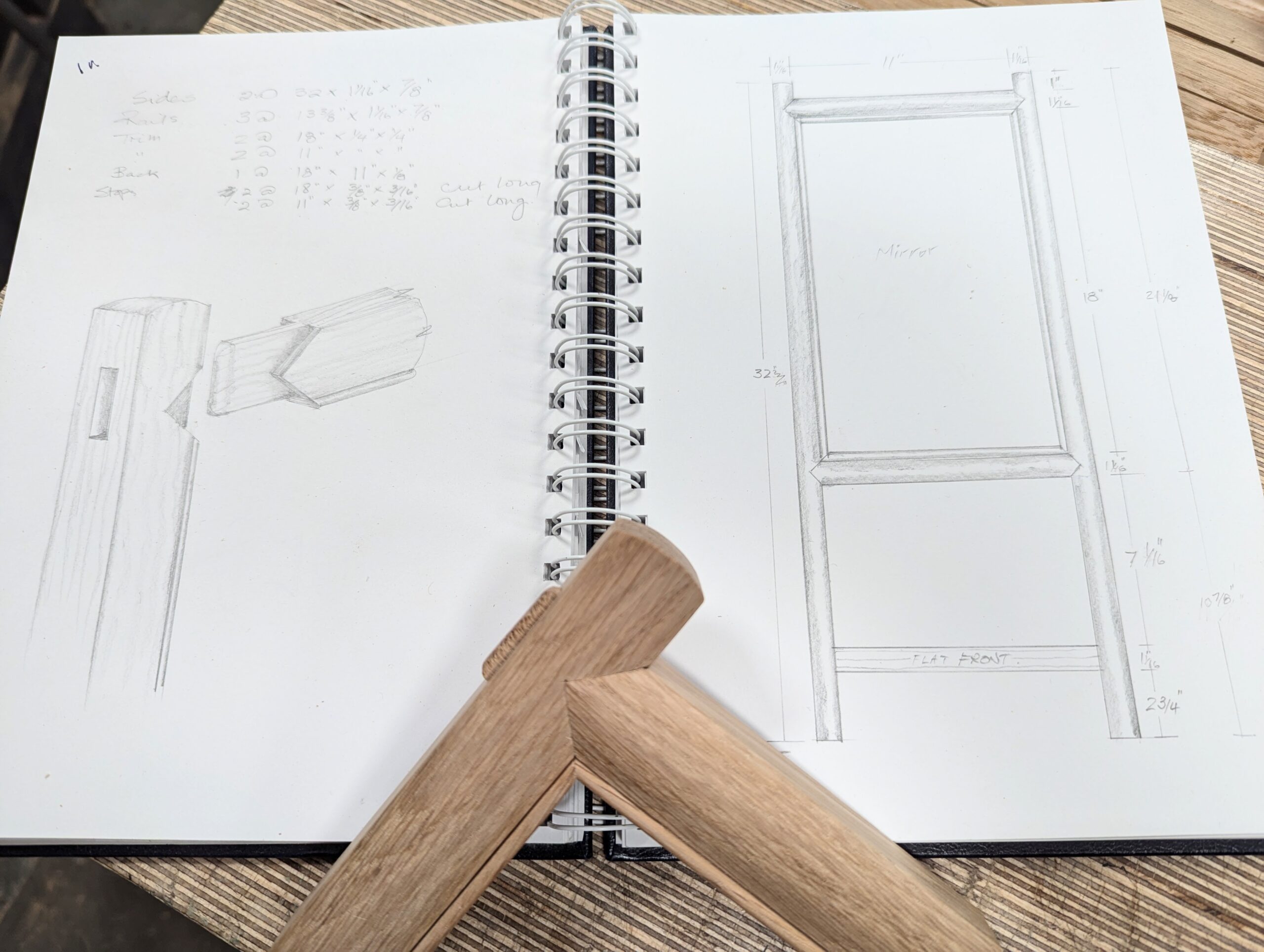
Part of my high self-demand woodworking, which is what hand tool woodworking is and demands and requires, if you're going to pursue it well, properly, and be good at it, is to also develop methods as you grow. They become yours whether you share them with others or not. Here I simply take a combined measurement from several same sized pieces ganged up together to measure and test my own levels of planing-to-thickness accuracy of my work. This will also test my squareness and parallelity and this goes along the lengths too. My pieces needed to be precisely 7/8" so multiplying 7 1/8" pieces three times will give me twenty-one, one-eighths or 2 5/8". It's a quick and simple cross-reference whether I use imperial or metric, and I choose one or the other depending on the multiples and how or by what they divide. My overall of 2 5/8" is simpler to divide and easier to see than 66.675mm, so I choose imperial in this case. And 22.225mm is difficult to see by eye with any degree of accuracy. I hope in this explanation that you can see and understand why I consider the things I do in my woodworking in creating solutions to problems engage my critical thinking to every step. A more scientific mind might just dismiss this as non-scientific enough and therefore more remedial and therefore of no consequence, but when you get to a certain age, it becomes all the more important not to ditch the mind and favour the ease of an easy calculator on a cell phone. In some tasks, I have ganged up and softly clamped twenty pieces together to divide the overall number as a cross-reference. Who in their right mind would do such a thing? Well, it depends on how much we care!
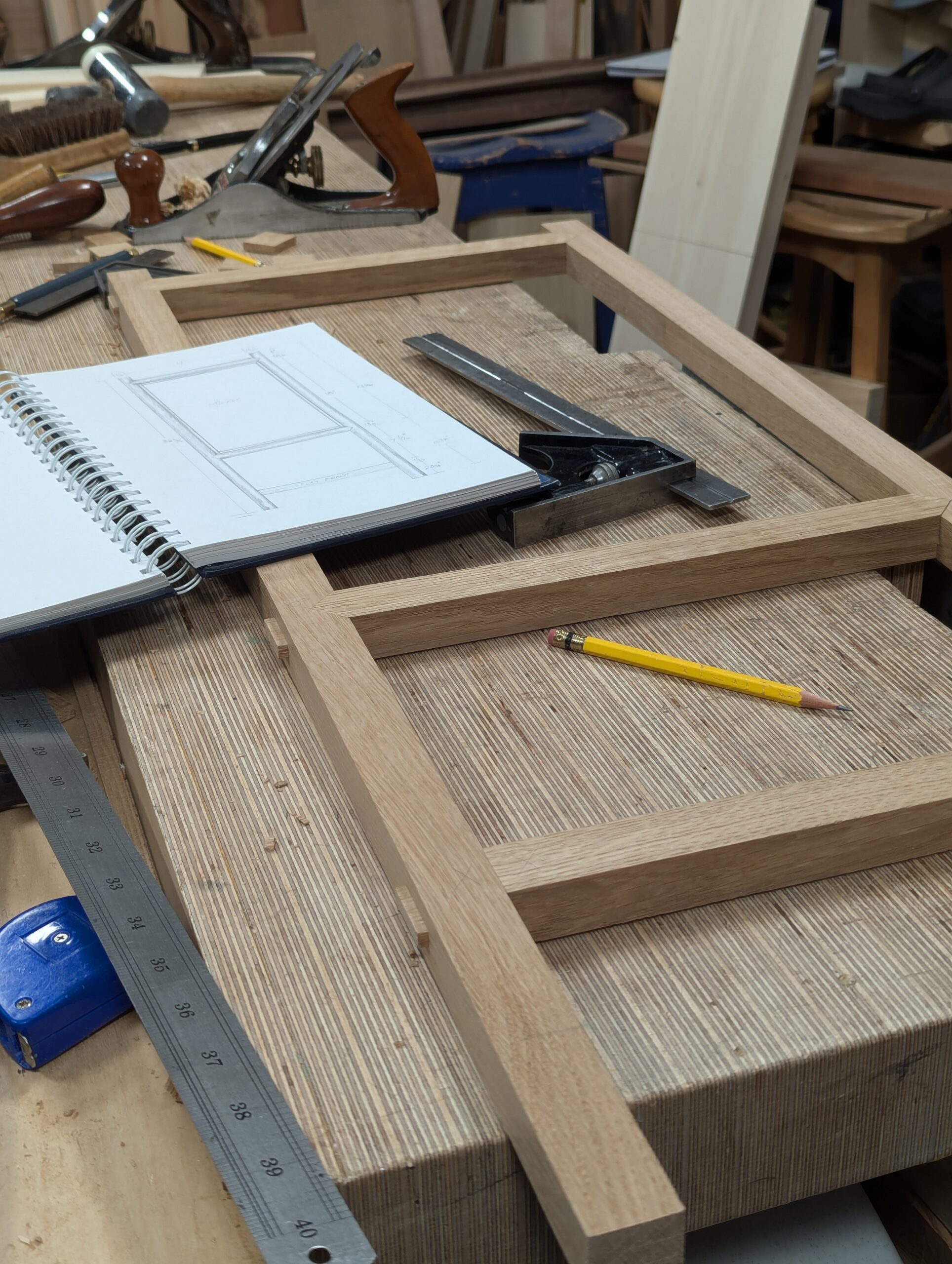
There are six mortise and tenon joints, four of which are the complicated versions with the spear-point mitres which allowed me to round the front faces once they are made. It's a clever solution that keeps the strength of a solid mortise and tenon and allows the decorative value of my rounded fronts, which takes place only after the joints are fully together. You have 8 mitres that need to be spot on, as you can imagine. Making this frame takes me half a day. That might just make it prohibitive to sell pricewise if I needed to sell it.
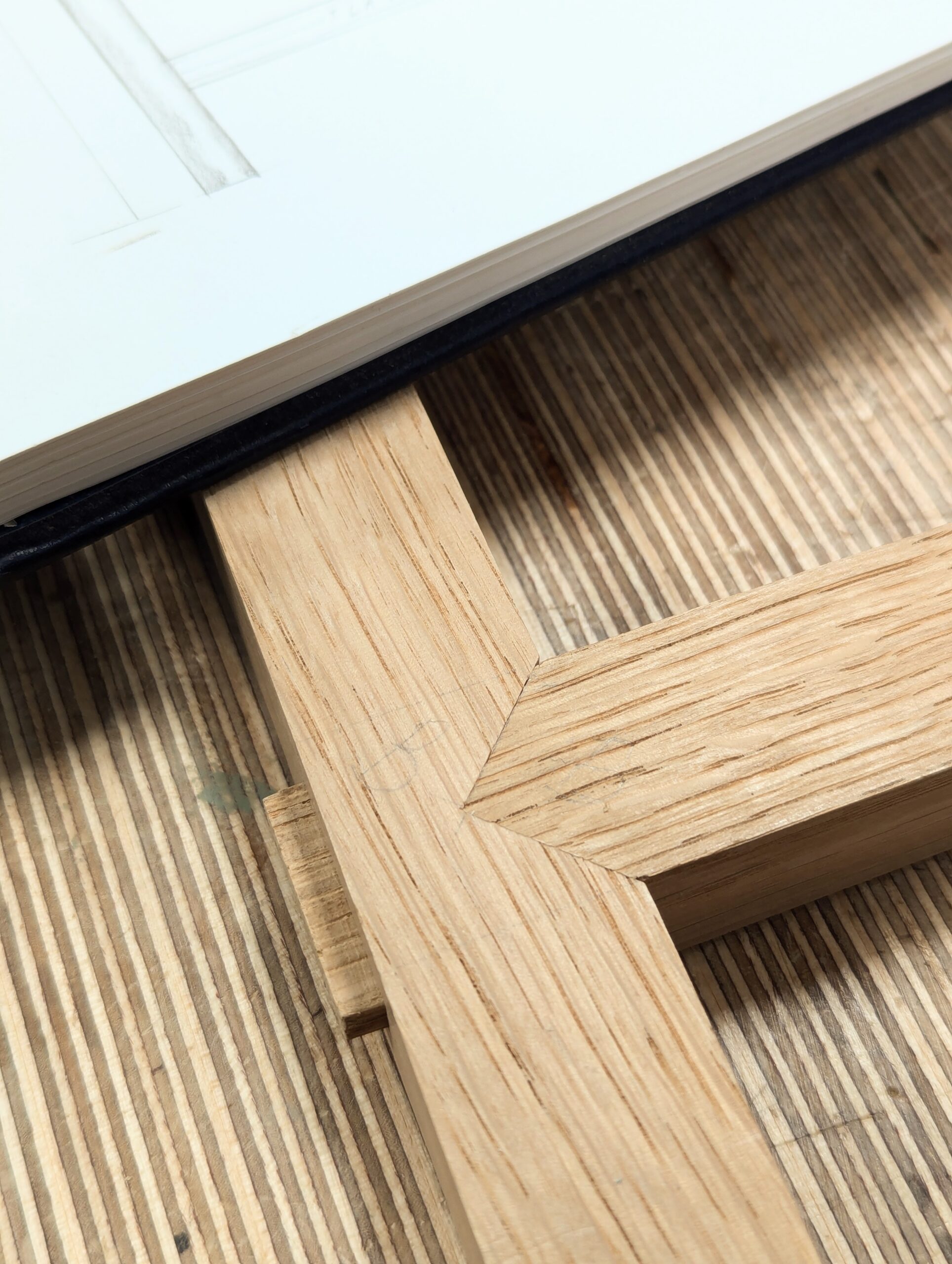
And then, of course, there are the visible exit holes, the rims, they need to be crisp too, not gappy because the through, roundover tenons draw the eye to what would otherwise be hidden. Who demanded all of this detail? It was the designer, I did!
But then, you see, no one compels you. No politician thinking she and he owns the worker and talks of them as though they actually create anything like jobs and apprenticeships. You know their names and how they speak: "We're creating two thousand new jobs!" as though they are. It's working people who create worklife and people like me who volunteer into family care that covers every area of our family life as much as that is possible.
Volunteer is a MASSIVE word with dynamic power. I made this complex frame that belies its inner construction and volunteered into the design and making because I wanted it and not by the influence and power of any other. Volunteering into all that we give to life is the core element of sincere altruism, not that I am an altruist. That is the rarest breed of person, the very rarest volunteer you may never have the privilege to ever meet in a lifetime, one who gives only from the deep of an inner soul with the only recompense being to hope in another and perhaps see life bettered, no matter how small the increase to the other's benefit.
Comments ()