
A New Week
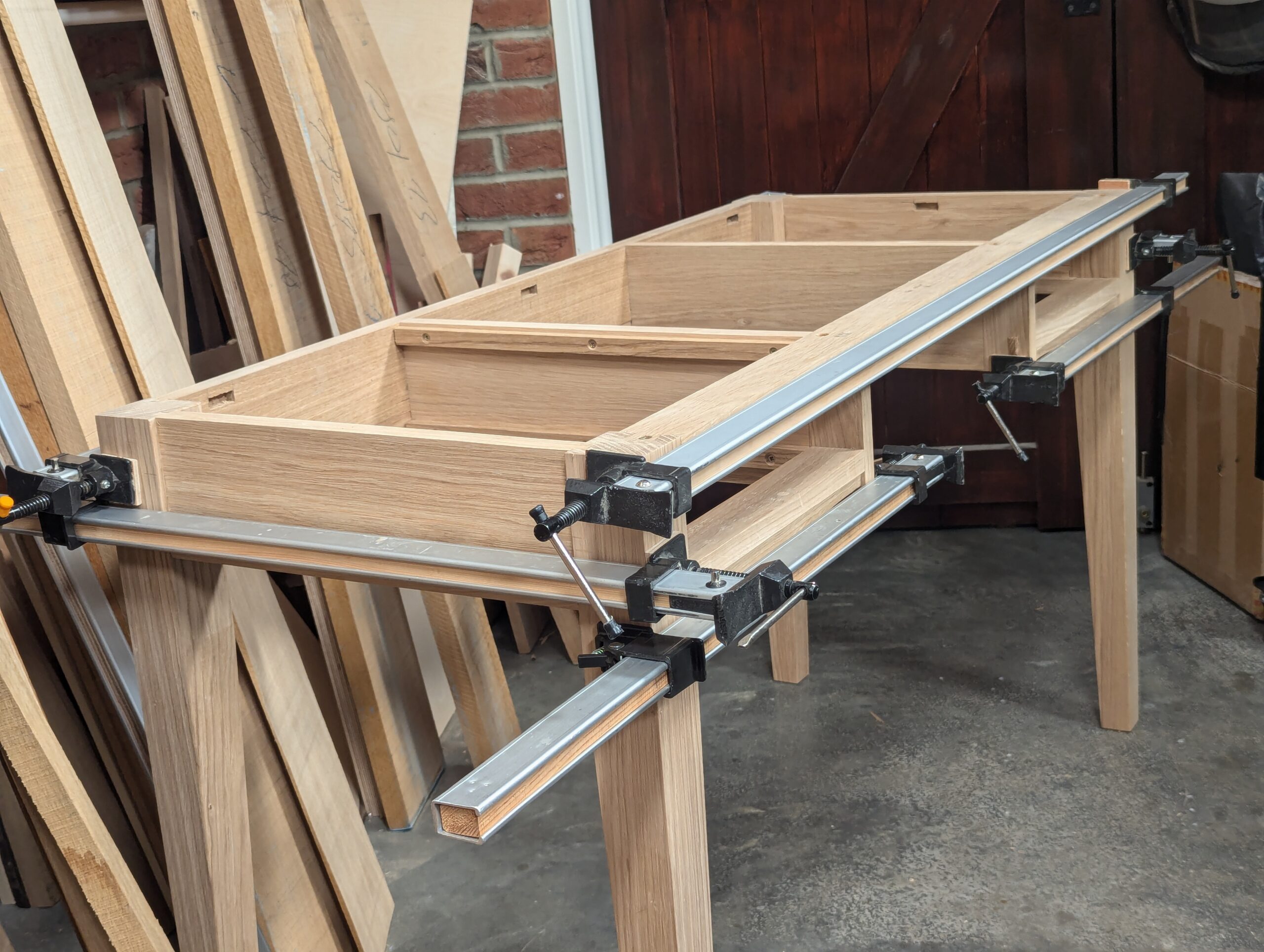
It's a seamless transition for a maker to slip through each of his days knowing the direction ahead and identifying every obstacle he knows he'll face long, long before he gets there. That carcase, in some ways, might be mistaken in its spelling where a word is spelled out wrongly as carcass to name a framed skeleton supporting interconnecting bone as sinewed structure of any animal that stands free as a carcass devoid of flesh and having lost life in and of itself, yet our carcase stands yet ready to receive doors and drawers; hence both words would work equally well in describing a skeletal framework made of wood or bone.

My carcase waits in steady readiness for me to begin my new week. My two days of rest readies me as my thoughts engage in the unfolding of plans a headwise condition gives me. Is headwise even a word? Well, I wouldn't use it if it wasn't and though it is something of an archaic term, I see it as still valid when used appropriately. In my life, it simply means that because of my experience in life, I can think ahead of possible obstacles and plan to negotiate them should they present as I move through the next minutes, the next hour, day, week or even year and years with my headwise way. Terms that do not quite replace it are thinking ahead, forward planning and such like that. Headwise speaks more of a profound experience, knowledge that equips, as that which enables, that engages all the terms and takes me to plan a negotiation in the face of anything that presents as obstructive, basing my answer on previous experience and my ability to critically think.
Headwise facilitates progressive headway based on that which became your owned wisdom. We use headwiseness (not a word`) in the everyday of living. Whatever the mode of transport, we anticipate all of the issues we can before we leave to plan our way through perceived pinch points and usual trouble spots. Planning routes is one thing but negotiating as we go takes critical thinking and a willingness to change route, speed, direction, lanes and all the rest.
Assembling my project for dry runs and joint tests obviated points at which clamping wet-glue joints could or would be problematic. Screws seemed to annoy some of the more 'professional' elements in my audience. They cited screwing wood-screws into end grain as being some kind of weakness. It was silly, really. They said the screws would strip out the grain around the screw thread. Well, it can, but it won't because I am aware that exerting too much power would do that and therefore I work sensitively. Also, screw strip-out will depend on the diameter and length of the screw, as will the pulling power behind it when seated fully. A two inch, 5mm diameter screw step-drilled will easily resist 400 lbs of pull and apply 400 lbs of seating power, which is many more times than I need to temporarily or permanently 'clamp' a joint until the glue dries or cures.
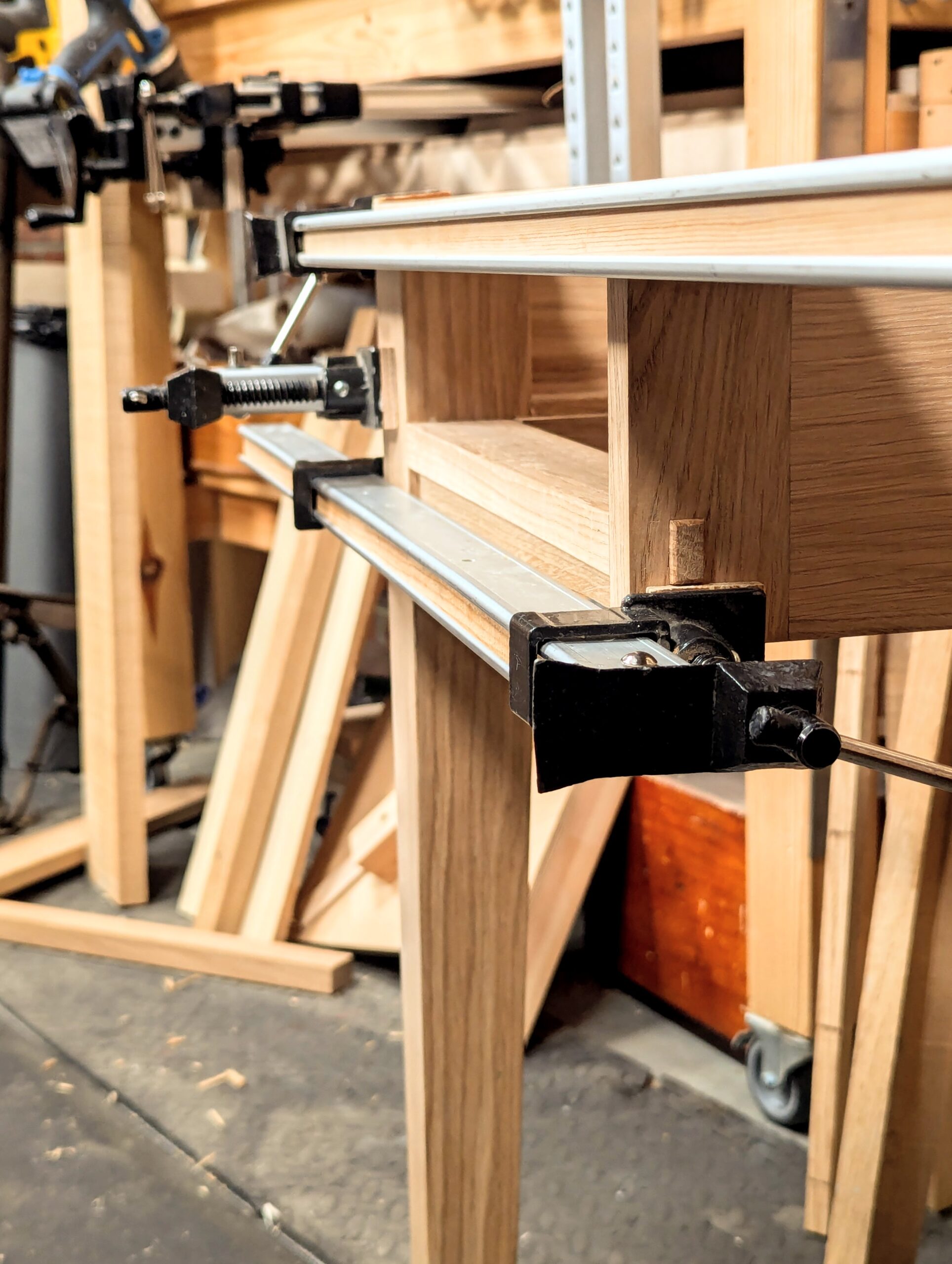
The good-enough reasons for using four screws are these:
1 They have optimised pulling power centred most directly where the applied pressures are most needed
2 They often reduce or minimise the need and number of clamps
3 Often, clamps cannot be applied in awkward places or to awkward shapes
4 Clamps at these pinch-points prevent use of clamps on other joints in the same piece
5 Additional resistance to joint separation long term
6 Additional support and strength
7 Speed needed during multiple-joint glue up (as in my case of 22 joints)
8 Comfort for artisan
9 Pure focus
10 We should all question both legalism and authority because legalists often work more as authoritarians from something they read that is years out of date but perpetuated mindlessly like laying planes on their sides for a century when it was intended to stop schoolboys in oversized classes from dumping planes on top of angular squares and steel hammers.
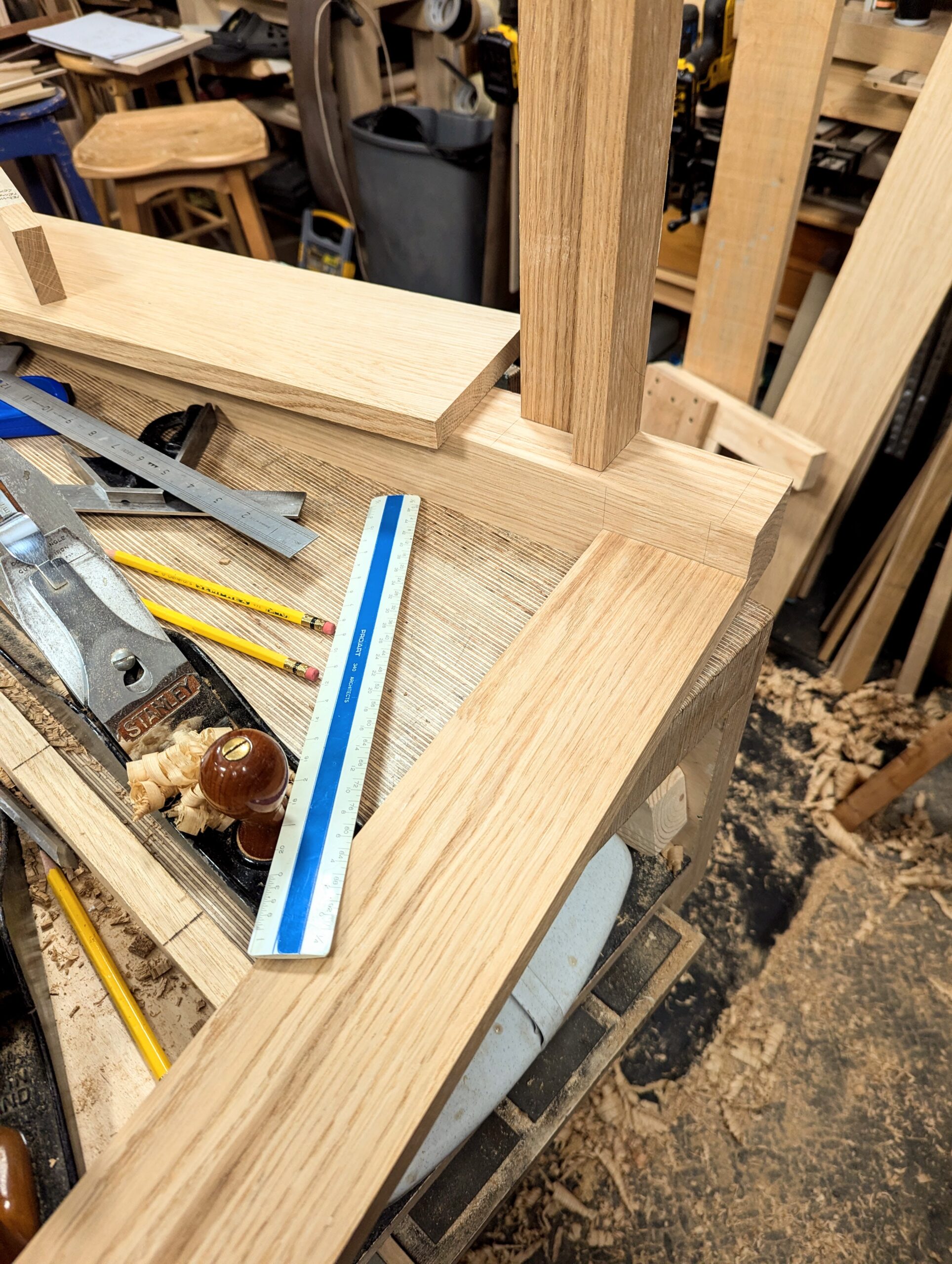
140,000 people saw the post on FB in the first 24 hours, less than half a dozen questioned the use of a screw in the centre of a dovetail joint. That's because I posted something similar a year or more ago and hundreds queried my doing it as though it were sacrileges. It was a perfect occasion to give good reason for doing it, and thousands upon thousands became better educated. This time, some were genuine enquiries, whilst others were plain legalistic (as in the last time). They cited the reasons above for not using screws without asking what the length and diameter of the screws were, what types of screw threads they had or asking why indeed I chose to use them. Sometimes we can divide a glue up into frame units and step the process over a few hours. Sometimes time does not permit this as might other reasons like simply wanting to align everything in one comprehensive evening out of components whilst there is still room for manoeuvre through adjusting the clamps, etc.
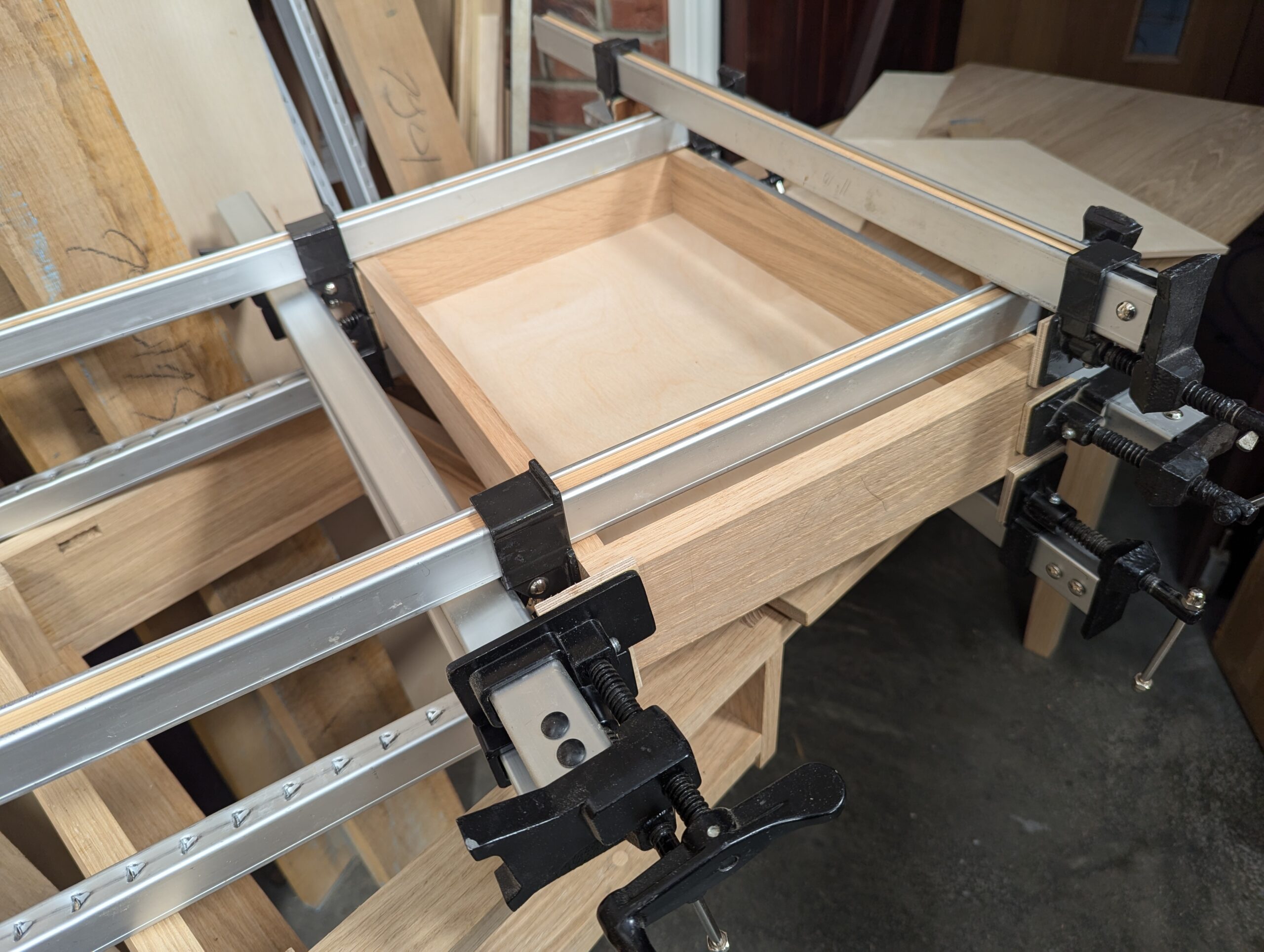
Today, I made one of my drawers. I'm surprised how much, after making thousands of drawers in my lifetime, I look forward to just making a drawer.

Comments ()