
Woodworking: From a Lived Life
My life working wood spans 60 years. It's a long time to have worked it six days a week and for longer working days than most: ten- to 12-hour days for much of my life was quite normal and often longer. The important thing is this ingredient: I volunteered every hour I worked into it. At least that's what I have convinced myself of doing. On the other side of sixty years since I first picked up a saw or a plane, a chisel and a mallet, I'm still well. How about that.
Woodworking alone would, in itself, always have been enough. Given my time again, I would most likely take the same path, or at least one very, very similar to it. Hopefully, I might just make a few less mistakes through bad judgement and trusting the wrong people, but in actuality these happenings have real value. They've made me stronger, more considerate, I think, but then more resilient and more determined to fulfil my vocation. Patches of sadness are equally the valid part of life as those joyful ones, and both usually stand out for good reasons. The sad, more reflective ones sensitize us; they raise the red flags of warning to help us to at least consider which path we want to take and possibly steer us away from repeating any harmful things that can damage us or, worse still, those we care about most that are close, but then too including the ones we've never met and are never likely to.
Working on my autobiography to fill in some of the gaps I've kept to myself and actively avoided sharing for two decades has been greatly challenging. I liken this to the challenges I've faced with many of the more complex designs I've made from time to time. Thinking about these deeper issues has made me realise just how much it was those complex pieces that helped me to persevere in the face of the challenges outside of woodworking, but somehow still connected. Working towards a fulfilling and even beautiful outcomes is indeed an art in and of itself. It means taking the challenges that try to hurt and harm your work full on. Making my pieces, designing them and making them work meant forward-thinking, detailed and sensitive planning, deep consideration and yes, critical thinking. I had to get through some quite complex issues to establish a composition, and every composition comprises mostly lots of very tiny steps of decisions towards the completion of a whole.

Looking back over my decades, I can see now how rare a thing it is for those in oversight to apologise. And by apologise, I don't at all mean, "Oops, oh! I'm so sorry you don't see this the way I do!" but more, "Oh, my goodness. I have been so very wrong in this. Please forgive my insensitivity and lack of consideration. I also mean working with and under those you may have known for decades who never once said a genuine, 'Sorry, Paul!'
Part of my midlife crisis, if that is even roughly a qualifying term in my case, was not altogether my doing, but yes, I will accept partly, was working alongside supervision where several men were doing things wrongly, failing to seek the truth and ignoring what they should have done rightly in several situations. One thing that I do remember for certain is that they never once apologised with any sense of sorrow for the wrong they did to me. So my midlife crisis was not suddenly being aware that I was in a transition in life, struggling to find my identity and lacking self-confidence. I found the answer to that, first in answering my vocational calling when I was mid-teens and later on in my midlife when the struggle showed the strength of my convictions about things I had little control over. I understand there are psychological struggles if indeed you have not discovered the life you want to live and are controlled by earlier decisions you cannot change. I get that, though I have not experienced it myself.
Rarely have I had feelings of anxiety beyond my control, restlessness has never been too much a part of my existence, and that's because my work has always been so very rewarding rather than anxiety-causing. Even in the man breaking my ribs earlier this year during a cowardly attack from behind, it was woodworking that aided my recovery with a sense of purpose.
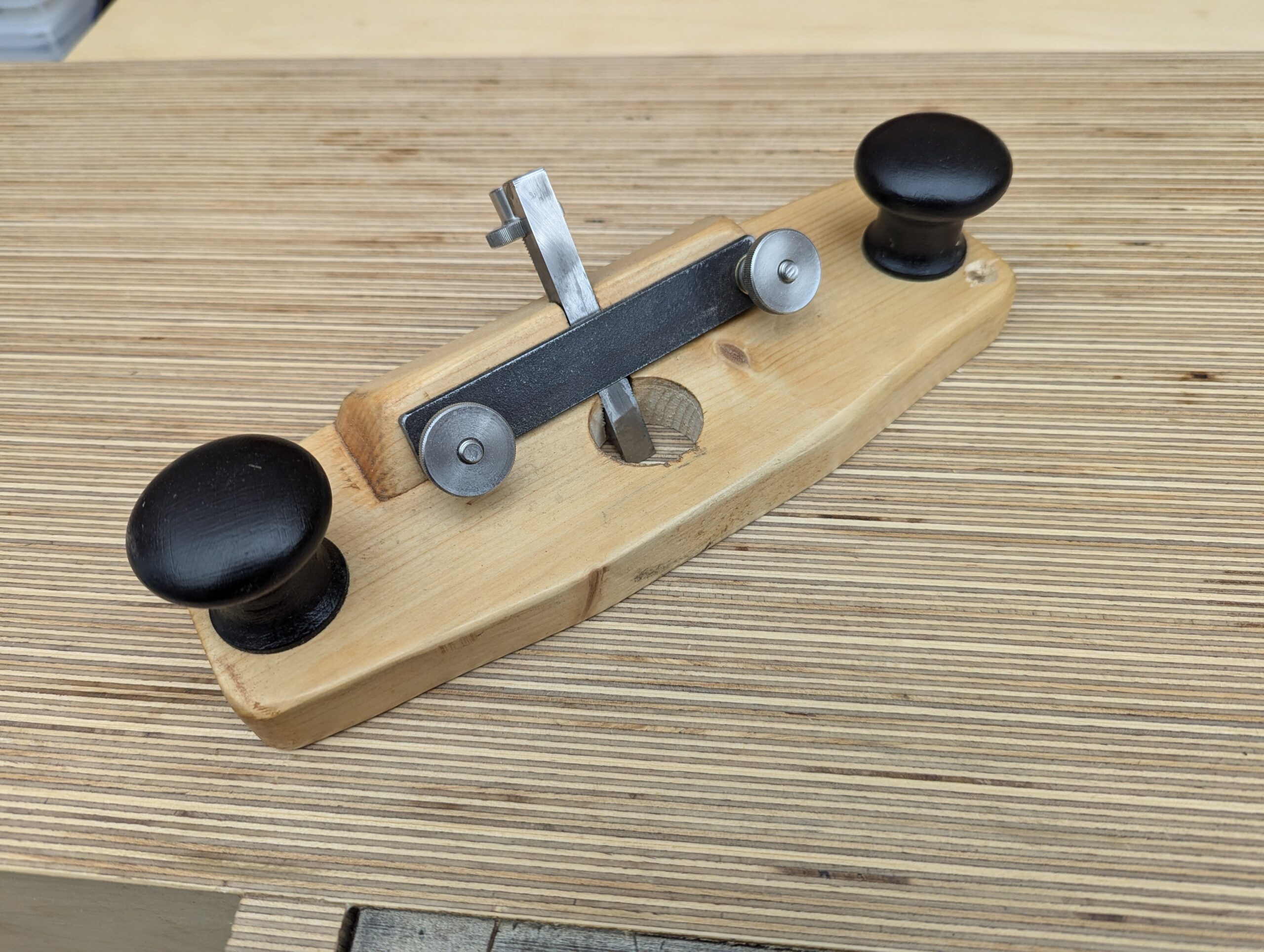
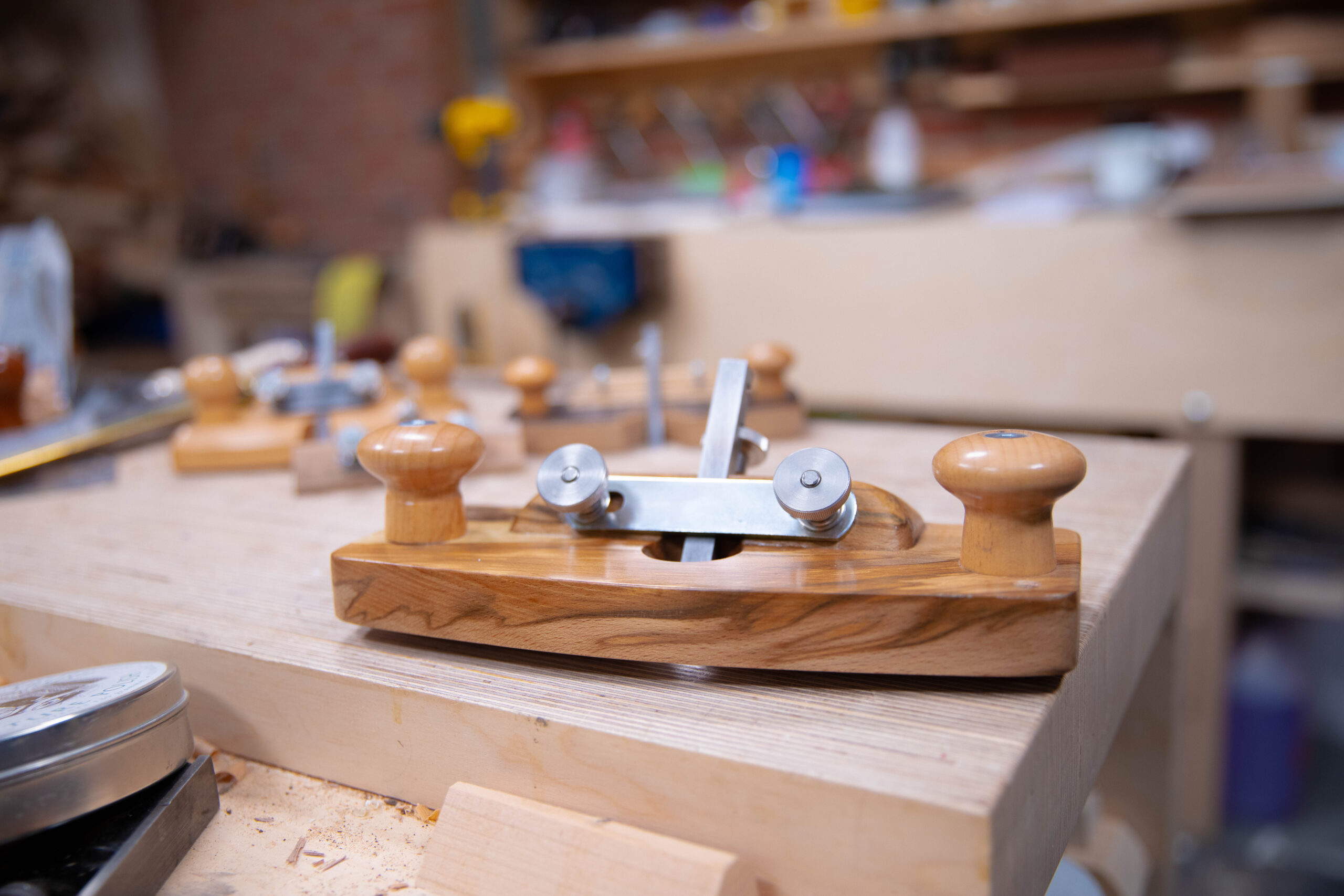
I have never been dissatisfied with life, nor have I yearned for any particular significant life changes, either. The quest for something better or new can be motivated by dissatisfaction with the status quo, but it can equally be that you simply want to invest in something of true substance with future outreach. I have continually striven to improve life, but never because life is somehow letting me down. In my earlier days promoting hand tools as a way forward for the majority seeking true skill, I introduced the all-metal router planes to show that they could be used for so much more than just routing out a dado bottom. No one used a router plane for refining tenon surfaces or as a marking gauge, for instance. At that time, you could indeed pick them up on eBay for under £20 and there were dozens of them there. Over a decade period, through my videos and writings, they gradually rose year-on-year to average £150. I had to become a solution. This was my prototype solution router plane you could make for under ten pounds.
When my children were quite young and came to me with a problem I thought that they could resolve, I simply said, "It's good if you can be a solution." They then knew that I believed in them and that they could take charge of whatever was wrong. That said, there is nothing wrong with anyone questioning their life choices and contemplating new direction. I think that is what is happening through my work today. Those who are indeed facing issues in their lives need to find a way of finding fulfilment beyond their normal daily work or life. That's why I put together the phrase, 'Becoming a lifestyle woodworker.'
There will only be a few of my ilk in the present world of woodworking that have actually lived solely off working with their hands in the same way, and that is unlikely to change. Also, with increased longevity of life span, who knows when I will need to stop? Working ten years past your sell-by date in the same craft for me has been both the scarcity and my icing on the cake. I do not meet others like myself any more. Hard to imagine but the average lifespan for a man living in England a hundred years ago, and that's only 25 years more than I have lived now, was 56 years. Today, the average life expectancy is 79 years, so nearing 25 years longer. `Despite both my father's and mother's severe degree of ill health in their latter years through a stroke and long-term diabetes, they both lived into their mid-eighties.
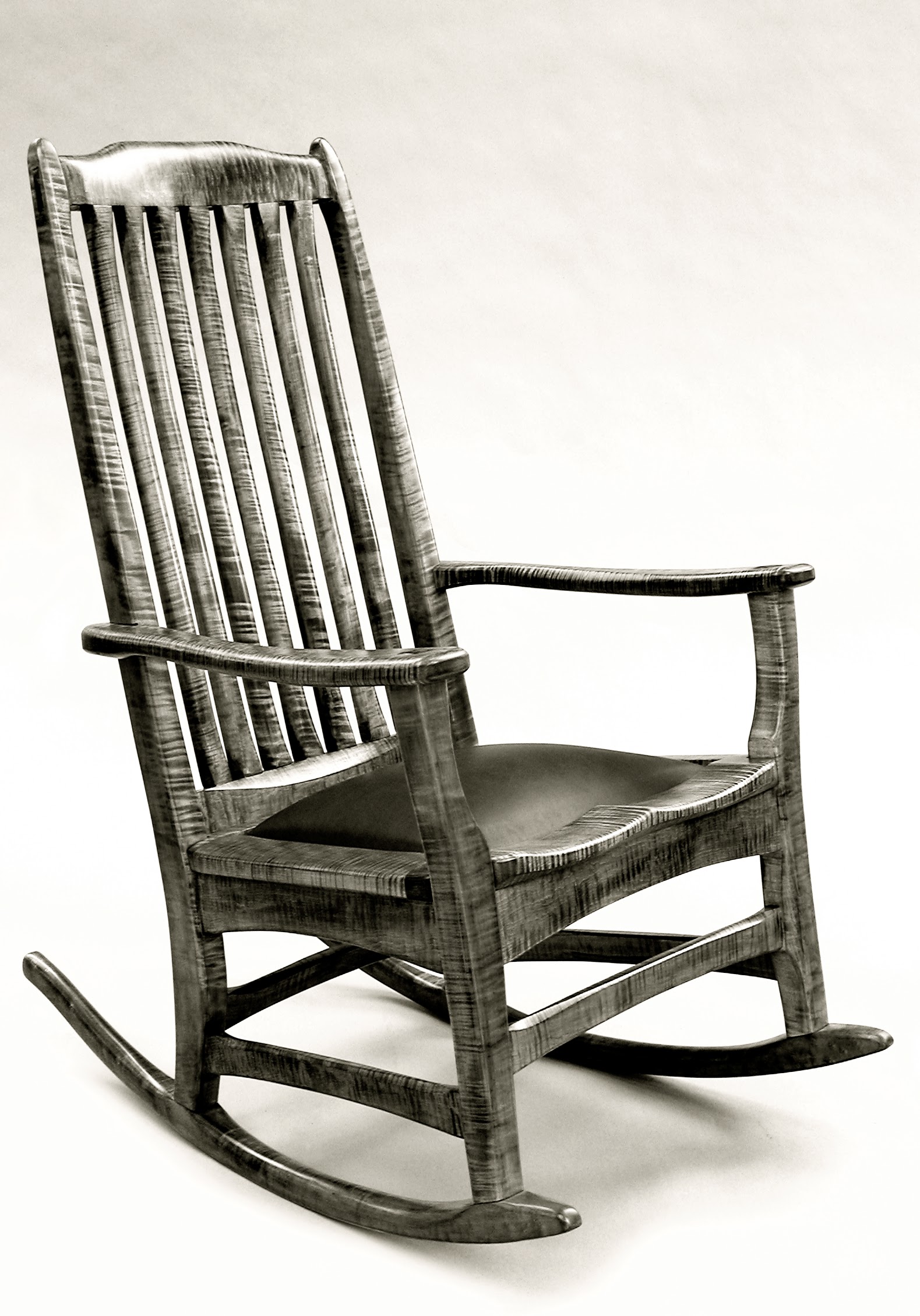
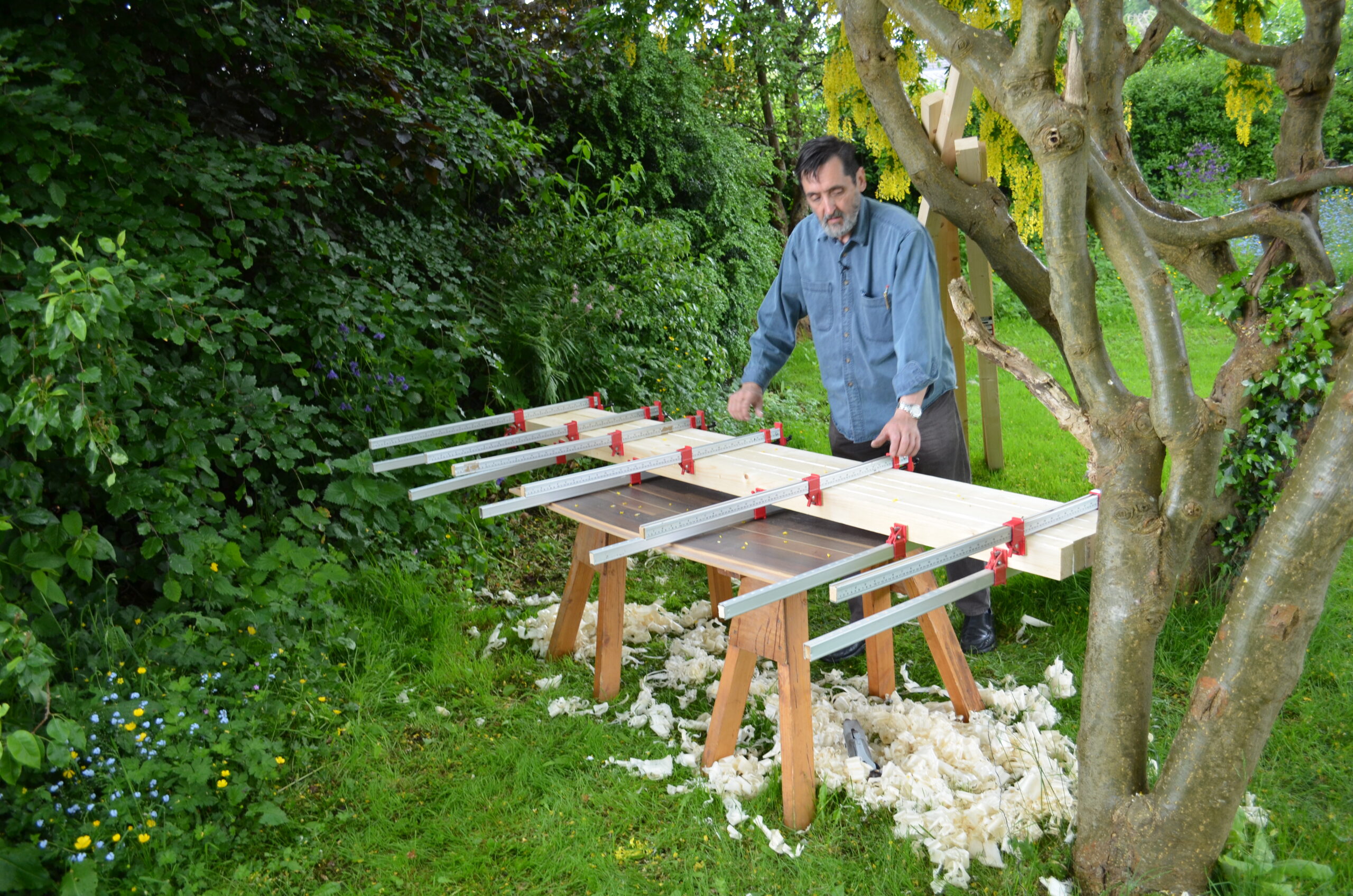
I think that without my work I would have wasted away. The guts of it has never changed. I make everything using hand tools, with the occasional use of a 16" bandsaw for stock size-reduction. My methods of work are definitely quick, efficient, enough for me as a designer-maker of one-off pieces. They minimise disruption in my workflow and allow me still to choose stop points if it pleases me. I allow occasional distractions if I want one. I see nothing wrong with that, after all, I am my own boss. Whereas, for the majority, woodworking, in the processing of wood, has become just a series of machine processes ensuring rapid delivery. This is true in both amateur and professional realms. I, on the other hand, want the process only high-demand hand woodworking that hand tools give me. I not only want the exercise of handwork, I need it for the better health maintenance and stamina it always gives me. The added and consistent gains to my cognitive functionality, brainwork if you will, cannot possibly be had any other way, so machining wood can never be a substitute because it cannot offer anything like the same benefits, though I understand that machinists might believe it can. Why do I say that? I say it because there are too many ingredients missing when wood is worked primarily or wholly by machines. Of course, my criterium is still absolute efficiency, but efficiency along with skilled woodworking.
Living over in the USA for half my woodworking and indeed my working life, 1987 to 2009, I saw how speed-woodworking was without much exception always pre-eminent and, to achieve that, woodworkers relied on machines for 95% of their woodworking to achieve that. In my world, very little if anything at all comes from a machine-cut edge. You can reverse that percentage. For me, almost every cut made comes from the edge of a hand tool I sharpened without using or needing any machine, and every edge always surgically sharp. The reason I say these outlandish things is not just to be iconoclastic, though. Not at all. When you provide the total power, energy and direction through your enthusiasm behind the hand tools, you deliver by a full-handed mental and physical grip from every part of your body and especially the brain. Your brain is thinking ahead, deciding methods and techniques you'll use. The accuracy is delivered by both eye and hand guiding the tool into the wood. In my world, this has become the truer power in woodworking.

Often, the question that comes back to me as I defend my craft as a viable option even against the so-called power woodworking world is, "Isn't the power woodworking of today simply the more advanced way of meeting today's high-demand needs?" The question for me has gradually become this: Is machining wood the same thing as woodworking? The kind of argument people present is to say that one is simply an extension of the other, when in reality that is mostly not the case at all. In fact, machining wood is the exact opposite. In machining, we inevitably pass the wood into the machine and then follow a mechanical path of linear progression be that following a fixed passage such as a fence or bed or, alternatively, the machine itself is following a fixed path into the wood as in a chop saw, a radial arm saw, a mortiser, a planer or a jointer, tenoner, etc.
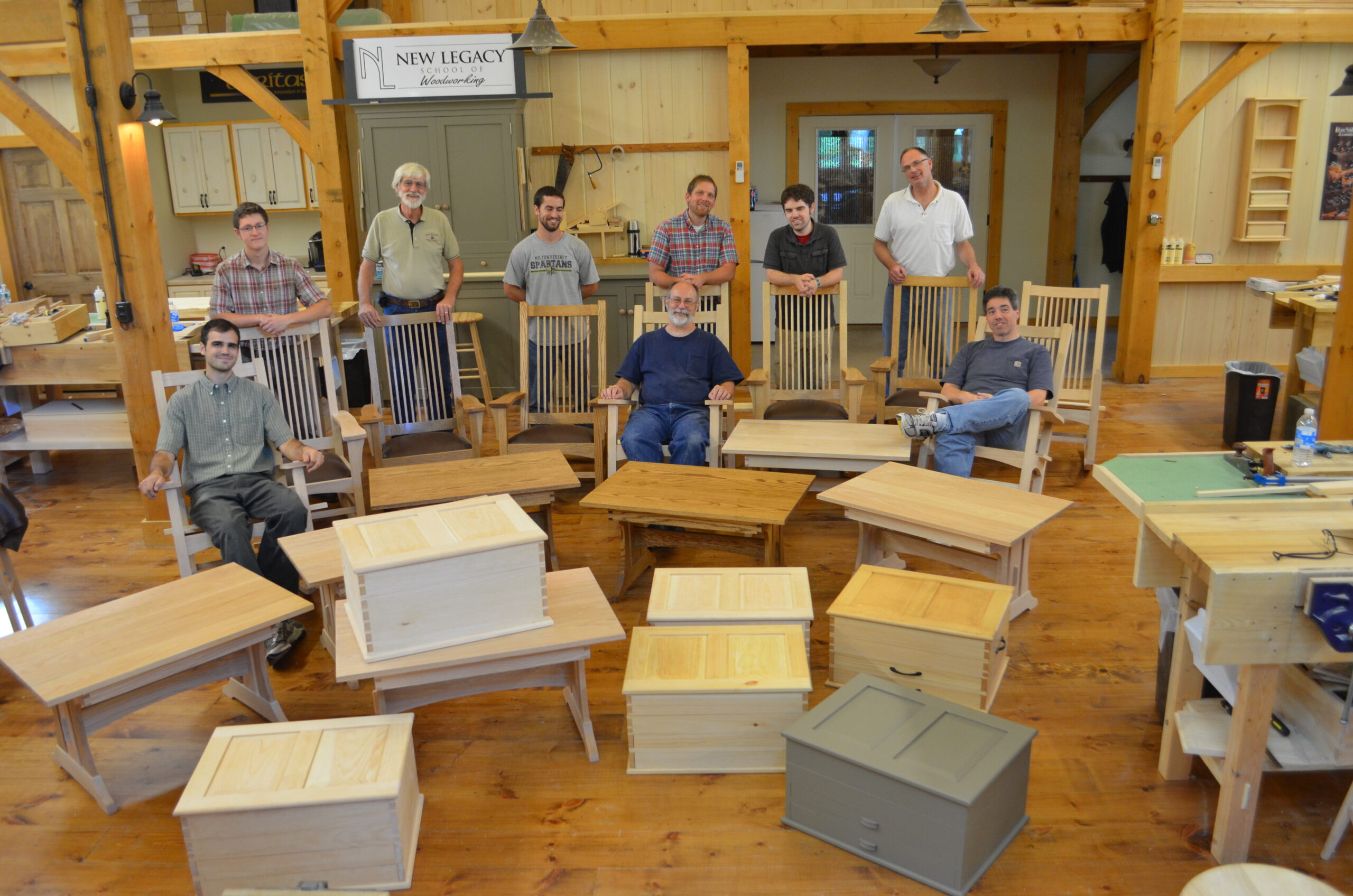
In my world, woodworking generally divides into two areas of dominion. In the one, we have the essentiality of skilled working that engages the whole body second by second by second throughout every minute of the day's working. In the other domain, we have mechanical settings that govern the performance and capacity of the machine to replicate cuts repeatedly in ones and twos or thousands and even millions. The skilled set-up of machines takes only minutes or even seconds, and by this the need for skilled working of substance and depth is minimised. In that domain, we see how we have distanced ourselves from the essentiality of skilled workmanship to gain dominance of lowered cost and increased competitiveness.
But it's not too late for anyone wanting to simply add depth to their woodworking. In an eight-hour day, take half an hour and determine you won't turn on a machine. Work for half an hour with hand tools. You might feel clumsy and clutsy at first, but after a few tries you'll gain mastery and look forward to it. But make sure you start with sharp-edged tools from your mastered sharpening skills using your own hands!
Comments ()