
Narrowing the Chisel Options
A workhorse and a one-type-suits-all to get you in the saddle. Believe me, they work!
For some time, probably sixty years now, I have reflected on chisels, types and functions. General chisel work comprises two tasks that in no way are the same and therefore often set the tone for some discussion with those starting out. For the bulk of our handwork, we use them to either chop into wood, split it from the end of end grain or pare cut to reduce height. Hinge recess are achieved with both chop and pare cuts. In mortising for tenons, we mainly chop the bulk and follow on with a small amount of paring for correcting direction. Tenon cutting with chisels is faster with split cuts to remove the bulk of stock from the cheeks of the tenon and then pare cut to the gauge line and shoulder lines. For housings, housing dadoes, etc, we chop a series of inline chop cuts to separate and weaken the fibres by a short series of stop cuts that sever across the grain, followed by pare cutting be that from the open side if it's a hinge recess or bevel down if it's a four-walled recess say for insetting hardware or inlaying another section of wood. For mortising, 98% of the work will be chop-cutting only. Between each chop cut, we leave a margin of somewhere around 4-5mm, depending on the wood and work types.
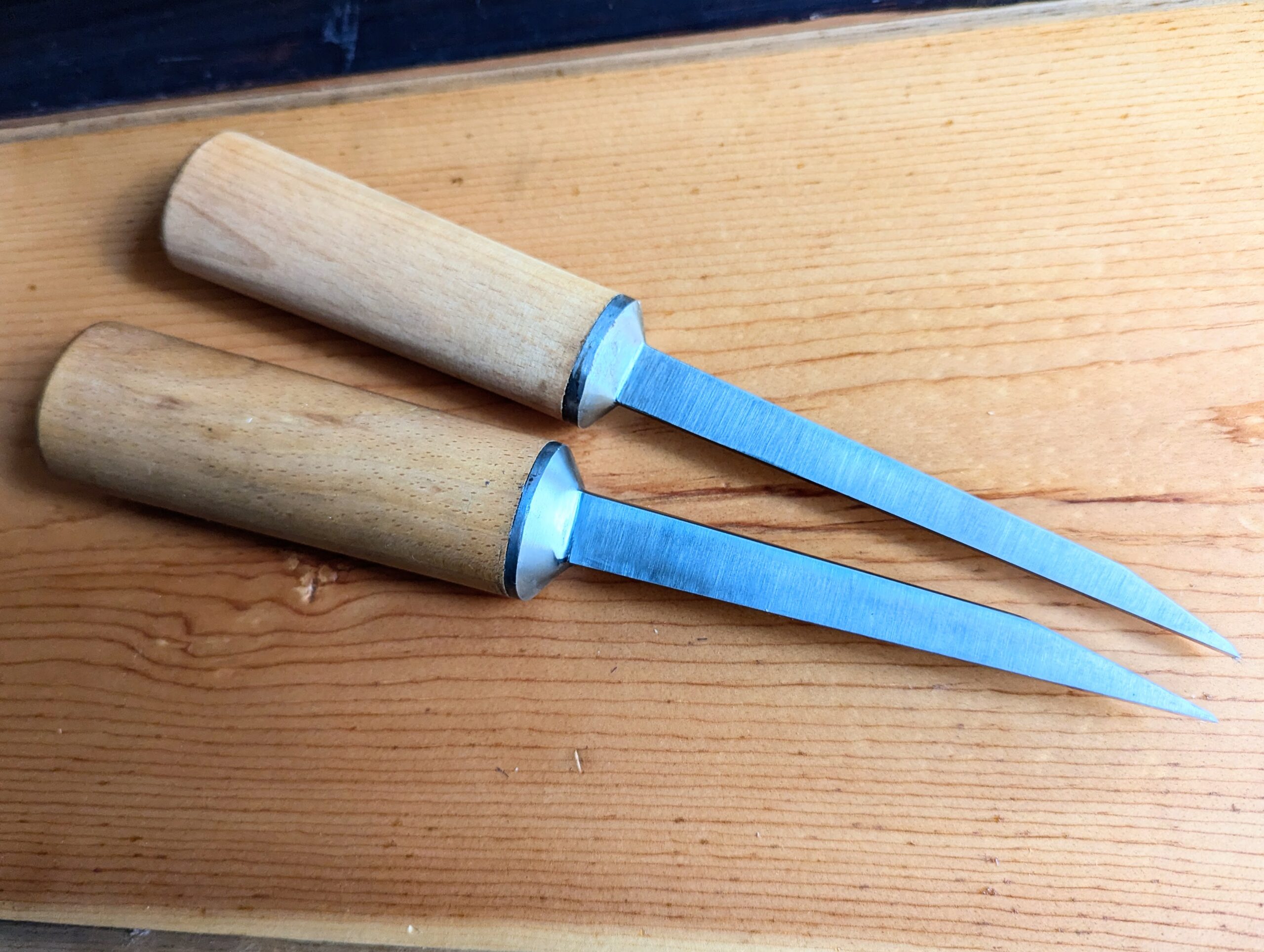
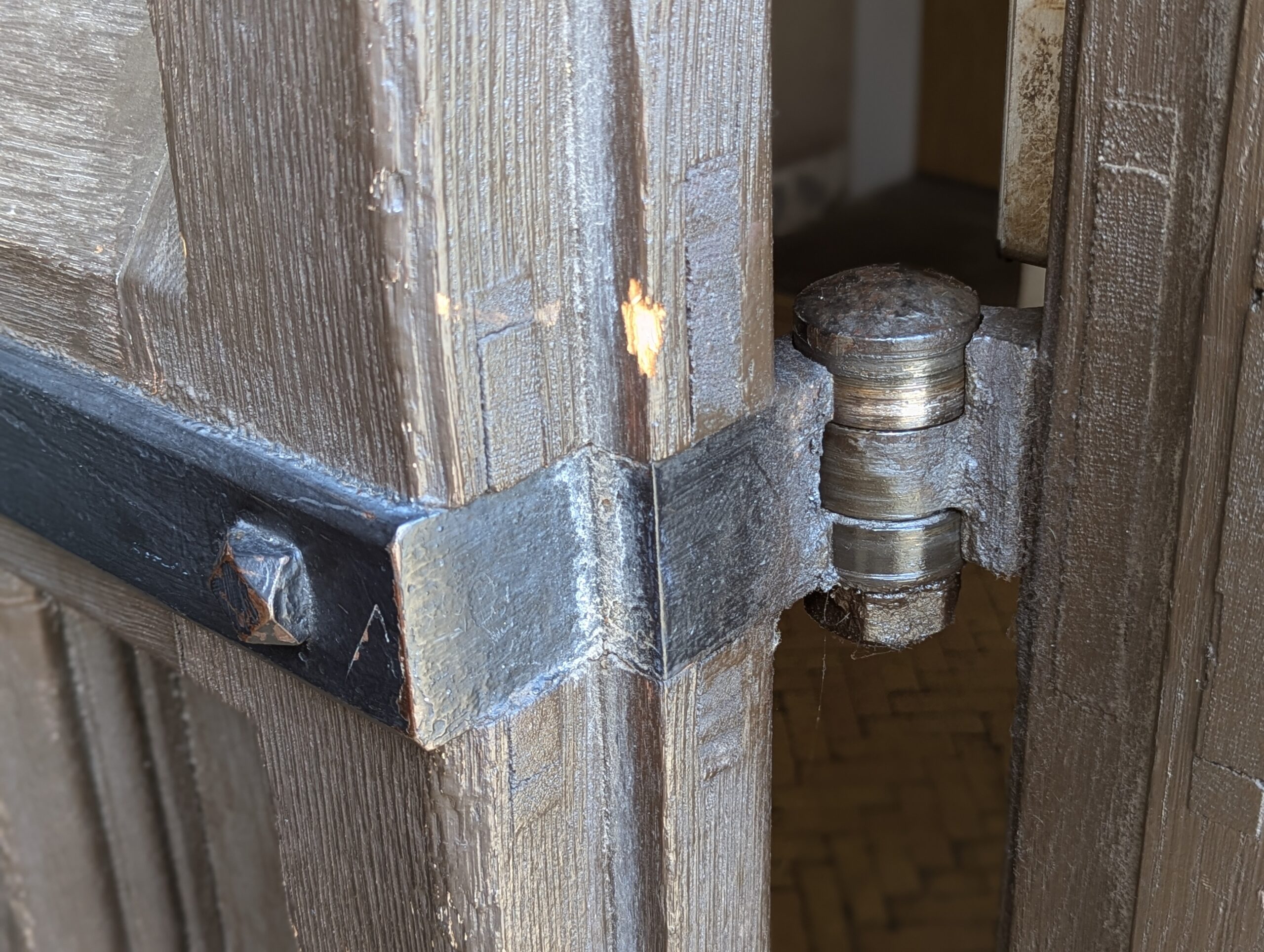
Moving from the 1700s to the mid 20th century and now on into the 21st, things quite markedly changed. Through three centuries of industrial development, we transitioned from blacksmithing makers hammer-forging chisels and irons on anvils in ancient factorial and country forge settings where coke belched out thick smog from every chimney in Britain to the engineering production through mass-manufacturing processes and systems we know today. In addition, we no longer made the bulk of entryway doors from wood alone, and went on to embraced extruded aluminium and plastic alternatives that defied rot and the expense of repeatedly painting every five to ten years for wood protection.
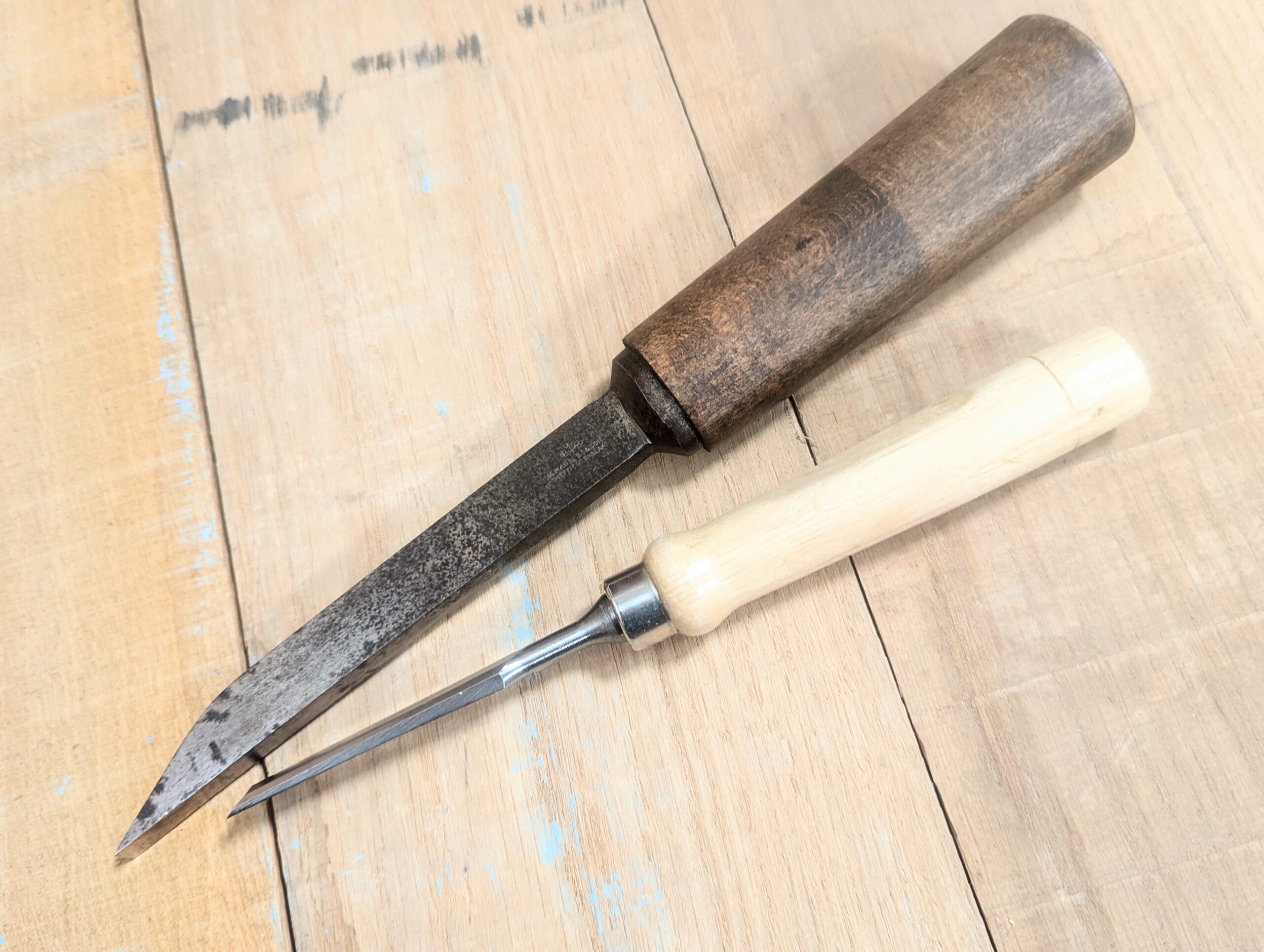
This brings me to the consideration and explanation of which chisels to choose for working our wood with. Most of you who know me will know that I advocate bevel-edged chisels for 98% of all my woodworking. I've saved you hundreds, if not thousands of pounds or dollars. Through the centuries, we've seen many types of chisels emerge that catered to the needs of makers living and working and earning in more specialised woodworking trades. Most of those trades have gone, and I dare say too, never to return. Manufacturers of the past were all too willing to develop a chisel for specific tasks, but many of those tasks are now redundant because of our changing societal needs. Today, we still have manufacturers that want us to 'collect' tools, and we do tend to buy into what they make. Firmer chisels, bevel edged chisels, registered mortise chisels, socketed chisels are a few of the different chisel types but almost all of them now are way over and above what we actually need. Add into the mix the different handle types, wood types, preferences and opinions and so on, along with the options for sharpening, etc, and we simultaneously confuse need with want, and it's this that causes the great confusion for those starting out in the craft. As it is with any art or craft, the options nowadays are massive, so my plan is to distil things down to what I consider will work best for my audience. Unfortunately, as we have seen recently seen, this can lead to a deluge of alternatives that are mostly very unhelpful. Better than that though is for you new ones to simply ask me a question on what might be troubling or confusing to you.
I often look at bench tools like I do when I look at horses. Planes of every type, saws, chisels and so on might be compared to all levels of weights and sizes of horses. `For my chisel work I prefer a general workhorse of a chisel and definitely not a cart- or draft-horse type. Stand alongside a Clydesdale for height and a Percheron for strength, or a Belgian, and compare these to an Arabian gelding, and you will understand what I mean. An Arabian can twist and turn on a penny, whereas a draft will strain its mass just to make a right-hander. But draft animals like these will pull massive loads all day in any straight direction and barely break a sweat. But try turning a draft horse even when it is not pulling, and it is like trying to turn a juggernaut. The feisty Arabian gelding, on the other hand, will flex and turn, rise to its back legs and pirouette to task in a split second because it is lightweight, balanced and resilient. He's not designed to pull great loads, and neither is the bevel-edged chisel designed to take big and deep bites. Work the Arabian appropriately and with sensitivity, though, and it will deliver everything you need, be that paring cuts, split cuts or chop cuts. Though it is not by mass that this chisel works, it will do everything you want it to when you sensitively present it to task, be that chopping or paring. And this, my friends, sensitivity, is the essence of being a craftsman.
For sixty years so far, I have used some quite basic bevel-edged chisels to do all of my woodworking. And whereas I could use mortise chisels instead, a mortise chisel of any size you choose will only do one task comfortably, and that is chopping out mortise holes. The question is, do we need mortise chisels for today's woodworking? Back in those earlier centuries, joiners and furniture makers working for joinery companies were making doors up to 3" thick with bottom rails as wide as 18" in oak. Those bottom rails were chopped into 5" wide stiles, and the mass of a mortise chisel like the one shown was essentially designed for the task of driving and levering the chisel deeply into the wood day in and day out. We don't do that any more. It's a past era. Adding six mortise chisels of this mass is no small number to add to our precious workspace. A 1/2" mortise chisel is just about twice the size of my bevel-edged chisel but then over four times the weight. Additionally, to drive a mortise chisel needs a mallet or hammer of substantive size and weight. That's at least two to three times the weight of my regular chisel hammer or mallet. And so we now see how things have changed. Our needs can readily be accommodated with one chisel type alone. This working economy comes from our physical working, and it is also how we make decisions as to which chisel we reach for every time.

Now let's look at the chisels with regards to size. The widths of chisels are a significant consideration, looking at the work we use them for. Chisels a half-inch wide and less will be used more for chopping with than paring cuts. I would never, for instance, use a 3/8" chisel for paring across a 1 1/2" long tenon cheek or into its shoulder. It's too narrow for this. I use this chisel mostly for chopping mortises and paring between narrow pin recesses, such as when dovetailing. The wider chisels, on the other hand, will be used mainly for pare cutting with and across the grain. Housing dadoes will be chopped along the walls and then pare cut from each side of the housing dado towards the mid-section until levelled. We also saw down the walls and then pare cut in between. Most housing dadoes will be over 1/2" wide but can be less. So, although there will be a crossover, 1/2" chisels will be used mostly for chopping with some paring and over 1/2" on up will be used for paring with some chopping.
Chisel sizes:
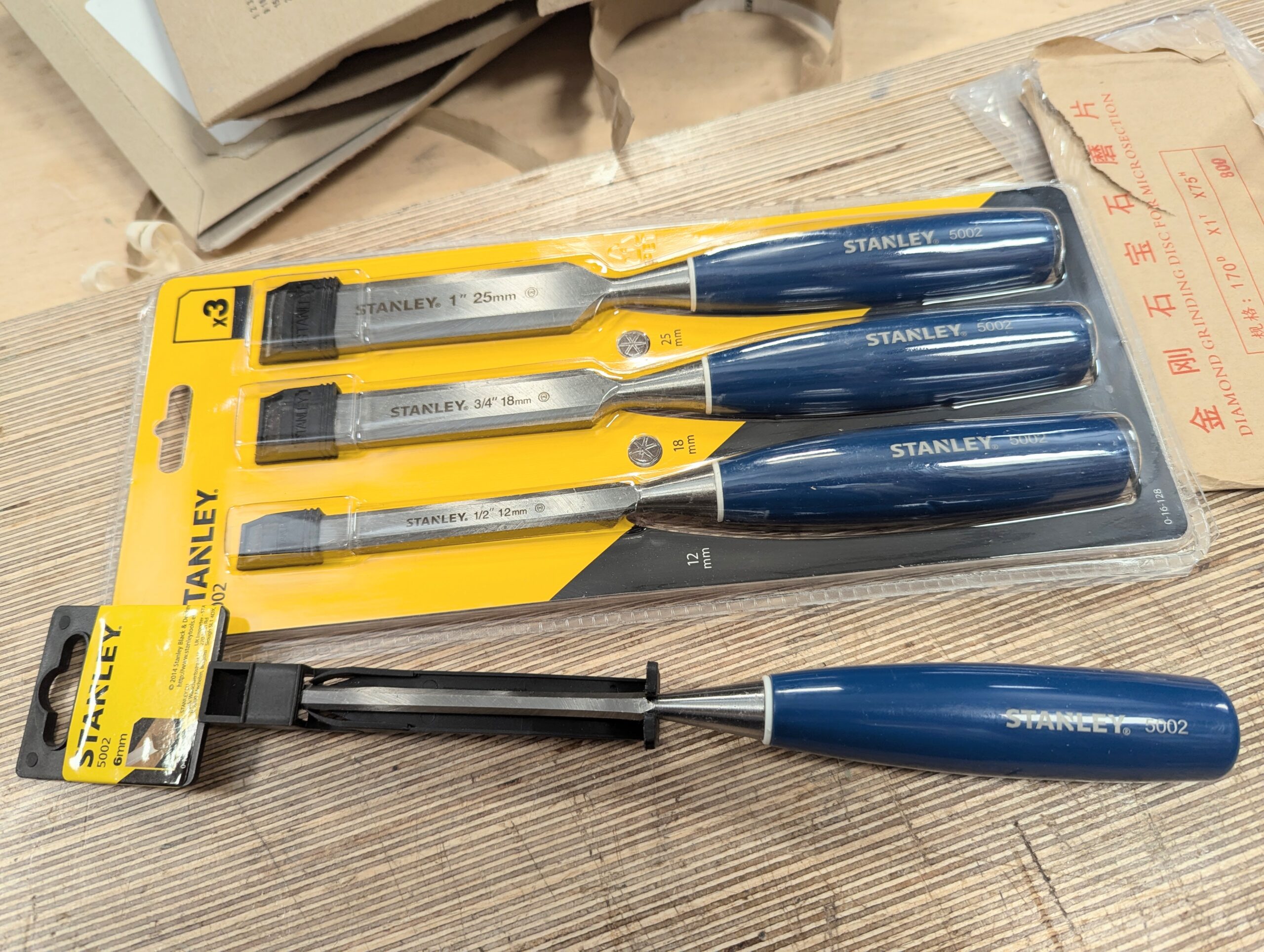
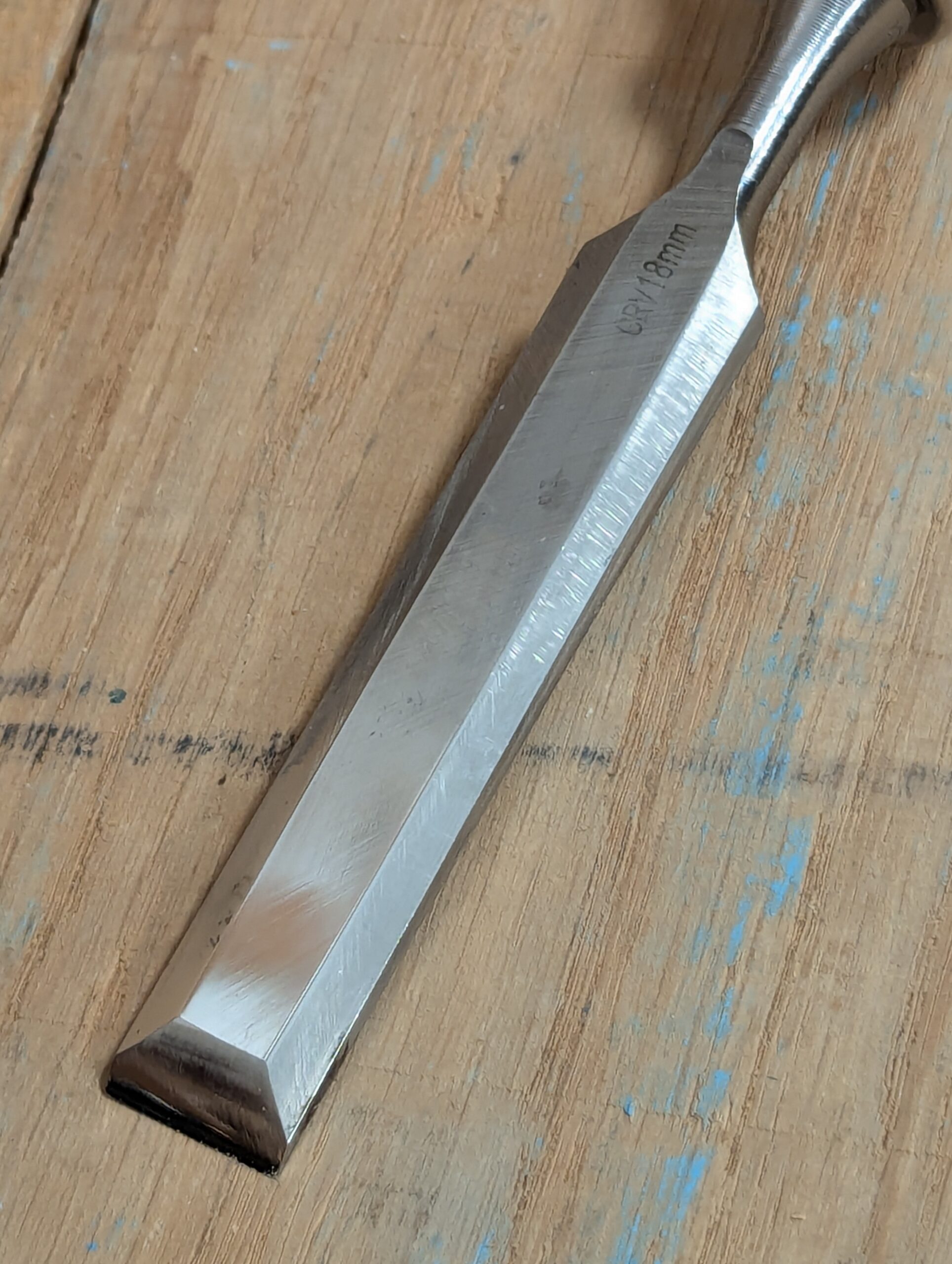
As a starter set, four bevel-edged chisels will do 95% of all of your woodwork. These Stanley 5002s are good value for money at roughly £5 apiece in the set of three, plus £7 for the 1/4" one and £12 for the 3/8" one. For mortising, they are just excellent. The split-proof handles are comfortable to hold, and they absorb the shock of hammering just fine. Some may well favour a more ergonomic shape, but the hands are designed to take just about any shape that is not angular. These chisels are an excellent length with plenty of steel and a good handful of handle without being unbalanced. I could happily use these all day long.
In our early start making joints, we want to make the three most important joints used in woodworking. That is the housing dado, the mortise and tenon and the dovetail joint. It takes practise to make these joints, and many of my projects on our commonwoodworking.com site and woodworkingmasterclasses.com are designed with these joints and practise in mind. Both sites are free, by the way.
If you have got this far and have not given up, then we are in good shape. To whet your appetite until my next blog on this, go to our Common Woodworking site to see the joints we use all the time. It has taken us years to pull this website together for new woodworkers.
More shortly!
Comments ()