
Days of Old Men Working
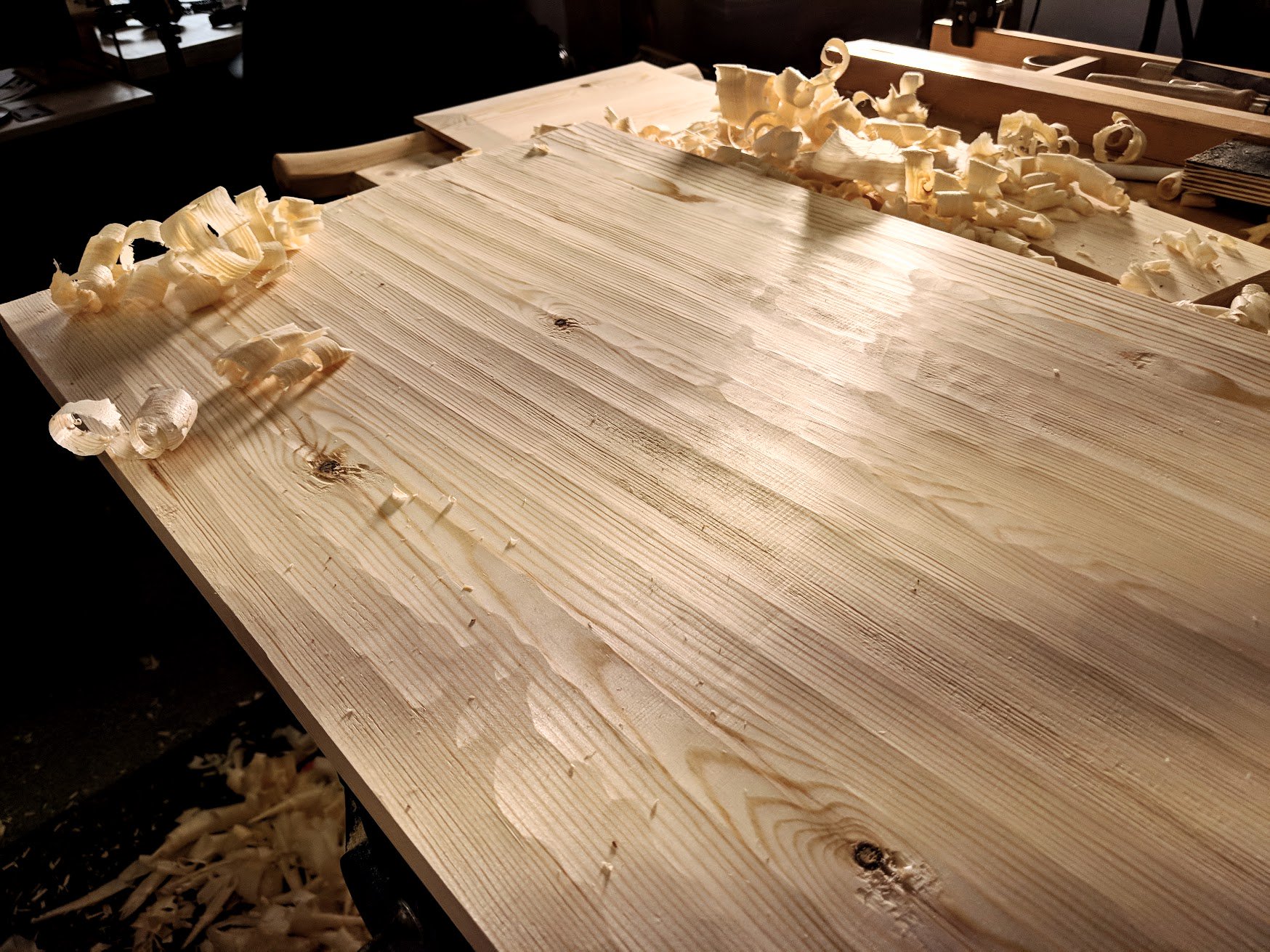
I sometimes wonder if they can understand smoothness on wood after the plane, fresh-sharpened, swipes away that last thin shaving to leave a surface they've never felt before. I'm talking about someone who only ever planed wood with a machine. The grain, sheer-cut, parted off, away and lifted in the bench plane's stroking swipes, left glass-smooth severing a million cells clean in two along their long axis with a polish no cut in any other way could leave. If one were to sand with the very finest abrasive, one impossible to achieve, it would but roughen the surface. This is something most commercial makers in wood will never understand because, well, they can't. It's the generation between them then and those now that missed the plot. The glass smoothness I speak of comes only from those continuous strokes, removing a wide and long band of see-through silverskin you can never get from a rotary cut or a belt sander. Side by side, stroke on stroke, along and with grain, the plane leaves behind the unvarnished shine of shines ninety-nine per cent of even the woodworking world will never see, never mind the whole world. To abrade with the very finest grade of abrasive paper only roughens the surface and covers it with powder to dull what remains. In such cases, we no longer sand the wood smooth but sand it rough, painfully dull and dusty, yet we would never say to another, 'Go, go and sand that wood rough.' Would we?
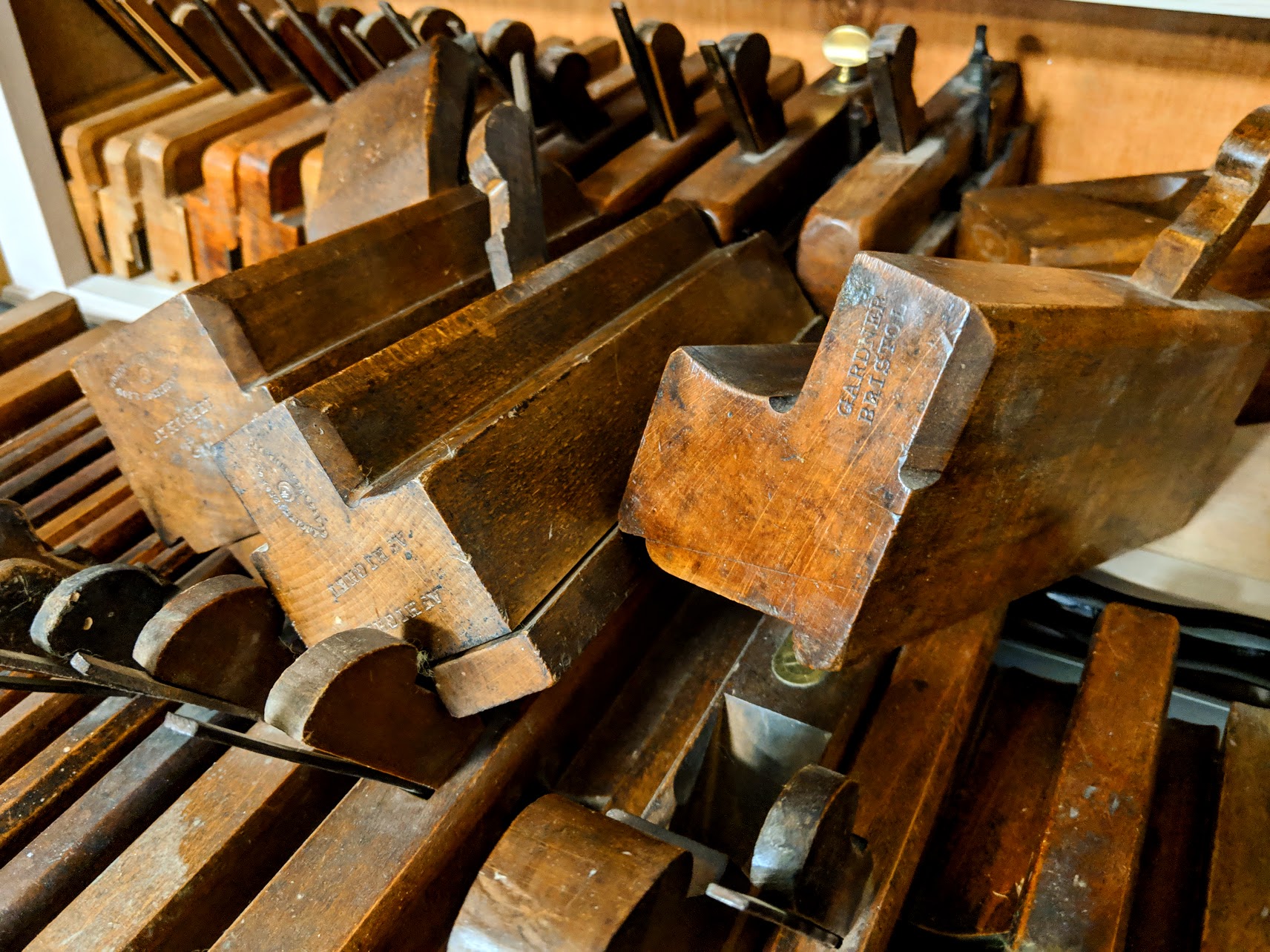
It's never been an obstacle or an intrusion to my work to sharpen the million and more edges throughout my sixty years of working wood. It's been as important to me as simply breathing––I take it for granted. Although the old men with whom I worked, those that trained me, never commented on the first strokes from their freshly sharpened planes, I could tell from the atmosphere surrounding them that they were simply and pleasantly pleased. You couldn't bottle it, that new car smell people speak of is only chemicals. With wood on wood, the soles' friction rose from many benches at different times on different days, and I remember the scents as though they were but an hour old. But then the sights replay in three-dimensional reality, perhaps even four and five dimensions. Who knows what passes between sight and sound and smell to please the mind of someone young enough to record these things for when he's seventy-five and still growing in his craft?
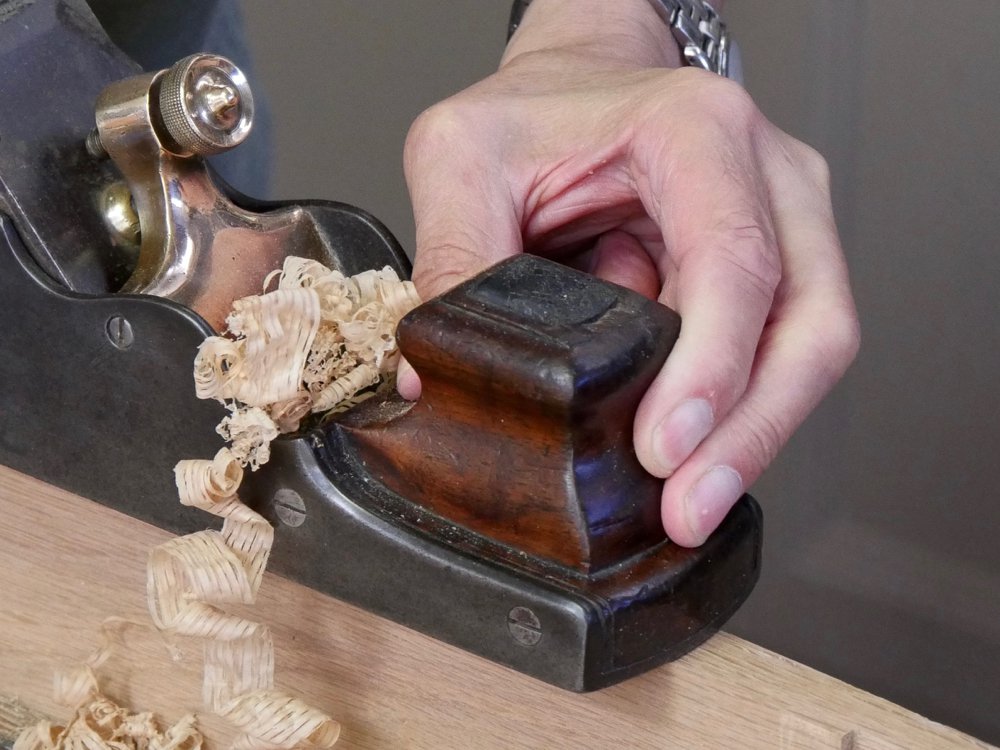
It was the humility I saw in a then old man eighty plus years and still going strong way past his retirement day and still keeping himself from the grave retirement would have wrought in his life. I understand such things now, now that I am approaching those years myself. He left me the truth of working wood with two hands so that I too could own what he owned and passed on. I enjoyed watching him place his chisels and planes with such great care amidst the others on his bench. The glinting steel, tarnish free from use and 70 years in the working of them, had a patina you can get no other way. Those boxwood handles polished now to brown and smoothed by the well-worn hands and the sweat of his brow still speak to me of the care he took with the tools that served him for 21,000 days of ten-hours working there within a few inches and feet of his bench. The glint from the chisel's edges were as the glint in his eye when he spoke of the work he did on this piece or that. But though his smiles were seldom now, they still came in the memories he had of his making. Treasures he held close and dear of the first imports of Brazilian mahoganies when he first made from this 'new wood' though it was new a hundred years before. When he spoke, everyone listened of an era in the late 1800s when he stood as I, a boy waiting for his master's voice and not daring to move until told. But his words were reverent, as they should be and should be still. He would earn respect the same way as his master did, by the work of his hands and the humility. There were no swaggering men back there and then, not amongst those who worked with one another, who knew and respected one another and cared. That came later.
Comments ()