
Seeing Beyond––Part I
Seeing beyond the ordinary and commonplace can, at least for some of us, be a challenge. Don't move with the times and we are accused of being Luddites but we know that some things, perhaps more than we care to admit, didn't improve the life of an individual but catered more to so-called entrepreneurs whose sole goal was to make money from a mass-making market. In essence, what is mostly needed and will better place us is to go to the origin to see exactly what the spirit of intent was when whatever it was we're looking at began. Inevitably, most creative people will indeed end up selling what they make, grow, cook, write, film or whatever. The more of an item they can make in a given space of time means lowered prices resulting in competitive prices. Throughout my working life, people have said to me, "Wow! You could sell those." Indeed, some things I made were products I designed specifically to make in large quantities purely to sell competitively. I see nothing wrong with that if or when that's your intention or becomes your intention. The issue for me is more how we nowadays measure success. But more important to consider these days is how we see and feel the need to express our successes or see the successes of others. For a century and more and especially this last half century people are referred to as billionaire Elon Musk or Olympian so and so. Whether such competetives find contentment from pinnacle positioning I'll never know. I do know this though, I have found a set of chisels that cost me under ten pounds at the time that I still reach for in the everyday of woodworking that carry no real maker-name yet I have versions considered premium versions I never touch. The same is so of my bench planes and saws. This last few weeks I have been making a wide range of projects that resulted in near perfection using the most ordinary of everyday tools plus one or two others like plough planes. After every handmade piece, beds, an oak wardrobe, a corner desk, and things like that, there was no cheering crowd and no quotes of Paul being a billionaire or even a millionaire. No one said too much about it really. But what I felt starting out with little more than a thought in my head, then all the way through and after that on completion was something that needs only a word or two and is enough for me––inner contentment. How come I feel such peace when I didn't use anything more than hand tools to create dozens and hundreds of joints in the last year? Why, after planing hundreds of rough-sawn board feet for hours did I not ache and complain of sore muscles and pain? Well, it's simple. I'm content, feel well and healthy and find the most joy in not using machines to do my work or substitute for the skills I have earned.
I do understand the many reasons that people rely on machines to do the work for them. My energy levels at 74 are not the same as they were when I was say 65. I can tell the difference even though it is not very much. The man who broke my ribs five months ago did set me back. I'm guessing that he would do the same to assert his rights as a runner rather than take care of the two tots on the bikes he ran against. But here is the thing. I am truly back in the saddle and making again and had I not had such good health I most likely would not be. This makes me glad that, for the past decades, I have built up resilience to establish built-in resilience along with stamina and determination even in the face of adversity leading to a disabling period needing rest and recovery. My recovery has given me contentment from knowing I have made at least one good decision and that is to maintain the way I work.
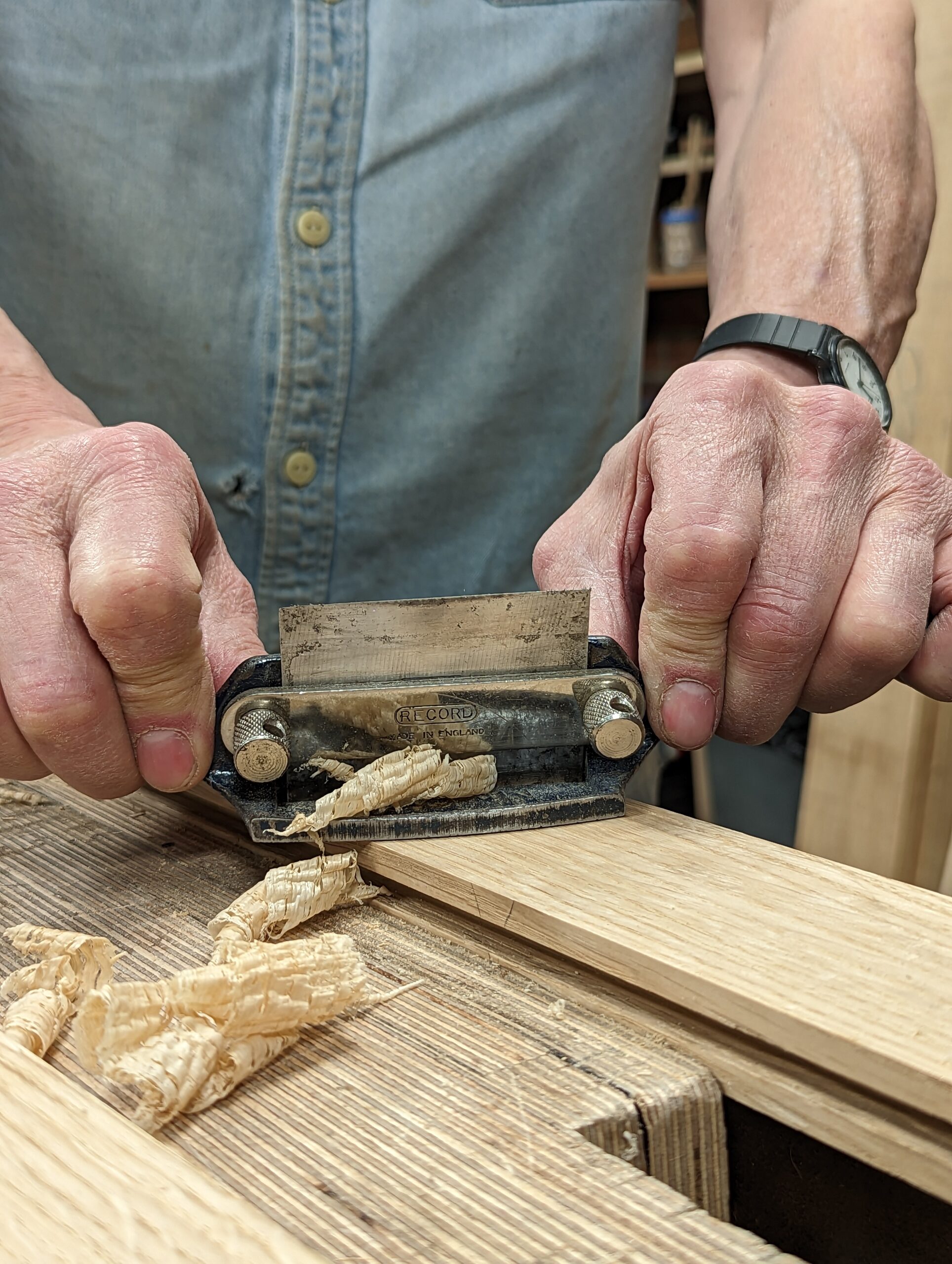
Another thing worth noting. I mentioned the tools above for good reason. Transitioning from a professional maker to using hand tools predominantly was a conscious decision. It was too easy to spin on one leg from a tablesaw to a chopsaw to a bandsaw for every cut needing dead-on ninety-degree parallel and repeat cuts. My challenge 25 years or so ago was could it be done by hand without too much complication? I found it could and I do it most days. My next challenge was could I teach others to do this without taking them back into the dark ages? I did, I have and it works! So you see, the spirit of intent had the dynamism to empower hundreds of thousands of others using the digital technology of this new age.
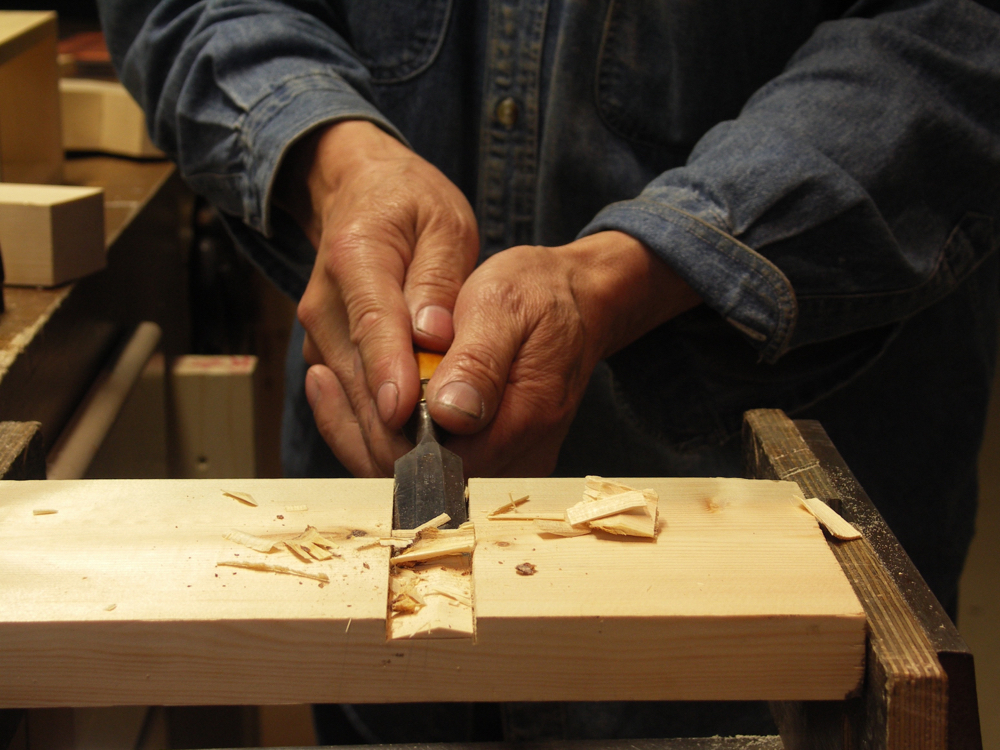
You see, there is something about muscle power that demands mental energy to match sensitivity to every task we do at the bench. That infinite, unmeasured but self-controlled flex that directs the path and passage of the tool into and through the cut belongs entirely to you alone; and this empowering is yours in the doing of it. No one else can own what you have mastered. They must master and own their own and we know it is worth working out for.
No matter the field you are researching, earning contentment results in mastery of self and there can be no substitute. Because something ancient and past has been replaced by more modern methods does not necessarily mean that we have bettered our scope in life through some kind of evolutionary process. That's how I feel now after mastering all fields of machining wood and then living with the truth that hand tools do a hundred times more for me than any machine ever could. Now I do also understand that people may not have the dedicated time or strength to do so much by hand so please do not feel condemned or as some say that you are somehow "cheating". I suggest in these cases you just do what you can. And my nudging multiple thousands across the globe to relook at how and what they are calling woodworking working wood is only for their betterment and to add true skill and health to their woodworking. It took me two decades of the last three to get people who were involved only in machining wood to consider and investigate what they only considered from an erroneous perspective. They thought that hand tools were outdated and outmoded and didn't realise that the hand tools I speak of above, perhaps £200 worth max, were not equal to the tasks of real woodworking when in reality they were real woodworking. Getting them to accept change by returning to how they first thought that would and could and even should work wood when no one was doing it that way anymore did not make any sense to them. Things they thought, perceptions if you will, challenged them. They actually believed that to work with hand tools was too outdated, hard work, slow and inefficient. And then too they had to overcome not only their own personal doubts but the doubts of the majority of woodworkers they knew or heard of or read about. They doubted then that they could ever establish the kinds of skills I've owned and lived off and by and with for my sixty years of hand-tool woodworking. Now these are not minor things to consider when, by slipping a roughsawn stick into an opening, the wood comes out square, parallel and true in a matter of seconds. I know, it's not quite like that but neither is it far off either. The real problem is the reason we compare machining wood to working it with hand tools. Ease and efficiency negate what we really want and need in our working wood.
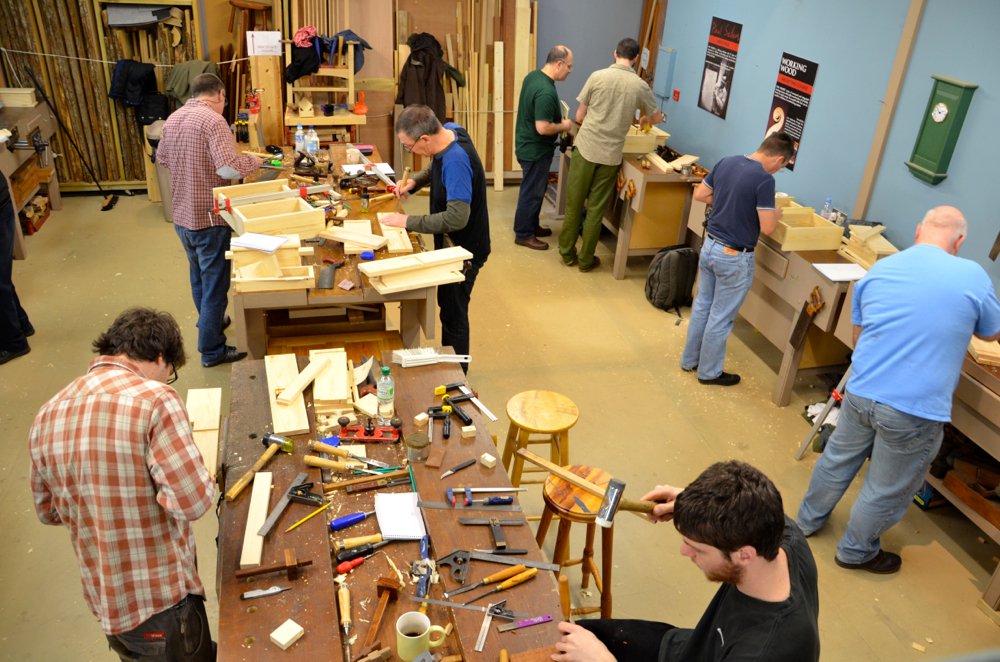
Reestablishing hand-tool woodworking on a more global scale meant a change of strategy and of platform and was made possible only because of the internet emerged to create options for new platforms to transfer knowledge. Paper magazines have dropped off the planet exponentially one by one and I suppose that the last one or two will disappear altogether in the next two or three years. Their background is mostly about media and marketing and when their profits drop to a certain level these remnants will quietly disappear. But then there is us. The best way to preserve any seed is not in a glass jar in a dim and dark cellar but in the planting of the seed in fertile soil. In the beginning, there in the USA, the soil was rock hard and stoney. People even laughed at me as I pulled out a gent's saw and a few sticks of pine. But one by one they sat in a circle on plastic chairs and the circle grew from ten to twenty to thirty and on up to 200 for each hourly demonstration I did. And no one left the circle until it was over 40 minutes later. The vendors selling machines asked the show owners to stop me from coming not realising that the show owners paid for my flights from and to the UK, my hotels and car hire between shows, twelve in a row at one per week. Such like that. Planting in those days had its challenges but gradually the seeds planted began to grow and flourish and we now have thousands upon thousands of woodworkers making in their home workshops and gaining health they thought that they never could own again.
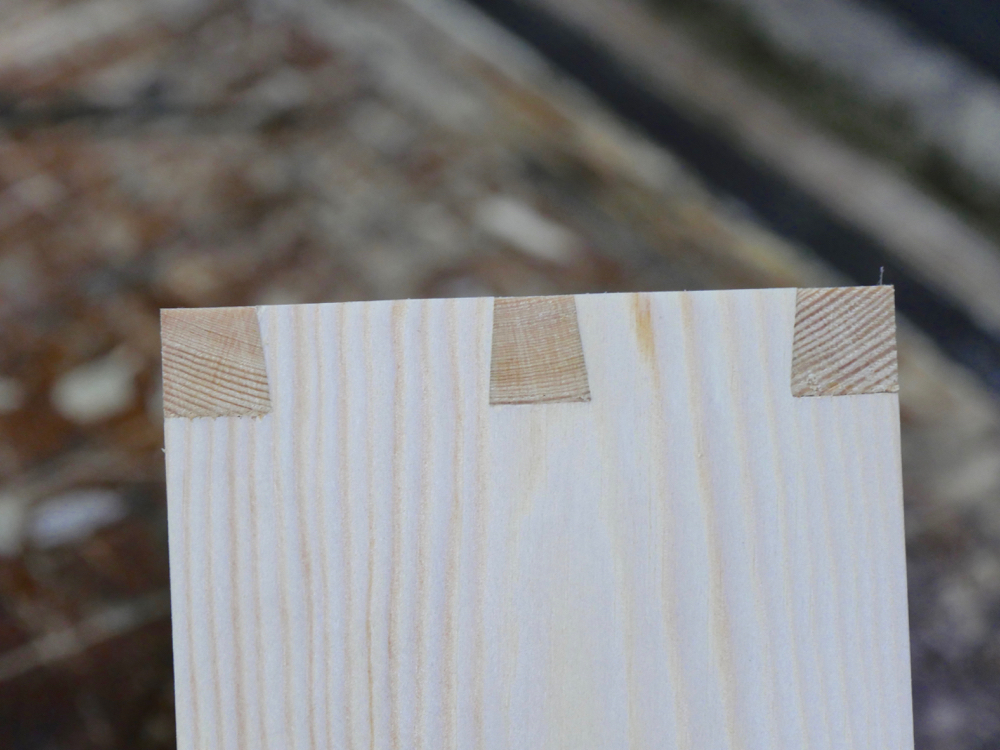
As long as you really know what you are looking for you can soon learn how to pick through the dross for the online information you need. This covers everything from the basics to the more complicated. Those of us who just love our craft are not some old-fashioned nostalgics acting out roles but we're living the life whether full-time like me or every spare hour we get from our day jobs. Nothing I do now in terms of real woodworking is any different than back in 1965 when I made my first dovetail and mortise and tenon with chisels and saws. Imagine! 60 years full time six days a week making every single day and never knowing a single day when you didn't have paid work.
Seeing Beyond II coming soon
Comments ()