
Poplar––Surprising Me
Many woods have surprised me through the years, even woods I have known and worked with on and off for 60 years. The assumption in the machining-wood world can easily be that all woods work the same way and give the same results. Pass a board into a machine and it works the same for everyone. In our world of handwork the knowledge attained and needed and absorbed goes deeper––much, much deeper. I know my wood from the inside out and it is because I generally feed my cutting edges into the wood using my own hands, skill, ability and, additionally, with all of my own energy. Through chisels, saws, planes and more, the wood gives me feedback minute by minute as do the tools themselves. I can use various terms like soapy, coarse-grained, silky, absorbing, crisp, crispy, gentle and many more. Cushiony describes a recent wood and grabby another. What about dampening? That is my favourite term for poplar. The wood characteristics increase my understanding and the words I apply mean something to me as I try to pick one that matches. This level of intimacy defines the species beyond what you get on commercial websites that only present terms accepted within their sphere selling materials. In my world I find an ever-expanding world of word surprises.
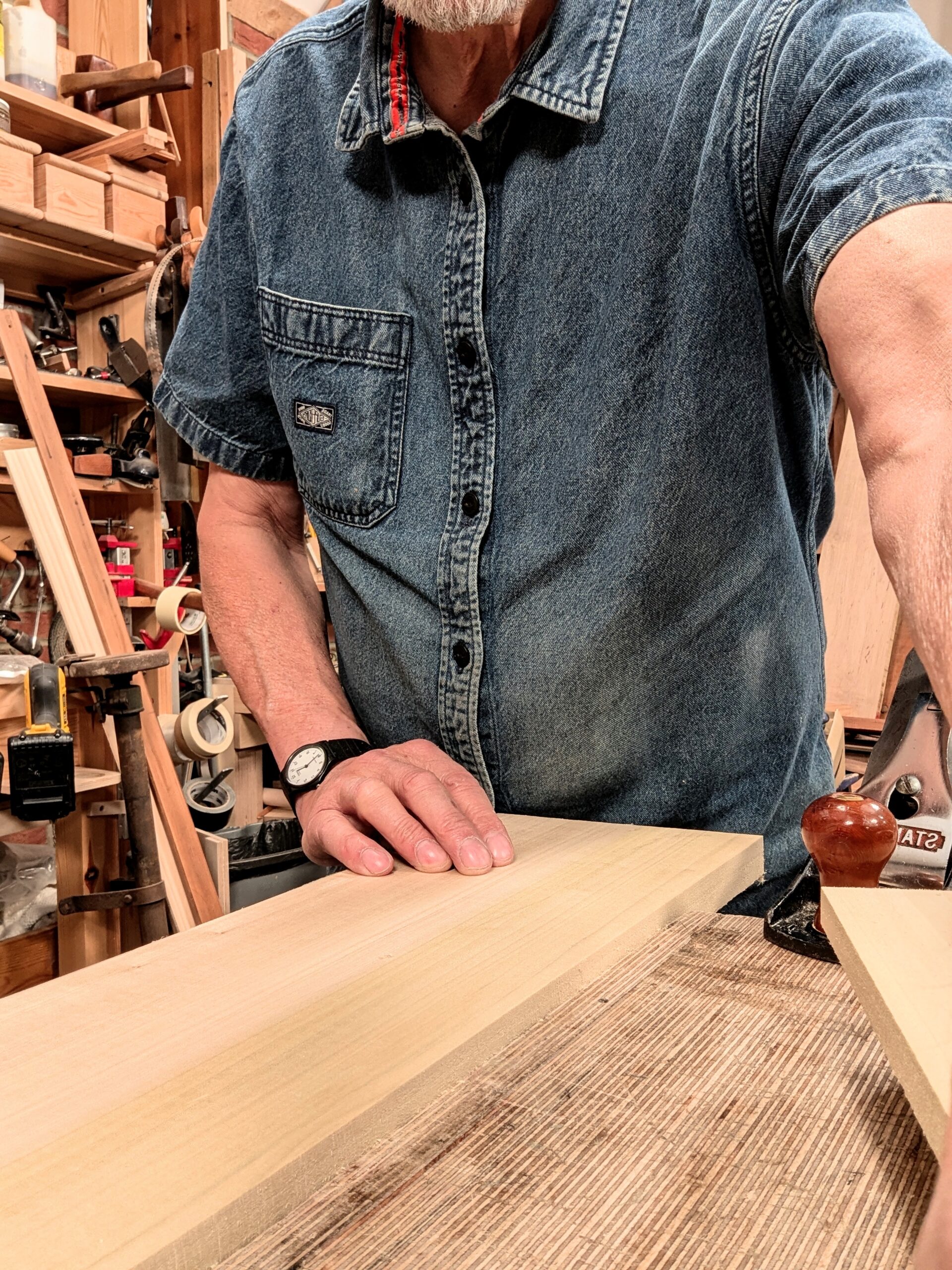
My recent use of Poplar gave me some new discovery, partially from my hand tool knowledge working them on this wood and then from my working with it on my bandsaw. very recently. I have had this happen before but tless so than on this particular occasion. I think this to be fascinating and hope not to bore you.
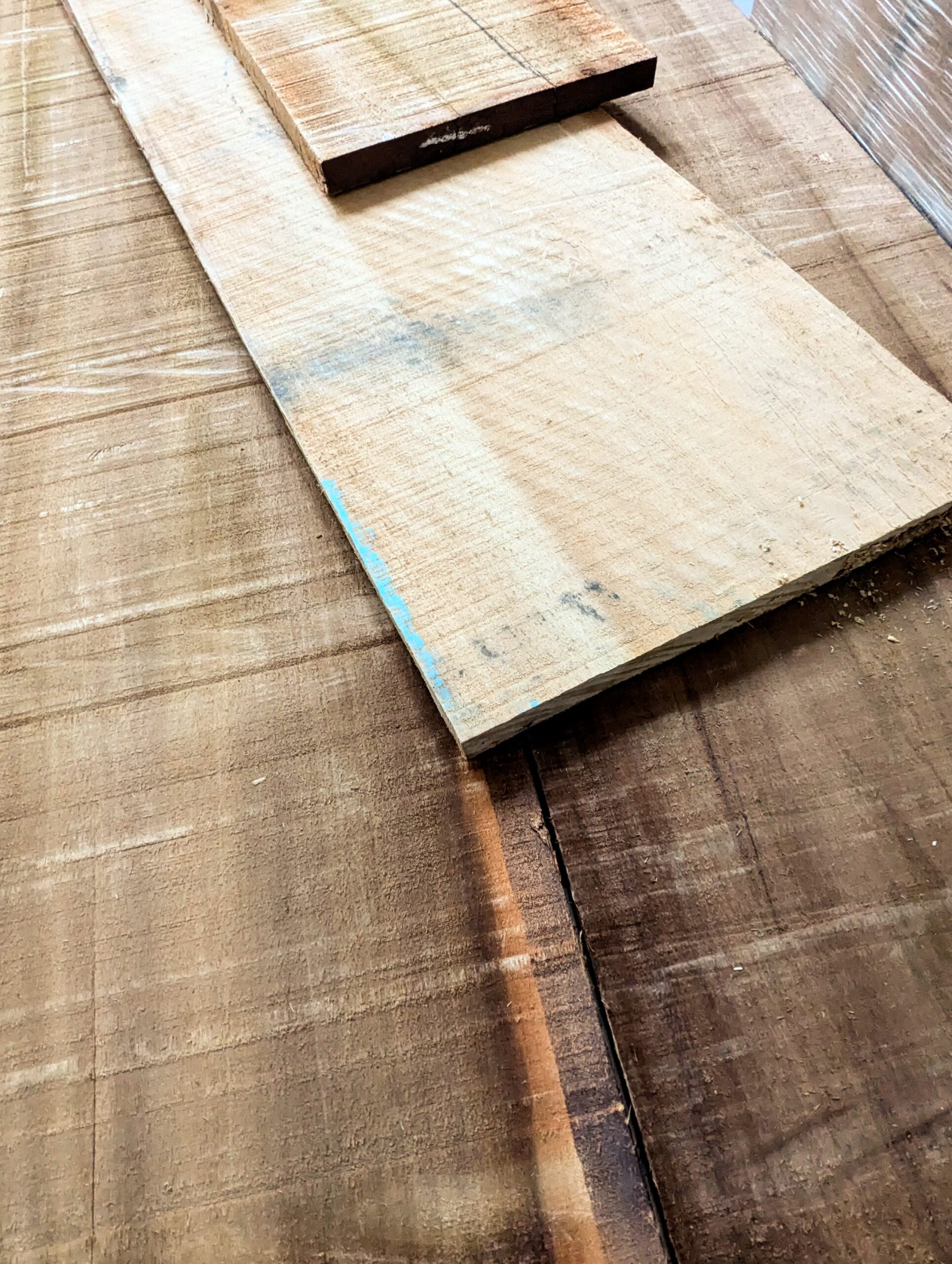
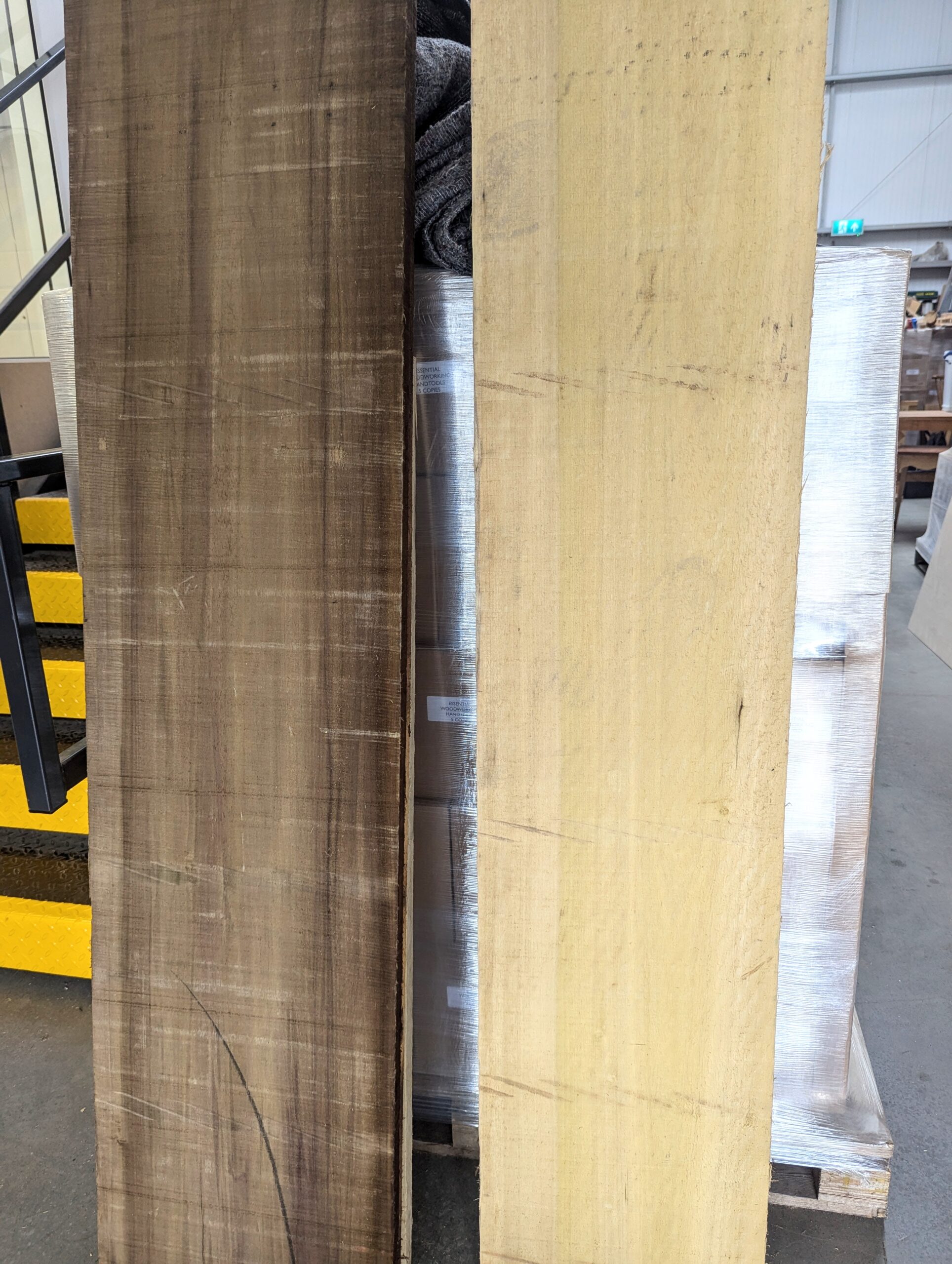
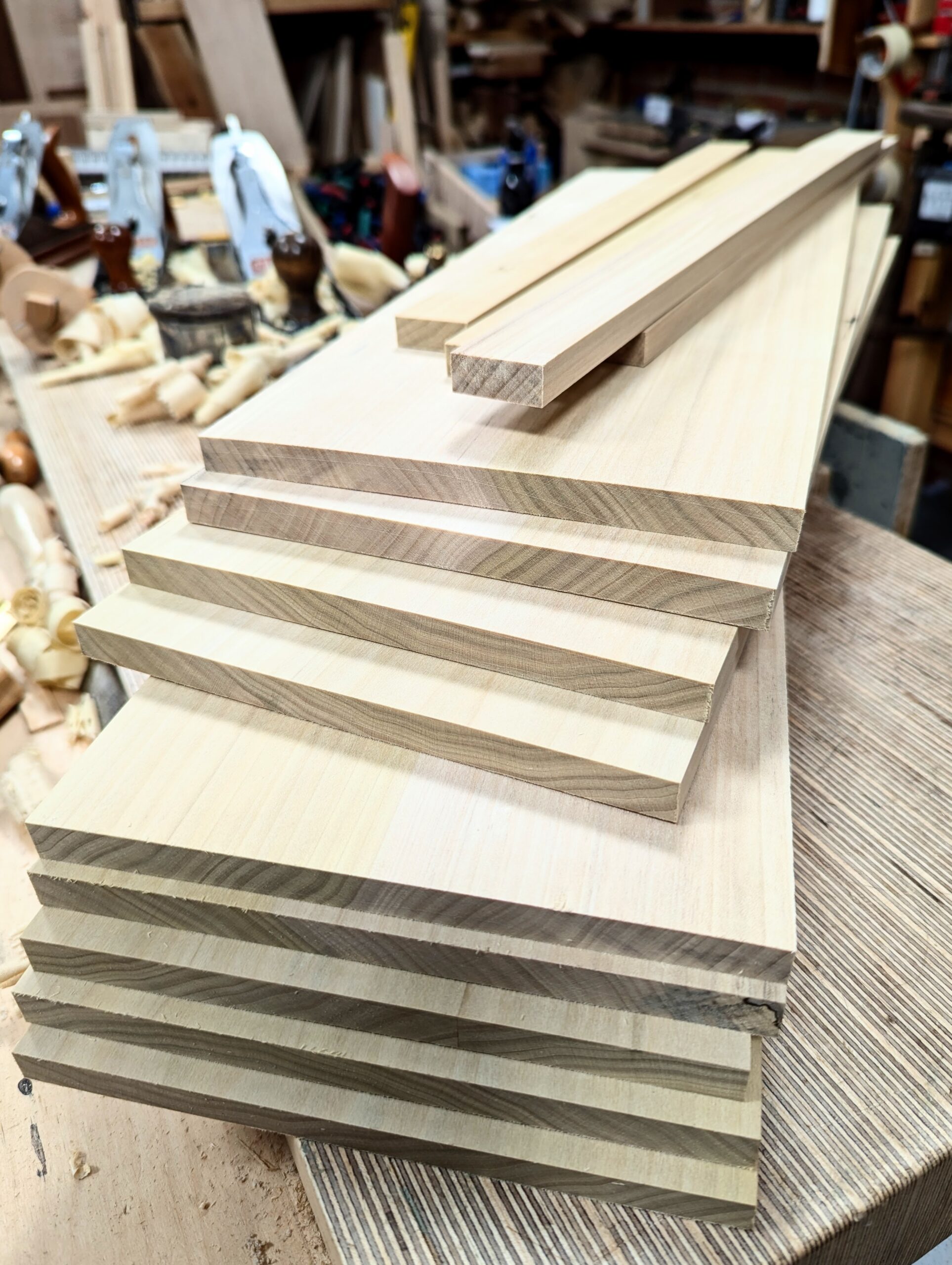
A few weeks ago I picked up some fine-grade Poplar (above) from my supplier. The racks were full and I got to pick my half dozen boards from about fifty. As Hannah and I flipped the boards we came across some stunning boards for a couple of my next projects. Why poplar is npot used more than it is I dont really know. I love to use it both as primary wood and secondary wood. Primary meaning the principal wood on the outside and secondary being the inside leass seen wood like carcass frame wood, drawer sides and so on. I think it is because it is less predictable than woods like maple and cherry, oak and walnut. In indistry you do not want wild personalities and divergent grain colouring and configurtion. These boards get left behind. At one time a supplier in the USA kept back the figured flame maple boards for me because no one else wanted them. I did, and he sold them to me at half the price of the dull and very boring maple. Poplar colouring can go from a deep brown and khaki to lime green and light tan or dark green and dark tan all in the same board. To get any uniformity can be impossible. I'm still going to try it on one the bedroom pieces as soon as I finish the present clothes storage one i am on now.
Here's what happened though. After the different projects I make I usually sit down, not literally, and start putting things away, sharpening the edge tools and saws and bringing order to everything within my radar. My latest bandsaw blade owed me absolutly nothing. I'd ripped wide boards of walnut for a bookcase, spruce and pine for the bed and bedside tables. It is false economy to keep a blade in when it does not deliver the crisp cuts and ease of push. On a small bandsaw like mine, a 16", it's more the motor power that might get bogged down on some depths of cut. I can cut near to 29cm (11 1/2") but prefer to settle on upto 8" for the best results. hardwoods cut better than softwoods because of consistent density across the annual rings plus far fewer knots that are surrounded by divergent grain that can easily distract a blade to take the path of least resistance. On this day I change the 1/2" blade I rely on that never falters. I know my tensions and settings by heart and it is as automiatic for me micro adjust everying as it is to breath. I'm like anyone else. I always enjoy cutting anything with newly sharpened tools, and though I wll never refer to any machine as a tool, it just goes against thre grain with me, I enjoy a new bandsaw blade as much as anything. I slipped my piece of thin wood into the gap and against the fence and immediately the board went of track by a good distance. I stopped, switched off and pulled my board back. I was resawing a 30 mm thick board in the hope to finish two pieces out at 13 mm for my drawer sides. I flipped it end for end and started over and within three inchess the same thing happened. My board was 20 cm (8") poplar, clear, straight-grained stock. I checked my tensions, considered drift, which I never, ever get, looked at the guides, which are generally unneeded for resawing if the tensions are set right really. So I did what I thought best and changed out the blade as this had not happened to me before. But exactly the same thing happened again with the second brand new and unused blade. It was the weekend and I had other things to do so I left everything as was.
The break did me good. It was on Sunday afternoon that my mind drifted to Poplar and my experience working it with hand tools. I've carved it often enough and used it regularly. The wood has good resiliance, even enough texture butsometimes it seems to grab the saw or the handsaw, even the gent's saw in finer work. I allowed myself to dwell on these charcteristics and thought obout its tendency to sort of grasp the wood. then I thought about how the chisel feels when you pare cut to remove waste from a hinge recess or plane the surface sometimes but not irregularly. Now that is not to say it is always a problem, it's just part of its nature you see. A charactistic if you will. But this was my first experience with machining it at this particular time.
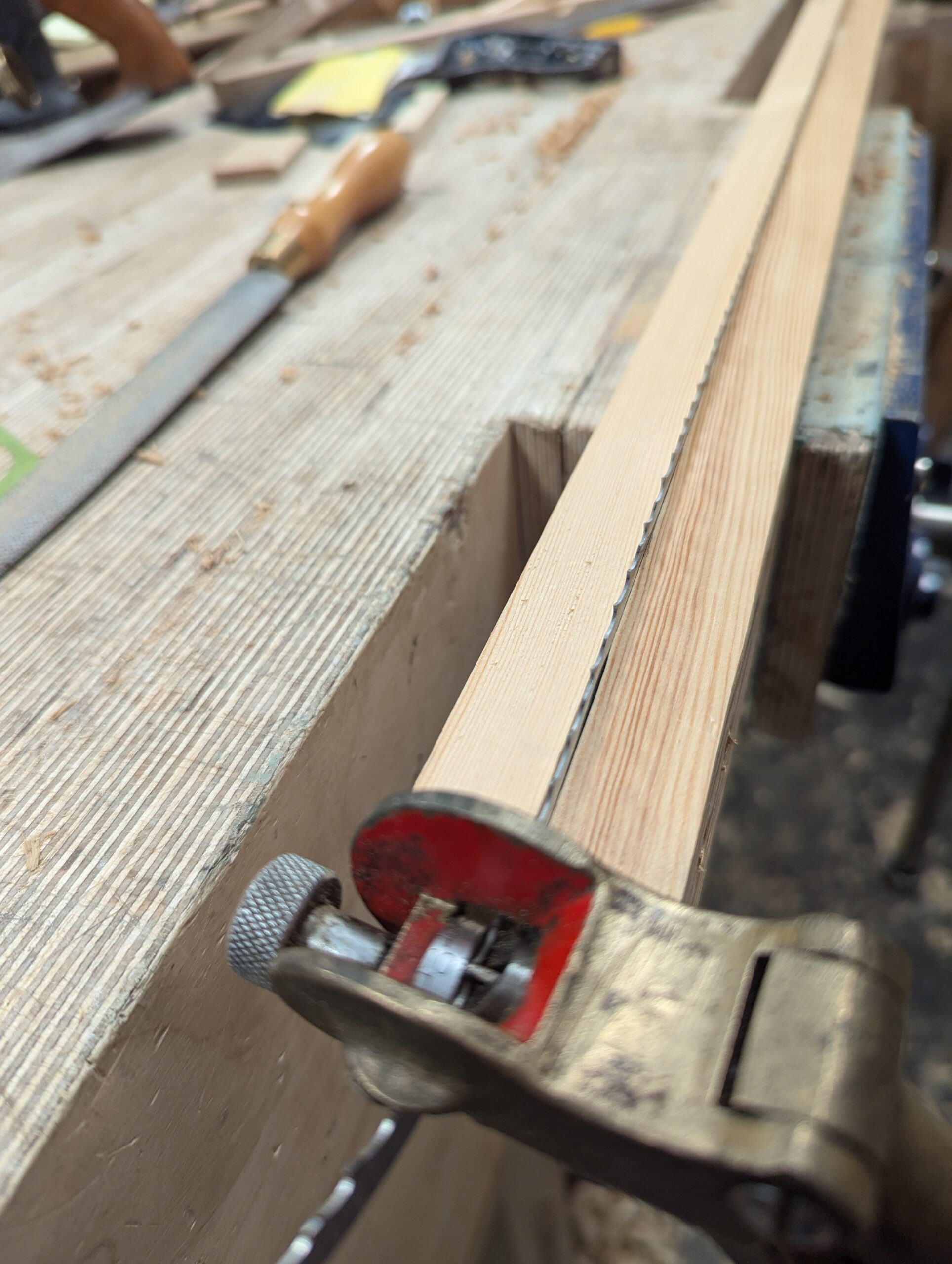
First thing Monday morning I looked at the first blade and then the second. The set seemed quite finely set but standard and adequate so I pushed an oak board full width at 8" on edge and it was cutting just fine. But even a 3/4" piece of wood flat face on the table deviated no matter how slowly I went or how much lateral pressure I applied to keep it tight to the fence.
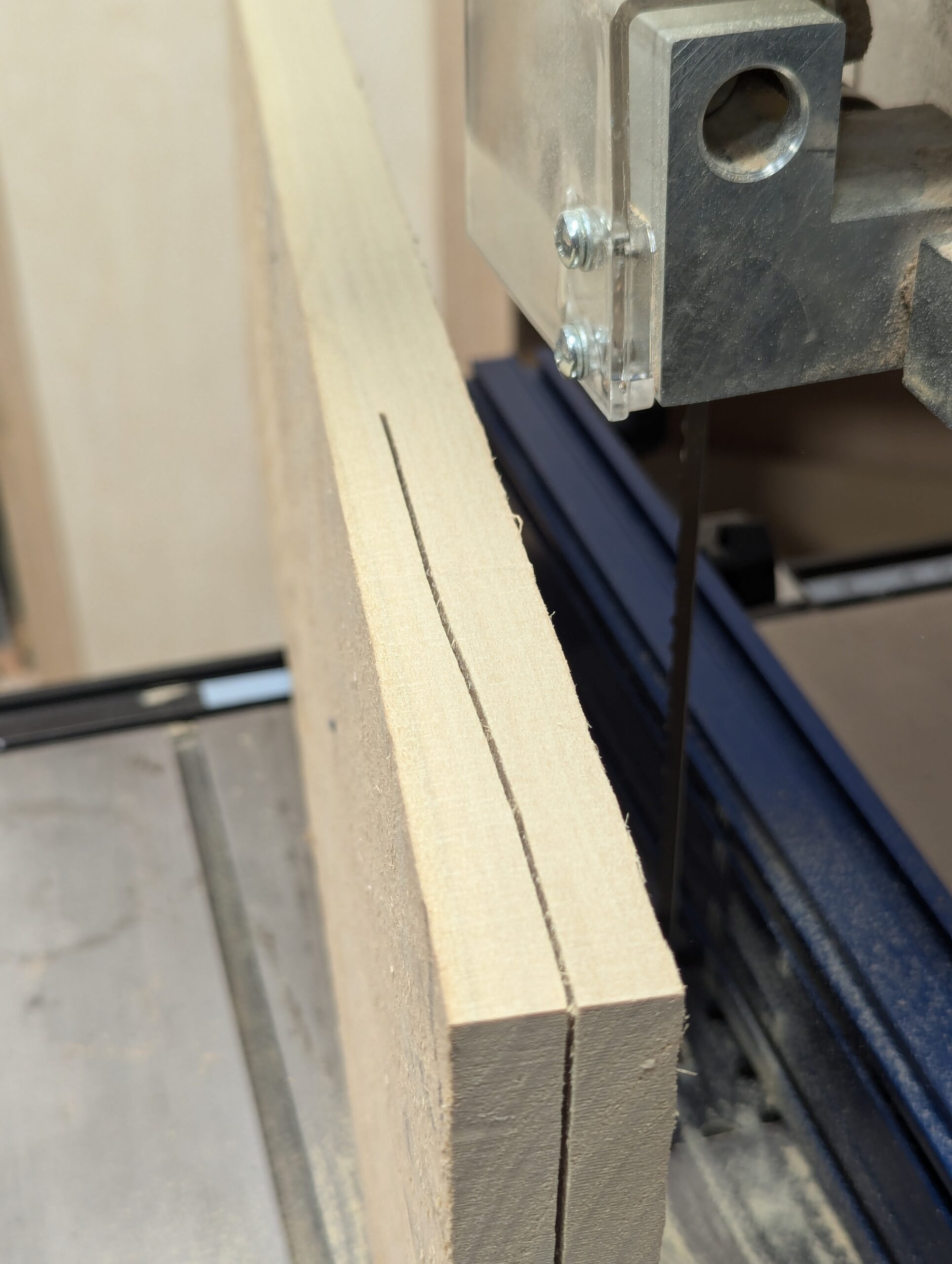
In fact, doing this would almost stop the machine. I did what anyone would do and decided to add set to the teeth (no they wouldn't really). The current kerf was .75 mm.
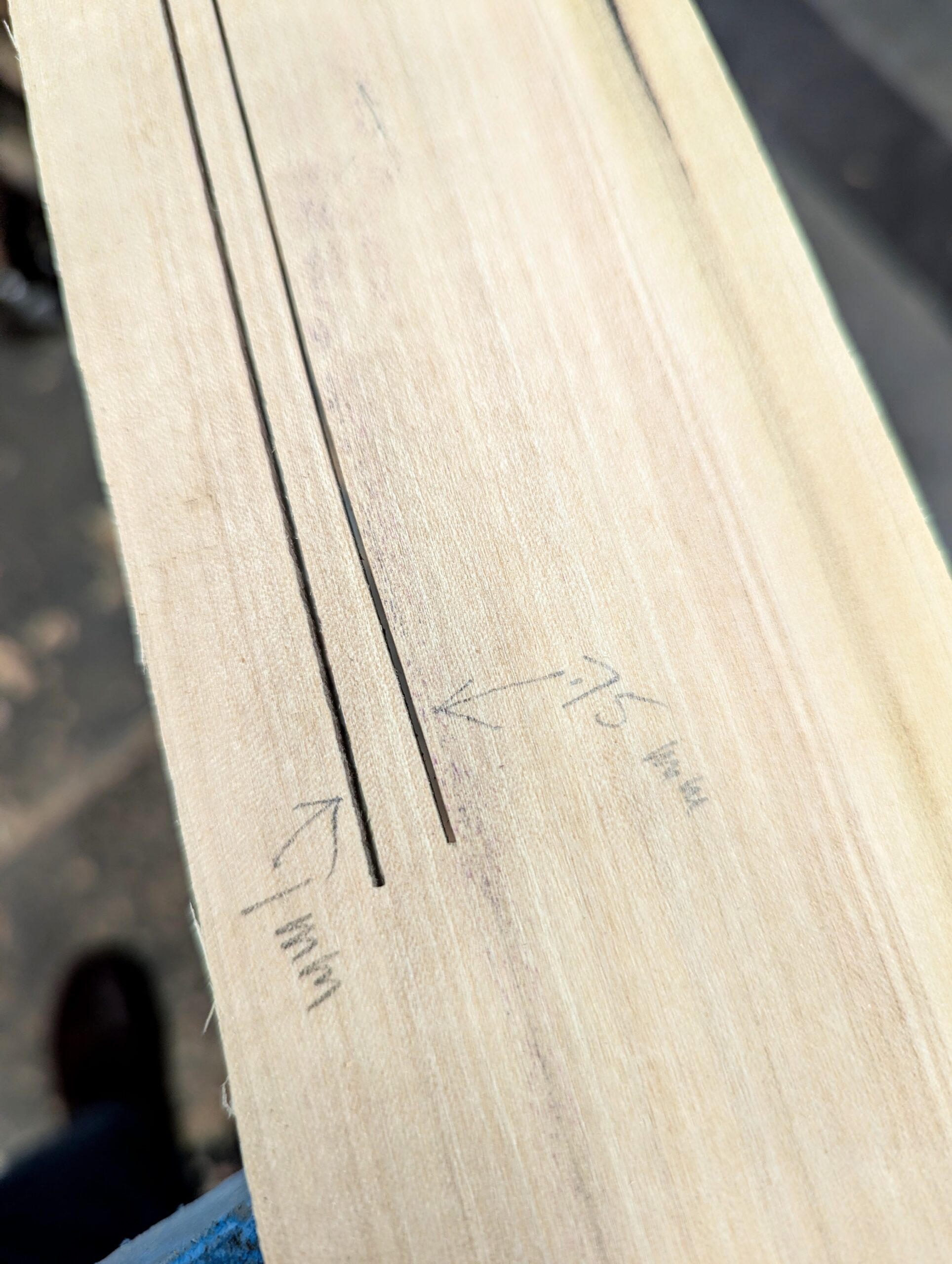
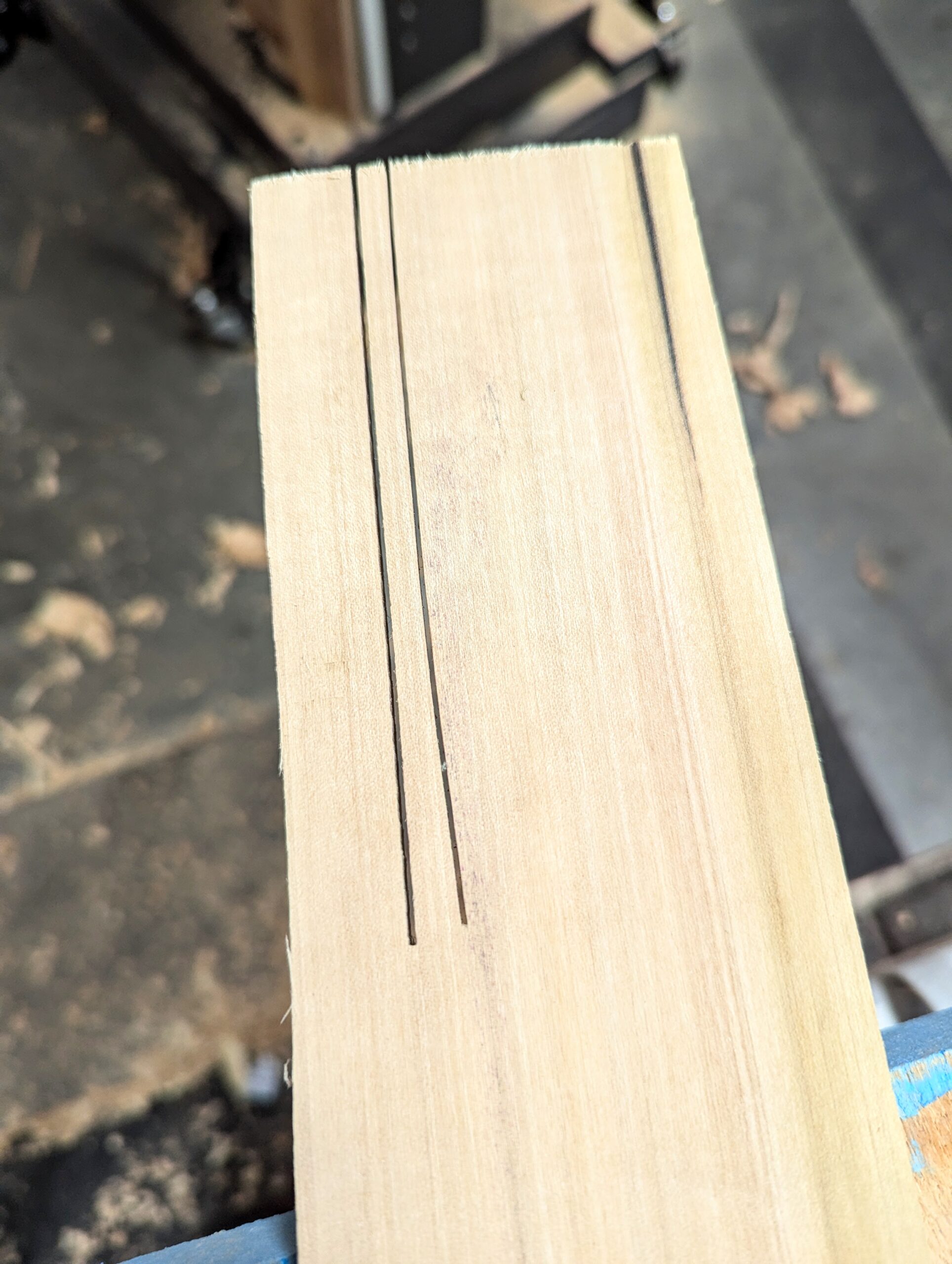
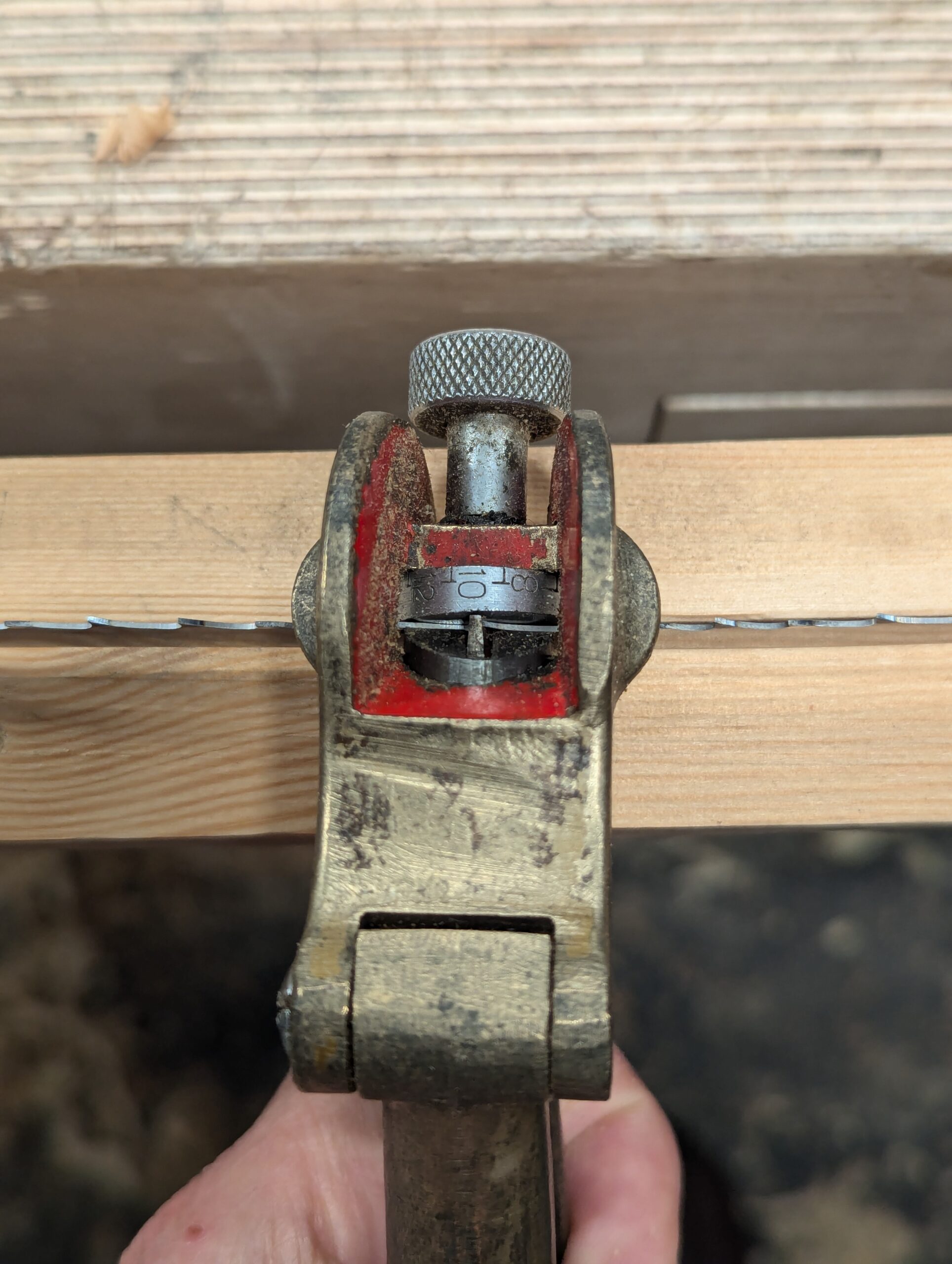
Using a regular Eclipse handsaw sawset, I increased the set to 1mm. Back at the bandsaw the blade zipped through the wood with zero argument and the outcome was the ability to cut my poplar down the centre to get the two 13mm boards per 30 mm thickness I needed.
It's one thing reading books and sales blurbs about materials we depend on and entirely another for your long term experience that can only, only come though working with hand tools. if you want to work with hand tools the experience is ongoing and never ending. Here I am at 74 and still learning but not so much from others these days but through care and consideration as I wor and try to resolve issues. Will this be the first time someone has written about what they learned from the hand tools they've worked with for 60 years affecting their bandsaw cuts? Who knows? Possibly, maybe, probably, could be . . . !
It would be all too easy to blame the bandsaw blade maker for not making the kerf deeper but you must also remember that they are making to optimum performance for blades used on more common woods. The .75 MM kerf does not just mean a one-size-fits-all outcome on a thicker kerf or blade would work better. We have other things to consider. Yes, the main reason is obvious in that we lose less wood, albeit so small, but then more kerf takes more energy and puts more strain on the motor and bearings and so on. In other words there is a knock-on effect we might not think about but we, from our experience, do.
Comments ()