
Only Three Common Joints
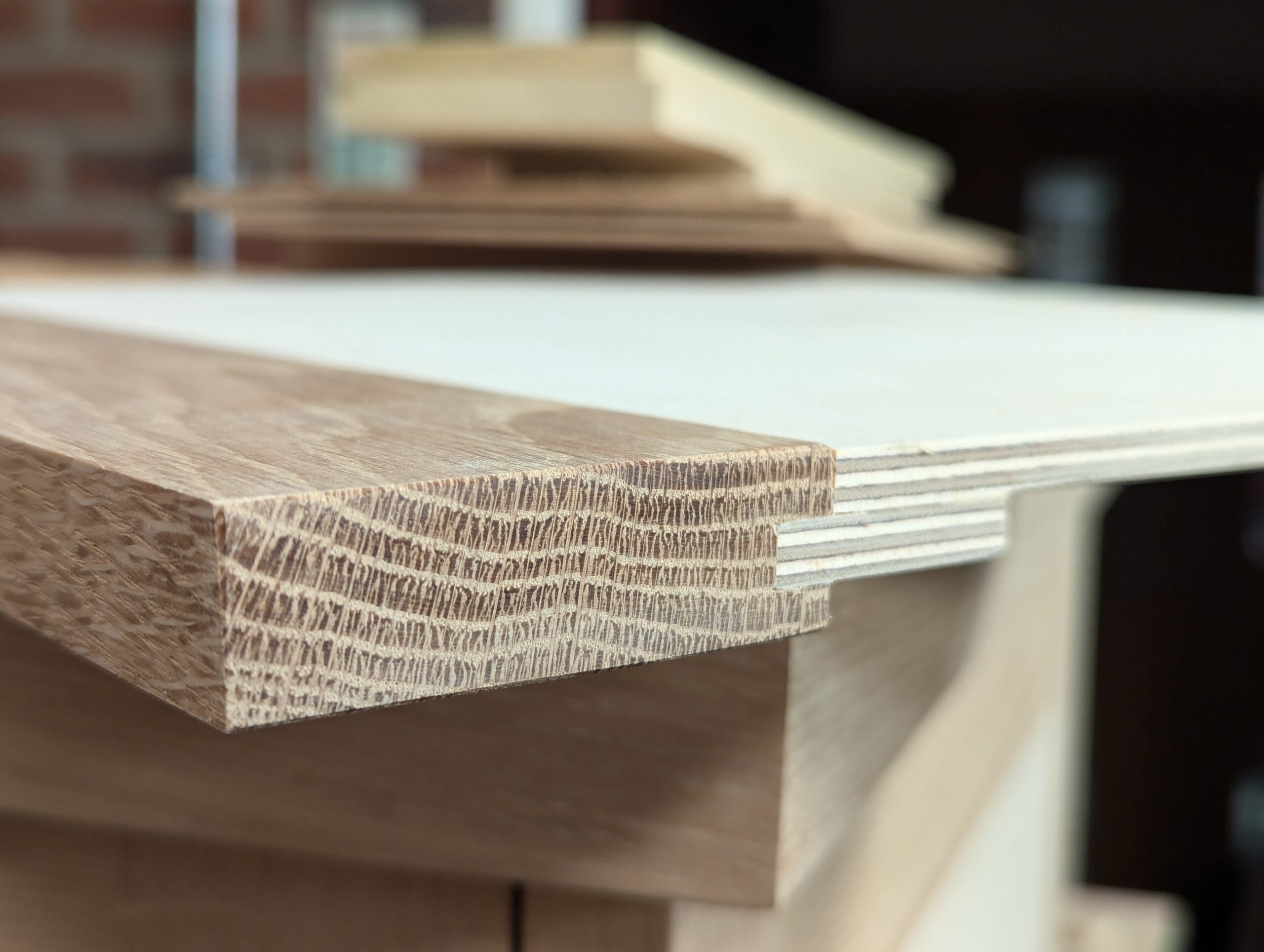
I'm a traditionalist in some ways and a modernist in others, but I constantly strive never to compromise my own integrity nor the integrity of my work. What do I mean by that? Well, integrity affects many things. Going for cheap-quality and low-grade plywood would compromise the longevity of the pieces I make. Using solid wood in general guarantees that my pieces will last at least two-hundred years. The way I choose to work and the quality of my woodworking speaks of my own skillfullness, yes, but so too the how of how I make it. If you know me at all, you will have heard me say many times that 'it is not what you make that's important, but how you make it.' Working with hand tools is the most high-demand method of all woodworking bar none. And then there is the integrity of being true to yourself and your following too. From my experience of working with both hand tools and machines, I now use hand tools predominantly, but not to be in any way nostalgic or to lead people back into the dark ages. I do it because it is the best way to do woodworking and to engage with it with your whole being. Your whole being includes your mind, your emotions, every muscle, tendon and sinew that connects these to the work. The one thing from industrial carpenters from a job-site mentality or place of commerce is that machine methods using so-called power tools are faster and that you cannot make a living from working with hand tools. Well, I have news for them. I did, and I have, and I can, and that is because I don't believe competitive pricing is everyone's only criteria and more than that, we are not all trying to make anything to sell. It's of equal importance to see too that most carpenters in industry do not own the skills to use hand tools, and with each generation that gets less and less. But in our amateur realms, people working with hand tools and owning mastered skills is always increasing.
Back in the 1980s, before many of you were born, I concluded that with three joints, traditional ones, and ten hand tools you could make just about anything from wood. I wasn't far wrong. I have spent the last 15 years making 99% of the furniture I have been teaching you how to make, using 99% hand tools only. Furthermore, I have lived by what I have taught and preached and never strayed.
Here is my very latest design. It's my version of a flat-pack disassemblable piece of furniture for clothes storage (or art and craft work, children's awkward toys of all shapes and, believe it or not, it's easy to make. I don't too much care if you make it by hand or use some other method, but what I care about is teaching you to embrace innovative approaches and creative thinking by using traditional hand tools and the advice of someone skilled enough to redirect your path to better ways of working your wood be that solid or plied. Don't cheat yourself out of mastering what you set out to do. I am not a gifted woodworker, I am an ordinary one. Yes, I am just a manual worker. So you can have what I have had for 60 years, too.
And I'd also like you to step away from the 1980/90s pallet wood and scaffolding planks along with your power equipment to see just what can be made with ten hand tools only. And if you doubt what can indeed be made primarily using quite basic hand tools, look at this that Team-Paul put together to show 30 or so pieces that we have made over the last decade or so doing just that. Here's the link.
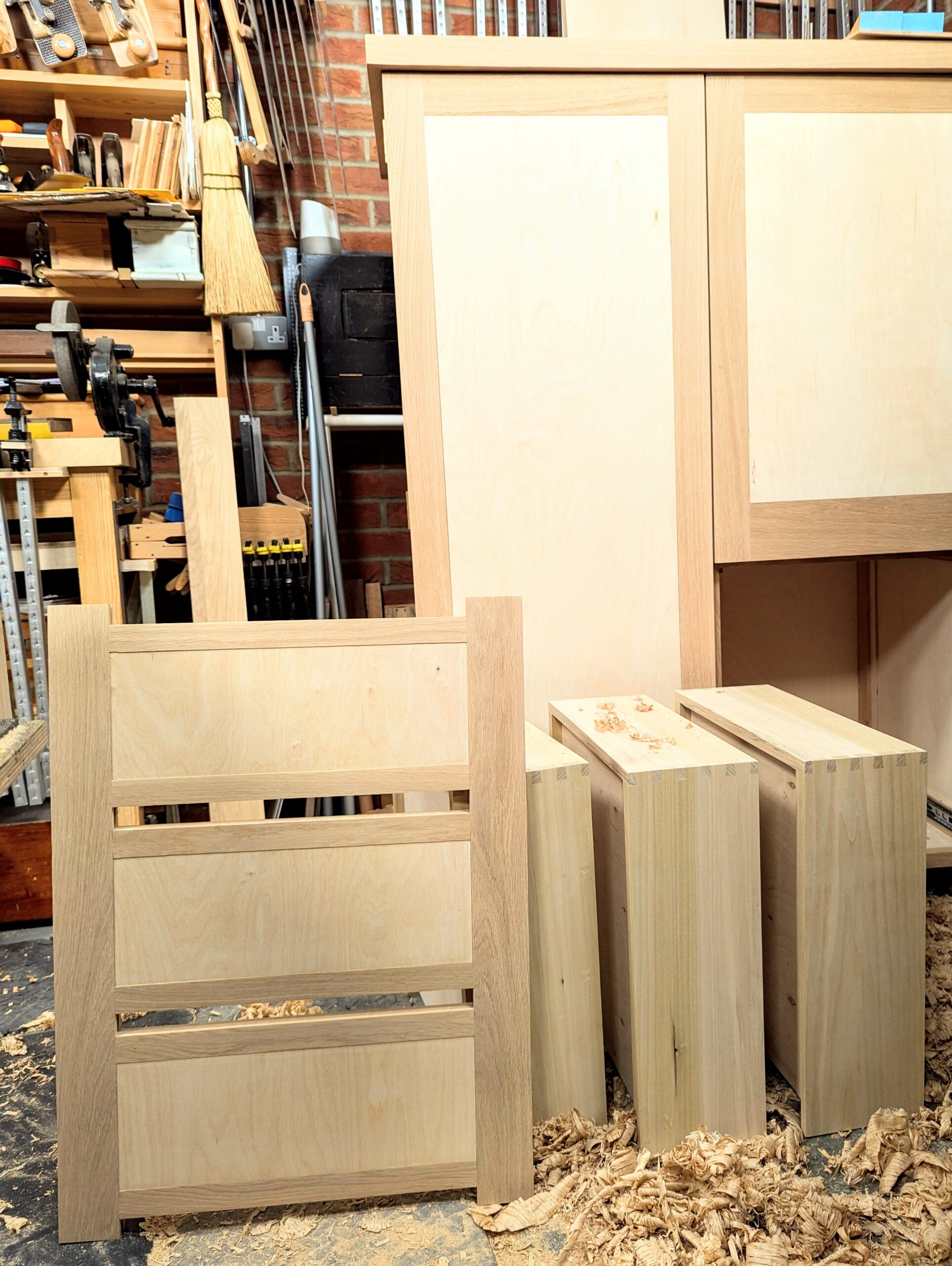
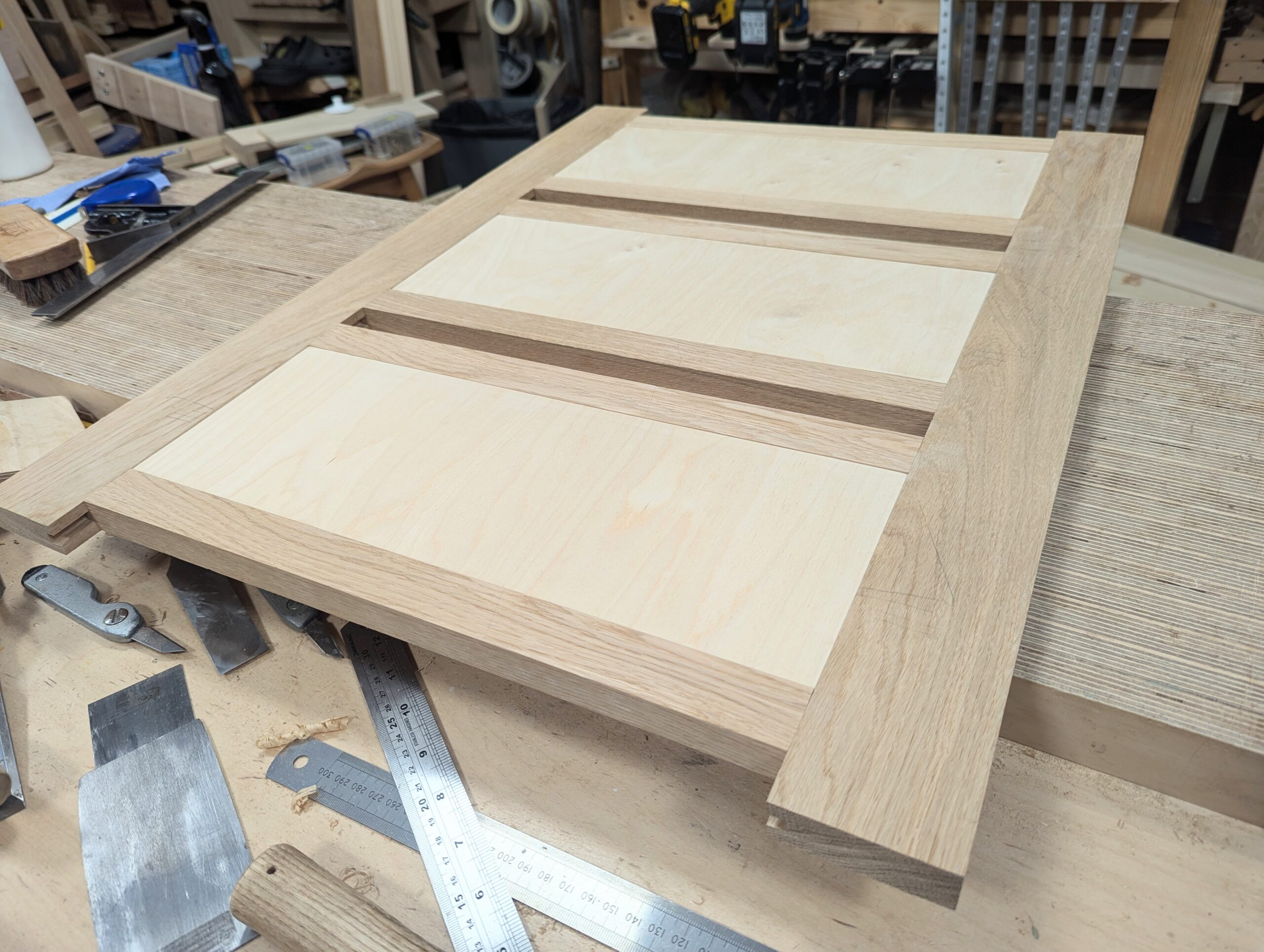
This new cabinet takes standard plywood and oak boards from the ordinary into the extraordinary with no real issues and zero compromise. The design is pure innovation, and the methods used can be adapted and adopted to make many more pieces. Now look at how I constructed the drawer fronts. Notice the stiles, how I split the wide six-inch oak board down its length to get my nicely matched grain, not book matched, intentionally not, to have good grain configuration and colour balance on each side. See the face grain of the plywood panels in the three drawer fronts that are yet to be separated. The grain aligns nicely because I used the same board but crosscut them to create sequential panels. This was very simple to do. It's a technique. It's my technique. One I developed just for this project. Yes, I know that some will say I do this all the time, but I doubt very much that they do.
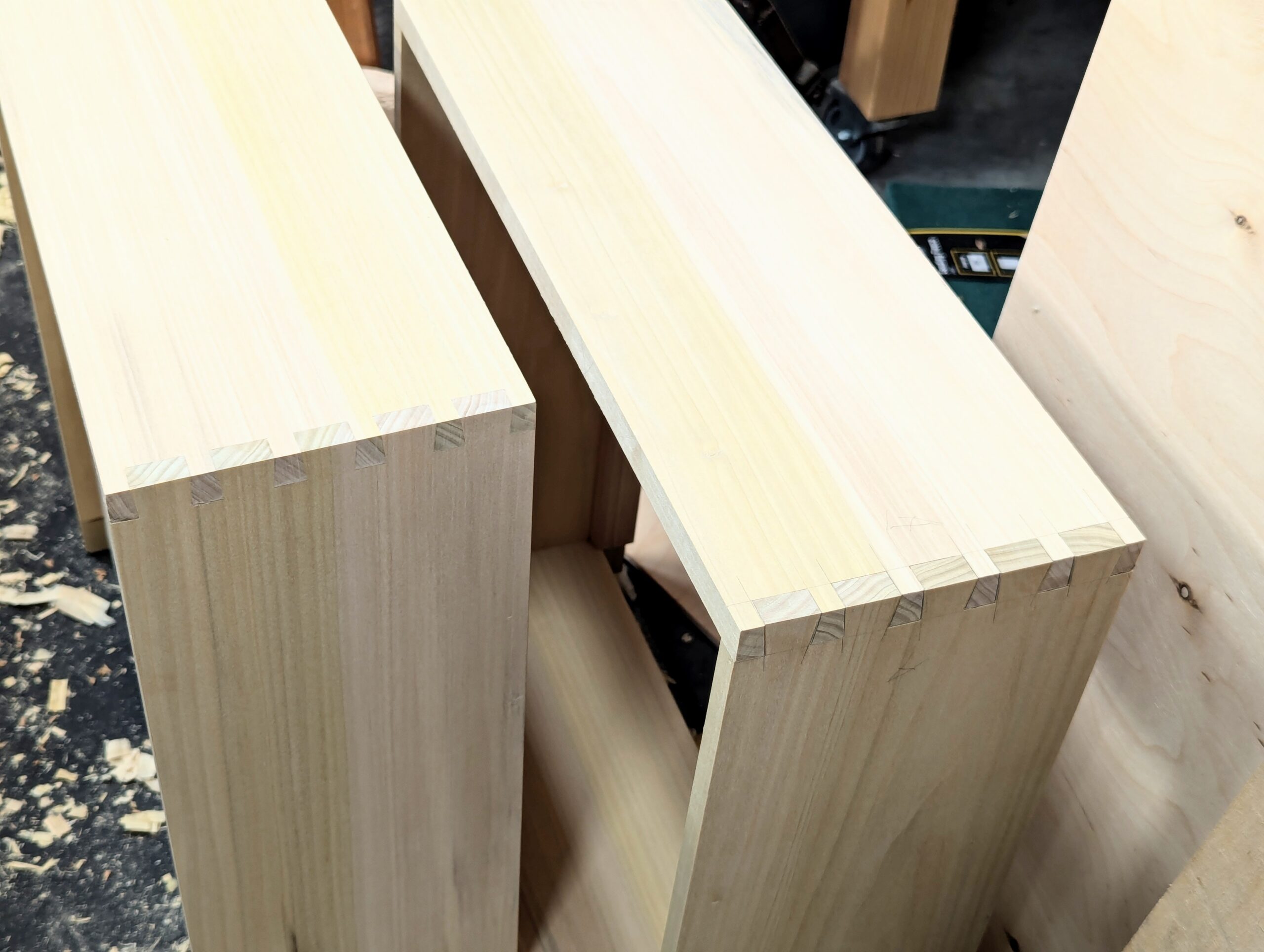
Imagine! The basic common dovetail joint used for all boxes and drawers, the common housing dado used for bookshelves and the drawer backs of drawers and last but far from least, the most common of all frame joints, the basic mortise and tenon joint. These are the three very basic woodworking joints I used to make this piece. How on earth can that be?
My work is far from done yet. If you continue to support me, I will always support your endeavour to become masters of your own destiny in woodworking with hand tools.
Comments ()