
Becoming the Maker you Want to Become: Introduction
I've been writing a few posts to steer those seeking hand tools as part of their home working that will lead them on a clear path of what is actually needed to get started and keep going. Hand tools are just as viable a means of achieving as any other, and in most cases, and it's not just my own view. I've helped many a hundred thousand to get started on their exciting and exhilarating journey. For many, if not most, the hand tool methods meet the exact needs of amateur woodworkers and expand those of machinists exponentially. When you master hand tools, you can go in any direction you want to. It's not the same with other methods. Hand tools will open the door to deep depths of understanding wood that you can never get any other way. It's a technology that started millennia ago and just keeps expanding into the lives of people who want real physical work and all of the merits that go with it. You start with physical connections to your material and the tools, critical thinking is essential, the exercise touches every sinew and muscle in your body and your core muscle, the very centre of your being, the heart, the lungs and more take their part in keeping you fit and healthy. Before you know it, even on the very first day, you just feel good about yourself. What more can you ask for? A new dawn just began.
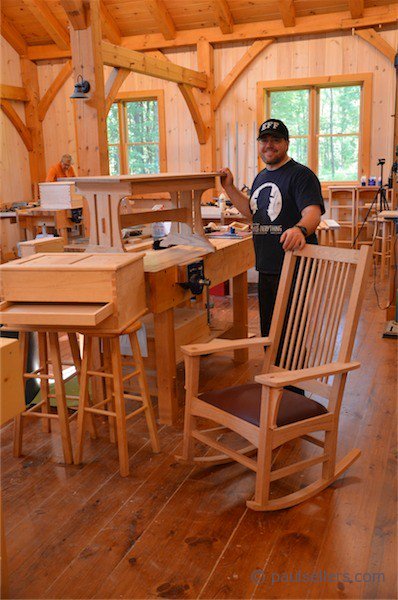
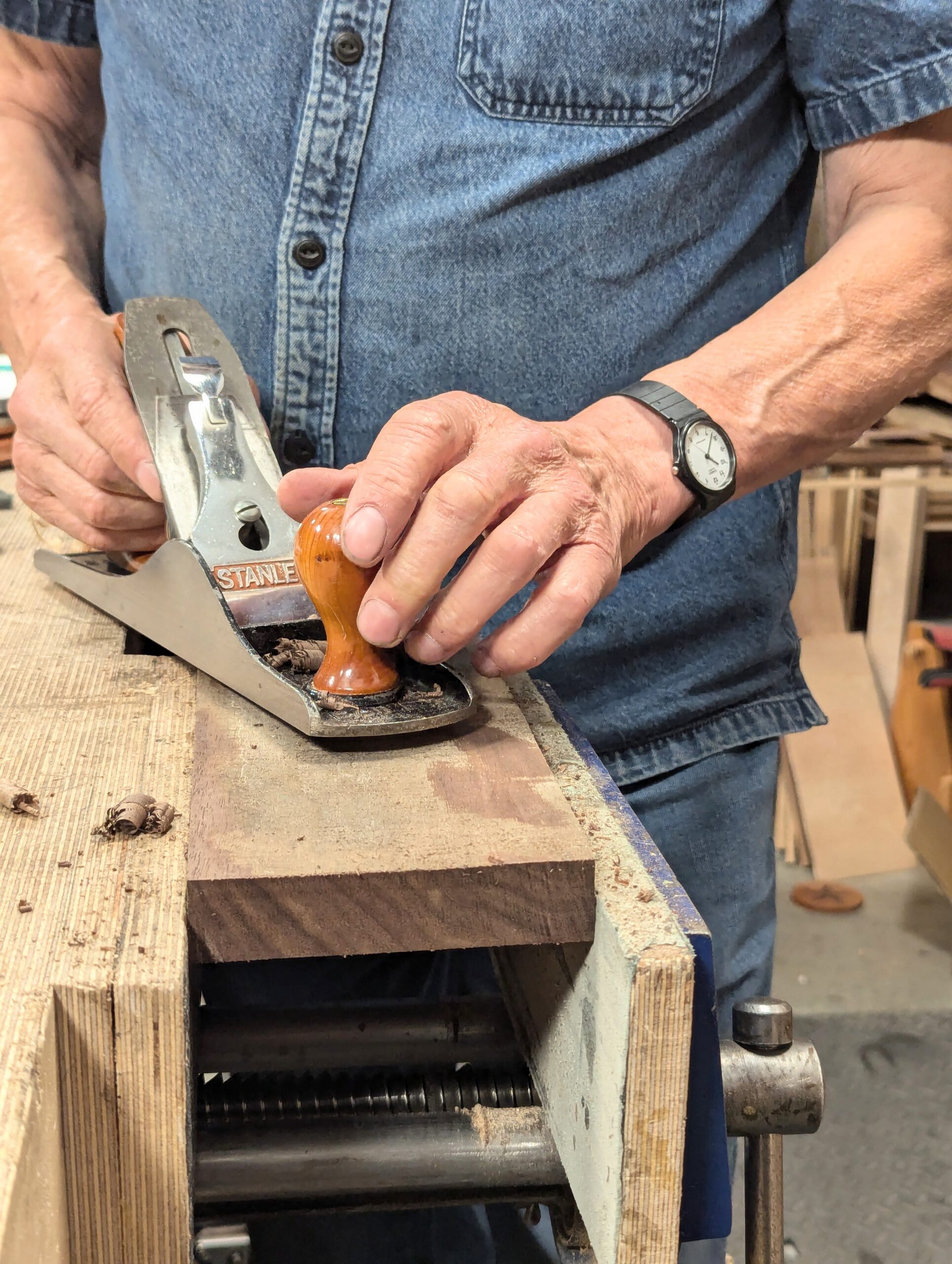
I should start out by telling you that hand tool making is not a second-class way of making but a truly first-class option and a way of achieving far beyond just what you make three-dimensionally but where you enter the multidimensionality of inner depth These opening lines of mine, what I'm writing here and hitherto unwritten, are just as important as going to the workbench and lifting the tools to work. We all need to understand why we work doing what. The purpose is not so much what we make, but how we make. It's not to pass time, like reading a novel or watching TV, it's developing your skills, yes, but it's also developing your mind. This attitude and aptitude should be the purpose of all that we do. Crafting and taking charge of disarray and confusion, converting raw to refined, is what we artisans do in our day to day. We define the undefined and make order out of chaos wherever we can. Woodworking with hand tools is all about accuracy and care, decision-making and developing our understanding of the wood we work along with the tools we use to do it. When I state the words 'hand tools' I am not talking about any machine here, whether stationary or hand held, I am talking only about those tools driven and held, directed and guided wholly by our own energy and the power to grip, drive, hold, present, steer and use them. We provide all of the accuracy, the guidance and the energy to drive whichever tool we hold into and over and through the wood. We deliver cutting edges of every type, be that saw tooth, chisel edge or plough-plane cutter into the wood rather than merely pushing wood into the machine. And there, if you will, lies the pivotal difference. That's the fulcrum point where with the very slightest of pressure the scale gets tipped favourably to a better life.
You see, it is wholly important to know the reasons, the why and the wherefore of what we do. I hope I can guide you clearly as you develop your woodworking future. You would only have come to my site for hand tool woodworking, and I take that reasoning seriously. It's not about making you a maker that earns your living from woodworking, though it could eventually do that too, taking the baby steps, I'm doing it for crystal-clear clarity in a world where 95% of woodworkers use only machines. You might need some kind of explanation for why you feel the way you do. My world now revolves around bridging the gap for experiencing what `I have lived for 60 plus years as a full-time maker. I want to help you to avoid the kind of sidetracking or distraction other entities can creep into your life with. With so many woodworkers finally divesting themselves of the more artificial ways of making to embrace hand tool woodworking, and indeed making a big mistake and never developing what can be utterly life-changing for your future good and total wellbeing, we are giving a clear, clear message that says hand tool woodworking can be for the majority working alone in their home workshops. By my placing these stepping stones in among the mire of mass-information rooted mostly in mere opinions, I remove the boggy ground underfoot so that you don't sink into the myths and mysteries that do often lead to confusion, With the mass of erroneous information out there, the needle gets less and less obvious in the straw. Let me start by asking what I see as a few key questions then.
Something drew you to look in my direction. I don't watch anyone else's videos because I don't need to. I have lived the life I have without influencers mostly because of my apprenticeship but then because of my age. The first time I really ever used a computor was when I was in my late 50s. In other words, I did not grow up using one and had to start from scratch. That being so, I learned photography and art along with a dozen or so other skills to support my later work teaching and training, designing and making. It was about equipping others to become woodworkers.
The first question you should ask yourself is what has drawn you to this point where woodworking intrigues you enough to want to invest in hand tool woodworking as a craft? A starter list might be as follows: I have spare time I didn't have before and want/need something to do with it. I'm retiring and will no longer need to work but want substantive work for various reasons. I'm disabled and cannot work in commerce or commercial settings. I have always felt something about working with my hands, and particularly in woodworking, but never had the opportunity. My house and family need things for their home/s, and I think with time and investment I could develop the skills to make them.
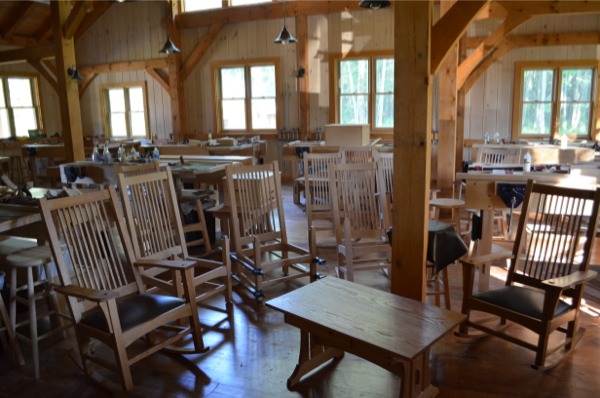
These questions are just clay on the wheel. Something to shape and mould into something you can give form and substance to. I suggest you dig deep into your inmost self and be honest about what you feel.
The second question is: How would you like to work the wood? Is it by hand or by machine? Can it be both? How you decide will again depend on several things. Machines take up a lot of floor space and the footprint per machine is not just a square or a rectangle of occupancy but the space you take up feeding the machine as you deliver wood into it and take it off at the other side. All the different machines take this kind of consideration. Some woodworkers start out by putting each machine on wheels and wheel them in and out according to needed. But over time, this gets tedious and especially when you have just put one away, and you forgot a particular cut and need to drag it out again. You must consider the noise factor for family and neighbours, and that will usually depend on the length of time in use. Of course, noise is a factor with hand tools as well. Banging and hand sawing can be invasive, even though it will always be far less than machines and dust extractors are. Of all the neighbours I have ever had, I have never had one complaint ever to date. Also, you can sound insulate your place too to minimise noise going out. I'm not going to talk too much about having both machines and hand tools, even though my experience is long term is equal in both camps. I would consider my workshop meets many demands with the minimum impact on my neighbours. I use a bandsaw, hand - held battery-driven drills, a jigsaw, a belt sand and a random orbit sander. To maintain an unpolluted atmosphere, I also hook up to a small and compact dust extractor to my bandsaw, which can be noisy but only for short bursts here and there. I might suggest here that you have already chosen hand tools as your way forward, simply because you are on my site. I do know that ten woodworkers will advise you ten different ways.
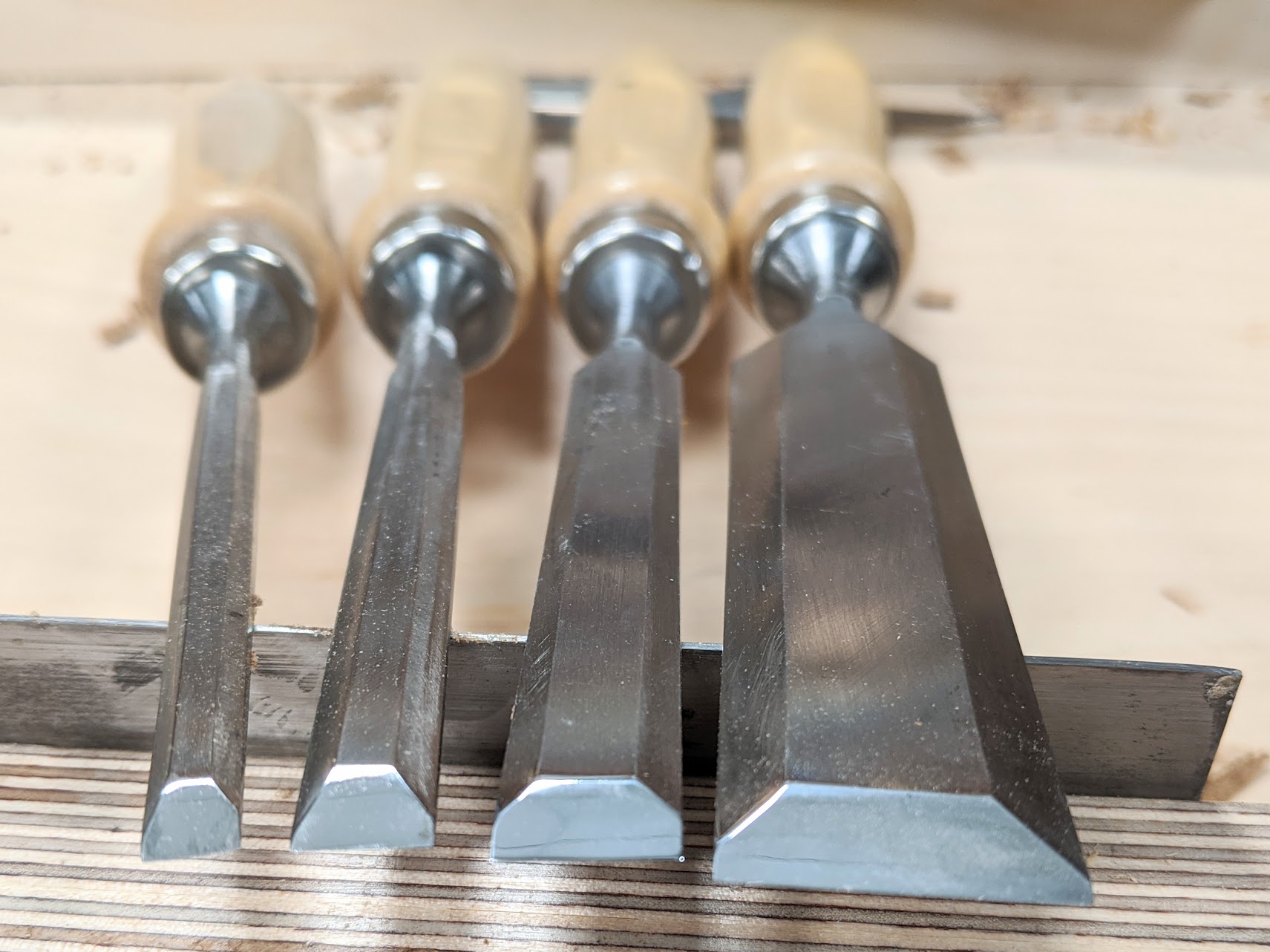
Another consideration will stem from where you live in the world, the country you live in and the town, village or house, which will include home type. Being on the 16th floor of a high rise with neighbours above, below and on three sides will have restrictive problems, but not necessarily impossibilities. Some cultures are defined by the, "Just-get-the-job-done-and-let's-get-out-of-here!" where the making has little value or importance to them. In my world, the process is of equal value, if not greater value, than the completion of the project. Usually, these woodworking types never managed to master hand tools to any substantive degree. Not because they couldn't but because they chose a different direction.
I am probably going to try to nudge through my biases and my prejudices here and there but preface it all by saying I like machines but choose to keep just one. I do use both belt sander and random orbit sander in my day to day, along with my drill-drivers and jigsaw. The sheets of plywood in my most recent project had too many square feet left with sander marks in by the manufacturer going across the grain for me to start planing and scraping them out. My random orbit sander took them all out in a heartbeat, which is roughly an hour instead of half a dozen.
Comments ()