
Working Oak
I’ve been ploughing grooves for my latest project in European oak. Oak always works really well with hand tools, that's why I love it, and if you know the tricks (which I always pass on when I remember to), even the wildest grain will yield up crisp and clean results when you know what to do. Plane it, scrape it chop and pare-cut this wood and you’ll find it to be one of the easiest and most pleasing woods in the world to get good results from no matter which hand tools you're using in the moment. In my early days living and working in the USA, it seemed that everything was made from either oak or maple and that products made from it seemed ALWAYS to end up stained. In those early days I could pick up curlier maple and oak with distinctive grain for half the price of straight-grained and boring woods because these woods would pop out of the plain-grained woods too much and the merchants found it harder to sell it. The thing about oak is that if the grain changes are not so prominent they become too distracting—the word complimentary springs to mind. Most oak pieces will complement one another and can run side by side until you get to medullary rays and then you have to really take care to choose your pieces because now you have personality issues.
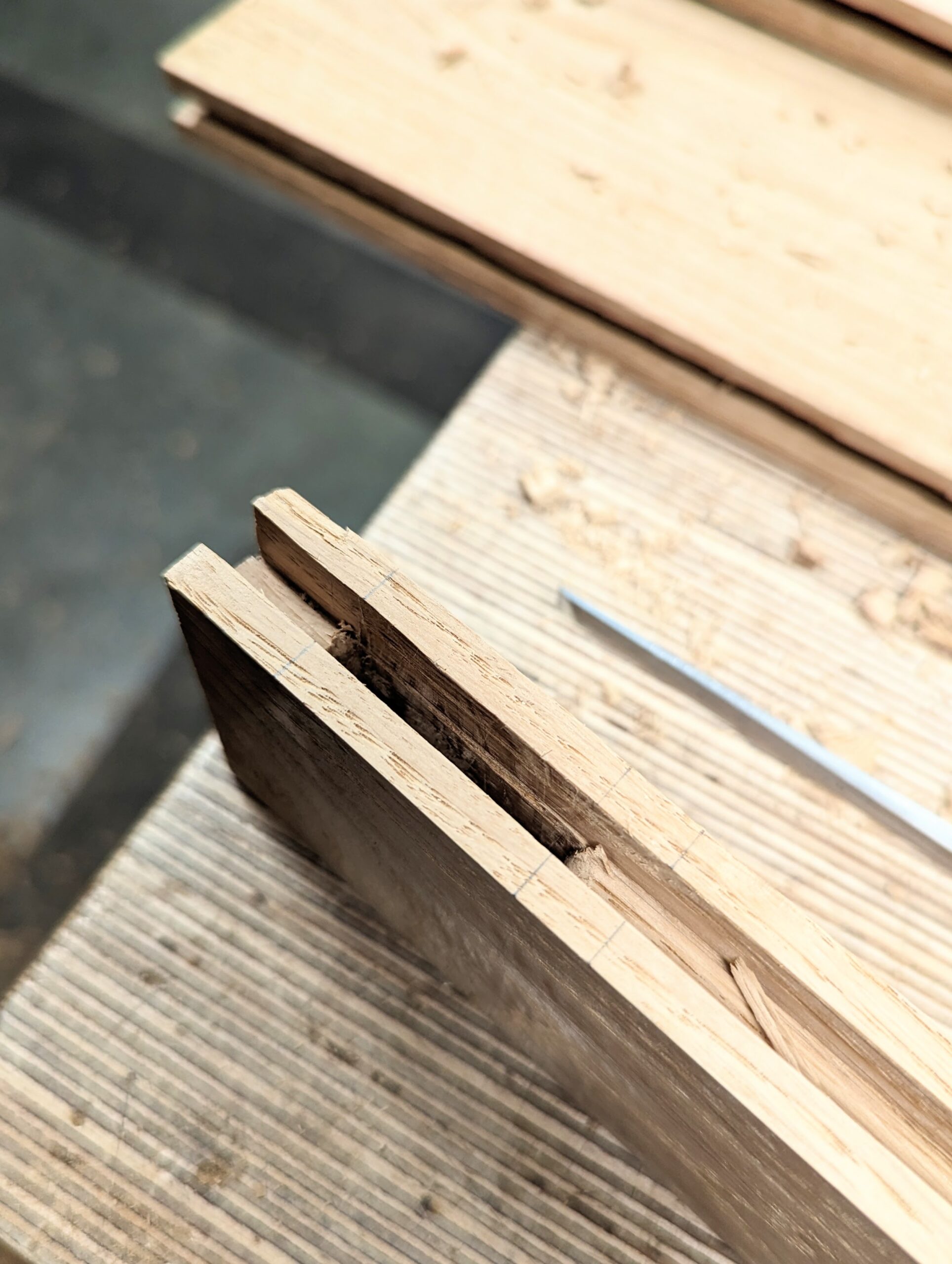
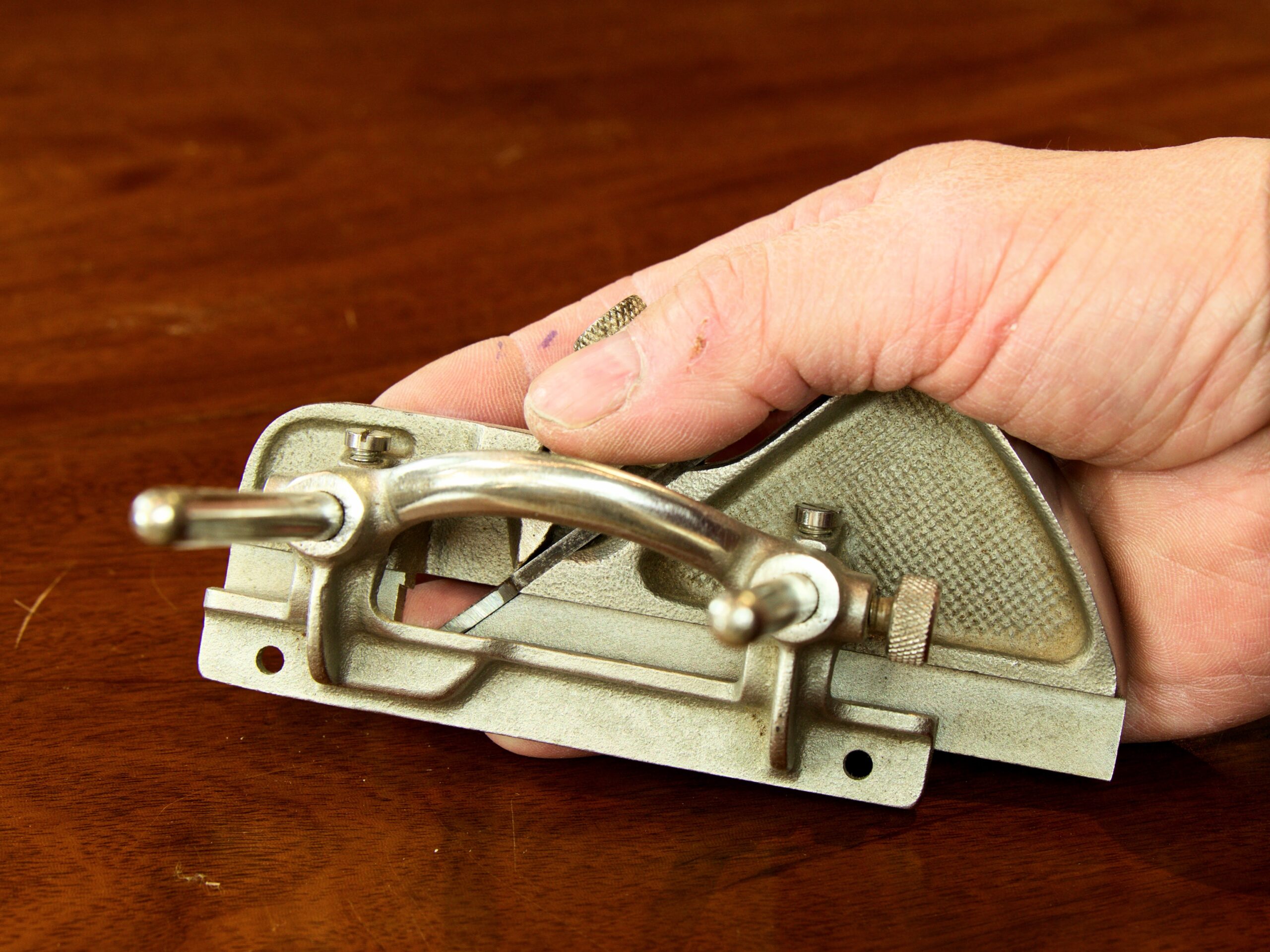
We know oak best for its intrinsic strength, resilience and reliability under all kinds of pressures. Split along the grain and create continuous grain in your parts and oak stands supreme amongst the best. It's a coarse-grained, open-pored wood and the grain can be quite diverse. The importance of sharp planes cannot be over emphasised. Awkward grain is not a question of changing out planes, cutting irons and bed angles between bevel up and bevelk down planes. That is way to time consuming resulting mostly in torn grain, Reach for a well sharpened and set #80 and this tool alone will tame the wildest grain immediately. If you have made a mistake and already taken that poorer choice and tried with the plane the #80 will get ypou back on track.
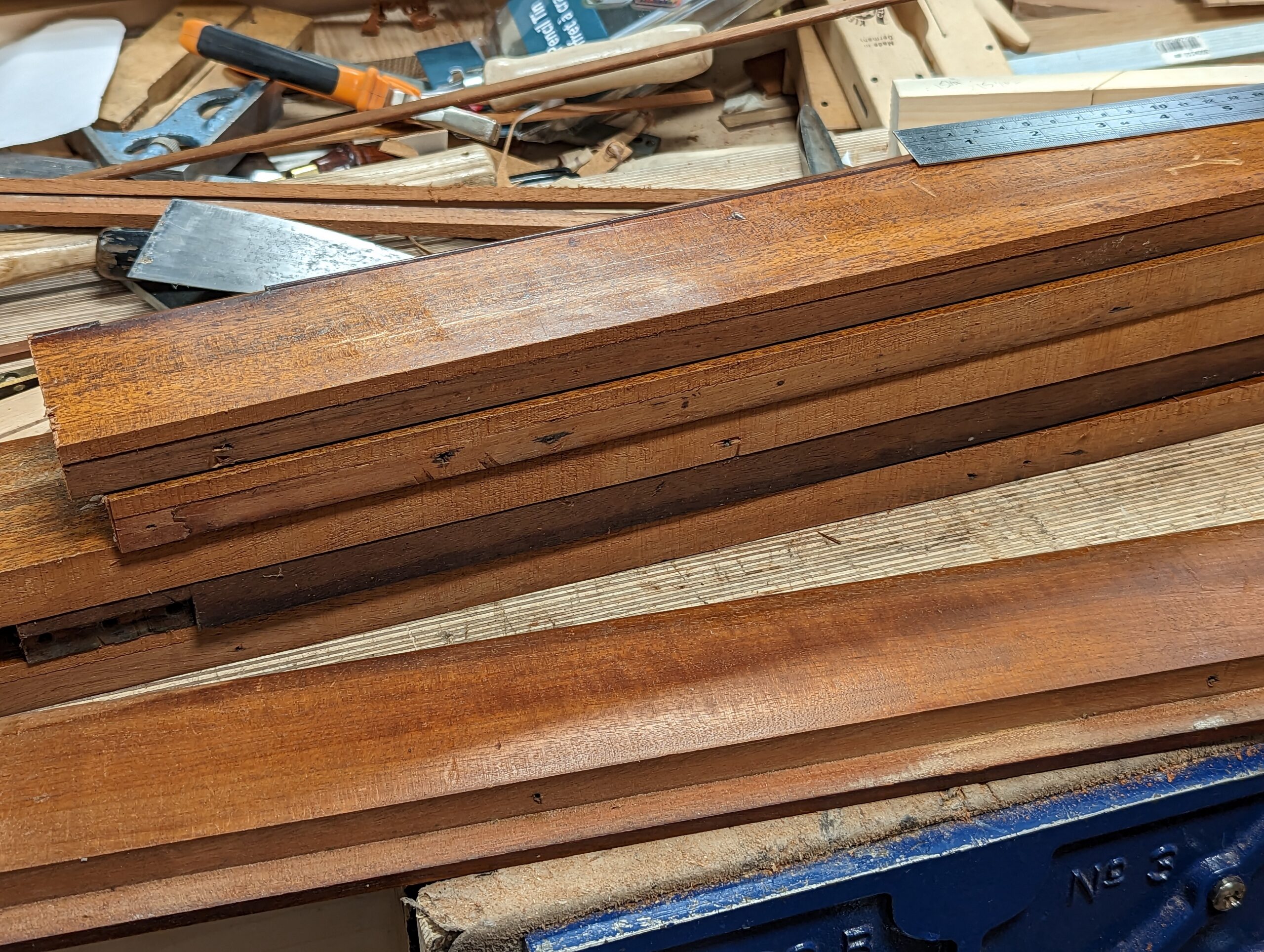
Back in the 1970s and on up for a decade or two woodworkers looked at exotic hardwoods to use them in part or for the whole of a particular part of their design. Thankfully, we have cut back dramatically on that, limiting their use for contrast features rather than a whole piece. Trust was that a whole piece in an exotic wood often looked more gawdy than attracive. Had the mahogany forests been well managed there would still be plenty of a sustainable resource for us to make from. But the depletion of rain forests was less about usable wood than creating land to raise cattle on to feed the meat-eating planet. Often, wood as in rough, site-sawn timber in the forest was used more as balast for the return voyages rather than need, but of course profiteers are profiteers no matter which flag you fly. Deforestation was always rooted in pure greed rather than real need.
At least that’s what we have worked out. I think it’s always a combination of all things greed that creates the imbalances we are having to deal with now. The Industrial Revolution has now become the new frontier of the technoindustrial revolution and it all needs paying for somehow. The whole of the Eastern Seaboard of the USA was at one time wholy covered with Pinus Palustris. The common name of Long-leaf Pine in the 1800s and a century and a half later was reduced to a mere 35,000 acres. Funny isn't it, in the 1980s they predicted that the computer would eliminate the need and therefore use of paper and a decade later the computer stands responsible for our using four-times more than those decade before. Typos became too easy to replace with another 500 copies and the first 500 trashed into our newly emerging recycling endeavours.
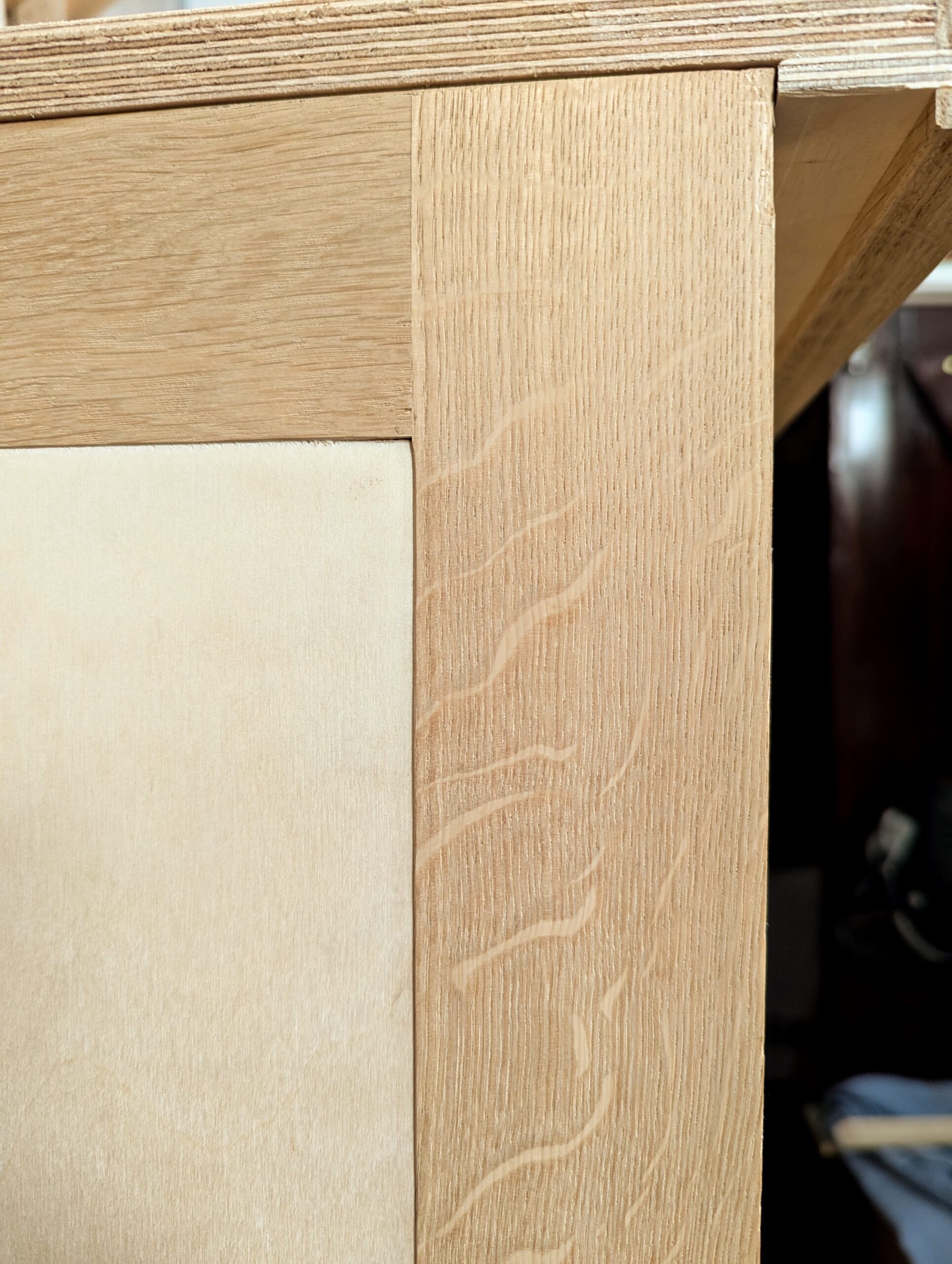
I’m working between solid oak and quality birch plywood on a couple of upcoming projects. Plywood is one of our more remarkable inventions for engineered wood in sheet form. We designed these materials to create economic panel-boards of wood but then too a material with omni-directional strengths to do things we cannot do with solid wood. If the quality is striven for, it yields an almost shrink-proof panel to almost any size you might need and you can buy it up to two inches thick from the right maker or you can laminate sheets together to get the added thickness you might want. My first plywood benches were an experiment and I have no regrets at all in making mine and using the one I have used every day for the past recent years. I went for top-quality plywood in birch for the thick outer veneers because I didn’t need anything decorative. I enjoyed bringing this bench to pass and made a second one identically with no changes. It’s holding up better than fine. It will outlast me.
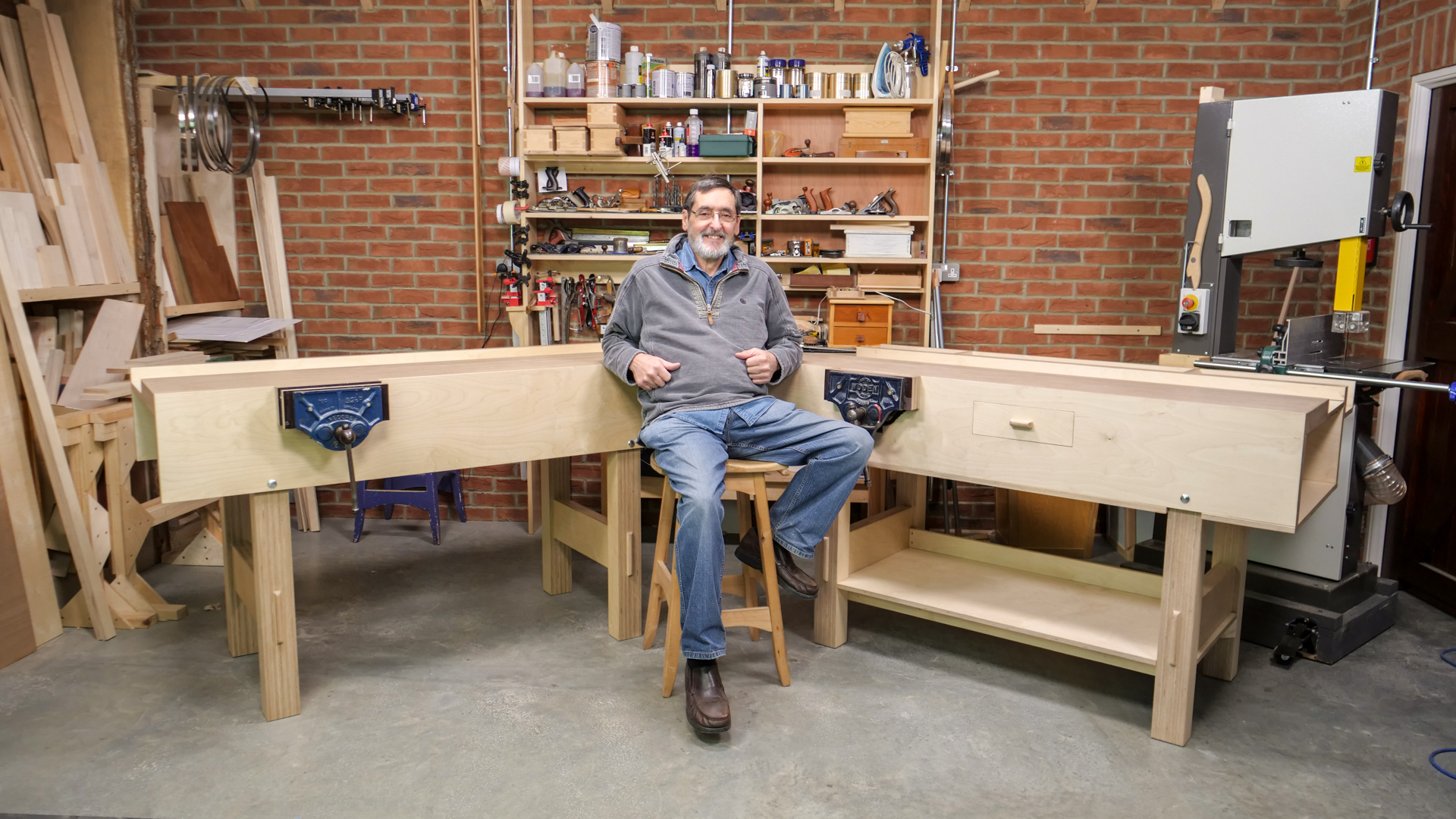
Often times it is less what we do with remarkable inventions than what we do to them or end up doing with them. Back in the 1990s we had a great quick-release (QR) vise made by Record for a century before then. Copies started to be made in China, Taiwan and India and sellers like Woodcraft, Rockler stocked the cheap imports which looked the same and had the same action but were not one and the same as Record of old. They then controlled the buying price for a season and sold them for half the price of Record. Of course, Irwin Record couldn’t compete and soon dropped the line altogether. Such is the way of global competition––a demoralising reality. It’s actually hard to find a good vise any more but they are out there if you can pick your way through the and then what we end up doing with them‘experts’ started to be working in marketing and sales who are sales personnel and rarely experienced woodworkers. I just watched the uncomplicated installation of a bench vise made complicated by the installer . . .
Comments ()