
Unusual Shrinkage
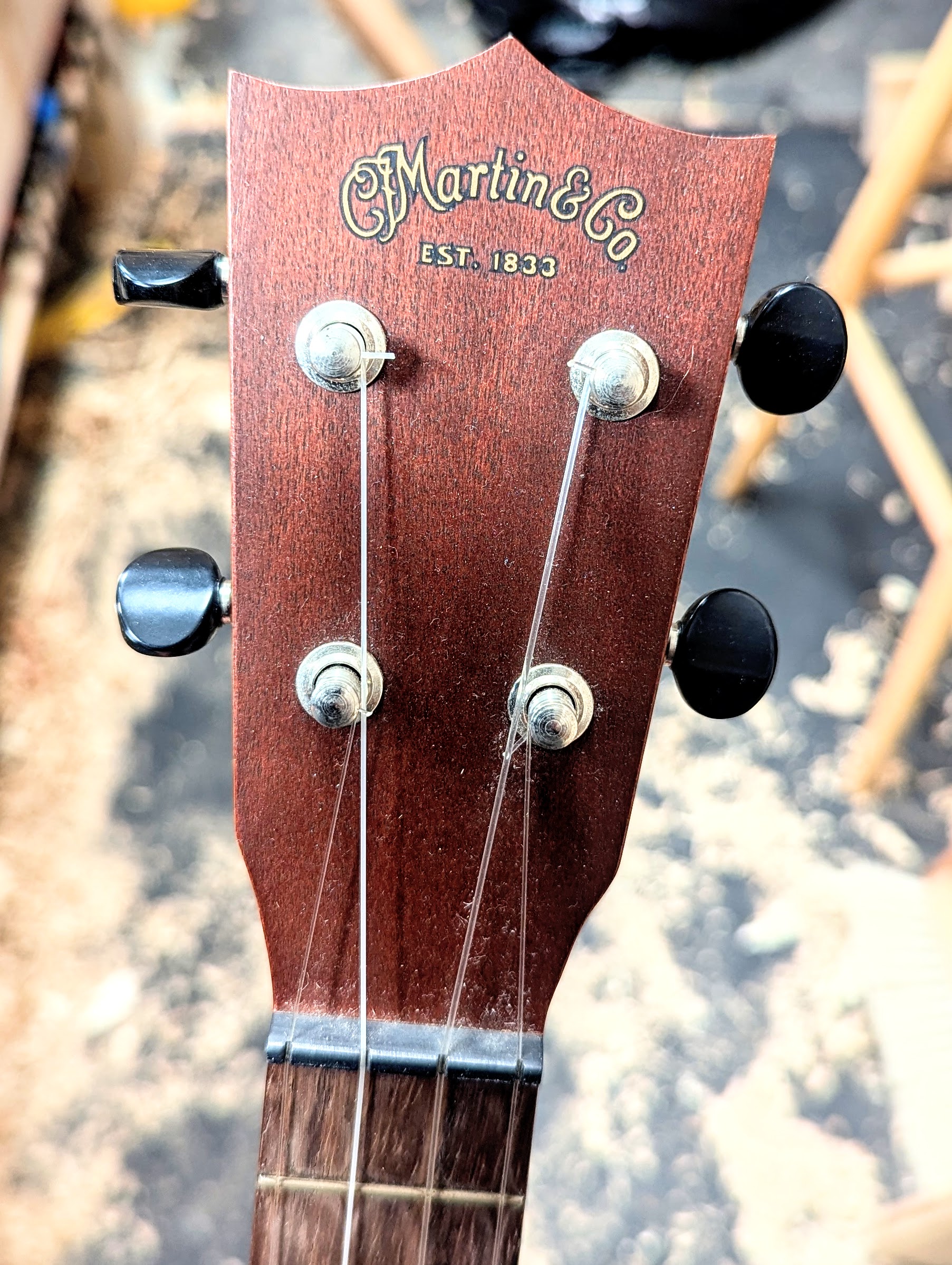
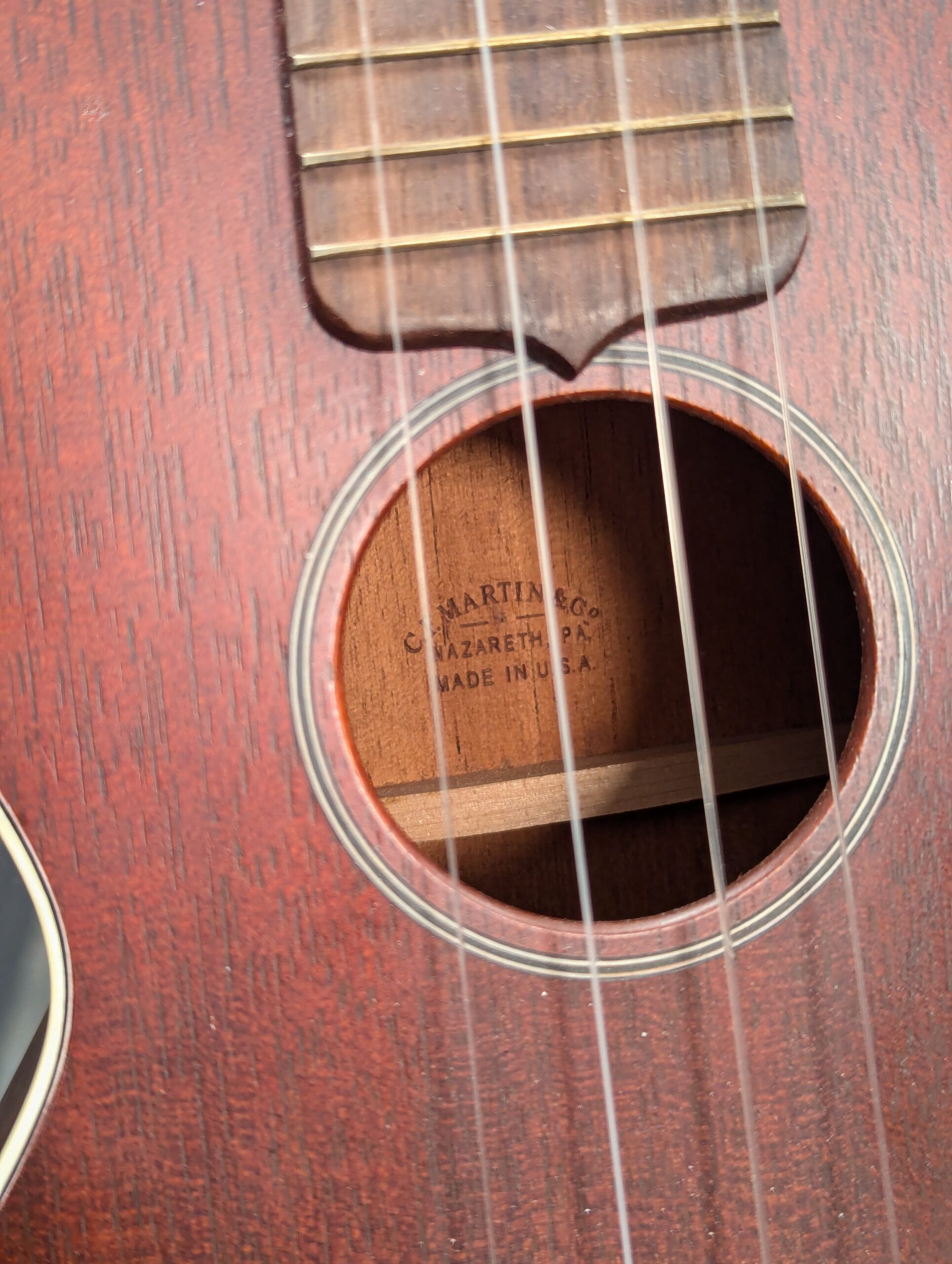
Considering Britain's weather and the reputation for rain that is far from true, you might think an instrument made in Pennsylvania decades ago that was bought secondhand in Hawaii would not have a problem in the UK. Not so! A friend asked me to look at his Ukelele because the binding had come away front and back. It's a nice Martin & Co. made in Nazareth, Pennsylvania, USA from mahogany. Plucking the strings reminded me of different Ukelele players going from George Formby back in the mid-1900s to Israel Kamakawowo'ol and his "Somewhere over the Rainbow" ukelele strumming fame.
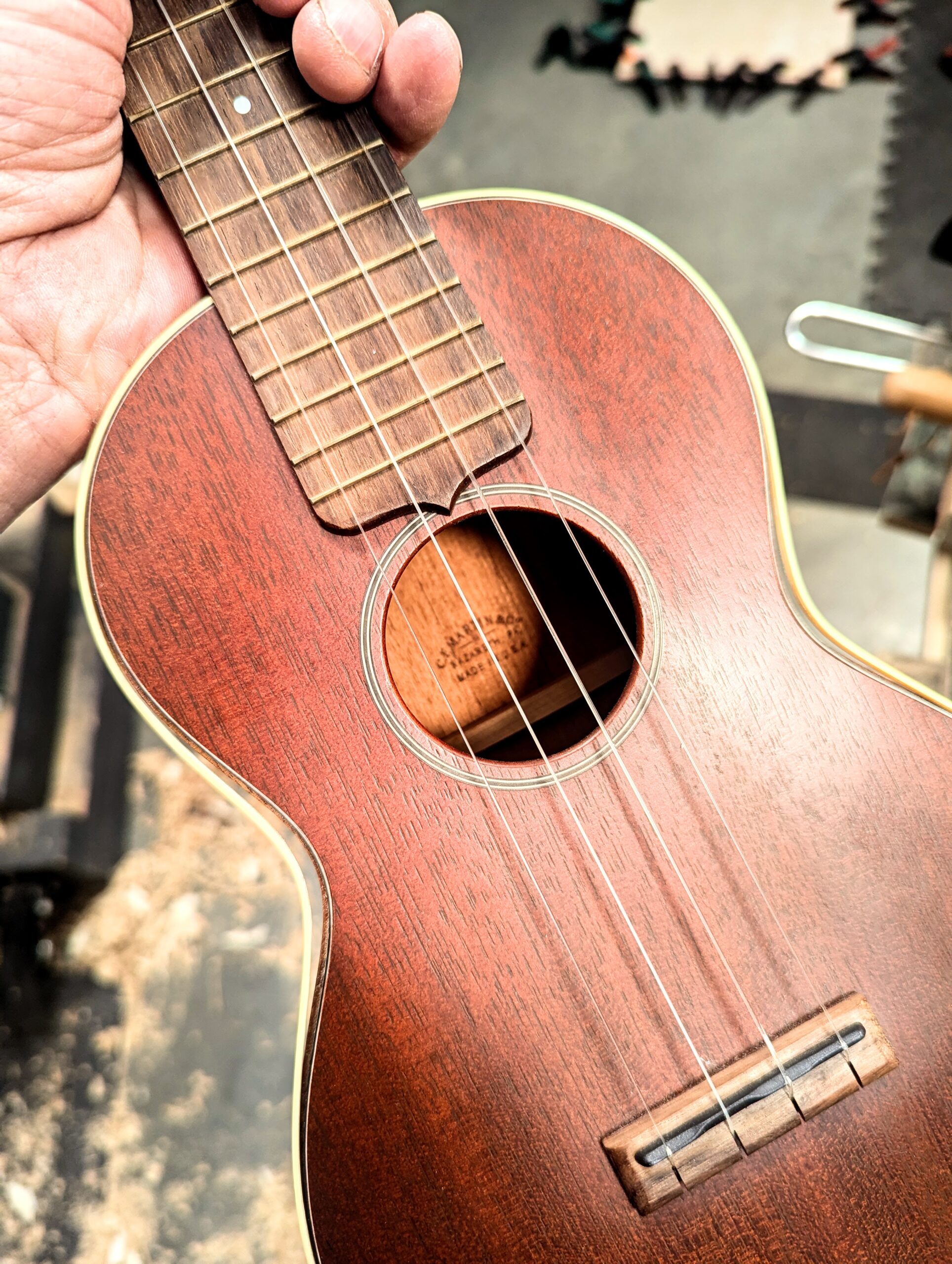
I'm sure the maker never anticipated this happening to so small an instrument. I wish that I had the original pattern for comparison. It would be interesting to see the difference between then and now.
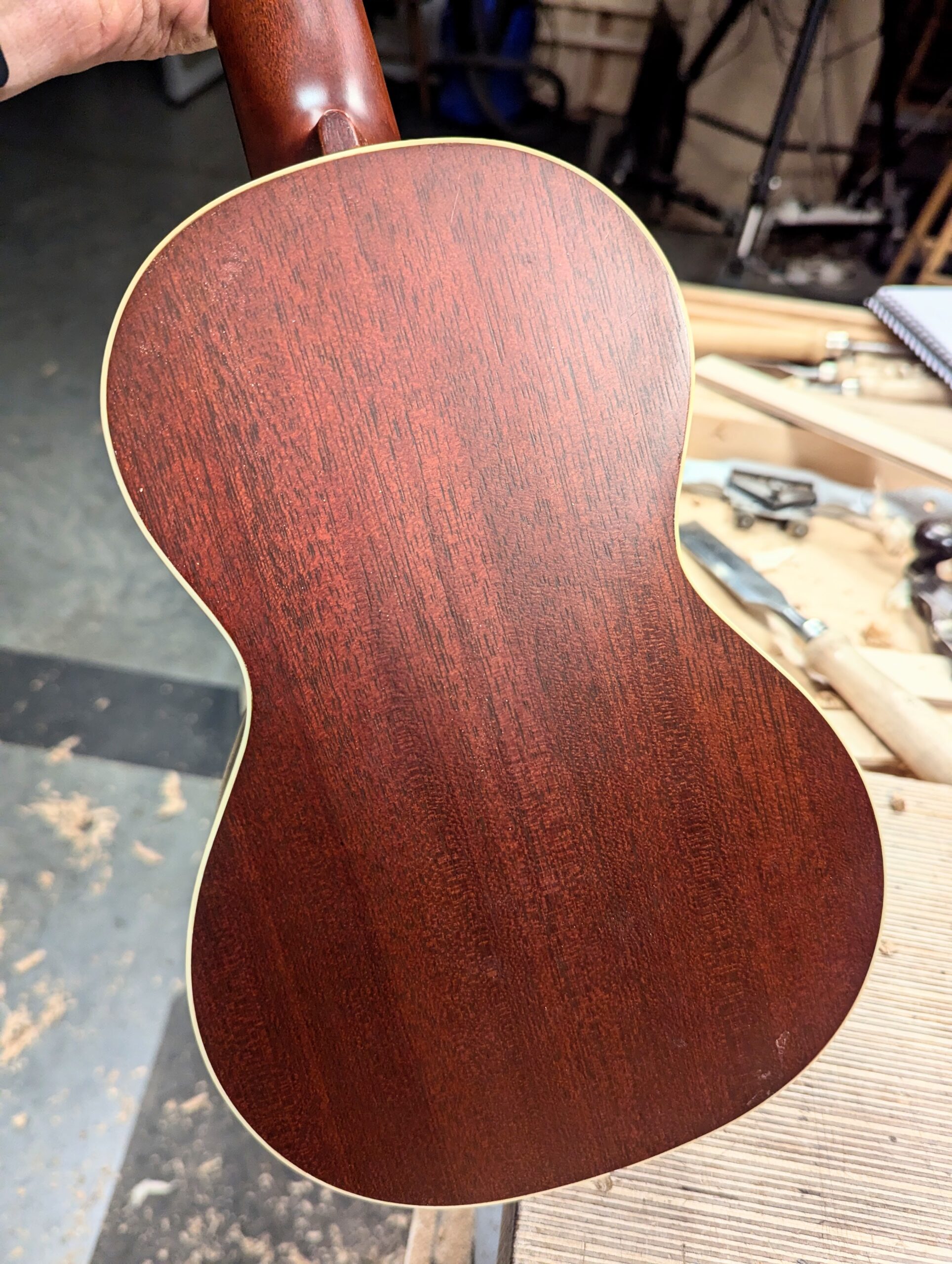
On the back of the instrument the makers used a single piece binding that met at the bottom with the two ends butted up against one another, I assume centred on the centreline. Once the binding was popped off and repositioned, it was 5mm too short of any 'meet and greet'. I filled the gap with cocobolo for contrast rather than trying to match the binding colour.
The binding did not turn loose at the top where the neck connects to the top of the body as the heel of the neck tied it in place and prevented separation . . .
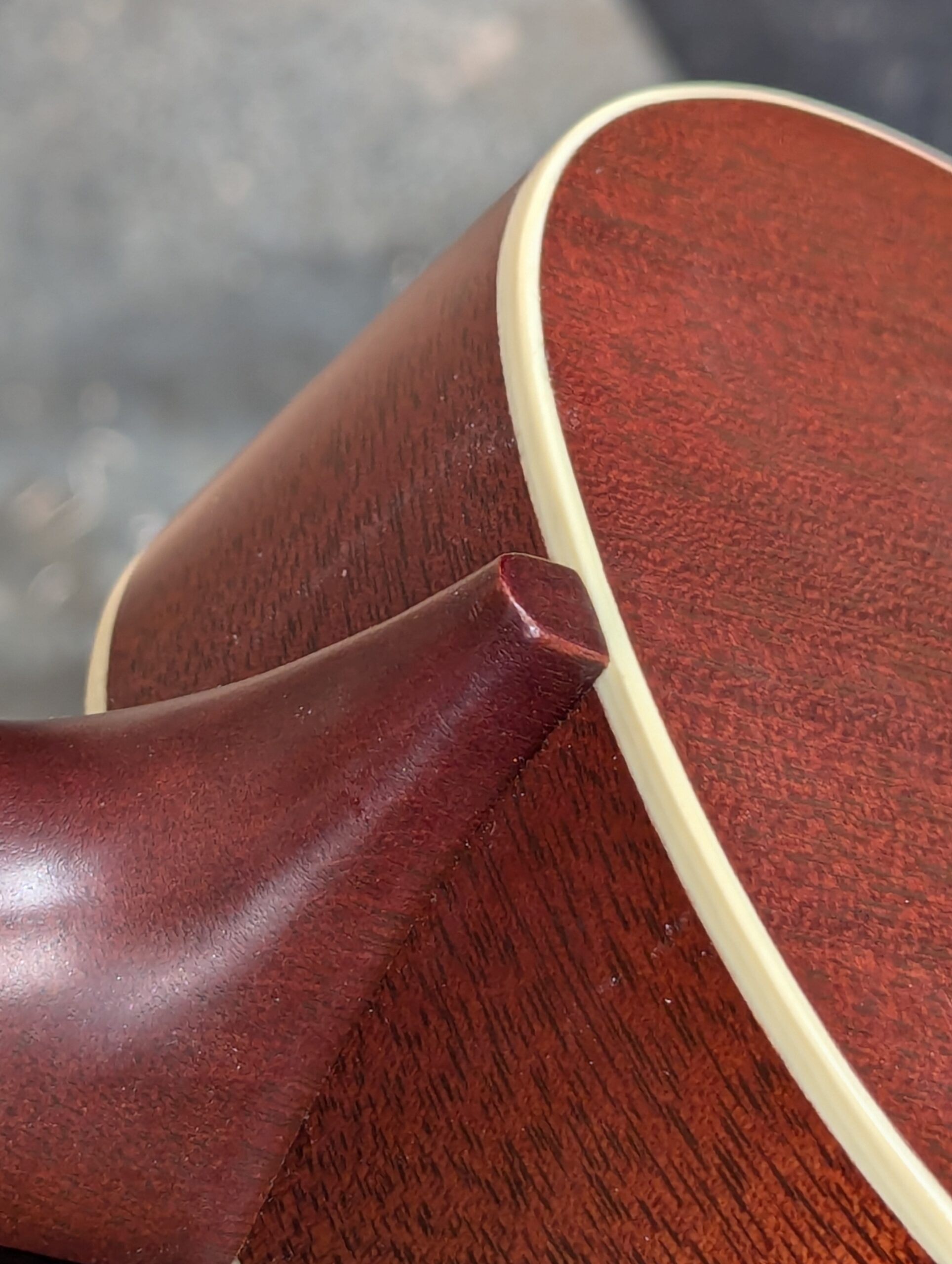
. . . that being so, I worked from either side down to the bottom. Funnily enough, the binding was not centred which suggested that the shrinkage of the body front and back was uneven with greater shrinkage on one side than the other. Several things could cause that.
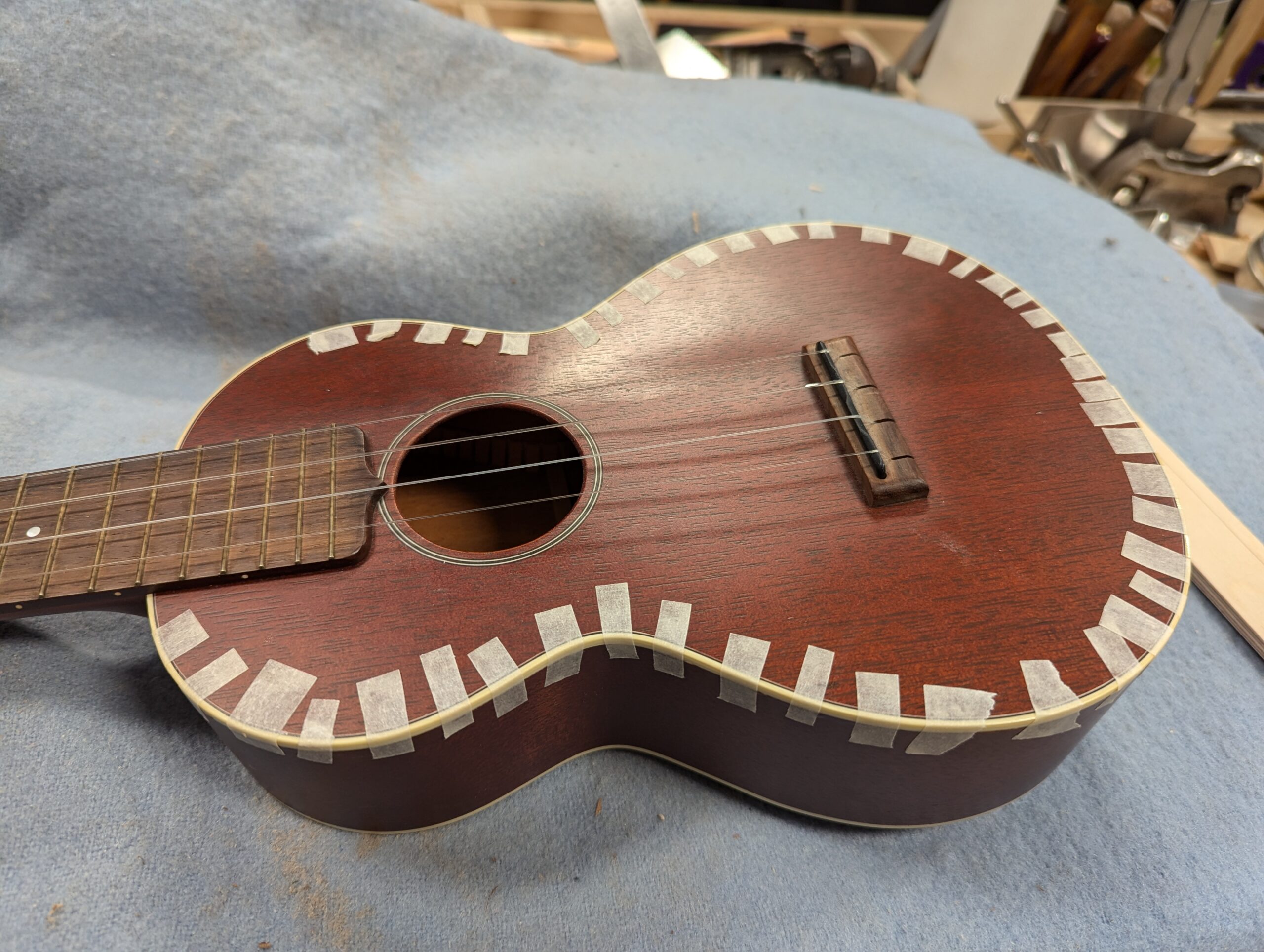
The tabs needed to be in place for about six hours until the glue reached the final bond. I left it overnight to ensure a full cure of the glue. The original joint line is under the fingerplate and that was not worth removing for so small a repair so I cut the binding at the bottom and centred on the instrument's lower bout. I used a modeller's fine-toothed saw for this.
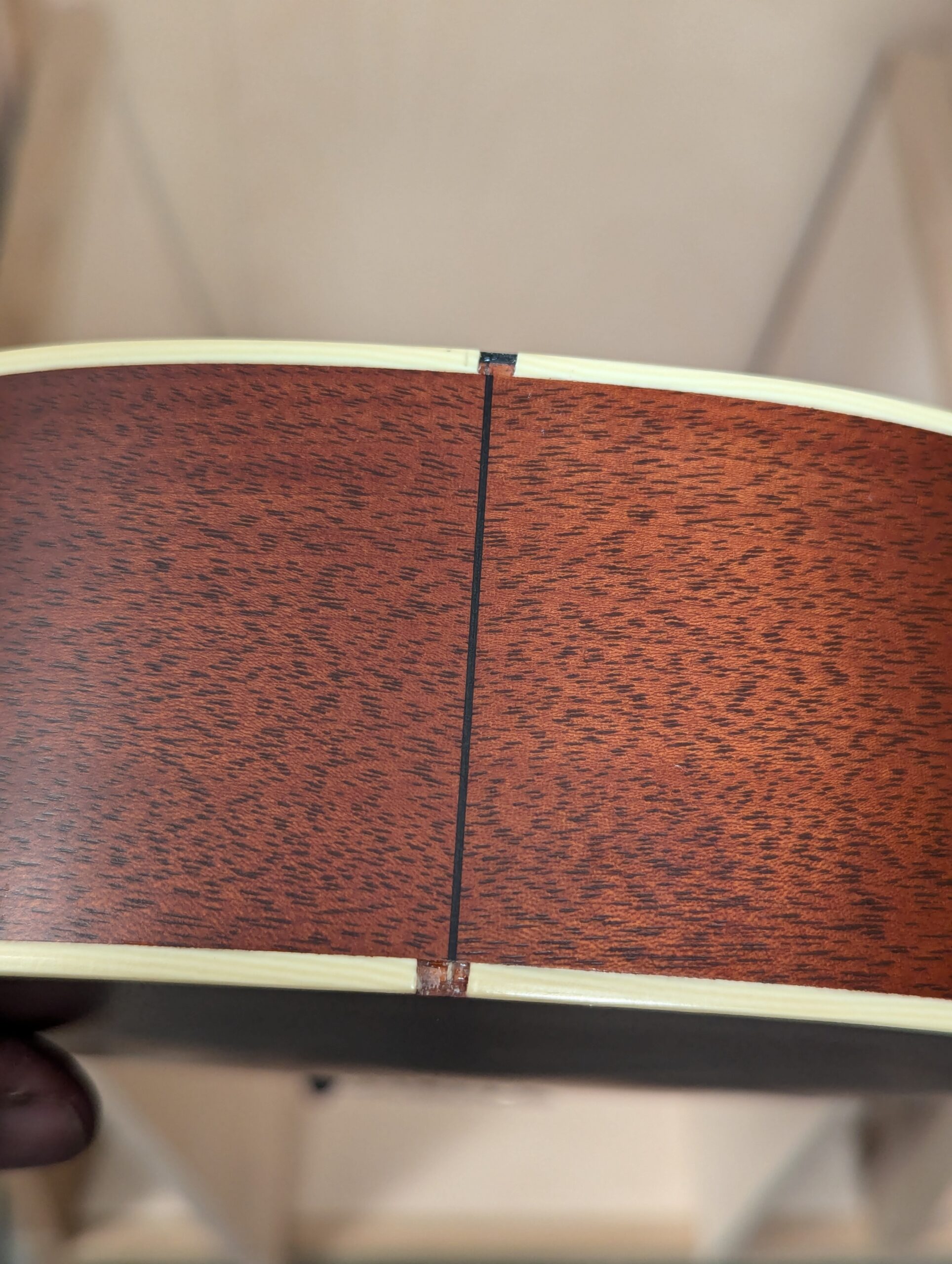
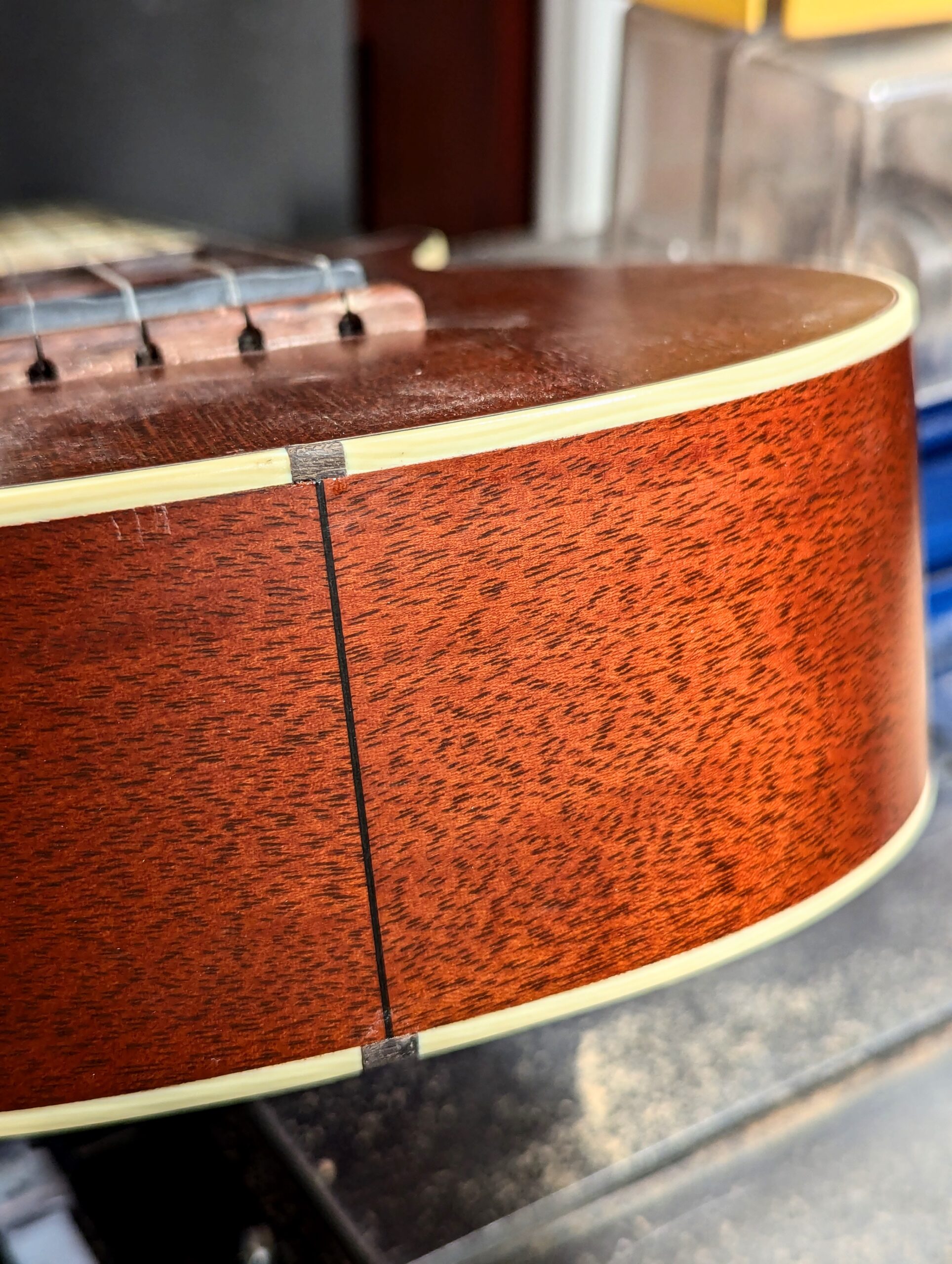
You can see that although I did centre my cut in the black centreline it came out unevenly and that is because the shrinkage was uneven on the bouts. The one on the front plate, the top of the picture, was already uneven and so shows the same cause.
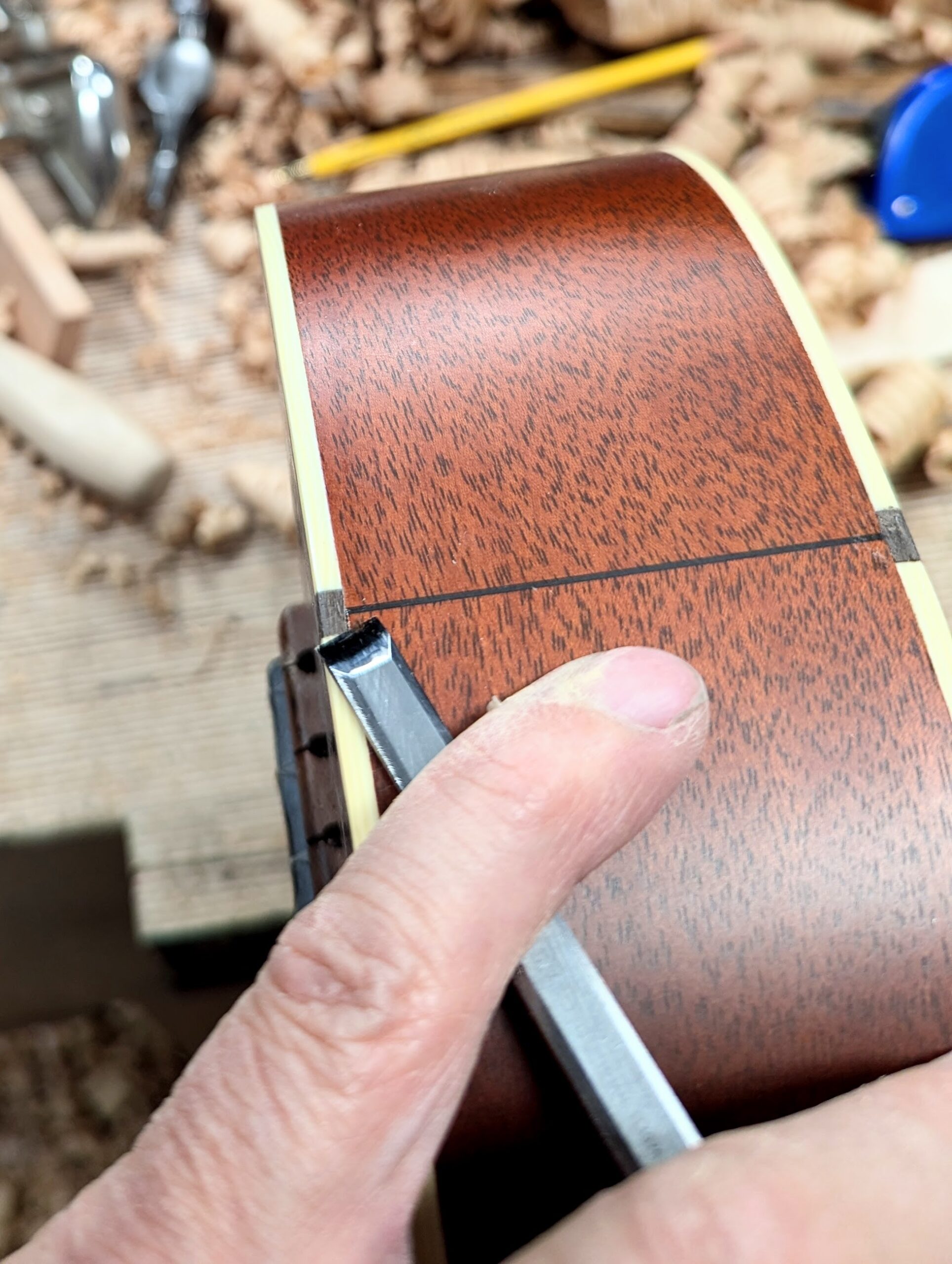
I trimmed the binding to equal out the unequal lengths on each side of the centreline which left a 7mm gap to receive the cocobolo I glued in place with hide glue. Once dry, I used a small chisel to level the insets to eliminate abrading that would have required repair to the finish.
I slightly oversized the infil pieces so that once inserted they protruded on the two exposed faces. This meant I could trim down after the glue had dried and the pieces were solid.
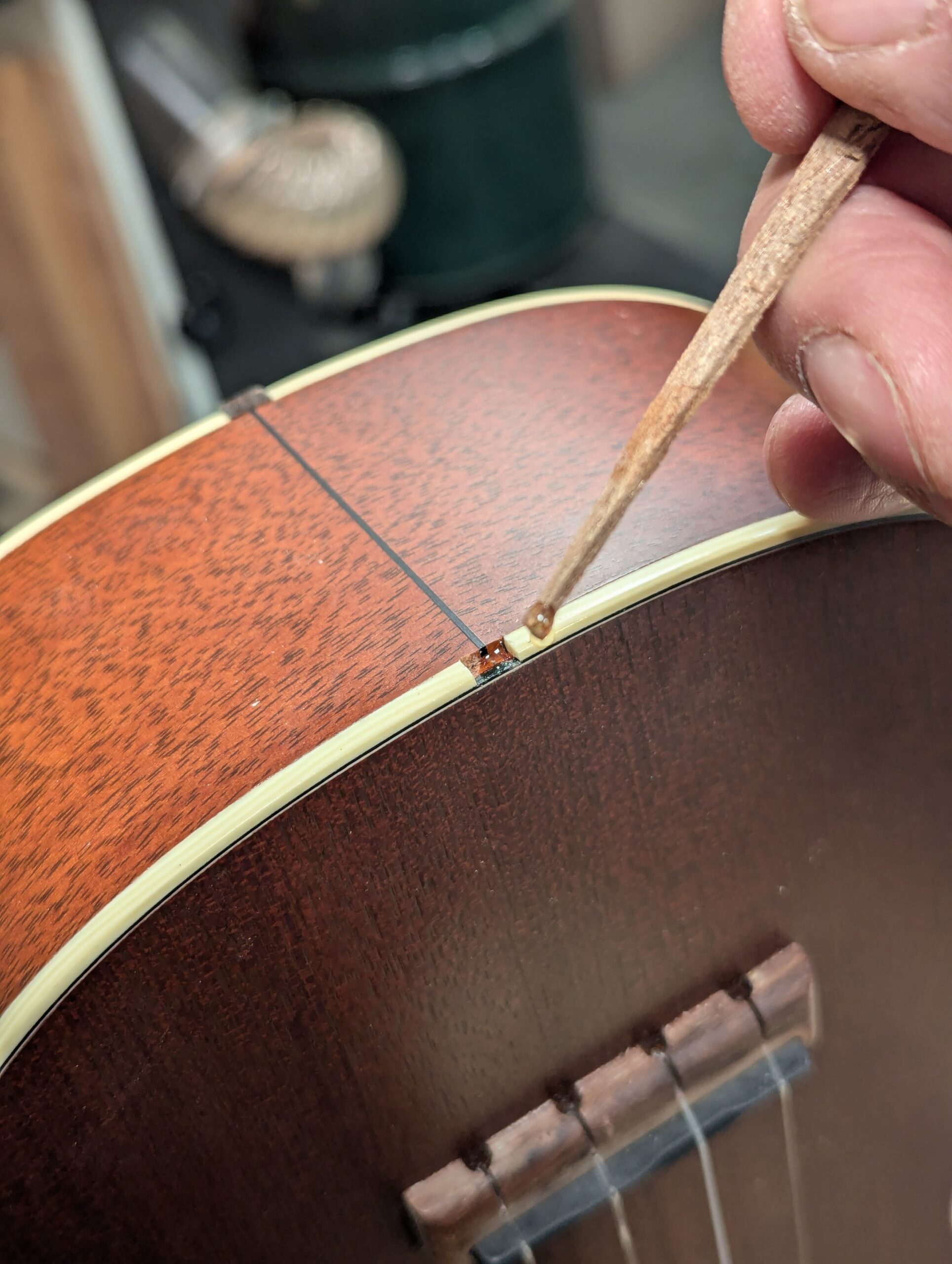
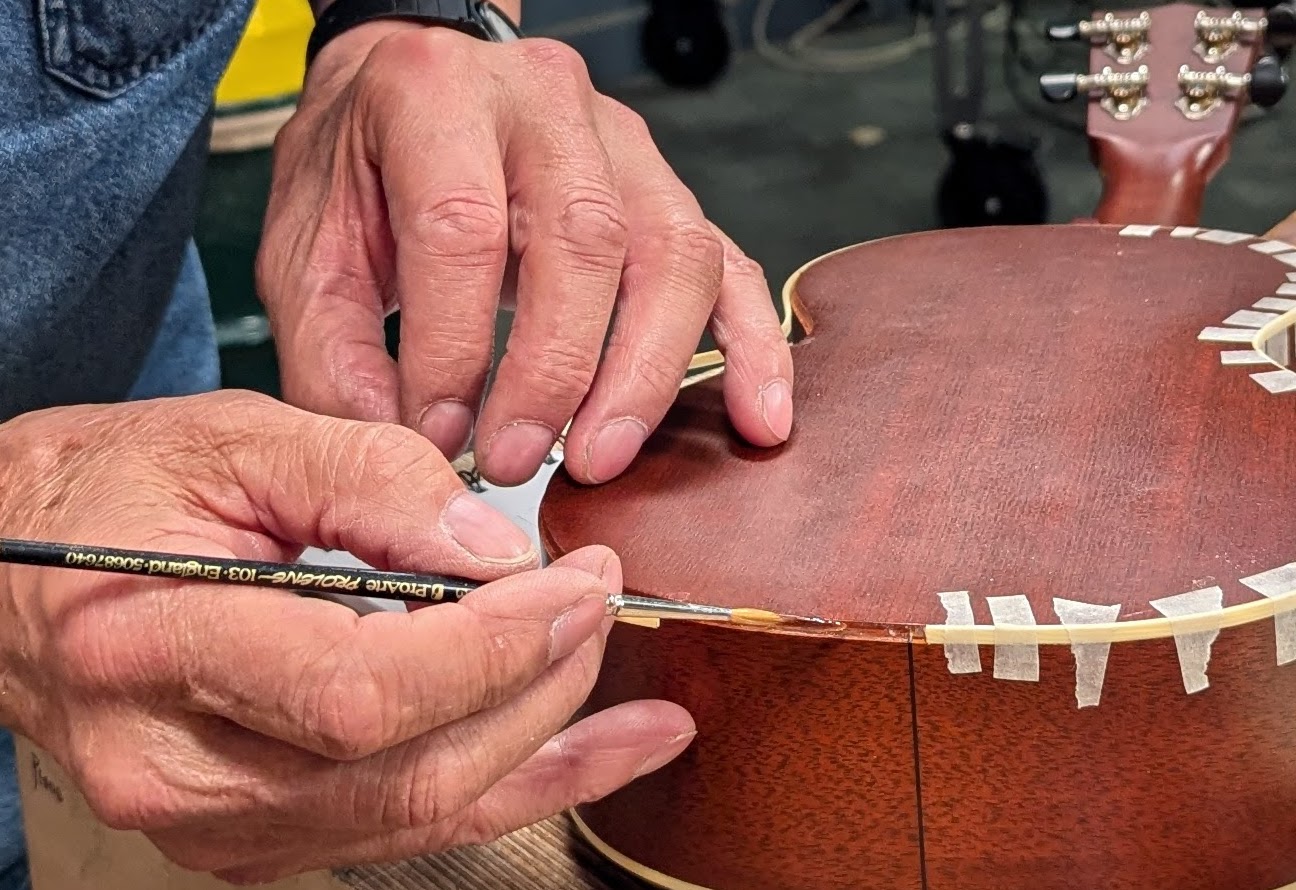
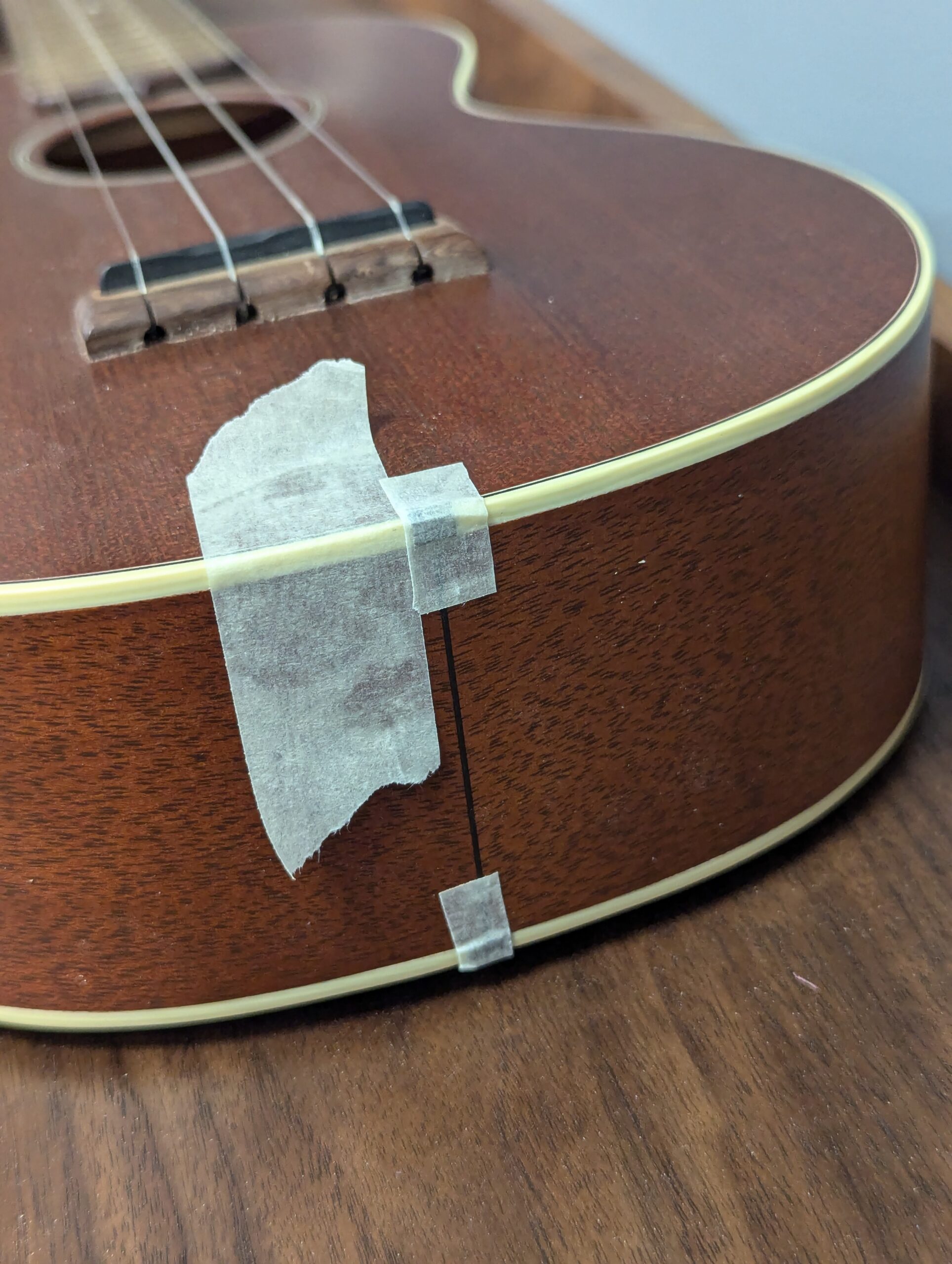
I glued the small pieces in place and taped them down by stretching the tape across the corner and pulling it so that it stretched. This gives the pulling power needed to apply adequate pressure.
Once dried, I carefully trimmed down any excess taking care to approach the final levels without marring the surrounding surfaces. I didn't want to have to match the finish or treat a larger area after the completed repair was done if I could help it.
The end result is a playable Ukelele again.
Comments ()