
The Silent and Isolative
As a boy `I worked near to a very old man working far beyond his retirement age, whatever that is. He would have been about the age I am now plus five more years. 80 years for him would have meant 67 years standing alongside a bench vise and working six days a week. I'm not far behind Bill. This is now my 60th year of full-time woodworking and making with my hands in the same way that he did. There was no size to this living survivor going through two world wars. He was a frugal man making no demands on life beyond the few square feet where he stood every day in his bib-n-brace overalls turned up several times at the ankle with the turn-ups filled always with the wood dust, chips and the shavings of his work.
Working alongside Bill, and with George at my elbow, I became conscious of two things in the man. One, his acceptance of self-silence and the isolation he imposed on himself as he worked and then too his percipience that was in no way impaired by his age. Along with George, he was a most sensitive and benevolent man. I could always hear the respect George had for Bill when he spoke of him and to him. George considered him a man of substantial character and an example of excellence whereas others seemed to despise his stand for right. When the men took on a turn to mock Bill, George always stood between them and him. George's height stood him in good stead. He had a presence to him that no one ignored and he could disarm any other in the shop by a smile or a nod or a simple clipped word that was never ignored. He never allowed another to be the butt of a joke, especially the older men or the young vulnerables.
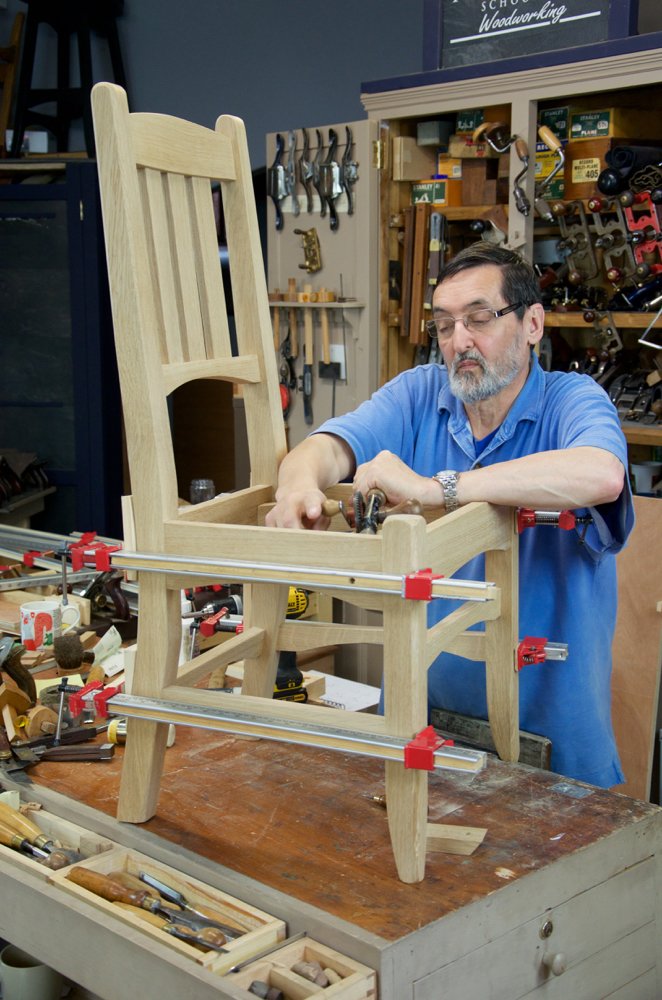
I work most days in the isolation of my working where the work itself separates me in an isolating silence I love to be immersed by. This encapsulation stops all time and in the isolation minutes can become hours and hours become minutes: such is the power of silence and isolation in creative work and space. In the noise of hammer beats, hammer taps and then saw strokes too sound is suspended as a rhythmic pulse like the silent heartbeat in our bodies. These are the rhythms of life felt in the planting and harvesting of crops, cycles where life repeats its reproductive life by perpetual replication of leaves on trees and the birth of all things. Somehow I still connect to the mentors that never spoke of their feelings or thoughts much at all but capably projected such things into the atmosphere surrounding them in their work. Bill always worked diligently and never allowed himself to be distracted by banter and the chitchat others had throughout the day. He never stopped to smoke as the other men tended to at every opportunity. His cigarette simply hung from his lips and clouded around his eyes as he worked. Or then again it burnt the corner of his bench in the same place. To Bill, idle chatter was theft from his employer. If anyone was sacked, it was never Bill. Even though his age disadvantaged him he was never considered for sacking because he still produced more than the younger men.
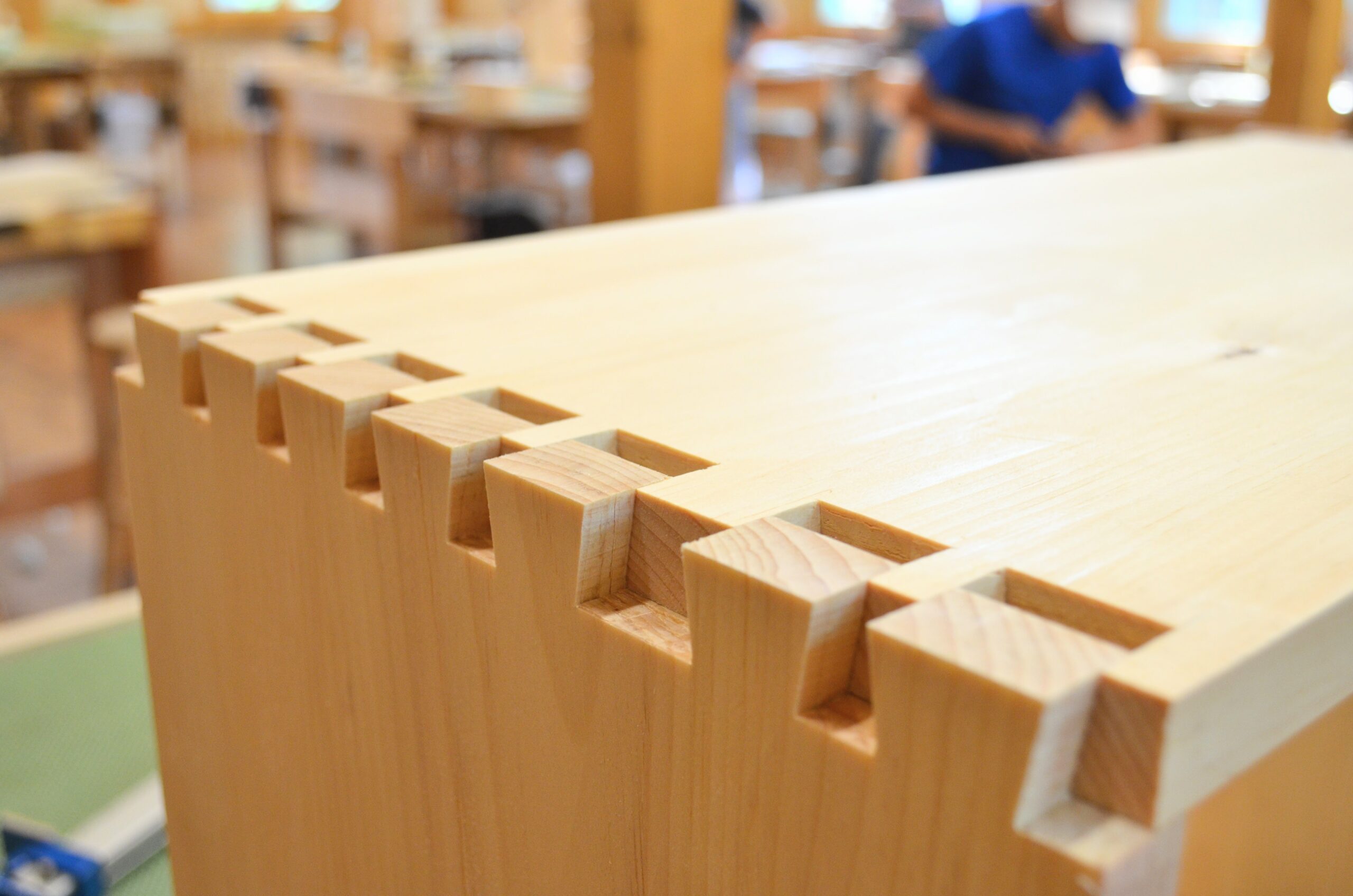
My work eventually became consistent and predictable. Much of what I do in the day-to-day is highly repetitive and I sometimes wonder why it so keeps my attention. I understand now that most people want perpetual change to stimulate and make the work interesting but don't realise that this kind of attention shift and change comes at the cost of the mastery I speak of. Having made a hundred thousand of the two or three joint types I use to make and build every day, much of my work remains the same day in and day out and yet everything I do is really quite different by the wood that constantly changes by its very nature. The variations in the working of the wood are usually minor but when I cut the line of a dovetail, though I could have done a hundred such cuts in the previous week or two, it's always different. I have never once found the work boring or particularly tedious. People watching me working, creating something painstakingly, often comment on my need for patience but that's not the case at all. Every cut I make is individual even though repeated. Through this, we add character to the work and the slight straying of the saw stroke leaves the imprint of the maker in the work. Though the silence of occupying your job, the task in hand, and being isolated into it, is always important, the outcome of these pocketed spheres is an indescribable contentment that comes to me in only a handful of ways. This is how handwork works and this is what we are robbed of using other methods where something hard and rigid and dare I say inuman stands austerely between man's hand and the wood's working.
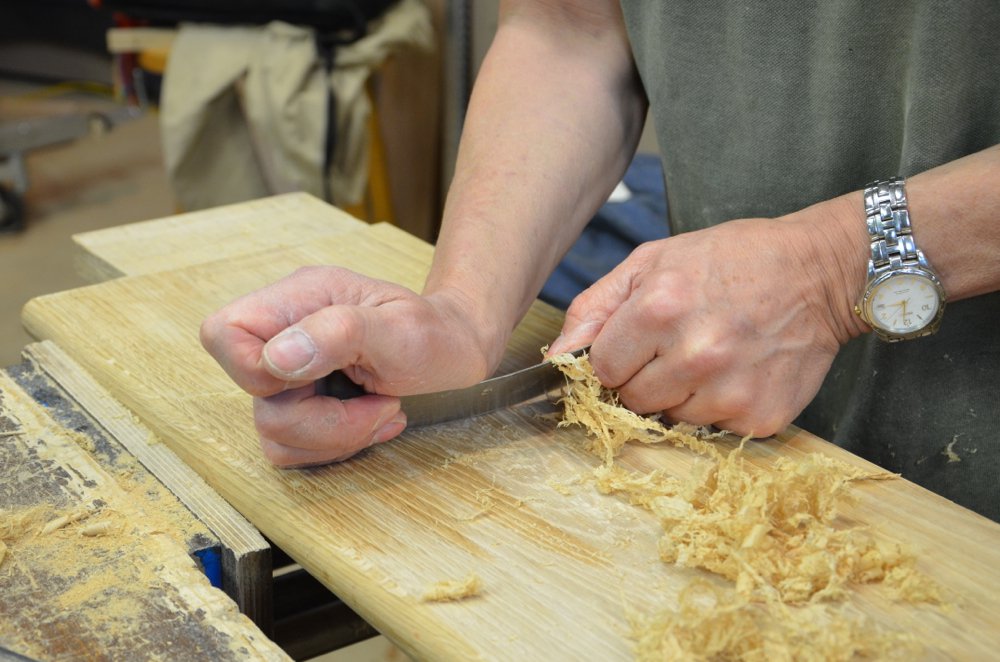
In my apprenticeship days, the experience of silence and isolation was more the scarcity and rarity, with anxious moments prevailing and yet George was always solid in this one thing. "You'll get there Paul. You cannot rush mastery, you must just persevere." My anxieties back then were in my rarely achieving the results others there seemed to take for granted. The saw cuts, unmarked and often gauged by eye alone, always matched the angles and the plane strokes parted away the unwanted with the precision of a Swiss clockmaker. It took me about four years before I found myself settling into my craft. The cuts matched all the more but more than that, George asked me to do things he felt I could do without worrying about losing some of the work he and I had worked on. It wasn't about pride so much as simply being entrusted with something I knew mattered to George. The first time he asked me to cut a dovetail for a piece magnified the significant trust he was placing in my ability. I wasn't as relaxed then as I am now. I never now question whether a dovetail will fit and fit perfectly. My work is predictable and relaxed. The saw and chisels held are firmly relaxed and firmly flexed according to feelings and sounds. In the working, we seldom consider these things and would rarely if ever discuss them.
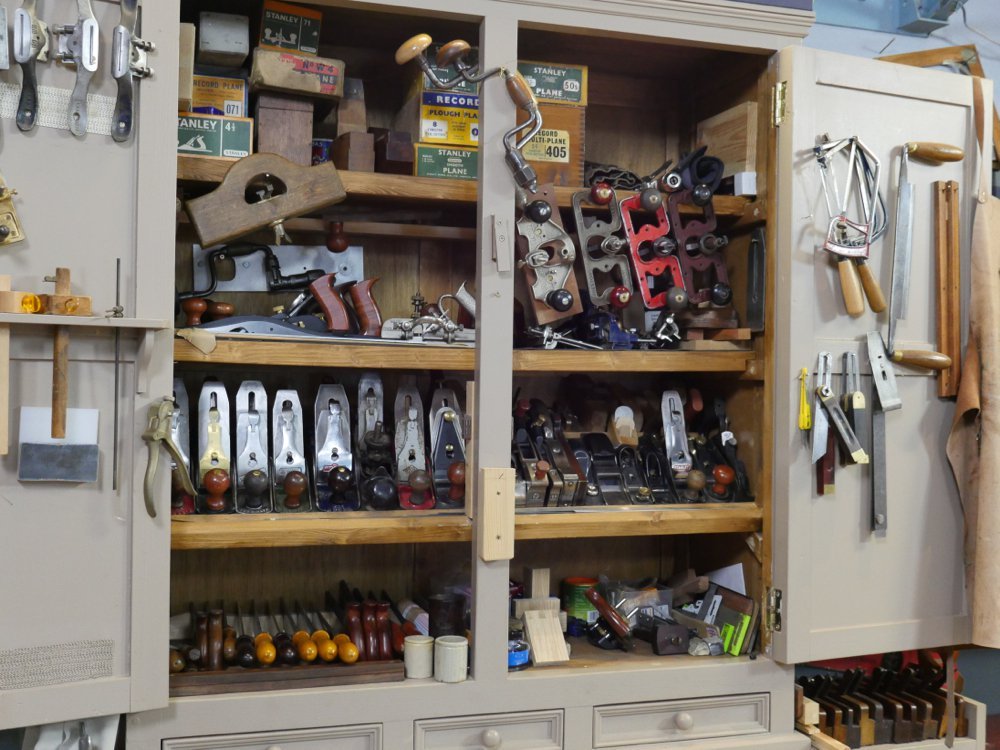
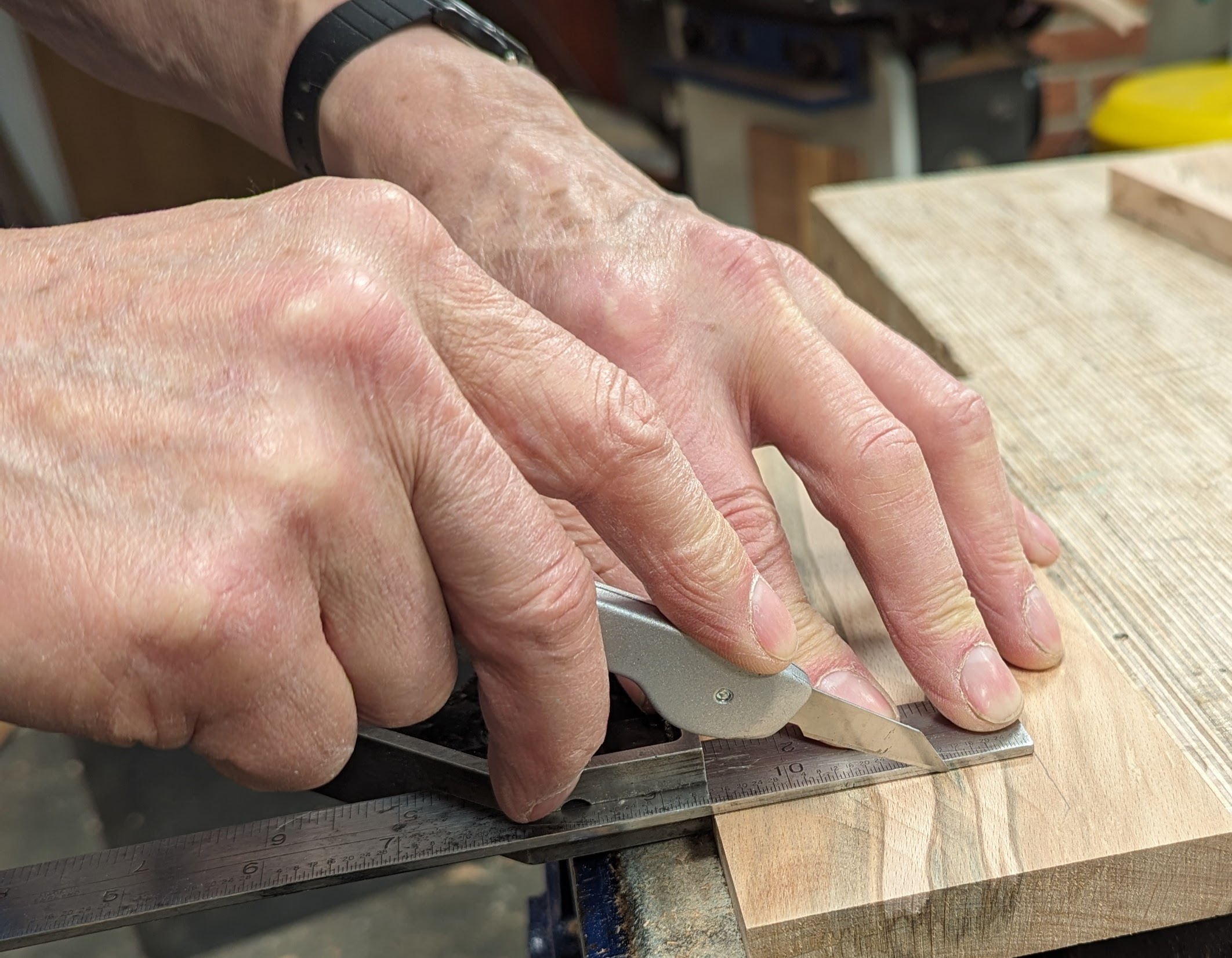
As I have grown in my craft, I still hold a measure of reserve knowing that a miscut might happen but I'm unworried by it because for the thousand cuts I make only one will be a miscut and most such cuts will go unnoticed. There is a common phrase amongst makers in every craft. It's been accepted even though I find it silly: "Woodworking is mostly about knowing how to fix your mistakes." That's not altogether the case because we learn as we go and then, through understanding our tools, the wood and our own limitations anticipate a likely possibility. Eventually, we do get to know what could actually go wrong by this or that action and through the experience of past mistakes know how to disallow the possibility. Planing end grain always benefits from a knifewall: first, you ensure you have a pristine sharp line to work to and this then minimises the friction on the sole of the plane that can indeed stress the grain at the out-cut of a skewed presentation force of which breaks the corner causing corner fraction. I rarely make any cross-grain cut without first establishing a knifewall.
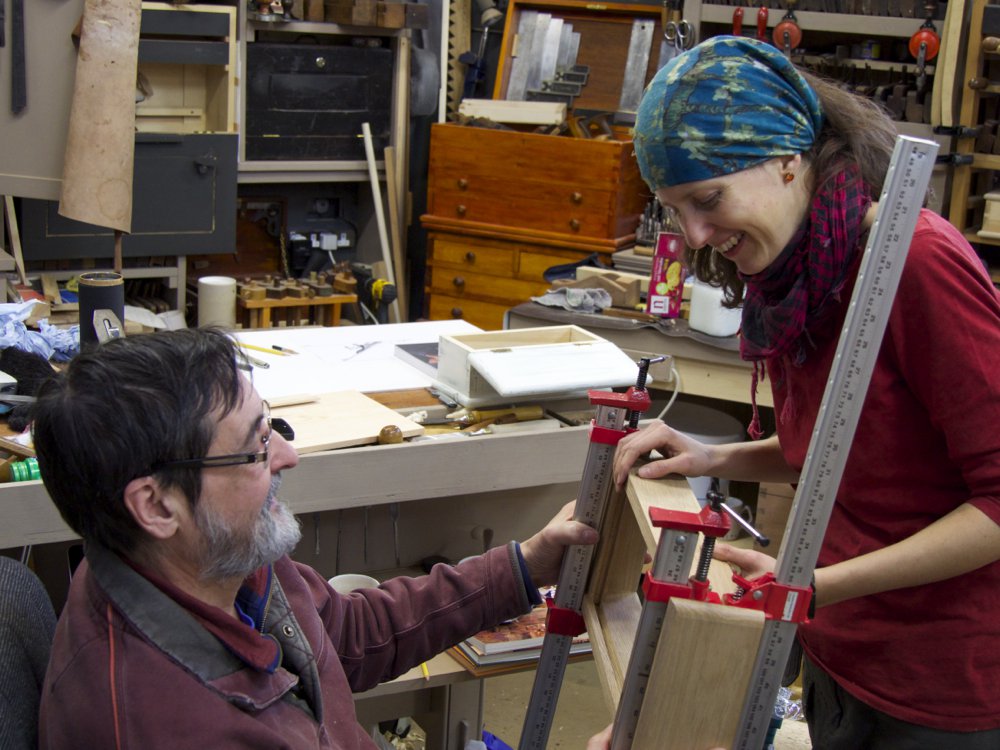
With a million such understandings, the isolation and silence of your working leads to an inner contentment few ever actually realise in their working. I understand the use of cute sayings; "Measure twice, cut once." and such, but of course, for a millennia before, we always measured twice and more often sometimes, along with cross-referencing we are always involved in in other ways. We just didn't need earworms to remind us that a cut made can often not be reversed so the experience of a costly miscut was a good lesson learned and we moved on into a contented way of working and seldom made the same mistake twice.
Even in my early-day insecurities I still enjoyed the 100% need for continuous learning and had I the need to do it again I would be there without any hesitation. Not knowing things and moving in the sphere of novice was critical. I am probably one of the few men who can truly say I never faltered in my love to learn my craft.
Comments ()