
The Evolving Toolbox II
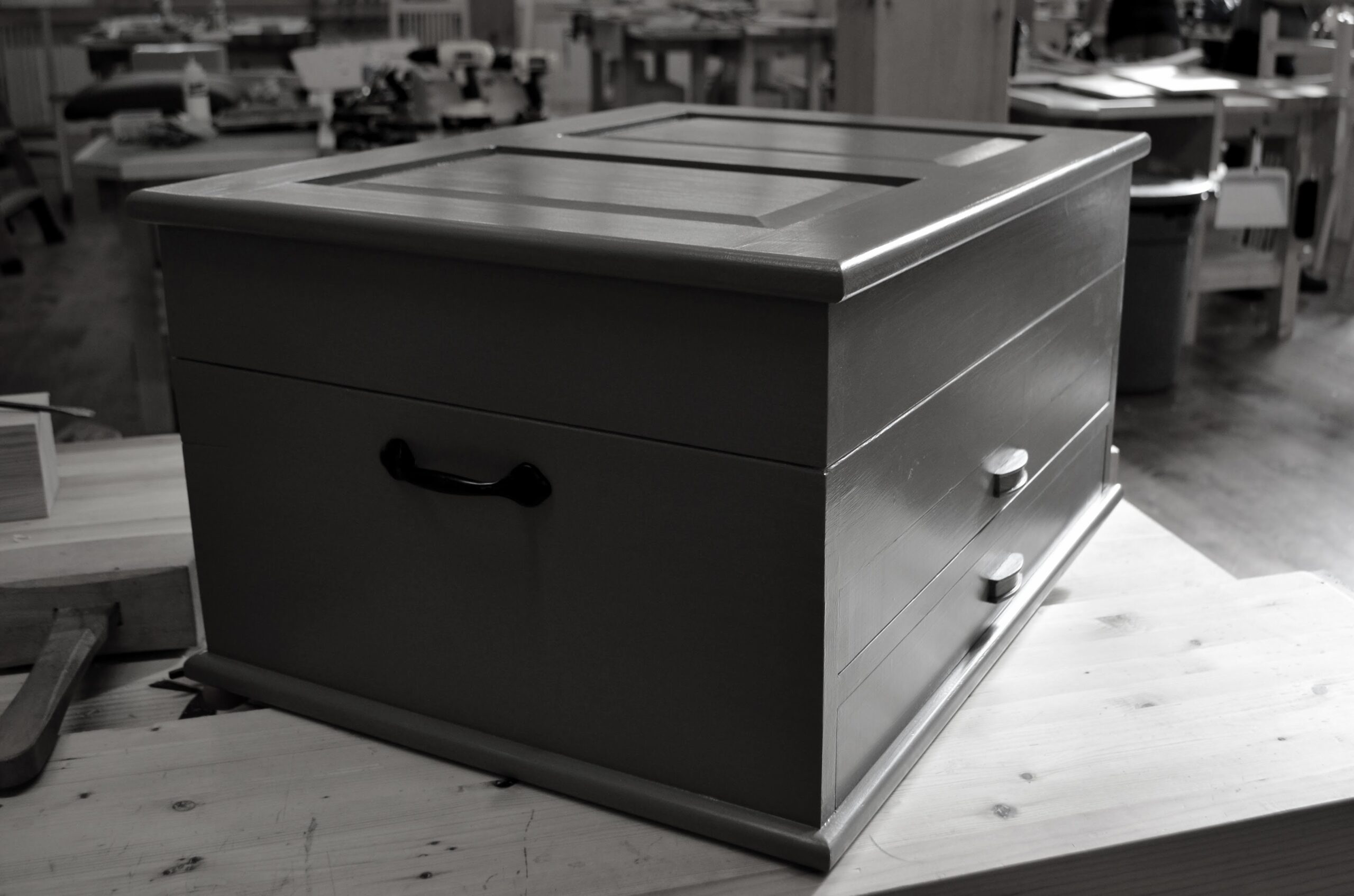
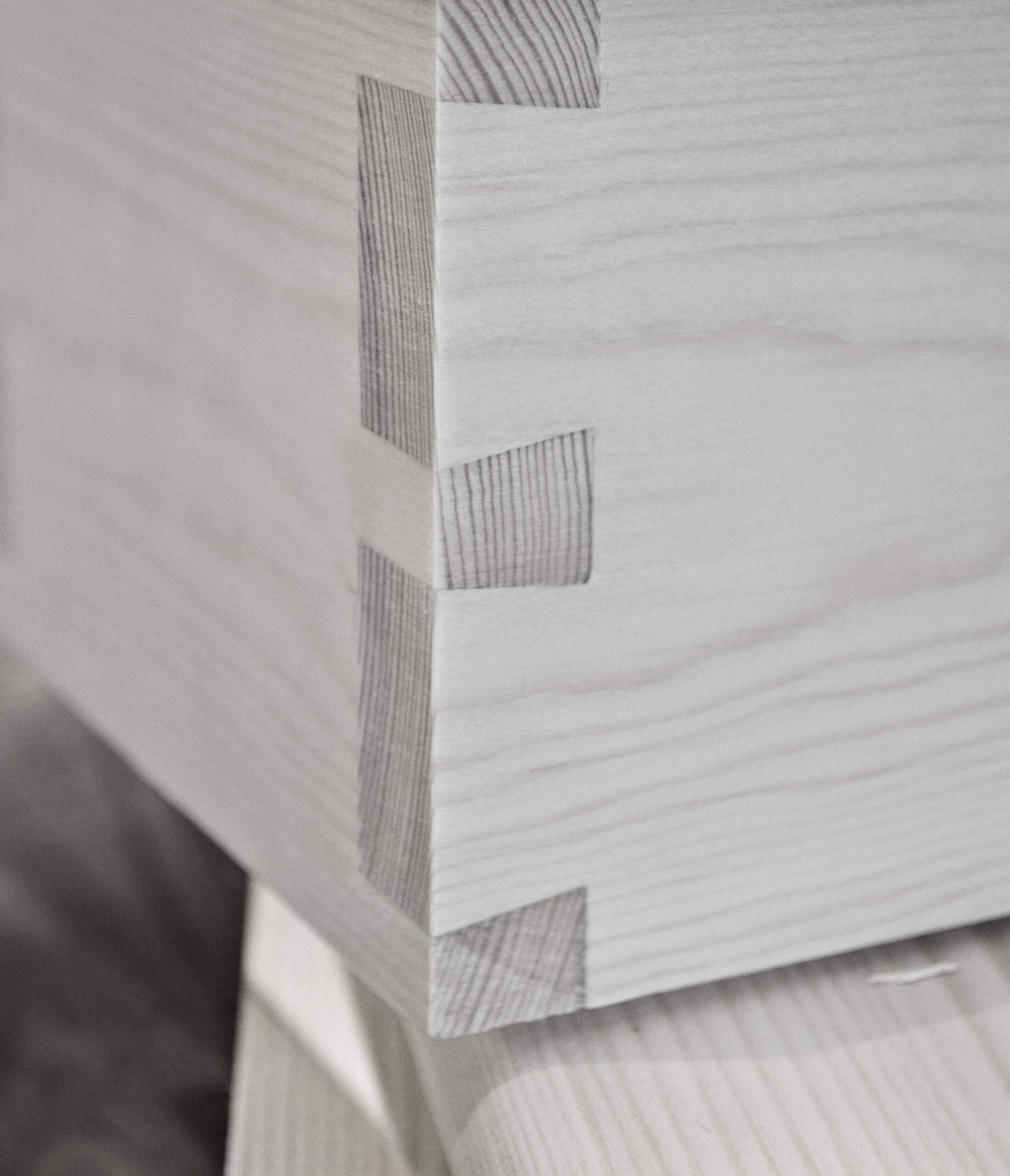
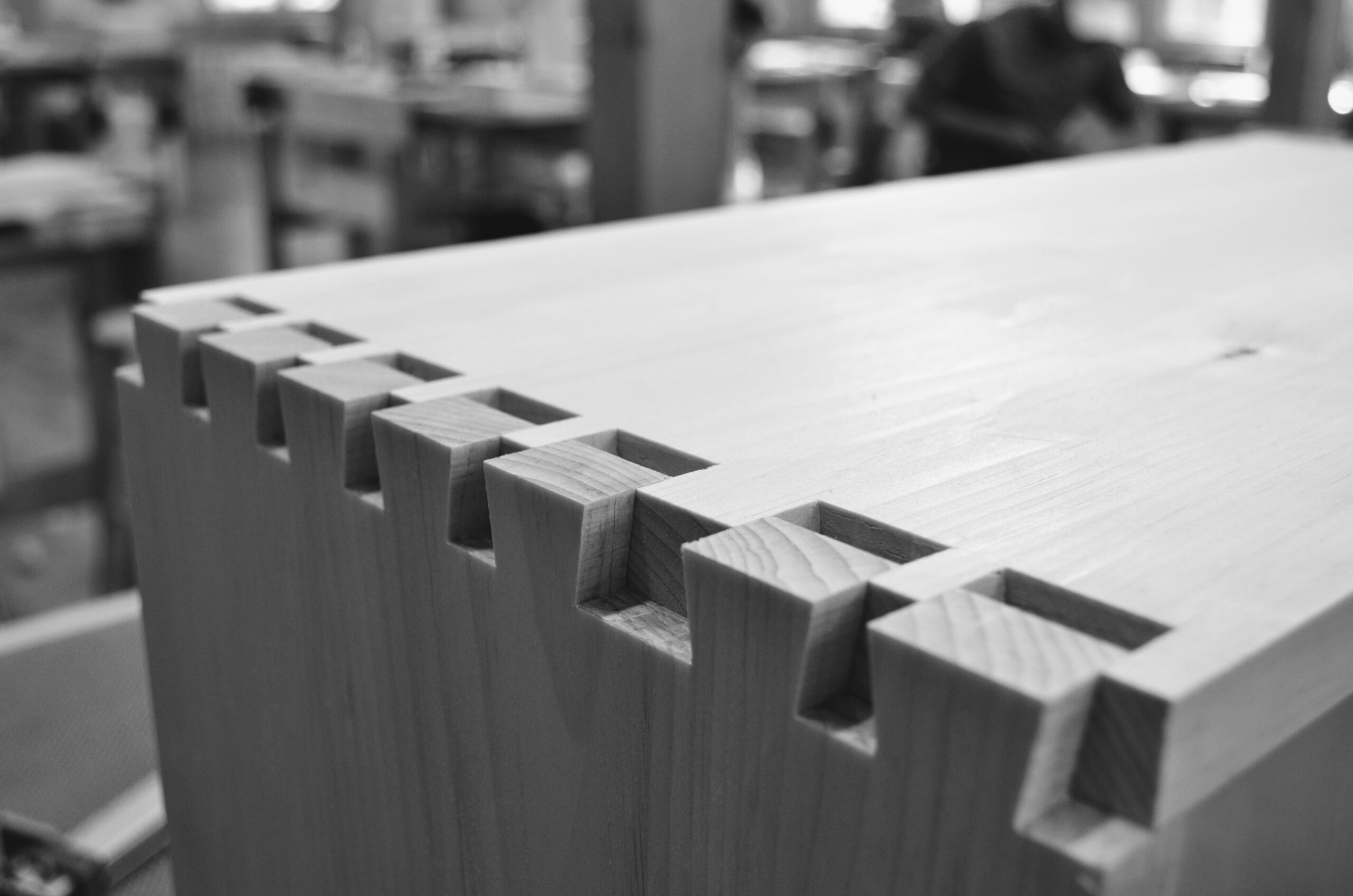
It was the tap-tapping of the tails into the recesses between the pins with the end of a one-inch chisel I remember the most. George had shown me this but did not leave it there. He'd explained Newton's Third Law that for every action (force) in nature there is an equal and opposite reaction. When pressing with my then thin, unmuscular thumbs and fingers the tails no longer moved further in to bottom out, I needed a little extra and a chisel was always close to hand and a good choice. As I tapped, the inserted tail wood exerts pressure and by doing so an equal and opposite pressure to counter mine caused the tails to deepen and almost magically pull themselves into the recess. The tap to each tail sent the pin wood into and between each dovetail just a fraction ahead of whatever was on either side. I could both hear and feel the 'pinch' of tightness as I traversed the expanse of dovetails going first from left to right and then back from right to left. It wasn't what everyone insufficiently calls this fun though, it was the sort of frivolous triviality that lessened what was in reality more a deeper sense of pure exhilaration. To describe victory of this or any kind as mere 'fun' makes it so much less than the realness of it. This very specific and wonderful worked-for victory told me that I could and would always make airtight and watertight dovetail joints to equal those of all of the men in the workshop who bit by bit taught me and were now hovering around to look over my shoulder. These men never criticised me unless I needed it and by that I mean they did not take any talking back or beligerence lightly, but they did critique my work and by this I grew. Big difference.
I do get why people refer now to more things as fun though. Today, yes, it means entertaining, enjoyable, amusing, light-hearted pleasure and less its original meaning of a diversion, mere amusement, even to cheat or trick someone. There was a frivolity to it that has now been more distanced from its origin: fonne...foolish!
I think this to be the main difference between my working life and that of others in our evloving universe of worklife. Going from school to work at age 15 was indeed a serious step. That culture of maturing in my day seems in many ways to be mostly gone and some of that may not be a bad thing so long as maturing to a place of taking responibility is not neglected. It was always serious even though we did find fulfilment and joy in our work. Today it seems as though maturing has been postponed in many ways and many realms. I don't see joy and fun as being one and the same or indeed in any way related. As two significantly different conditions of the human mind and being I think now that many mostly choose the term fun as more an all-inclusive expression yet the difference between the two is night and day. One deepens the sense of achievement while the other somehow trivialises it. We no longer use terms like joyful, enjoyment or enjoyable though in my world these describe what I do and have throughout the day far more accurately. In that place, my mid-youth, post-war space and time, there remained something of a certain sobriety in the world I worked and lived in and it was reflecting on this that I found what I enjoyed in the camraderi that has never been replaced. It was the solidity and dependability in an era when I was able to finally dismiss school as more an unreliable place of immaturity to be absorbed into manhood. Those transitional years matured you progressively if you were working amongst those who took on the mantle of maturing you and making you responsibly productive. Those men saw that then as their responsibility even though they would never use such terms or explain it that way. They just assumed it as their responsibility as any mentoring artisan or craftsman overseeing and apprentice should and did.
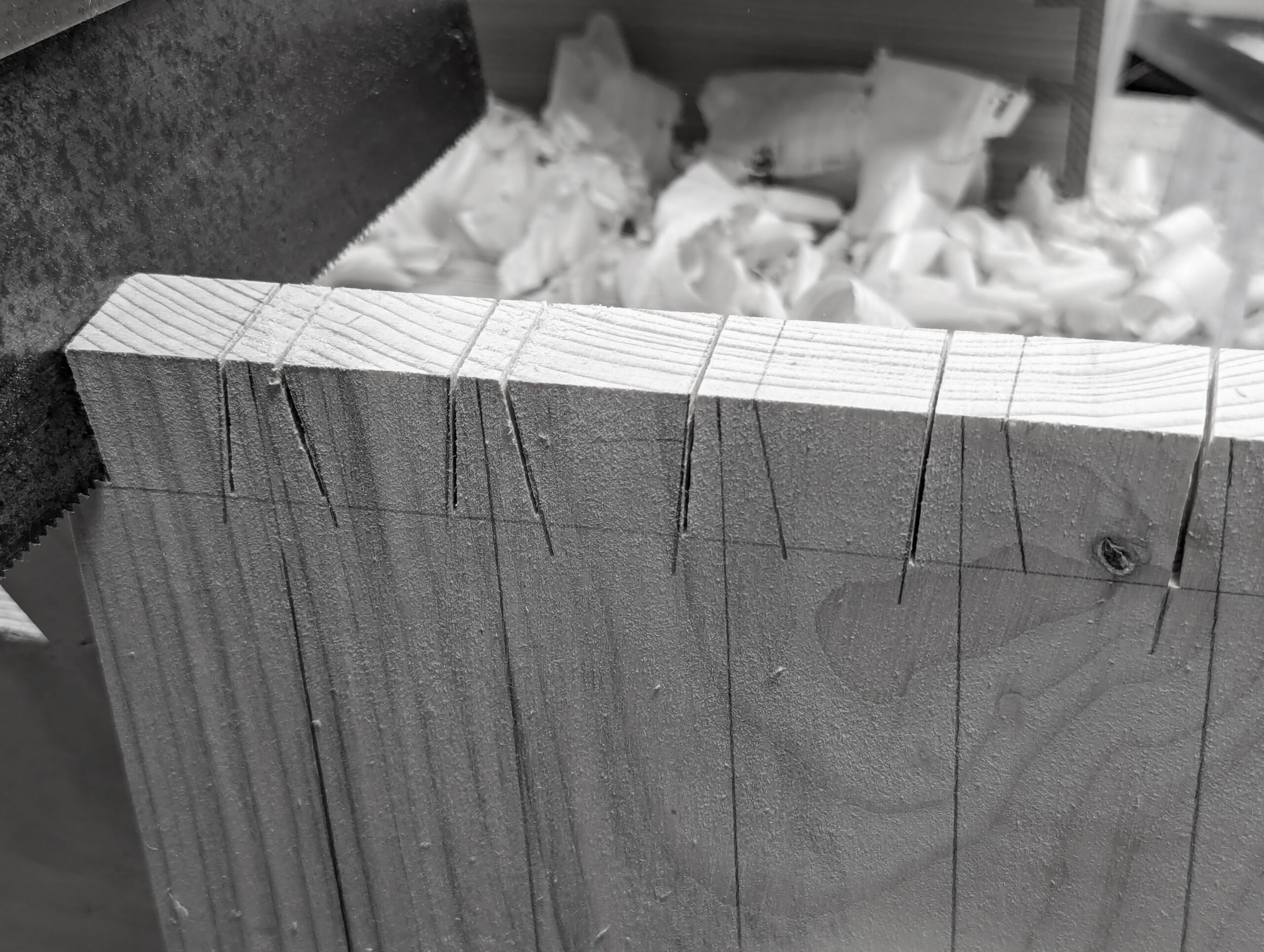
What was unique about the outcome of this particular and specific dovetail was that I didn't do it to be approved. These men never worked to be admired or qualified or anything else. None of it was to gain approval because the standard of workmanship was expected no matter what. It was the realness of life I admired and respected and so too them. They, aside from my parents, were the first adults I would associate with on a daily basis and they in turn placed expectations on me that brought maturity out of me and that to a fullness. Even when the men were indeed impressed, along with George, that was not what I sought. I achieved standards that measured up simply because it was the right thing to do with the right and intended outcome. Here, I managed the making of the dovetail using the first tools I had ever bought, owned and used with my own hands. Looking back now, knowing that I have made thousands upon thousands of hand-cut dovetails, and having now reached the age I have working my wood through six decades, it was that first dovetail of quality that raised and set the bar of self-discipline for me for life. I believe it was this that spoke to me the strongest, saying I would never once use any other method for cutting my dovetails. I wanted what I did to be good, of course I did, but what I saw was that the outcome of what I did would indeed, by its very nature, validate me as a capable woodworker in my own right. The lines of satisfaction fell there. By this I would be governed throughout my life.
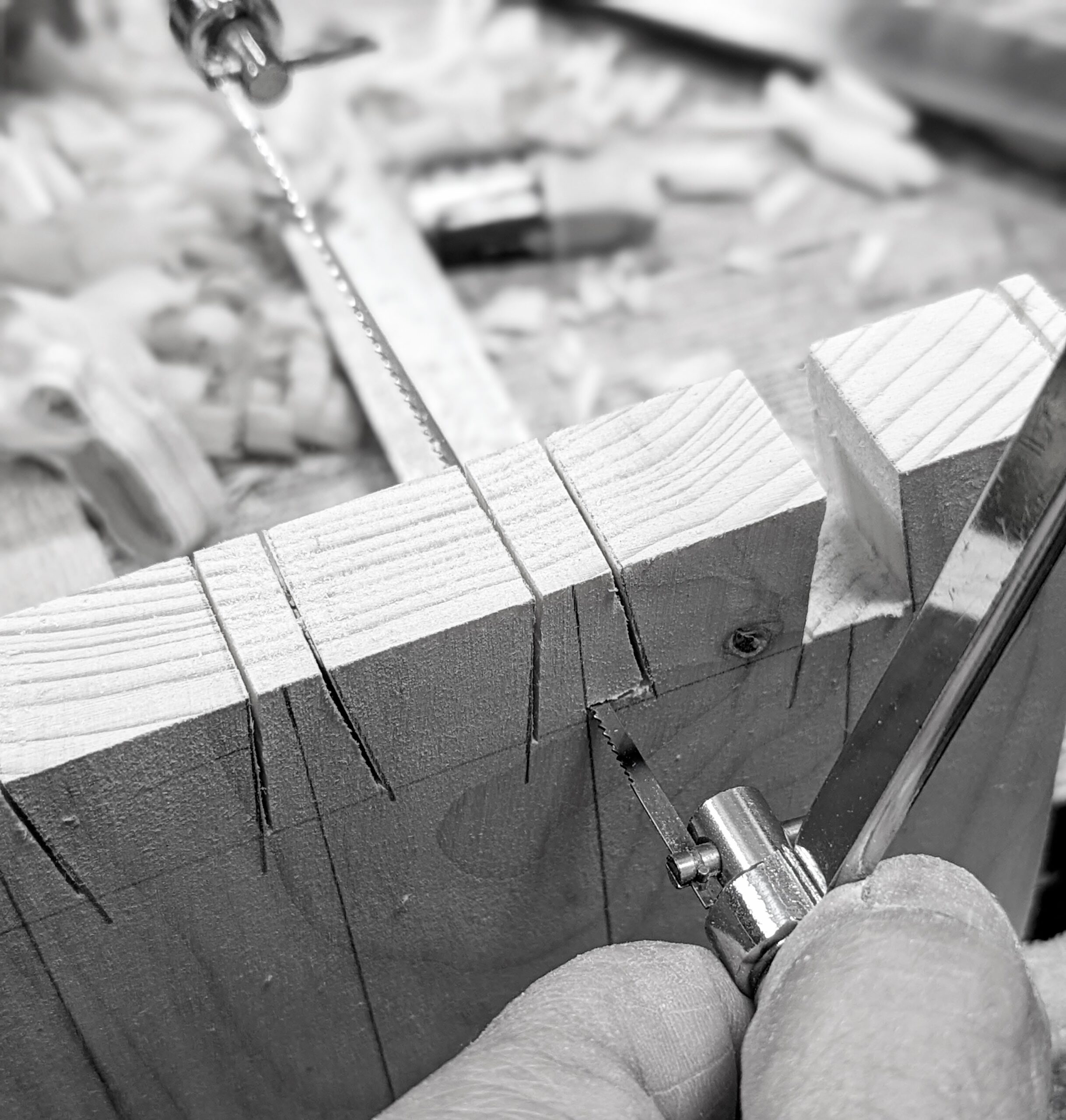
But, of course, there was too an approval that did come from the men and it was simple and simply put: "Good lad, Paul!" They didn't dish out compliments easily these men who day in and day out made the wood do their will. They were encouraging me and it was indeed an encouraging thing, as if these men were bonded as a sort of brotherhood with one another to become my true mentors in craft. George passed one of his wide grins from the other side of the bench, leaned over and earthily said, "Don't let it go to your head. The next three corners will be harder!" It's a grounding thing knowing where you are in the pecking order.
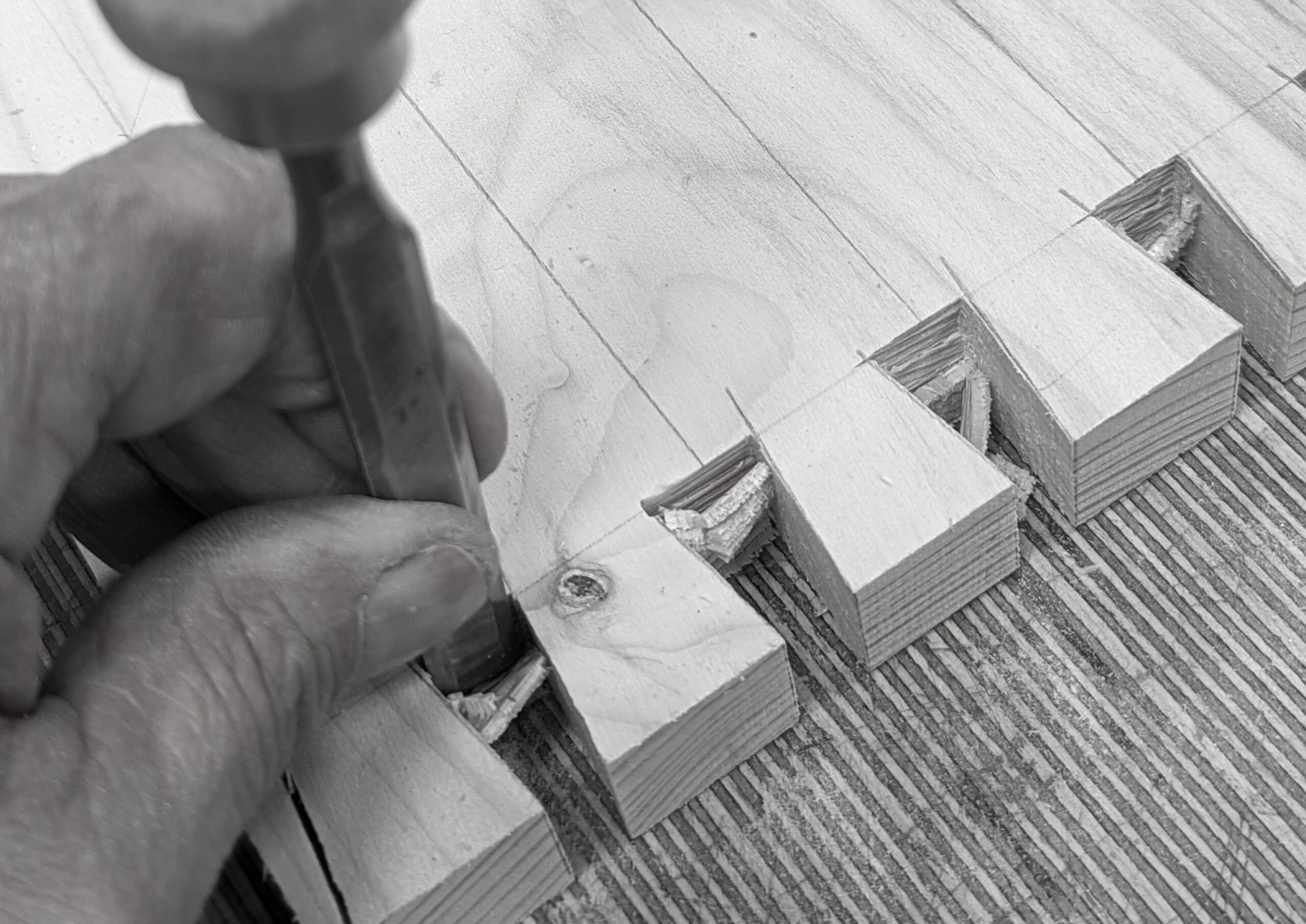
Making this joint had taken me about an hour. Only one comment from one of the men remained to challenge me. "Should be good. Took you long enough." George had taught me two things about dovetailing box and drawer corners. One, the joint comes best straight from the saw and should in general need no refining with chisels. Two, they should need no trying to see if they really fit. I recall him raising his voice and asking me, "What are you doing?" I told him I was trying it to see if they fit. His response was simple. "You shouldn't need to try it. If you've done it right, how can they not fit?" He smiled as he said it but then explained that putting the joints together only abraded the meeting faces and so fractured the surface fibres. As I said in the last post on this, I now press them home just to 'keep' them, ready for the first and final glue-up. Of course, we may or often have to dismantle the joints a few times for practical reasons in the making of boxes: working other corners, adding in other joints and such. Just keep it to a minimum and when the box is done, if glue-up is not immediate, leave the joints assembled until you are ready. That way all the components are protected and they are expanding and contracting together at the same rate.
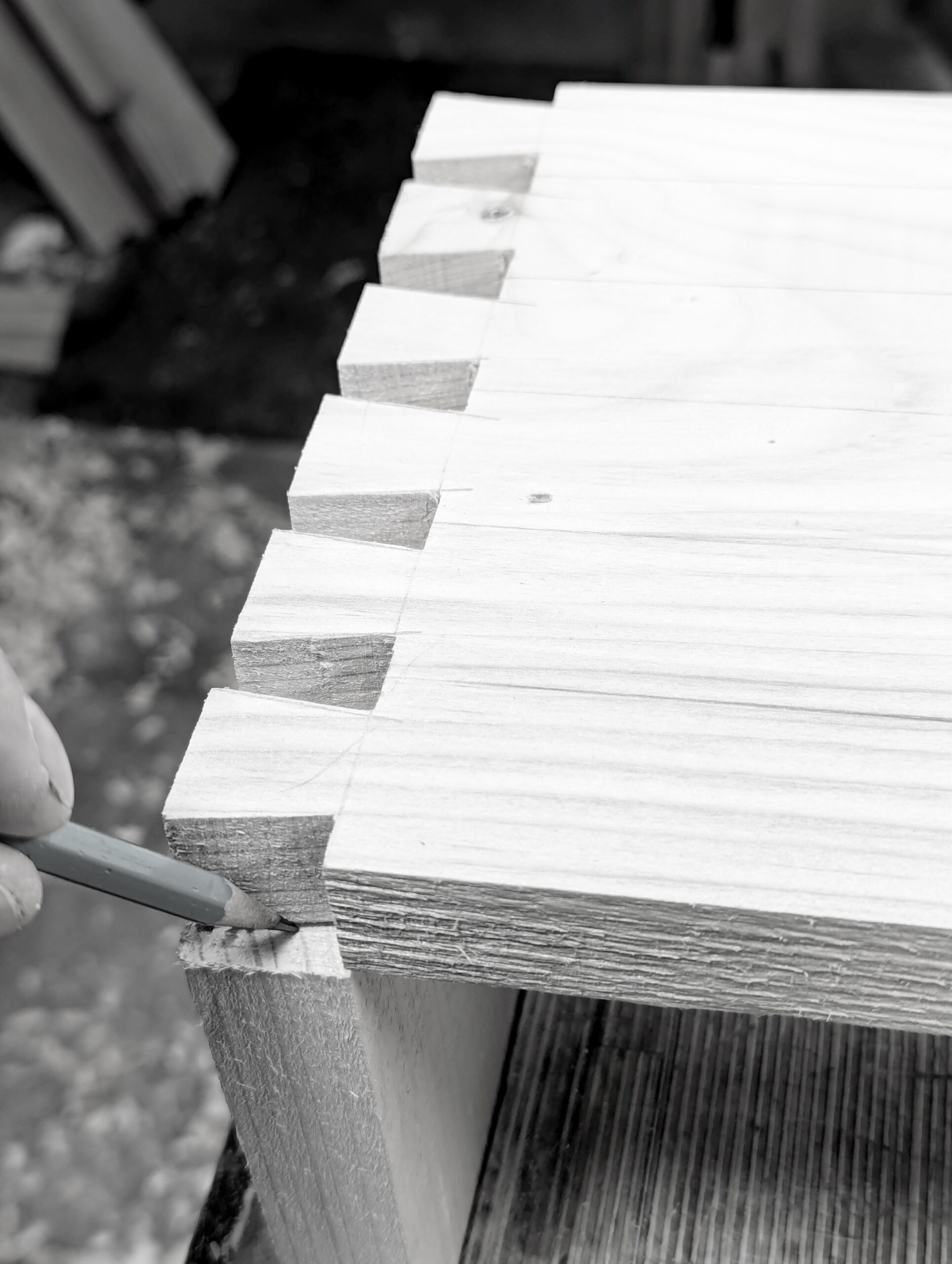
As my box came together the men watched me from a distance. I could tell they were enjoying themselves and delighted in throwing out knowing comments. Generally, they were encouraging my work and that was because they knew I was no longer temporary. The trial for me was over. I'd be staying for the full five years of my apprenticing and the work and I suited one another. Transitioning from the brew boy, errand runner and sweeper-upper to more serious work was steadily arriving. Many tasks came my way throughout the day, much of it tedious and repetitive but overall my course was set. As the four corners of the toolbox were now seated and all inspection by the men was passed I was warned to go less public with my working on it. Though the foreman had encouraged me, he didn't want me working on it in work time even though I wasn't. What he wanted was for others to understand that there was no chance of me fudging the lines. I could spend fifteen minutes of my lunch break on it or after the work day if the men were working overtime and someone else was there.
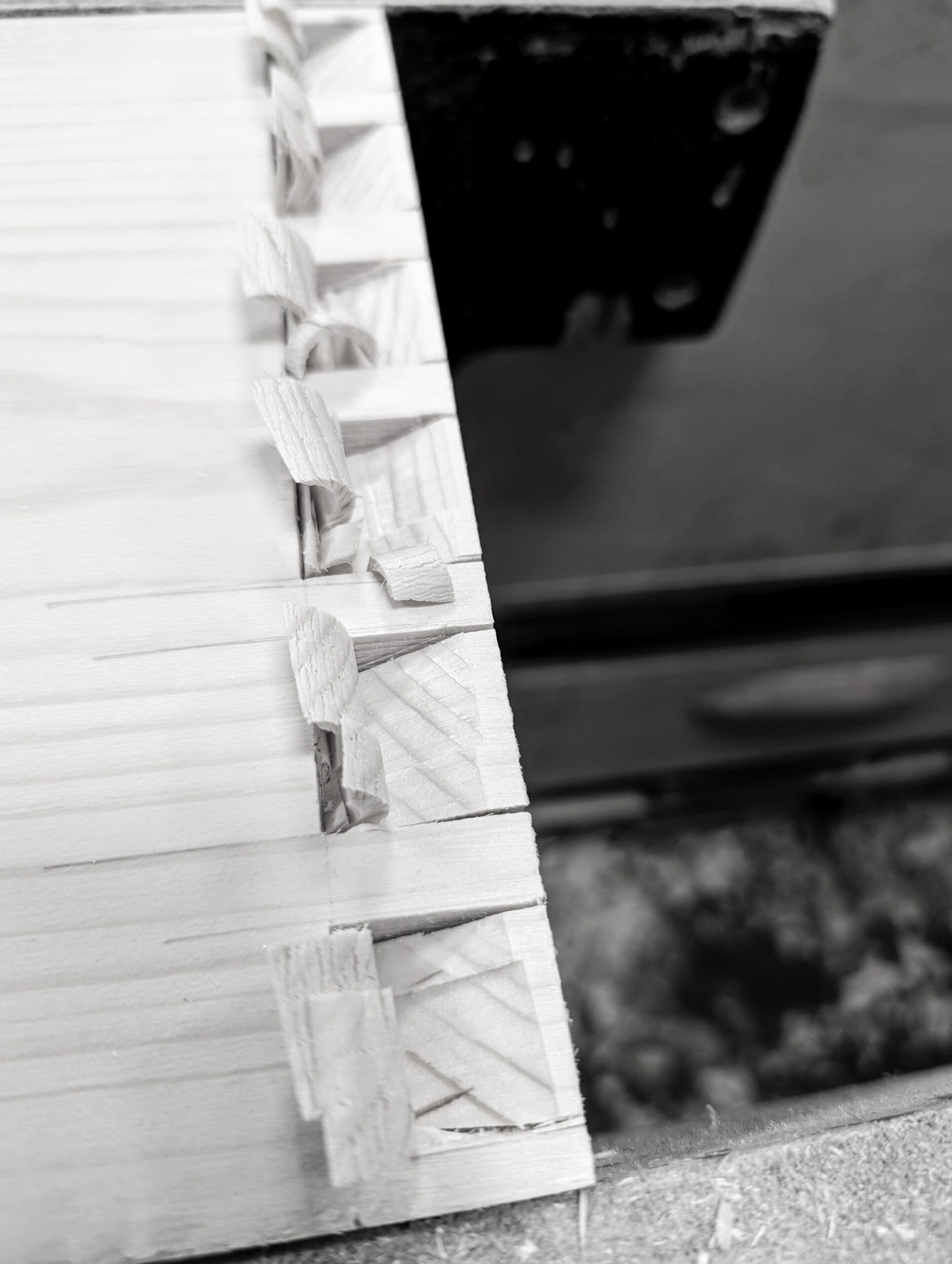
After the box dovetails were finished I glued up the box and returned it to the back of the wood racks to hide it. Bit by bit I had most of my wood gathered. I'd needed the front door frame and panel and the rear frame and panel wood. I'd also needed two tills for all the small tools along with the till bottoms. This last level of accumulating came mostly from offcuts as the parts were so narrow and small.
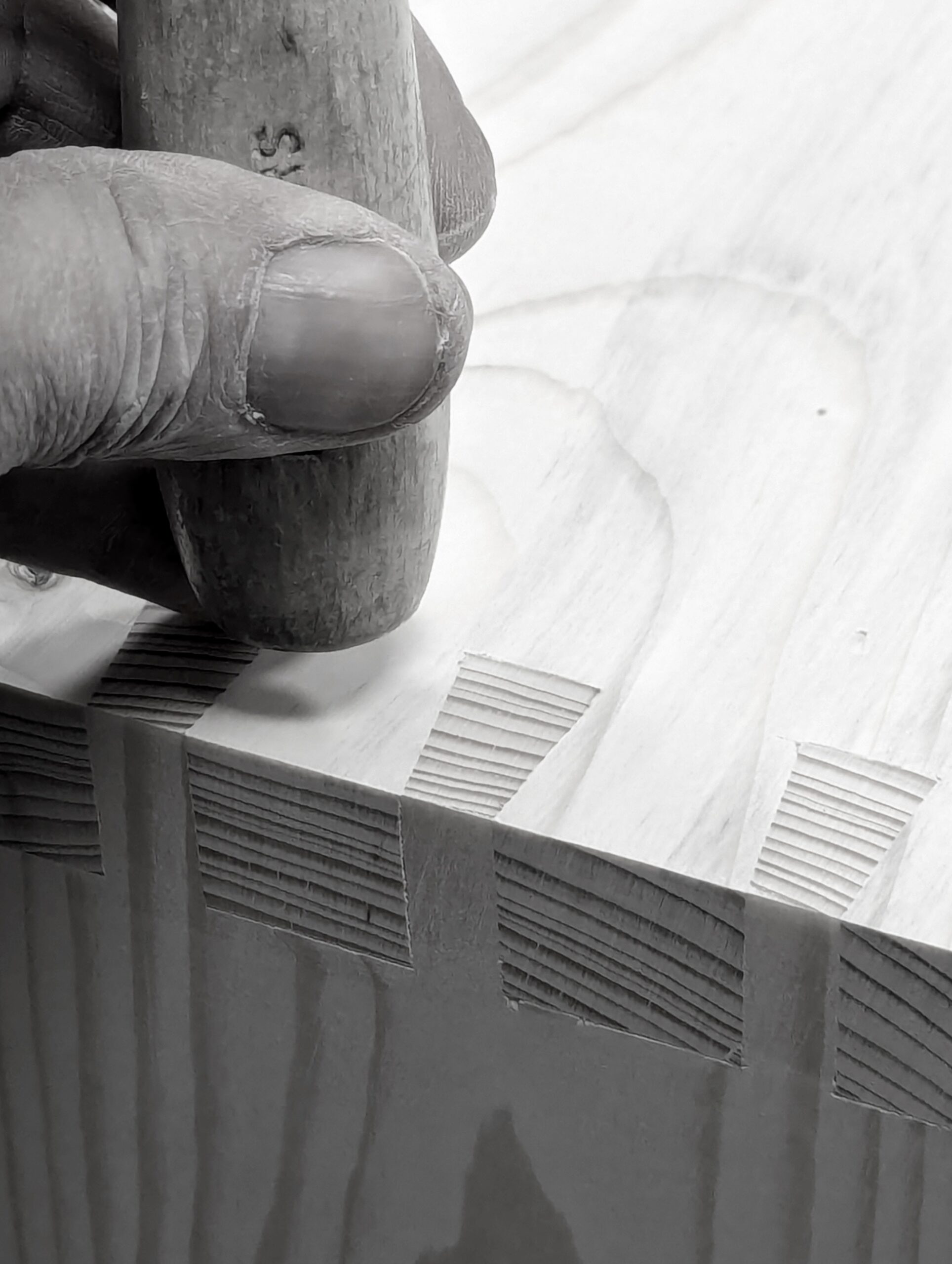
My personal tool chests have worked fine for me so far though I don't use them in my garage workshop for my my online work. In most independent workshops like mine where security is not an issue, it's more convenient to have places for the tools in the open atmosphere. A hundred percent of my hand tools are within a metre of my hands and my vise. I want and need the immediacy of tools ready to go for efficiency in my work. But there have been times, longer periods, when my tools were in more unstable environments and needed bolting down. I designed mine as a furniture-making foundation course for hand tool woodworkers who came to my month-long furniture making courses. In the making of it you have carcass construction, door and drawer making, etc.
My perception of tool chests parallels the emergence of changes in woodworking. Someone commented that their tool chests were ideal for storing the dozen or so jigs they made to go with their power routers. Bulky and blocky, these things litter every machinists workshop. For hand toolists, shooting boards and mitreboxes are the equivalent of ill-fitting equipment.
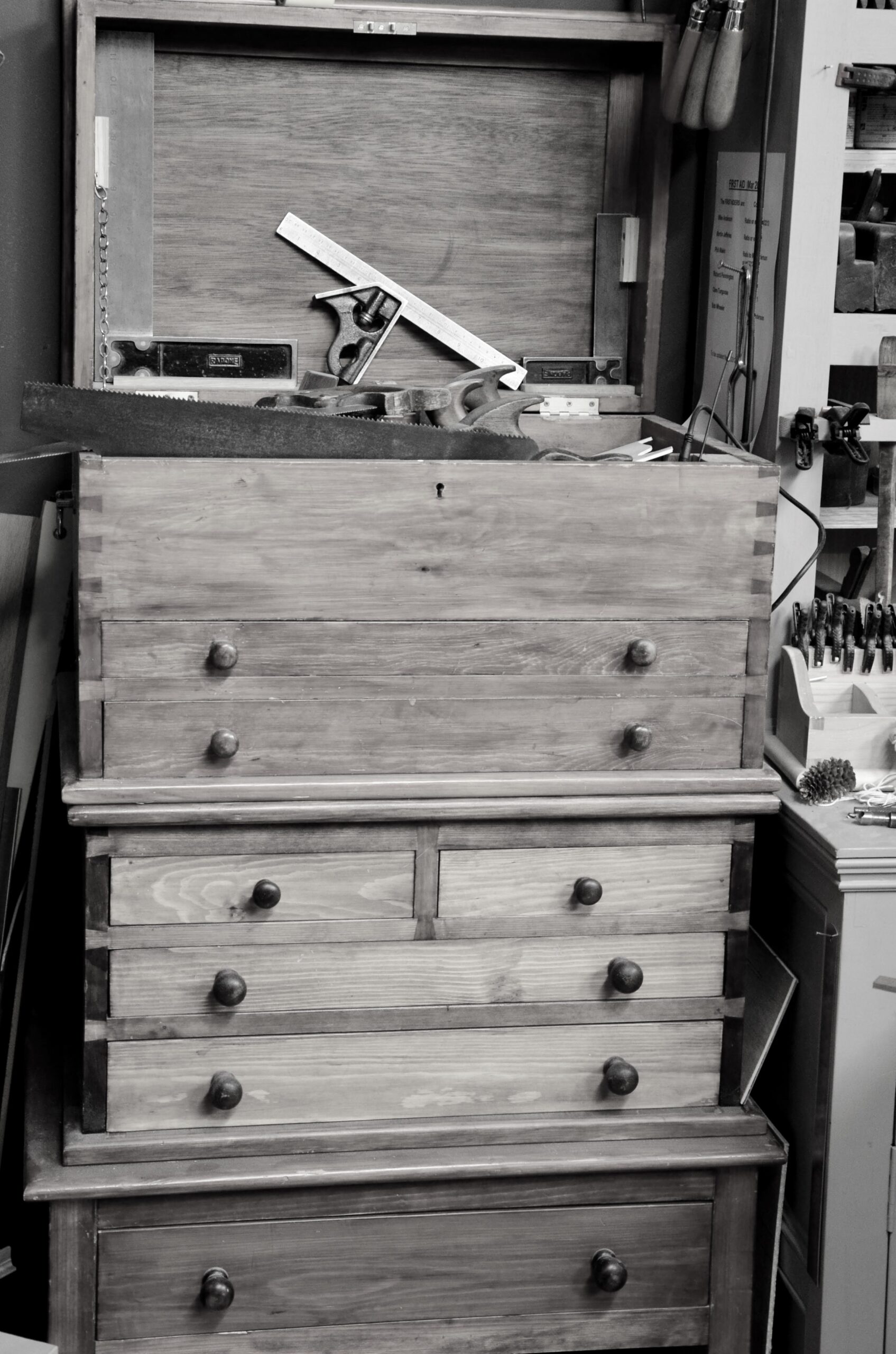
Going back into the history of woodworking opens the doors of our understanding. By these skirmishes, dipping in and out, we look into the environments of makers in their day. Take the ships carpenter on board the ancient ships built only from wood. The raising of the Mary Rose from the depths of the ocean came about in 1982. I plan to expand things further as we dig deeper into my past. I have more to say on this!
Comments ()