
It Comes and Goes
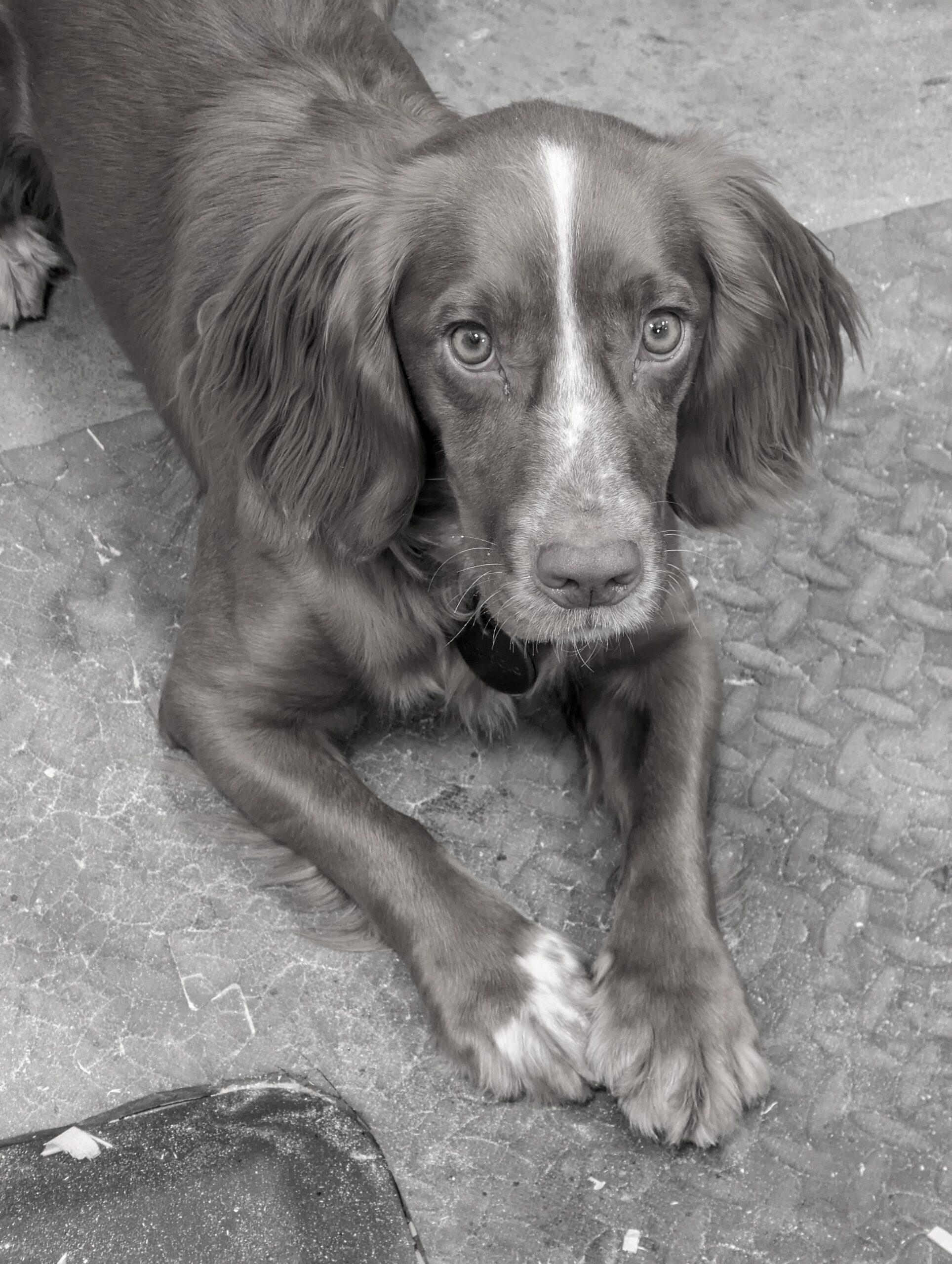
Today I made again and yesterday the work took on yet another full, unfaltering day in an exchange of all the hand tools I use. Work parcels itself out into tasks with starts and stops to embrace each diverse function. The tasks are all distinct and though different, they each flow seamlessly into and out of each other as if one prefaces the other as a lead-in. These pockets prescribe both my ways in terms of direction and then the action and method I choose. The pockets I speak of are entry points of change throughout my day as the work unfolds. There are no fits and starts. Each task differs from the other and no two can be described as the same or even marginally different. `The tool picked up might be the same but the work tasks may not be. Chop one minute and pare-cut the next. Two completely different and unrelated tasks where in one task the hand applies even pressure from the upper body to the hands and handle, in the other the hand selects the mallet, strikes to drive and then parts off and levers to lift. My planes and saws use stroke-on-stroke to slice and cut by square-on pushing and then skews in quick repeat passes through and over and into the wood to take off the excess where waste falls to the floor. Rosie watches, ready for a quick snap and snatch at each fair-sized chunk as a substitute bone to chew on in a quiet corner for ten minutes. I listen for the split and splintering until she catches my eye, stops and stares until I start working once more.
The coming and going of handwork is the rhythmic pulse that comes no other way by any other method of working wood. In some ways, it's an unintentional exclusivity we enjoy, an acceptance of organic noise types and the exclusion of mechanical others. The human engine has multidimensionality relying on great and minute manipulations and shifts in direction second by second––the complete opposite of machine-like, inline omnidirectionality with mere pushes along a straight corner where table meets fence. This rhythm, the pulse of all handwork, is the same with most if not all handcrafts. By repetition, the day comes and goes in unmeasured chunks of time as do the patterns by which we carry them out. It brings true order in the art of our working. We think ahead by tasks stacked in order by anticipating every effort ahead of the need. This prefacing is our making ready our sphere of forward planning but dimensionally there is no flat one dimension screen with the illusion of 3D, we're working in 3D every minute. Things pile up in one part of the bench from piles elsewhere waiting for use. So too the tools. They accumulate and multiply until they are no longer needed. Each hour, as the space on my benchtop diminishes, I stop to pick up and put up the excesses, put things away or in a neat pile elsewhere until next needed. It's structure and even when it doesn't look like it, it is. My advice to others is not to put up too much too far away until your done with whatever you have out. Placing them this way is much-needed gain.
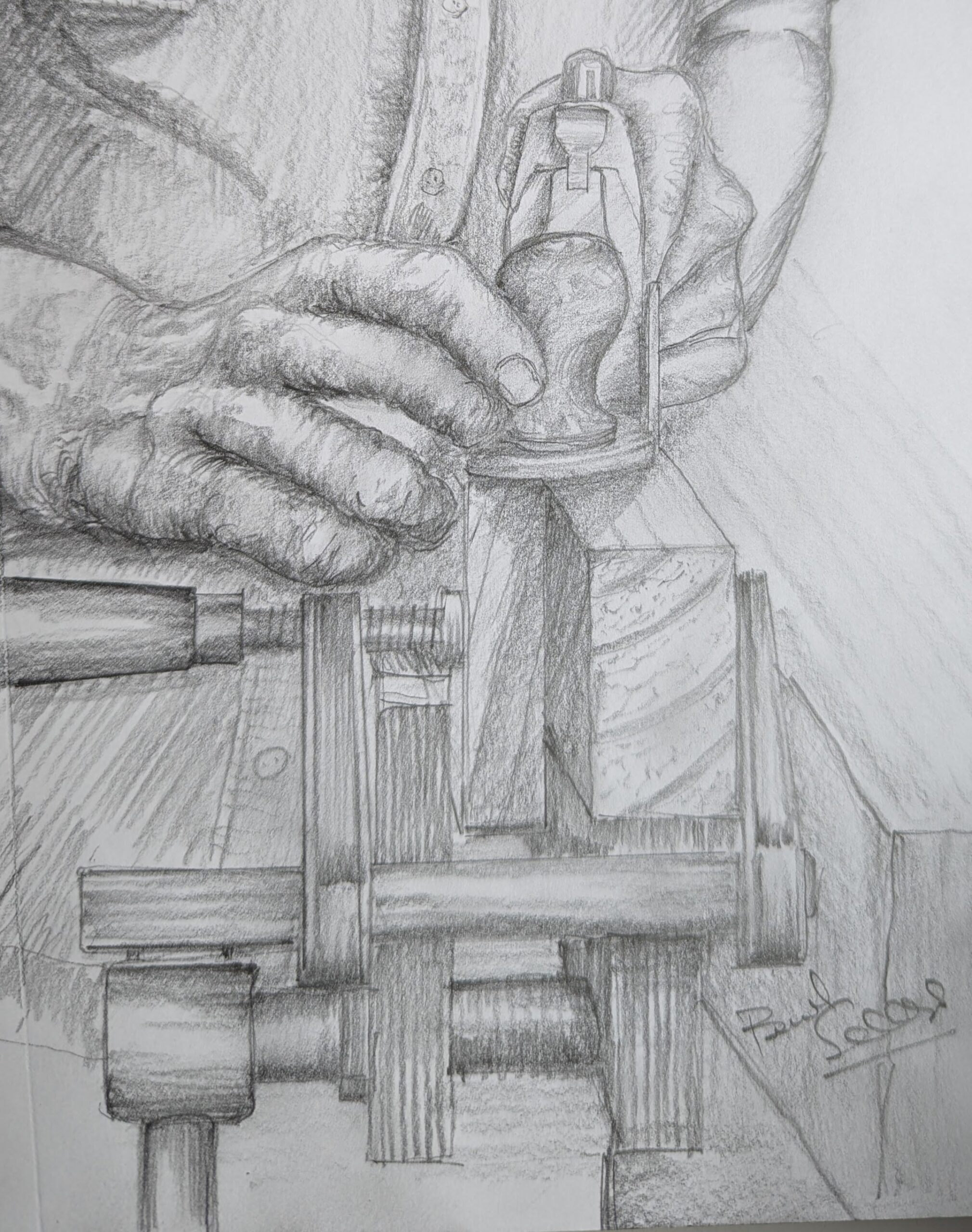
Economy of time becomes increasingly essential to the golden triangle of working. What's the golden triangle? For me, it's the workbench and vise, the tools and equipment we use and then the bandsaw. This compact threesome for me is economy of motion that's not unlike the cooking area of a kitchen where the fridge, the sink with its prep area and the stove feature within a metre or so of one another. This adds speed to my working without compromising the freedom hand tools give me throughout my day. rarely do I move more than two feet in an hour and yet I get all of the exercise I need for eight hours when I work and never sit. There is no dumbing down of skill. No replacing the layout patterns, the tools I use are 98% hand-picked, hand guided and hand-powered. I love the symbiosis I have developed for my life and where I am today. In my present state of mind and physical ability, I hope nothing ever replaces it. My work keeps me for my family and friends.
My recent injuries showed up as weaknesses elsewhere beyond my broken ribs, after the fact. I say weaknesses but not in the sense we might know or normally associate weakness whether physical or mental. Mental is not separate to physical but very much the flip-side part with a couple of caveats. These two elements generally meld together in our physicality in that they are dynamically hinged one to the other. As a man living generally with no aches and pains in his body, I ended up after the infraction with a few. I can link every ache to the incident and the breaking of my ribs because I can see where one part of my body shielded another and in places took up the slack of a failing part. when any part of us fails to fully function, fails to effectively carry its weight in the whole, we end up compensating for a weakness by using muscle, sinew and tendon elsewhere. This then always costs us in that one part pays for another. But over the last few weeks, any discomfort in the ribs that has lessened has caused an increase resulting in some measure of pain or discomfort elsewhere: inevitably a stiff neck and shoulder is a result of trying to get an hour's sleep every hour in a recliner because lying flat is impossible. Of course, it wasn't only my ribs the man broke. And it wasn't the fall that broke my ribs. No, not at all, it was the attacker who struck with double-handed force in the exact same area. My ribs never touched the bike and couldn't have done. The mangled ankle, scraps and bruised areas of my lower calf, etc were from the bike fall. Though things have markedly improved, and some of the muscles have returned to normal, I can still feel myself trying to cushion those parts that still hurt. This week the physio will look at the musculoskeletal separation to try to help manipulate the muscle around my shoulder blade where some muscle parted from the scapula in the assault. Aside from being left with some minor stiffness, for different reasons, this week's gentle and general return to a full week's work has shown me that my previous ethic of self-control and healthy hand working has stood me in good stead for recovery. I can see how the developed muscle in my upper body has been exceptionally good for me in taking up the slack. Usually falling off a bike as we ride comes with some measure of prewarning. A wobble, a small obstacle in the path we are on makes us ready for the fall and even midfall we can do something, anything to redirect something to cushion our fall. Previous falls through the years also equip us, cause caution, make us aware, but being attacked from behind comes with no warning. The shock value is always unprecedented even if it is not the first time.
The attack on 21st March has caused me to rethink and identify the true value of my work, my working and my workshop. It's all too easy to take the everyday things we do for granted. My aftercare self-care meant I must lift and manoeuvre my body using mostly my arms. Standing and lowering to sit, bend and so on relies on the leg muscle I built up through cycling and exercises like squats. I had started these exercises as a result of a physio saying my cartilage was worn very thin and I needed to build muscle to help. That really worked and because of this, I had already exercised sufficient for my current disability. Great!
Work for me has always been both a way out and a way through both physical and mental barriers. My kind of working removes many barriers but more than that it frees me up to engage with what might otherwise become an obstacle. Today I mowed the grass with a mower that has no self-propulsion. Six weeks ago I could barely muster enough breath to walk fifty feet. My right shoulder is causing me a serious enough issue to say take it easier with this part and measure out by feel what you do. By this, it's improving and not by not using it or taking it too easy. Listening to your body is the critical ingredient in recovery and no one else can do this for you. At least now I can sleep lying down, on my back and on both sides without pain. It's now the other compensating parts that I am now restoring one at a time. My benchwork is not the benchwork normally associated with muscle building but the precision work of muscular control at the workbench. This week has been the best week yet but it has not been by taking it easy but by measuring my exercise and matching it to the work in hand. It takes a good hour and a half to mow the grass in and around my house. Another three-quarters of an hour is a decent workout on hedge trimming. I did both without an issue and without a break. When I had done I felt great with many parts relaxed and recovered. Before the assault, I always said I had not felt different since I was 50 years old with regard to health, aches and pains. Today I feel that way again.
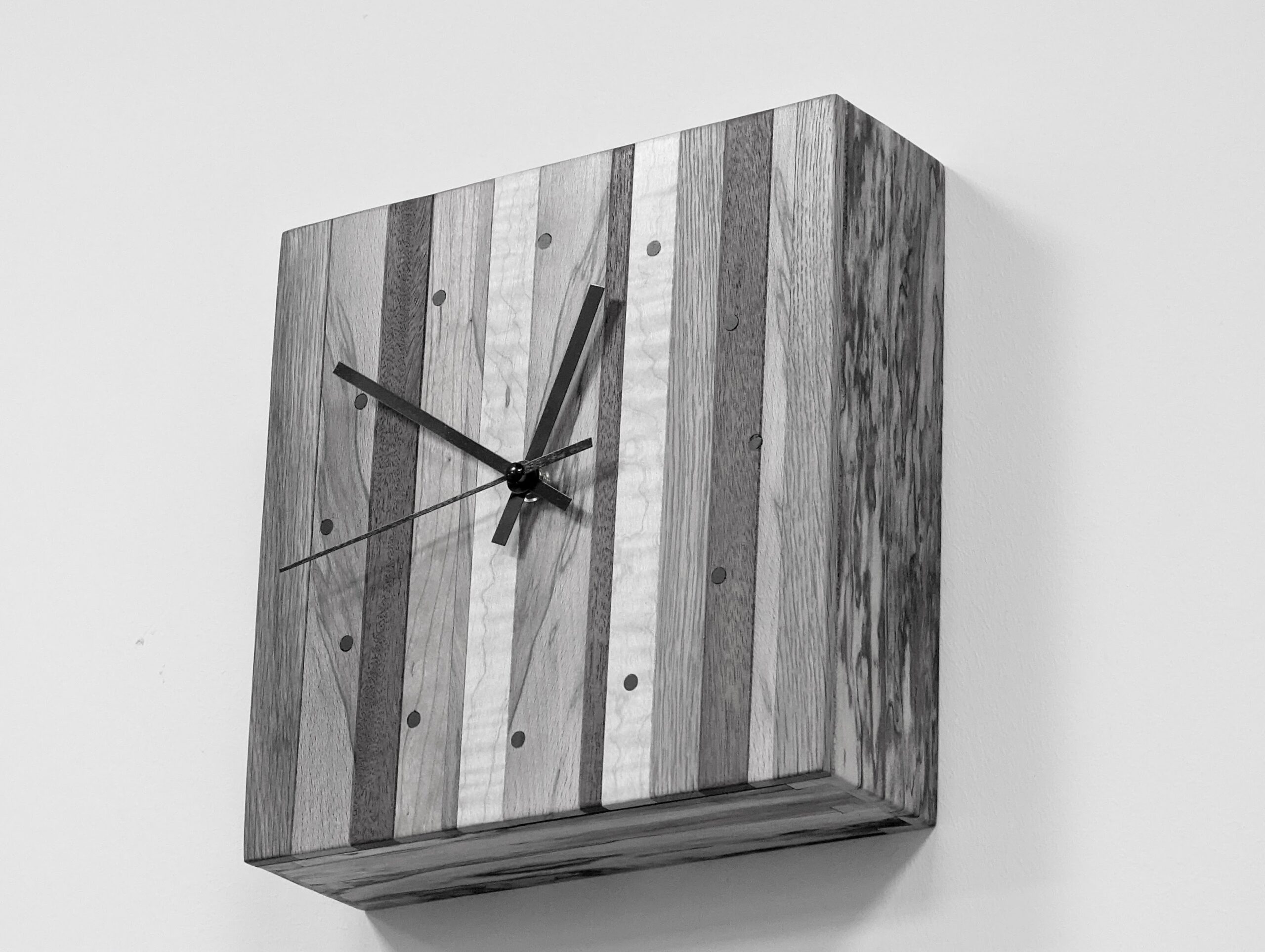
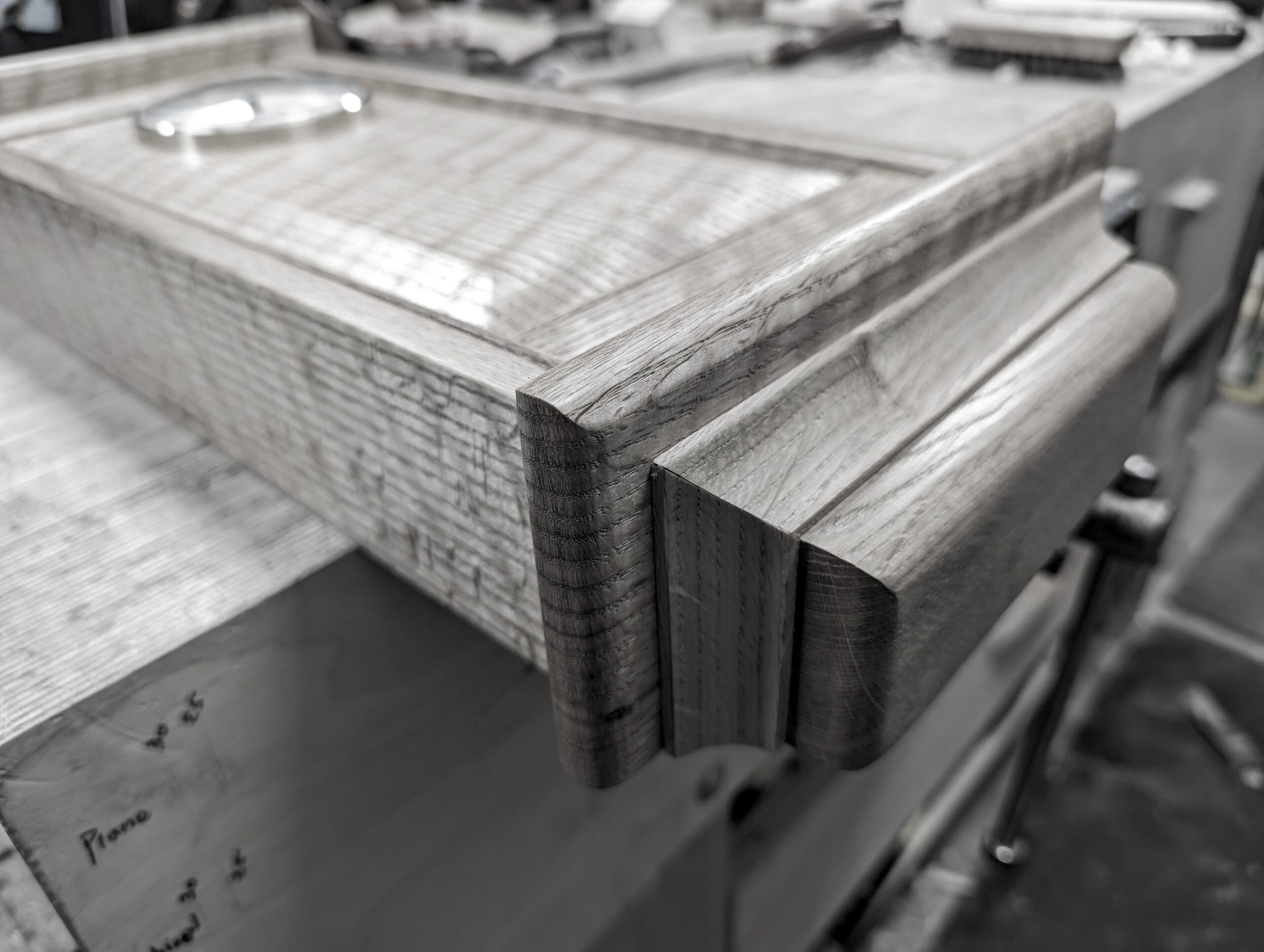
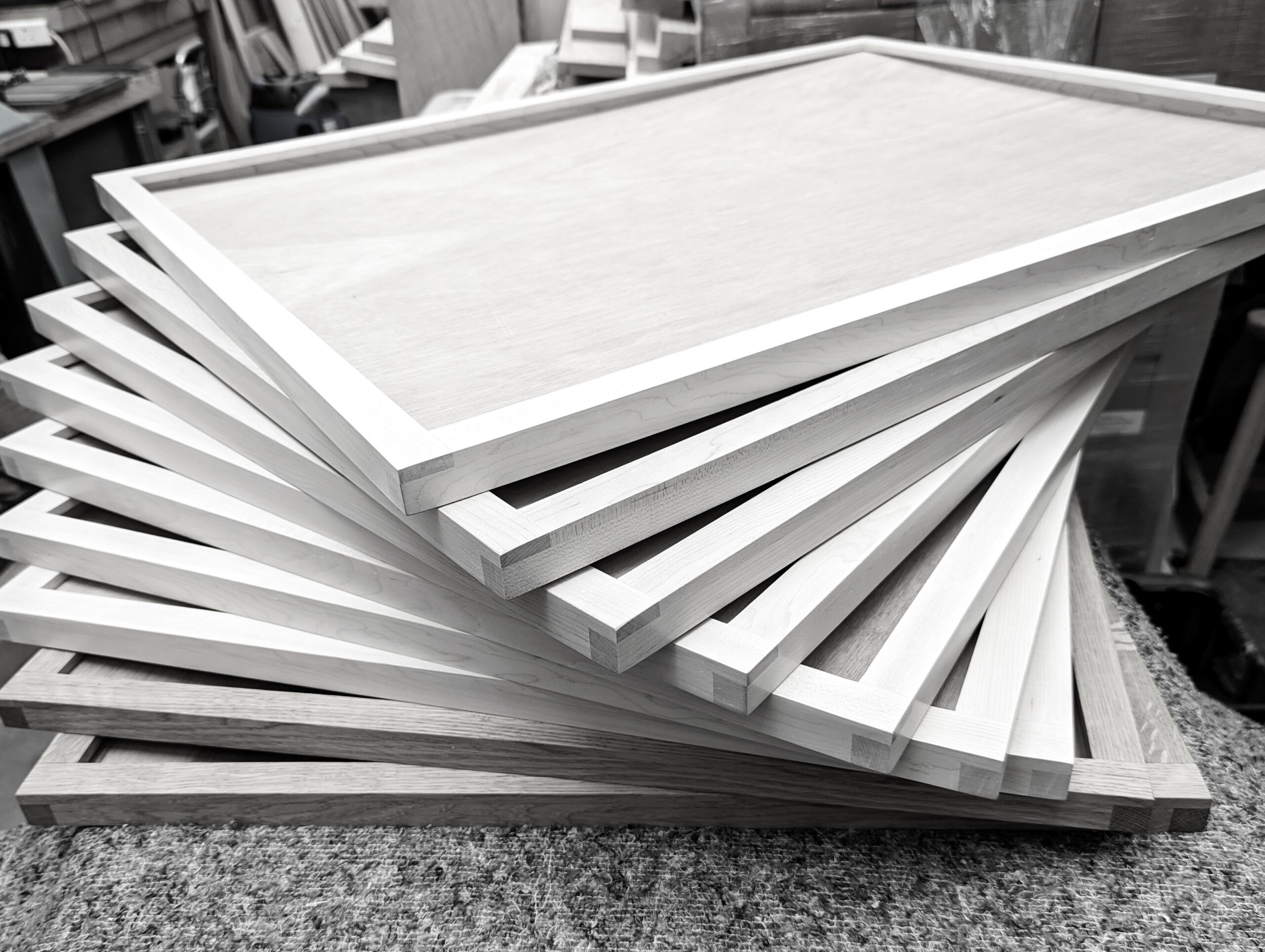
Why black and white? In an HD, multicoloured multidimensional world it just Pops!
Comments ()