
What's the Point?
For me, my pencil point is very much the same as a chisel edge and saw teeth, they might need to, can be and should now and then be sharpened slightly or majorly differently––sharpened to task, as it were. Legalism has always choked off creativity. I think it always will. Following fixed and rigid rules becomes very like painting by numbers. We don't need a rule book and we don't work too well with a colouring book––staying in the lines and such. But rules are good starting out––they can establish patterns and muscle memory so I'm good with that. That is until we develop and grow our ability to flex in the saddle here and there. Developing flex is good! High rise anything as far as structures go, not pyramids, rarely works without the ability to flex under pressure. Many a structure would be brought down through wind pressures without the ability to sway a little here and there.
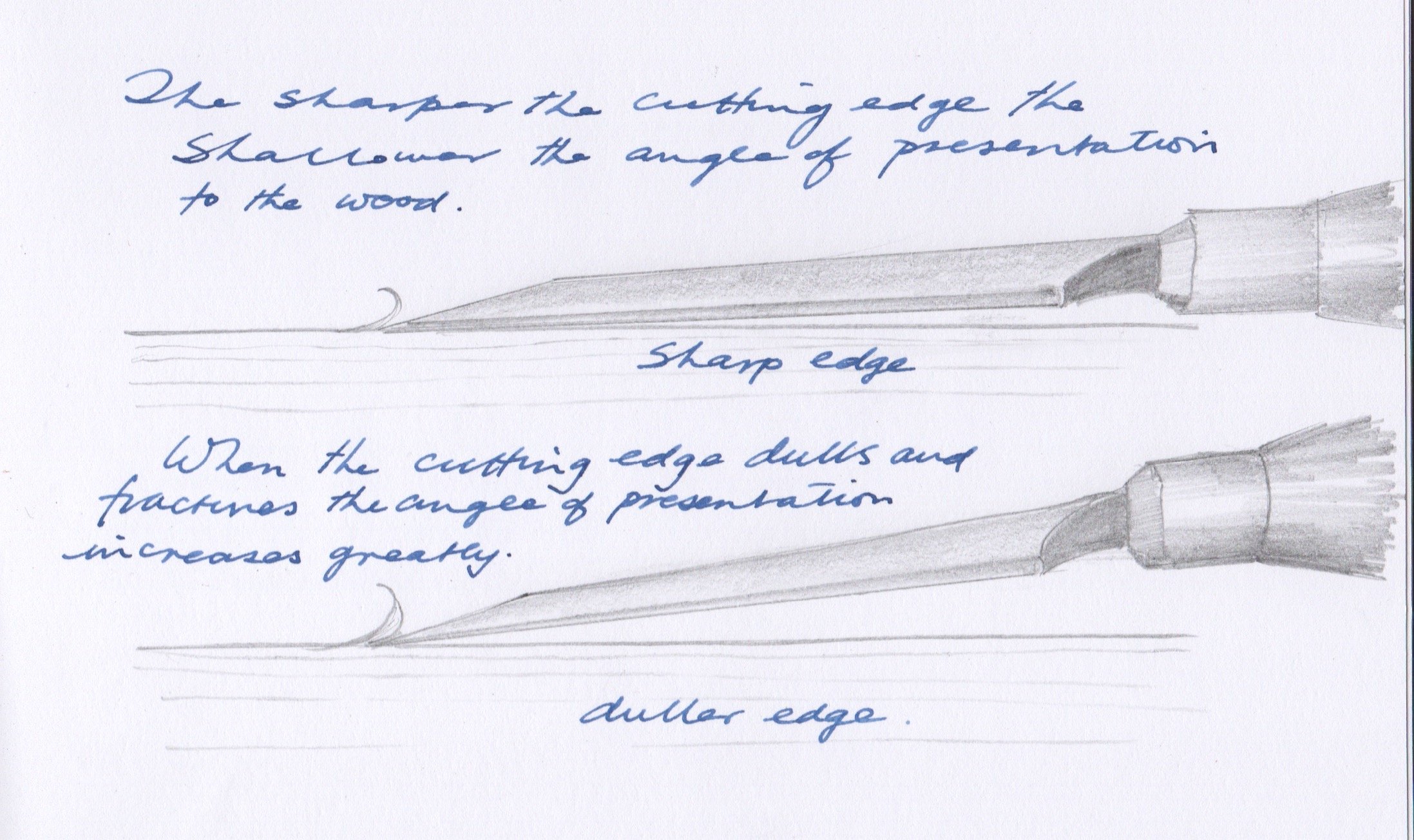
As soon as the freshly sharpened chisel touches any surface of wood to pare cut or chop, we lose the edge by some often immeasurable amount. There have been times with some woods and some special task where I have sharpened up four or five times in an hour even though the tool might only be used for a minute or so over that whole hour. Any edge tool is less sharp in some measure and it can show on woods with a more spongy resistance where the wood compresses markedly until the compressing wood springs back into the cutting edge. Think Newton's law of third motion.
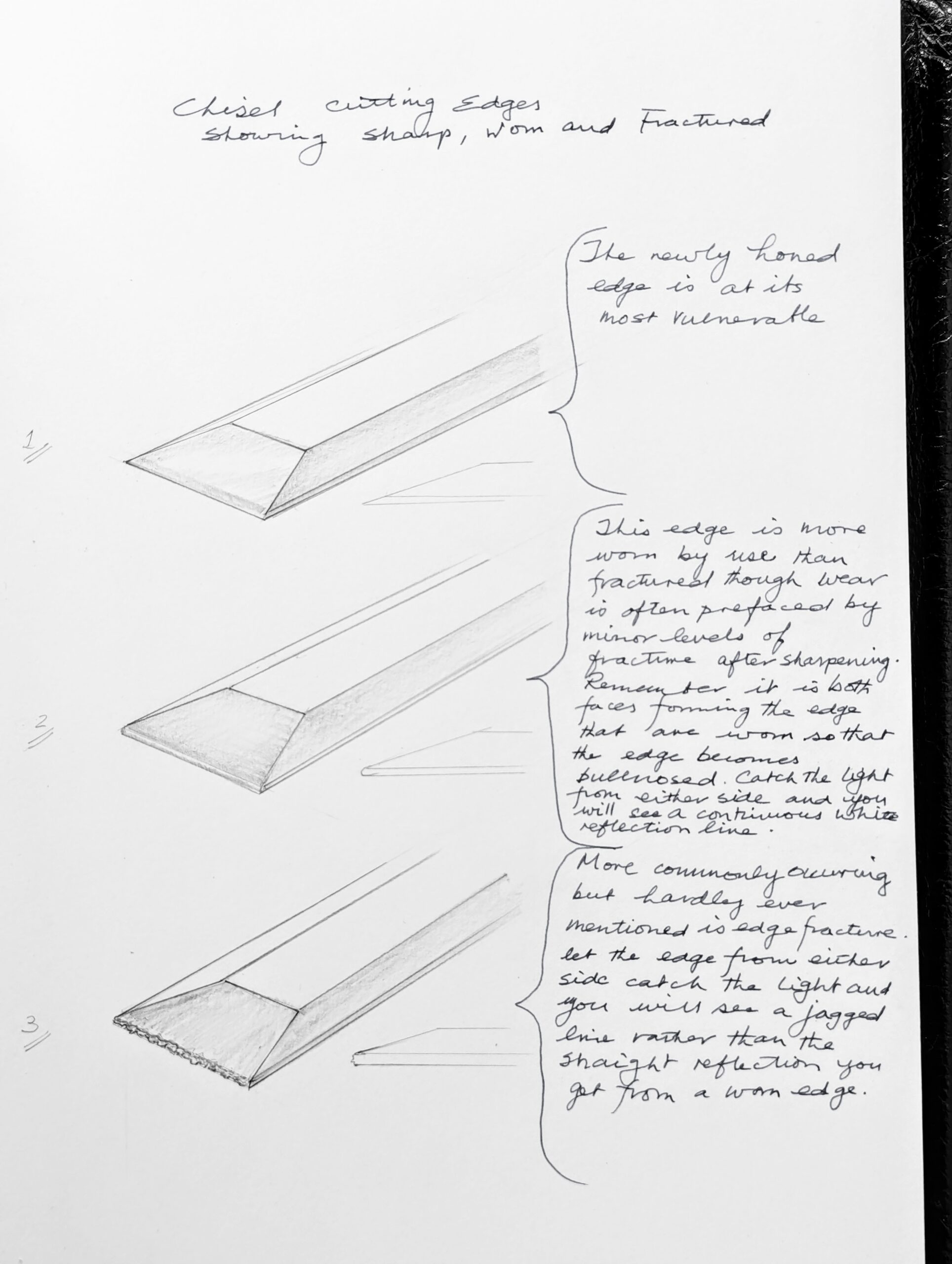
The hardness of a chisel edge or pencil point does not mean that they don't fracture because that's exactly what they do. Depending on how they are used and what for will determine how and to what level they indeed hold up. "Hold up' will be less to do with hardness than edge retention but often we fail to see that whereas hardness and the degree of it will usually dictate how often we must return to sharpening it rather than strength and durability. When we consider a cutting edge or pencil point that fails to cut or mark cleanly we almost always say that the tool or point is dull or blunt. These two terms are not one and the same. Dull, in essence, means blurry and ill-defined whereas blunt, though it can mean dull or abrupt, in this circumstance will mean worn down by erosion. Whereas that can and often will be the case, I venture to say that most often, when I take the time to actually look, it is less usual to be dulled by wear than being actually fractured. The difference between the two terms, dull and fractured, would then be because one is worn away and the other is broken by fracture. The outcome in use then will be equally different. The fractured edge will often show as a fractured cut line in the wood surface, the dull edge a more bruised one where the edge wood yielded and to the point of being turned in. These are small outcomes but telling. Rarely or ever is this a consideration for most. Of course, this is all by degree. Think worn to be like river rocks eroded gradually over many centuries of water pouring over the same rocks. The rock's outer surface look worn and have no visible sharp or angular corners. Often, the chisels or plane irons, saw teeth, etc are indeed worn away in similar fashion by the cutting edges being rubbed or pushed into a resistant material as with wood. I think that in actuality the first passes after sharpening start out as minute fracture and subsequent continuation in use takes the edge into a wearing zone. But there are often times when the edges and points simply fracture on the first points of contact with the material be that wood or paper and resharpening need is obviated immediately if we are sensitive. Chiseling fractious knots will almost always fracture the chisel and the plane iron edges. So too the teeth points of saws and especially cross-cut saws that have a their three-sided point. This is why we woodworkers generally avoid scraping wood with our chisels held perpendicular to the wood's surface.
Now to the Real Point
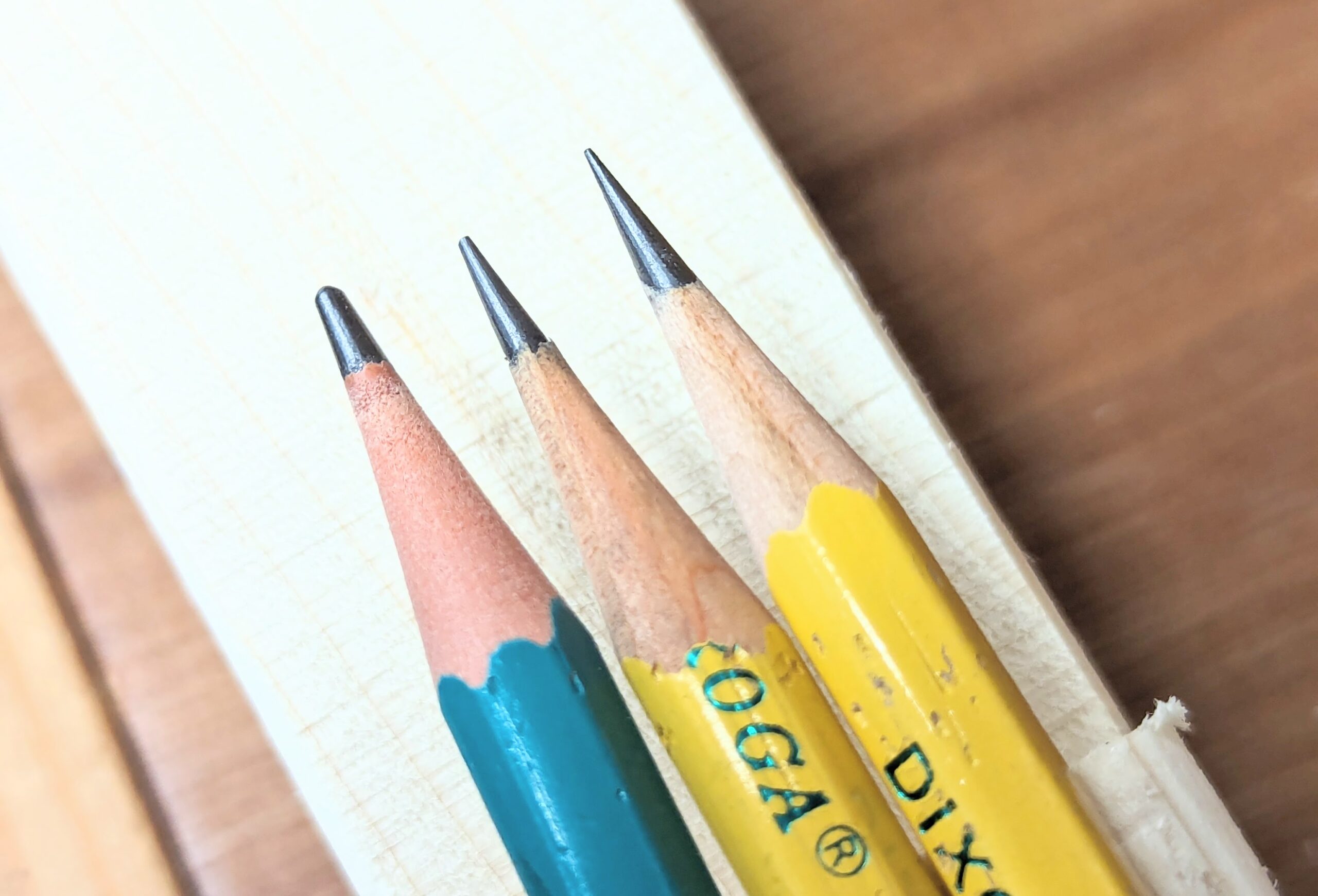
All too often we will think, as with the chisel edges and the saw points, that a one-point-fits-all situations for drawing and whereas we can make that work. the nice thing about pencils of any kind is that they are so easily and readily refined to suit quite specific tasks ranging from pin-point dots to broad-stroke shading, soft-stroke, edgeless lines to super-fine and variable versions.
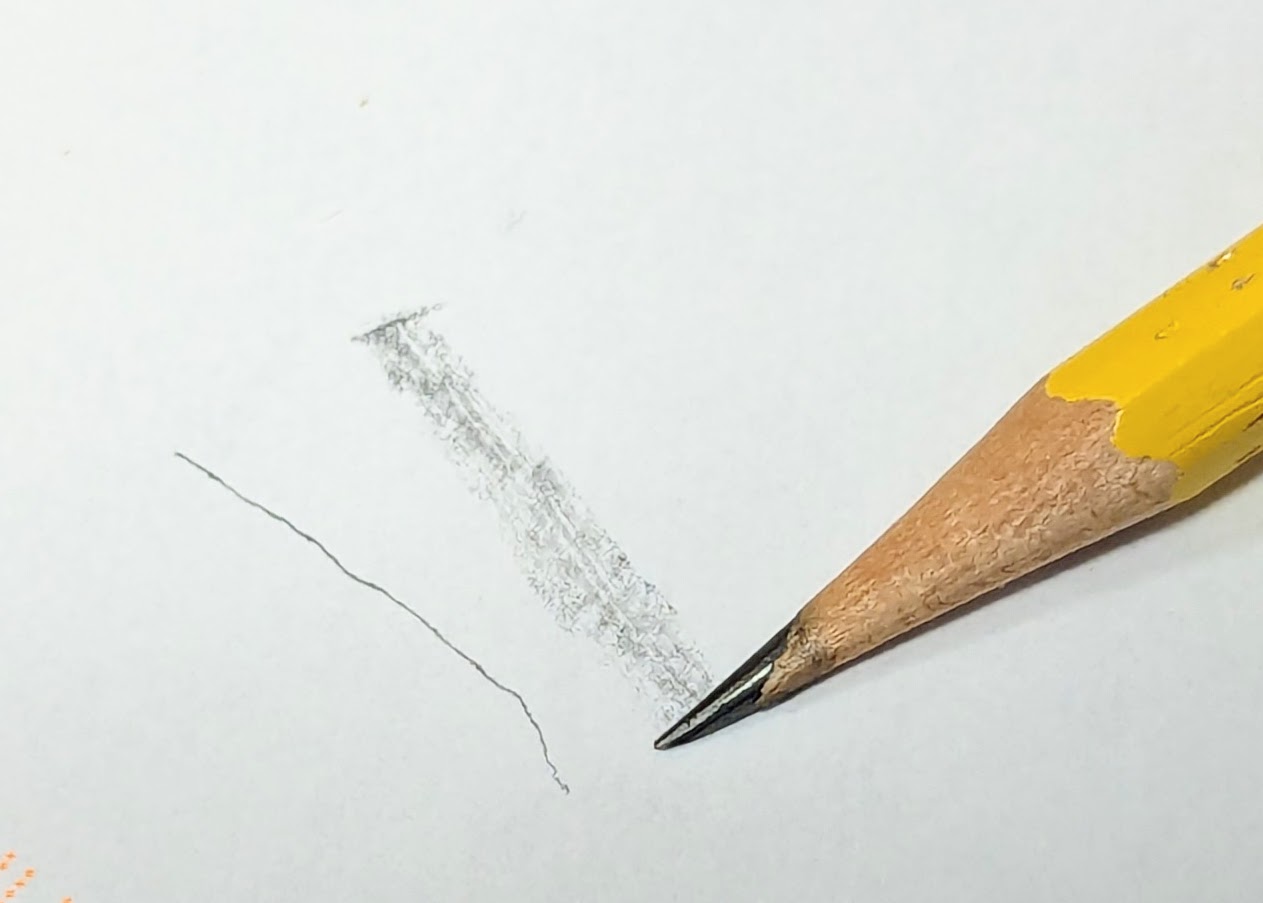
The angle of presentation to the work surface of paper also gives infinite variability so combining this with the different choices of points we create can allow and require substantive decision making. For much of my drawing and sketching, I keep the same grade of pencils in my unique pouch. On my workbench I keep the yellow Ticonderoga #2s pretty much pristinely sharp whereas the green ones I allow to own a rounded point.
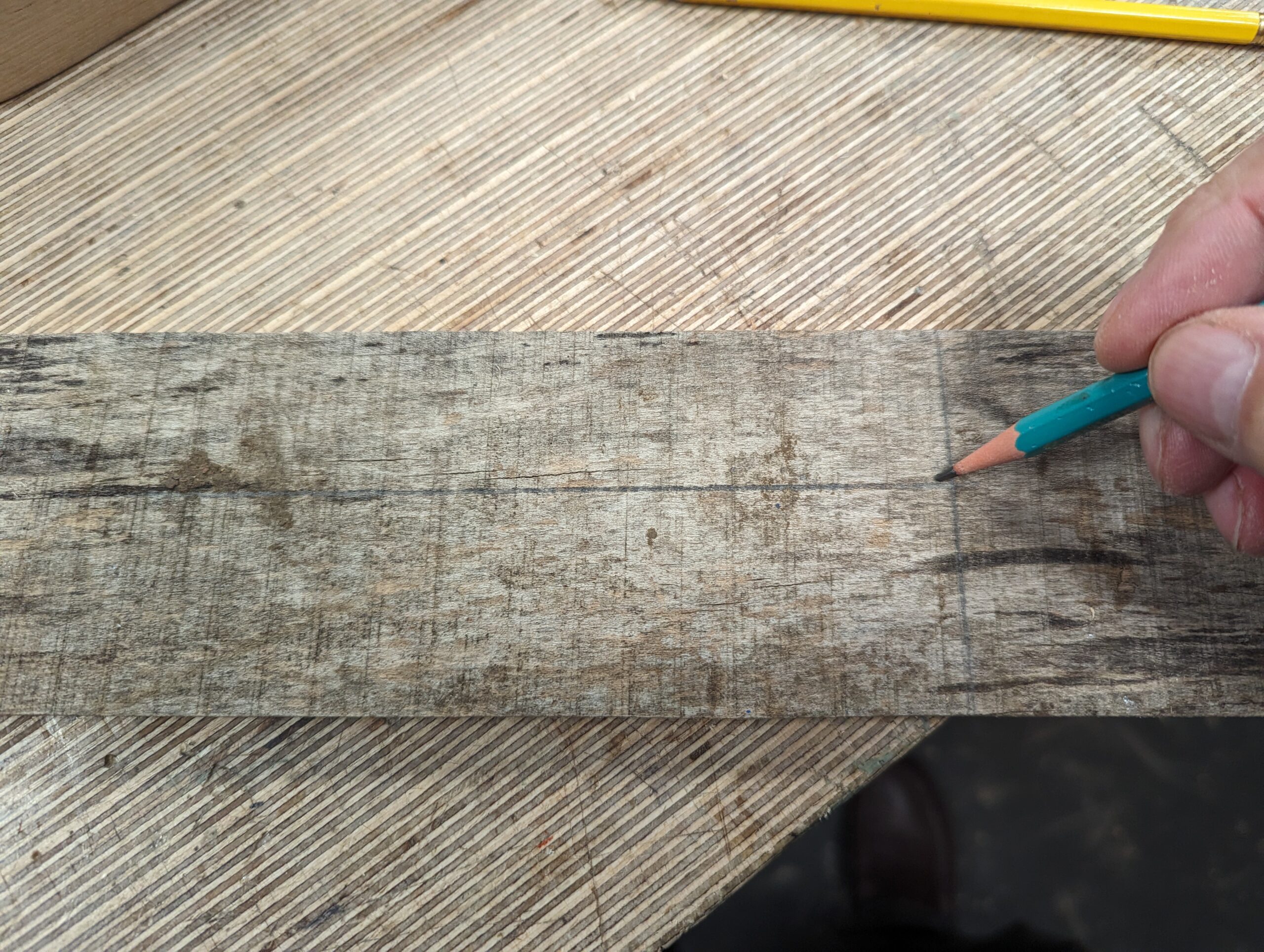
The difference is simple; yellow ones are always the ones I keep for laying out lines, the green ones I use for marking on rougher wood surfaces as the thicker markings show up the better with the thicker marks a round pointed pencil delivers.
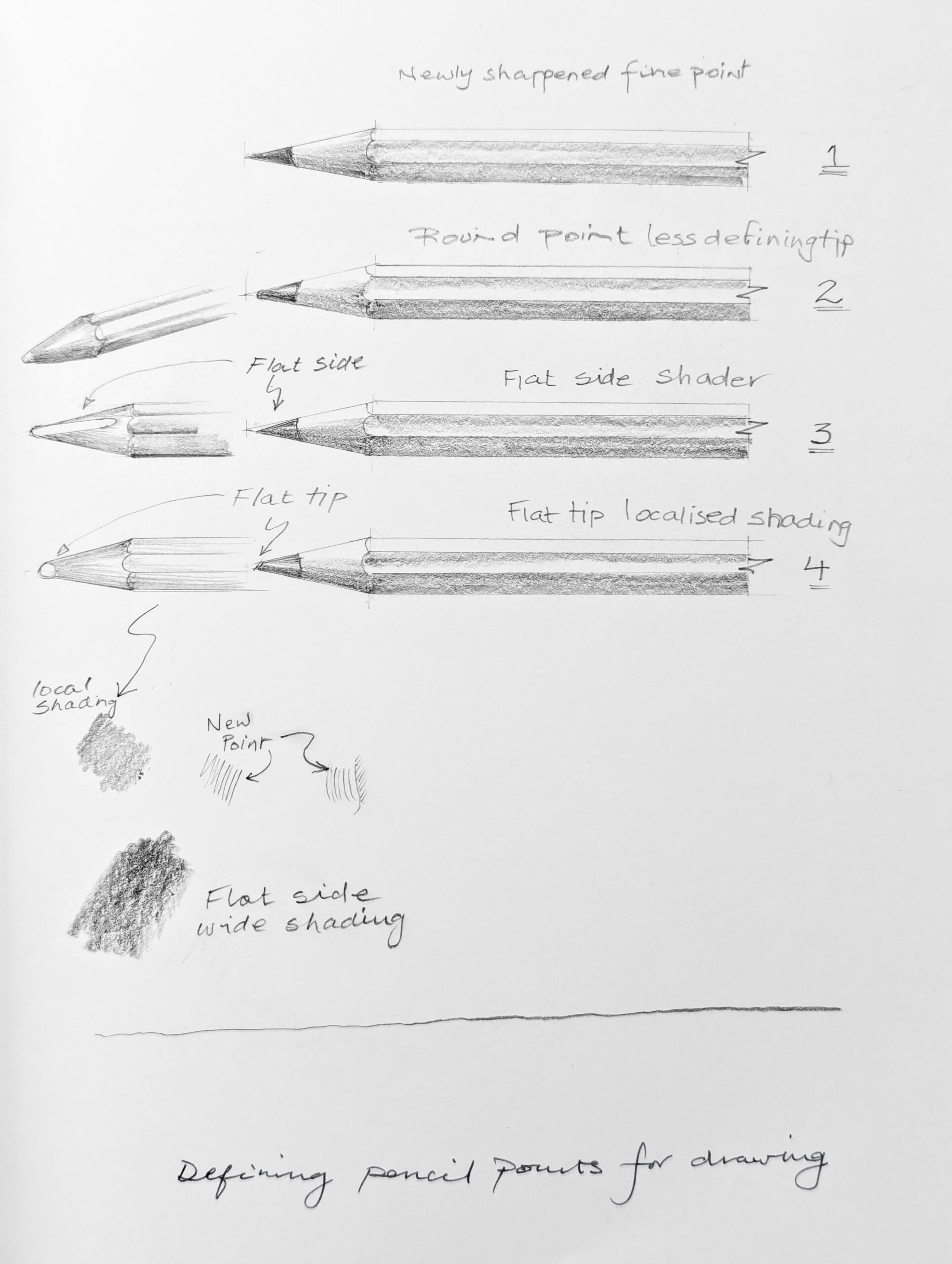
For drawing, my needs are quite different. The sharp points I like for my woodworking layout need constant renewal minute by minute. The #2 is my preference because the softness leaves a clear black line. Harder 'H' grade pencil graphite will hold the point better but are too light to be seen on several wood types yet excellent for technical drafting.

The image below show how I have flattened one side of the conical point for broad shading . . .
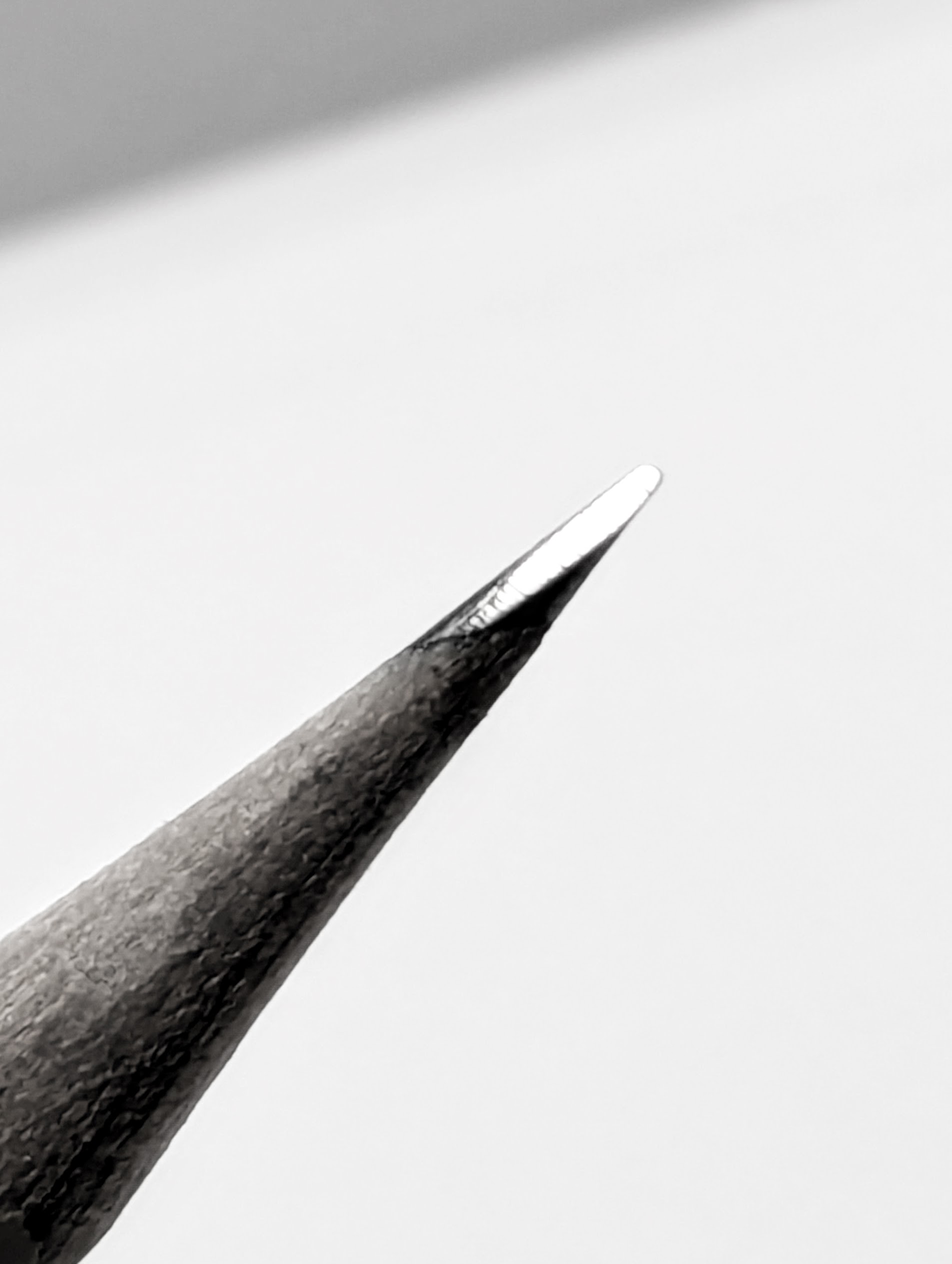
. . . but that by rotating the pencil i can also have a super sharp pencil point for detail work. This give me two refinements useful to my work.
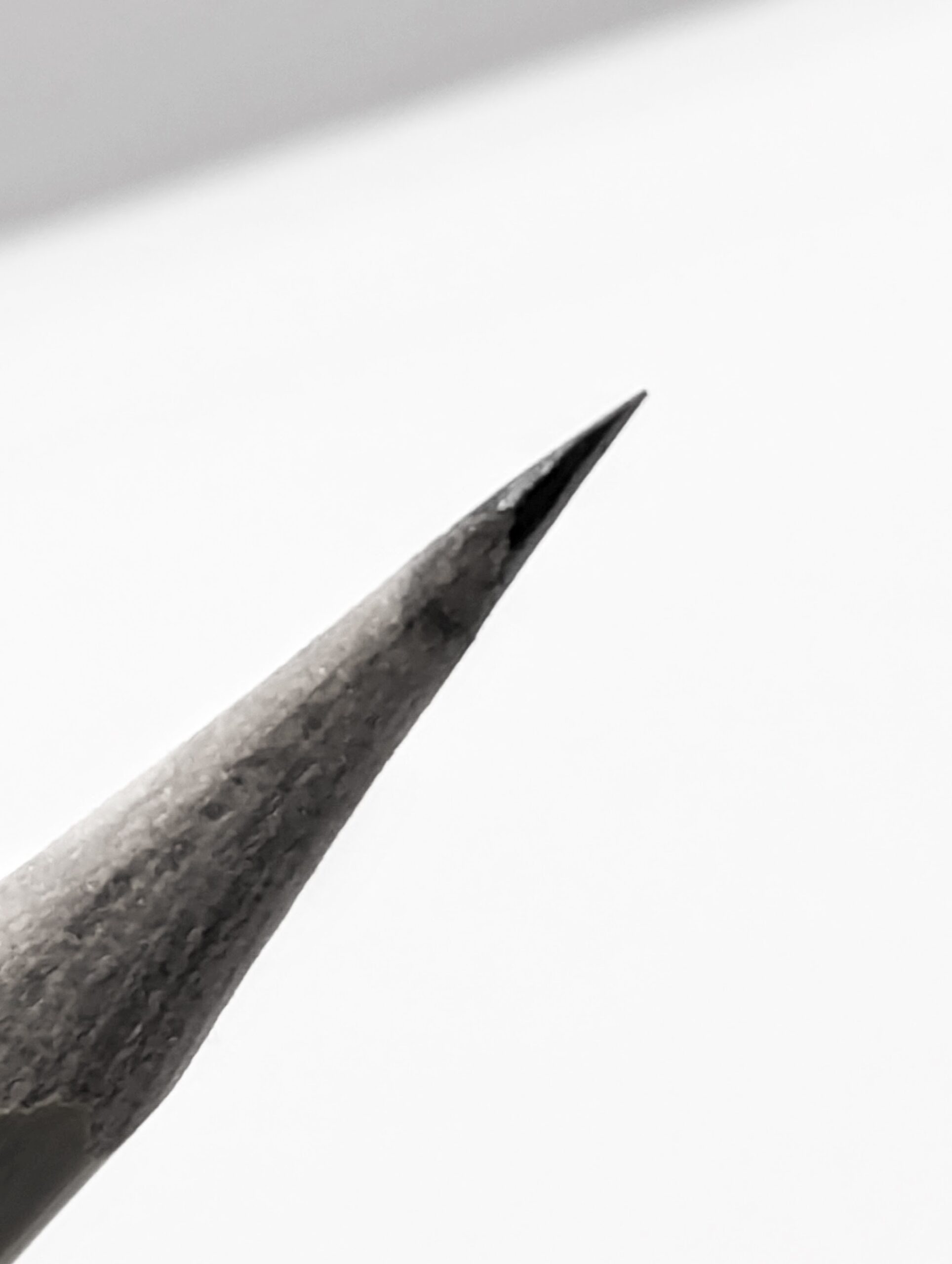
The flat face is useful for shading wide expanses.
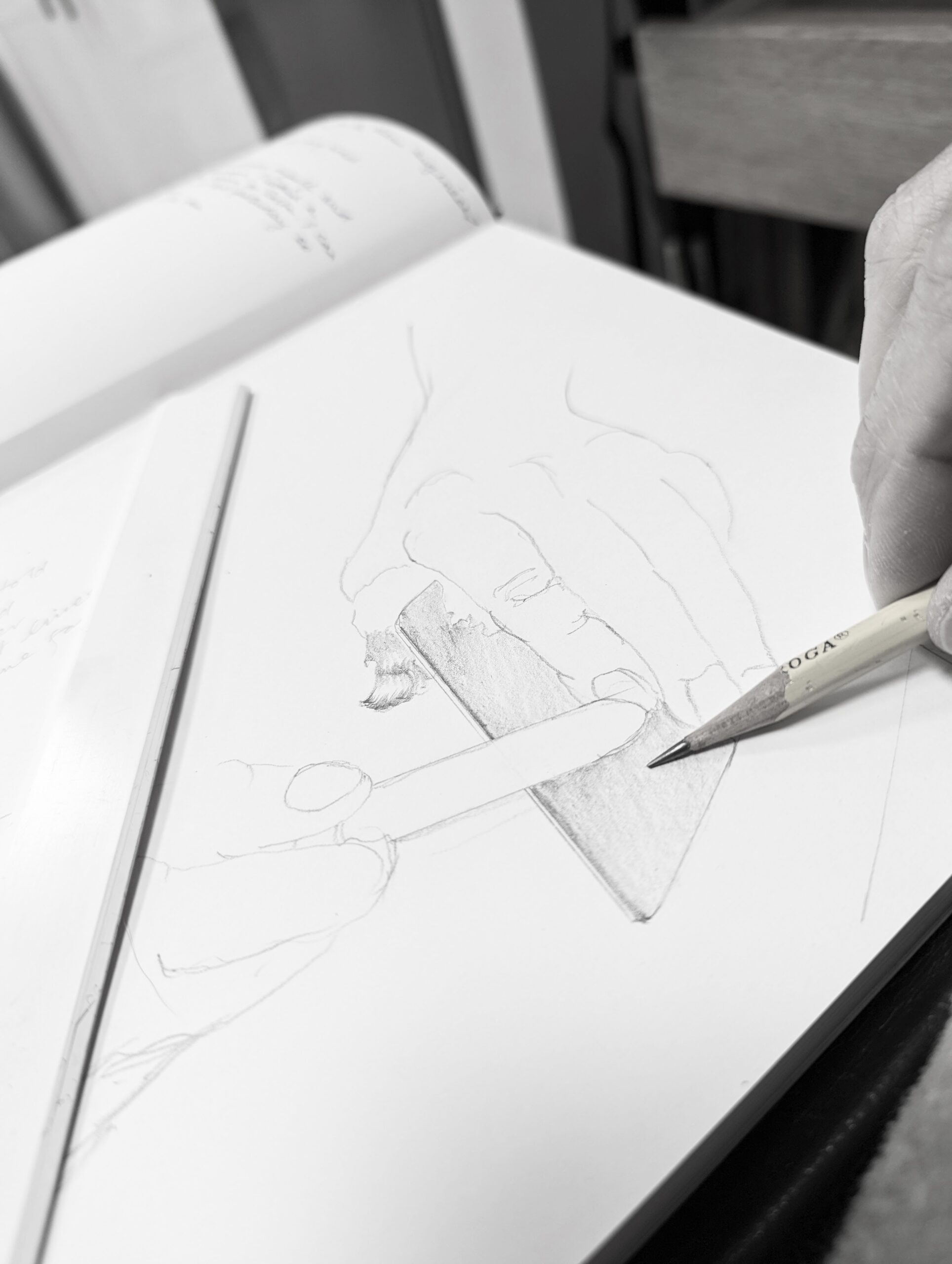
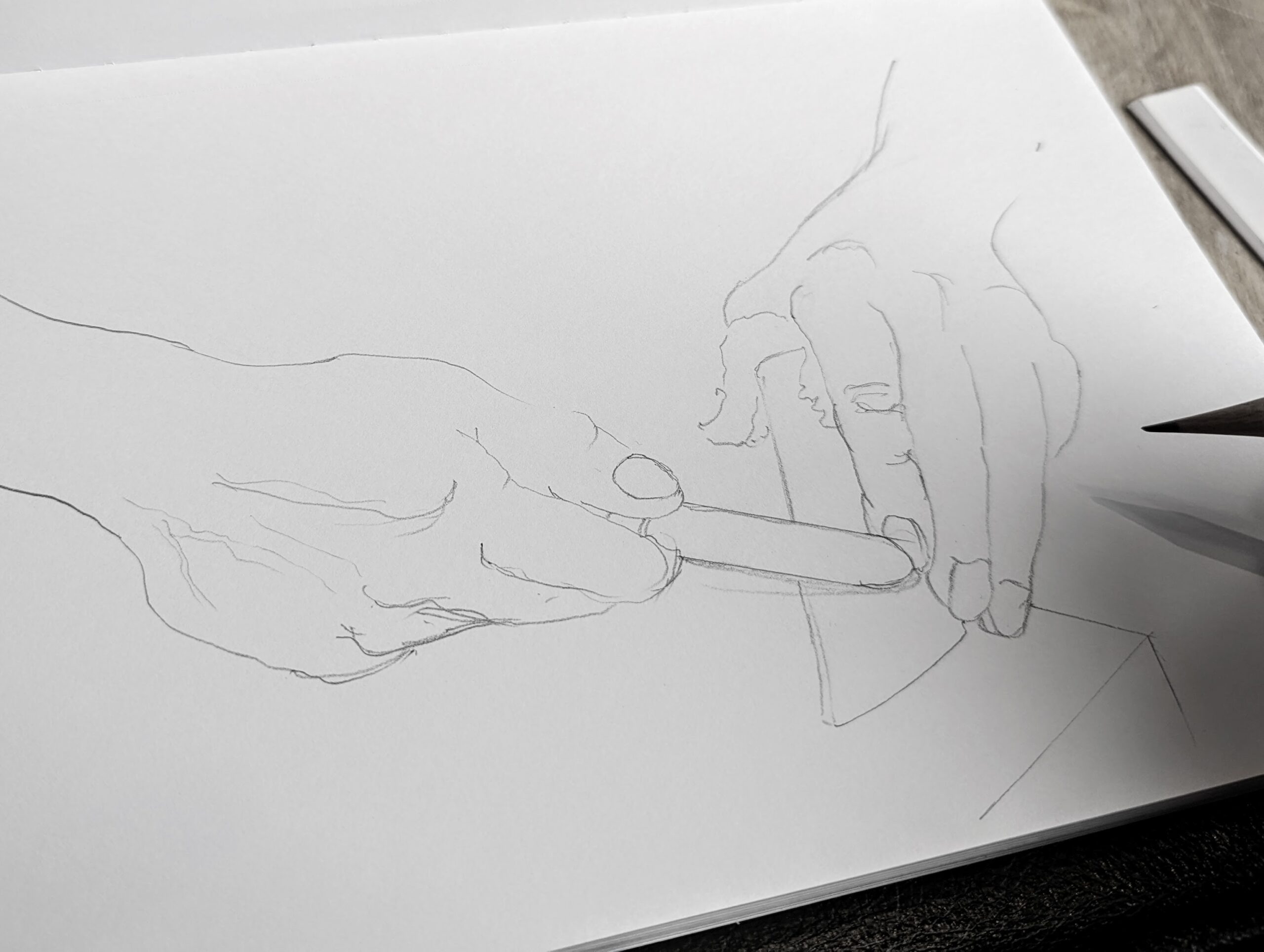
In my outline I offer my first outlined statement. The enables me to consider perspective and sizing, shape and so on before I put more work into the drawing. Because my medium is erasable I can make adjustments until I get it right.
Different pencil strokes from different point refinements allow me to make texture detailing as `I go. This then tackles technique, tone, additional depth and ultimately tonal intensity and so on.
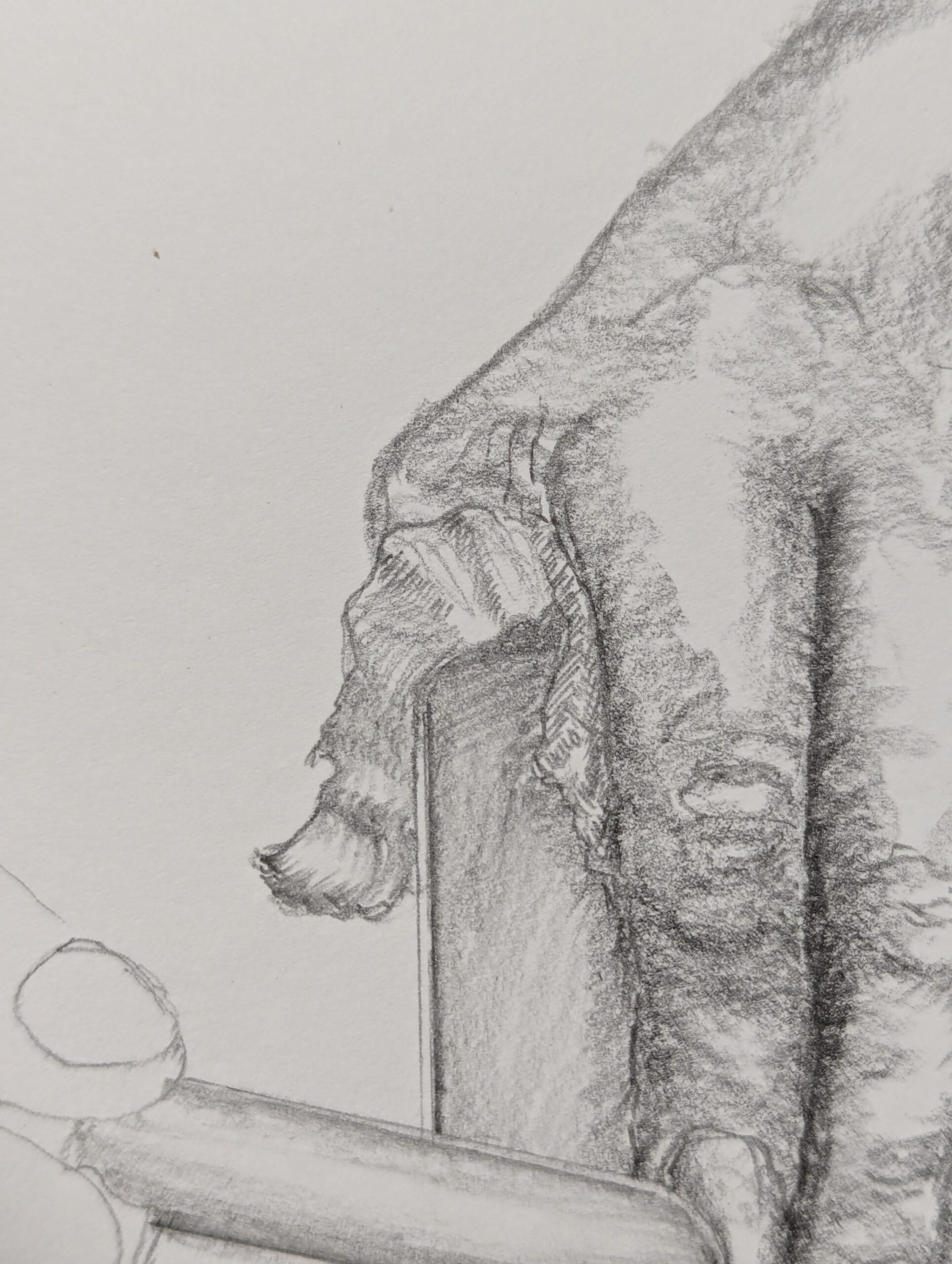
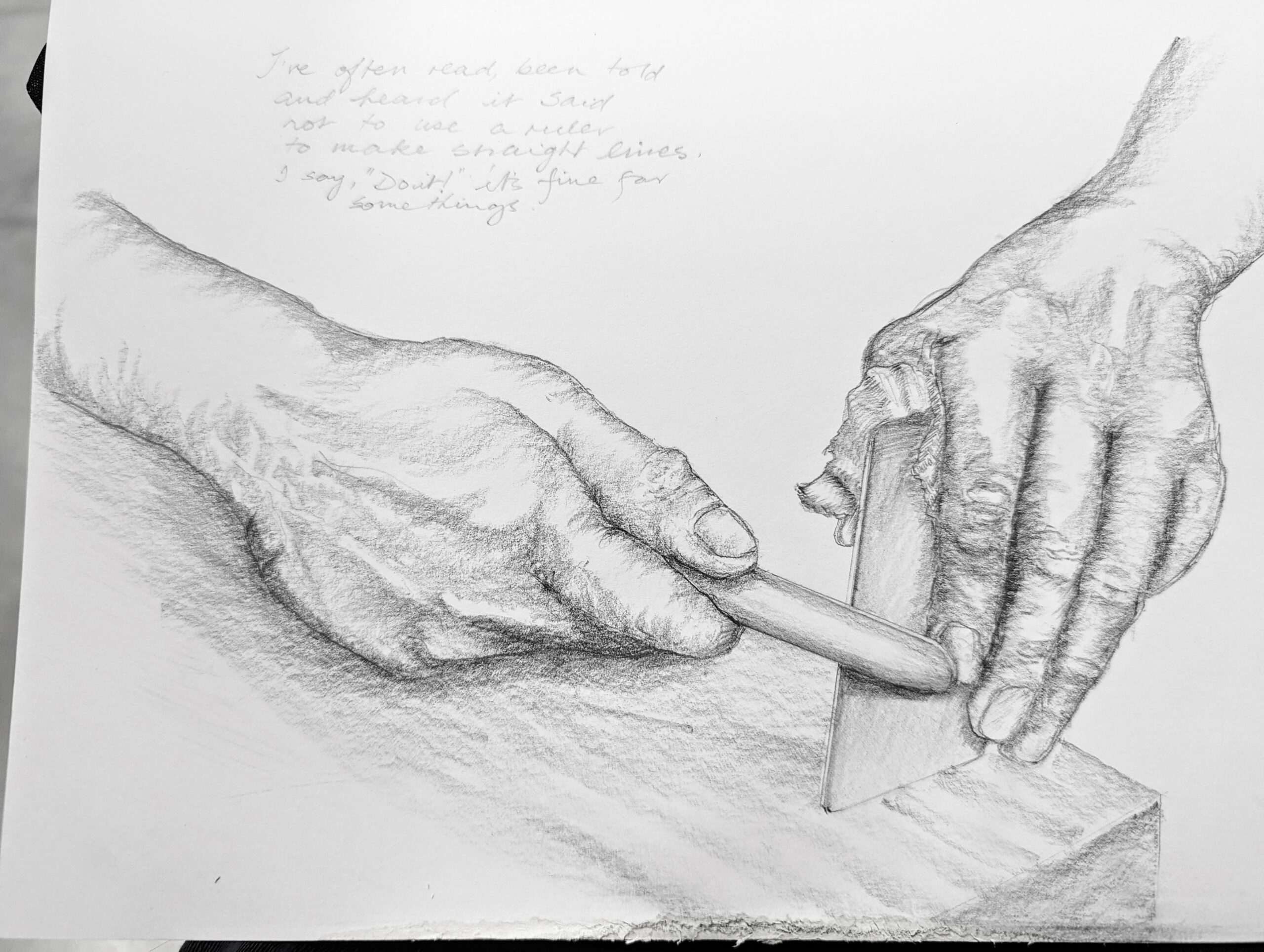
In my drawing working hands that work with one another they must be oriented just right otherwise the task being carried out will not express the correct characteristic.
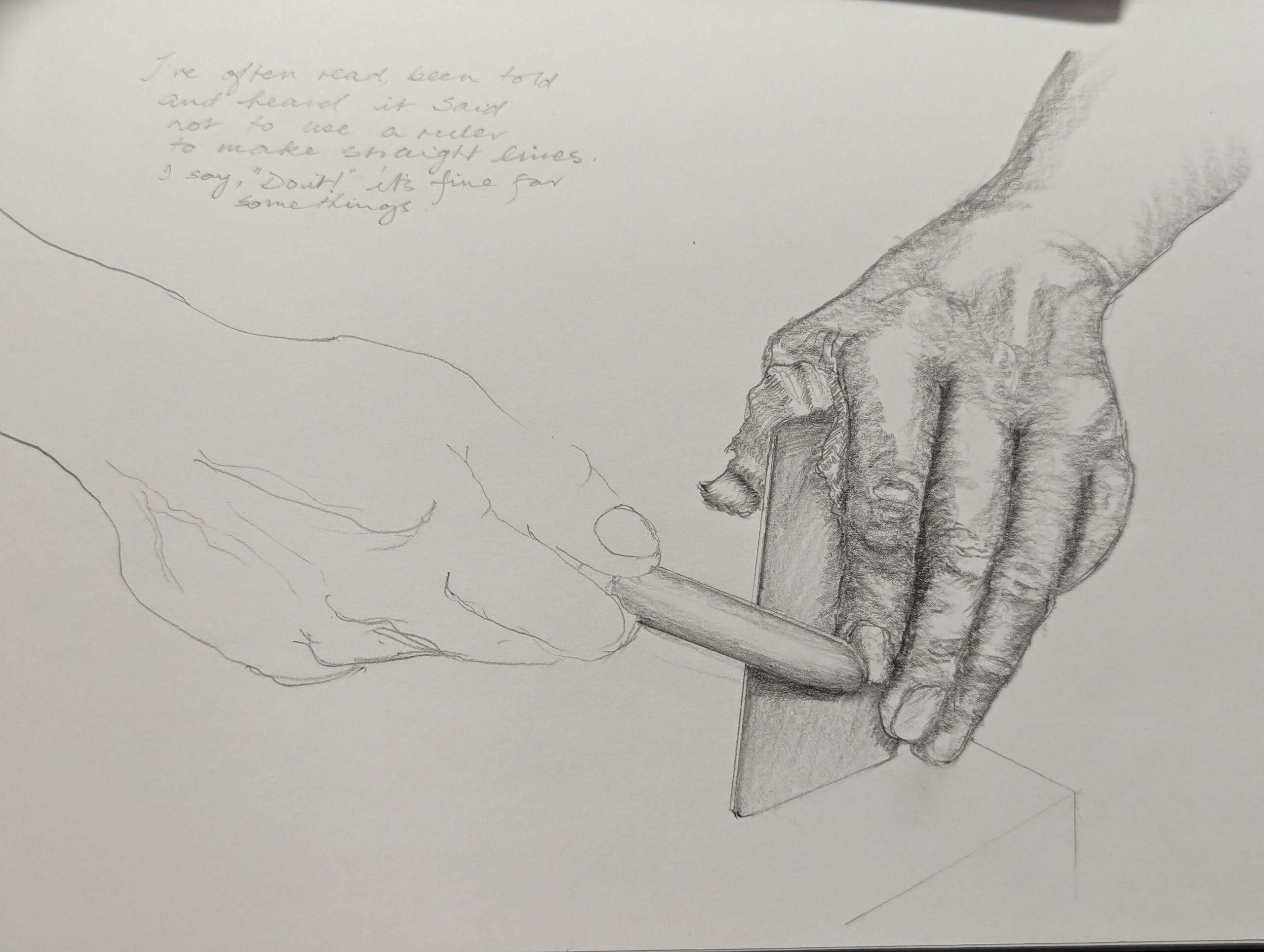
A drawing is done when it's done. I keep my drawings for weeks and months and often go back to add more.
Comments ()