
Is Heft a Cultural Thing?
I'm never quite sure. I used to think Record's steel sash clamps of old for joinery were the best but my mind changed through the years and I wouldn't really want them near my furniture these days. Then, living in the USA, I used US Jorgensen pipe clamps for my making and they worked fine enough though a bit crude. I liked them well enough, I suppose, and used them for two decades or so, but can't say I like them as such, really. Now I use a variety of clamps in my work and have narrowed them down and I rarely if ever need weight and nor do I need clamps that supposedly clamp square and parallel in any sort of forced way. that's another silliness introduced in latter years by makers and sellers. It's always been a bit silly to me because misaligned and misplaced clamps have a way of pulling things out of square and so you need to work with them to micro-adjust parallelity, pressures and such to ensure you don't clamp something that you are pulling or pushing out of square by the sheer physics of several inequalities you can create as you apply pressure through the screw mechanism.
It's been over the last 20 or so years of using mostly inexpensive extruded aluminium box-section sash clamps that I live now with them with no regrets and no need for anything with heft any more. Through very practical applications making furniture and general joinery and woodworking that I am now left where I a. Aluminium weighs about 1/3 that of steel which is much denser. The box section of my sash clamps give me the best weight-to-strength ratio I am always looking for and especially when I have half a dozen clamps on any piece I am making which is always very common. But I do get it that heavy joinery in big frames with any kind of regularity will usually benefit from cast iron and steel, T-bar clamp types––I keep half a dozen around to use even though that might only be every few years. I actually don't need them nor do I like lugging them out.
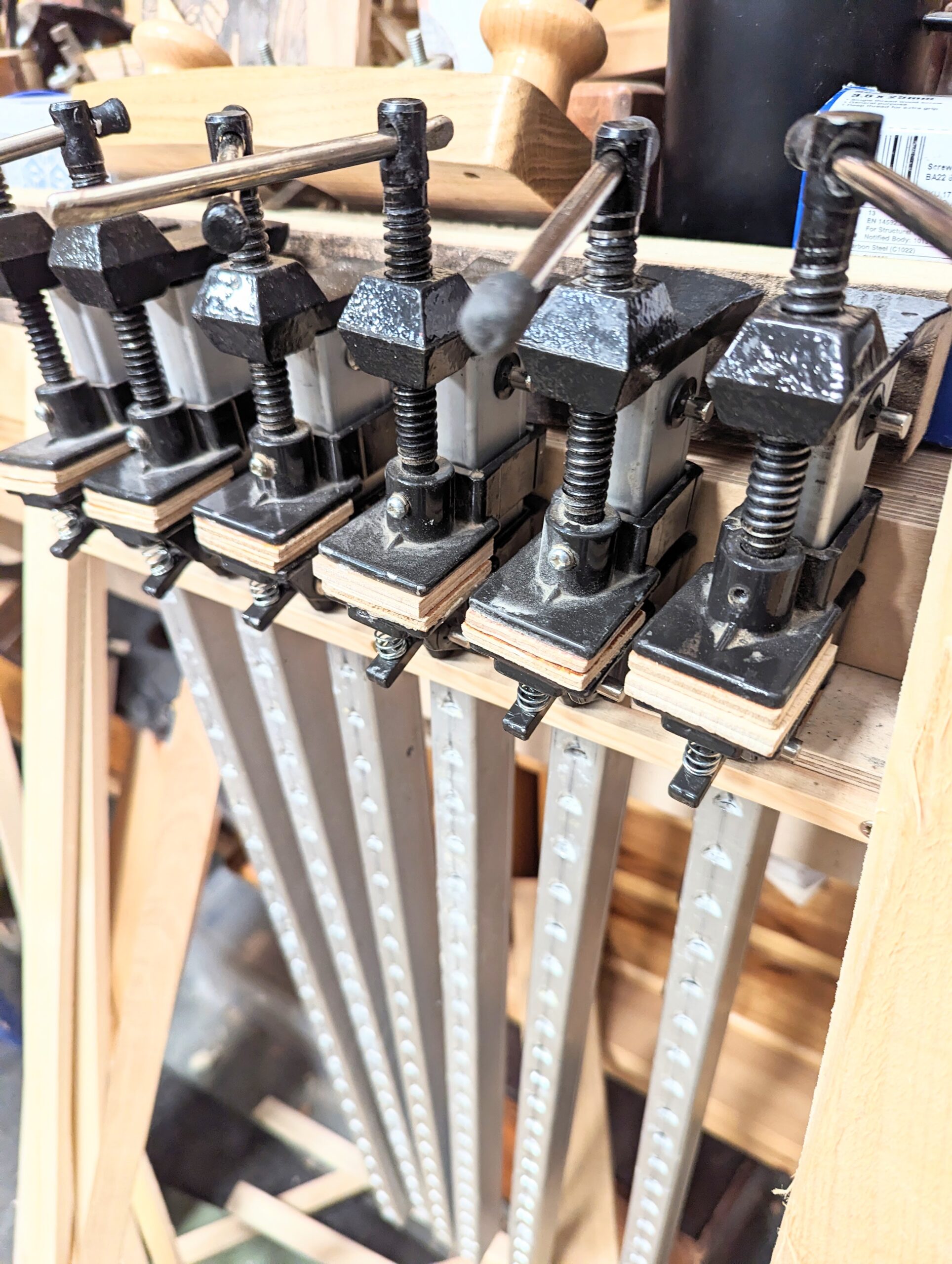
I used to hear people say things like, "Now that's got some heft to it!" with exclamation marks of positivity included. Or maybe, "Now you can clamp the tar out of anything with those. Mmm, Mmm!" I'm never quite sure if it's more a macho-man thing rather than just a practical application though. Each to his own.
So just what is it that I feel differently about these? Some do the same with hammers and plastic-handled chisels with steel caps on them. "Now you can really beat on those!" Or, "You can really beat with that, and then some!" Of course, you know my view on heavy bench planes. There's a string of them available now, Juuma, WoodRiver, Lie Nielsen, Veritas, Clifton and such. Weigh too heavy for me. Too many carbs and calories for this man and that's the truth. Plane hard work and both puns intended to decorate your day.
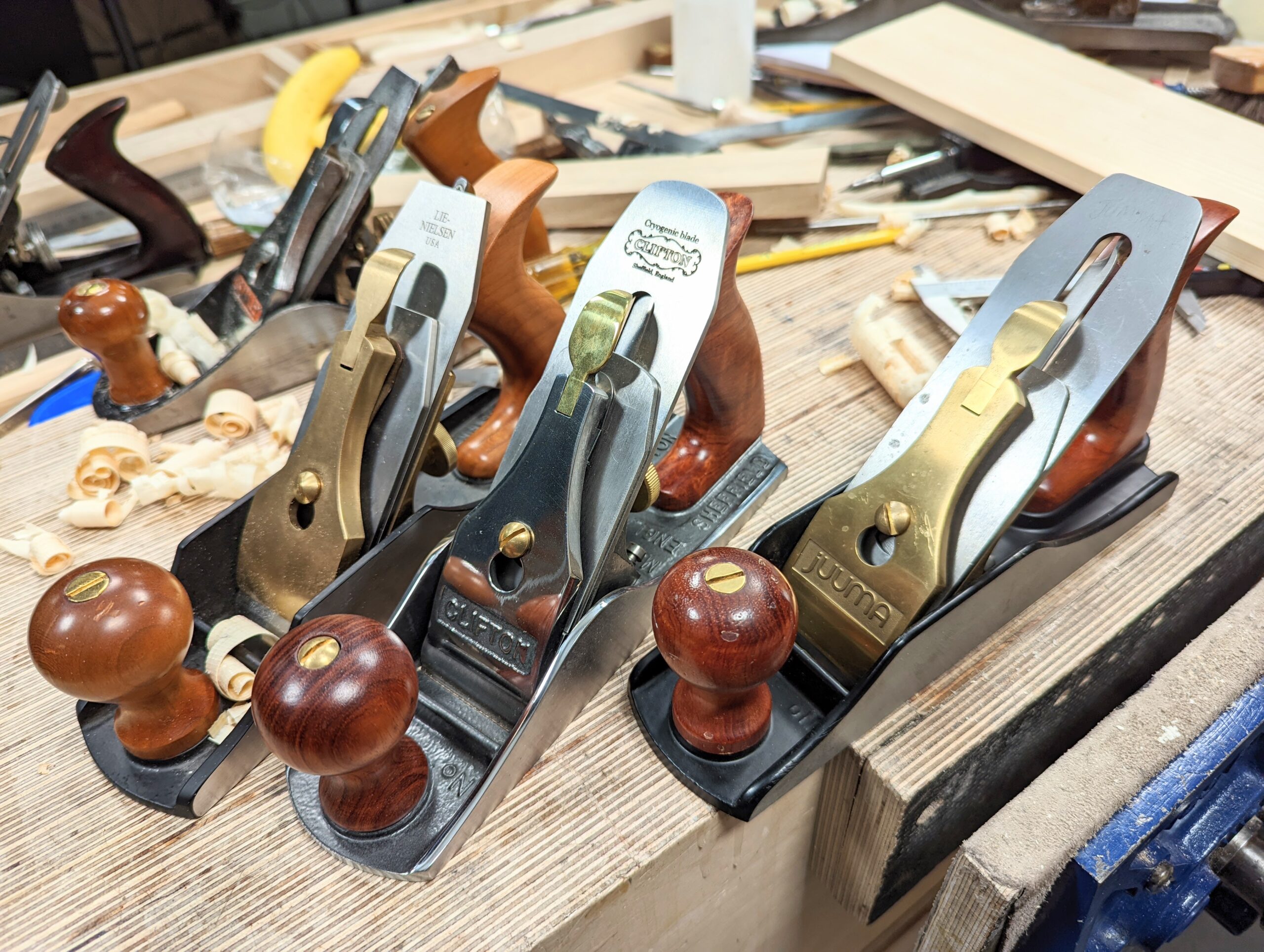
So just why do we make heavy work of woodworking? Why in times past did the masters of old on every continent throughout the world never simply load a lead weight to their wooden bench planes? Those historical wooden versions were lightweight and any added weight was of no true worth at all. Surely we are not stupid enough to think that they didn't know any better? Or that the world was just waiting for alloyed steels to be invented? It was because they knew they didn't need nor want weight. They only needed sharpness at the business end of the plane because sharp planes pull themselves to task and need no weight to pull them to the surface which is not what modern gurus and sales outlets will tell you. Sharpness and sharpening were known to be an iterant task and it took no longer than two minutes to do, reset and get back to work. Of course, wooden planes are much, much lighter in the work than any and all metal versions.
I rely on just four different clamp types now and have done so for the last twenty-five years or so. My aluminium sash clamps (top) in various lengths, come in at around £15.
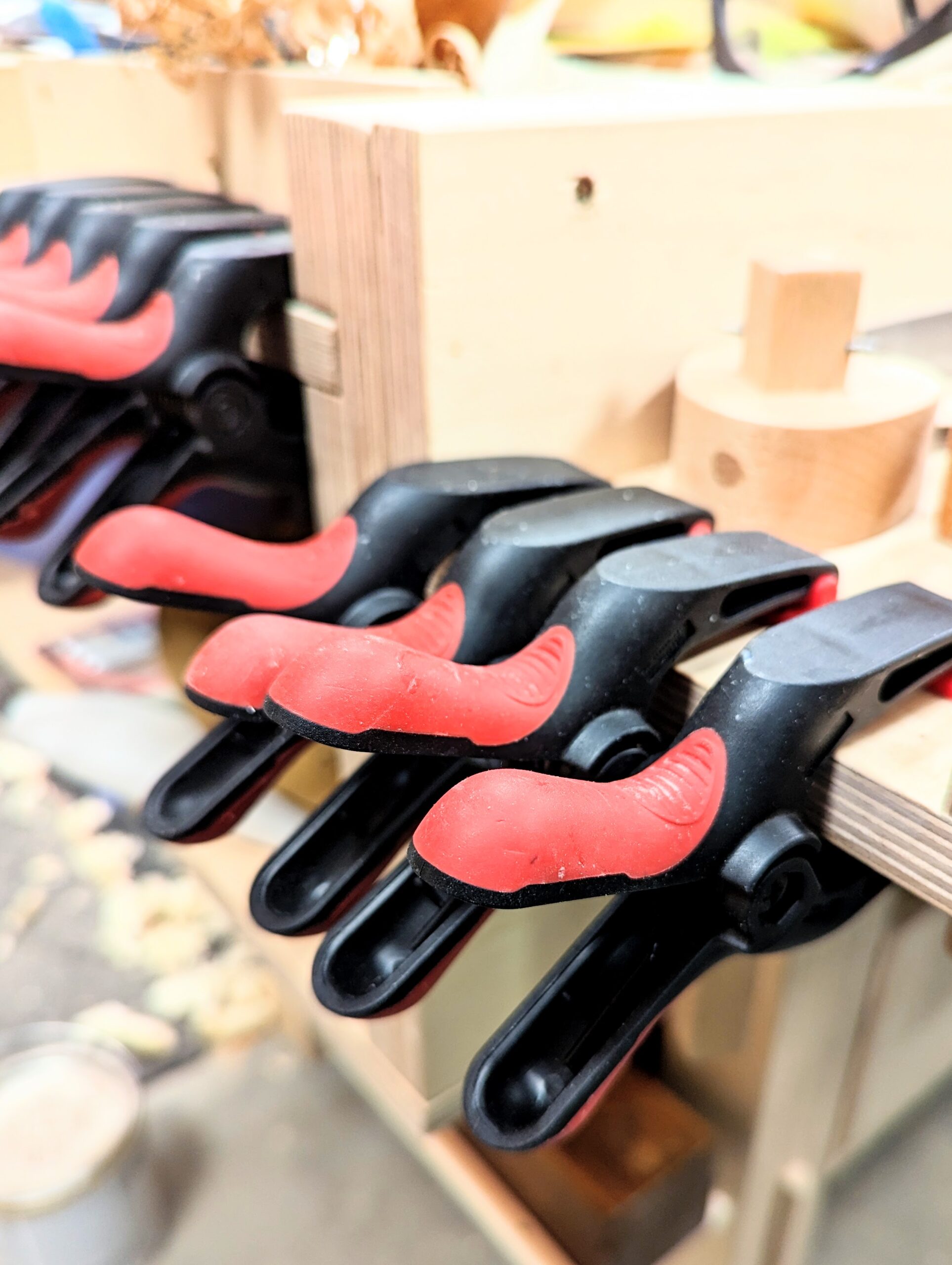
I use spring clamps a lot for small glue-ups say on strip-to-strip glue-ups these days. And they just get better and better with regard to product quality. I have klemsia clamps. too, I like them for some things and we have a series of videos on making your own which can be made from scraps.
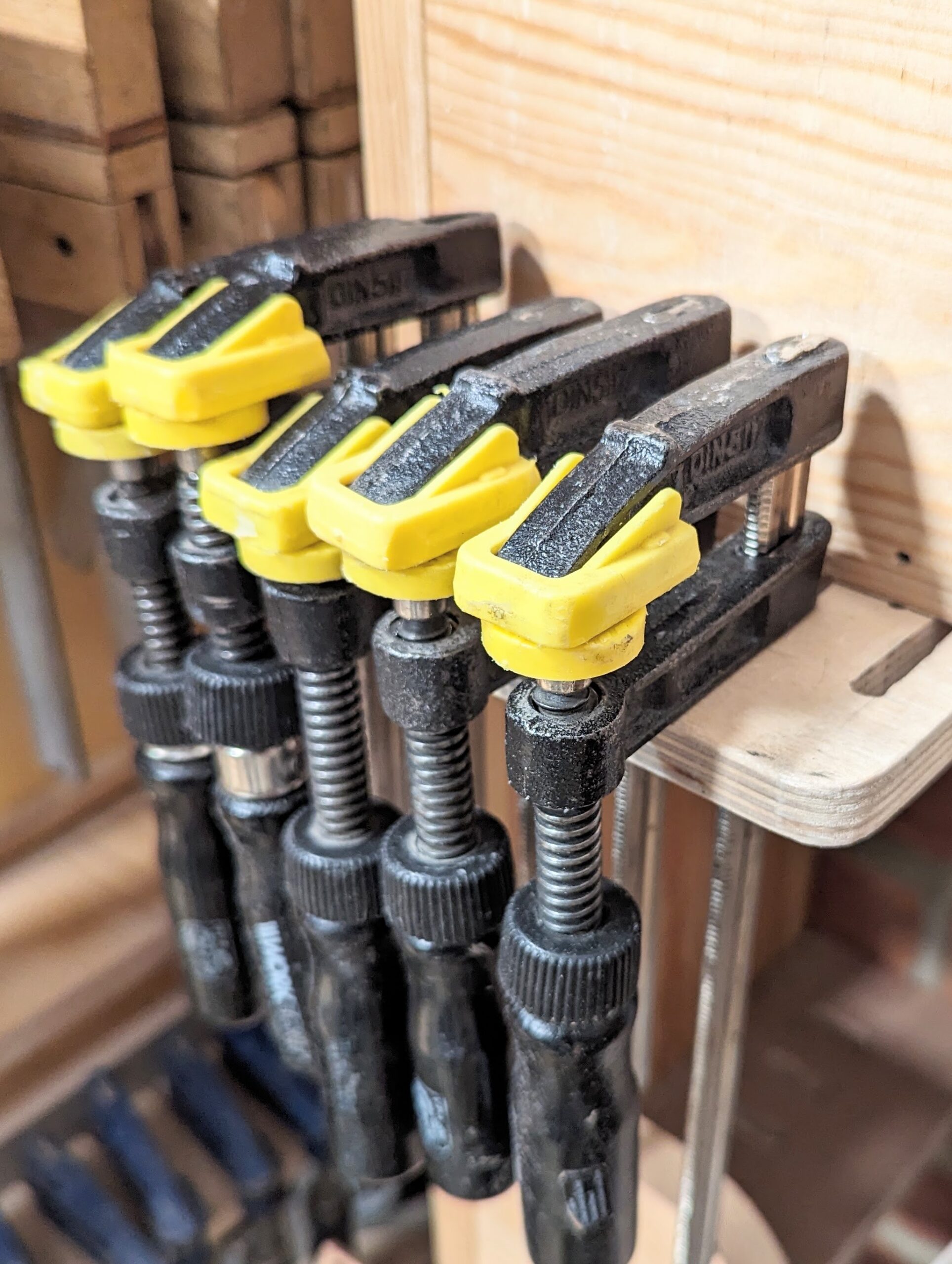
The 'F' clamps I use are inexpensive and these have worked surprisingly well through at least a decade or more for me now. They usually come in a cluster of five for about £10 from Lidl or Aldi here in the UK. Certainly, I suspect that almost all clamps of a similar design will come from Asian makers somewhere.
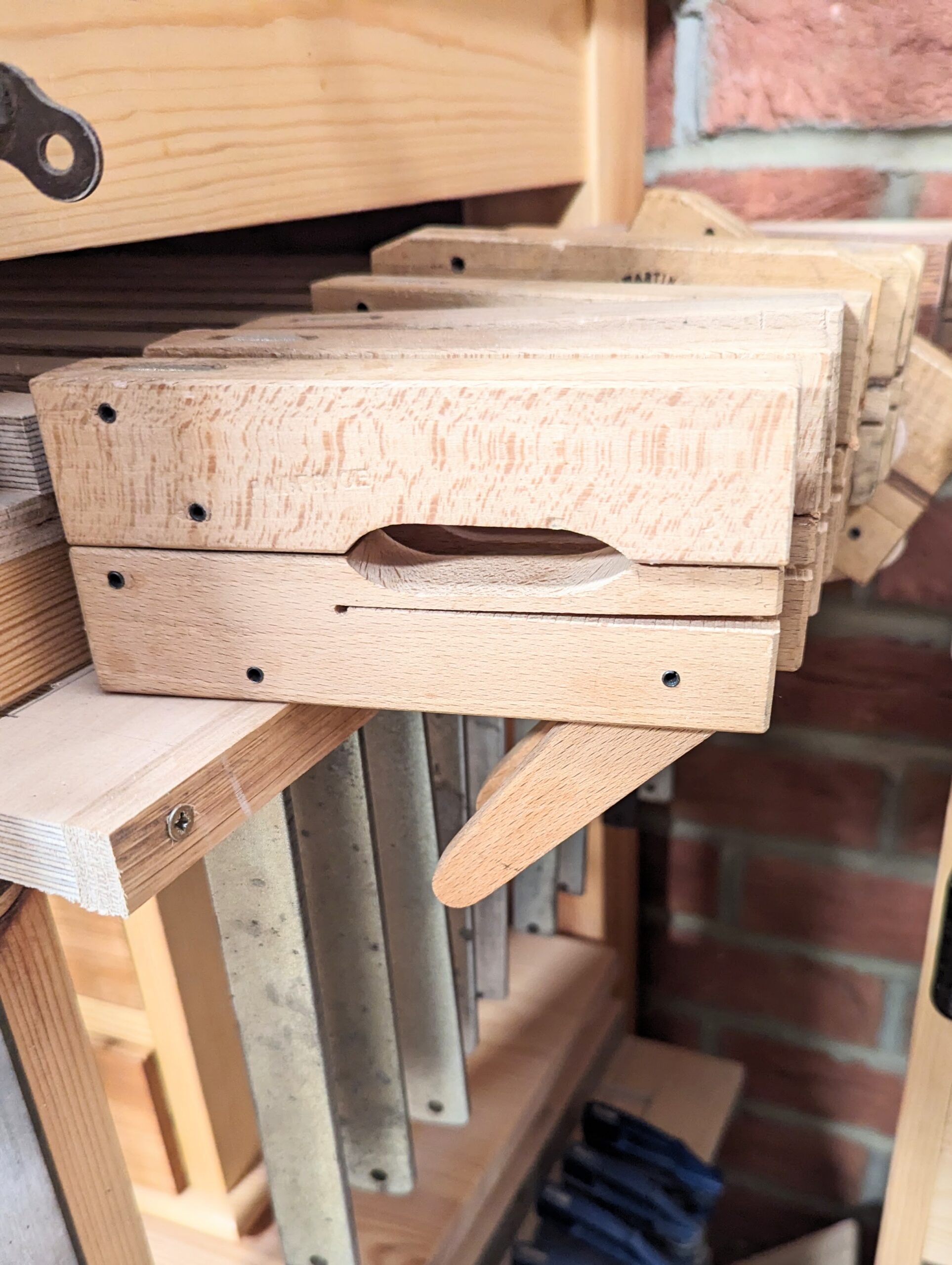
I own a mix of 20 Klemsia clamps and use them regularly enough. The ones I own came to me secondhand or little used and then I made ten or more that work just fine and as well as the manufactured versions. making your own puts the cost at under a pound a piece.
But there are some tools and equipment that are better with added weight in the right places; shoulder planes work well with the added 'bottom' weight I find. So as it is with all things, the longer you work with something the more you refine what you want to work with. Looking at the online suppliers with page after page after page of clamping options, you might think you need more than you do. From hold down to hod fasts and edge gluing clamps to mitre clamps your shop will soon become swamped. What I have written here is all the clamp types I use and I would not change any of them for heavier versions as I never have to "clamp the tar out of anything."
Comments ()