
How Opinions Confuse the Issues
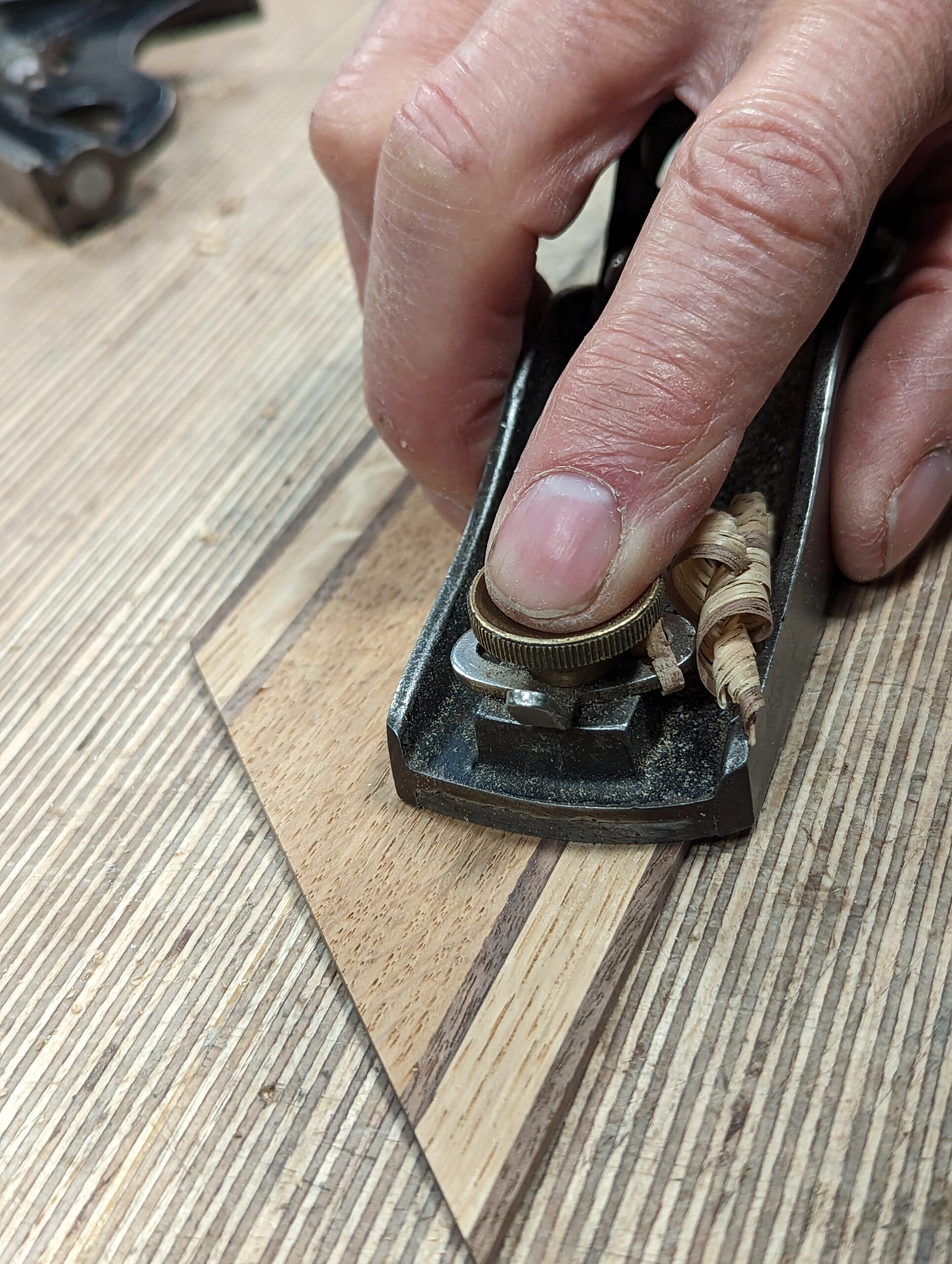
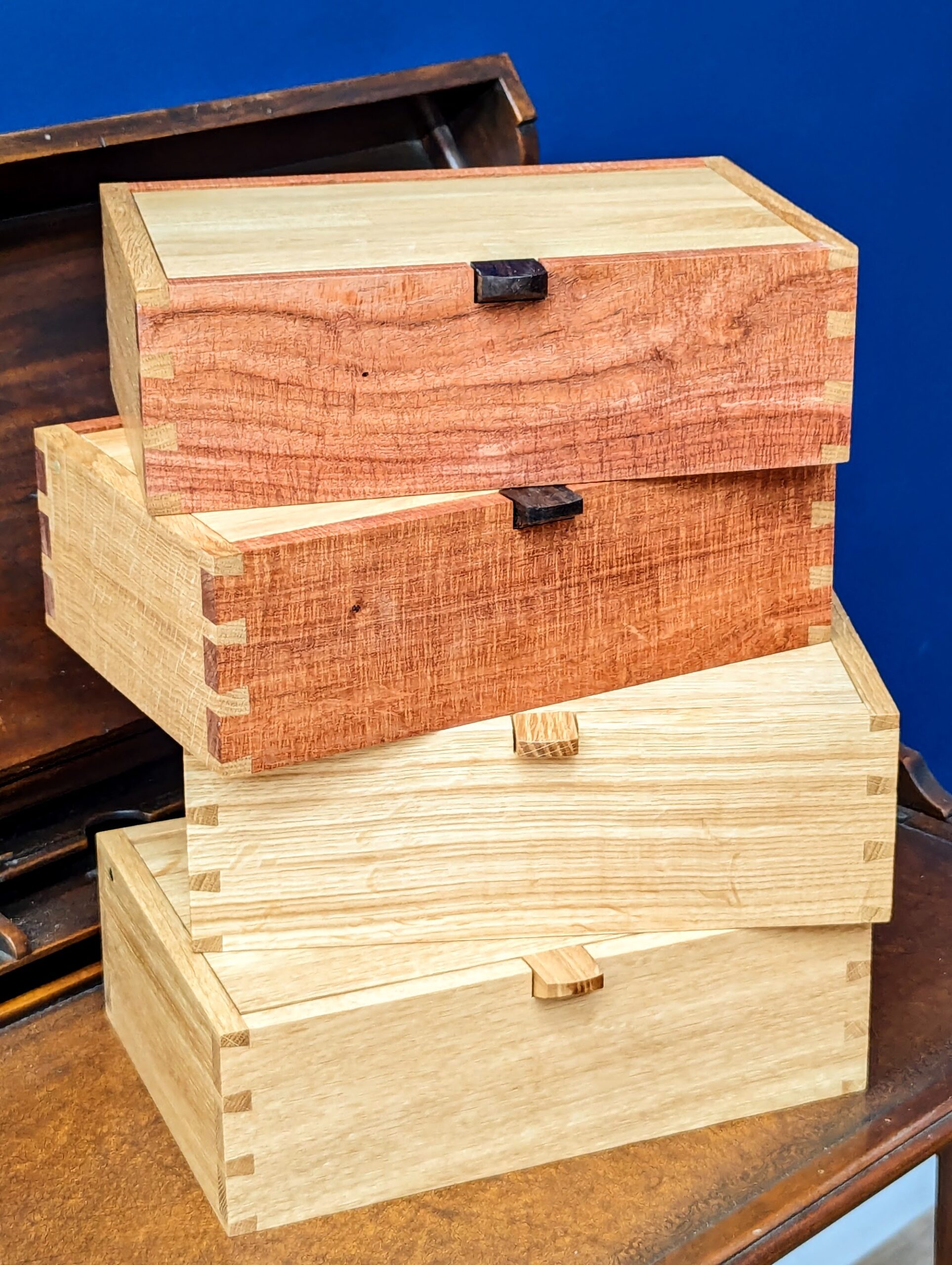
I'm never quite sure that people always get it but I do understand and admire the willingness of those who want to be a solution for others. I've written about how little many opinions really count in the reality of life though. Often, in more recent times than ever before, I've found a marked increase in confusion surrounding a genuine request for some kind of solution to a frustrating problem and that then frustrates me the more because amongst the multitude of answers that right answer isn't based on anything more than, well, someones opinion. And it can be this that the problems mostly occur. It was when I first began teaching and training my apprentices that I saw how generally good information could be misapplied to just about everything and then the things that someone experienced said can be misinterpreted to others. I once said that, in a misapplied and inappropriate function, a block plane was just about useless if people thought that a block plane would achieve the same results as say a bench plane for bench planing tasks; as though it is just a miniaturised version of the larger bench planes. This "dislike" (which I have never had) then became magnified as, "I know Paul Sellers hates block planes!" , which I of course, don't at all. I love them for their limited functionality and I never never said such an outlandish thing. What I was trying to counter was the fact, and it is a fact, that a block plane cannot do the mass of tasks a basic #4 bevel-down smoothing plane can do in the levelling and truing of wood. Why? Because these two planes are very different animals. I can name a dozen such incidental offerings ranging from saw sharpening and saw choices to the realities of bevel-up and bevel-down plane functionalities. Mostly it is down-to-earth stuff I share on but that down-to-earth information is getting all the more buried in the detritus of internet information. I am always looking to present the prescience we gain from longer-term use and working that only comes through our working rather than an overnight success after which the advice given might just ruin something you are in the middle of making. I could no more imagine planing the outside faces of my recently auctioned oak box with a block plane or indeed any bevel up plane than flying to the moon. Yes, with great skill and much trouble, I could probably do it . . . but it would be a mostly unpleasant experience.
In a recent brief discourse on coping saws people stated that coping saw blades, by "tradition", are or should be set up with the blade cutting on the pull stroke and not push. This is a source of general misinformation. Half a dozen contributors were stating the tensions were different on pull stroke and push stroke which is true, however, the 'stretch' between the two anchor points on the frame of the saw mean you can and should generally install the blade for push-stroke cutting to maximise power in the cuts, have the pencil or knife marks and lines facing you to cut to and minimise the breakout on the show face as you cut. Comparing the coping saw to other frame saws such as the jewellers, piercing and fretsaw is not a practical comparison because, again, generally, these saws will be used on an undercut pull stroke supported by an 'L' shaped platform. Now does that mean each should never be alternqted for some tasks? Of course not, but even using the term 'traditionally' adds a label like this is traditionally used as a pull-stroke saw which is factually untrue. Other things said, like "if the blade is loaded on the push stroke the saw will tend to wander" sound so authoritative even though there is no factual truth in the statement whatsoever.
In teaching and training over long periods and then being trained that way myself I eventually saw the need for the two books I wrote on woodworking. The first is out of print but is undergoing a thorough review and update as part of my agenda. But it was my Essential Woodworking Hand Tools that pulled everything out of me. Countering so many of the diverse claims and prejudices people have became essential to the book and this proved to be of the greatest value to those who bought and read the book since it came out in 2016. I am grateful to the thousands writing to say, "It's the very best and most useful tool in the shop and it's never too far from my workbench." Teaching thousands of students in hands-on classes and workshops through the decades highlighted the need to counter the kind of legalism that gets passed down as fact for generations through copy-and-paste authors coming from a background of writing rather than making. This five hundred page tome came from my own lived life as a full time maker and user and less the writer in me. No one single item in the book was copied and pasted.
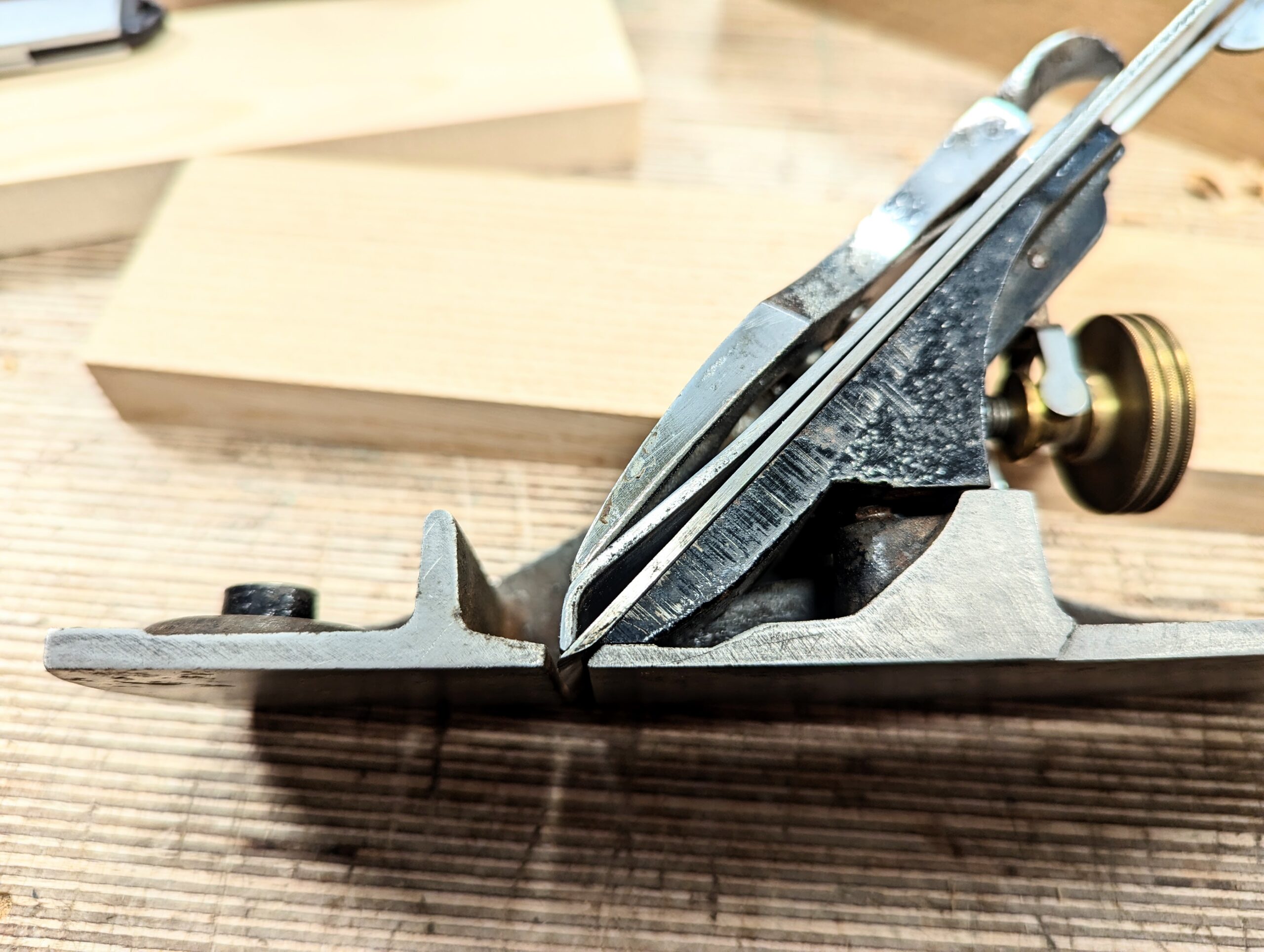
I once took a hacksaw and removed the whole side of a #4 Stanley bench plane to ascertain certain things that could not otherwise be actually seen and then too to prove certain points of view given as facts that were not facts at all. Such issues were being passed off in dozens of book publications giving me (and everyone else) the impression that there was nothing original in what was being published but that authors simply copied and pasted the same erroneous information. What I discovered by my need to know the truth enabled me to show that what was being said was often not the case at all and all the more that those gifted at spin were doing little more than perpetuating the same fallacies. If this was happening decades and even centuries ago, how much more is that happening through today's internet presentations. Sales personel are well known to say just about anything to make what they ultimately solely aim for and that's 'the sale'. I wanted to still the noise and proliferation surrounding everything from retrofits with thick irons to micro-bevels, machine grinding and many more totally unnecessary practices so that YOU could make a more educated adventure into why you were doing what, with what, when what and on what.
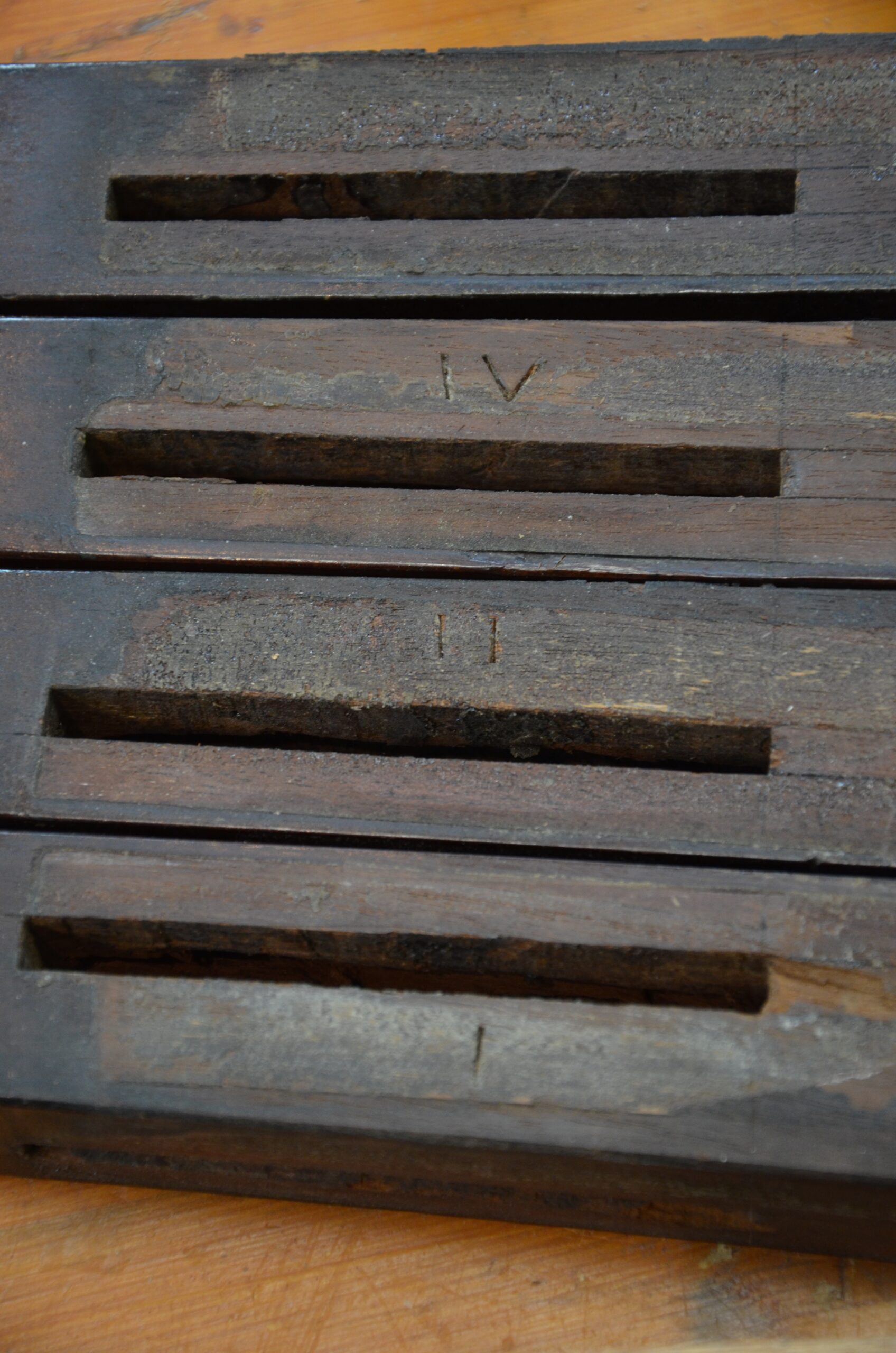
I recall how many pieces made through centuries past spoke to me in different blog posts I've written. Some of the pieces, more than a handful, were the unwritten works of crafting artisans who rarely if ever wrote a thing in penned works about their craft. I learned more from one such 'author' fram the single table he made two centuries ago. I replicated that piece to prepare me to teach the making of it as a course in the making tables. I both learned and adopted many practices from that one piece and couldn't add one iota to it. Another time, I came across a discarded wardrobe with sliding dovetails and in the making of a large cabinet the whole of the reasoning behind using sliding dovetails came to me in a flash. In the repair of a Gustav Stickley chair when I lived and made in Texas I learned about the rigid proportion and the systematic formula used to determine his version of his design and manufacturing of a simple and now classic dining chair. Such investigations will impact and educate us in the most remarkable ways.
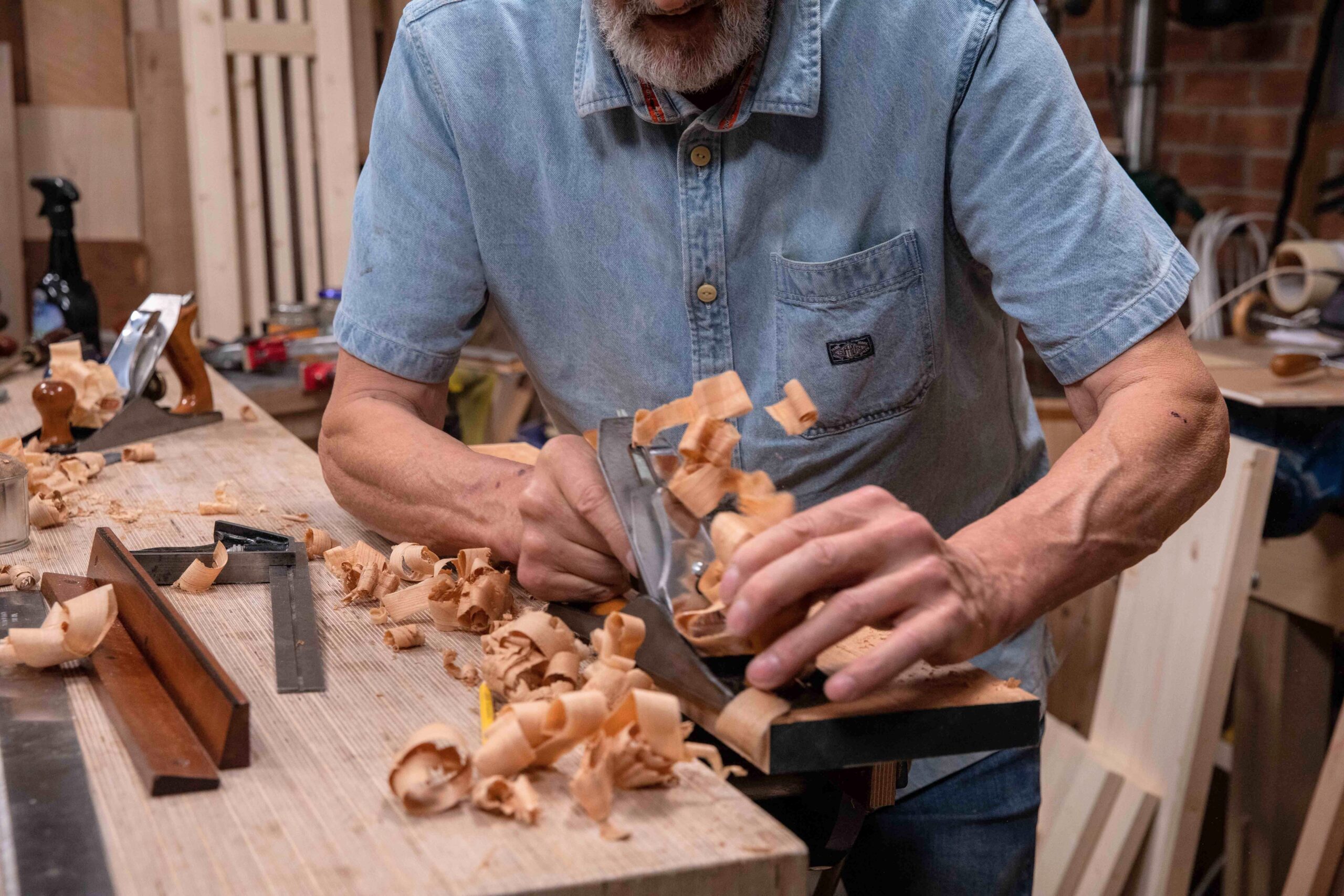
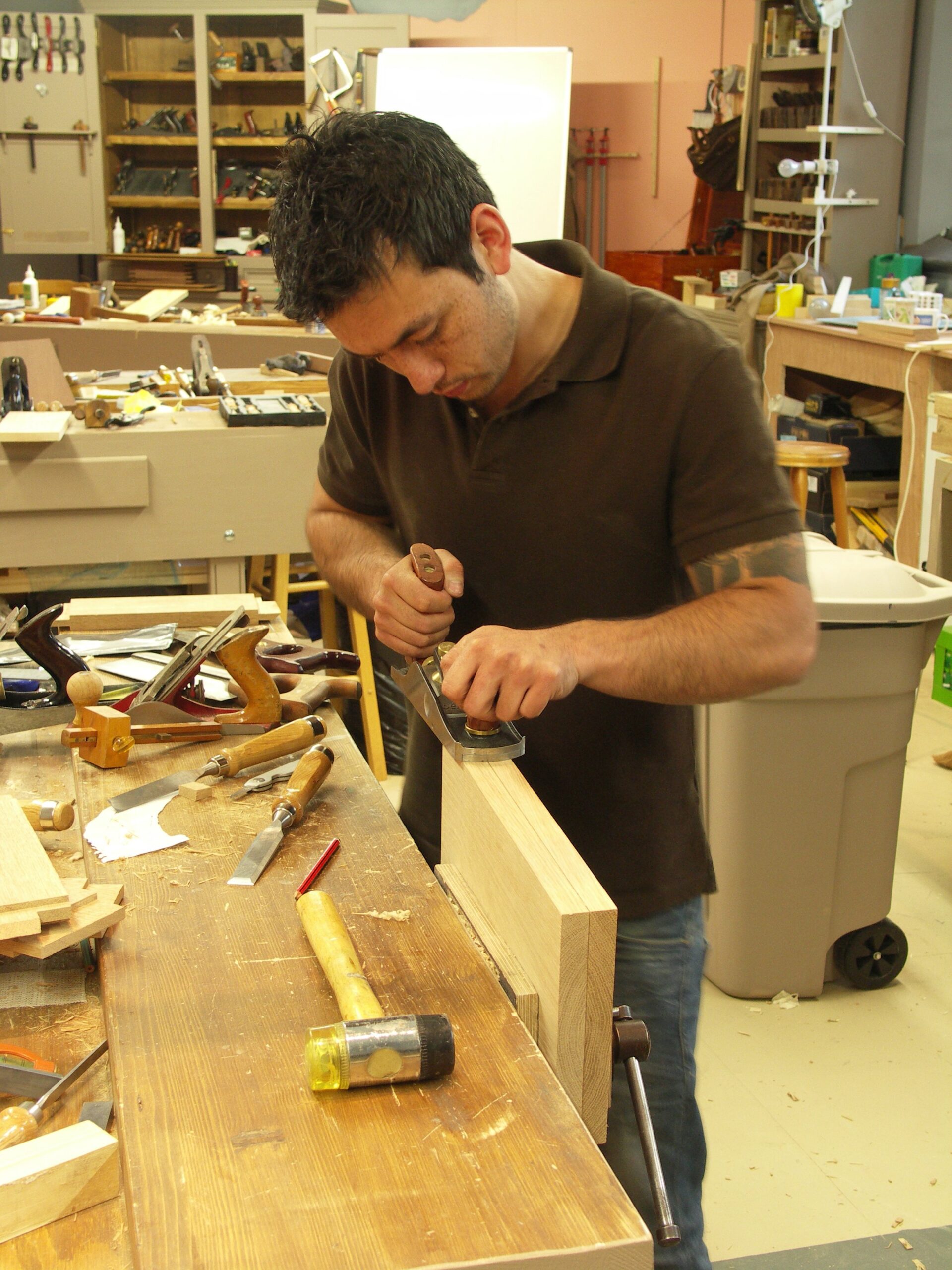
Often it's the excess of information combined with erroneous and thereby meaninglessnesses opinions leave with us. Whereas I respect the willingness of others to dive in and help, more often the erroneous comes from those who should and do know better. The questioner was looking very much for an answer to a frustration rather than the limited perspectives that might too often come from unmastered ability and naïveté. This person wrote in asking why their plane wasn't working, stating that the throat of the plane was closed off and the plane sole merely burnished the wood he attempted to plane. This prompted a plethora of half decent reasons for the problem but none of the answers actually fit quite fully. For me the answer was immediate. I knew that he was either loading the whole cutting iron assembly upside down or at least the cutting iron installed onto the back iron (US chip-breaker) the wrong way. A couple of dozen opinions came in that didn't fit the description the questioner gave. The first thing in my head was the cutting iron must somehow be upside down and that was indeed the case. The owner made the flip, installed it correctly and took off his sought-after onion-skin shavings. But it was the confident answers that troubled me. None of the answers really fit the problems he encountered because the slit-throat opening was the real clue from the outset. I dismissed all of the other possibilities straight off to isolate the real issue. Experience counts the most but my experience I am speaking of comes not from my own daily use of planes for sixty years but from the classes I taught as a special class for new owners and restorers. As part of my hands-on courses I used to dismantle the sixteen class planes taking all the parts out of the plane and placing them on the benchtop. After a demonstration, each student had to reassemble the planes. Fifty percent of the students got the plane iron installation wrong. They either put the whole assembly in upside down or connected the cutting iron to the cap iron the wrong way around so that the hump of the cap iron aligned with the heel of the bevel. This then became one of the most valuable lessons. By the end of that one-hour session everyone got it.
Of course, a missing ingredient in explaining his problem was whether the plane was a bevel-up or bevel-down version. But I knew the issue without that being said with words; the added information was obvious. It had to be a bevel-down plane for the simple reason that the blade of a bevel-up plane on a bed angle of 12º and with the cutting iron bevel of 30º with a cutting iron installed the wrong way up (bevel down) would put the cutting edge about a quarter-inch above the sole face––this alone would have disallowed any shaving being taken off by about a mile.
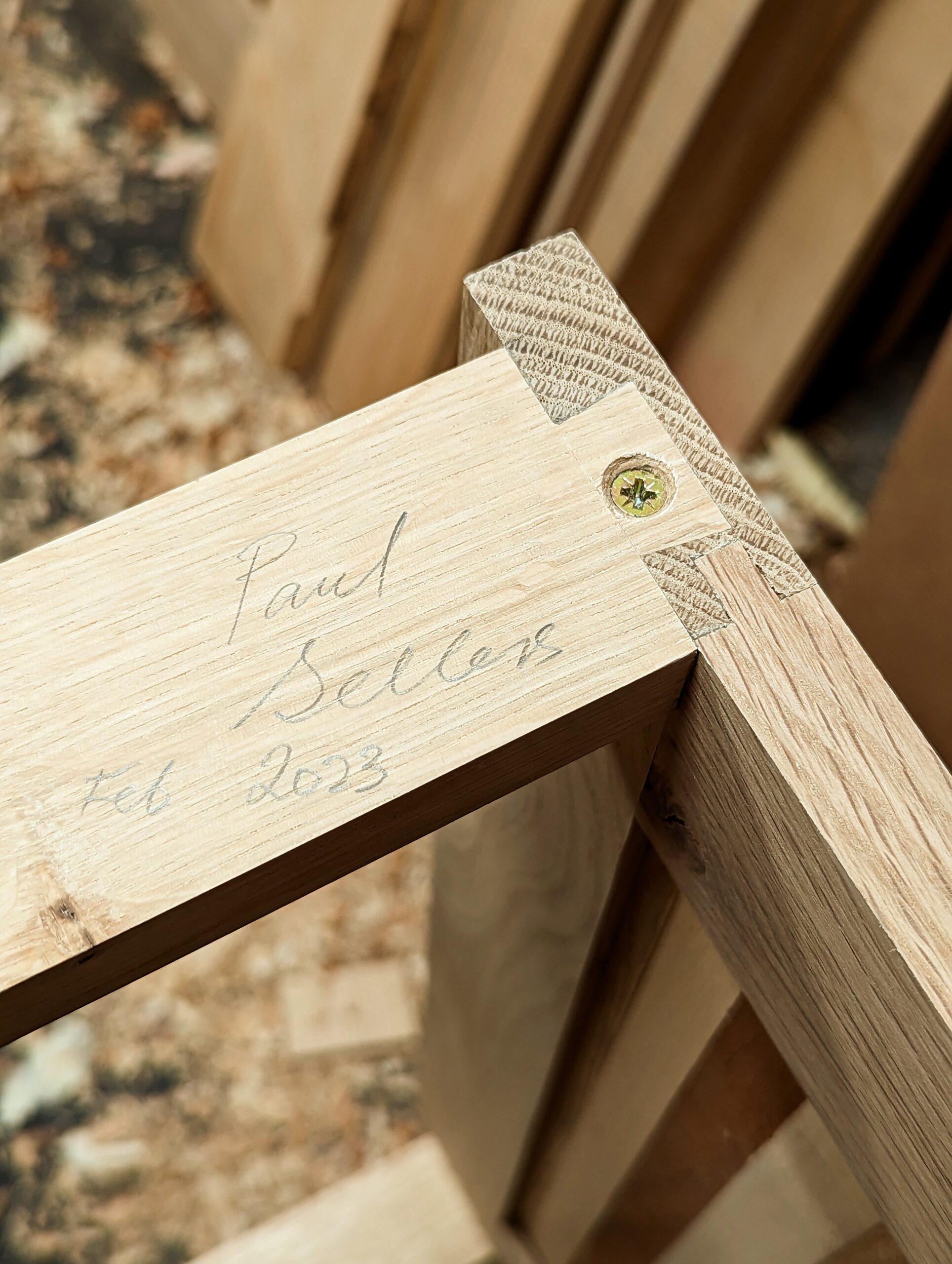
Over the years of blogging and teaching though, I have seen how things have changed. Ten or twelve years ago there would have been no answers coming forth to such questions. I am glad for this willingness to help. I hope to keep refining others with the help they need to answer the questions but to answer them more critically rather than amidst a the confusing mass of possibilities. The goal of any father will be to work himself out of a job so the children emerge as responsible adults. In this age of excess we can expect an excess of answers minus thoughtfulness. Giving out a dozen possibilities might seem helpful but most often we usually need just one or possibly two to hit the spot. Freedom to others comes not with plurality of answers but carefully considered thought-out versions. Had the recipient followed each answer it might have taken a week of remedial work but a correct answer solved the issue in a few seconds. Remember my using a screw to seat and secure a dovetail joint under a tabletop that would never be be removed in the next 200 years if ever? There came a hundred reasons that this was an extremely bad practice and should never be done because of the problems it 'would' most definitely cause. With every one of comments so stated I realised how much had been passed down through recent generations to establish utterly erroneous and misleading beliefs. I do this so that I can simply keep working while the glue dries. It was a perfect solution that kept me able to work continuously on my project rather than have to wait a day for the glue to cure. For anyone reading those highly erroneous opinions it would take some disseminating of every single wrong opinion to gain the ground they needed.
A man I think was called Henry `Simmonds, a professor at the time, was commissioned by a body of businessmen to help them get more information to their customers. After some research he discovered what the real problem was. "It's not that you don't have enough information and you therefore need more. It's that your customers don't have enough attention time to disseminate what you already give them. The more information you give causes a dearth of attention, you see." This was back in the pre-internet era of life. How much more is this the case today?
Comments ()