
Choosing a Wood
How often we see figured grain and say how pretty that looks (and it does), imagine exposing such beauty and such wood to enhance a piece like the neck of a spoon, a ladle's bowl. Why choose so for the back of a cello and a violin, its neck and scroll and more in the bouts with tight curves bent so?

My three serving ladles came out well. The video filming will result in a video presentation for woodworking masterclasses in the near future. Scalloped with a gouge is the best way in so dense a hard-grained hardwood as no other tool really works too well when the wood is hard and no longer green no matter how sharp the edge.

I might take an hour to scallop such a hollow but mine this week took me twenty minutes to go from flat unworked wood to its final depth and smoothness. It worked well enough with my two freshly sharpened gouges and I've made three with no need of more sharpening. The two gouges I used are a 38mm #7 and a 25mm #8. without a second gouge go less deep or more deep and wider. I used a panel saw initially to rough down the bulk of waste wood and that was straightforward. The shaping of the outside came from a spokeshave and a rasp and for further refining, I relied on a card scraper shaped to smooth out the scallop.

But it's the wood that's important to consider. The curly grain was not picked for its pretty grain but for the grain's inner structure. Curly woods like the maple and sycamore I used have an intrinsic strength rarely acknowledged or even considered as being critical to the work in hand. I feel this immeasurable inherent strength to be many times stronger for handles and the backs of bowed instruments. The undulating interlocking grain defies breakage when shaped components shift this way and that to suit the tasks intended to be expected of the wood used. On violins, violas and a cellos. the thinness can be 2.6 to 3mm thick and this thickness varies in every instrument made.
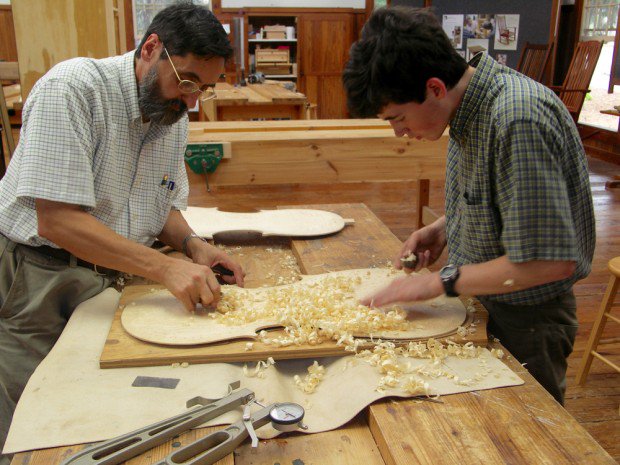
It's the scallops that cause short grain as they are carved from the solid and not bent as some think. So too the walls or bouts of the violin. These curved parts measure as little as 1.5mm in thickness and its curly-grained or figured wood that creates the wholly essential walls of resistance under the great stresses under the straining that comes from the four taut strings and the playing of the instruments. The neck too is under tremendous stress. With all of this in mind, I felt the neck and bowl of the ladles needed similar consideration.
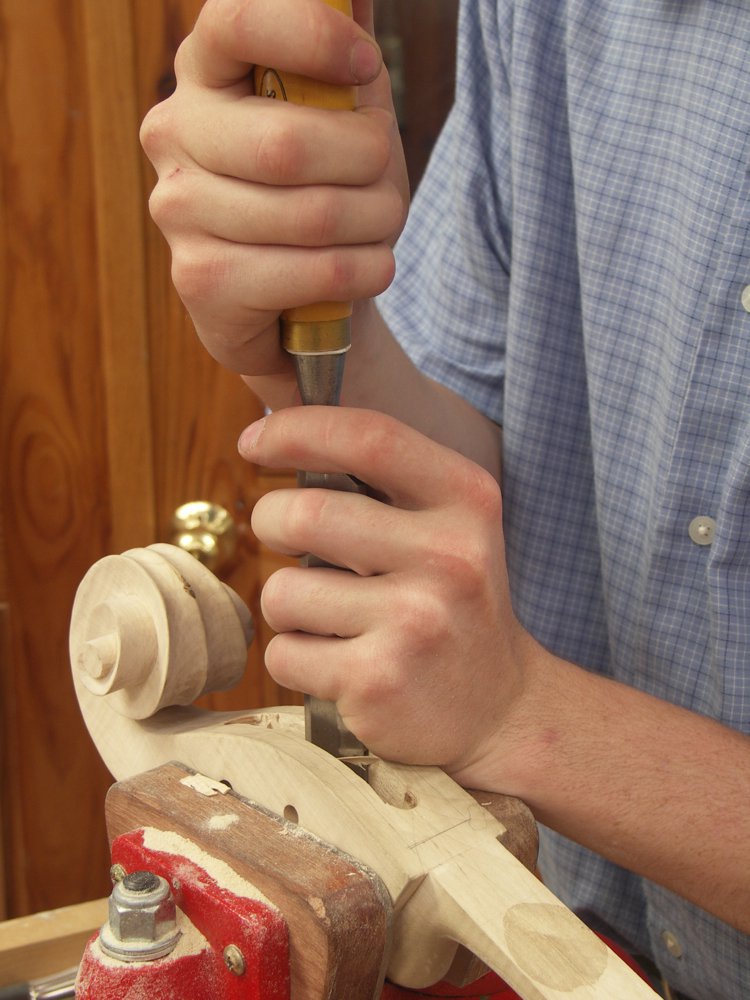
So I say all of this for everyone to reconsider why such woods might be picked for different tasks. in projects like the ladles, when the bowl is so deep, it's important to have wood that's equal to the task if indeed it is a lifetime utensil used in cooking and serving.

And finally. We must choose non-toxic woods as well as woods that will not flavour the food even though most woods will lose their flavour after a while. Do your research if you stray away from maple and sycamore. Also, some woods can be made into cooking utensils but remember plunging them into hot liquids can have an ongoing effect on the wood. Open-grained woods like oak, woods with large, open pores, etc, are not really suitable. Oak to will usually separate along the large medullary rays which open up and remain as thin cracks.
Comments ()