
You Never Know
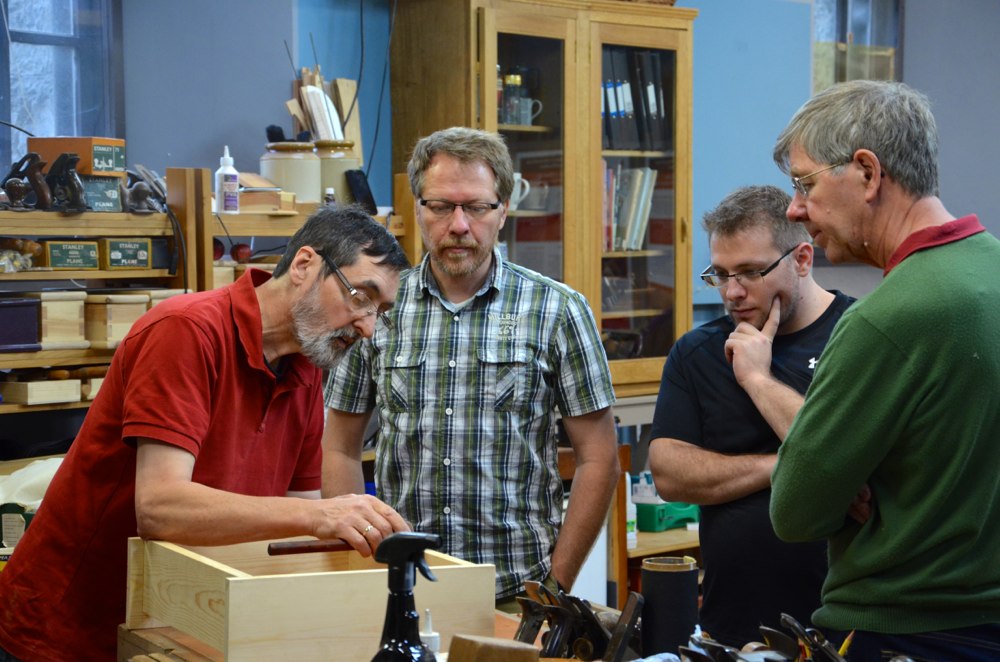
Assumptions often mislead us; our own and others. In a world more and more devoid of crafting artisans, men and women making to live by, working as I have and in some measure still do, it seems logical that, as with my using the term new-genre woodworkers, we see emerging a micro-mass of new-genre artisans working to adopt methods and patterns of making without the intent of earning their livings from it. They now take what they find best suiting them from times past, perhaps when artisans stepped from their homes to start work at daybreak somewhere within a few steps, to a small workshop within walking distance, to craft with their hands. Donning a cap signalled worktime. The rough boards flipped and turned end for end meant choices must be quickly made for cuts that removed fault lines, checks and knots to create from. Following chalk lines and pencil markings, perhaps knife marks too, the word of reduction takes place. The points in time are magical for the maker. They look deeply beyond the surface of roughness to penetrate to what cannot be seen with the eye. The ripples and eddies, the furry surfaces and rips speak volumes and before any cut is made a complexity of decisions are made, noted, scribed and worked to. I'm not sure whether deoxyribonucleic acid (otherwise referred to as DNA) carries the knowledge of which I speak. I doubt it. This type of information is obtained only by the slightest touch of the tips of fingers, the scents both subtle and pervasive. Things like this. But then i think how fearfully and wonderfully the human is made and was made. many senses have yielded to other forms of gaining knowledge. But the knowledge I share here is the knowledge of experiencing rather than the superficial reading or watching of it. We dig much deeper to the innermost being of our material. By the splitting and shaving, sawing and fitting one part to another do we find the knowledge I speak of. No one can capably write of such things and I have yet to read of any who have. You see, such things are quite impossible. In sound and smell, we often find direction. But the ring of an anvil though no more distinct than smells, impacts the degree of direction we take. In my world, different woods and many sights trigger the brain and in split seconds I can know what I did not. Are we woodworkers yet to be inherently born to work wood before we even find exposure to it and are we somehow rooted deeply and predictably entering into something that might anchor us by some mystery we knew or know nothing of? We each have a penchant to learn some type of craft working with our hands but any opportunity to try was swallowed up in modernity whereby any inclination toward this active art form can no longer be encouraged as a way to live. Yet thousands upon thousands of students over three decades and more approached my bench in classes designed for them to master hand skills using what would really be primitive forms of working. Tools on the bench seem archaic through wear and yet men and women of science and engineering stand around the bench in clusters stooping and bending to see the cuts I make with a hundred-year-old saw. They know of means made that cut through 10mm of steel with water in seconds and pristinely accurately, of laser cutters directed by computers, such like that, and much more. Some work in robotics and design programs that complete eye surgery on human eyes, but here they are striving to master some methods that, by comparison, would be crude methods to work wood "Be realistic!" some say. Maybe I agree. My speed translates into an efficiency that was developed over many years and decades but here is a living truth that I believe in because I have proven it in the lived lives of thousands. What has taken me 60 years of daily woodworking to master can be had in a fraction of the time. Why? Because the receptors are full-on and totally engaged. Through these we shape our future, shape our thoughts, shape our outcomes in a way that engineers who we are, how we think and then what we do. By this we become.
As an apprentice not everything came to me all at once. When I started, the men were testing me to see if I was listening properly and then whether I was appreciative. They doled out knowledge, techniques and methods gradually. Mostly it revolved around attitude. Some apprentices were cocky, surly, over expectant. Back then you needed to 'know your place'. I don't know if that is still the same and I personally don't have a problem, with it. You learn much more from a place of humility than you ever do from a place of pride. It did take several years to glean from the men. Sometimes they could be more like children hooking their arms around their notebooks to stop anyone from copying or seeing their work. This was the period when the hierarchy of British working classes ensured that you did not get above your station. It did one of two things: it forced you to get out or have respect for your elders. Ultimately it resulted in respect from both directions. But what took me many years to learn can be had in a few months really. What my apprenticeship gave me was rote repetition because of volume. Driving blows to nails and chisel handles is a build-up before you first find the sweet spot and then get it every time. So it is with any learning.
Now then. Did you know that your spending just a few hours, no more than five or six, something like that, on our Common Woodworking site you would gain as much knowledge about woodworking as it took me two years to gain by word of mouth at the bench working alongside the men who fed me small amounts at a time so that I did not get above myself. The difference? I think most of those following have already gone through trials to reach adulthood. On the other side of this, they want to achieve skilled work ASAP and they are prepared to put the time in to master skills. That has been my experience. I have known many amateurs working in high-tech worlds coding and such who have developed the most remarkable woodworking and craft skills. They knew that there would be tough roads ahead had they taken up woodworking for a living and decided to set time aside each week to pursue their craft. This indeed works.
We designed Common Woodworking to guide everyone new to woodworking with hand tools along a steady and progressive path to open doors. It's completely free with zero advertising and no sponsorship, freebies or kickbacks to me. I can do and say what I feel is absolutely right and necessary and I do this responsibly because it matters.
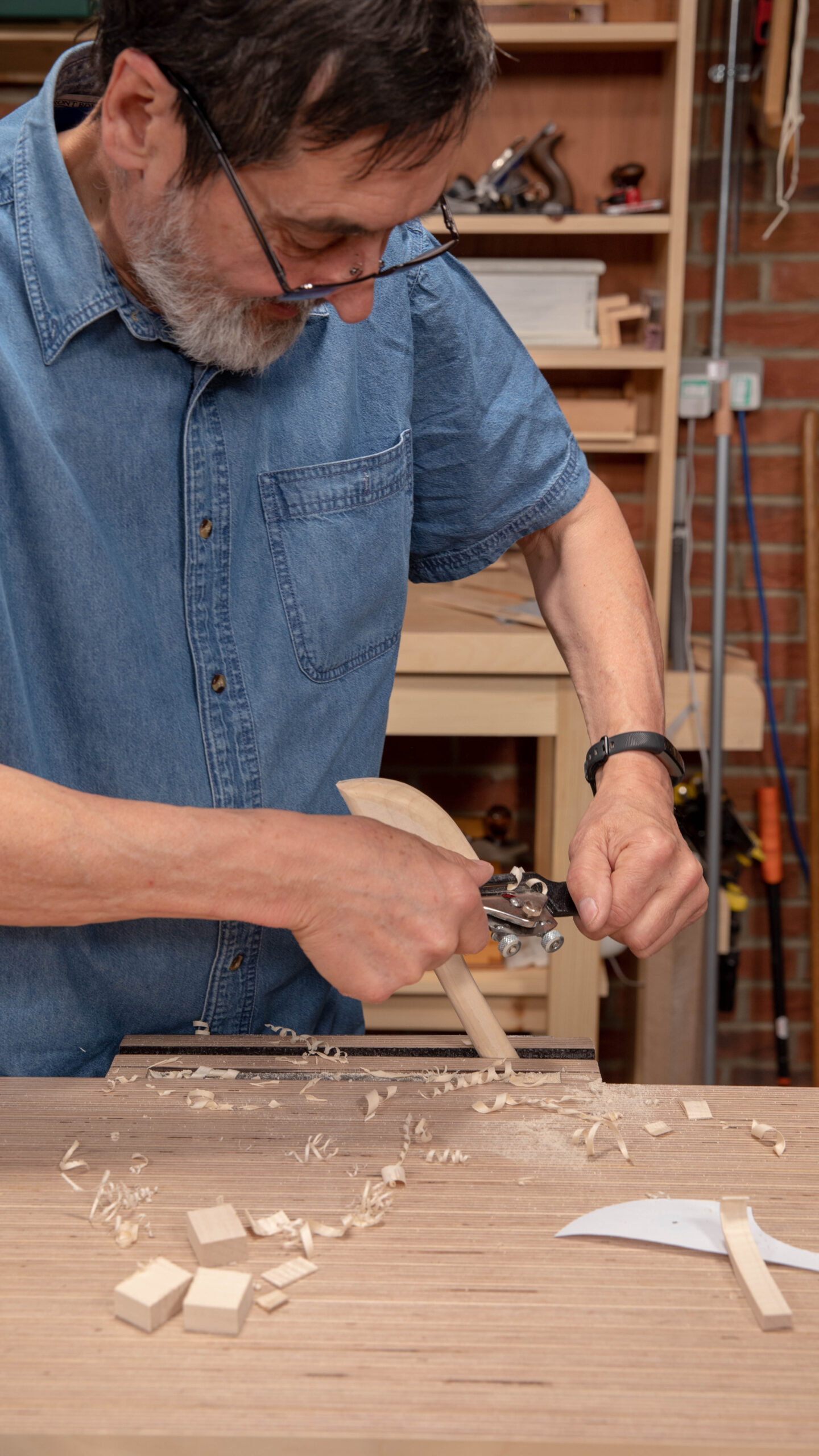
Woodworking Masterclasses expands on the basics of Common Woodworking as does my blog. this is important because I want people to understand that it is not what you make and neither is it the end product you make that matters so much as the how you make it. Give me half a dozen machines and I will crack ot a coffee table in a day. I would say I am equally able to use machines as I am hand tools. but it is the how of working and not the speed I am looking for. Why? I need to keep in shape. This is mentally and physically. I need the daily workout at the bench. I don't have time! I hear some say. Well, neither do I. But I make time by not doing other things. It takes planning. I have learned that without goals and a plan you really don't achieve very much.
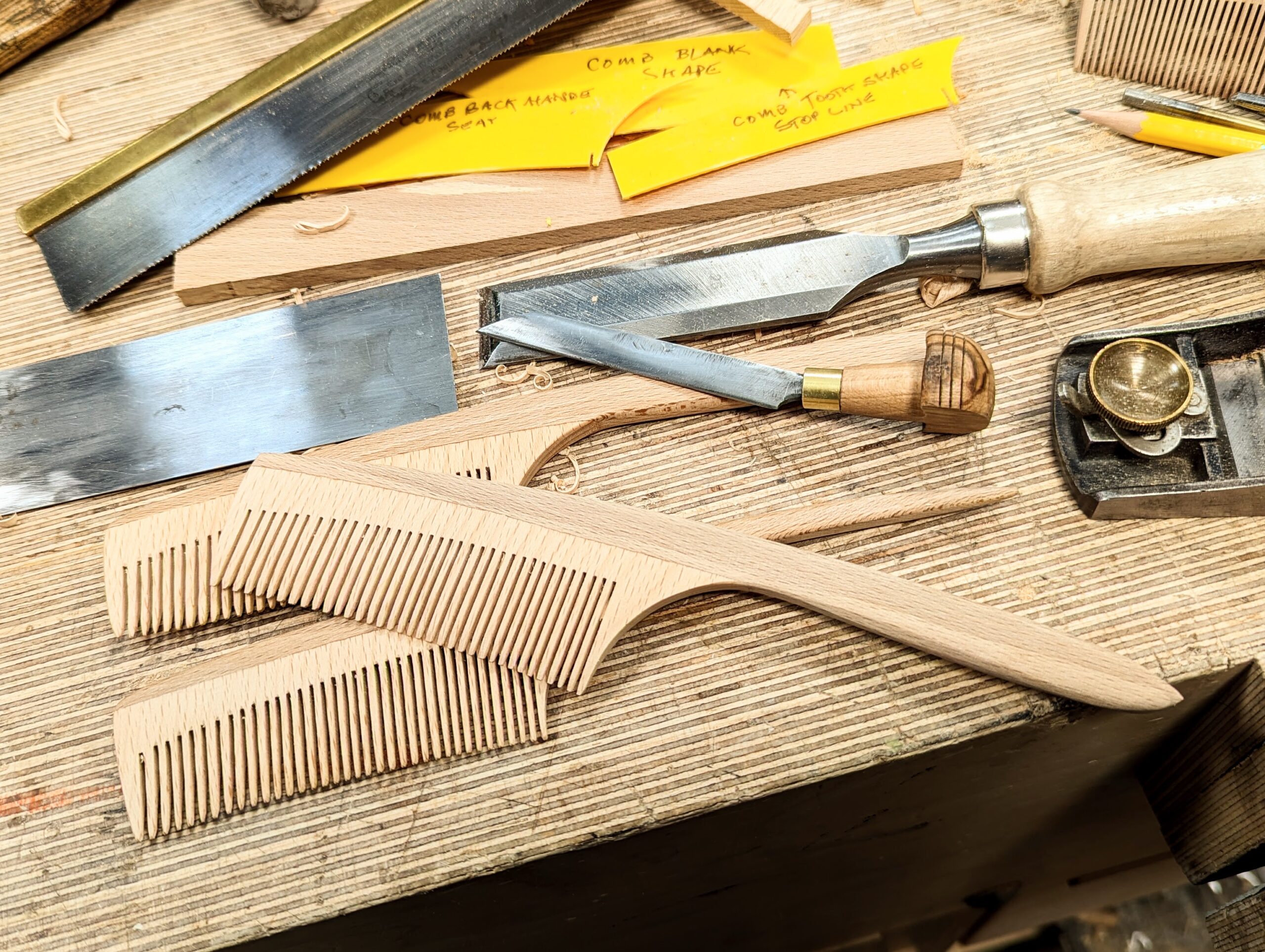
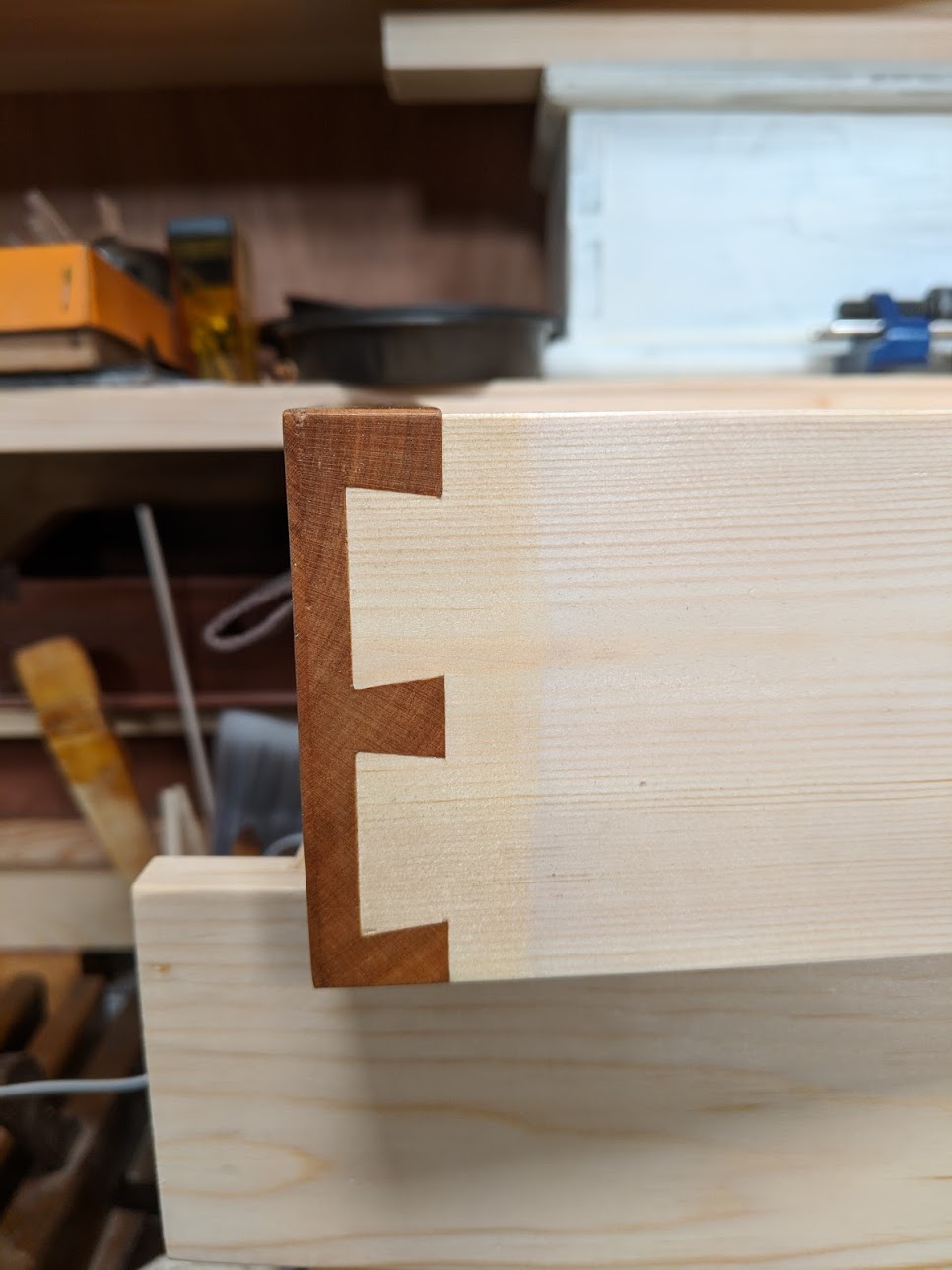
Woodworking Masterclasses carries you deeper and deeper into skilled woodworking; within a year or two, part-time, you will feel incredibly confident to make whatever you set your mind on. When I set out to cut any dovetail joint I never wonder if it's going to come out. I would be absolutely gobsmacked if it didn't. Today, I look at anything made from wood and know that i could make it. A few years ago I saw a simple-looking wooden comb in a shop window. The comb did fascinate me and I thought it had a beauty in its simplicity, quality and evident functionality. There was nothing to tell me how it was made, no telltale signs anywhere, but I knew it was made by machine throughout. It was clever. Very clever. But then, as always, I asked myself if such a comb could be made wholly or majorly by hand methods? Something so lovely deserved the kind of attention hand work would give it. A few months ago, perhaps two years now, I made my first comb and though just a little rugged it was really quite nice, nice enough to give to my granddaughter. In the process of making that one, I learned some tactics but I felt the comb in ones would be impractical. To bulk it in small batches of four to six increased productivity and I set out to do just that. My method gave me four combs in three hours but then six in four. The combs I saw sold for £30 each at retail. As a product line, and one of a dozen or so, and with direct sales, this could make someone a living I think. So we see how mastering skills in other areas of woodworking are usually adaptable to make other things, things you've never made. I should add that it would take almost nothing to design a dozen styles in half a dozen woods to come up with a small cottage business and selling online. Wooden combs might be something of a luxury in some circles but isn't that the time when we look for an unusual gift that we might not buy for ourselves but would for someone special?
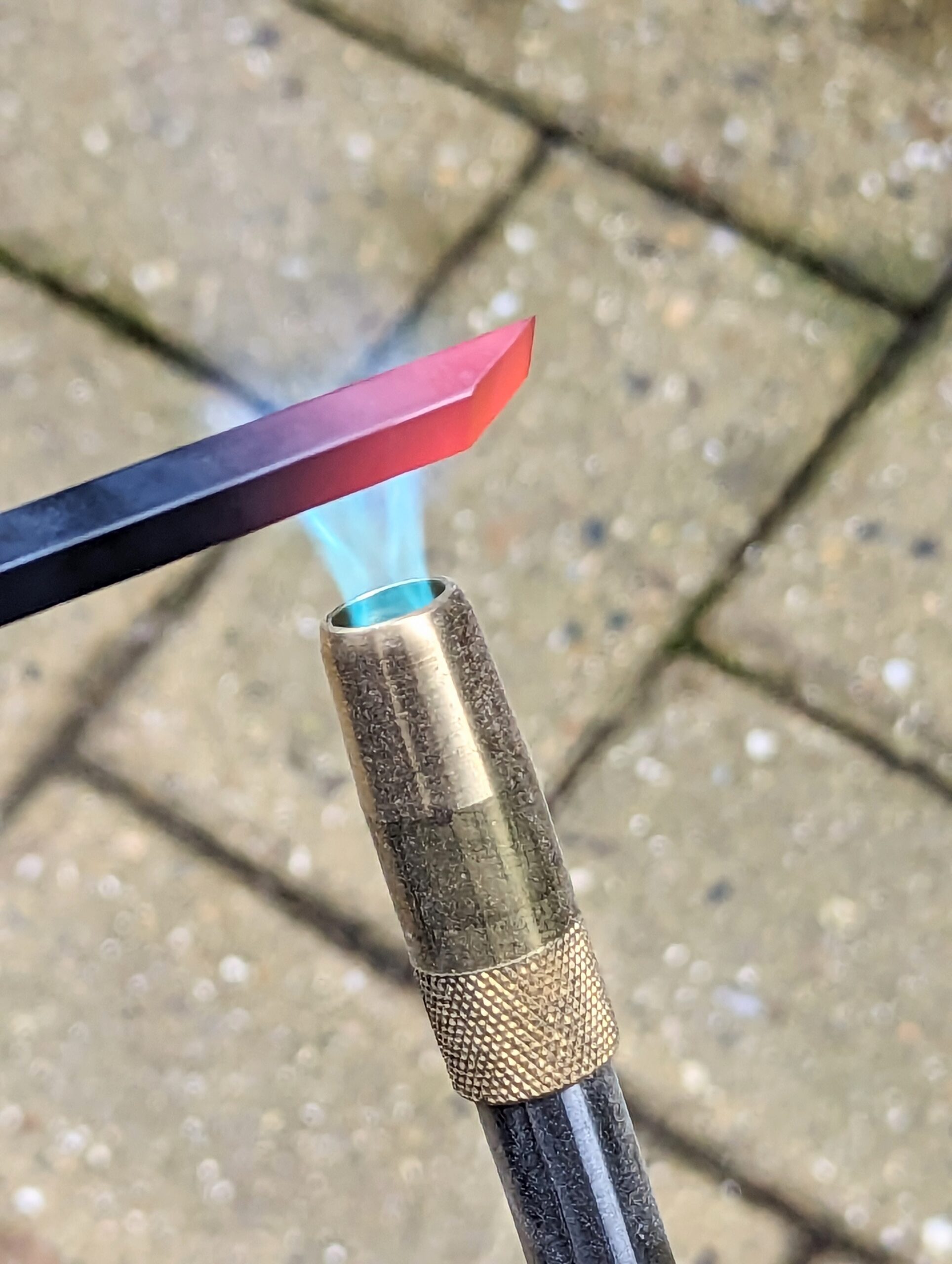
It's more likely that most are exposed to a computer and robotics at school that then guides a machine to make things via a machine-guided, numerically contrived and controlled device. I wonder if this then programmes the users on their way through the education system, defining how they too would think and act and work long term. Had they been given a handful of tools and some wood, some different metals, solder and flux, perhaps fibres taken from a sheep's back and leather from a cow, they might have enjoyed the twists and turns of their hands and minds to make. Yes, it's perhaps a backwards step, I don't know, but not a backwards process when you think of chemistry in the brain dumping loads and loads of dopamine to make with creatively and carry things living forward.

Sadly, I think, the majority will absolutely never know of what I speak here I'm afraid. At the other end of life, on my end, we will see something of a result good and or bad. There is a reason that many people now handling wood with a handful of inexpensive hand tools cannot wait to get home to their garages to make with what many call primitive methods using equally primitive tools and two hands with upper body strengths to manipulate with. As I said, most will never have the opportunity to do such a thing even though it need not be an either or for anyone. Most will never own the skills of which I speak as a result of something we mysteriously and nebulously call progress. Considering that hand-tool woodworking was once the only technology of the day, and it worked surprisingly well, is it really a backward thing to pursue in our present age?
Comments ()