
Remarkable Invention
As I walk through the streets of Oxford, before the lunchtime food providers open their doors, I am always fascinated by the lines of upturned exposure of the undersides of chairs and stools used for cafe seating lining the windows. Things like this, along with art of every type, bookshops too, always stop me mid-stride. In this case, it's the ingenious multi-grooved spindle-moulder cuts in the backs of chair rails just to align the corner bracing that creatively destresses the dowelled intersections of the rail-to-leg dowelled connections. It's just plain clever.
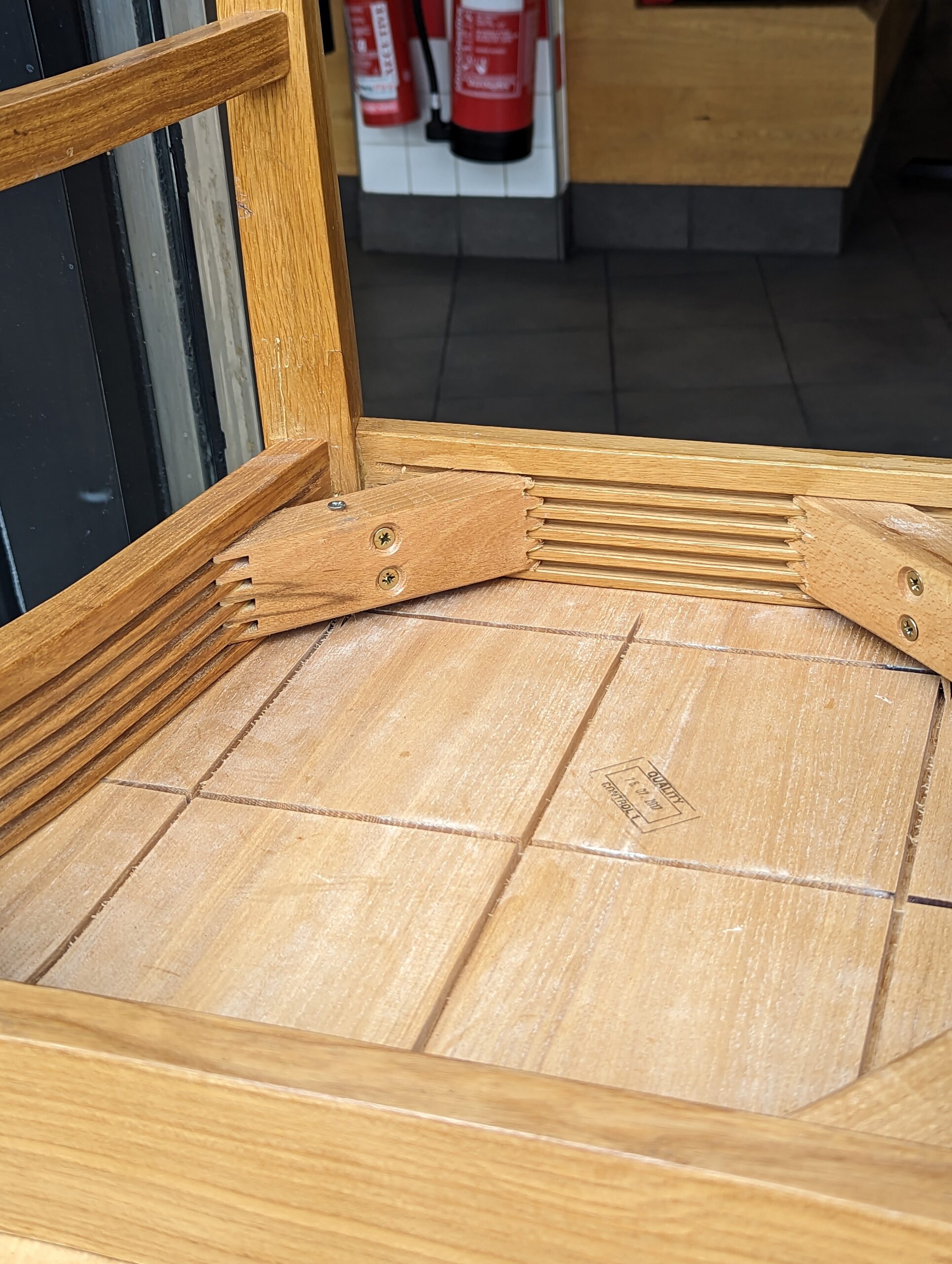
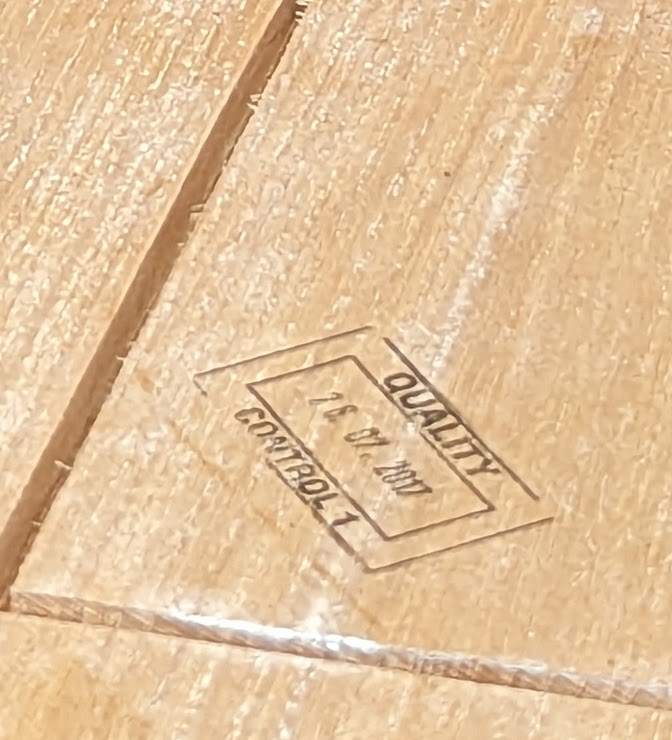
The manufacture and assembly of this solid hardwood chair will be no more than a ten man-minute-involvement in manufacture time if that. The chair shows no physical deterioration and the date stamp clearly shows a six-year span since its manufacture.
How it Works
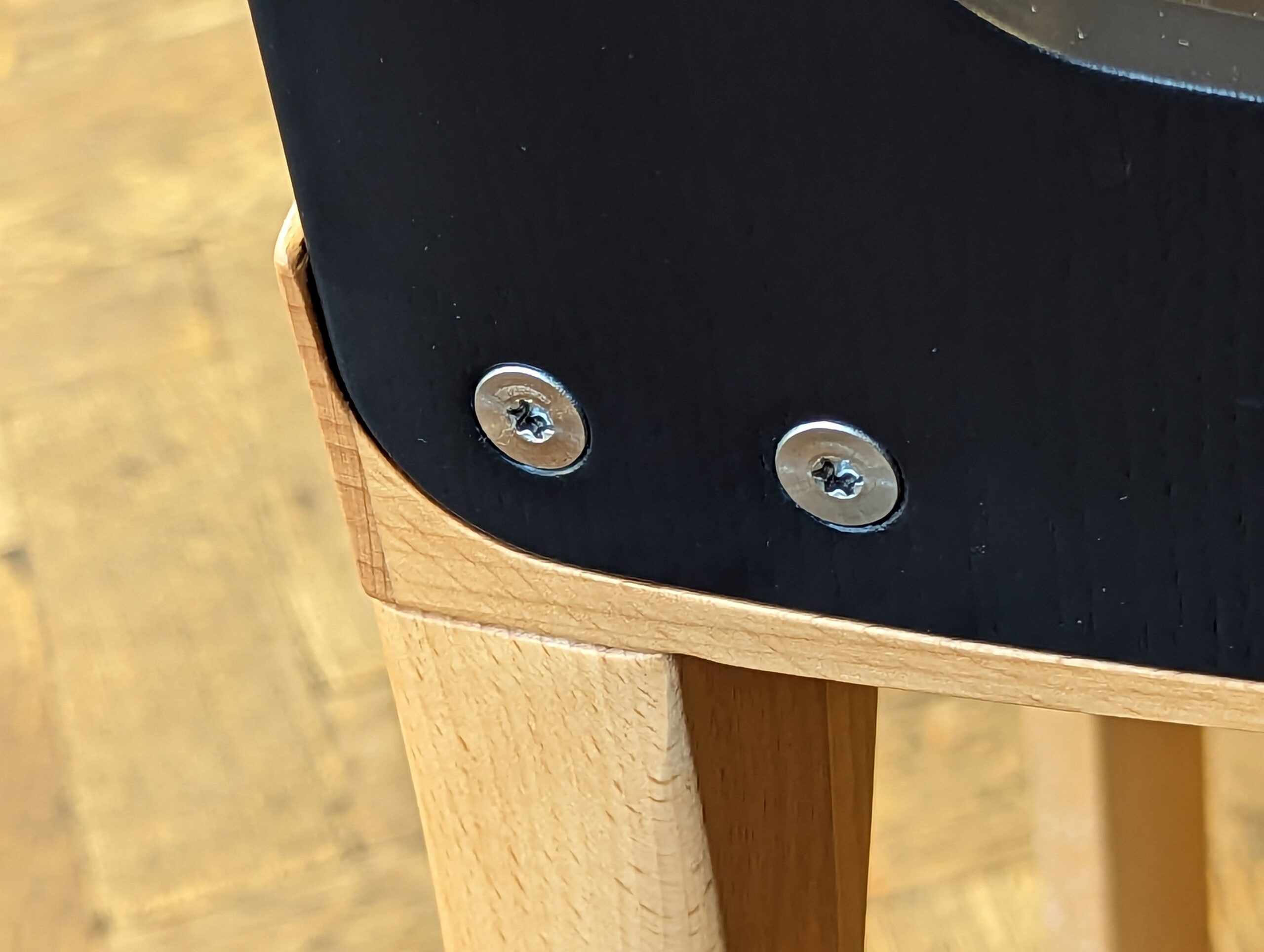
It's a minimalist maximalist securement altogether. Minimalist in that dowels install quickly and impact minimally in presence yet maximalist in the intrinsic speed of manufacture and assembly. Dowels are much less demanding than full mortise and tenon joints in that they take out the minimum amount of wood and, provided the holes are bored with absolute precision, alignments can be spot-on square-on or angled according to need. Rails cut in hundreds and even thousands can be a continuous process over days and weeks and in a month two thousand chairs can be packed ready for assembly elsewhere saving on shipping and warehousing and even assembly processing at the point of manufacture. Two 10mm dowels to the ends of the rails will take out half as much wood from the mortised area which on this width of rail and size of log would have created a real weak spot in the design if left at that. That said, the twin dowels into the ends of the rails would have weakened the rail too. To get around this the designers added the corner bracing to transfer energy away from the joint proximity towards the middle of the rails via the angled fingerjointing. The two screw heads engage with a screw insert in the inner corner of the leg. (These can be inserts or bolts through. I have seen both used consistently.) These inserts have phenomenal strength and resistance but their real value is in pulling the leg and rails into one another which also assists with the speed of manufacture as this mechanical pull eliminates the need for clamping and waiting for glue to dry and cure.
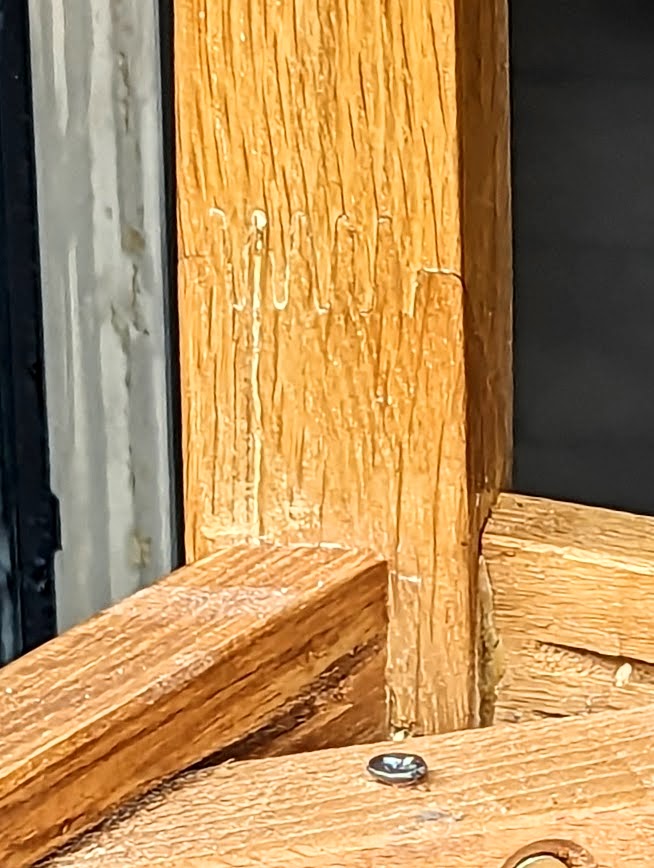
You will barely notice the finger joint on the leg a few inches up (or down if righted) from the joint area. In our solid-wood making we would be very unlikely to scarving any joint in a chair leg for fear of glue failure or lack of continuous grain throughout the leg in this critical area. Any break in a chair leg can be catastrophic for us as makers. Of course, we are constantly;y told that the glue is stronger than the wood. That's not true in several circumstances but it might be true in long-grain-to-long-grain glueing. I say might because there are several anomalies with this way of looking at it. These finger joints are quite amazing though. Something that we cannot do so well by hand but with a spindle moulder or dedicated machine it takes but seconds to do and it's always utterly skilless once the cutters are installed. A sliding bed will finger-joint many sections in a single pass, flip every alternate one sideways and along its length and the joint slides in place for an airtight, watertight friction fit even before the glue is applied. At the end of a run, there is zero waste.
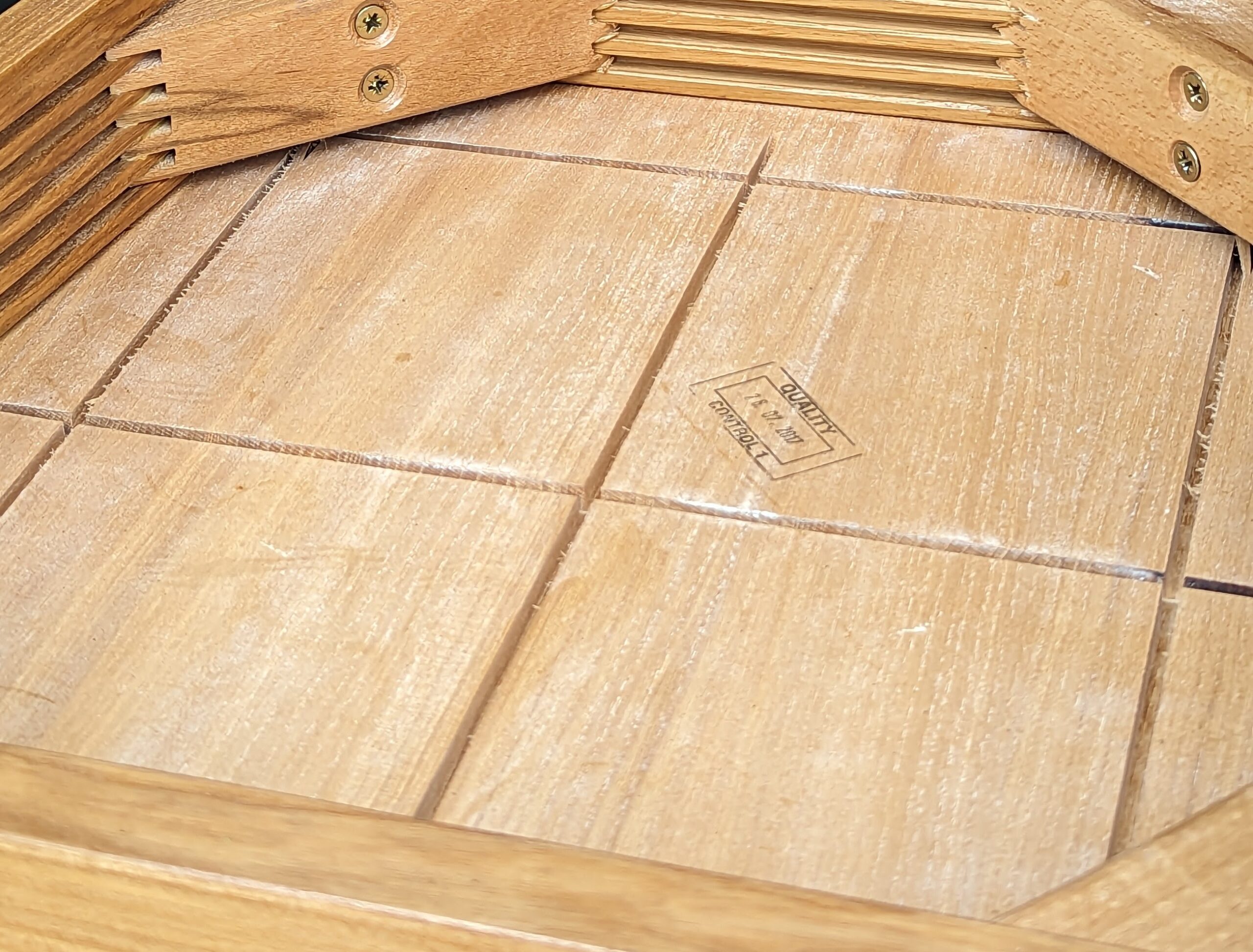
Lastly, the relief cuts in the underside of the solid seat minimise later distortion after manufacture. you retain the appearance of a solid seat above while ensuring the seat stays flat when atmospheric changes occur. See the poorly seated screw in the corner brace, that's it for securing the seat to the frame. Not greatly done but it works.
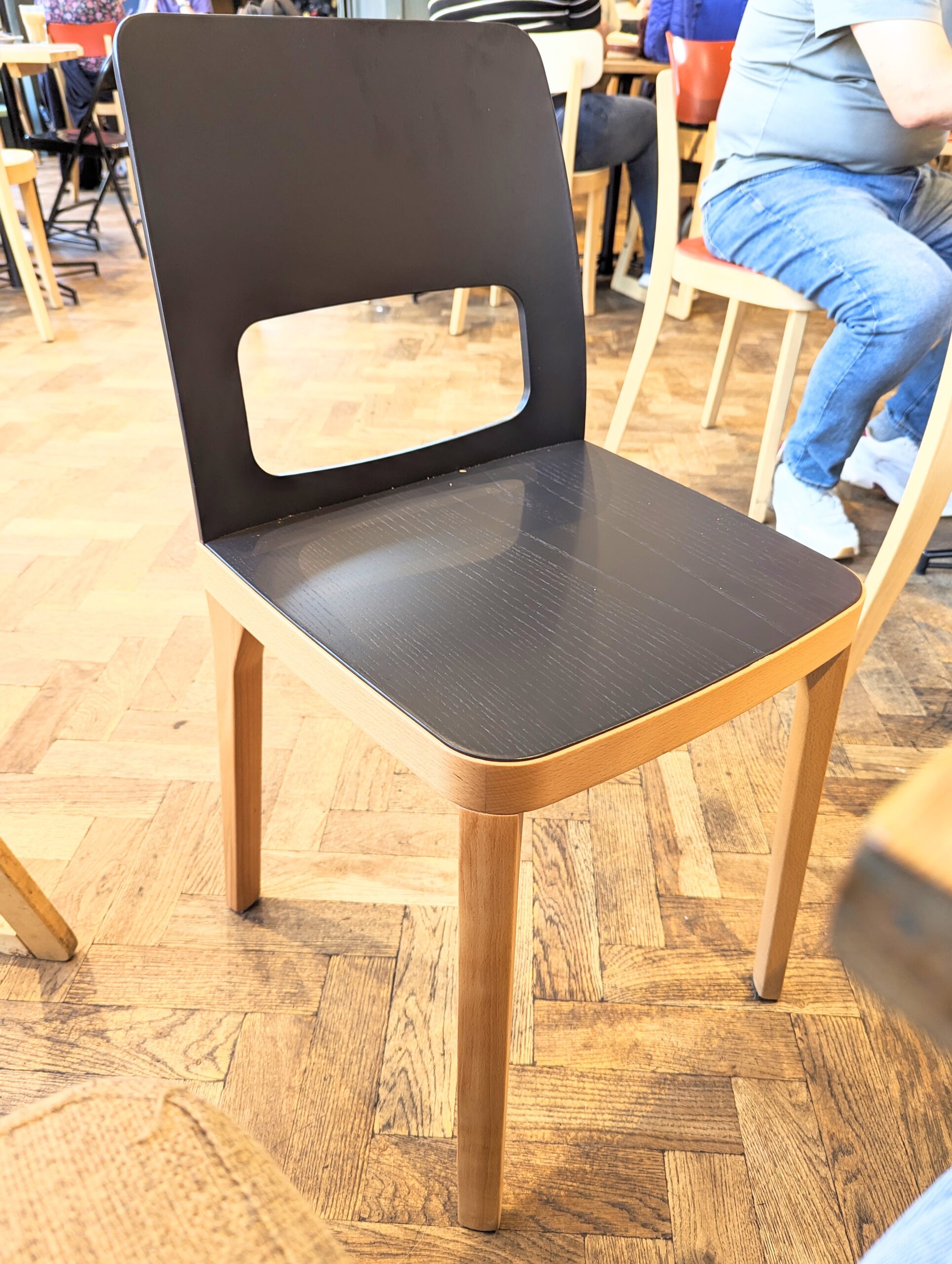
Mass-made chairs are remarkably designed and made. In a domestic home they would be lifetime chairs and the tolerances are remarkable. For most of us, a dining chair might have an hour's use a day if that. In cafes, they will more likely see eight hours of use seven days a week and will likely go on for many years.
Comments ()