
Finding Yourself
I just read a book written by someone trying to establish a sense of belonging. Throughout the pages, the writer strove to establish the reality of being isolated in communities by the communities in which the writer was "born and bred." There was a cruelness to it as is mostly the case with bigotry and hate. Fear of rejection permeated the author's experience of life as growth from birth to adulthood took place; in reality, different phobias affect how we perceive life growing into any society be that a guild, a community, a workplace, religious order or whatever enterprise you care to name. With two wars currently raging we see societal systems on one hand rejecting the other and then two ancient religions on the other. These major assaults will be outside most of our personal zones but looking at the writer's effort to balance out the opposition with reason you can see how it often takes another extreme to counter the energy of prejudice.
In my earliest days just before woodworking began I experienced life differently than my then young peers. When school finished I walked to a papermill to work with my dad baling cardboard for recycling for several hours. No one I knew worked like this five evenings a week and then all day on Saturdays and Sundays until 1 p.m. Was this abuse, child labour infringement or was it what you did to support a family of six children and two adults? It was the latter and I enjoyed being with my dad for these extended periods. When that work ended I began my apprenticeship. I was already used to working, trained for it and by it. I have no regrets. even today my peers rarely match the workdays in output and ethic I established early on in my life although some do. We work a 35-hour week here in the UK. My week still doubles that and the only reason it does is because I still, still love what I do, Since my early days of making alone I have added in to my day other aspects equally important to woodworking; writing, drawing, designing and photography and videography support my output but then too I enjoy being with my friends and family too. Am I the last of a dying breed? Quite possibly, I think. Go back sixty and seventy years ago and woodworkers worked as I do. That's now the rarity and scarcity and that's okay too. What matters is following what you are called to do and be.
In recent years I have seen a marked change in the volume of people seeking woodworking as a portion of their lifestyle. It's nice. Thirty years ago half the people I met in woodworking scoffed and a percentage of professionals still do but only on the most minimal of levels now. I think even they see and learn from us. The might even discover methods that increase their performance as many contact me and say so. Respect for hand-tool methods of woodworking has steadily and progressively grown and especially amongst the amateur realm which is a hundred times more than the professional version now. I believe that these are the ones who searched with rue sincerity for what they perceived woodworking to be, theysincerely looked for the deeper things in making and found what they personally wanted to invest their lives in. Instead of a computer and printer they wanted a piece of wood, some gravers and a hand press to print their art. This for me is finding yourself. It takes something to persevere against opposition in the form of opposers. Peer pressure is a powerful aggressor that often goes unseen because, well, it can be hidden inside some form of aggression be that passive aggression in the form joking or overt aggression as I have experienced when I said, Nah! Not for me!. Here is something of an example:
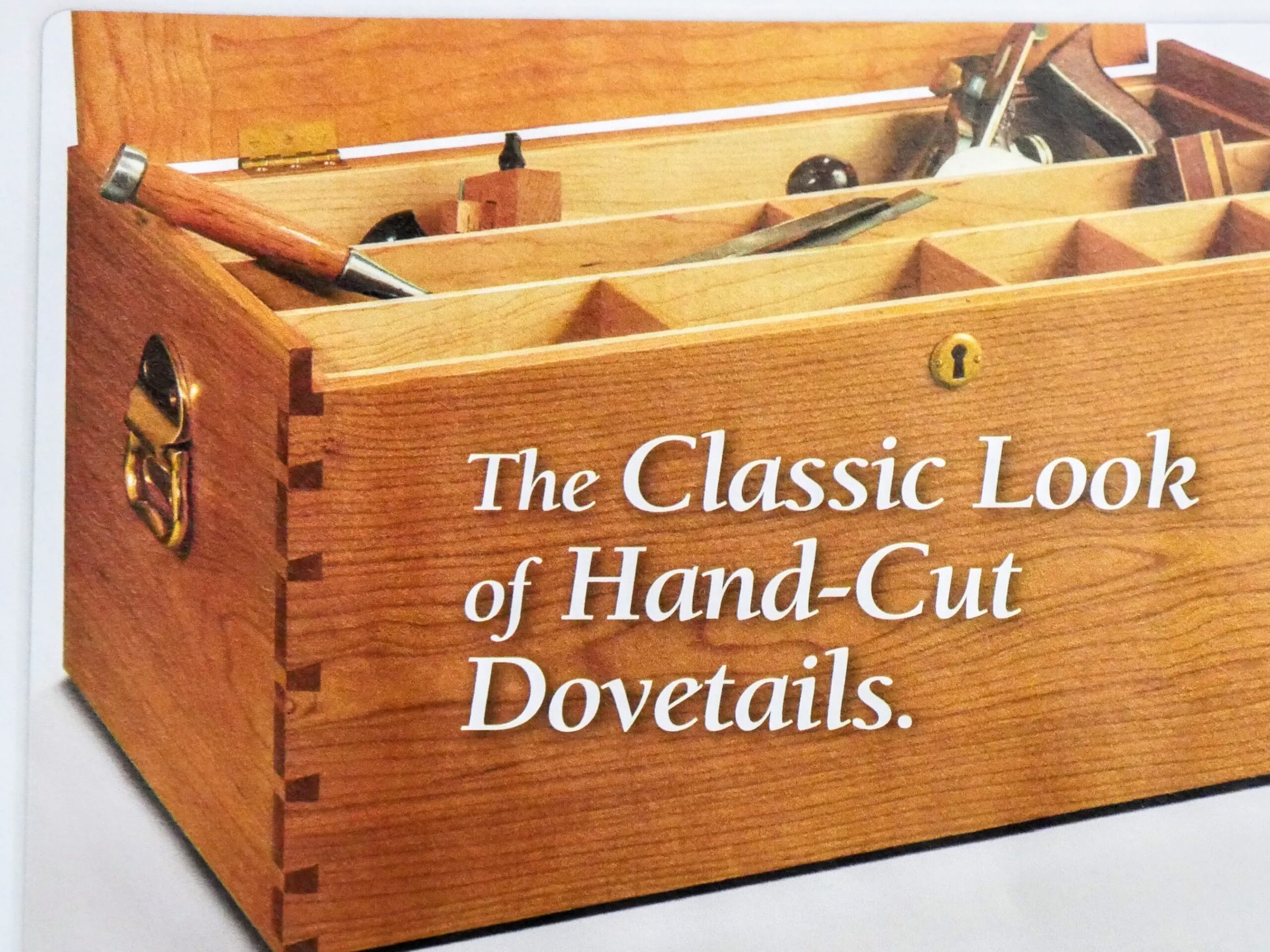
This box is made entirely by machine yet spuriously claims "The Classic Look of Hand-Cut Dovetails." signifying a belief that the end result matches that of hand work without the effort and skill the other needs. It dismisses what we see being as critically important as the actual work we want and pursue itself. It dismisses the possibility and probability that we might actually want effort and challenge that is integral to our working and our making. What does it matter so long as it looks the same? Doesn't 'the end justify the means,' after all? The inference of course, is that wrong or unfair methods may be used if the overall goal as the outcome is good. But the assumption for us is that that bit in between wood sorting as a starting point and then completing is immaterial or that it is best evaluated in terms of energy and speed. For me, us, we want the muscle build, the directing of energies over periods that truly cost us, the mental challenges and so on. On a recent project, making my combs, I stopped midway to make a refining tool from steel brass and wood. It took me an hour using the lathe, the blowtorch, hacksaw, file and such. I didn't hesitate for a second, saw the need, went to the metal vise with an old bandsaw blade, softened the steel and made what I needed. It worked beautifully. Who does such things? Who do you know that even thinks that way?
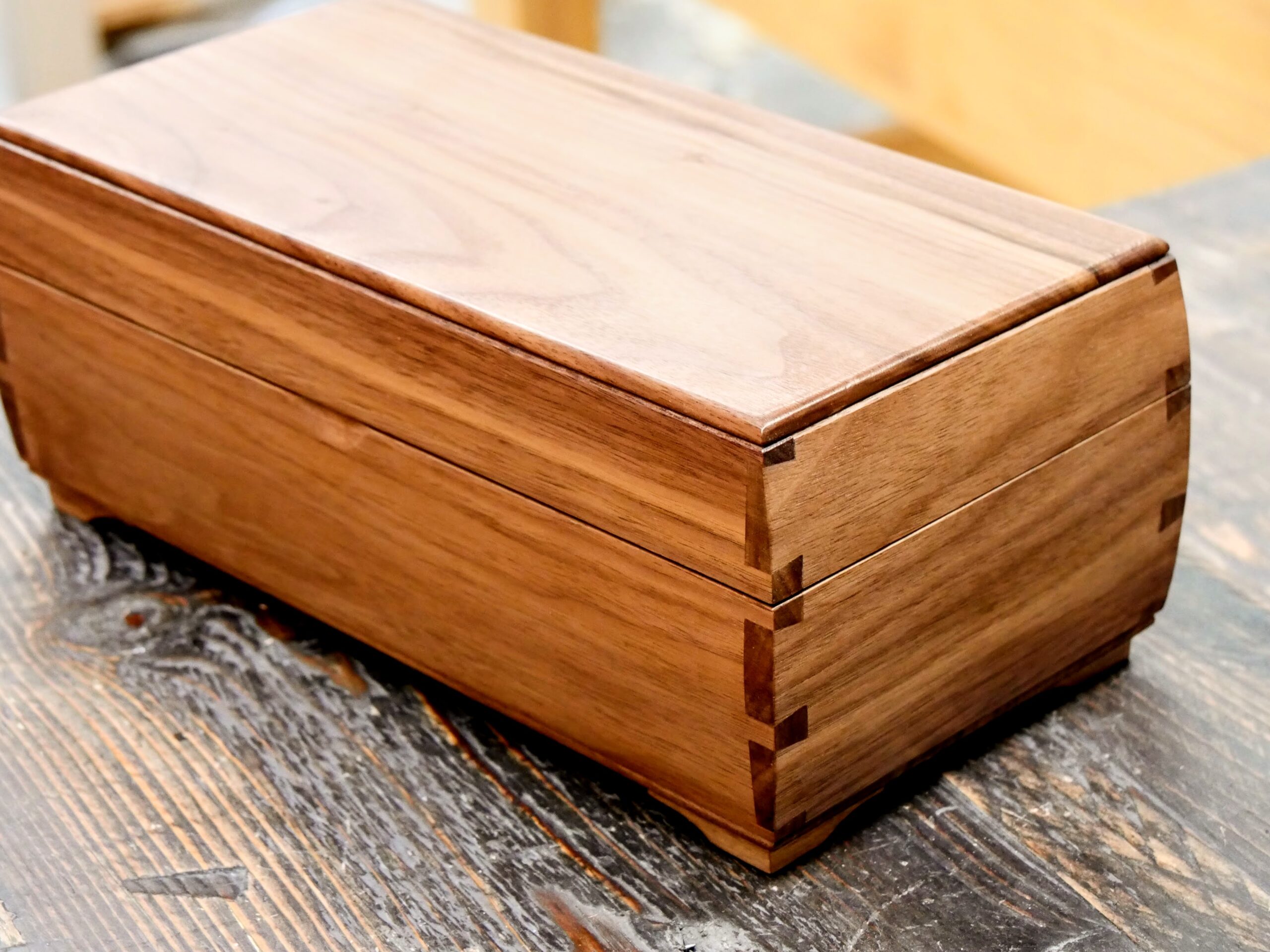
My concern in all of my work is that without inputting from a background of making and even selling work too we might not discover the deeper us. Can we have a calling deferred for different reasons? Can we be having the DNA of making programmed out of us so that we ultimately dismiss and even destroy the deeper us because we have lost sight of the meaning of handwork? It's my belief that we can and are. Conversations no longer discuss the making of things and people more rarely encounter a maker of any kind. Despite this though, our audience steadily grows in the face of strong opposition. I think that people are finding themselves and finding a form of escape.
I know the reasoning behind using machines to process wood and for the main part, I agree with it. But the demand for deeper knowledge proves my change in direction 30 years ago. Back then there were only half a dozen woodworking schools in the USA. It was the dearth of woodworking knowledge that led us to search and the internet became the new platform for the search to begin or continue with and through. I was slow to the mark because, well, I didn't own a computer until 2005 and use the internet platforms until 2008. Our first videos came in 2011. But that was no loss. Our experience stood much stronger from hands-on courses spanning three decades and more. This was the backdrop for my writing curriculum and books. My love for wood and woodworking has grown into a love for amateur woodworkers. They are the ones that will take hand tool woodworking forward. this was my plan from early on when my peers tried to make me feel uncomfortable. But I owned my craft through the skills I had mastered and I didn't want to keep it to myself.
Comments ()