
Handling More
It's my seventh day since my hand surgery and the advice sheet from the Pulvertaft Hand Cebtre in Derby and Burton NHS Hospital said, 'Plan to avoid activities which involve strong grip for one to two weeks after the procedure as the hand [s] may be a little tender. However, you will not do yourself any harm.' I have diligently taken care of my hand exercises and these exercises make a big difference to how my hands feel each day as they heal. I have been on self-imposed light duties for the week and as I experience no swelling, no infection, zero pain anywhere, etc I decided to be back at some not too-heavy woodworking today., the eighth day. I put in 3 hours of handwork at the bench using hand tools but nothing that caused any jarring or stress to my palms, fingers, etc. As I worked, I transferred the usual or normal hand, arm banging and such to my fingertips and other areas of my arms, hands, forearms, upper arms and shoulders. This change of technique worked very well for me. Much of the work I did was good from my hands. But I think it is worth mentioning here that I am not a medical provider and I am sure everyone's hands will indeed be different before and post operation. That being the case, follow the advice your are given from the hospital or clinic. that is what I am doing for me with the customised health care the doctors and medical team in occupoational and physical therapy gave me.
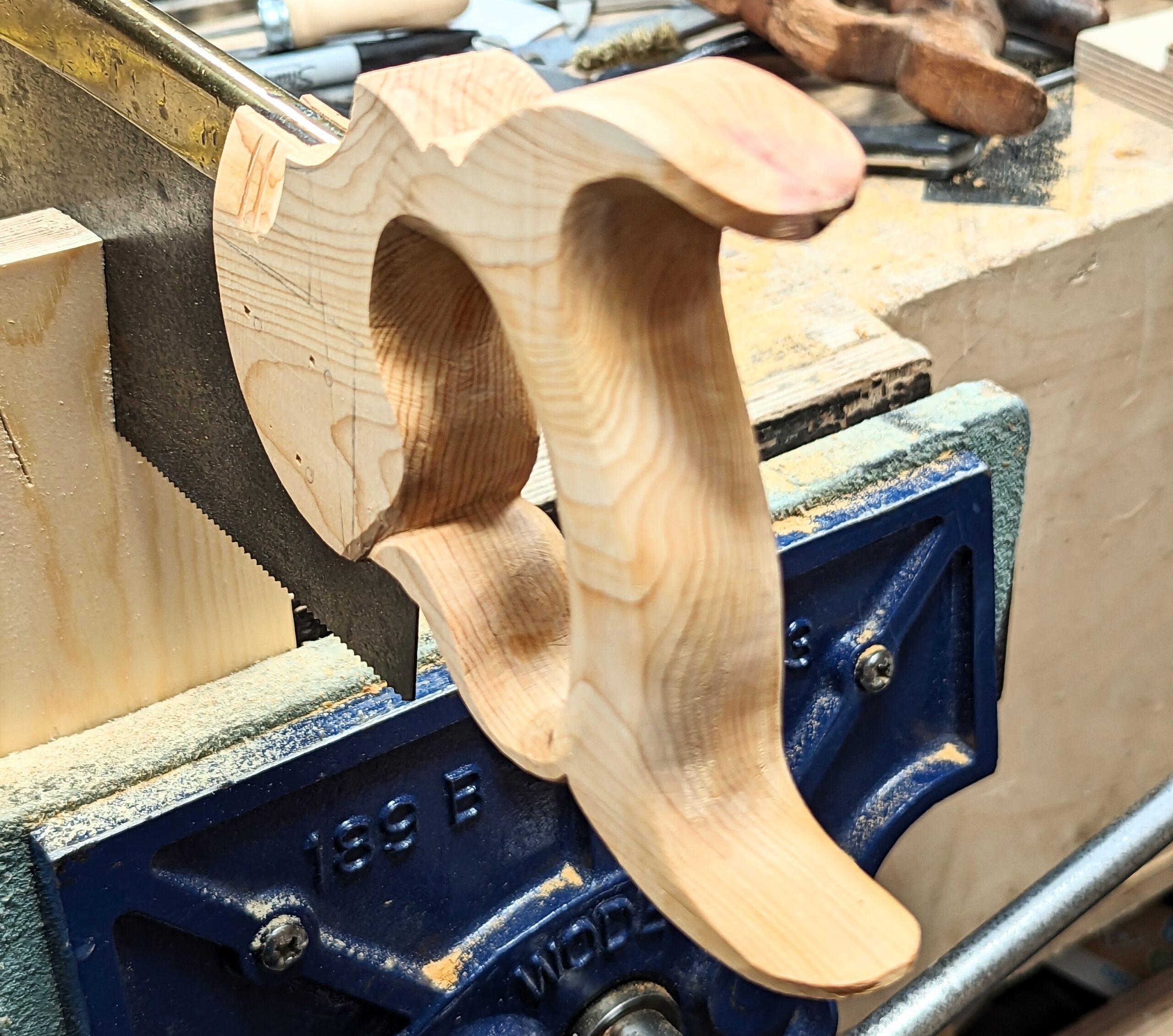
Okay! I had an old and vinatge R. Groves 14" tenon saw that needed rehandling. It was my first ever Groves saw and whoever owned it before me replaced the handle with a sapele one. The work was crudely handled (pun intended). Because it really felt comfortable I just kept using it and never replaced the handle so today was a good light-duty day to see how my hands would feel and I decided that if I felt any misgivings or discomfort I would stop without hesitation.
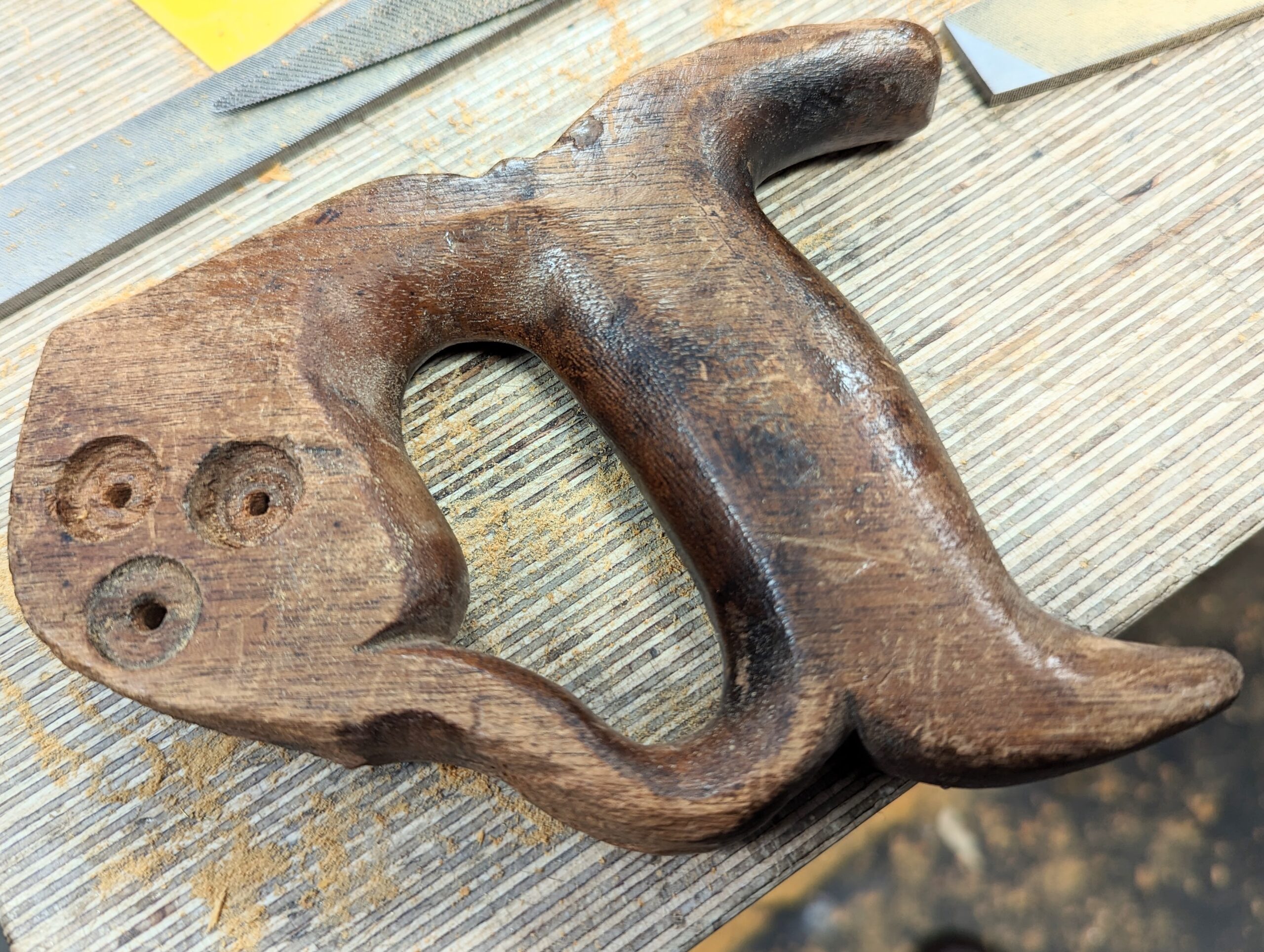
I created a template I cut from 1mm plastic sign material taken from one of my other 14" Groves tenon saw, one I use all the time. Using a sharp knife to follow the pencil lines it snaps precisely to the line. I traced out the outline directly from the handle with a pencil, compensating for the roundovers, then went freehand over the lines with the shrp-pointed knife.
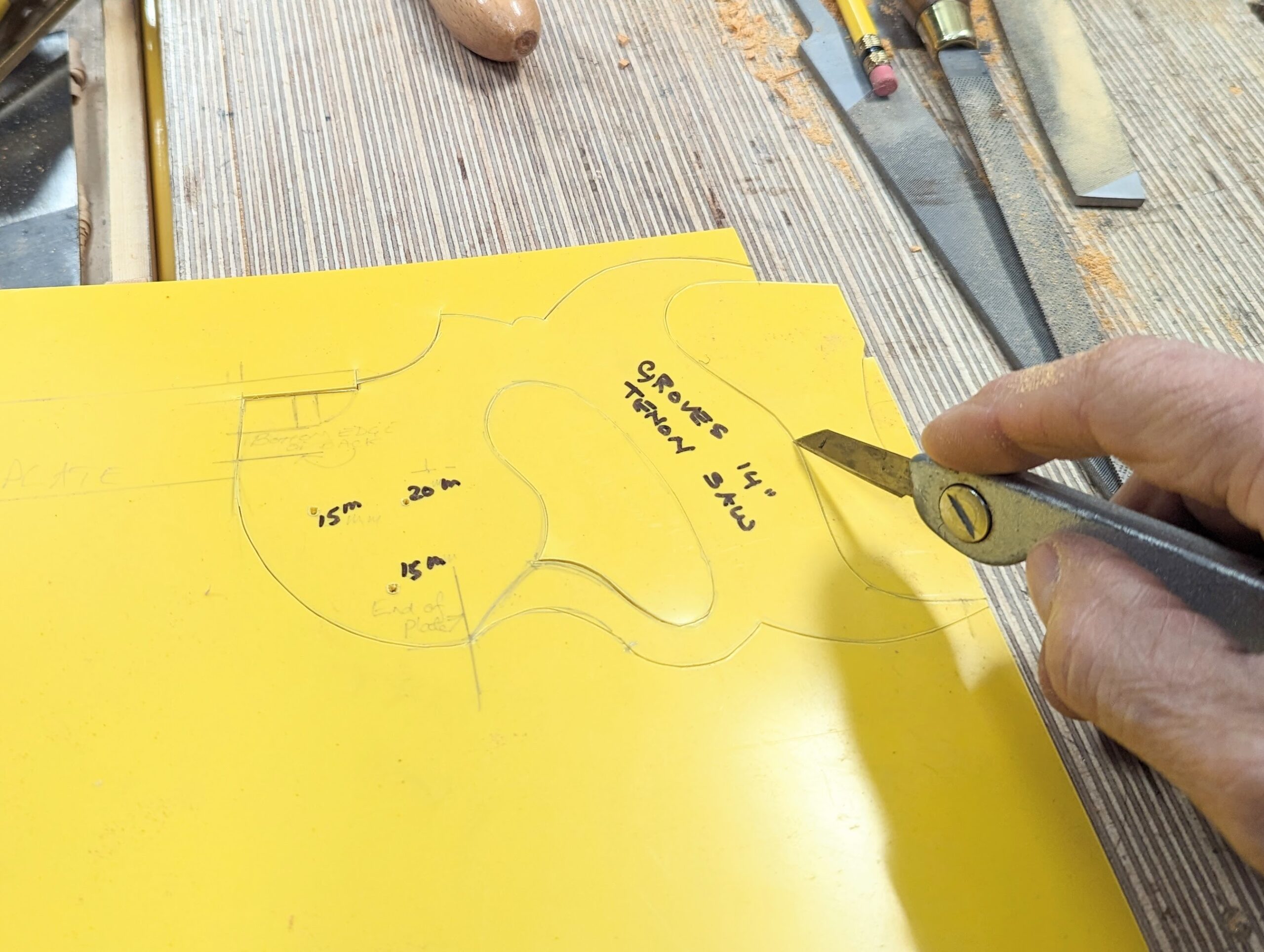
Snapping is easy on 1mm sheet plastic and the exactness of it is amazingly simple and accurate.
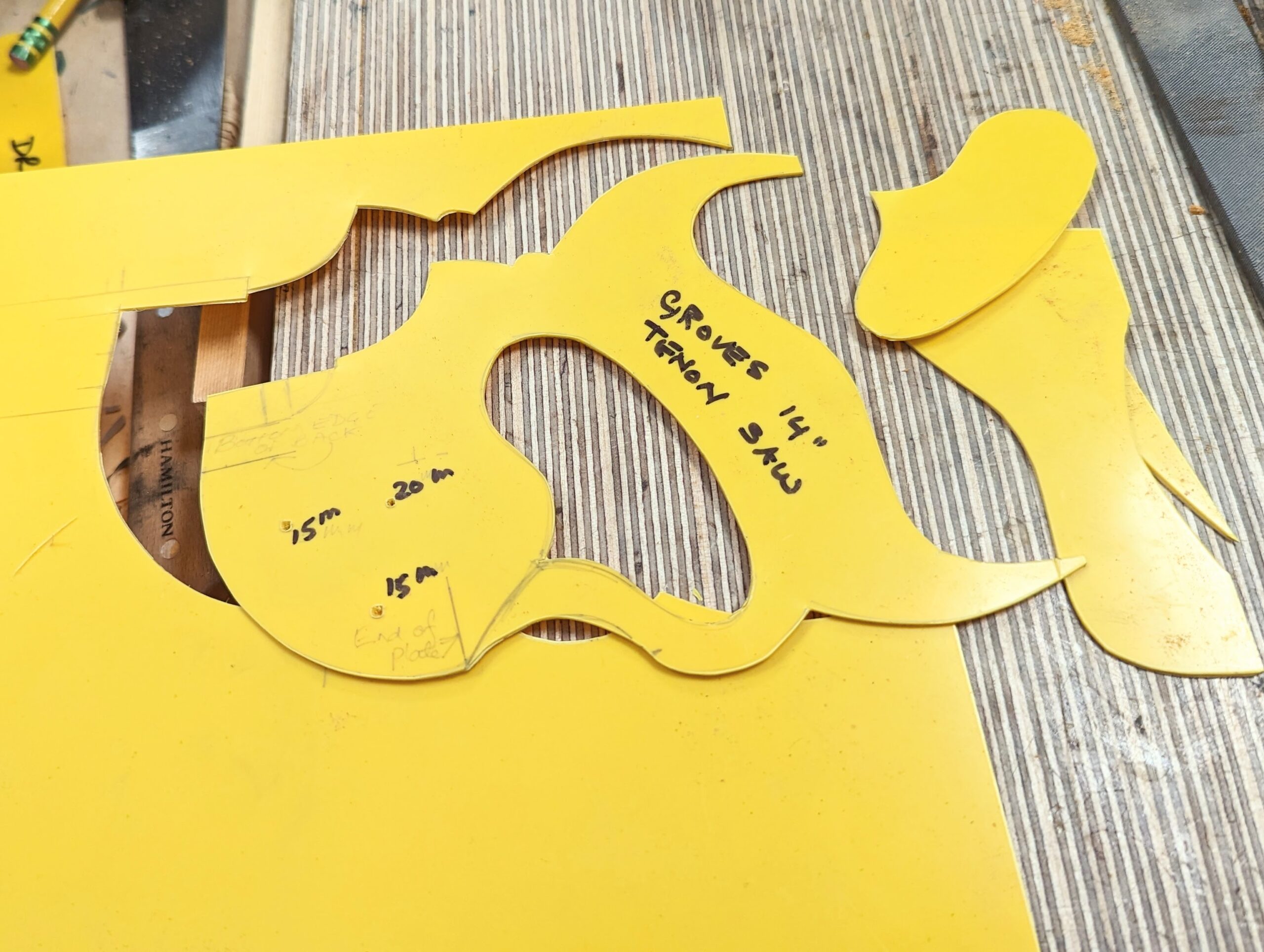
Setting the template in place and aligning the grain for preference is the next step.
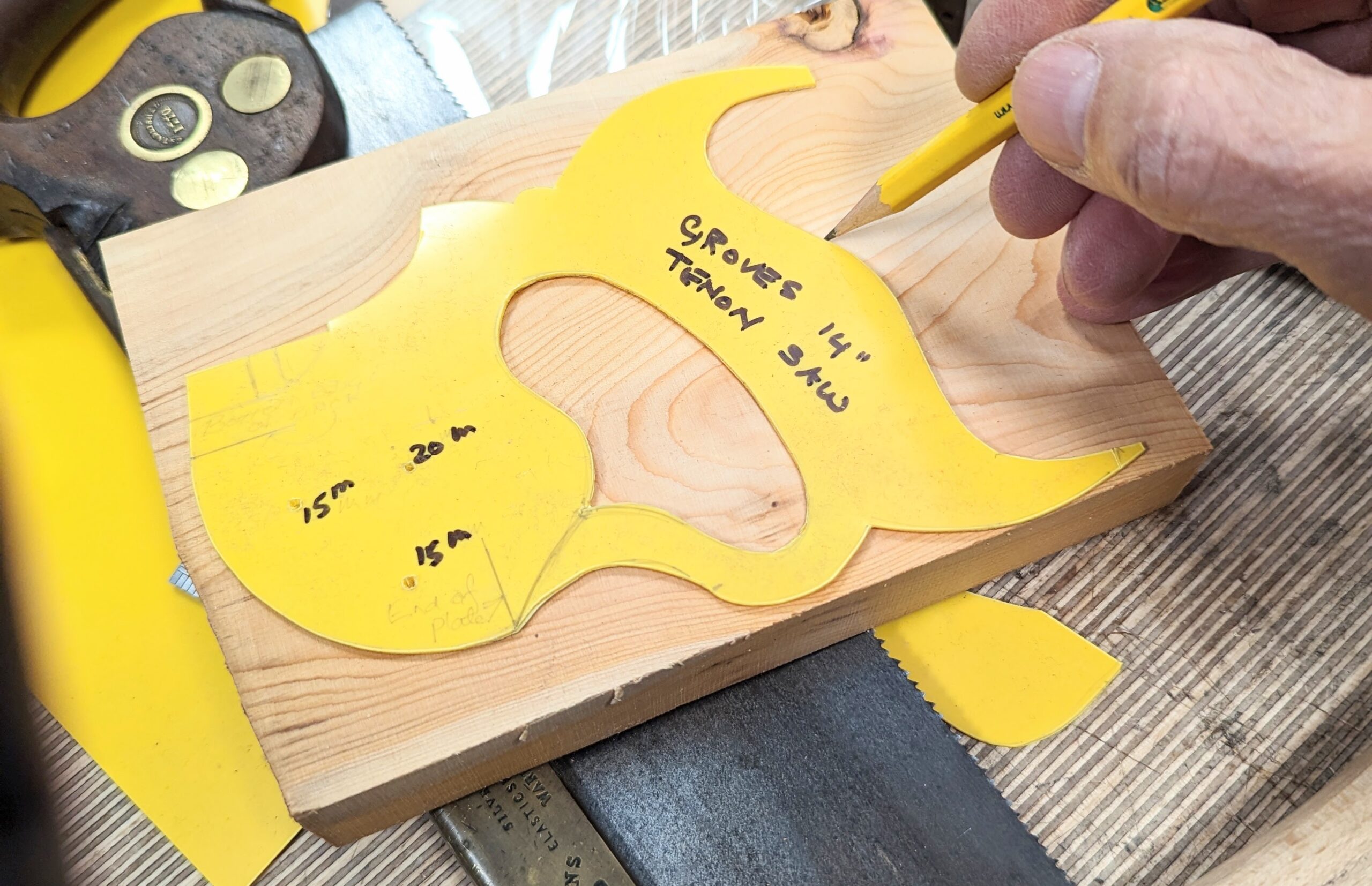
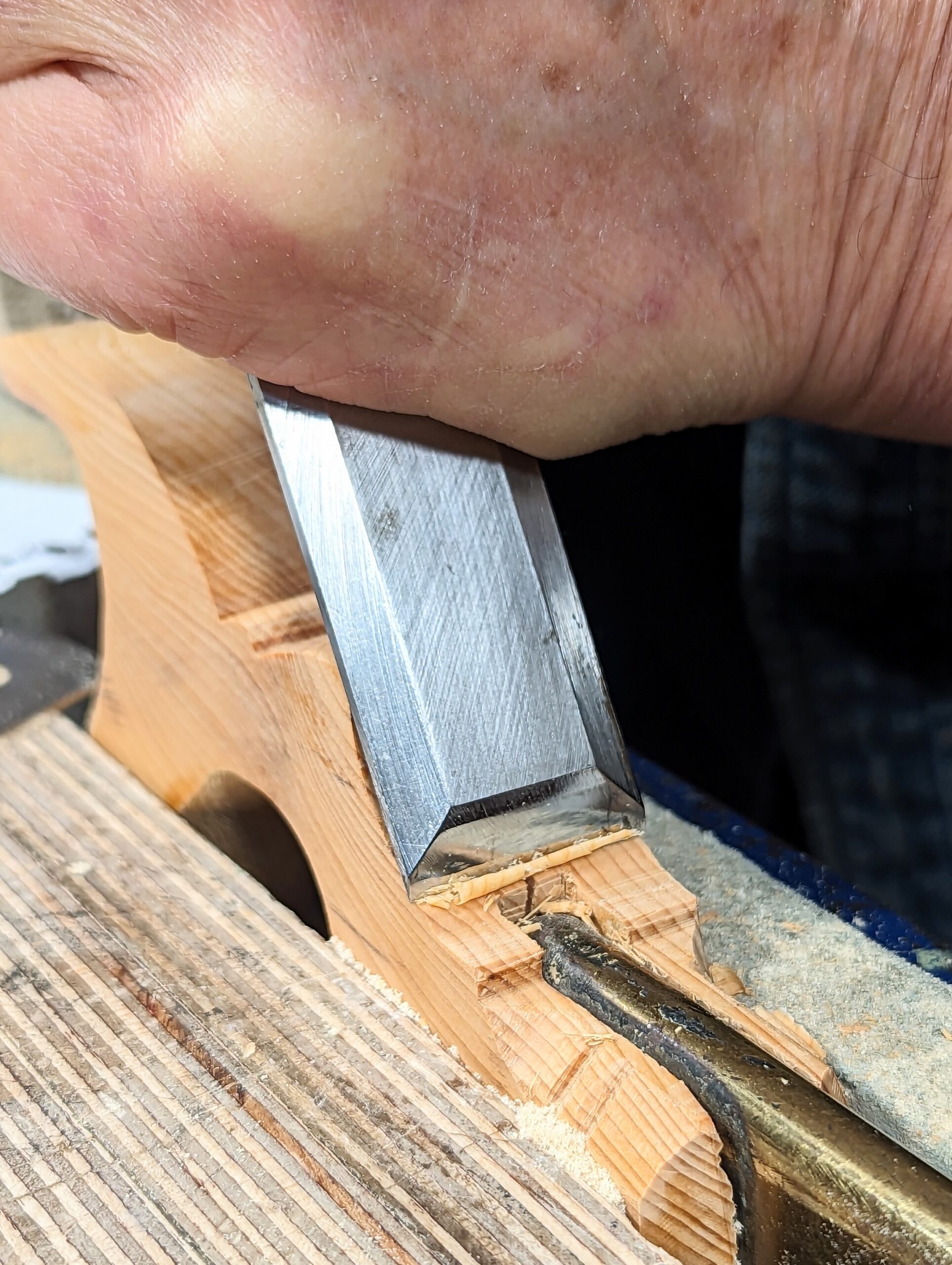
I used the bandsaw to rough out and this saved using my hands as I was trying to go easy on them where I could. This included the saw kerf to take the saw plate. But I felt my hands were good enough to chop the small mortise recess for the brass back. Of course, I needed to use the coping saw to cut the distance between two bored holes top and bottom of the hand hole.
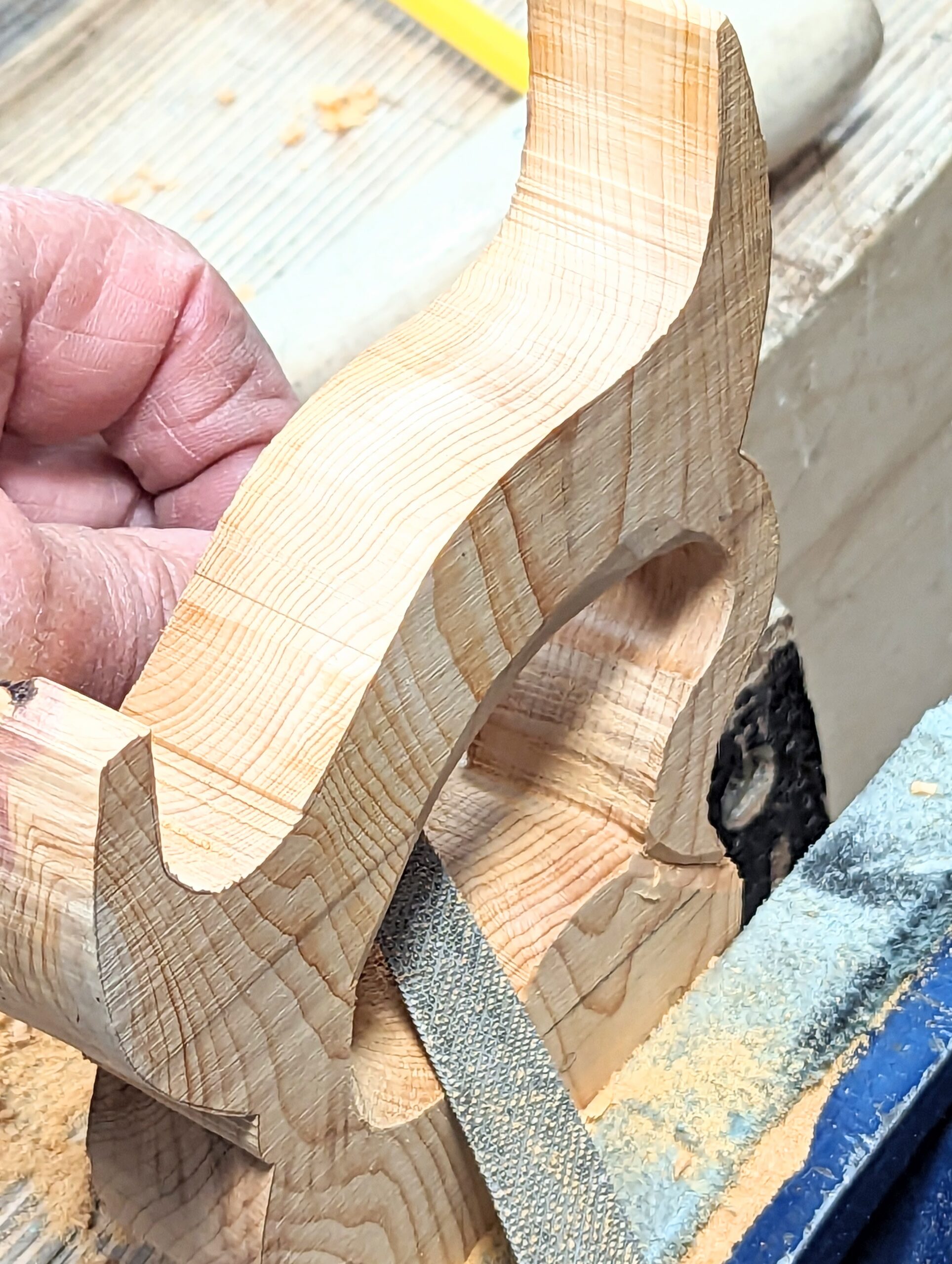
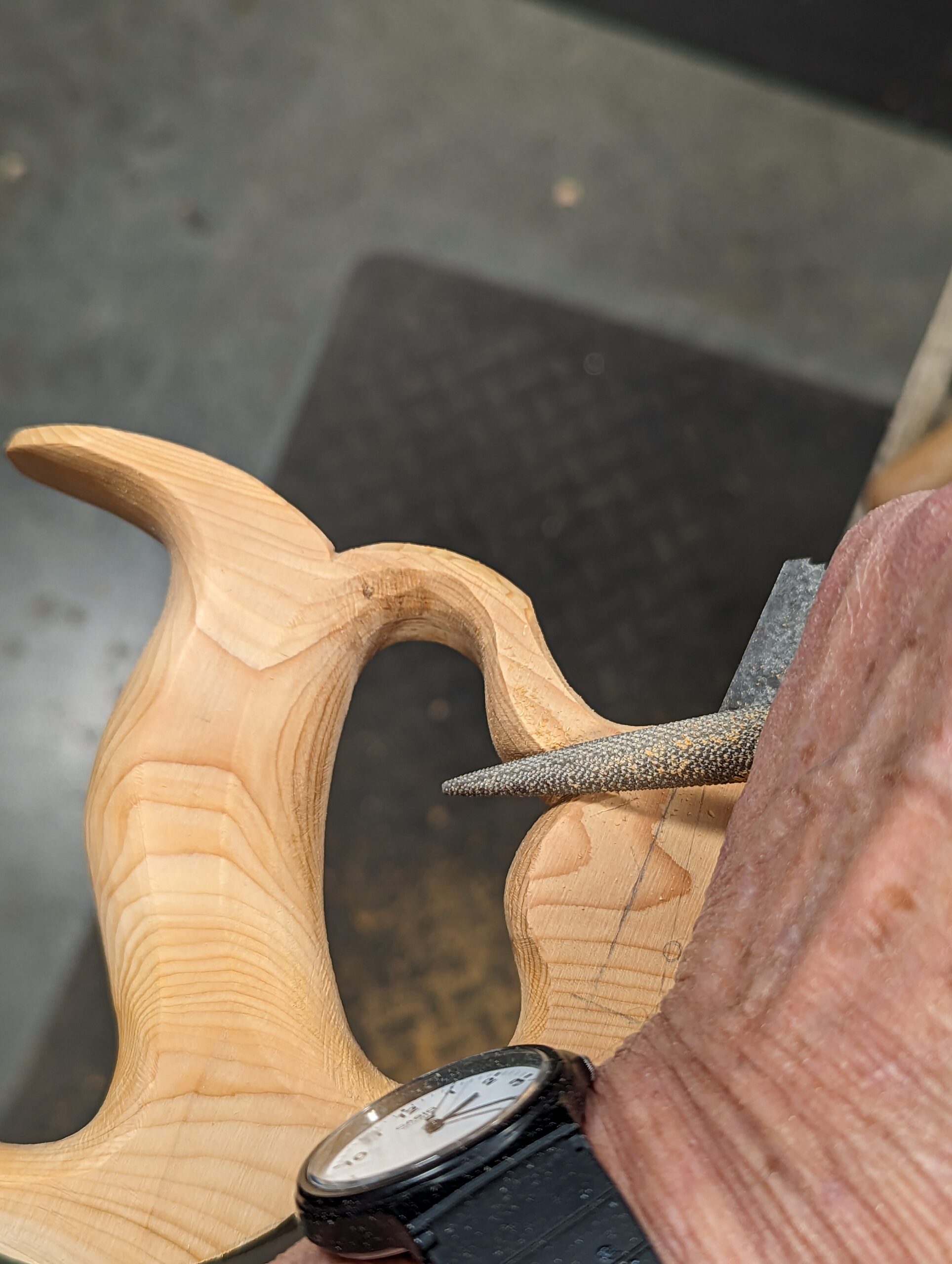
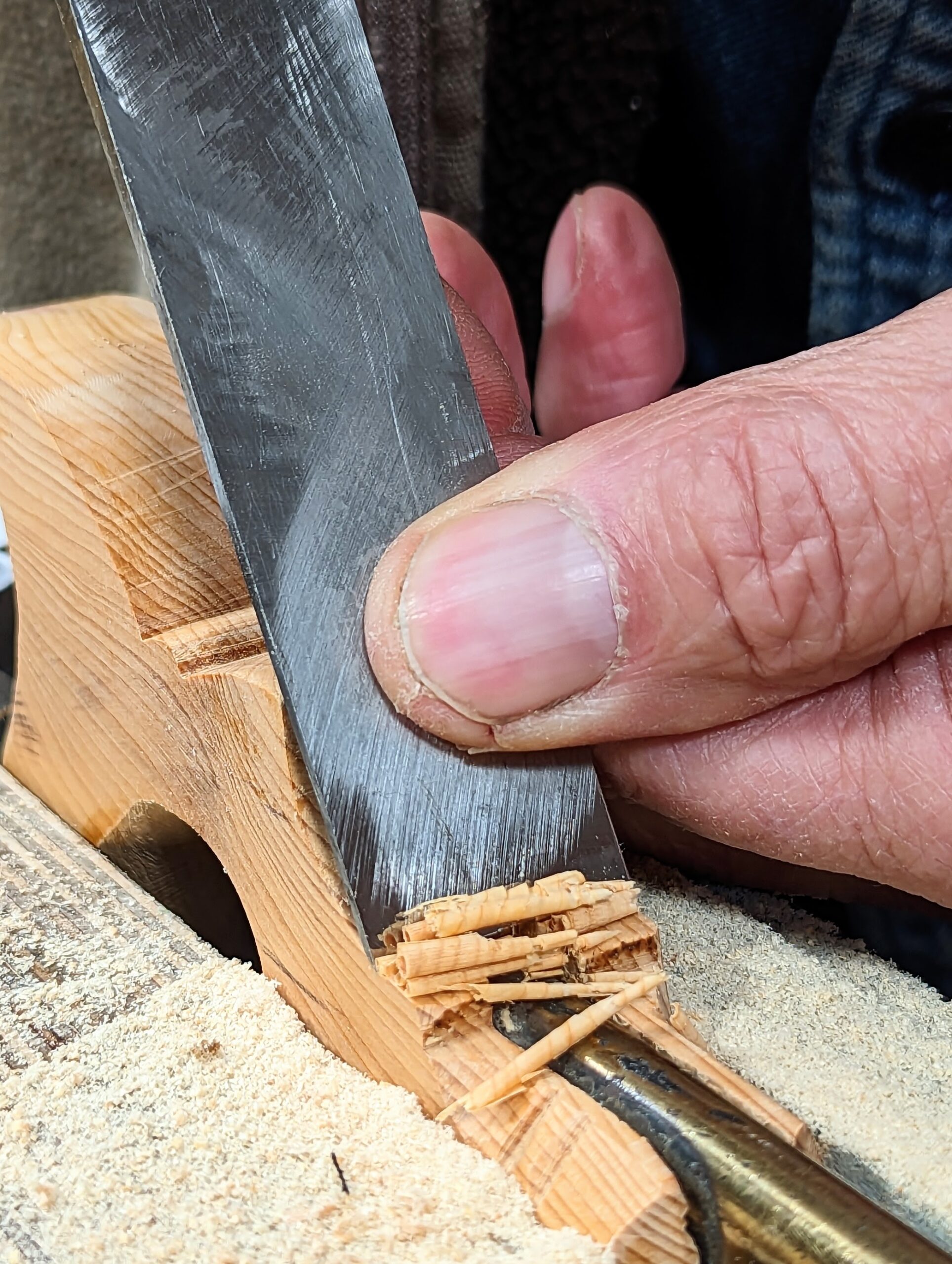
With the shape roughed out there is quite a bit of shaping to the round to match the handhold and fingers. This seemed to be an hour's work or so. I went quite gently between the rasp, the chisel and the spokeshave. These three tools did most of the work.
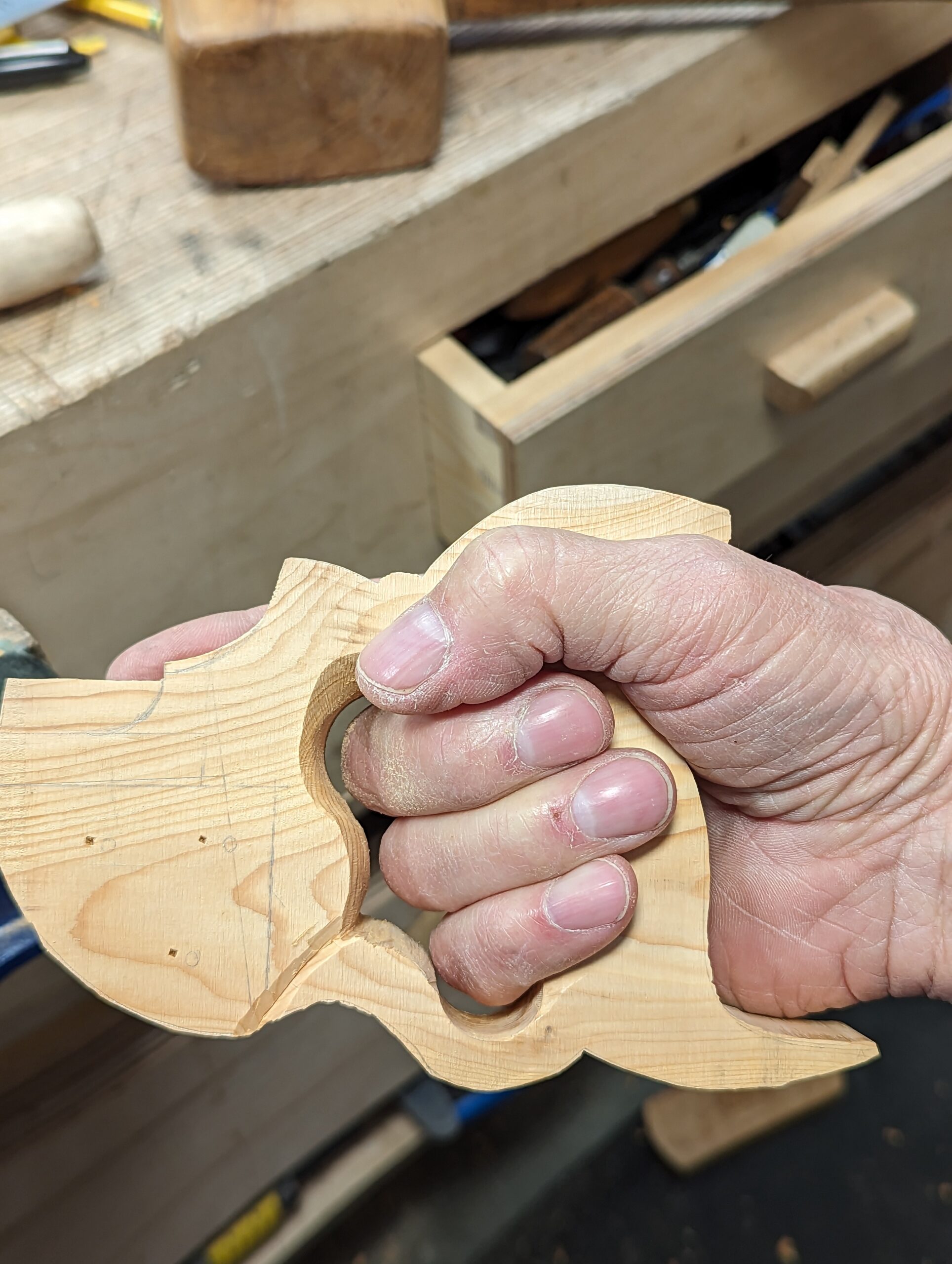
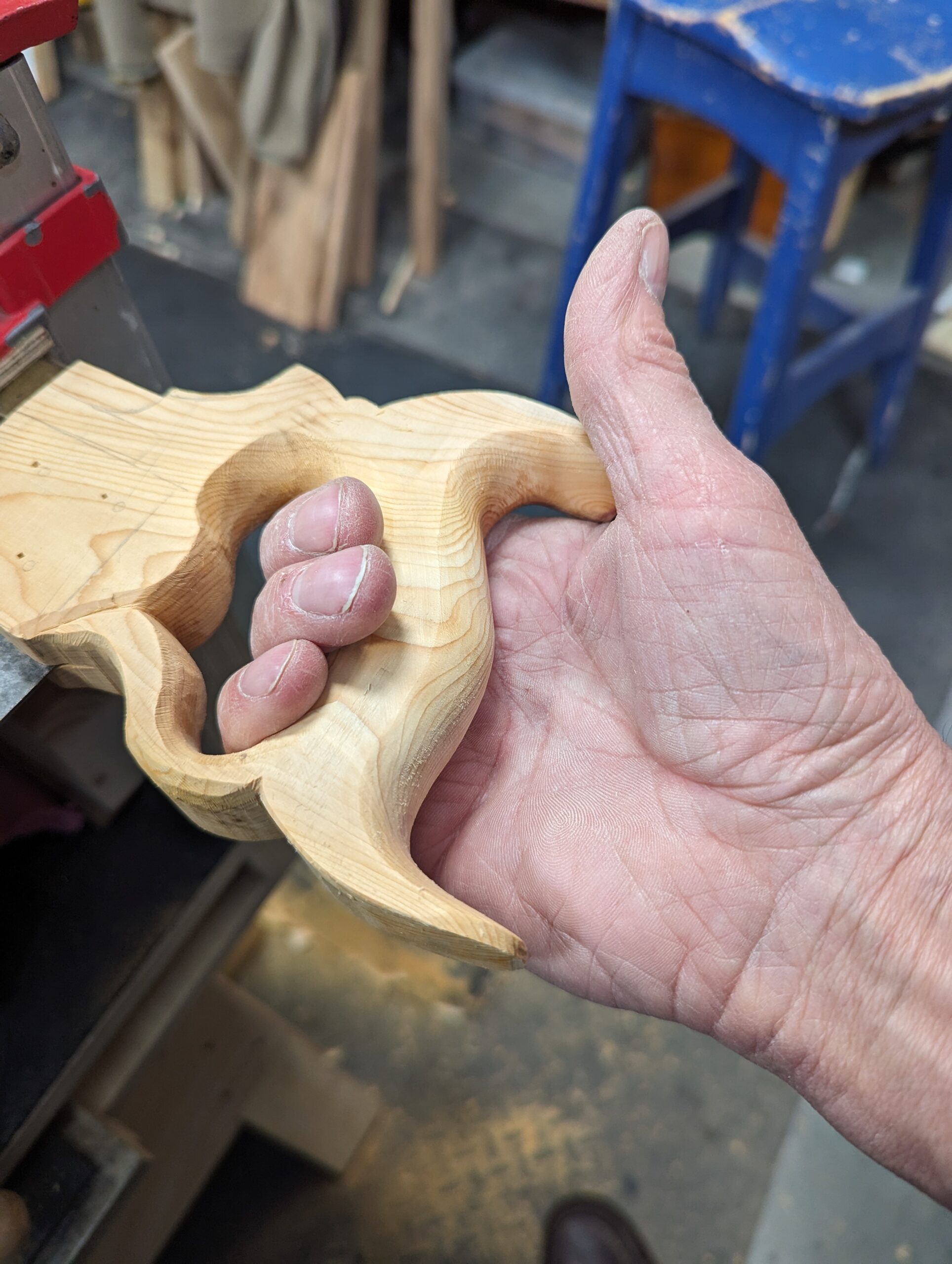
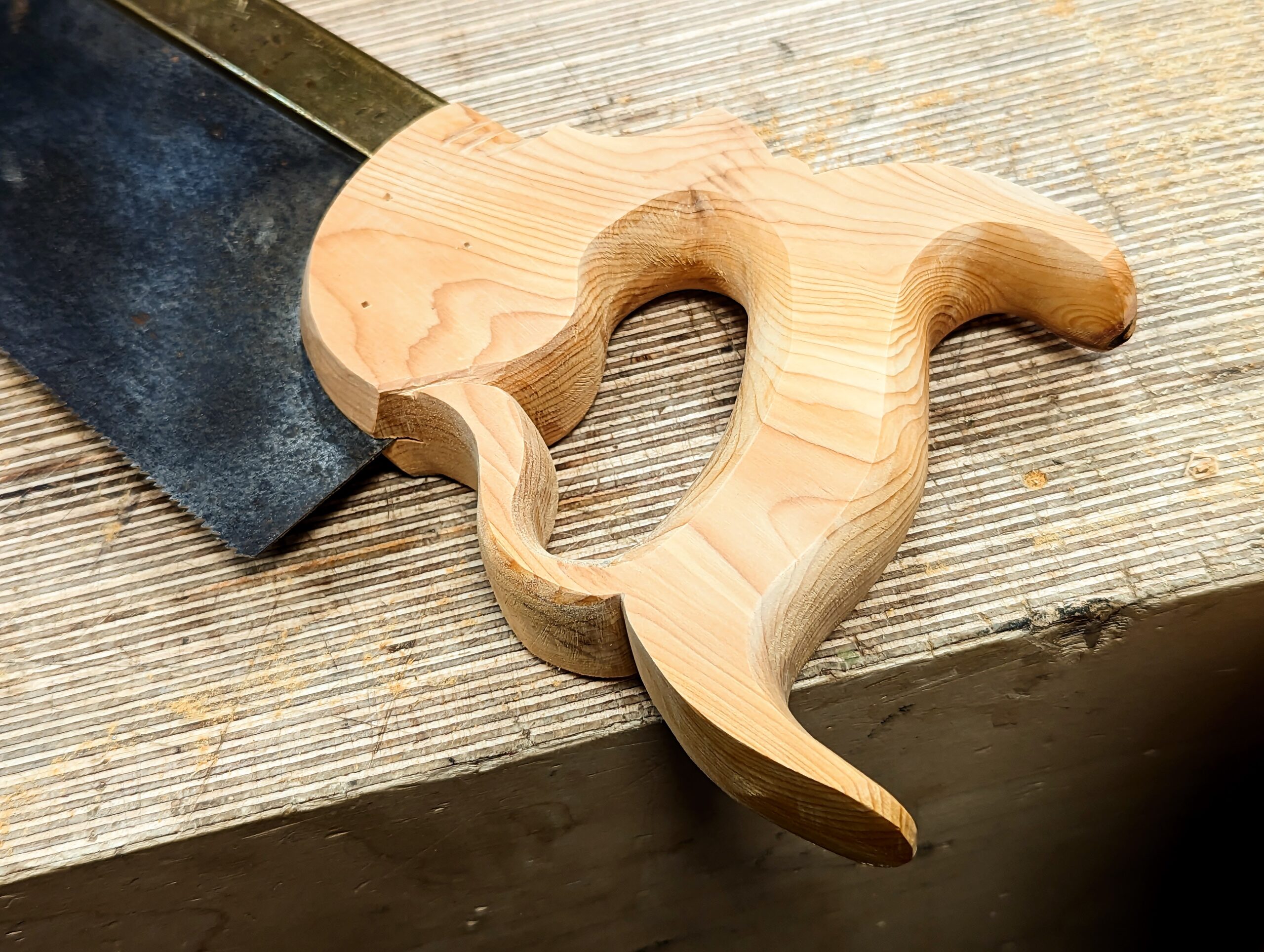
It's important here to notice the height of the handhole opening. It's so surprising to see how people hold the saw when sawing. This is the correct handhold. Three fingers only through the hand hold with the fourth finger pointing along the side of the handle as shown. this gives controlled verticality to the saw plate and direction to the cutting strokes. Plastic saw handles usually allow for about five fingers.
It's surprising the beauty and fit of any vintage saw handle smoothed and shaped by hands two hundred or so years ago. The saw handle I am making the saw for is from a saw the company that began making somewhere around 1770––250 years ago and 70 years before the Henry Disston factory started making.
I used pencil rubbings for different aspects of the saw, to get the precise centres, particular shapes and such, but I often found myself improvising and freehanding lines I wanted to work to for a different aesthetic.
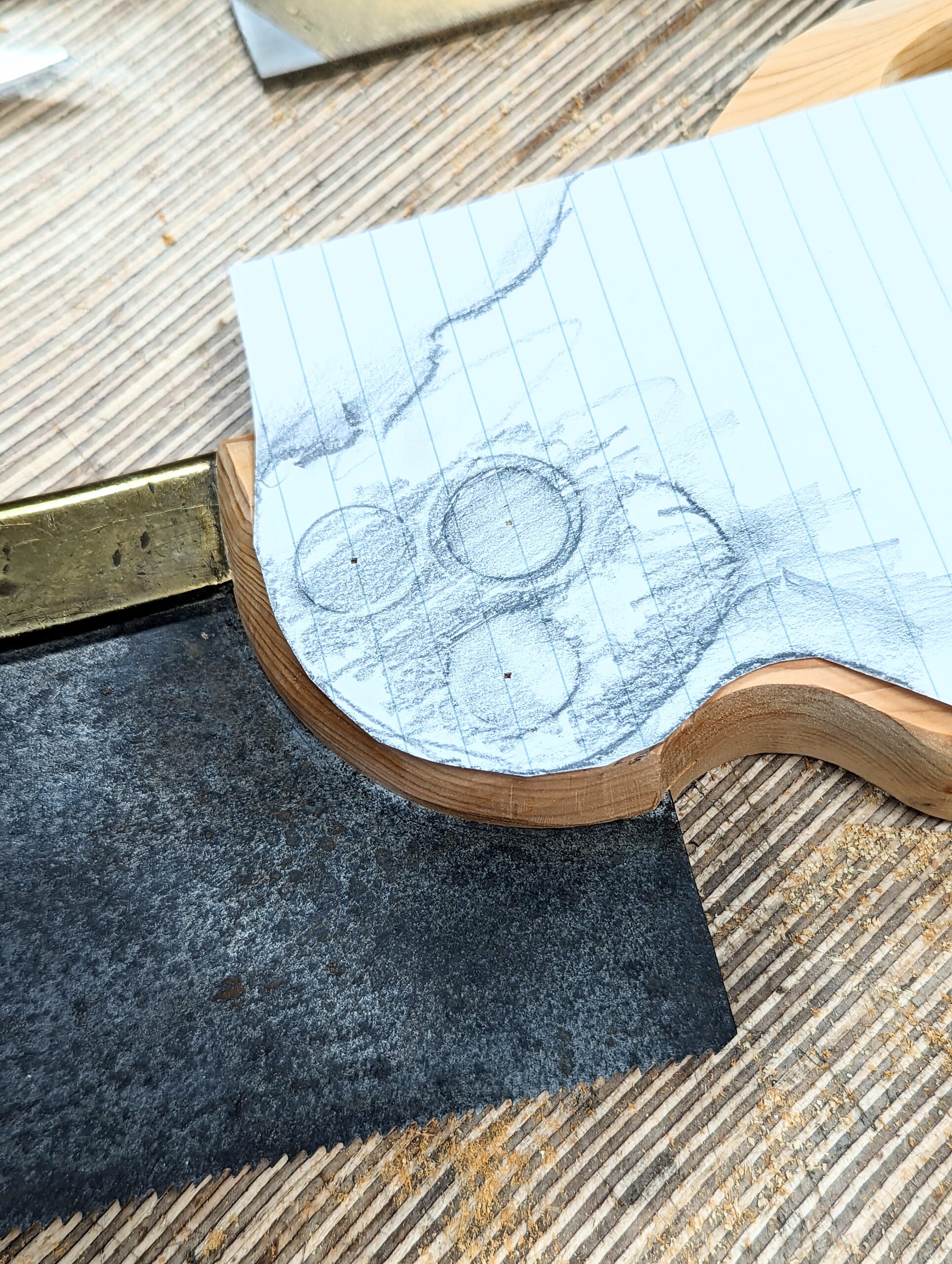
It's importqnt to get the holes centred on those in the steel plate. This steel does not drill at all easily . . .
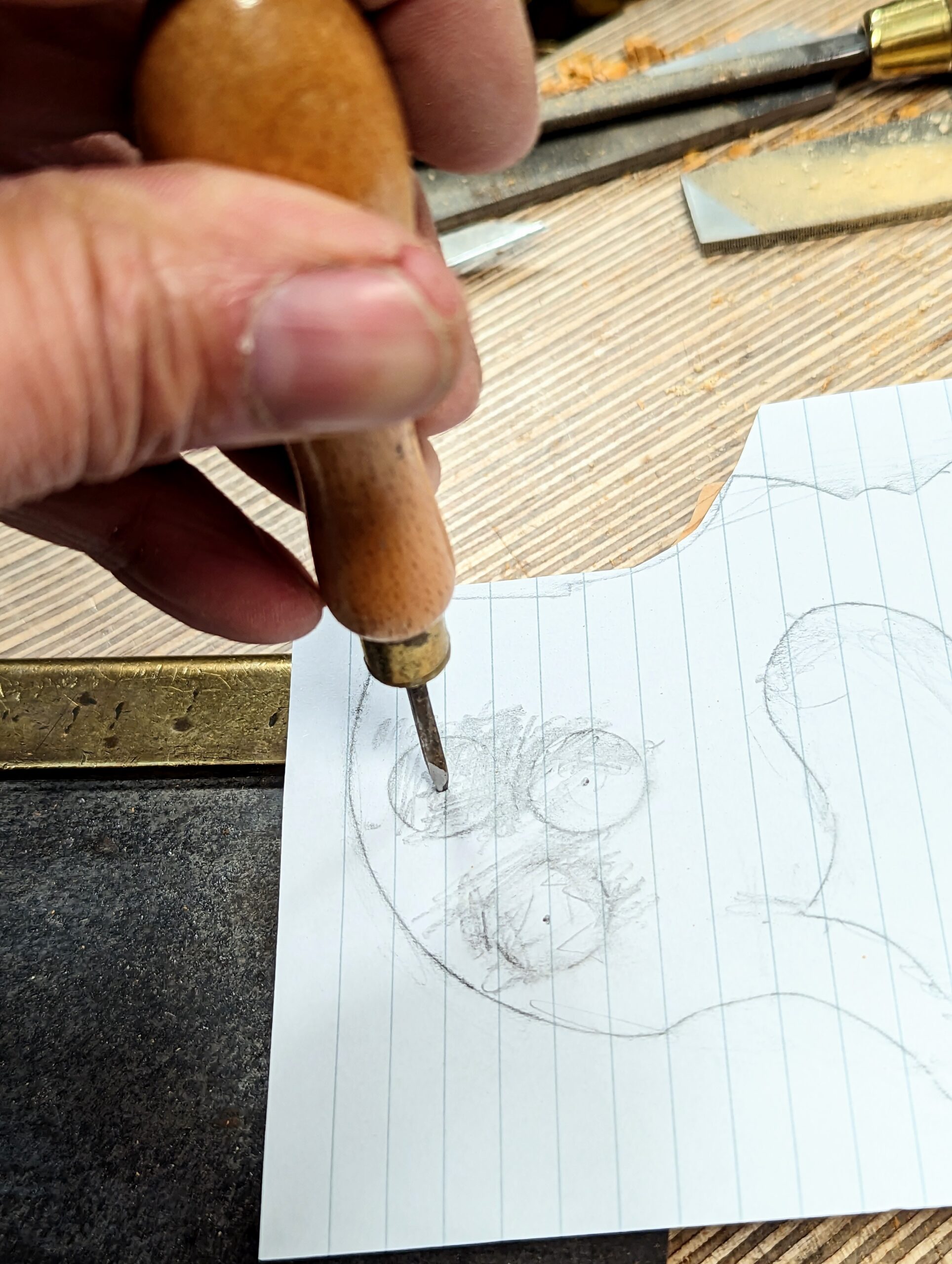
. . . I will check again later before I drill.
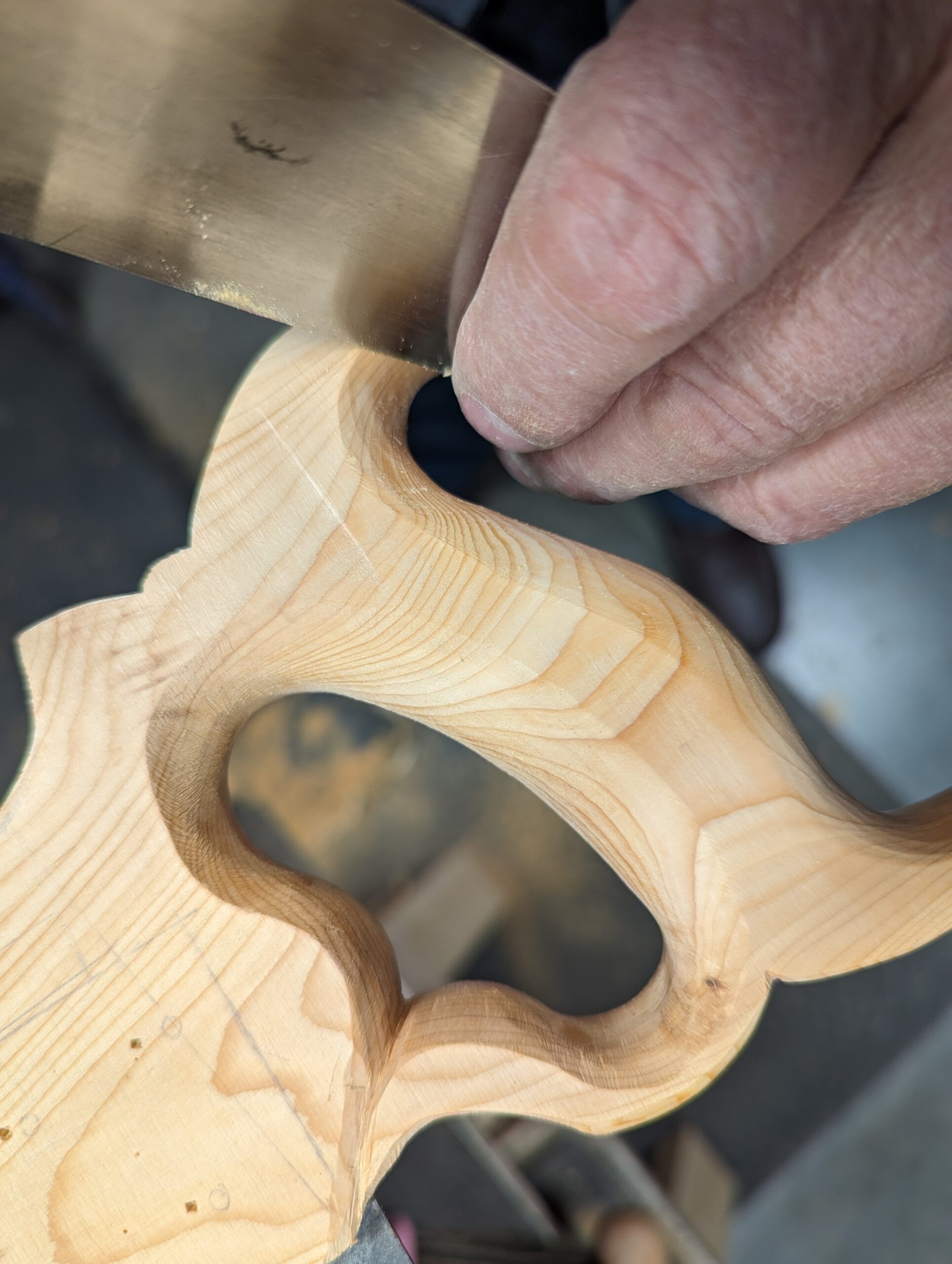
The best scraper is a thin one. This one is just slightly inder half a millimetre thick and bends readily for most of the work of scraping. I also have a scraper made from a worn out Zona modeling saw and that is a third of a millimetre and really flexes well.
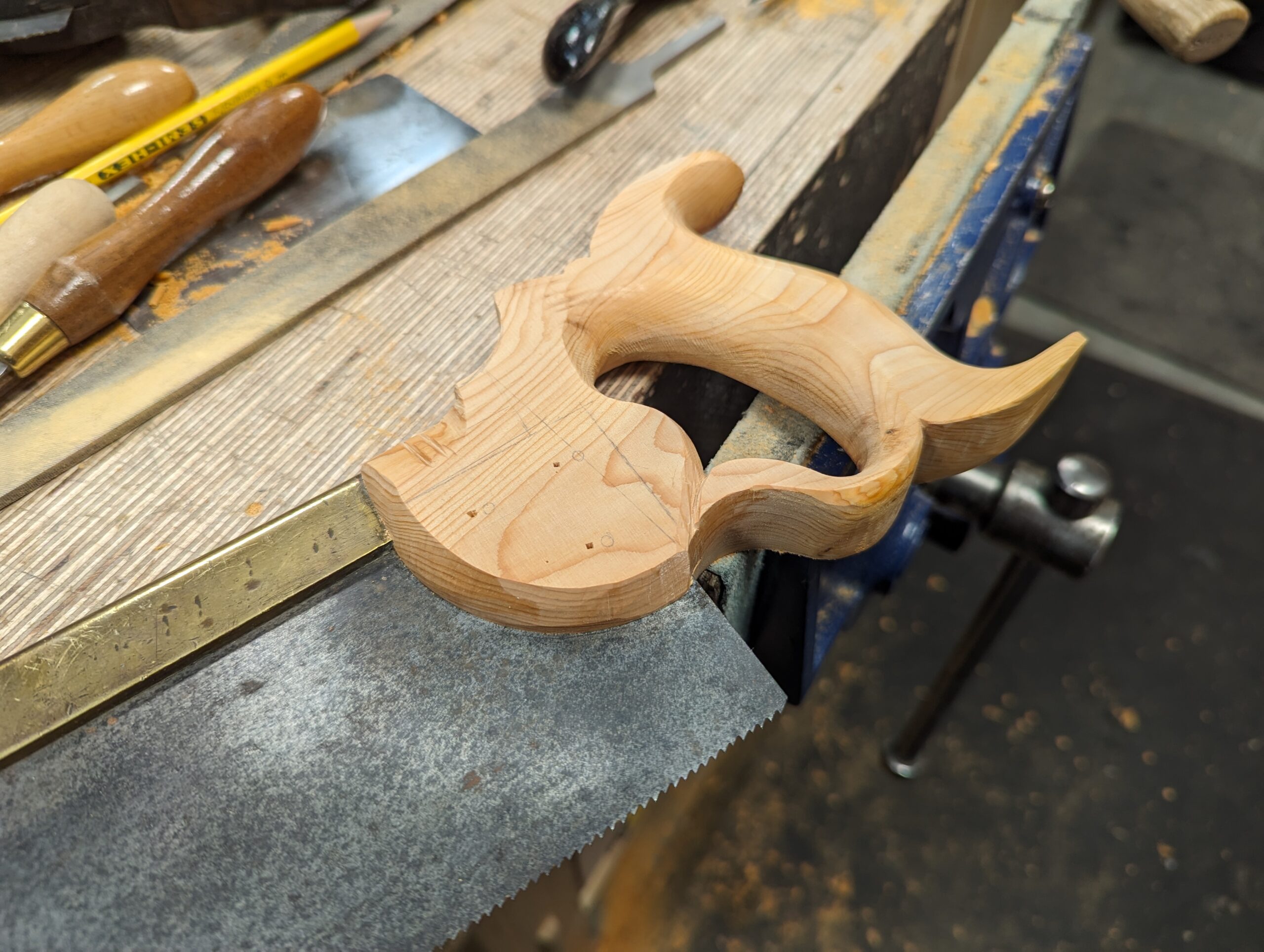
The saw is now fitting my hand nicely and this is the wonderful thing about customising saw handles.
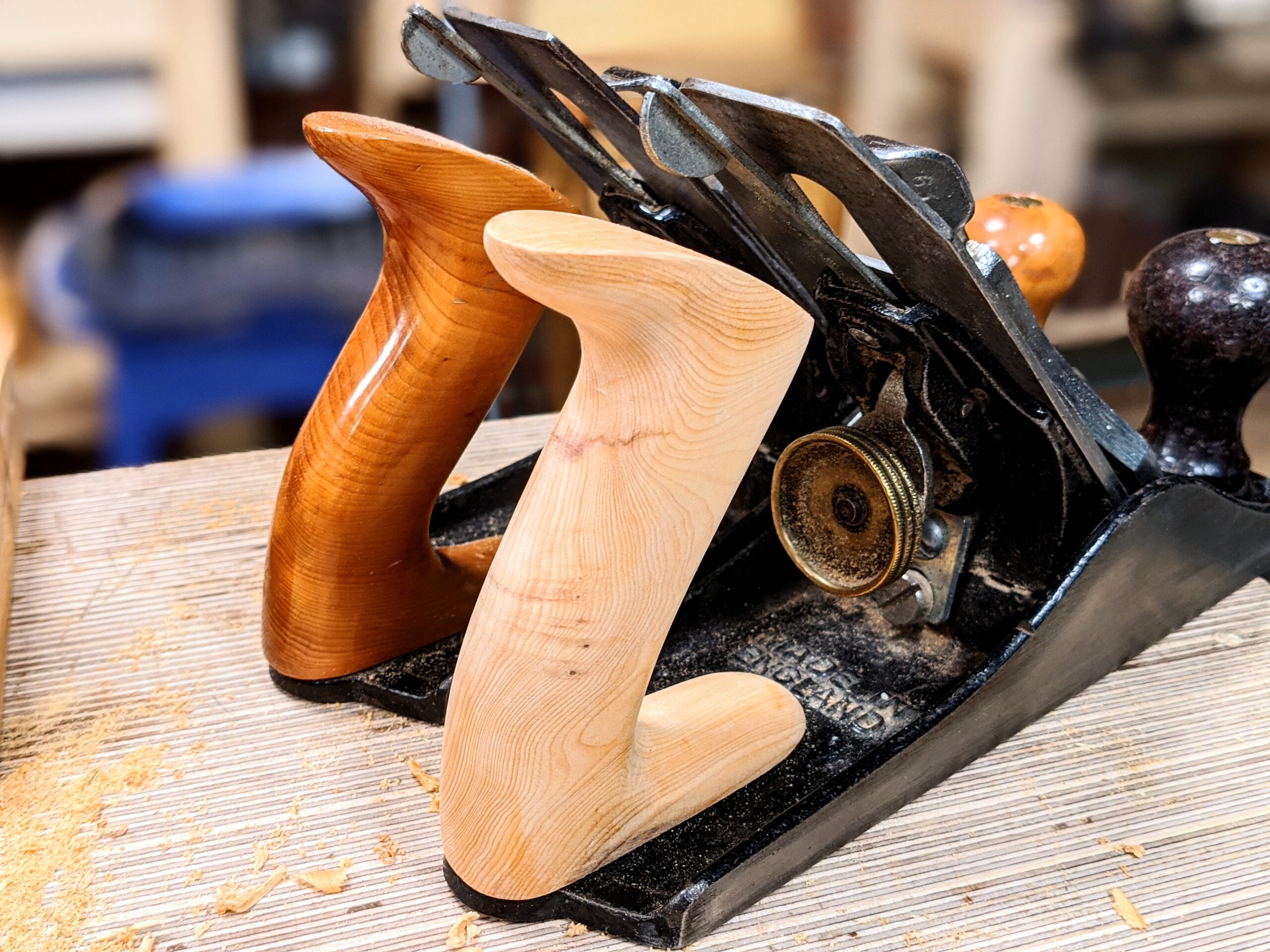
I chose yew for the wood because it makes a really good saw handle and it darkens to a rich colour over about a year. I also did my plane handles with the same wood and I think this will complement those too.
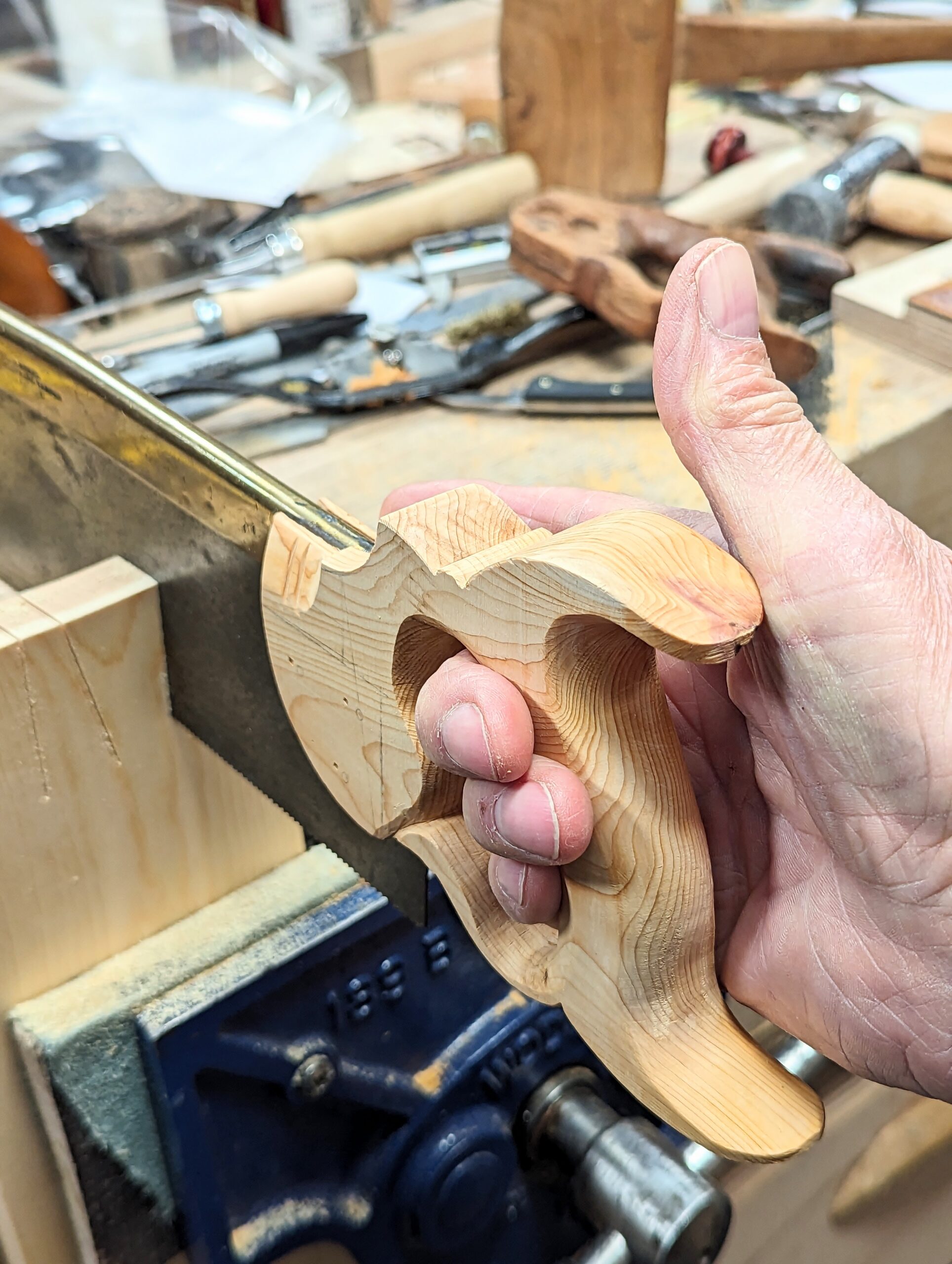
Already the saw feels wonderful even though I have a little morre finessing to do. I could indeed use it like this but I think another hour will give me the comletion I want. I went for a friction tightness between the handle saw kerf, the mortise recess and the plate. Even in cutting these long dovetails the handle stayed in place.
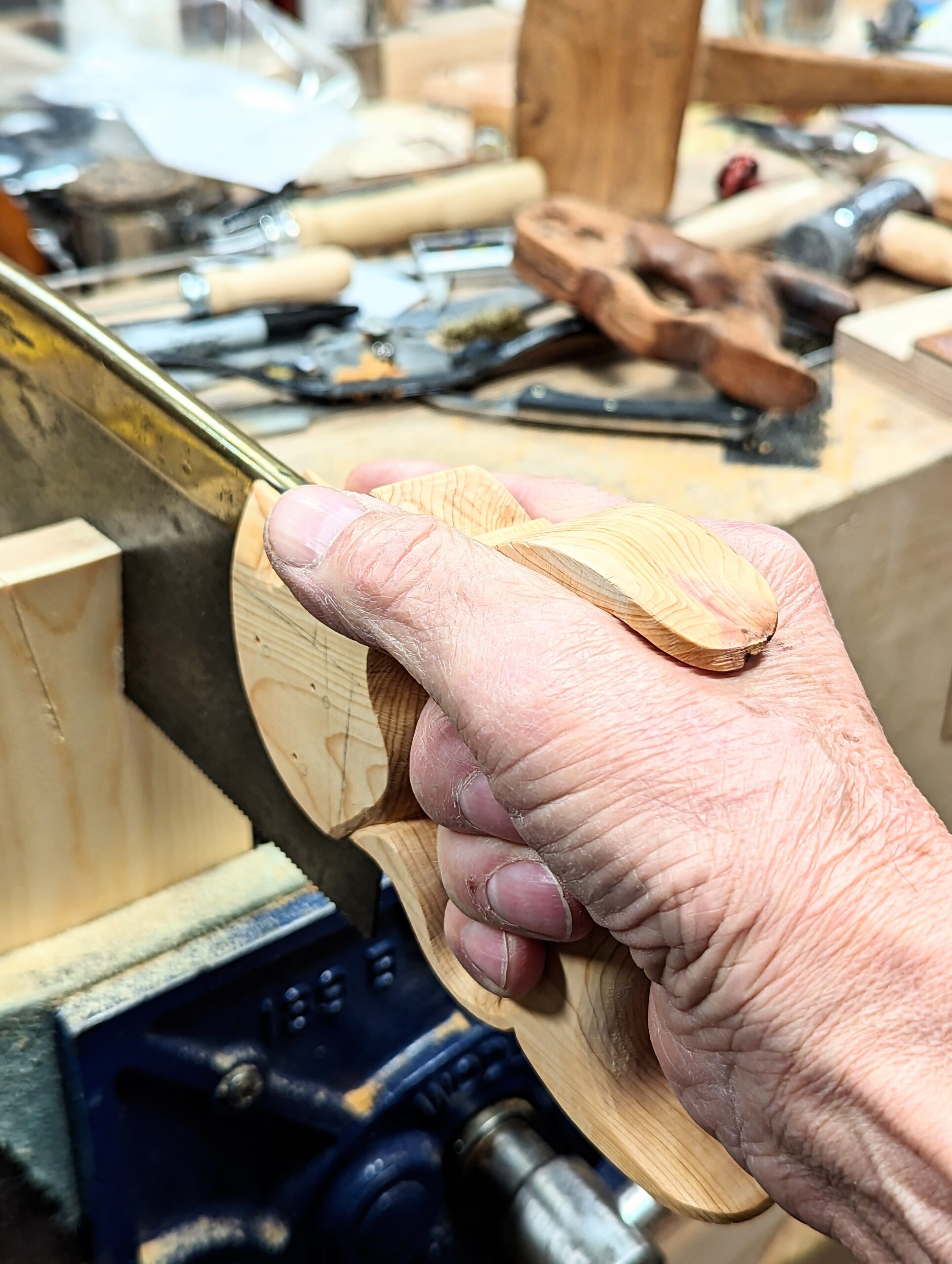
Fits like a glove now. not too much left to do before I drill, fit and finally install the brass saw nuts.
It's almost 5 p.m. My hands feel truly good––wonderful, really! It's not the big things so much as the small ones. I can clasp my hands effortlessly now. When I shower and wash my hair no fingers get in the way. But at the bench, my hand tools slide into and around the handles and I have no need to tuck one finger into my palm.
Remember I never had pain in any of what has happened through three decades. But the one affected finger in each hand impacted the others who came alongside in sympathetic support. This created muscle memory in those fingers too and the exercise is as much about dismantling this as keeping the tendons from being encased in the scar tissue repairing on the inside of my hands. Finger grip/hand and hand extension to the tips of my finger, all of them, seems to have the most radical impact on the whole hand.
Defining the handle on my saw is an allegorical poem I am writing for a four-dimensional experience; imagistic, if you will. As I'm working I'm listening to a favourite musician singer I listen and I compose and make. She's singing The Promise as she plays her guitar.
My friends, finding our way back to what truly matters is critical to our future and by this, we feel healing and well. My hands are finding their way back to what they once were. This rhythmic pulse expresses in my work and working. My mind is synergised to a level I physically feel as liveliness and I wonder how this can be just from shaping with a spokeshave and chiselling with a chisel held inside the palms and fingers of my hands.
Comments ()