
Lone Woodworking
In my choice of individuality, I mostly engage in lone woodworking. There aren't too many of us out there but for most of my life it wasn't lone but shared space and I worked alongside others capably working and making a living from hand made furniture, many of whom I trained for a good niumber of years. My work has changed to include other elements and people with different skills I feel are important. These include writing, drawing, designing, videography and photography too. But the bulk of my day is still making at the workbench in non-commercial, non-industrial ways. I took myself off of the conveyor belt almost before the start button was pushed way back half a century ago. I'm glad I did what I did and understood what I wanted in lifestyle woodworking. I never faltered in the way I engaged with real woodworking and here I am with a few hundred thousand others pursuing the love of handwork.
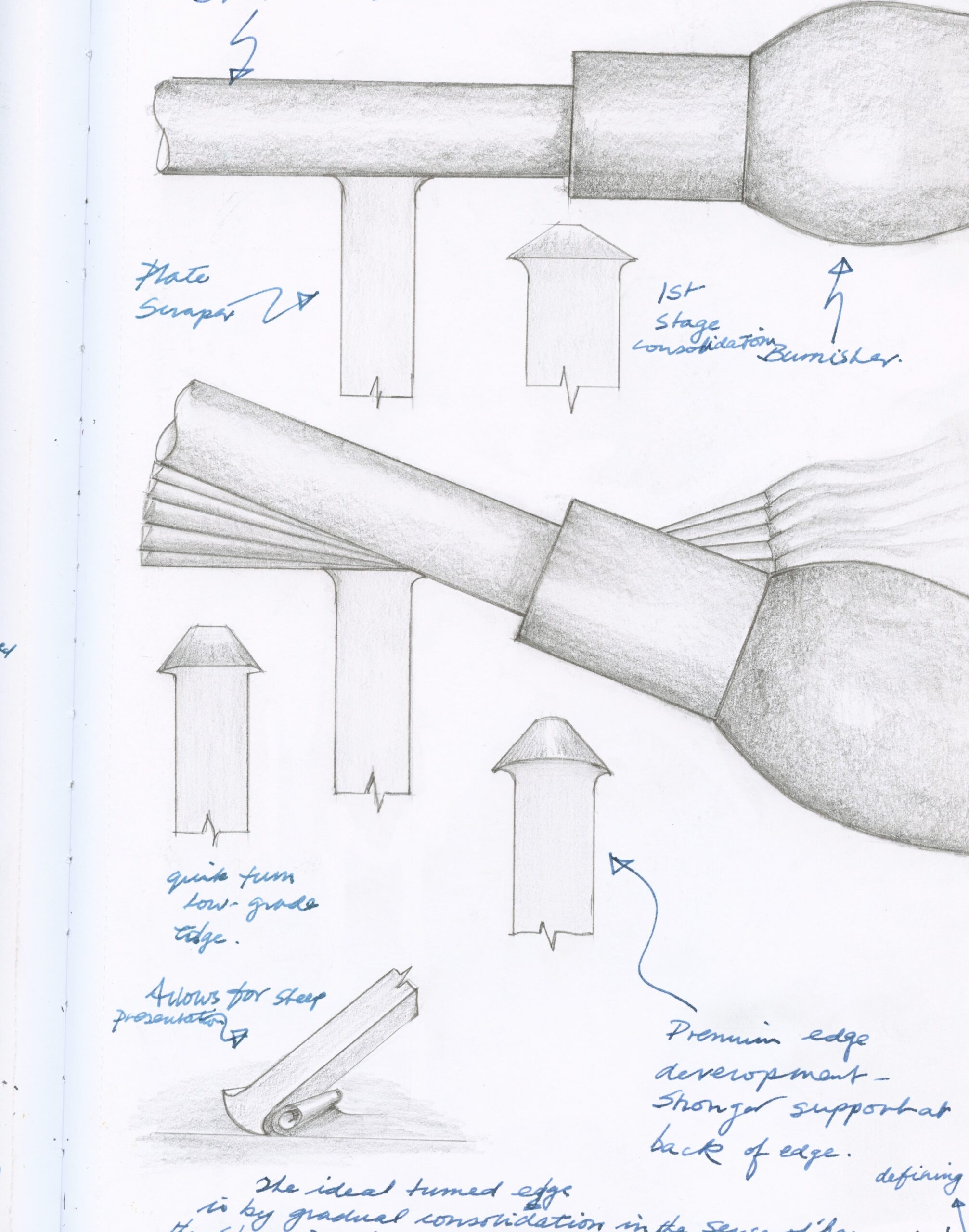
Picking up an HB pencil is not the same as picking up my iPad to sketch with but neither one really precludes the other. Technology serves me well alongside my Luddite making methods which are always a non-negotiable. Without technology you wouldn't know nor would you have heard of me or a hundred others. I doubt that my one time use of reliance on machines alongside my hand work and hand tools will return to my workday. The lone bandsaw does everything I need. One machine I would never have again in my shop is the tablesaw followed quickly by the jointer and planer.
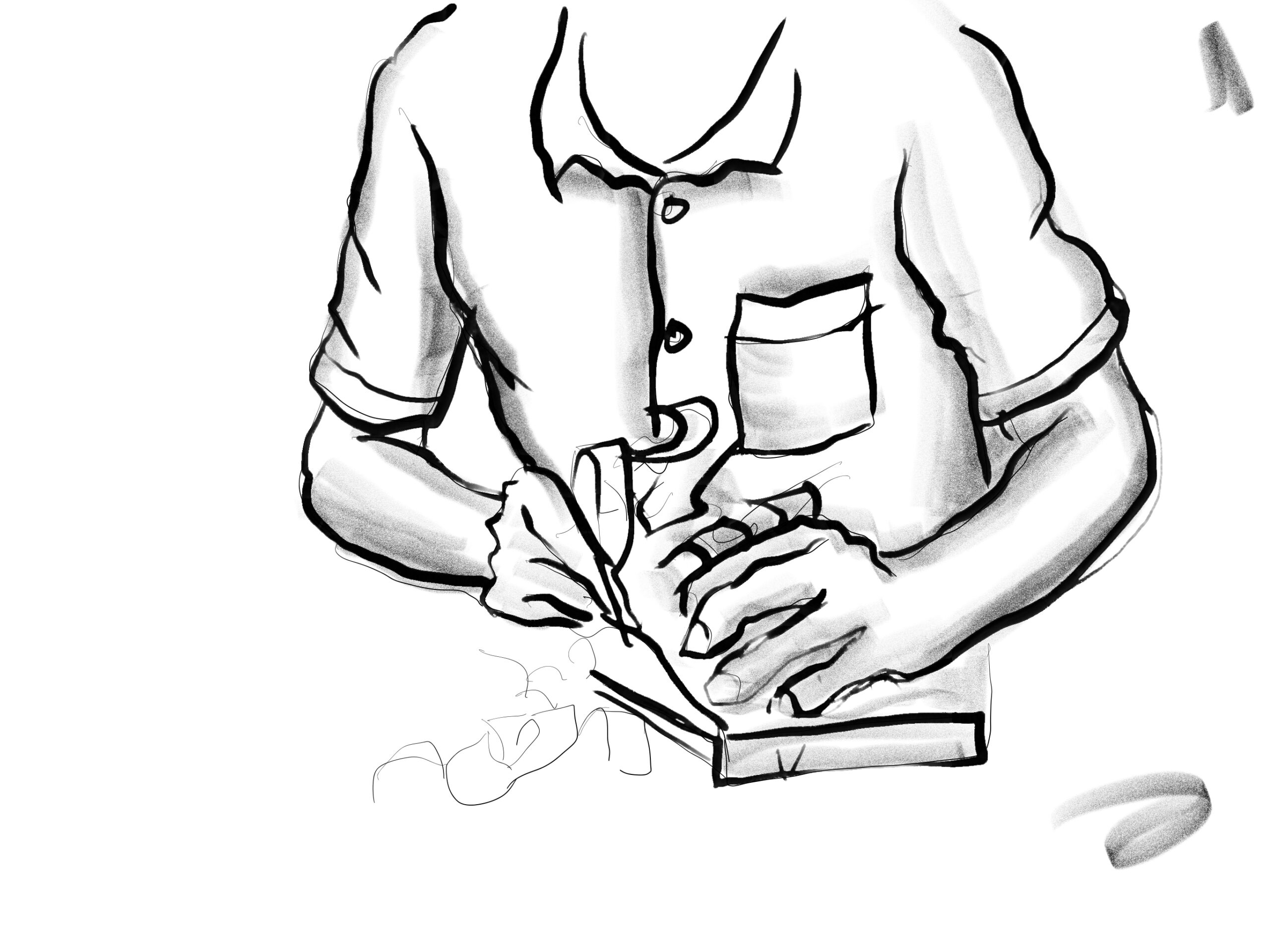
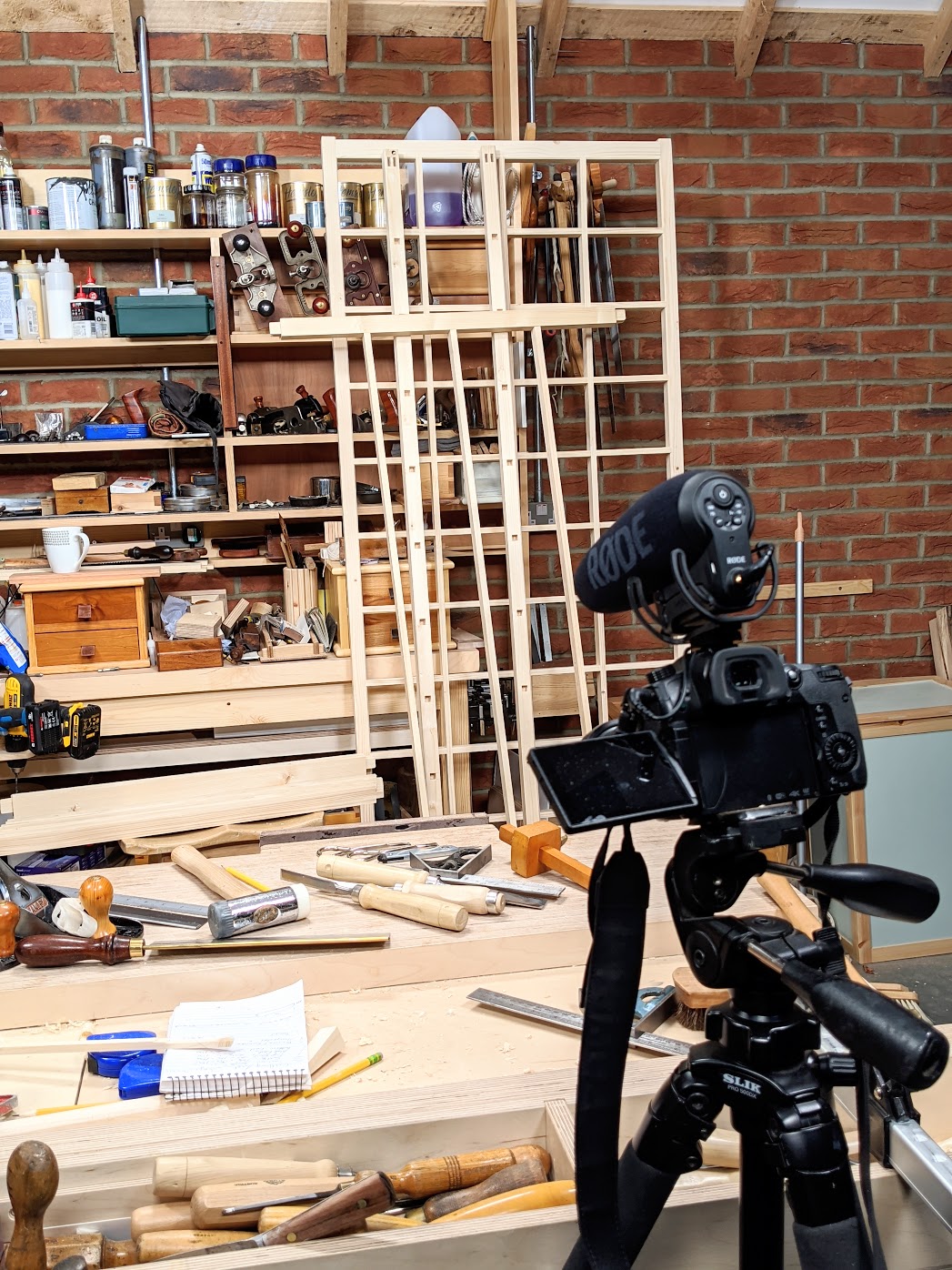
I've just recently returned to self-videoing after a two-year break post-covid but that's for personal interest and not necessarily for sharing at this point. Filming yourself can be problematic and time-consuming but it saves having a camera person riding on a bike behind you or sitting in a cafe as you write and think up something to say occasionally. I'm getting prepared for some future events where some isolation will be the result. I see several pockets of travel as well as the need to capture some events in my world of lifestyle woodworking.
My lone work is very different to lonely woodworking. I am never really lonely mostly because I am more outgoing no matter where I am. My being isolated is an act of intentionality where I work in a sphere because I choose to put a little distance between myself and others for the sake of my work rather than just having no one else to work with. Of course, if you do wear the correct equipment and put in place all of the safety measures associated with it, machine woodworking will be 99% self-isolating anyway. That's for completely different reasons though. Done properly, everyone around you will also be wearing the same safety equipment by necessity. How can anything be more isolating?
I think one of the best times in my life was when we made the pieces for the White House. Nine of us including a couple of apprentices worked all the hours in a day and around the clock to complete in time for President Obama's Inauguration speech. The pieces were installed a day ahead of schedule, so a day before his Inaugural Speech. This shared space was really a rare and more magical experience never to be repeated even though it did have its issues surrounding personalities, adverse influences, etc . . . but by good and patient management and a spirit of conciliation, we got through. One other long period I had bettered even that though and that was with my son Joseph when we made his cello together. That takes supreme shared time for me.
Machines have very much changed the way the majority of woodworkers work wood and that's both in professional and amateur realms. In equal measure but perhaps slightly less so for professionals, people shy away from hand work and this distancing has changed the face of woodworking altogether. I suppose we might often copy professionals without realising we were actually sold out by them for the quicker and faster thinking this to be better but not knowing their better would likely be a lesser way than we were actually looking for. We thought that they cut dovetails and used hand planes without realising that we actually are more likely to know more about such equipment than they do. I most likely would never ask a carpenter today about how to sharpen a chisel or set and use a bench plane for planing than a car mechanic. But in some way, the irreversible happened when machine woodworking transitioned from commercial realms to become accepted in domestic home workshops. It quite quickly became the traditional way in all realms woodworking throughout the USA first and then the rest of the world but to a much lesser extent.
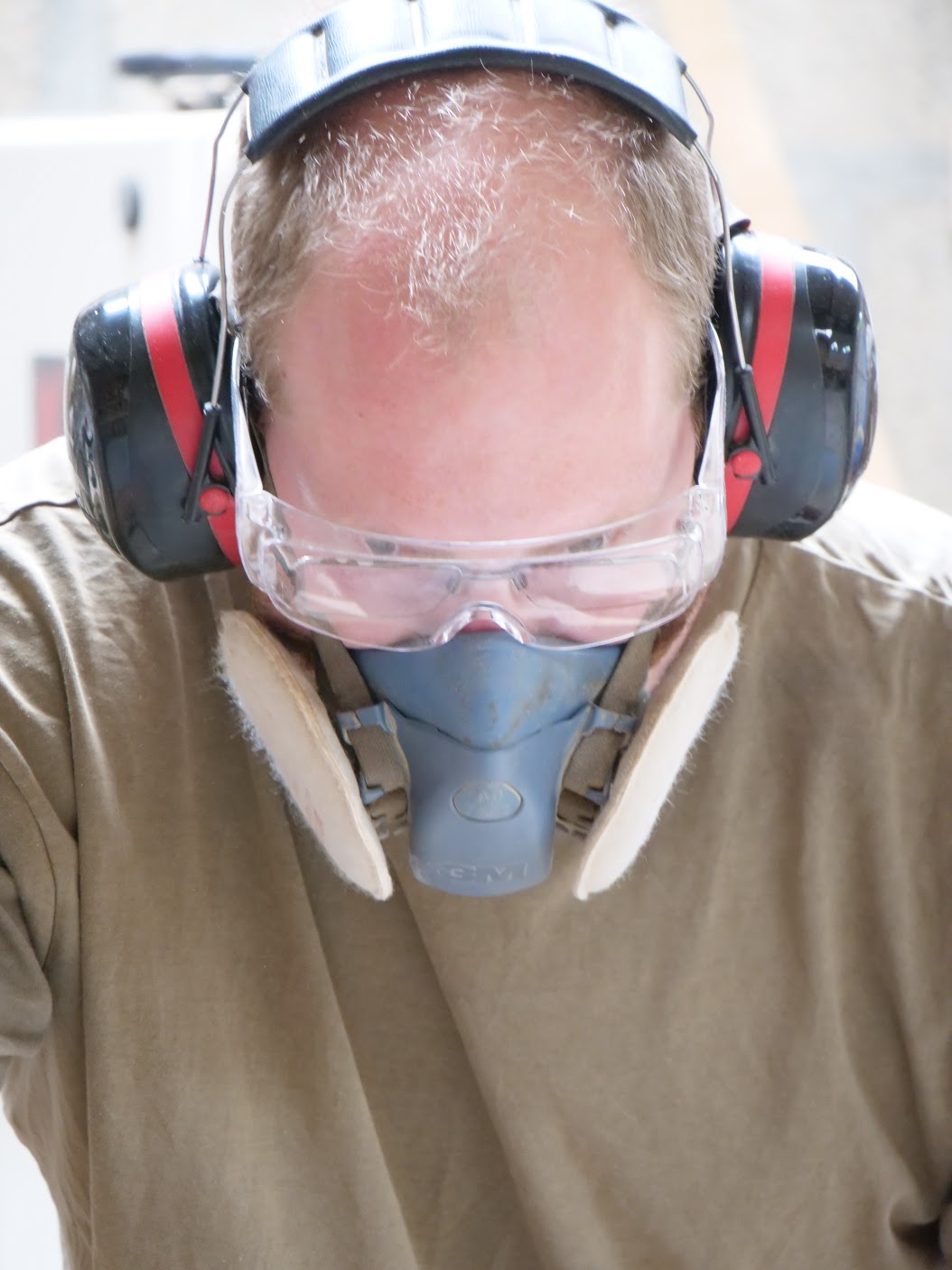
The precursor to machine woodworking in domestic home realms evolved with the electric hand-held drill around which accessorised components like circular saws, sanders and jigsaw attachments came: hard for us to think that the first electric drill was actually invented over 130 years ago (an 1889 invention by two Australians, Arthur Arnot and William Bryan.) and readily gained support. The first non-human-powered cordless drill came to us somewhere around the early 1960s. This prelude into powered hand-held electric equipment rapidly distanced woodworkers from hand tools to a place of embracing electric hand-held and freestanding machines. By the start of the 1980s, much of woodworking had shifted greatly with woodworkers believing automatically that woodworking by electric and battery-driven power automatically improved life altogether without thinking anything of the deskilling that was taking place. Another ingredient unrecognised at all was the isolation by noise, dust and danger needing dust masks, hearing protection and eye protection; all machines in woodworking necessitate personal protection and the protection of others in the room. This would distance all users from one another for prolonged periods. I think that it is worth mentioning that back in the ancient mills of Britain, factory workers learned to lipread because of the noise in the mills and then, as something known as progress continued, the workers became completely and partially deaf because of the incessant noise in the mills where the looms never stopped. Hard to lipread with a face mask on. We learned that with COVID.
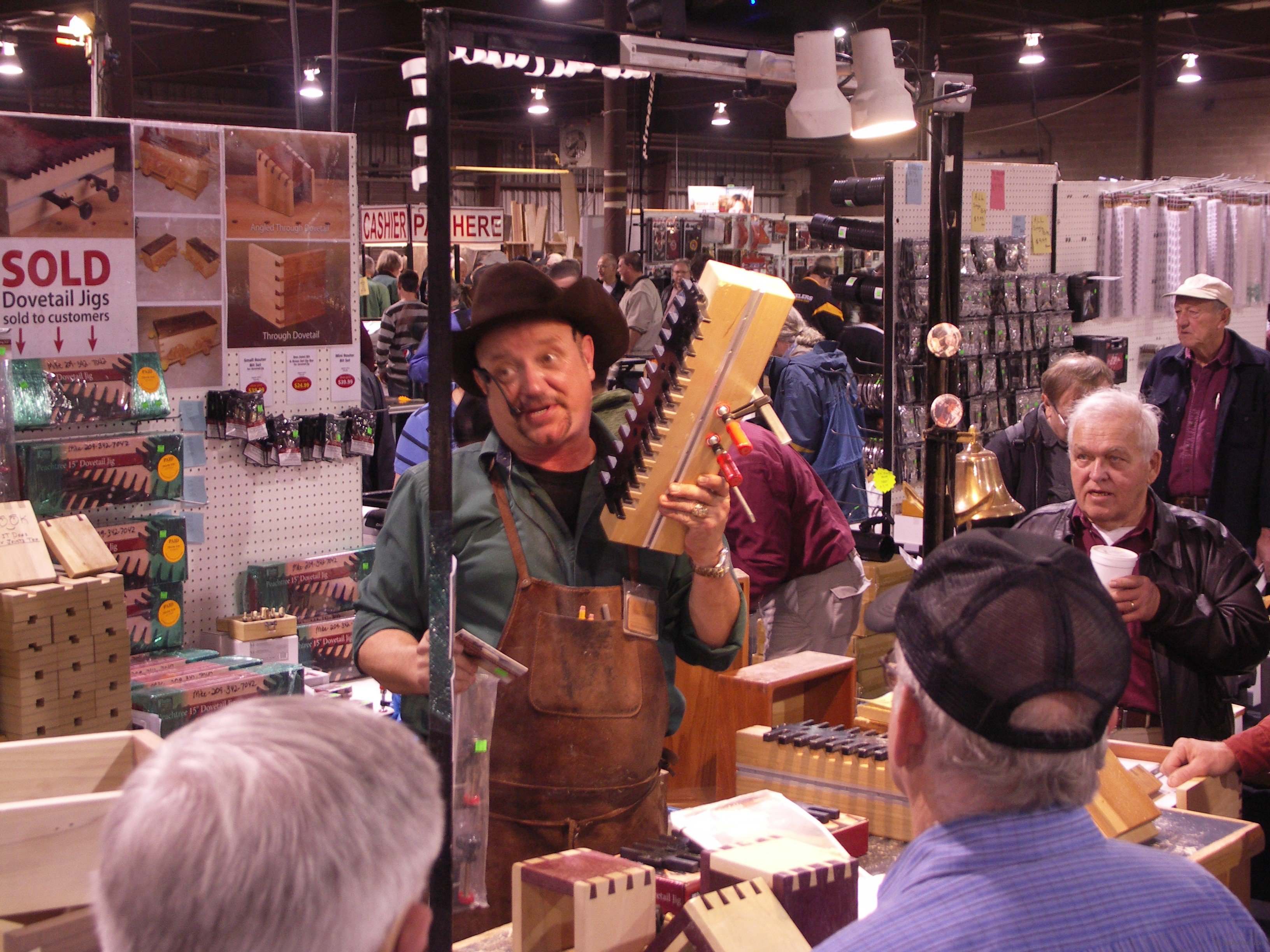
Dedicated machines in miniature form soon came as powered routers, jigsaws, skilsaws and sanders of various types. Following the first handheld drills, I doubt you will find many home shops that don't have a shelf full of them. Especially is this so since the umbilical cord of plug-ins was severed.
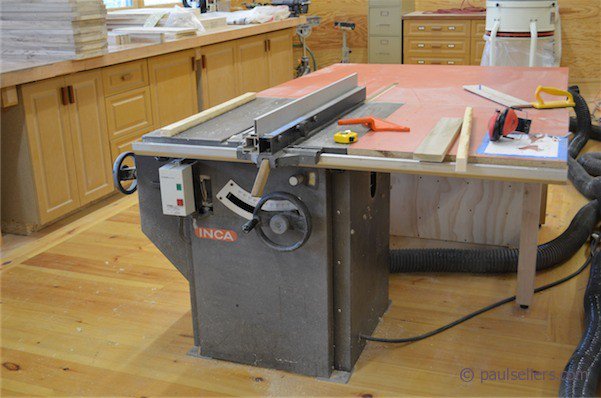
The larger, commercial bolted-to-the-floor machines like planers, jointers, mortisers, tenoners, bandsaws together with a wall-mounted swing- and radial-arm saws tackled domestic markets with down-sized machines. This was a bigger market than industrial production when you think about it. Suddenly they had hundreds of thousands of individual domestic, amateur woodworkers on the North American continent alone buying three or four machines for their garage workshops. By converting the DIYer woodworker at amateur level to become the new tradition they very effectively replaced handwork with machine-only methods. This was one of the most successful conversions in any craftwork ever. In a matter of a decade or so, most American woodworkers had shifted to become mainly machine-only woodworkers and in many if not most cases hand tools were shunned and rejected as being out-of-date methods. The reality was this though; mostly it was the actual skills that would be lost with each so-called progressive year of advancement. Slow-start, spring-loaded plunging routers advanced the cause and battery-driven power became commonplace. I say all of this based on my personal experience arriving stateside as a migrant in 1985 and then watching from a distance the changes taking place. Of course, these powerful manufacturing entities almost owned the woodworking magazines by their advertising bucks. Some magazines of the day had 70% of their pages dedicated to advertising machines in full-colour two-page spreads and more.
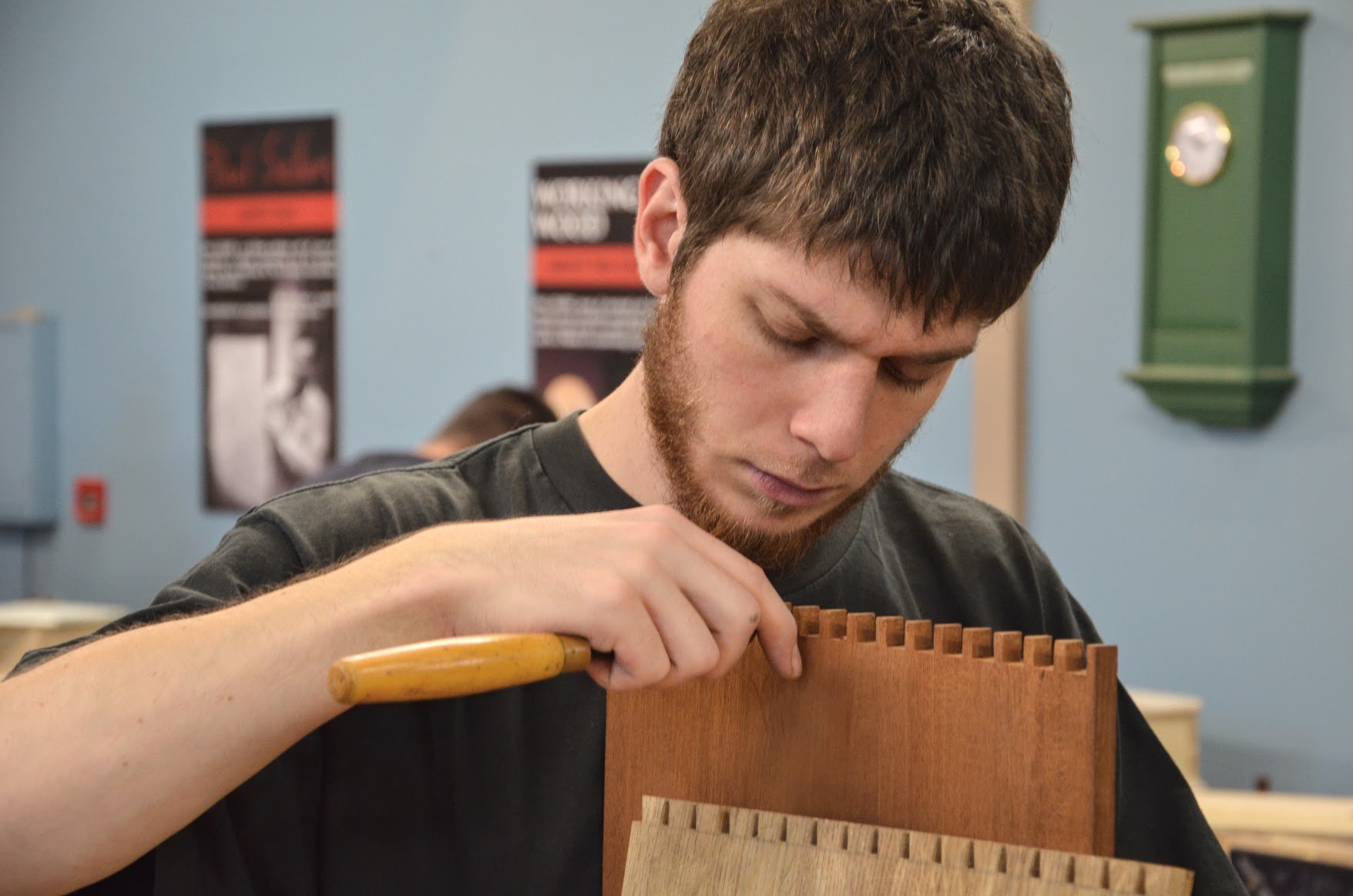
I may be lone in my working most of the time but this is by personal intent and not by the shifts in how we make and the noise in woodworking today. In my woodworking, I rarely experience loneliness as such and that's because thoughts and feelings take a different tack when you work on your own with hand tool making. Of course, it has nothing at all to do with being standoffish or in any way adopting some kind of superior air. Nope, it's not that or anything like it and I say that because it can't be that. These two spheres, machine working and hand tool working are not the flipside of the same coin in any way simply because they are distinctly different to one another and there is practical need for both realms. In my world at least they are as near to being unrelated as a second cousin once removed. Lone woodworking for whole days and whole projects is most likely the most efficient you will ever be because you are not managing factorial production but only your own. Once you enter the realms of mass production using machines and employing others the tasks change and you end up managing people. This usually means that you will be your least productive as far as making goes but more productive through others on production delivering results in good measure. Most individuals eventually get overwhelmed with work and take on others to do some of the work. The more you take on the more management you need to do and often to a point where you can no longer work creatively to make but must work creatively to manage. This kind of overtake can be wanted by some and not by others hence many individuals find a more hermit-like environment to create in
The isolation of lone woodworking enables you to focus more deeply and over prolonged periods. It also helps in developing thoughts, ideas, project parts or the project whole and do so very progressively. That being so, we might need to engineer the time for the freedoms we seek. When someone else is in the room you get more distracted even by a single or simple comment (or an action even) just when you need it the least. Is it handy to have someone there to catch a board or an exchange of thoughts and words? Sometimes yes and sometimes no. I find I can only really experience shared creative space with one or two well-known and used-to-me people. Usually, it will be with those I have trained through several years who better understand this or that for good reason and without any need for explanation. I find protracted answers with more than one person destroys thought patterns, work engagement and work processes. regaining the moment can sometimes take quite some time in the same way losing a thought might just be gone forever when you are composing something in word and any interruption means it is can be lost forever. Throughout most of my life working I have always taken in apprentices and this has always been solely for their benefit and good not mine. The benefit of any company there is far outweighed by the loss of the peace I have in working on my own. That said, there are times when I can work close by someone else who is equally lone and engaged.
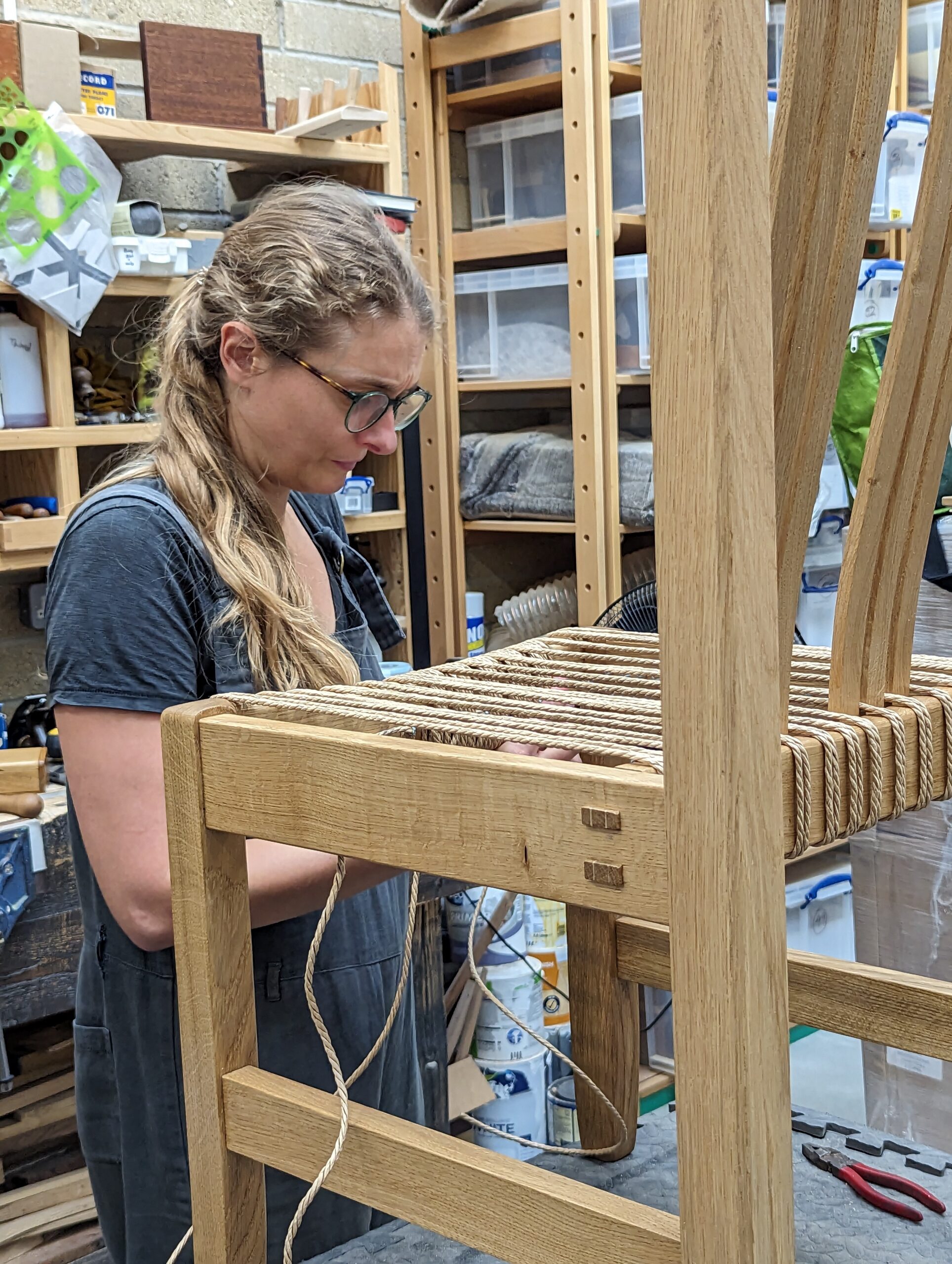
Sometimes, often enough, Hannah and I pass like ships in the night throughout the day and for several hours. At the wrong points in time, day-to-day questioning that might seem quite acceptable in other realms can be quite intrusive in my workspace. This can be tricky for others to work out. In writing and in making, as it is with all people everywhere, I do not multitask and that is simply because there is no such thing as multitasking. Though in our own pride, we might think or be told that we are great multitaskers and often give this term credit in the lives of others, according to research there is no such thing. If we get anywhere near to seeming to be multitasking then it is more likely that we merely have good ability in prioritising the minutest of details to set an order to expedite events that get what we need done. Even driving a car, where many tasks are done in synchrony with one another, seemingly at the same time, the journey becomes prioritised in the immediacy of various demands. This series of operative needs means that we 'tune in' and 'tune out' according to needs in the journey. You are basically fine-tuning the steps by listening and watching according to the need of the minute –-nothing more. Do too many tasks in the same sphere and close together and we end up with a bottleneck of tasks we might better call chaos and confusion. Apply this reality to working in the workshop with too many plates spinning at once and you will indeed lose most of the ground you hope to gain because instead of the plates spinning you end up spinning dizzily.
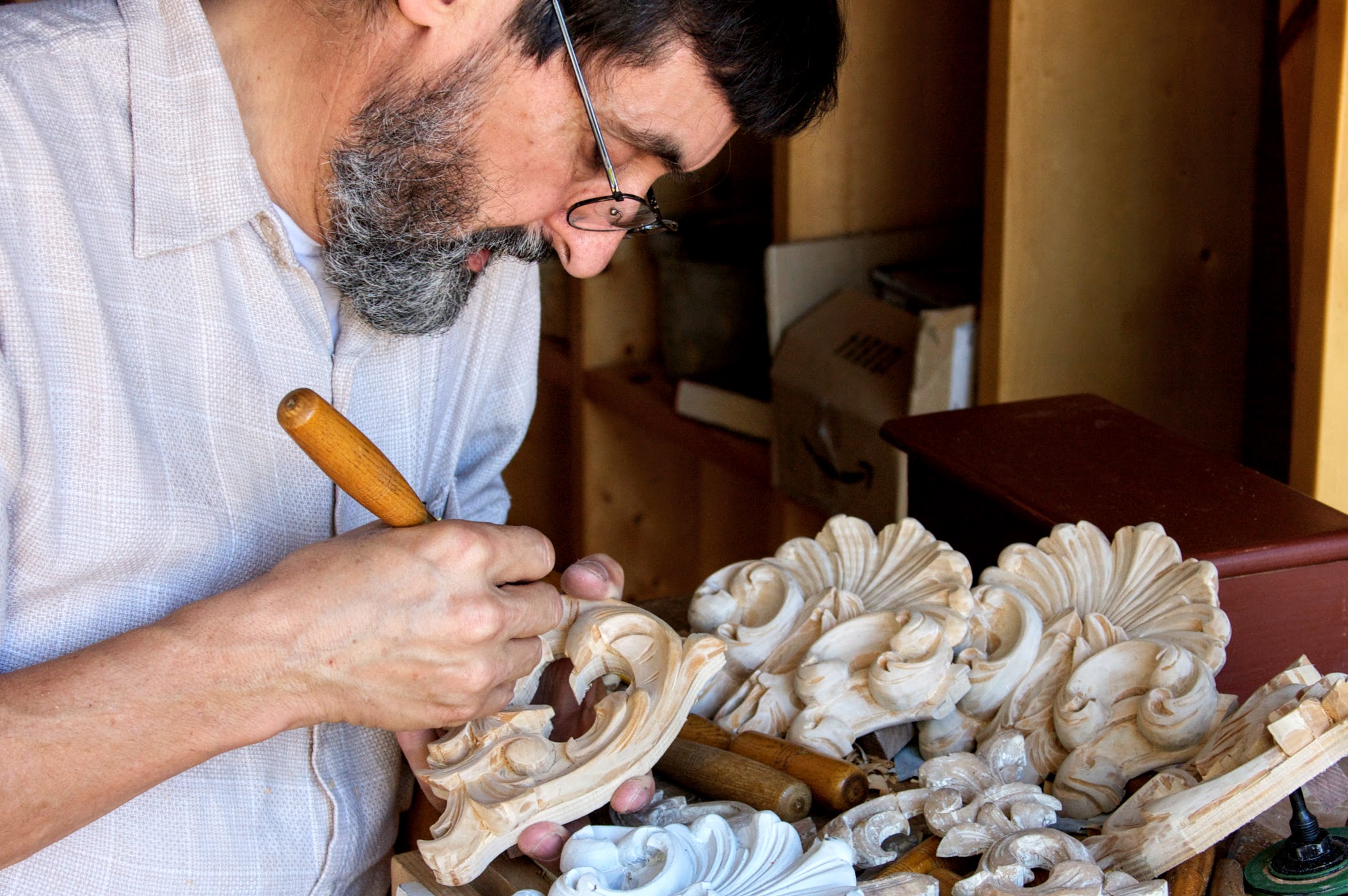
On my own in the shop is not loneliness in the same way that when you work with hand tools your brain and body will be anything other than totally engaged with the work. Working wood by hand is very different to other methods of work when you are the sole maker. Handwork is and always will be high demand. It's a sphere of engagement similar to many other tasks we undertake be that programming, drawing, writing or whatever. In essence, it is preclusivity at its best so an intentional loneness to be deeply engaged in thought and deed. Nothing can replace this. Prioritising the work you want to conclude in a given period needs this depth of thought. People without a plan rarely achieve very much of anything. Planning is an art and a gift some people have and some seem less prone to have or indeed want. On my own, the plans usually come together very positively. I usually feel cheered in the making of anything in that mostly it's bringing order to my making and that without distraction. I realise this to be more a luxury in a highly invasive and more toxic world where time is constantly being infringed on invasively. For some who have families and others who work with others, there is often no choice. But I have spent the best part of 60 years without the luxury of lone working. Apprentices, other people, family and so on have always been an important part of my making and training and I would change nothing that that included. These days, I get three or four days in a week to make, plan, sketch, write and work more on my own. I rarely preclude the others of it, just have my now 'free days' to create for the work we do videoing and making sure the work gets done before I am too old to do it. And I am close to concluding the foundational work of it. Very Close!
Comments ()