
It's the Subtle Things
Part 1
I often think that woodworking by hand delivers results that surprise those extolling the virtues of machine methods and the accuracy machines deliver. I doubt that the accuracy I achieve is as good as they might think, but my end result is for me most likely what I want rather than that which a machine gives. I don't want a machined product but more than that I don't want a machine-cut dovetail, mortise and ten joint or a housing dado from a cutterhead.
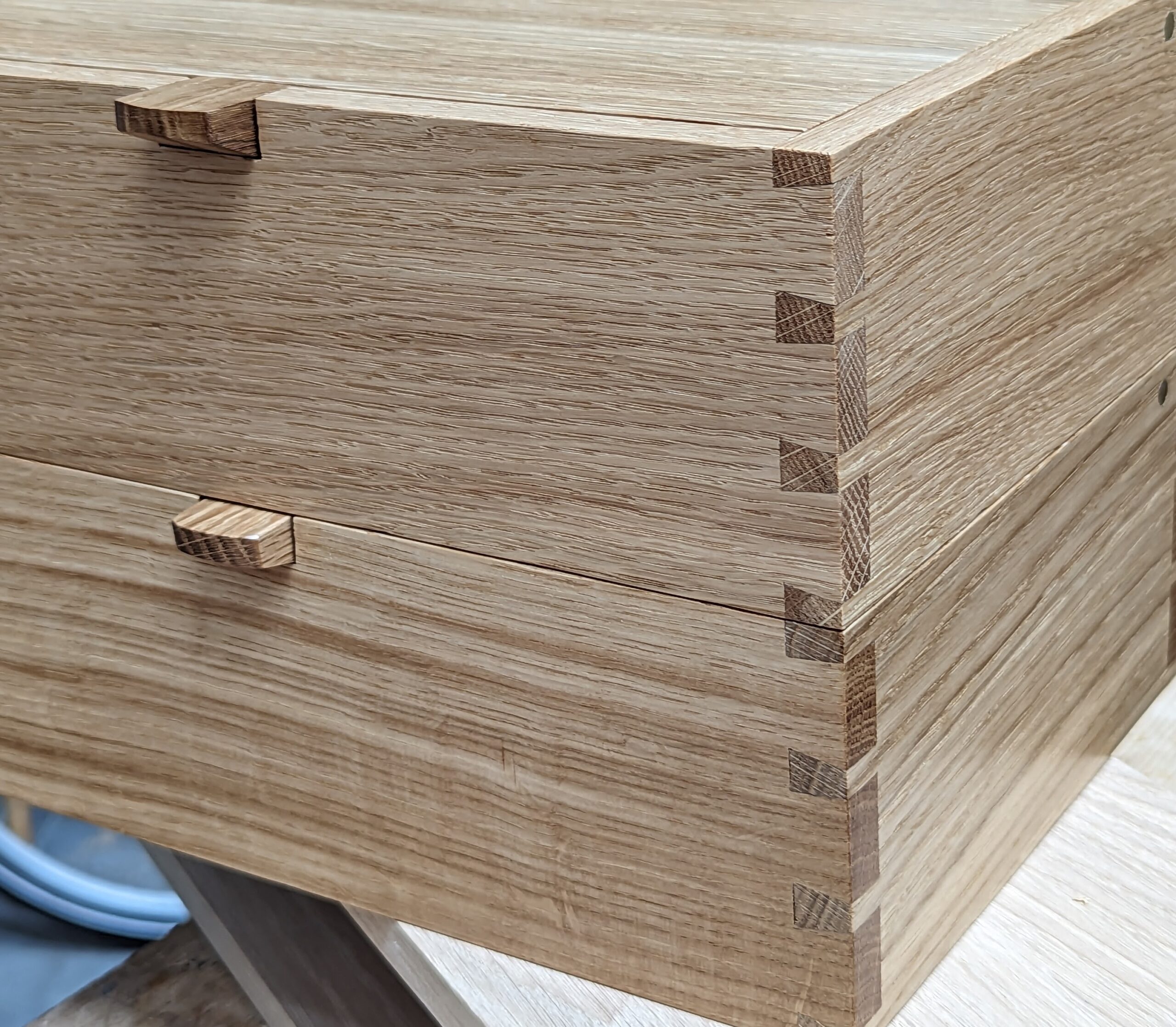
My world is, of course, intentionally very different to most others and especially those within the industry of furniture making. I think it's fair to say that most furniture makers and woodworkers, 98%, anyway, use machine-only methods except where nicking out a corner for a hinge recess cut with a power router is needed, to square things off.
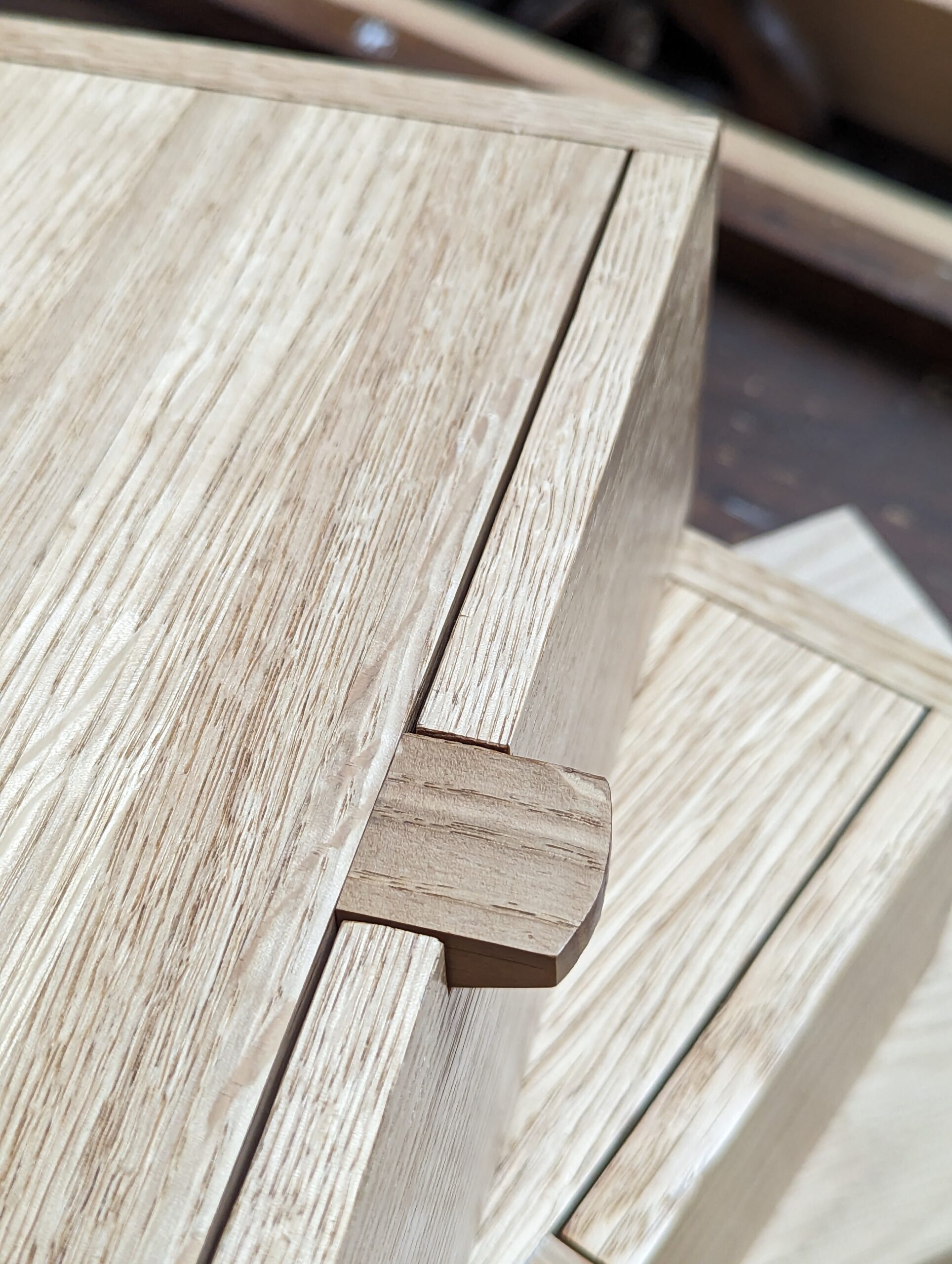
It's just that we with hand skills can deliver a stroke that counters the inaccuracies of an adjacent piece in the twinkling of an eye and the subtle twist of a wrist. The advantage of working inaccurately far outweighs the intolerance of machinist legalism for me. I can whisk off a thou' in a split second and end up not just looking good but doing good and then feeling just perfectly fine too. My out-of-square edge leads the door quietly and gently into its recess to leave a paper-thin line around the door's rim that looks like a thread of cotton stretched taut from point to point in perfect thinness. It's done without fuss and a half-width part-length stroke feathered in at a slight tilt that makes the whole length of the gap so even it cannot be believed even in the seeing of it being done in front of them. Mostly it's their belief that the machine will always, always do things better that blinds them to the reality of skilled work bringing the reality of ancient technologies into play. It's about remembering that these technologies not only worked but worked exceptionally well when a man made just one piece ior two. No, it's important to see that it simply did not keep pace with the industrialisation of work and people who became lifelong factory fodder. Machinists usually do not see this. I know of one person who went to a premier furniture school in hope of becoming a furniture maker. he poured himself into the three year course and gave the college his £30,000 debt which he will never pay off just so he could spend the next 12 years pumping MDF into cutter heads and teeth. The main difference for him is he's in substantial debt but he gets weekends off.
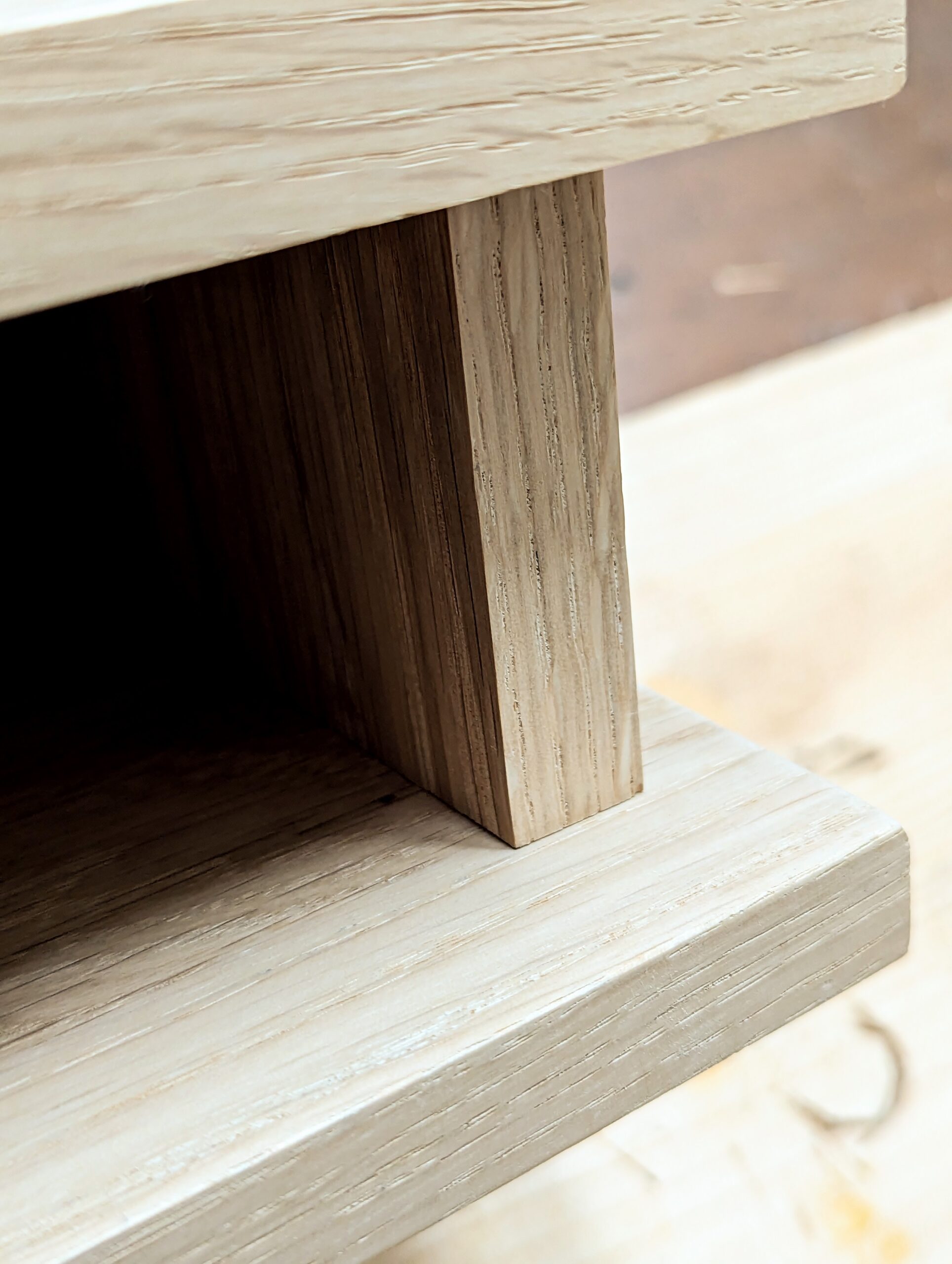
My demonstrations are mostly wasted on unbelief because though they others me make many cuts at all sorts of angles, depths and widths in different woods using just hand tools they don't actually believe what they just saw or, worse still, even, they refuse to admit what they just saw with their own eyes. The truth is this though, they can't believe it. The word 'admit' means to let it. They won't let truth in.

So I ask myself, 'Can it be the intolerance that affects their perspective or can they not believe that a man skilled with his hands can plane a true ninety along a length of wood a few feet by eye and hand and feel alone?' And if two edges are out of square as equal opposites to create a true, inline dead flat without using a square or a sliding bevel, a straightedge or a line drawn to test what's felt and gauged and judged by feel alone can that never be relied on in the outcome of a man's work? Does their unbelief negate the actual act of what we do? Machinists on the other hand must be intolerant of variation or discrepancy in all things machined. What we might accept as nearly okay and, well, good enough can never be tolerated in machining wood because it is very difficult to machine in defects like out of parallelity, uneven depths, inequalities like that. Near enough is usually never near enough to the mark if a discrepancy can be visibly seen so my declaration of 'perfect' to myself would never be perfect for those who know nothing of hand-tool woodworking beyond what they have read or heard. You see, it's in the doing of hand work with hand tools that equips you to compensate, micro-adjust a mismanaged item and negotiate a compromised outcome that wastes absolutely nothing by way of energy or material or indeed an acceptably finished and stunning piece. Is this because I set myself a lower bar than most or that we hand tool woodworkers are still evolving into full-time machinists? It's neither, of course and may that never be too. We sentients dig deeply to attach ourselves with a wide range of interactive senses to the work and working and that includes the unconscious ones that translate and transform information into action into outcomes. We have to steer wood and tools and energies as transformative powers designed to deliver new shape by cutting edges we control by sight and sound and our sensitivity within a few square inches of our vises.
I can speak of fibre arts to some degree and sewing all the more. My mother served her apprenticeship as a Belgian dressmaker and spent most of her life making wedding dresses and such. I'd watch her for hours as I read my books by her cutting table and see her create her own patterns as templates to cut to. There was no one-size-fits-all dress pattern for her to work to. Like me, she sketched an outline of a concept first onto her notepad with its plaid lines. She'd show her customer the outline and then measure her to create a pattern from rolls of brown paper. An hour or two later the paper was pinned together and worn by the woman having the dress made. After she had left the scissors came out and the fabric was cut and pieced together with pins. Designing was in her blood as it is in mine.
There was a time when a hand-made dress was admired even for the basic skills of sewing that it took to make it. Then came the age when handmade was to be mocked because, well, it was unsophisticated. There are indeed two types of hand-made looks. One has a quality to it that is just unsurpassed in terms of craftsmanship. Every stitch, though ever so slightly different to the ones either side, would lay aligned in the fabric in such a way that it looked as though it was placed more as a gem than a mere cotton stitch. The other hand-made dress type has a clunkiness to it in the same way last year's cell phone or laptop might look and feel a year after it was made.
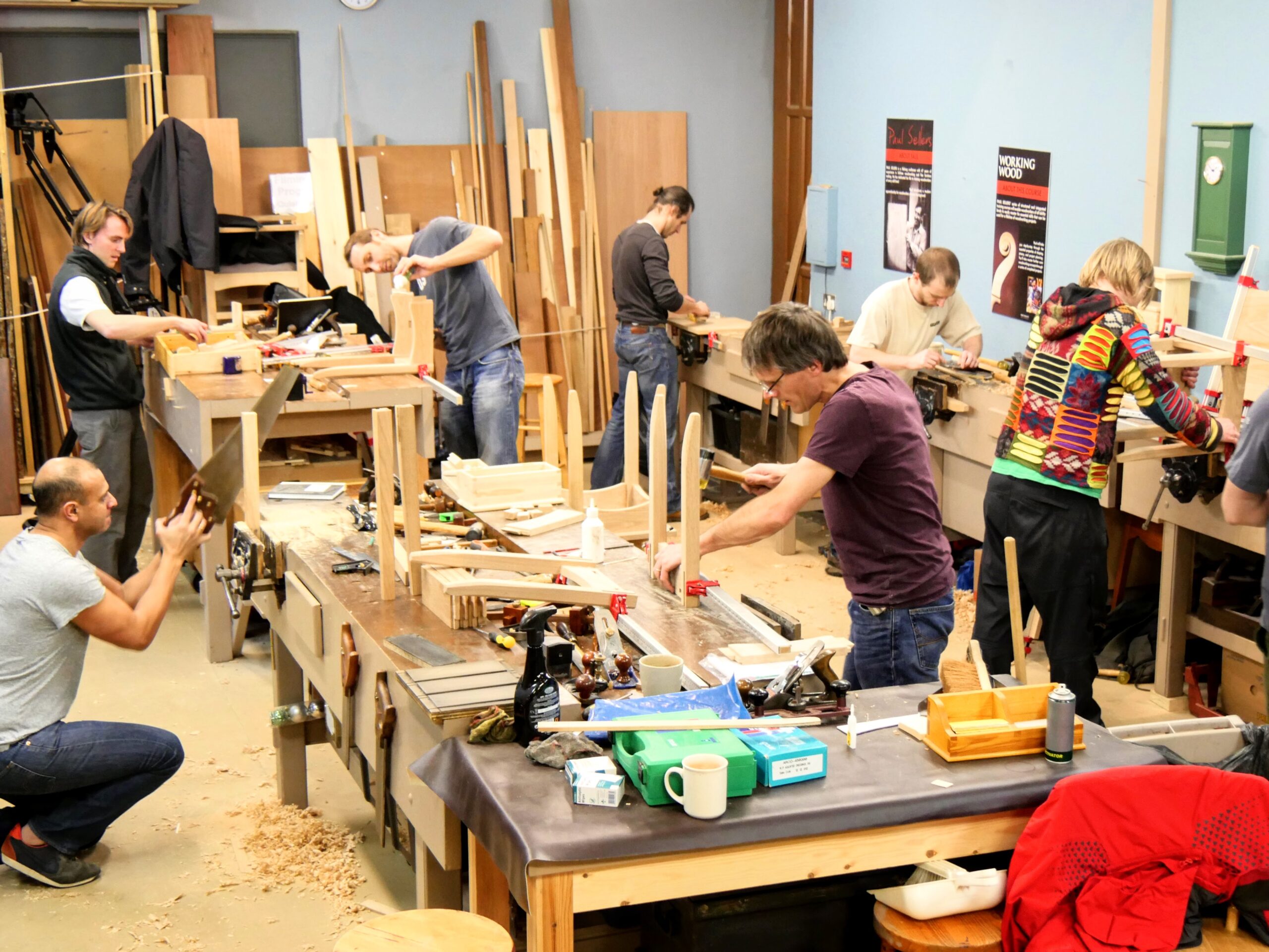
I don't know that apprenticeships in woodworking and joinery, furniture making and the then existing but fast dying-out-other woodworking crafts and trades were really as structured as most woodworkers in amateur realms I meet or have met around the world in this age might truly think. In the 1960s we saw apprenticeships one-on-one diminish and technical colleges try (failingly) to take over under the guise of supplementing the loss by sitting students en mass in classrooms rather than in the mentoring classic of one-to-one engagement at the bench. I hear of the German training here and the Japanese training there but I wonder if this is not sometimes the romantic West seeing green grass on the other sides of other countries' and cultures' fences. One thing that does strike me is that some cultures have deep levels of respect for the elders of the craft: something that seems to have gone with each successive generation for six and more decades. I saw the demoralising results of disrespect in some of the older men I worked under in my apprenticeship. It was in the subtle and not-so-subtle comments that spilled out of them more than once in a given day. I think wars do that to working people.
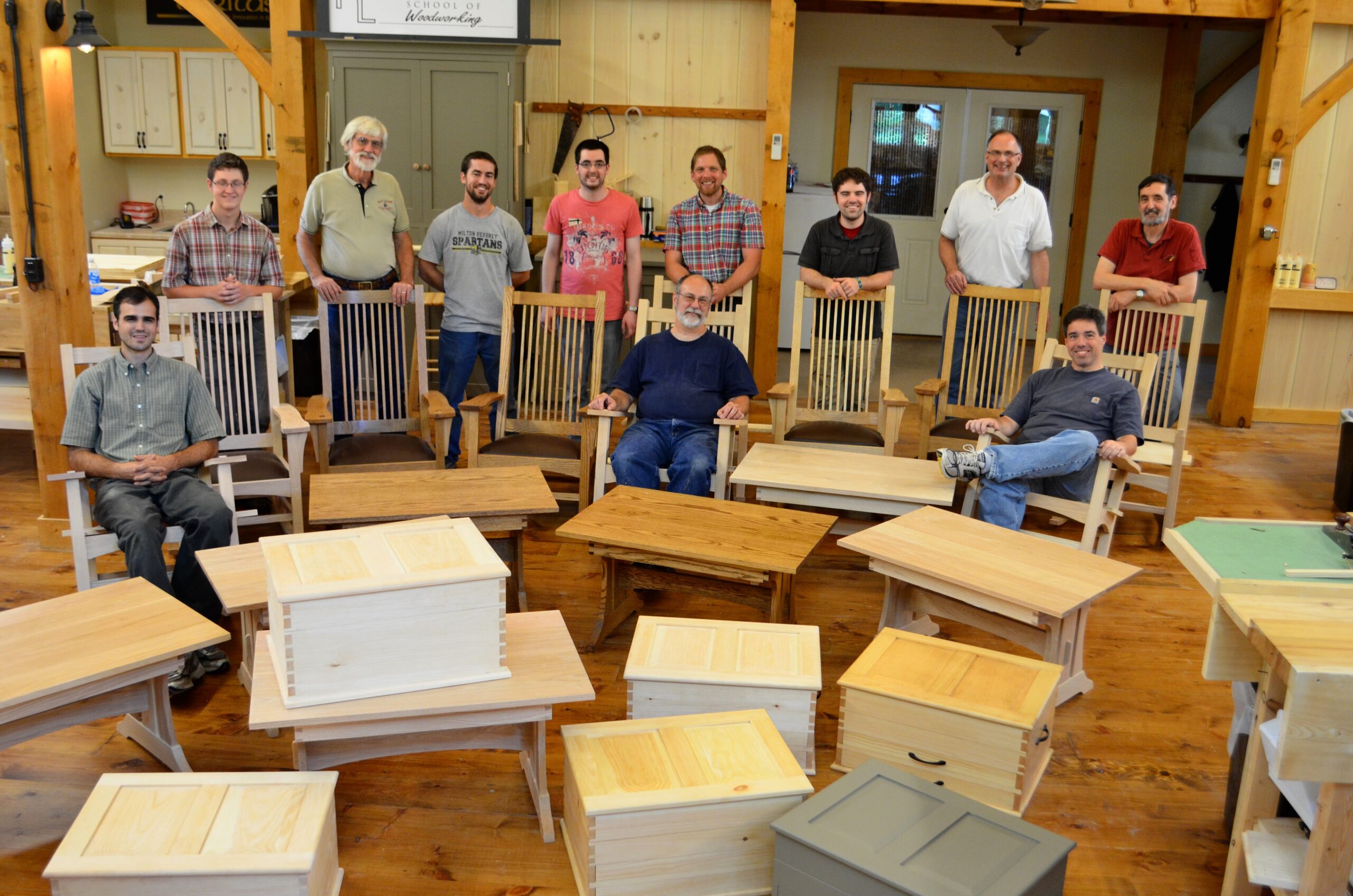
It's the strangest thing to dwell on it today and compare apprenticeships to my hands-on classes, courses and the apprenticeships I've offered and trained others by. There was never any measure of disrespect from any attendee anywhere that I can recall once I started teaching. I always avoided any external support or control from organisations, institutions, government-supported apprenticeship schemes, education institutions or financial support that required me to co-sign for a student, or apprentice for their support. I did provide free instruction to those who could not afford a course or an apprenticeship. No apprentice ever paid me for any apprenticeship and no apprentice ever made anything for me or my business. Where these apprentices gained the greatest benefit was in working close by and through their personal focussed attention. When artisans earn the skills they are expected to have they seem always willing to pass along what they know to the new emerging generations. If there is no respect then it soon and readily becomes obvious and unless there is a substantial change then the apprenticeship will end by the choice of the artisan. My most recent experiences have caused me to reconsider where craft training will end up. Changes come as a result of many things and not the least of which is the impact of social media platforms entertaining rather than offering true training. Of course, that's not what they are about. I understand that so I leave it parked there.
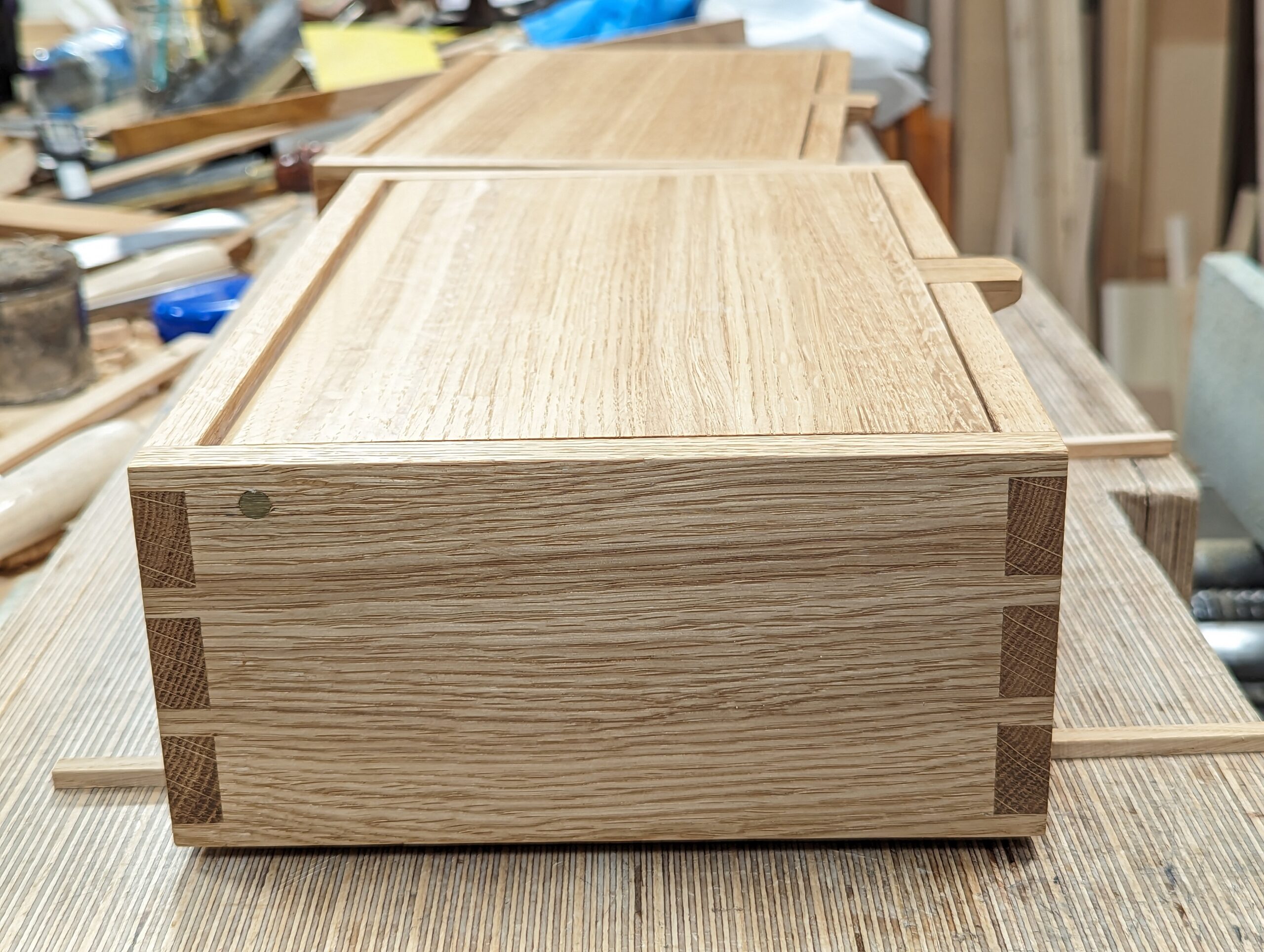
Respect means to literally look again; to look twice makes you think about the worth of something. If and when you look twice at a well-practised artisan, watch the hands, the mental acuity in moving the body, lifting the material, placing it, placing the tools to the work and such, stitching it, shaping it, splitting and carving it into what it is not. If there is a key ingredient missing in our super-fast digitally paced digitally spaced life today it's the recognition of the need for respect...deep, reciprocal respect.
There is a part two to follow
Comments ()