
Remarkable Things
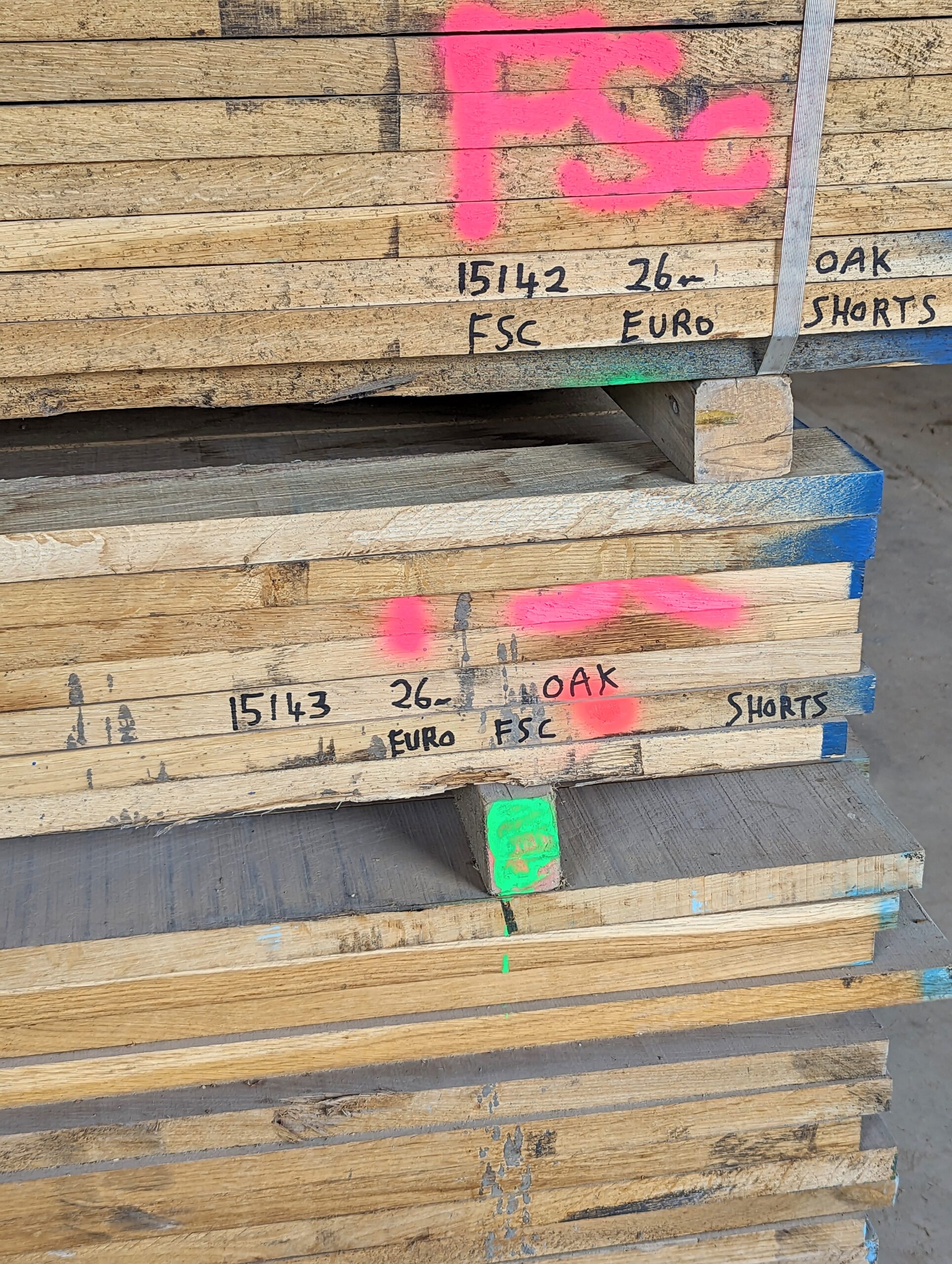
This week I milled my wood from roughsawn oak and some poplar too to make a chest of drawers. Oak is my primary wood and poplar the secondary. The drawer insides don't need oak, poplar is lighter in weight and for bedroom drawers it will last well enough. I planned out the chest on paper and to scale using a scale rule in my sketchbook as I usually do. Doing this helps me to see proportion and also enables me to create a cutting list which helps minimise waste and means I get the exact size for each component. But I admit what goes down on paper might change in the doing of things, changing the final outcome slightly. My drawer sides ended up 7/16" thick instead of the intended 1/2" because I wanted to get two pieces from my rough wood which was dried down to 1 1/8". Once my first flat face was levelled and trued I just managed the 7/16" to the two boards. This is what we do in the moment.
What exactly accuracy is is how we judge things. Did my downsizing compromise my design or facilitate the work to make certain it happened? To make up for any loss by the thinner sides I will add strips of wood to groove and add them to the inside bottom edges. The grooves will take the drawer bottoms. I might have done this anyway. Accuracy is more the way we work. I coined the phrase it's not what we make but how we make it. If accuracy is as I said how we work then how we handle ourselves determines the outcome.
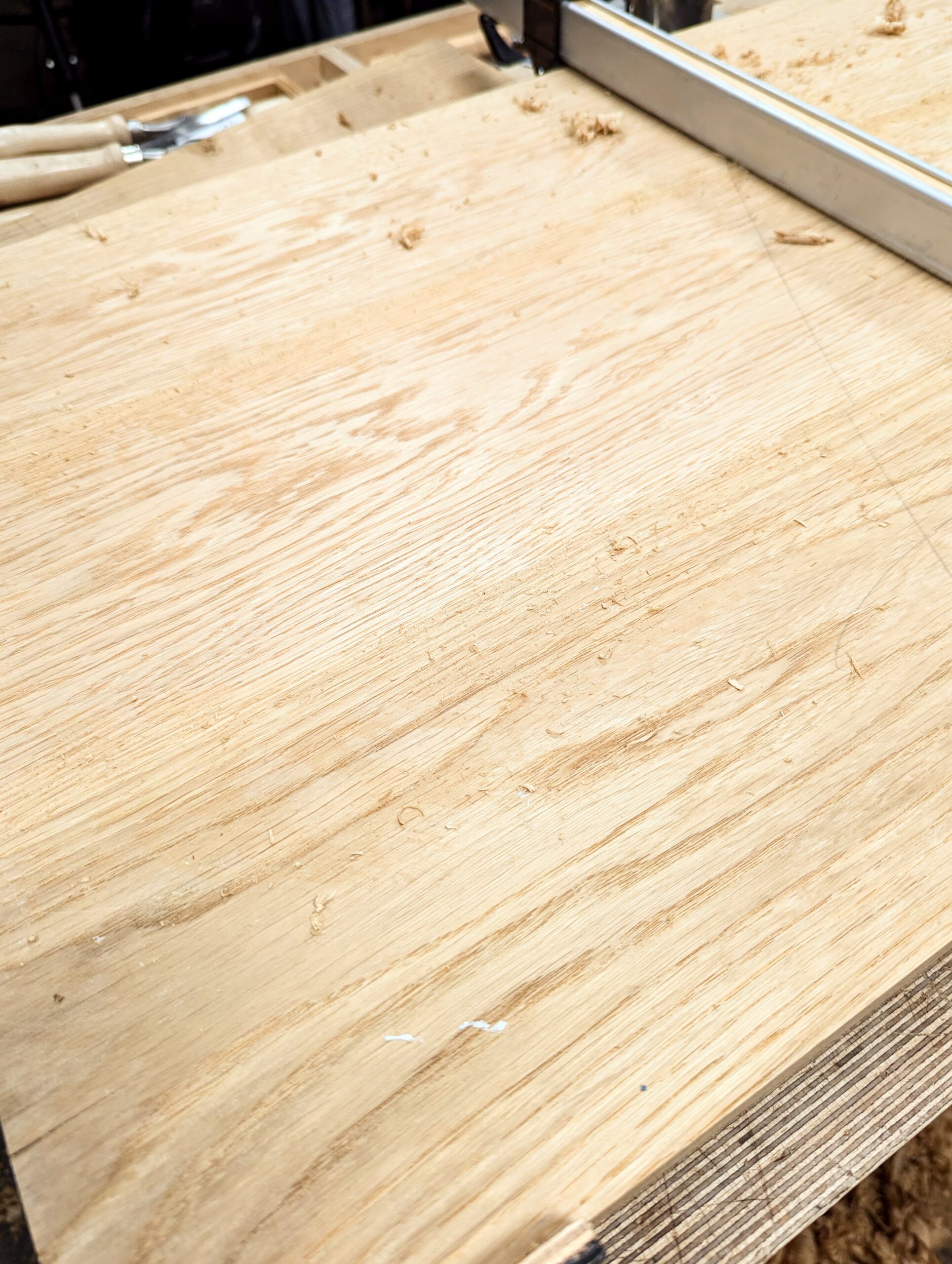
Making my chest of drawers by hand meant not using thickness planers and tablesaws, power routers and such like that. My using a bandsaw does not give me the smooth cut dead parallel that I would get if I owned and used a tablesaw and then skimmed off a thou' on a jointer and thicknessed it with a power planer. I once owned and used all of these for five decades. Thankfully they've gone. very freeing!
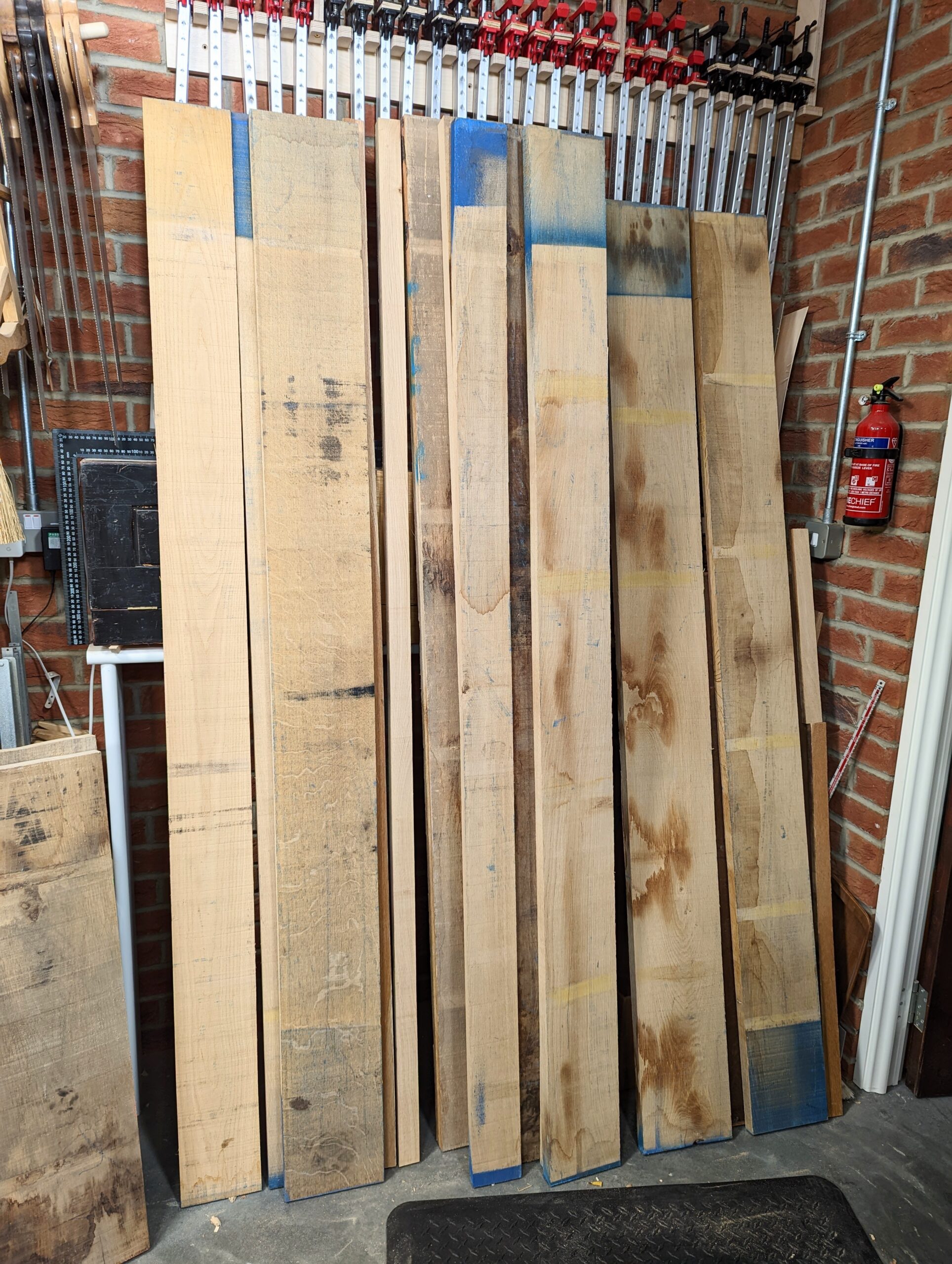
Thicknessing my wood for the main carcass, I hand planed the 6" wide pieces down to 7/8" and laminated them for the 22" panels I needed. It didn't take long. I then cross-cut the panels to length with a 22" Spear & Jackson handsaw sharpened for a crosscut saw. This is a saw I love the most. I bought it for £17 from Amazon, touched up the teeth with a saw file and it takes a great and keeps a long-lasting edge to the teeth. Sharpening is one of the accuracies I speak of. I will not compromise sharpness for laziness and procrastination.
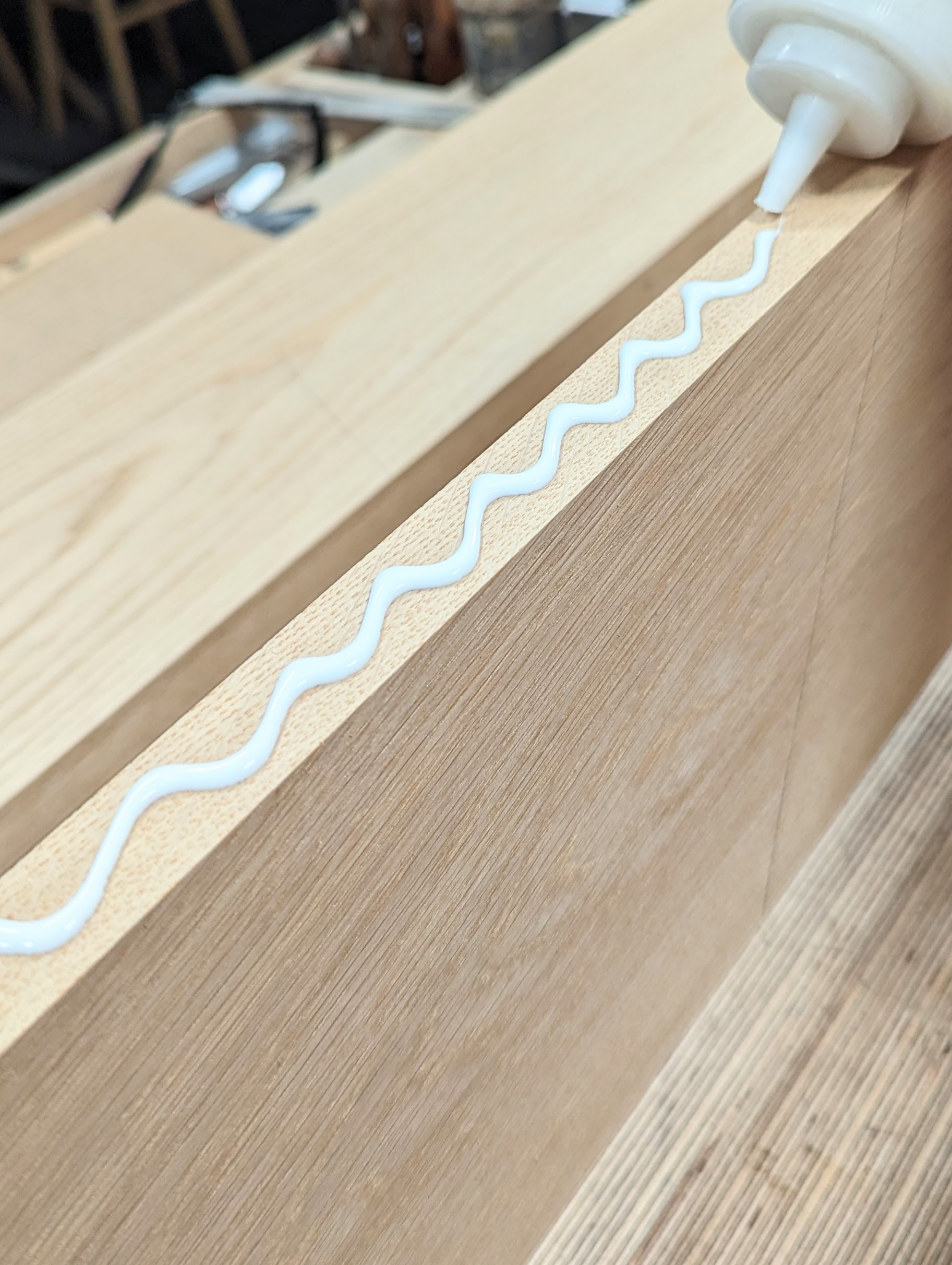
At the end of the day, I had panels sized, trued and planed ready for joinery. In this case, the joinery was two long housing dadoes cut 1/4" deep by hand and routed with my own hand router. As I cut the dadoes the cameras were running and I have to say the work felt quite stunning. You'll see it when you watch the series. I mean, without any guides and power equipment my dadoes came dead true and dead to size and took the sides with just a few hammer taps from my Thorex 712 38mm. Each measured tap drew the sides deeper in until that solid seating said no need for more.
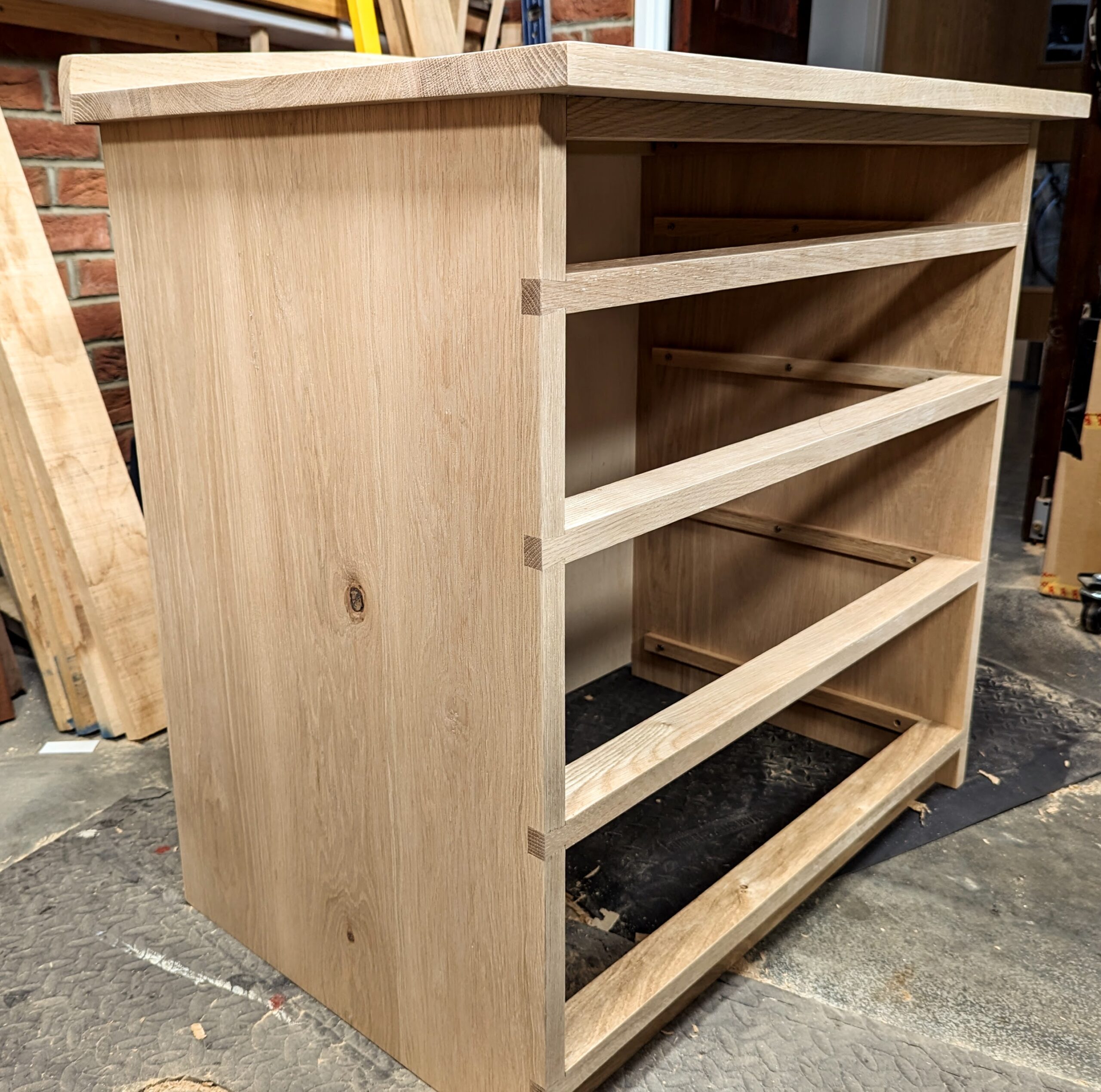
Now I had what I needed to cut the five dovetailed rails as dividers for my drawer openings. Taking the distance directly from between the panels gave me dead-on knife lines I could work to for the dovetail shoulders. It's common practice to gang the five pieces in the vise and square the shoulders across with a knifewall. Cutting the dovetails is a breeze. The dovetails came straight off the saw with no need for paring and so too the tail recesses. Once tapped into place I did what I always do. I checked it by measuring corner to corner. I'm not really sure why. It could not be out of square.
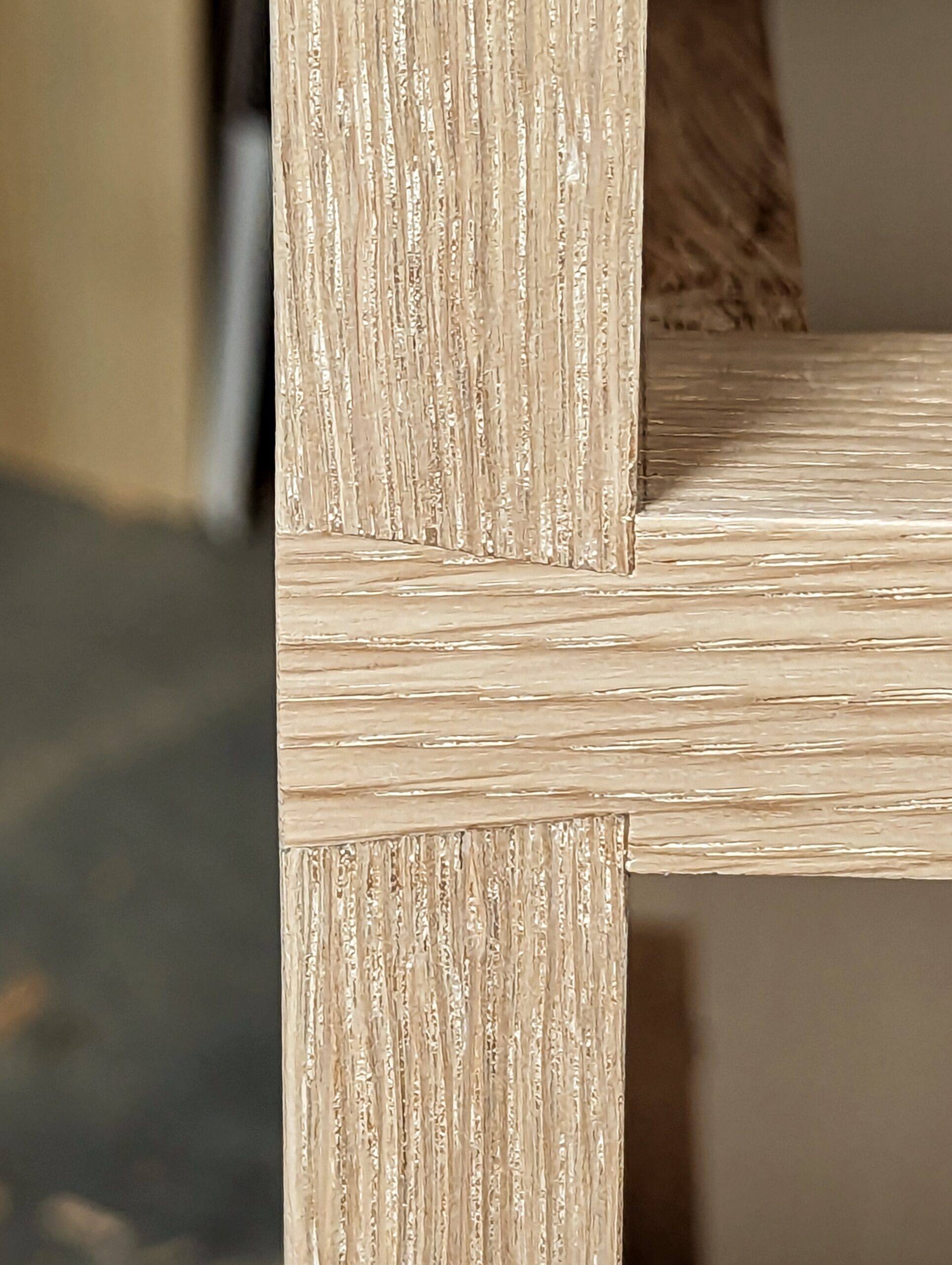
The important lesson I have learned as a hand tool woodworker is that any discrepancy will inevitably telegraph into the overall outcome. Two shoulder lines out of square or distanced slightly differently will almost always send the whole marginally out of square or out of parallel, often both. It's the small things that can make a big difference and with chests of drawers, we end up matching the drawers to what we created as openings.
The Hypercube
There was something in the seating
Where twenty interlocked angles held
First by compressed fibres
Followed by fibre friction
And then the swelled fibres
Locked tight forever by
Inner unseen cells
But known by the man maker
In an evenness that settled the union
And no words explained things because
Such work leaves no need for words
So I measured internal corner to internal corner
And they measured the same
To the smallest fraction of a tiny millimetre
And I asked myself why did you doubt?
Why did you check?
You knew inside your head it would be good
That the work would be true to itself
As you knew it should
And there the work stood
As art from its fourth-dimensional being
A hypercube with facets
Too numerous to count
But communicated to engage
And connect one to another to another
To a never-ending other
Just by the making of it
and the standing of it
Comments ()