
Just a Dovetail Joint
If I can cut a gap-free six-dovetail corner to a drawer in 20 minutes it's because I am not rushing it. It's also because of the practised structure of my making, the sharpness of my tools that are sharpened before they become in any way consciously dull and because the tools I use are customised by me for me. The soles of my planes wear unevenly and I flatten them about every year or two. It takes less than five minutes by hand on a true and tested granite surfacing block and leaves me confident that if there is a levelling issue in planing then it is me and not the tool. The planes I rely on in the day-to-day are not premium versions as I would never buy another premium plane because the Stanley (or Record but not Record Irwin) bench plane versions do everything that a premium plane will do (and better) without all the extra baggage that comes with ever-engineering and too much unnecessary weight.
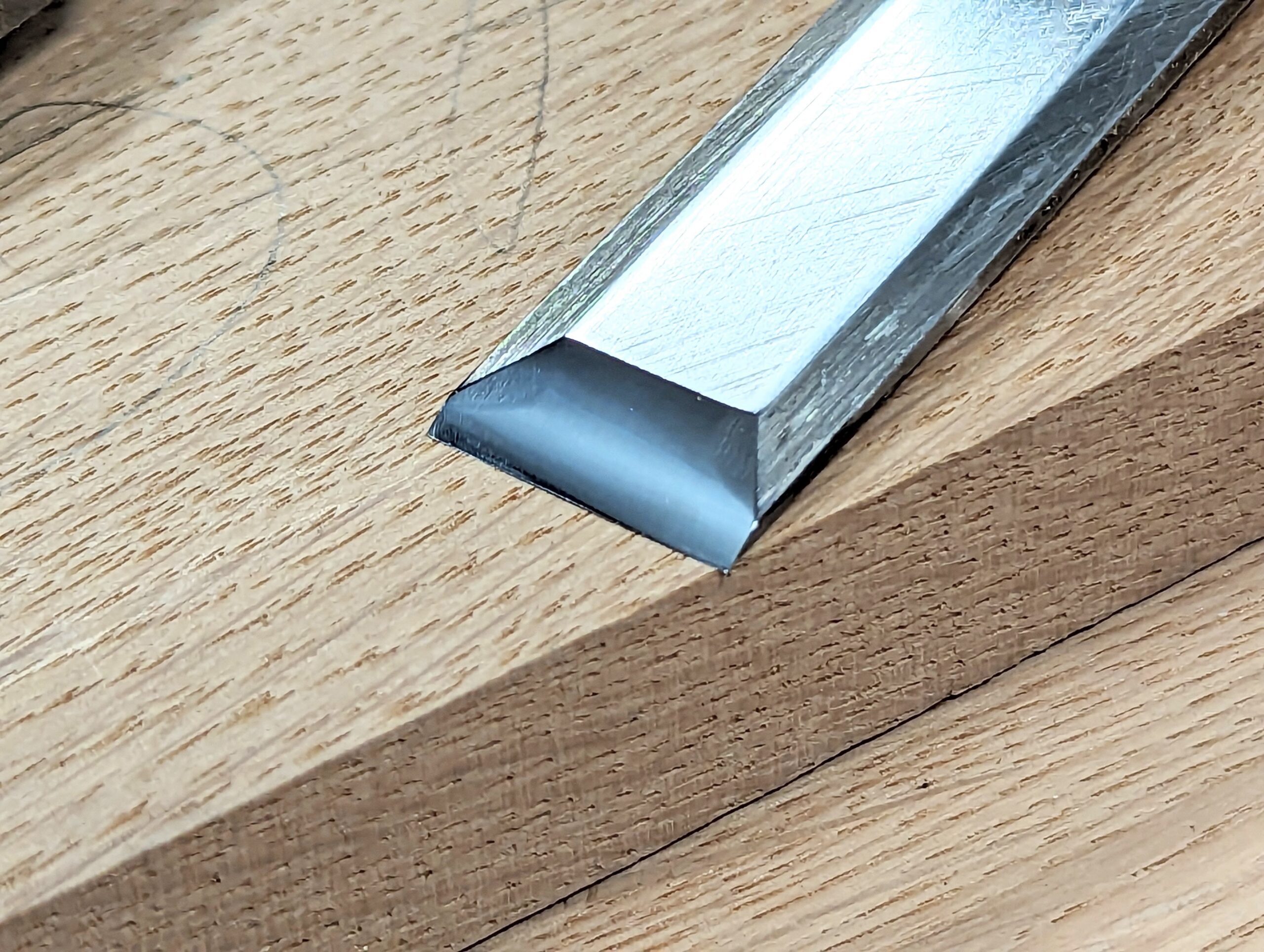
Someone commented recently on having to sharpen a plough plane iron and the inconvenience of it. I am never sure where this comes from. I must sharpen 20 of my edge tools two or three times every day. This is and always has been normal practice for me because I usually work a minimum of 8-10 hours a day working at the bench with my hand tools. I have gone through at least 6 #4 plane irons even though I do not generally grind my cutting irons on a machine grinder but use only abrasive grit of one kind or another. That's roughly 10" of steel and that's only one of my half-dozen bench planes. So I have lived as a full-time maker now for 58 years and that's 17,400 days so far and around, give or take, 139,000 hours of pure woodworking. So could that be 5.568,000 edges sharpened? It could indeed!!!
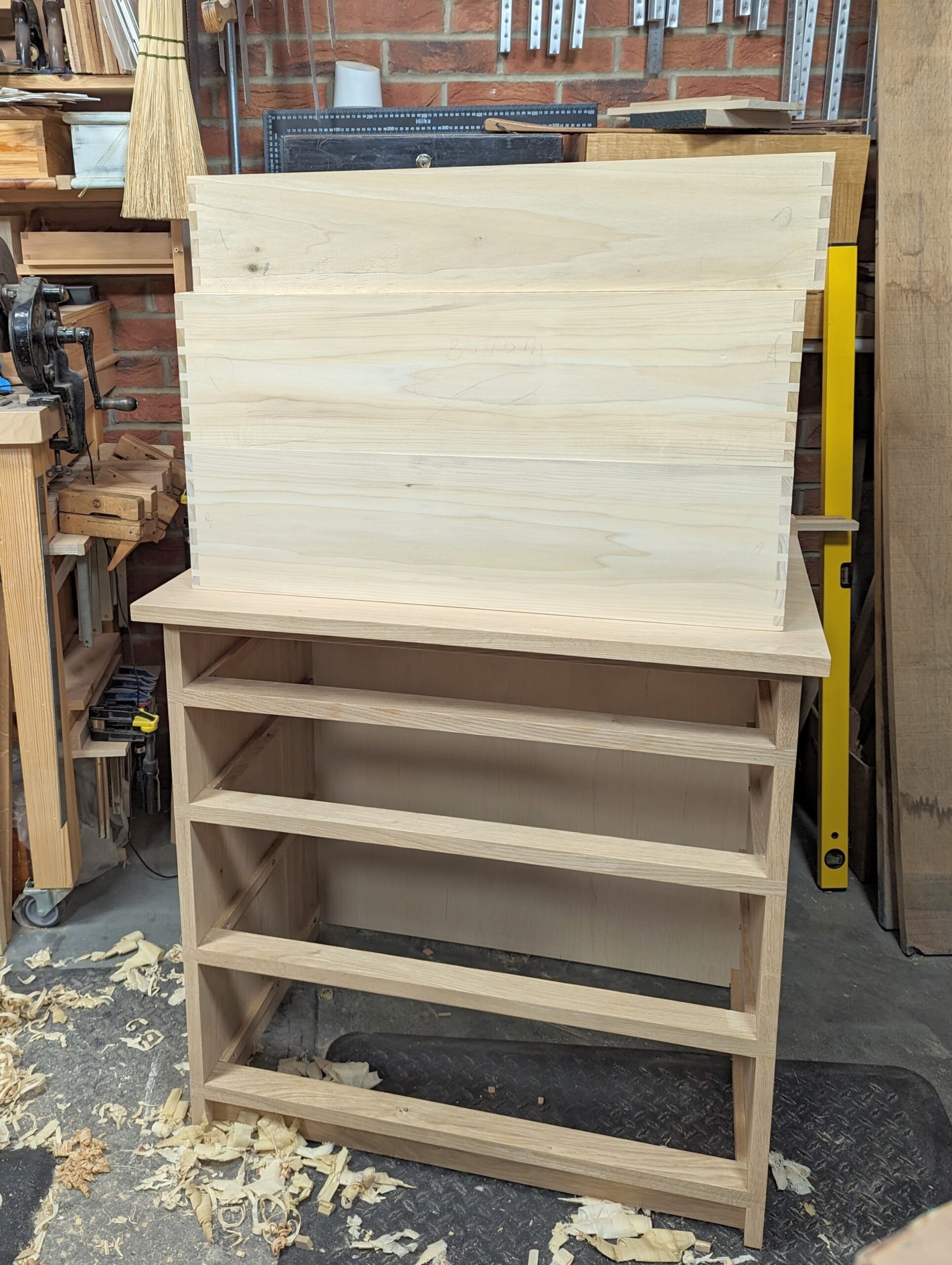
In making my dovetailed corners of my drawers I cut my sides and backs to fit dead tight to the openings with no margin. Why do I do that? Well, no matter how hard you try not to allow it, wood compresses with every mallet or hammer blow you make in driving a chisel into wood and then paring of the fuzzies on end grain reduces the length by a thou'. Now I know that some will disagree with me saying that but that's of little consequence in the grand scheme of woodworking. Even with the knifewall wood still compresses and we woodworkers do our best to ensure it doesn't but in my experience and the need to not live in an artificial world of the illusion of perfectness, walls get moved.
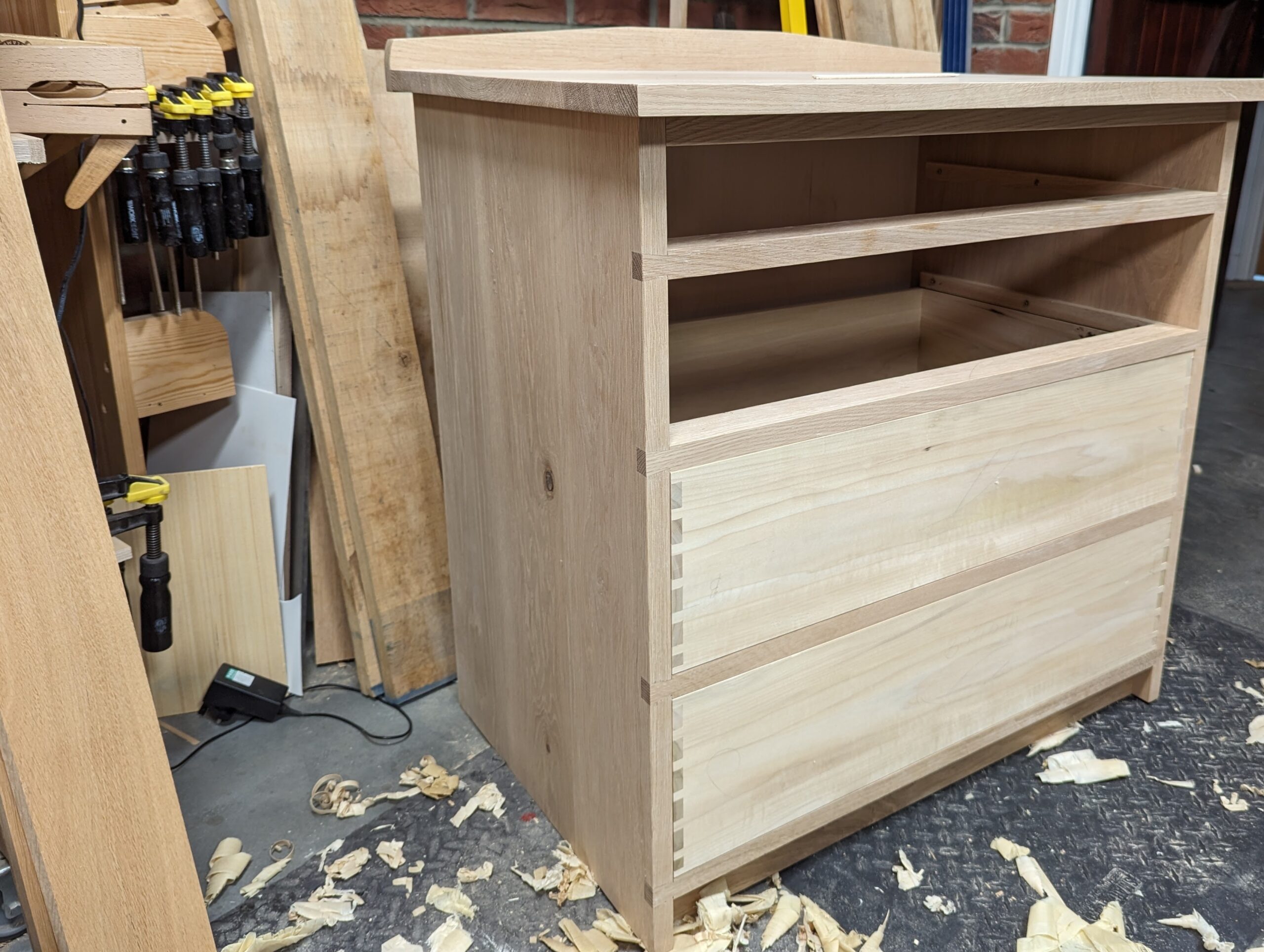
Making everything dead to the opening sizes, my drawers always seem to come out just right for the final planing to fit. This might be three to six shavings only. That's close enough for me. The drawer slips into the opening quite nicely. Now I am just speaking the reality of what happens with wood overall and working with the more general hardwoods and softwoods at that. In rosewood or ebony, that will not be the case because of the density of the wood.
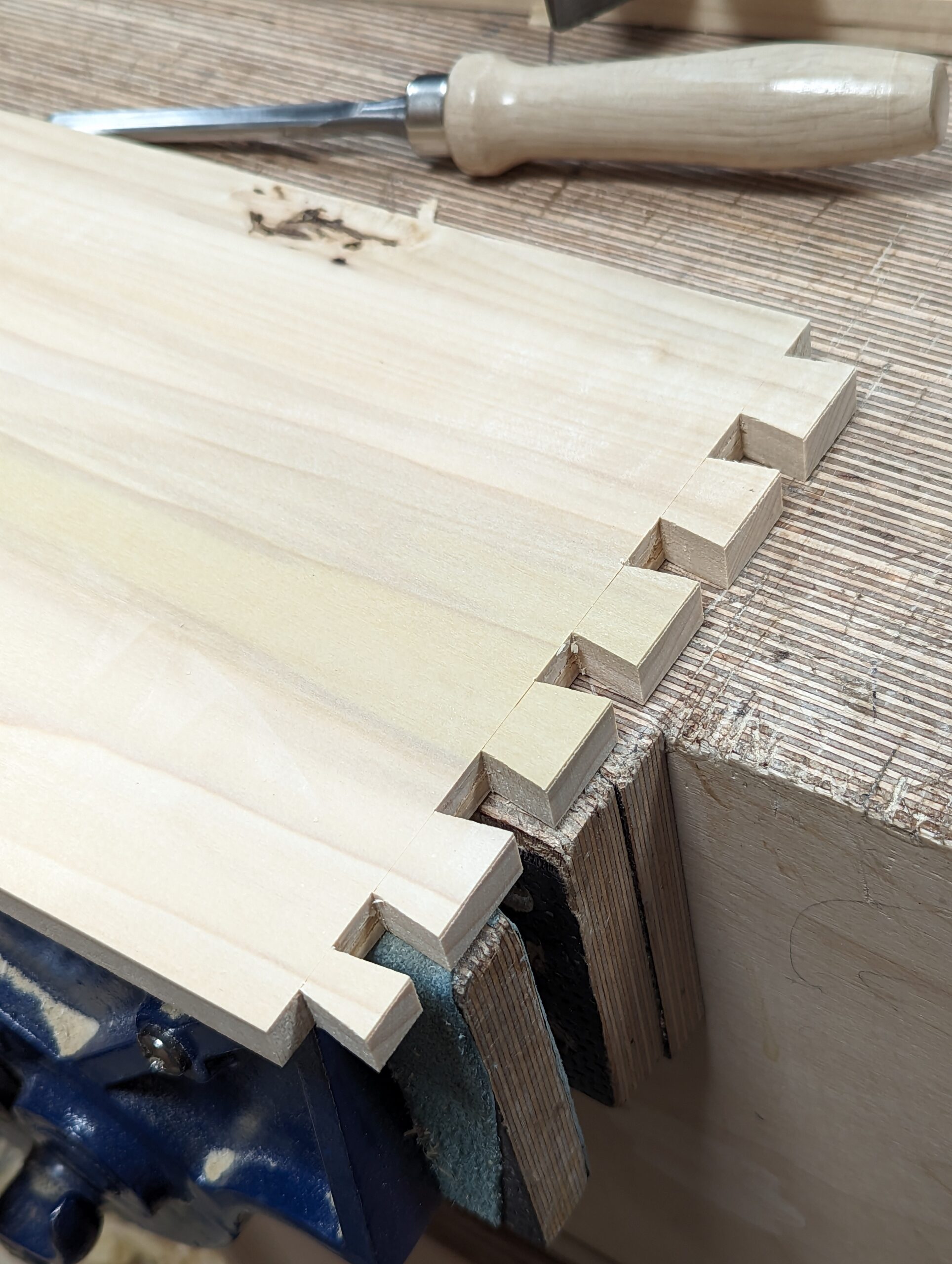
I prefer not to saw out the bulk of the waste with a coping saw because it seems to demand a compromise from me that I am unwilling to allow. It does not mean I never do it, and in this series of drawers I did use the coping saw for one corner, but that was just to offer an alternative to my audience. Generally, I see this as more a production method with a result that distracts me from a better method. You see it's the fingertips close up to the cutting edge and the arrest I get up against the knifewall that matters the most to me and then the horizontal cut in towards it. Lifting out the waste and seeing the precision of the cut becomes the reflection of my efforts. Parallel this with feel of the cutting edge and its slicing cut on miniscule levels and suddenly woodworking becomes magnified to inexplicable realms.
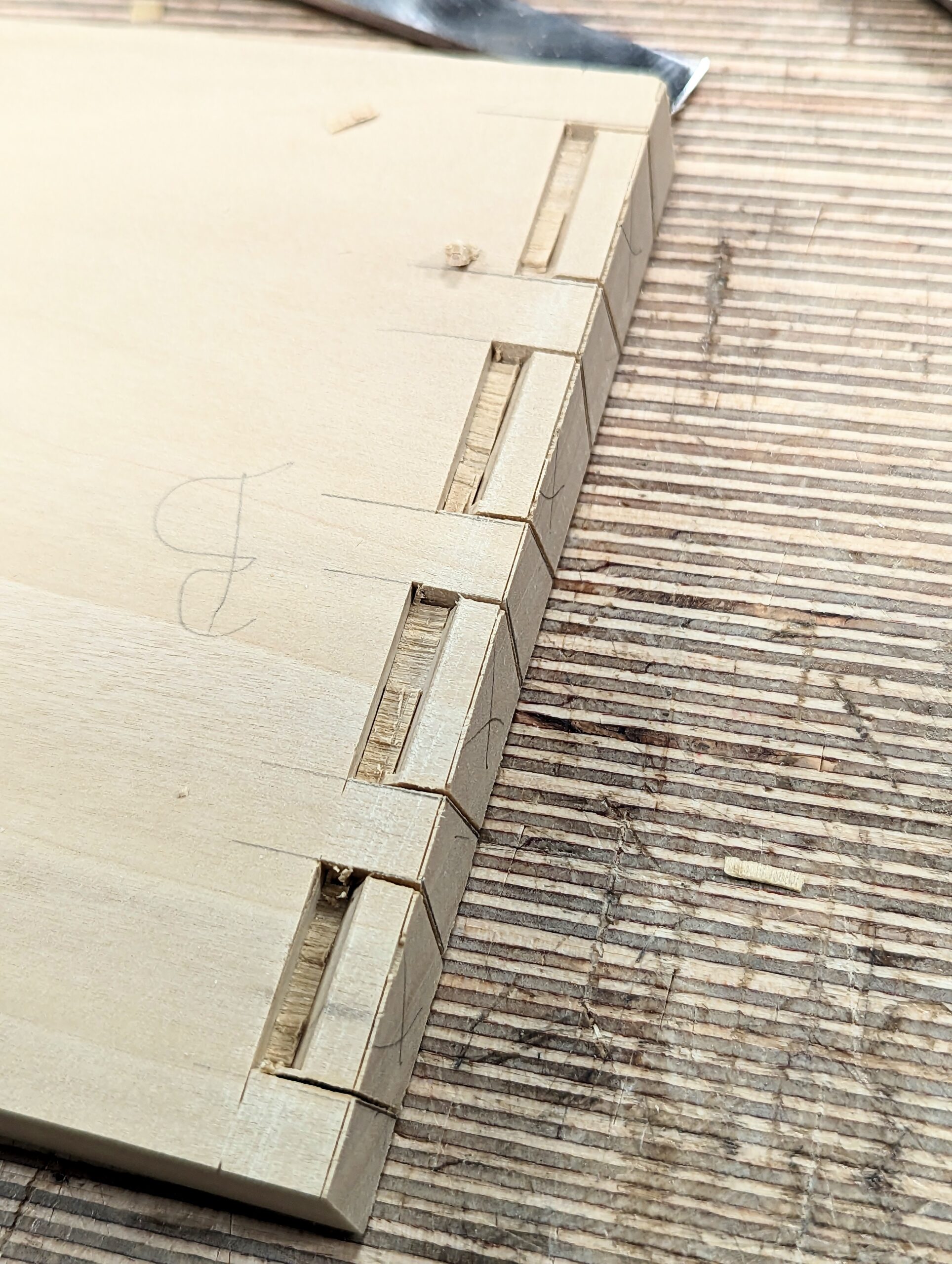
Someone asked me why I polish out the whole of chisel bevels and it seemed more accusatory rather than enquiring. Well, it actually was a disapproval, I saw that. He'd bought into the micro-bevel, two-angle method but my macro-camber came from the ancients through centuries of well-proven technology which is quick to achieve freehand, non-invasive and more reliably achieved at that. As it is with using the coping saw to remove the bulk of the waste, I avoid unnecessary intrusions but that the addition of this third and fourth party interruption.
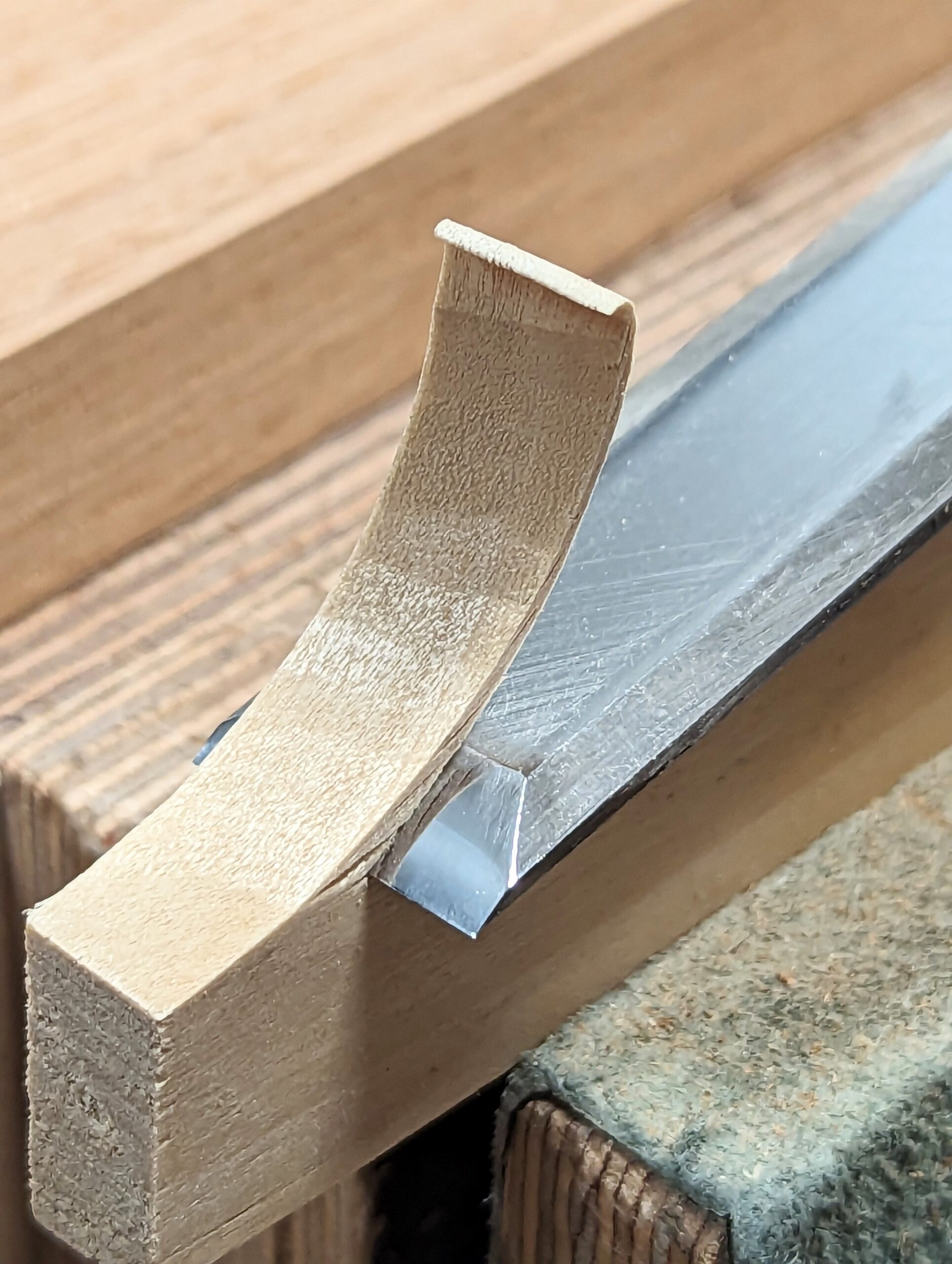
Back to the chisel. I can't always explain the concentration of a whole body and mind to the chisel's cutting edge and the placement of it in severing fibres. And I only explain it because, well, it's an attempt to steer those woodworkers who might just miss quite a lot by using too much force to feel for what's happening. The two or three fingers and the opposing thumb bring accuracy and concentration to the point of parting off in the movement developing the cut. We have the sense of feeling and seeing but then too there is the subtlety of slight sound. There is something that defies description unless you are a true wordsmith that also works and understands wood of any and all types. Of course, no one has such a thing, do they? That's a luxury for anyone. This is a lifetime of learning and I am still on the journey knowing now that I can only truly know wood at a very finite level. I find scientists to be the most bemusing of people, especially those pursuing their microscopic invasion of the minutiae. It seems to me that they know the wood the least yet cannot seem to admit how little they really know. Imagine deciphering a drought half a millennia ago in a tree's growth ring and never cutting wood with a sharp chisel or a good and well-tuned saw in the substance of making. I have been fairly disappointed with books from that side of learning but I am grateful for Bruce Hoadley's endeavour to bridge the gap twixt the two realms. His book, Understanding Wood is a cover-to-cover read and I have read it three times over the years.
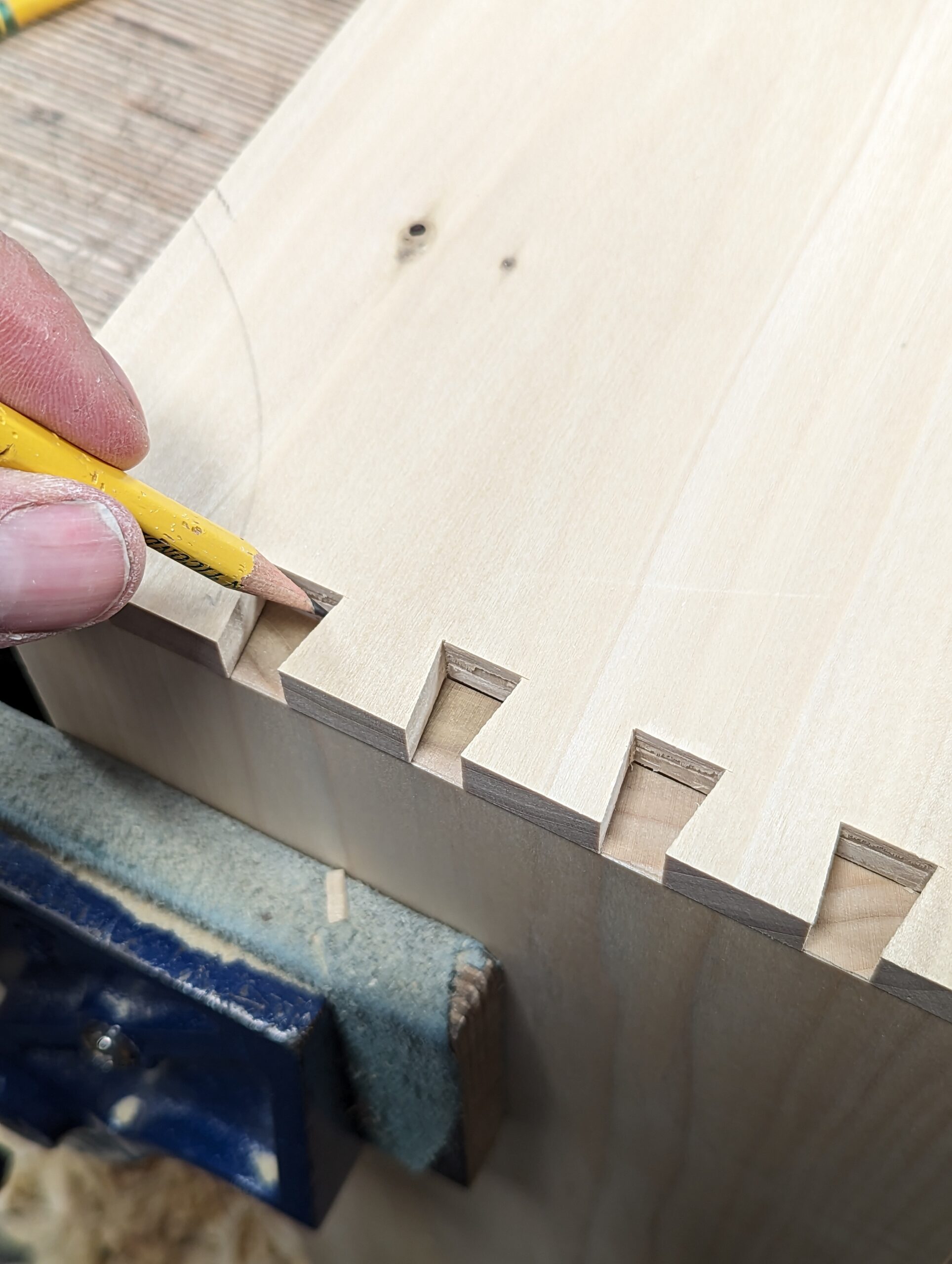
I might suggest relaxing in the making of dovetails. Compression in the wood is only intensified all the more when we ourselves are tense. Anxiety is the opposite of our goal to enjoy the process of woodworking. The fact that we have chosen high-demand processes that defy mass-making methods that are not really methods means we must dismantle how we were programmed to think and engage with our work. The immediacy of clicking, copying and pasting and hitting the delete button speedily through processes does not altogether work best for us. Better to leave that with the mass-makers for we are not nor ever will we be mere robots. You will be able to tell when you are too tense because the mallet's drive will send the flat face of the chisel an extra degree into the knifewall and show as an unwanted gap. It's always important to remember the rudder is the smallest part of the ship and yet it turns the whole ship as needed. Soo too those first strokes with the saw determine the direction of the saw in subsequent strokes. Taking time, allowing the saw to cut unforced, suggests great care to follow the lines placed to guide us. It's all too easy in our excitement and uncertainty to drive the tools faster than they can accurately cut. we, you, have nothing to prove. Your choice of hand tools pushed the button to stop the conveyor belt so you could just get off.
Enjoy taking time. Examine your feelings to see what's driving you. It doesn't have to be slow, you're just choosing something new to you; hand tool woodworking is a way of working that the ancients had and that was a measured control.
Comments ()