
At a Price
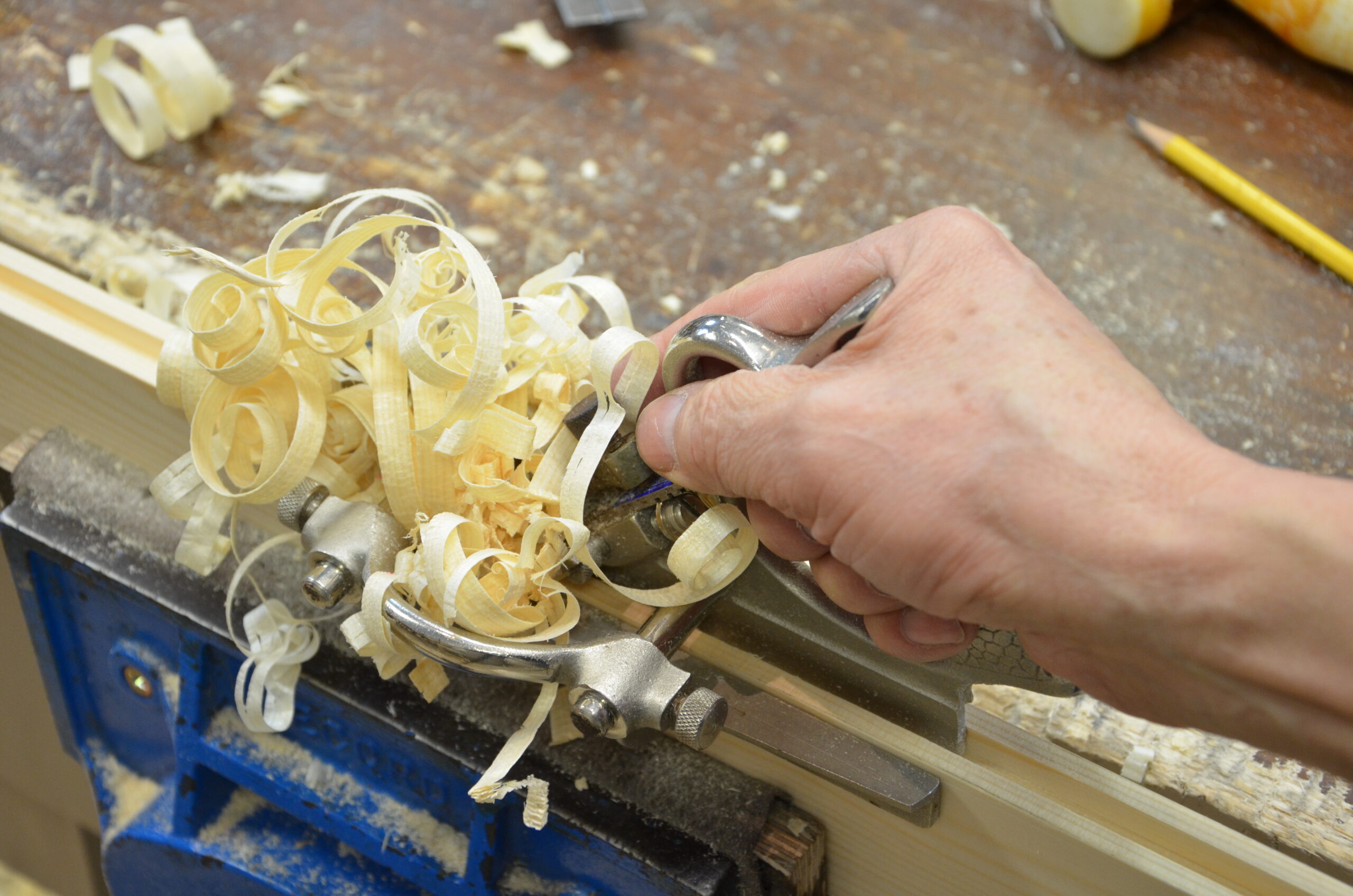
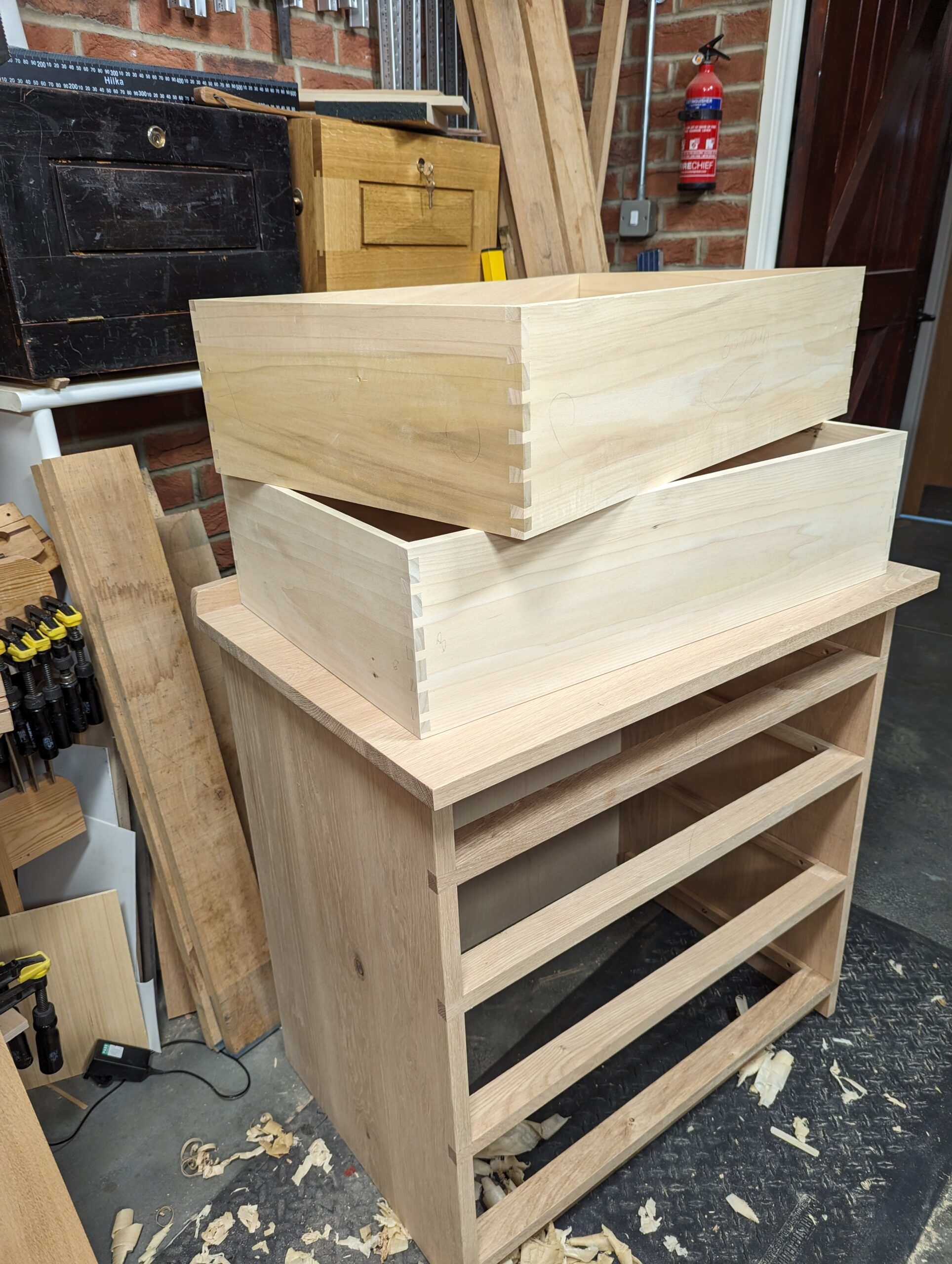
It was setting up the plough plane to cut the grooves that really struck me the most. I had timed myself in cutting the four corner dovetails and realised how quickly they came off the saw. I made two eight-inch deep drawers with dovetailed top to bottom to each of the corners in less than two hours. All eight dovetails came straight off the saw with no paring to fit and they all fit as close to perfection as was humanly possible. I once watched a close friend and colleague make dovetails for a similar chest using a power router and a dovetail jig. Stan was not used to setting up the jig and that took him quite a while. This man had never made dovetails with a power router and jig before and it was his boss, Kevin, that forced him to do it. I think the issue was that Stan was not a fast maker and each piece took him a long time to make. But another truth was that Stan's work was always impeccable. No one could ever find even the smallest fault in it. He never used the machine to make his dovetails after that simply because the end result looked machine-made and the dovetails were not as perfect as the hand-cut ones.
I suppose the contradiction for us craftsmen with certain standards comes when we sell our ability and control to a boss, the owner of the company. In the early days, Stan was hired because of his ability in hand work. The problem was that he never gained greater speed so the pieces he made were more expensive and the boss needed more income to cover his management lifestyle as a now non-maker overseeing the admin and finances of the company.
The sadness in what I witnessed was this full-time, skilled artisan in his mid-40s somehow felt so very diminished and dismayed as a result of the instruction to use the power router on his dovetails. In his previous twenty years, he had never resorted to using this industrial process in this area of his work. I felt sad for him. It was nothing to do with using machines or so-called power tools, he used them for various other aspects of his work and we were in no way a hand-tool-only group of makers, most of the work was indeed machine-made. But when it came to dovetails we none of us had ever used a power router to cut them and would each of us indeed feel as though our work was diminished by dovetailing this way? I certainly read the signs over the ensuing days and saw how this singly compulsory suggestion (which though phrased that way was indeed an order) took Stan down to the lowest levels I had ever seen in him––it was soul-destroying at the very least. I understood that for him and I the whole was diminished because of this overseer's very contrary decision.
I suppose the question for us is this; is it only about perception or is there some other reason that we hand toolists have when it comes to certain aspects of our woodworking? Is life as a skilled maker more than money making and speedy production even if we do it for a living and not just as a hobby maker? Do we boast without words when our pieces stand finished for others to see? I mean, most people seeing my work without ever having heard of my name or my reputation for handwork would only ever believe that the work was machined––perhaps even made by CNC or the soon-to-be AI. This is really of no consequence. What is of consequence is my knowing how I made it.
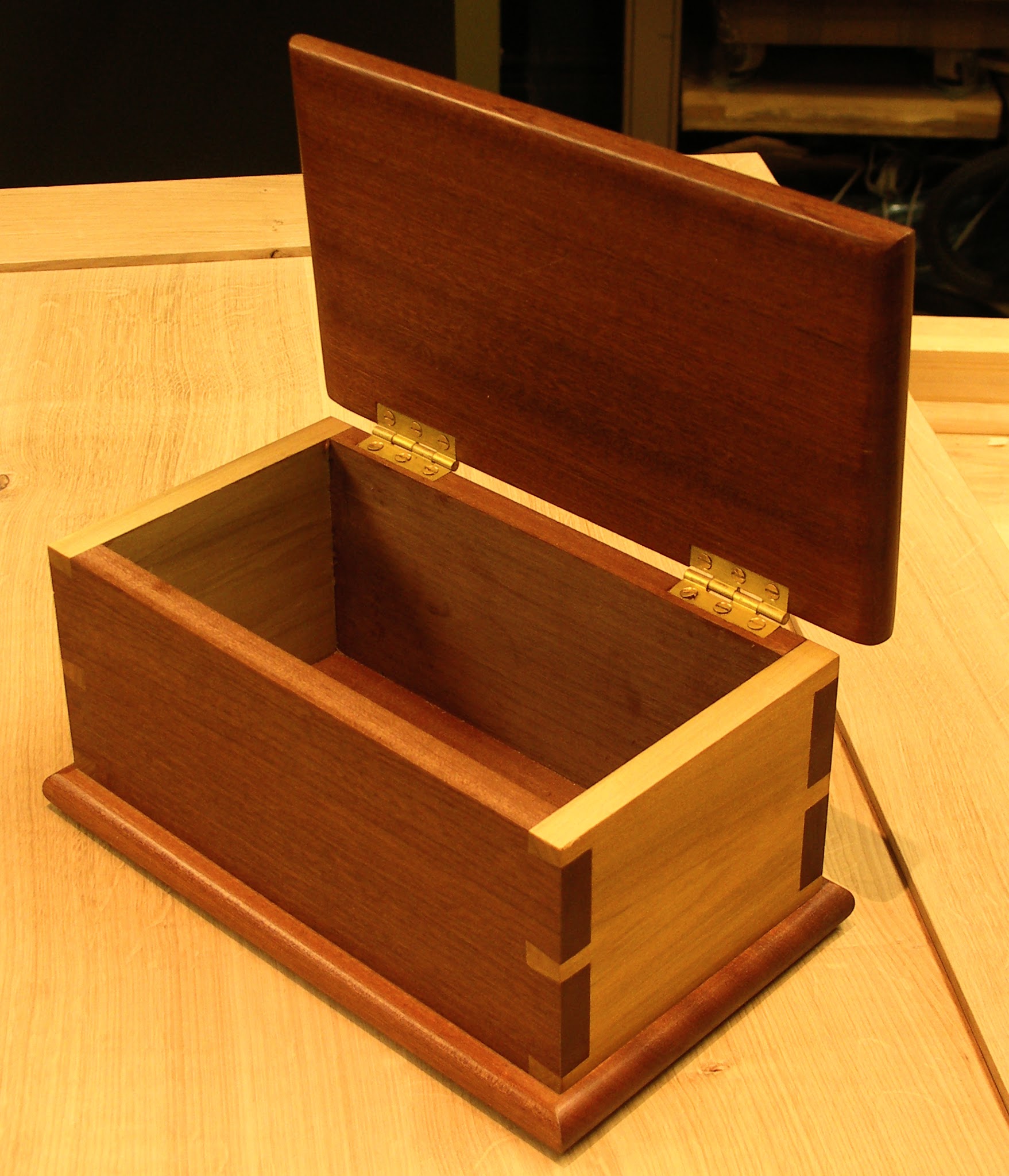
In my world, as a lifestyle woodworker, I have never once used or even considered using a power router guided by a router guide to cut my dovetails. For me, it's the one joint that somehow demands the more intimate levels of my woodworking demands of me. The imposition of a boss forcing anyone against their will seems abhorrent to me. Why? Bosses too must be limited not to overstep the limits of their control even during the working day of an employee. This is no less than pure bullying by someone who controls the people working for them. Instead of stepping back and looking twice at how this would impact this person's spirit, this boss-man sought only to force his will on his employee. In the overall creation of the piece, two weeks' work, the boss man only gained an hour or two. It would have been small compensation to yield this one process. The workman had worked with his boss for two decades. Were they friends? Not really. Not at all. How could such a thing happen except it was to push a point in which the boss had to be seen to be the boss?
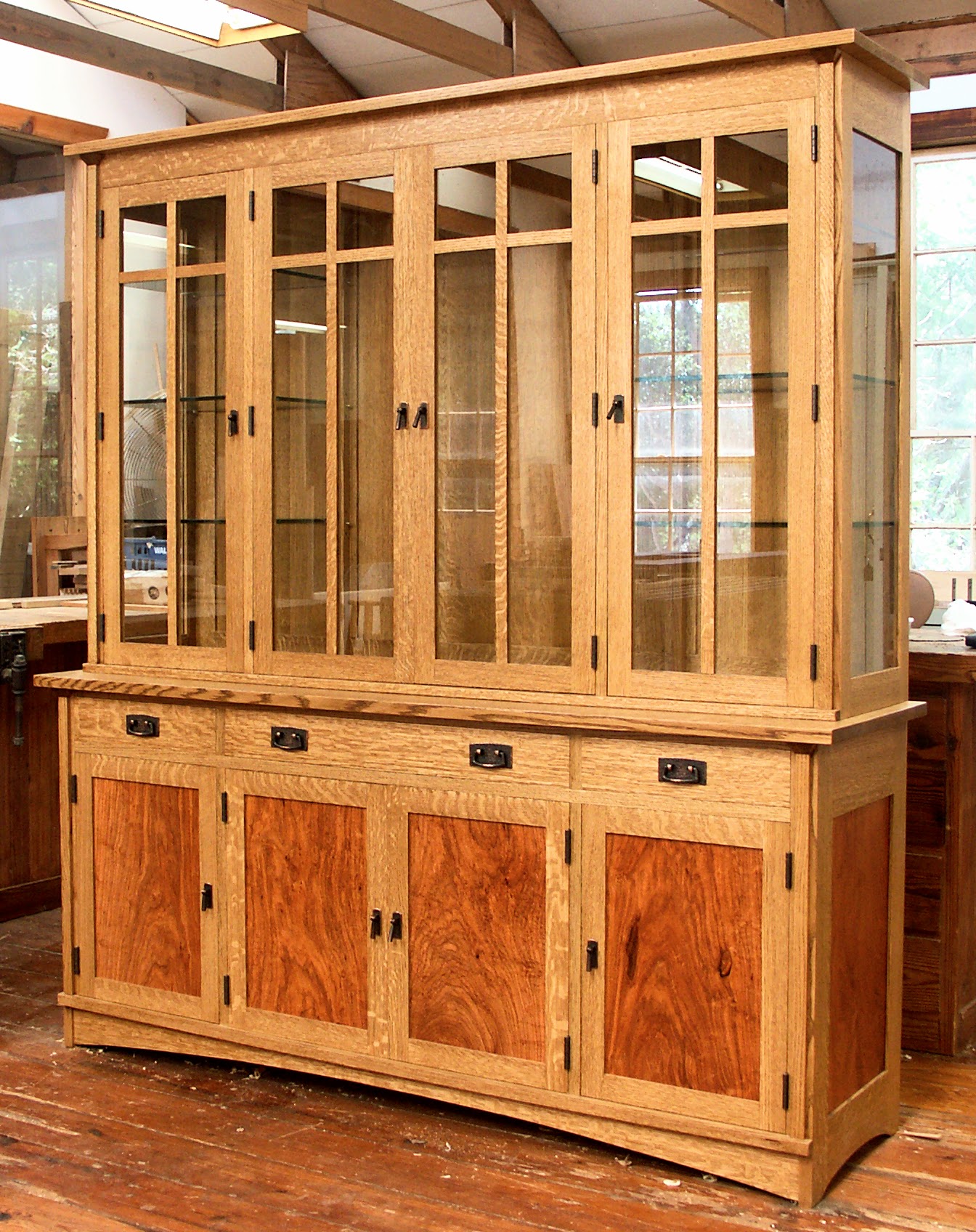
I think in more creative circles we artisans should be given space to be ourselves, to use methods we prefer to use along with the tools we choose. In a factory, it is a different requirement. I was sad to see Stan in his now crumpled state continue to work with half the spirit I was used to seeing him craft his pieces.
So I am back on my dovetails again and thinking about each cut. My thoughts are this: I have four drawers to make and have made two so far. The couple of hours on the first two, the largest, were very enjoyable to me. My work felt sincere and transparent and if gaps were made but there were none, I would just have left them there, testimony to the honesty of my work and my working fallibility. On the other hand, what if the gap left a weak link in the hole? Then I would have no issue adding in a piece even though another might say in fifty years' time, "Look here, look how shoddy this man was in his work."
In my making dovetails by hand, there is an intimacy to the work. It is not just a question of the fewest saw strokes, the power in them and then too the chopping of the waste I say that upfront. I often wonder if people, woodworkers, really consider things as I do. My fingers touch the various woods I work with to feel for things that are immeasurable without scientific equipment. Density, moisture levels, flatness levels and compressibility, such like that. The plane sends me information as do the saws, the chisels and the spokeshaves and scrapers. I receive various pockets of information that then lead me to change direction, tip this tool or that one to get the better cuts. My dovetail wood varies markedly even across the width of my eight-inch wide board. The dovetail on one side cuts very differently than the one in the middle or the other side. I feel the difference in the friction of the fibres on the saw plate. Being sensitized helps me to make changes and this information will never be written down on a scientific paper because the scientist is less qualified than the makler and yet the scientist presents her and his work as the ultimate authority on wood. After my near 60 years of working wood, I acknowledge that I have only touched the very tip of the iceberg.
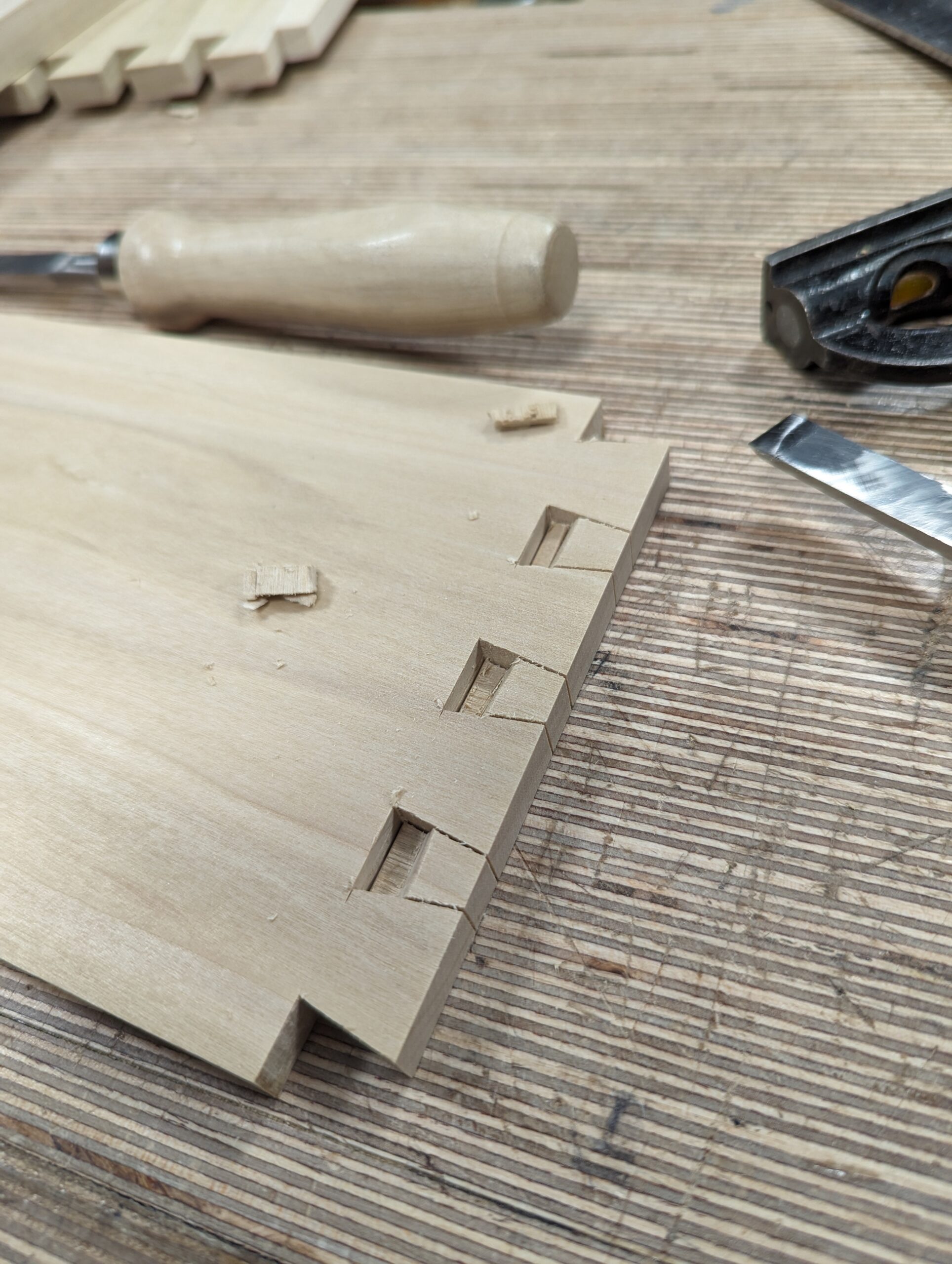
I am on the last drawer now. In this, the drawer-making has taught me much. I can take the side from one corner of a drawer and swap it for another corner and it still fits. In fact, I can take for corners and swap each one for another and even turn them end for end or upside down and they will each fit the other without gaps. They are all hand-cut. How is this even possible?
Comments ()