
What Do You Expect?
I looked for a second Stanley 60 1/2 block plane of the old style but didn't want to pay the price they were going for. In the end, I bought two, a secondhand one for £39 and then a new one for £50. The new one was so very disappointing and I'll go through the fixing of it shortly. I did know what I wanted in one plane though and that was a non-negotiable; the older version that I currently own has no lateral adjustment so you must set parallelity at the cutting edge by a swivel here or there to get things aligned at the business end. I generally set by eye along the sole looking into the cutting edge in relation to the sole face to start and then use light hammer taps from my Warrington hammer for the final set. This works as well as using the lateral adjuster in the newer models and is just as quick if not quicker. The newer models have a somewhat rickety and quirky lateral adjustment mechanism and an adjustable mouth closure to open and narrow the throat opening. Funny thing though, both of these had problems that rendered then useless. The US versions of vintage class were really much more reasonably priced on ebay compared to their UK cousins but, of course, any saving is offset by shipping costs – always prohibitive. I'm really not at all interested in the regular block planes with a higher bed angles of 20º. Combining the bevel of 25-30º pans out at a steep presentation and my #4 does a better job; I like the 12-15º bed angle because it will do everything the steeper version will do and more much better.
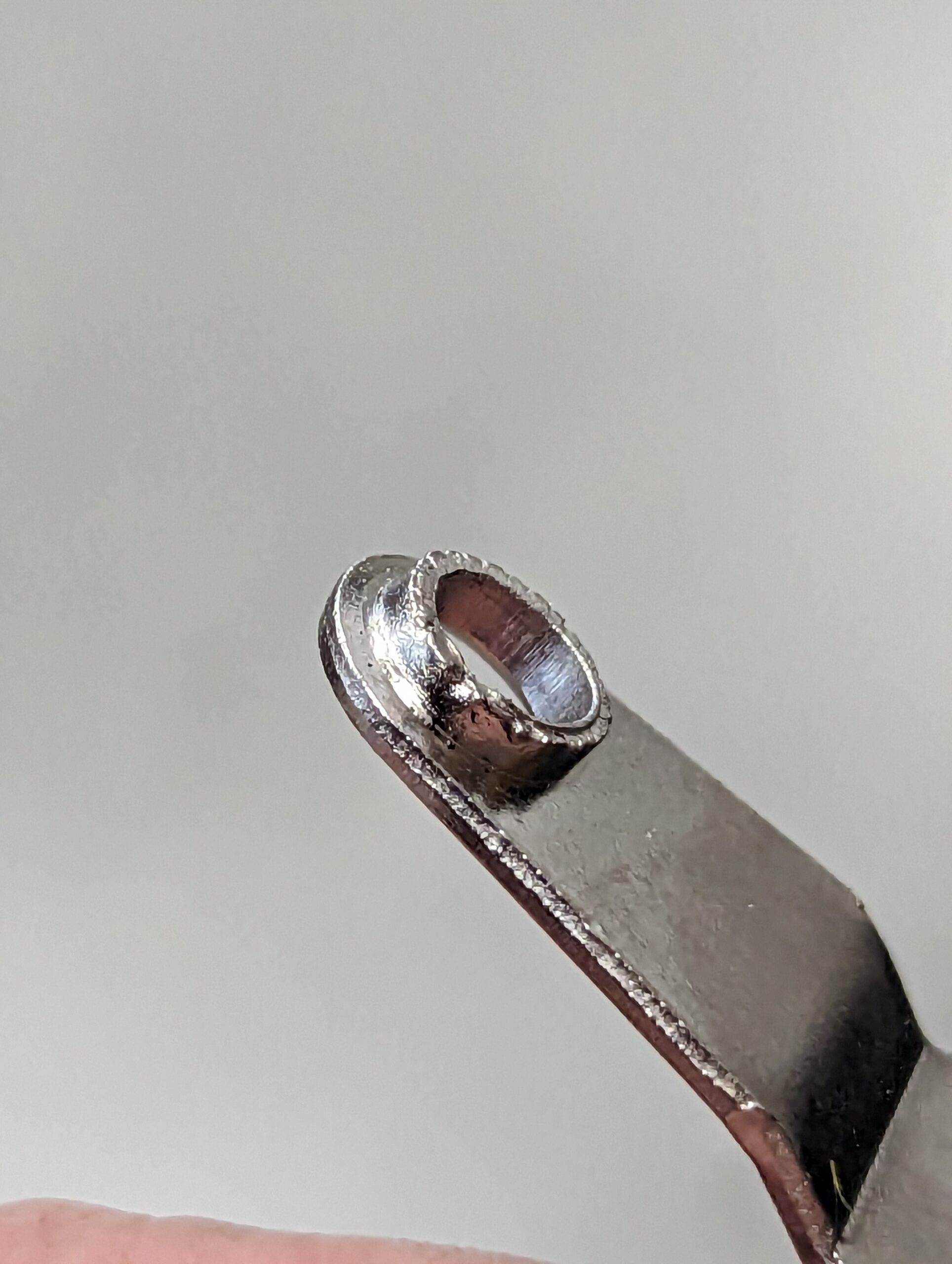
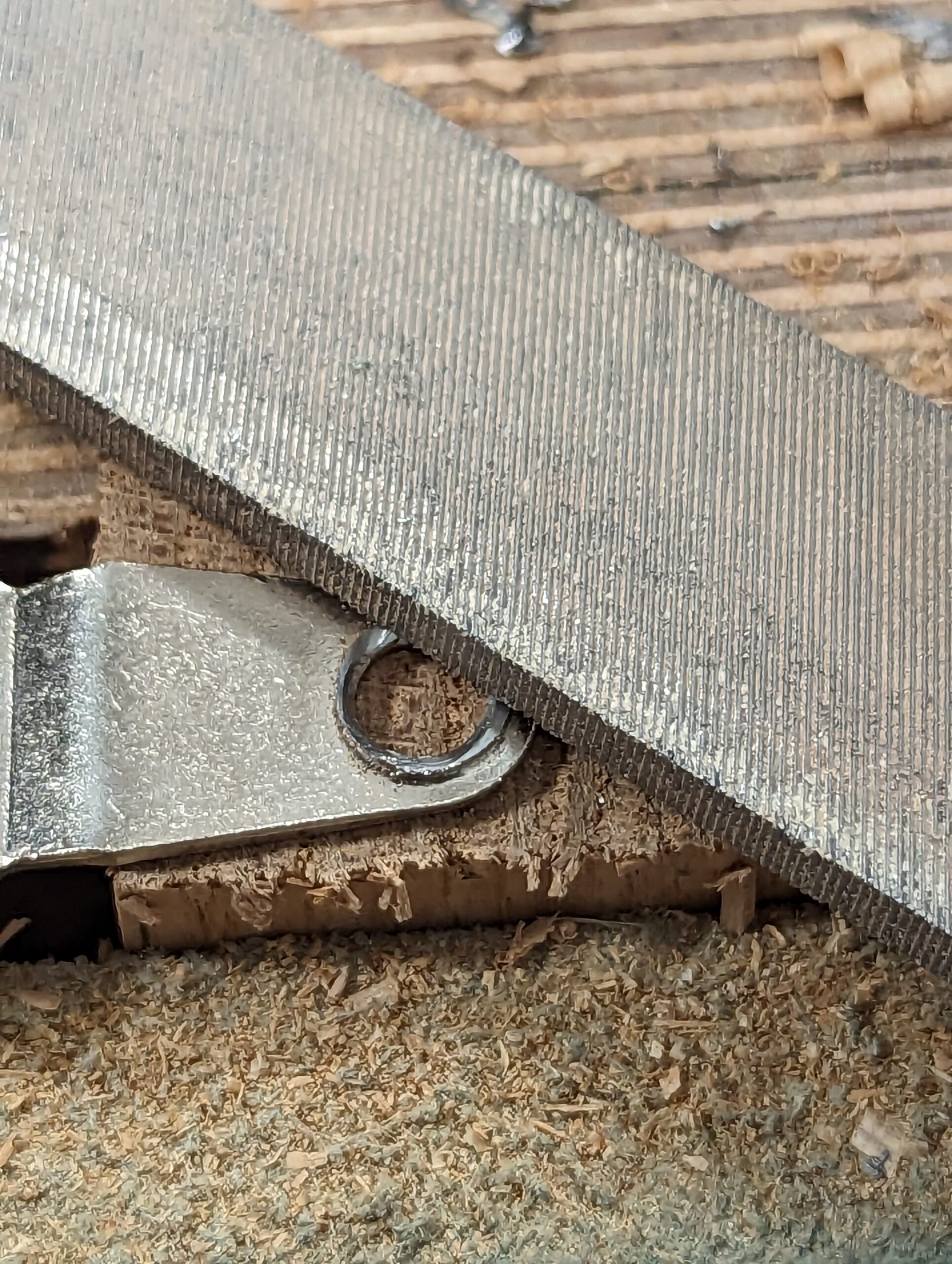
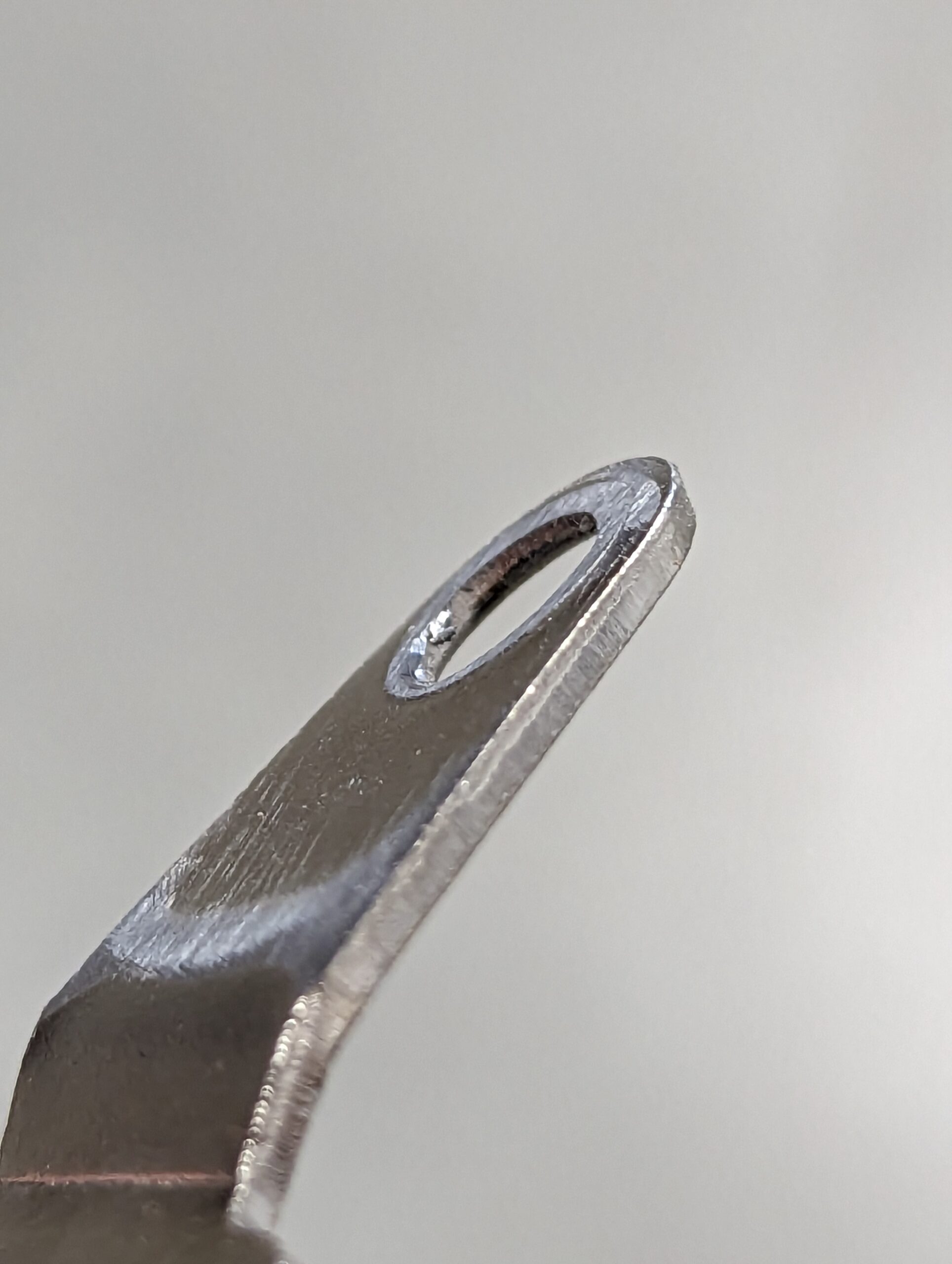
As I struggled to think about prices for my audience I remembered that Spear & Jackson had come back online making Bailey-pattern #4 and #5 planes of a fairly decent quality for bench planes. These two needed only a small amount of fettling to get a good and positive outcome at a much more affordable price and the planes were definitely good enough for long term use without compromising functionality at all. I ordered the S&J 9 1/2 block plane just to see what it was like but the box it came in alone said it was more than I really wanted. The boxed plane was so much heavier than I wanted. Taking it out and placing it to the wood and with minor setting it was just about ready to take shavings, but there was a serious fault. I doubt that even the makers knew what the fault was or how to improve it. Somewhere in the chain of manufacturing the workers skipped a step to save that penny in the bonus payment or a minute in production time. The lateral adjuster has a hole punched through that creates a volcano crater-like edge that stands up 3mm when there should be no upstand there at all. If you didn't know block planes, you would definitely not know how to fix it. I will get to that fix in just a minute.
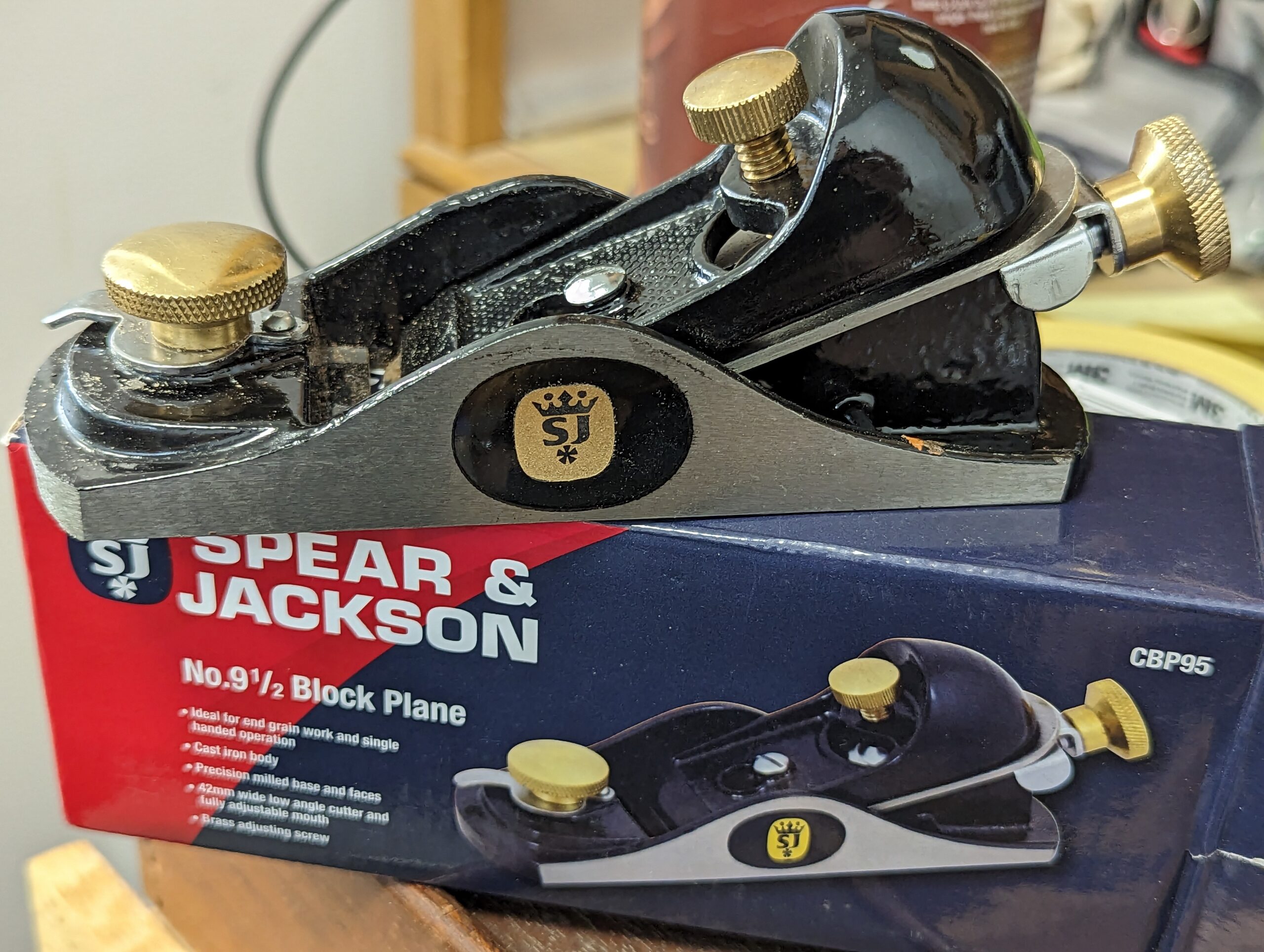
It is most unfortunate buying either of the Spear and Jackson block planes because most of sellers used the same image of one or the other planes interchangeably so you might think that the 6 1/2 is a high angle version or visa versa when they simply didn't bother to trade out the image for the right one. Of course, the marketer in charge of selling online would not know a block plane from a house brick, I get that.
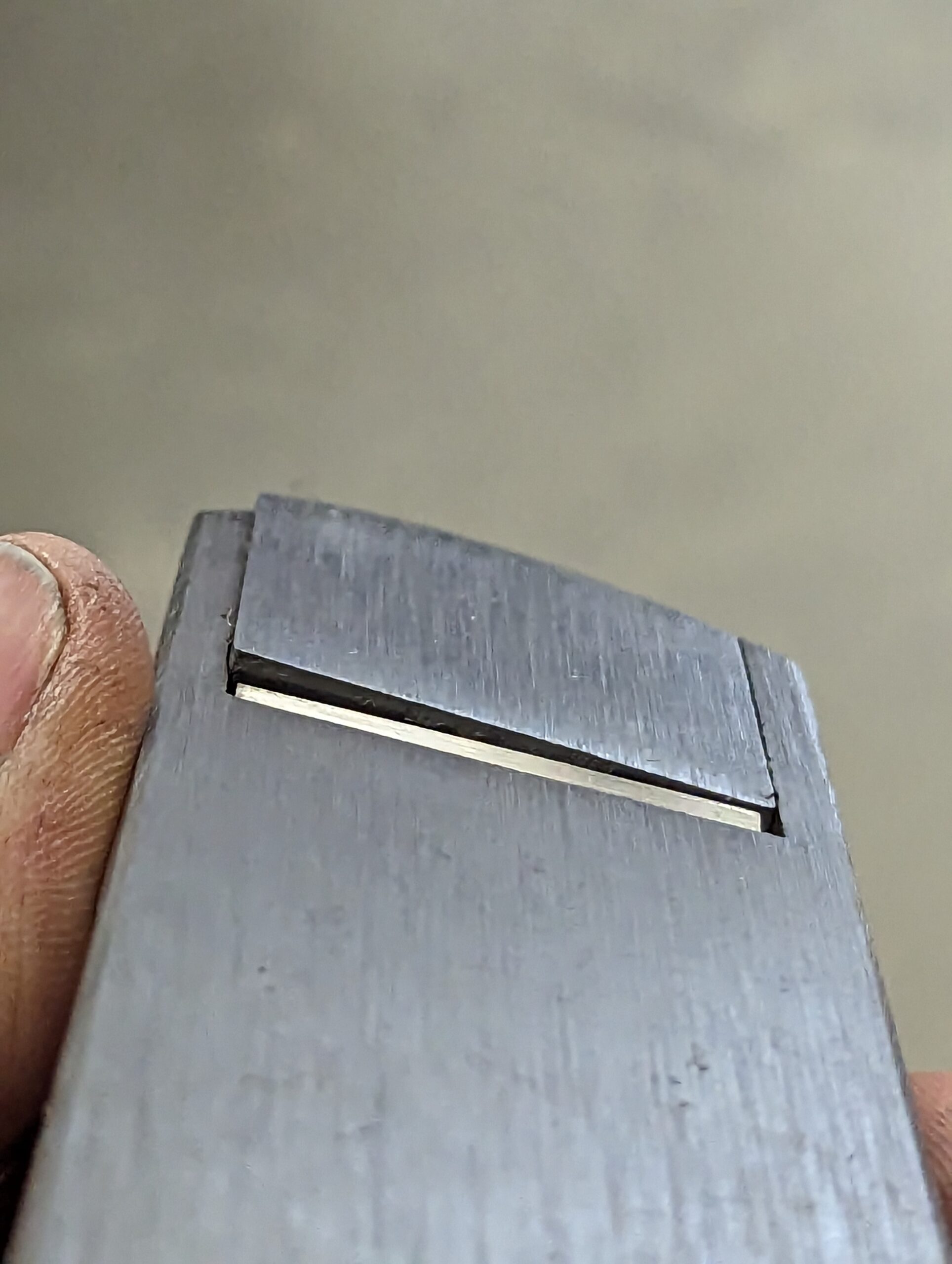
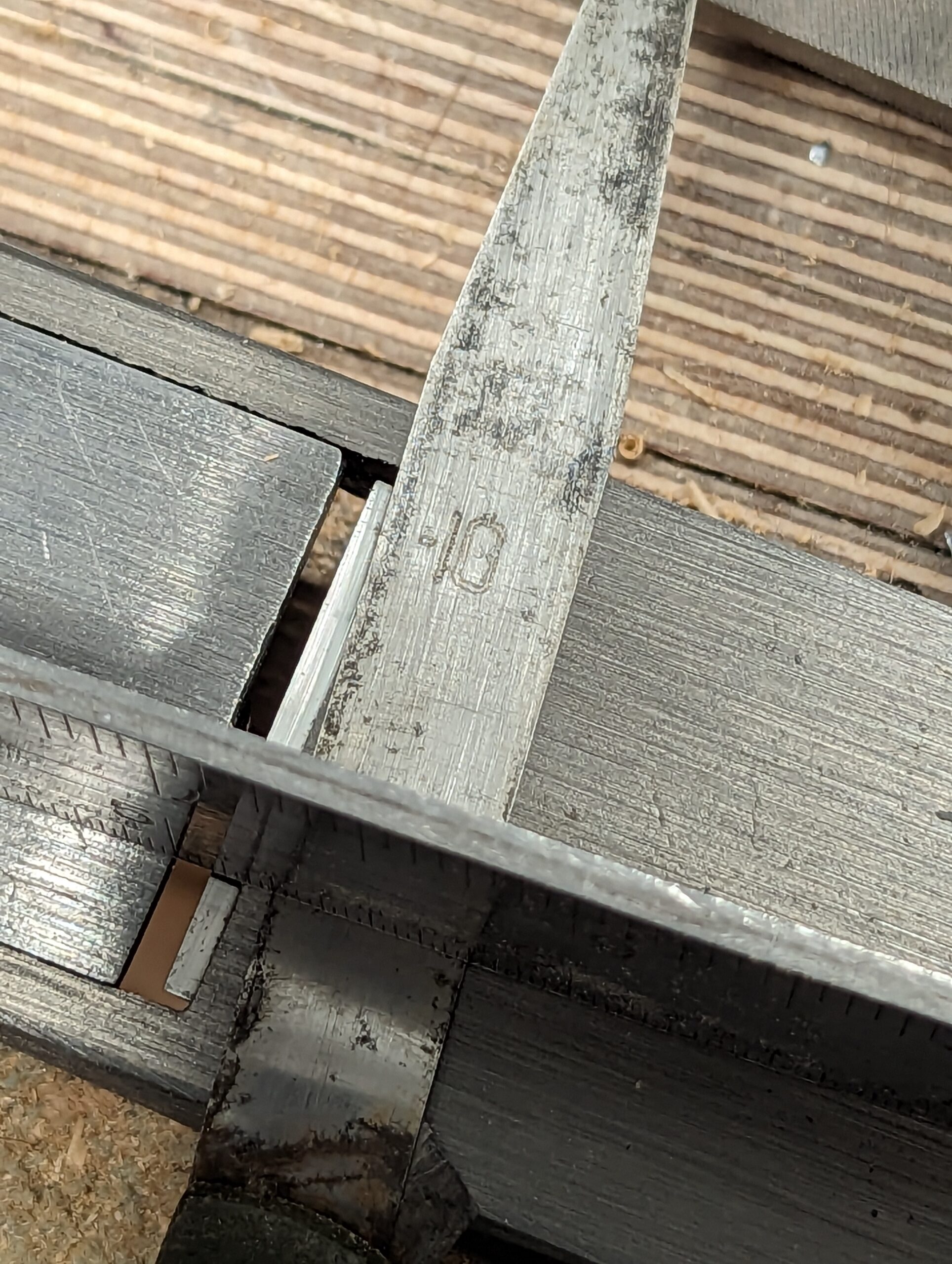
What really deterred me first was the increased weight and heft of it together with the additional sizing and the increase in metal added to it. Somehow manufacturers have drifted from user knowledge to manufacturers thinking they know what users need and want but without asking them. Imagine, if you will, making a plane that simply cannot and will not work and sending them out year on year by the thousands. The unsuspecting public who wanted something to ease a door will think it is them and not the tool and yet all of the ingredients are there in the plane for it to be a decent tool. Had they checked and set the planes prior to shipping they would have had a satisfied customer and that is what you get from the more premium makers. It's not always that the better engineering gives you ten times the functionality but they are rigged up to take that shaving straight off out of the box. Of course, that is just temporary. Once the plane dulls the task of sharpening and resetting looms.
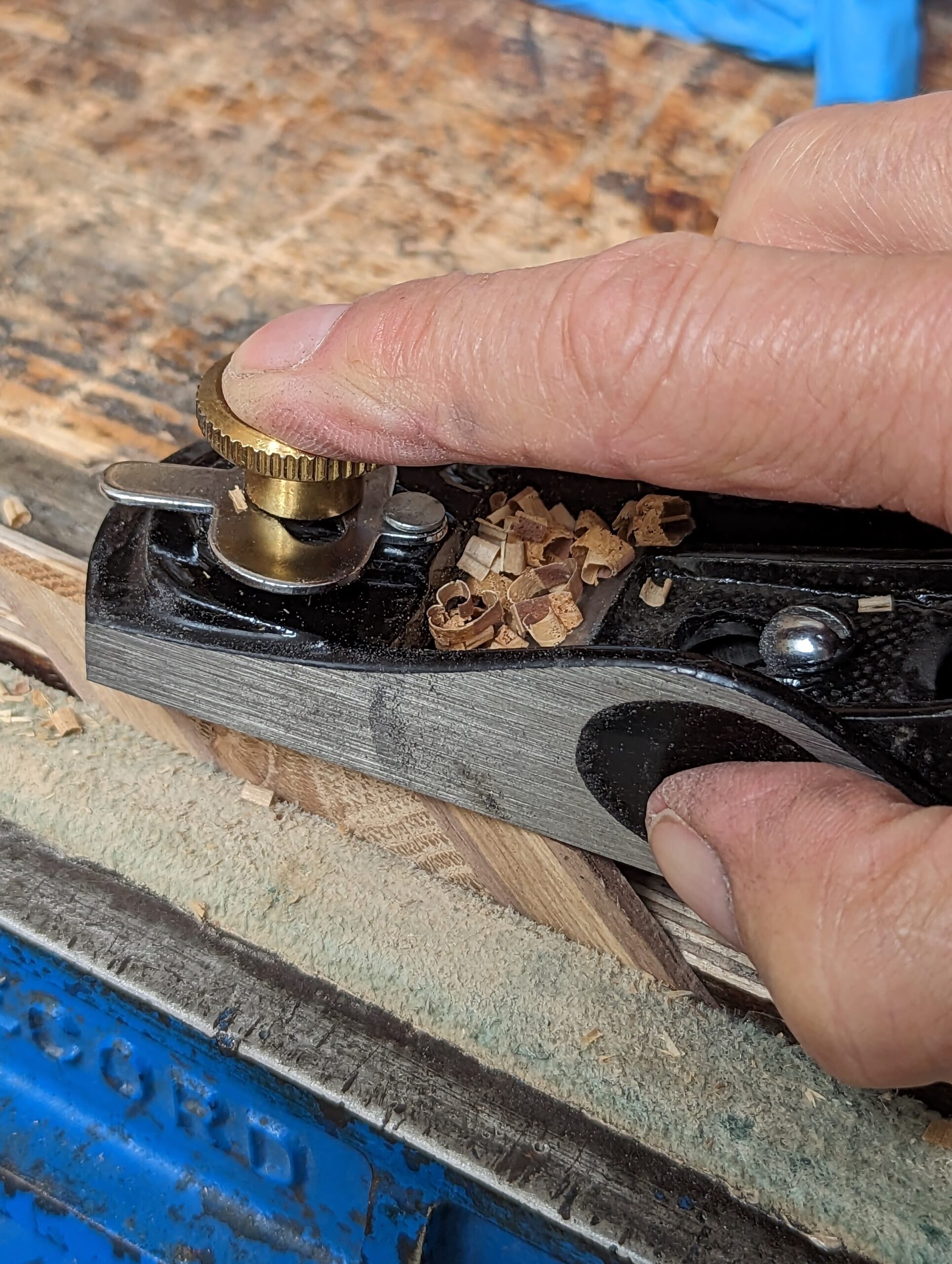
Where Stanley should be ashamed, they boast. Proudly embl;azened with the name is the date of their century-old and more history as plane makers. It's actually doubtful in my mind that stanley actually make these planes and I have good reason to believe that. I cut S&J a little more slack as the 'new' new kids on the block. Both Stanley and S&J have put weight on these block planes and with no good reason. They have done it for years now and I suspect that's because they farm out production to some central Asian factory. You cannopt believe what it says on the packaging any more.
One main problem is associated with the lever cap locking the blade to the body of the plane. Instead of the lever cap applying ready pressure by the flip of the lever cam or a turn of the thumbscrew, people buying the plane must now cinch down the lever cap with that central set screw using a screwdriver even though that is NOT what this screw actually is intended for and quite incorrect. Whereas the setscrew might obviate the use of a screwdriver and gives the impression that this is the correct thing to do (and it is what you would assume) it's exactly what not to do. The set screw simply helps to adjust the distance so that thereafter you can just flip the lever or loosen the brass knob that loosens the lever cap. This then enable you to take out the cutting iron for sharpening and then return it and simply flip the switch back or lock down the cutting iron with the knurled knob depending on the plane maker's plane type mechanism. Both are fast and effective.
What the companies now offer really defies the Stanley legacy in what was probably the best design in block planes ever. 140 years have passed and we had a hundred years when block planes came as a working plane. I wonder who it is sitting in an anonymous office somewhere in the world that is so detached from the that they can put out such shoddy facsimiles. And doesn't it amaze you that with all of our smarts, no modern maker gave us anything better that improved on what Stanley gave to us in the planes their designers created over a century ago? I mean, is all they can do is increase the material sizes? Then too, adjustment and forefinger knobs were made from three times as much brass, three times thicker, three times bulkier and three times heavier and that has to be better, right? Wrong!
And so then comes the cast-metal body. Why oh why do some makers, no, all of them, seem so wont to destroy good plane designs with a mass more weight? Weight is never an improvement to any hand tool. And I am not just talking about economy models either. For some reason, makers see weight and heft and mass as a positive thing. What they created to give us is an oversized draft horse bred purely for ploughing and hauling expecting it to perform as an Arabian–not only doesn't it work it can't! The funny thing is that 95% of these planes, no matter the maker, are simply Stanley knock-offs. As far as I am aware only Veritas of Canada has come up with a production line block plane that is totally their design. Why then if the bulk is indeed a mere knockoff of a Stanley can't they realise that size and weight was intrinsic to Stanley's design and these recent increases in bulk are a non-improving and unnecessary addition that costs more in materials yet makes no improvement to the product or its functionality? Indeed, its detrimental to it. Surely, that being so, it's a no-brainer to just give us an identical plane? Why did they feel to 'improve' what was tried and tested by the Western masters of production models for almost a century?
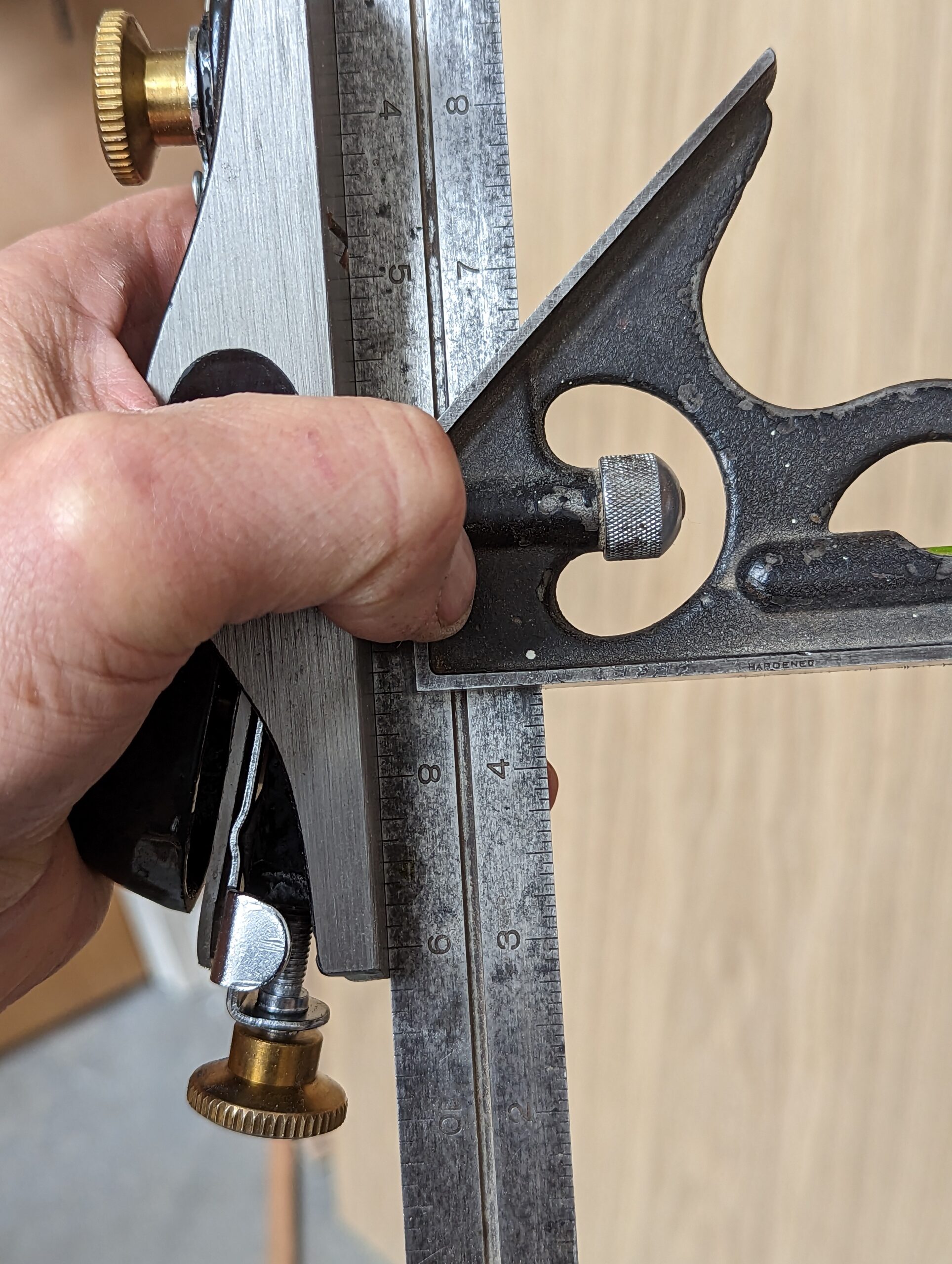
With these new planes ordered and arriving around the same time, I was struck by this one issue that occurred in all of the planes. Side by side, these planes had the upstand I spoke of. It begged the question are these planes made by the same maker in the same country and on the same continent in a single-output factory? As it is with many 'Old and trusted names' of industry, you must now read between the lines, see what's there but not written. Search for block plane on eBay and you will see the same image used by six different suppliers but with their own names on the planes. Many of these old and often well-known names do not make tools but are suppliers and distributors. The price range goes from around £13 on up to £50 but side by side in the hand they appear to be the same identical plane. Stickers somewhere are the only difference.
Surprisingly, the only one that actually worked out of the box was the cheapest of all at £13.99 with free shipping and a two-day delivery. Everything worked and screw thread tolerances were quite acceptable. I sharpened the cutting edge, loaded it and ran it along long-grain and end-grain oak.I have no way of testing for hardness and edge retention yet but I have no reason to believe it's not good. A week working with it will tell me all I need to know.
Comments ()