
And I Sang a Different Song
I go into Oxford on the bus each week to choir practice for a two-hour session. I am a novice chorister in an Oxford-based choir made up of like-minded people who volunteer into the event where everyone sings their hearts out to make sound happen for others. You'll see where I am coming from in just a minute.
We've come a long way in the last decade and a half. When you run a marathon the first stage of the run seems a daunting distance away from the qualifying pass point. At the halfway point the narrowing distance becomes more apparent with each stride and you are encouraged by this mystical transformation in your spirit. Sometimes, in any race or challenge, the start can be more painful than you thought as you push your body and mind to engage whatever opposition you feel. You might even find yourself a little disoriented. I'm still in the early days of a work that began in the late 1980s, even though I feel at last that I have passed many pivotal moments that seemed then to be about the halfway mark. Even keeping up the steady pace where distance becomes the greater challenge in a non-competitive run, I still have some way to go. My opposition was never the distance, the number of runners, the heat, the muscle pain or the brain aching for a break. It was quite simply the unknown. In those first days, there was no template, no one to copy or emulate. It just did not exist for a lone individual to have the audacity to think that he could become anything other than just a carpenter.
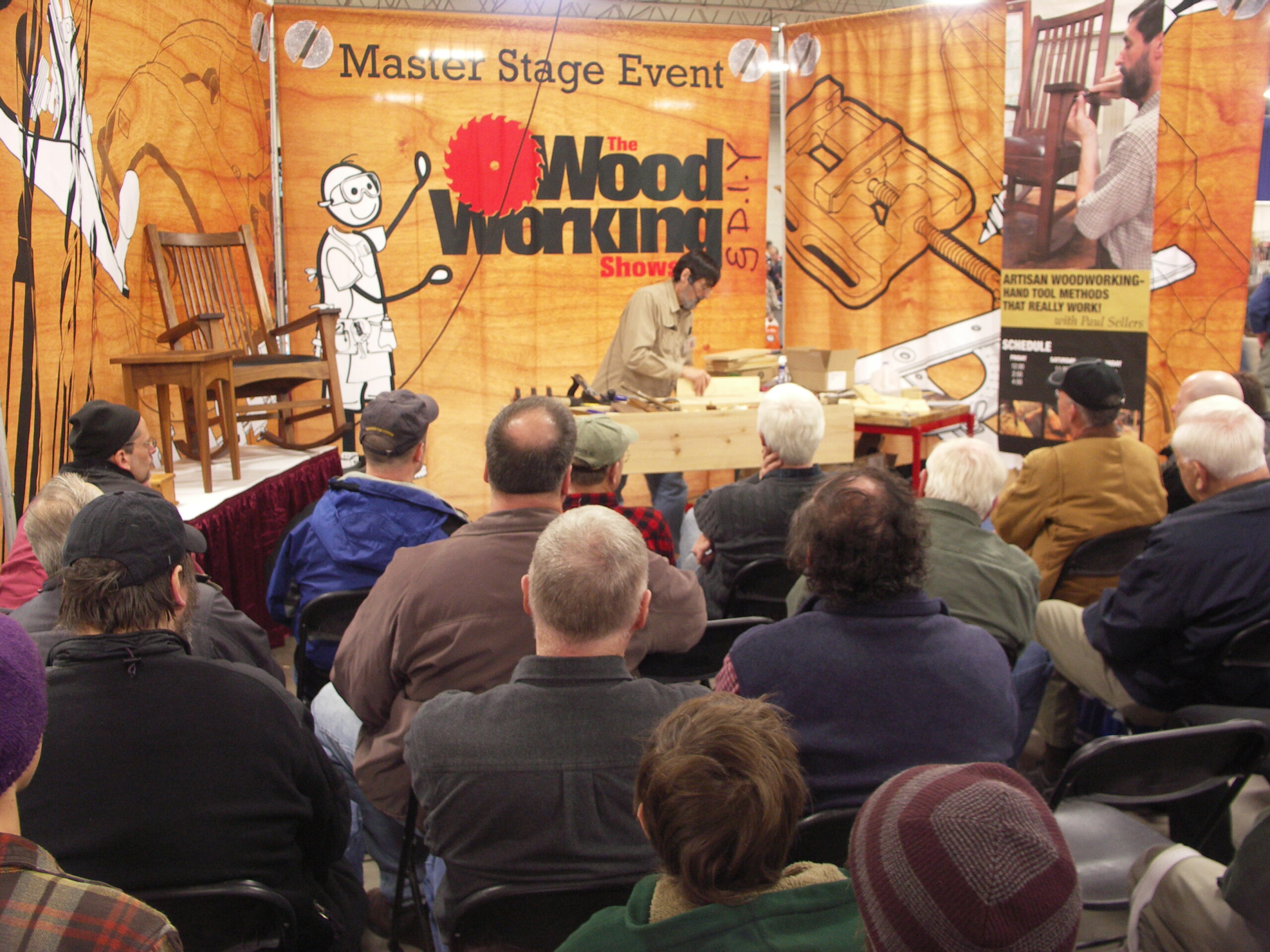
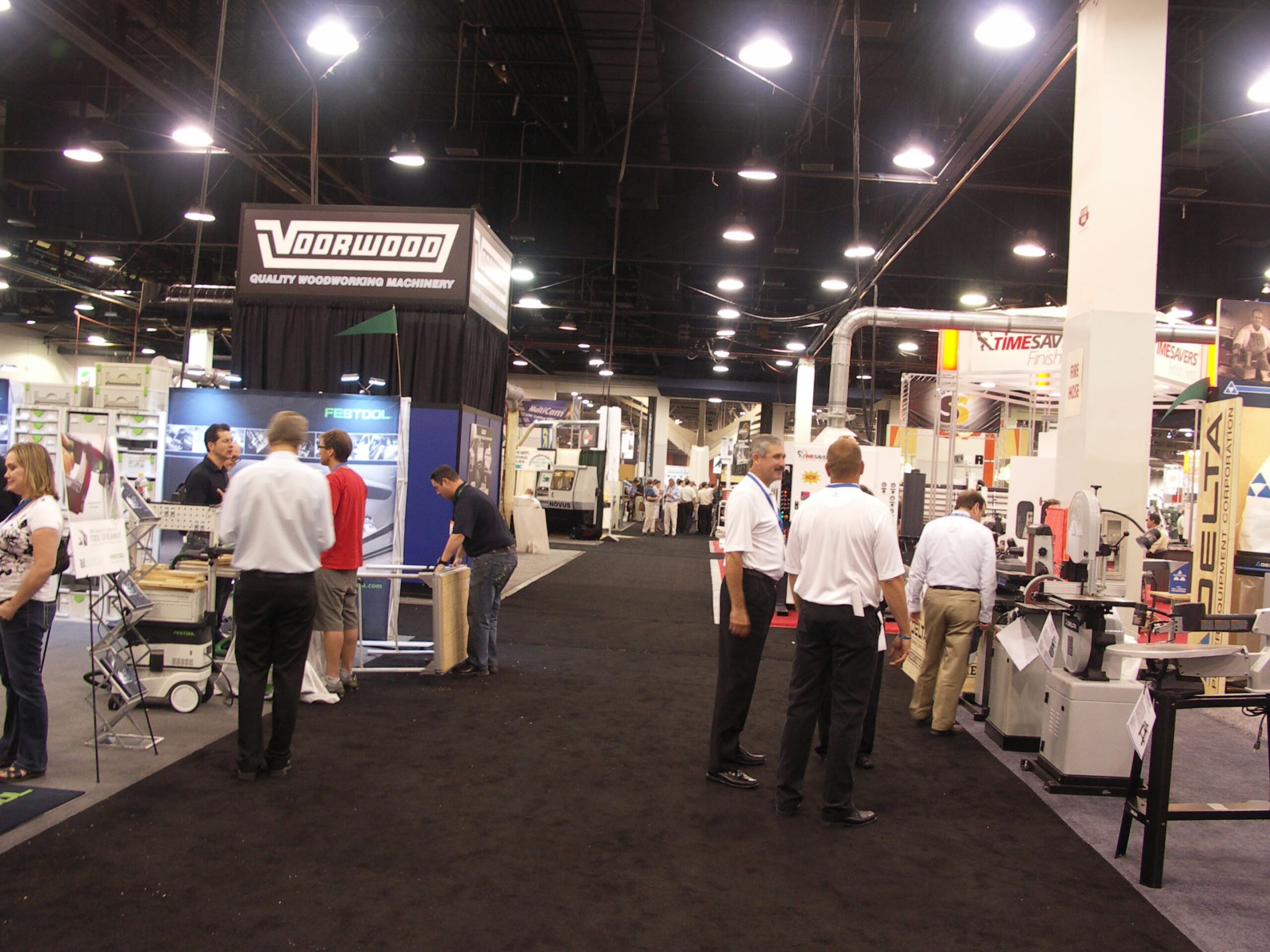
When I went to woodworking shows to demonstrate back then, every other booth there was owned and manned by the machine manufacturers of the day and of every type you could imagine. I found those opposing me, the scoffers there at the show, were brothers in the trade. Alongside the machine manufacturers were the magazines paid by their advertisers next door and they too had over 50% of their pages dedicated to advertisements promoting machines alongside their articles promoting machine-only methods of woodworking. But then the audience by way of attendee woodworkers were not split fifty-fifty but more like a thousand to one. How could hand tools possibly be progressive? Who was this guy in an isolated booth 10 feet by 10 feet paying a month's income for the tiny space and shoved to the back of 80-foot by 80-foot spaces dominating row after row with masses of every kind of static and hand-held machinery? Bosch, Dewalt, Black and Decker, Milwaukee, Festool and a gazillion other entities took premium space promoting machine-only methods together with a thousand pieces of support equipment in guides, gadgets and very noisy gizmos and here I was with four chisels, a Stanley plane, a gents saw, tenon saw, a coping saw and an oilstone. I talked about knifewalls and eyeballing a dovetail that fits perfectly straight of the dovetail saw a chisel chop and a coping saw. But one by one over twenty years, my last show was in 2012, my audience grew and became ever-more supportive in the process. Converting woodworkers to hand tools was a slowish process but that was mostly because they didn't believe in themselves. I am not sure what the percentages were for professional woodworkers versus amateurs was or is but I am now convinced that amateurs outnumber professionals internationally twenty to one. Hence the dedicated onslaught by machine makers promoting their wares and dominating almost every show venue there is.
So hovering there in the background of the behemoths where their audience participants are known as "the punters", I found pockets of people searching for something, well, could it be something just more real? Something that would cost them but not in money, more an endeavour to test themselves. My marathon was no competition at all but the measured pace of what we once knew not as the marathon runner but the loneliness and isolation of the long-distance runner. I really wasn't a part of the two show choirs consisting of sellers and buyers selling anything at that time. No classes, no tools or equipment, no books. I was not singing the same songs and neither was I singing from their hymnsheet. No one asked for me to be there. I simply volunteered into my ideal that hand tool woodworking should not die but not because of preservation or conservation, I hated the idea of my craft becoming part of some kind of living history museum even though I do see the value in the educating elements of it. It was ever important to me for people to discover that the art of hand tool woodworking was alive and well if not alive and kicking for those who understood that there is no competition between hand tools and machines: to catch a glimpse of the reality that cutting a dovetail by hand would be faster and more efficient than setting up jigs and guides for a power router. There really is not much real connection between hand tools and machines. Machinery is a type of conversion minimising the need for hand skills to adopt a more industrial way while the other is an ever-expanding art. The one becomes industrially exclusive because we don't all want industry in the backyard garage workshop and the other offers inclusivity because we seek ways of exercising our whole being in every way possible.
I think that most people think that their country is the best or even better than the rest and the ones with the biggest voices are often the most likely to be heard for different reasons. For those of us in smaller places, occupying our limited spaces, well, wherever we put our foot is or soon becomes our personal and personalised land of opportunity. It's here that we seem always to plant and grow, sow seeds of hope to show others a new or an old way and all the more when we live to make because making is indeed the end result; our work is less to do with what we make but the how-to of it. A man we know really little of wrote for others to follow saying "My hands have supplied all of my needs and the needs of others also." What a remarkable thing to live in such success in the provision of others alongside his own. For the longest time, in my younger years, I never really thought of it that way, that we are here to provide for our needs and the needs of others by the work of our own hands. My early days of dedicated woodworking shows in the USA were not for crafting artisans in a craft fair setting but massive selling venues where hundreds of thousands of woodworkers would look for machines and equipment. In those early days, I was definitely the needle in the oversized haystack, pushed somewhere near to the back wall only the most dedicated determined to see everything for their buck would make it to find the oasis in the desert.
In the beginning, there seemed almost no choir to preach and that is because I experienced shut-down and glazed over eyes if and when I pulled out a Stanley ¢4 to but today that's changed markedly. look at what we have achieved in our service years to the world of hand tool woodworking. We are such a tiny team. Did you know that through this past decade, our team for all we do comprises only five and sometimes six people? We have never failed to put out an instructive video on woodworkingmasterclasses.com every week and I have written 3123 extensive blog posts of instruction and information. I wrote my foundational, project-based course for hand tool woodworking (currently being revised and updated) and followed on with a near 500 page book Essential Woodworking Hand Tools. We've hosted and managed our different platforms including (believe it or not) unpluggedshop.com which we simply host for other hand tool bloggers worldwide and take no income from This might answer those who comment along the lines of, "Paul's way is the only way!" Those with a blog focussed on their working with hand tools and the encouragement thereof can post posts on unpluggedshop.com Common woodworking is our introduction to woodworking for those seeking to better understand the basics of how to do it. Go to commonwoodworking.com and its free once more with no adverts and no kickbacks or free suppliers from tool makers and distributors. Woodworkingmasterclasses.com is where we host both a free subscription along with a more in-depth paid-for membership and of course there is much more alongside that is no less of a major contribution to the woodworking world whether that is for purist hand tool users or machinists. The basis for everything I have taught came firstly from my background as a lifelong, lifetime maker with the bolt-on of teaching woodworkers (a mere 6,500 of them) in hands-on at-the-bench classes in the evenings and weekends for three decades. I know, this is a bit of a brag. But you, yes, I am referring to the most important part in this, YOU! You were the reason I kept going and never gave up when retirement age 65 came and my pension was there on time. Eight years on I still have no plans to retire because I am not done yet and the choir is not yet big enough for the craft to be part of every lifestyle woodworker.
Comments ()