
What's Ordinary
I take old things made by artisans in past times and see things we never do now in our more advanced society and with more advanced equipment, machinery, guides and such. And people actually believe society to be more advanced, you know, but the ordinary of past made things pop out all the time to surprise me.
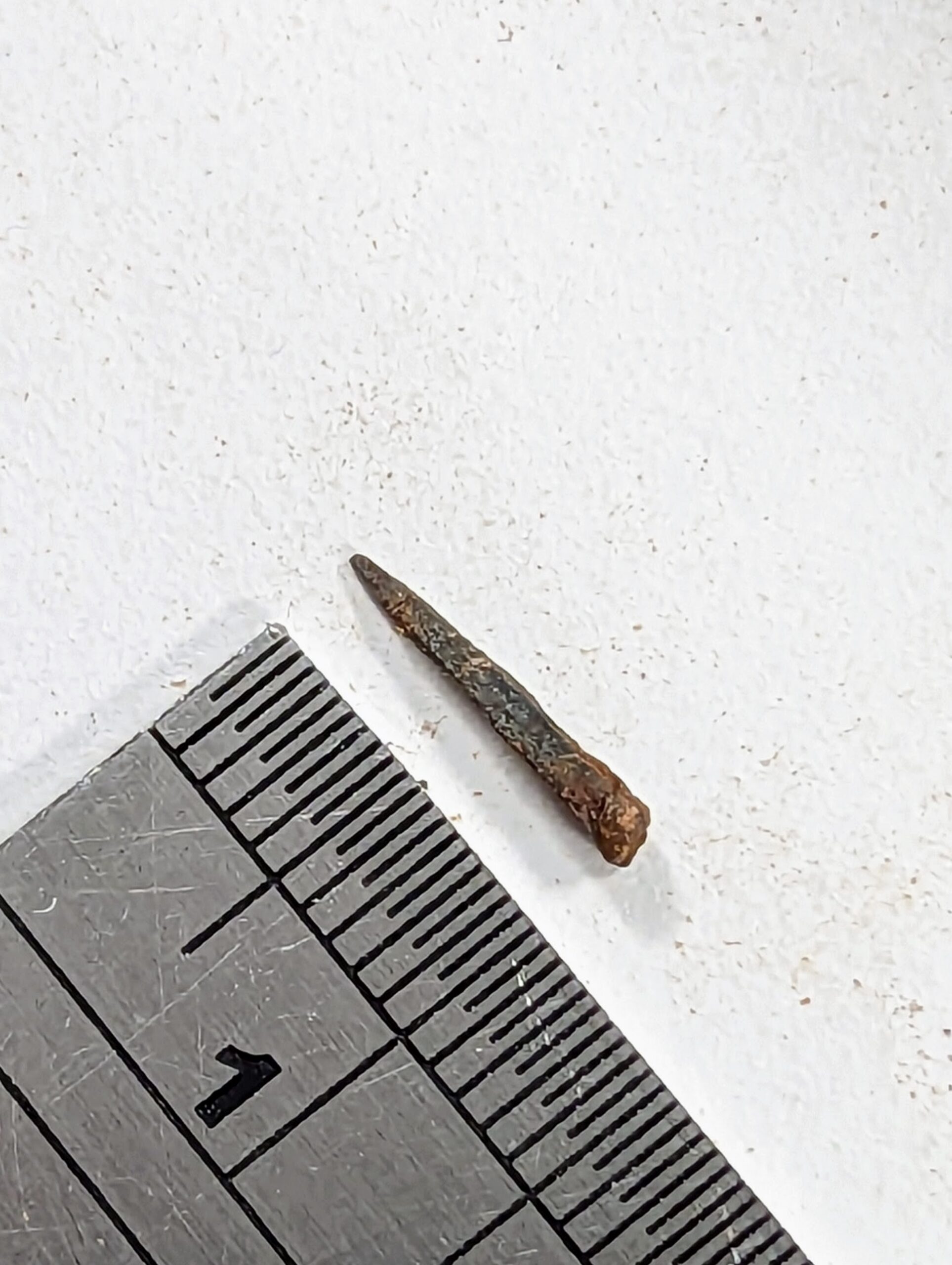
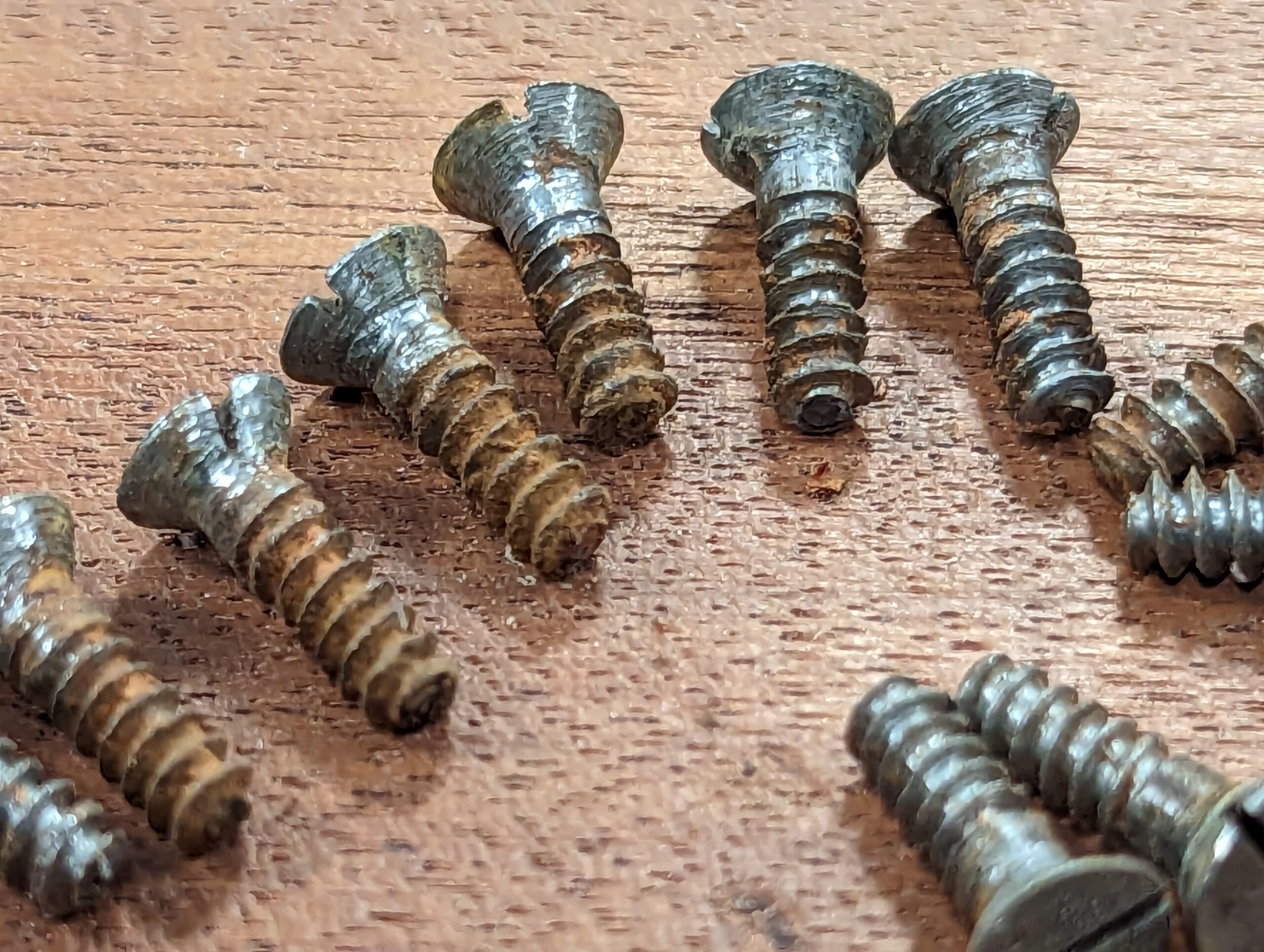
Well, it's just a handmade nail, four-sided, blacksmithed in two blows to two faces by a man twisting the wrist of one hand to meet the hammer face held in another with some small heat and an anvil, after all. And then the handmade screws look different too. I look twice to what drew my eye, the slots hand cut, sawn and the threads unequal show the hand-madeness by a man maker who made the less perfect perfect by customising fits to settle matters of small discrepancy.
So glad I didn't listen to the vastly knowledgeable out there who would now say not to use steel in mahogany because mahogany rusts the screws, causes the wood to rot, then split, then stain the blah, blah, blah. Colleges are the chief source of much erroneous information like this. All hearsay mostly. The nails did rust, rust in, wouldn't pull with an easy pull but only pure determination released them from 200-year-old fastness.
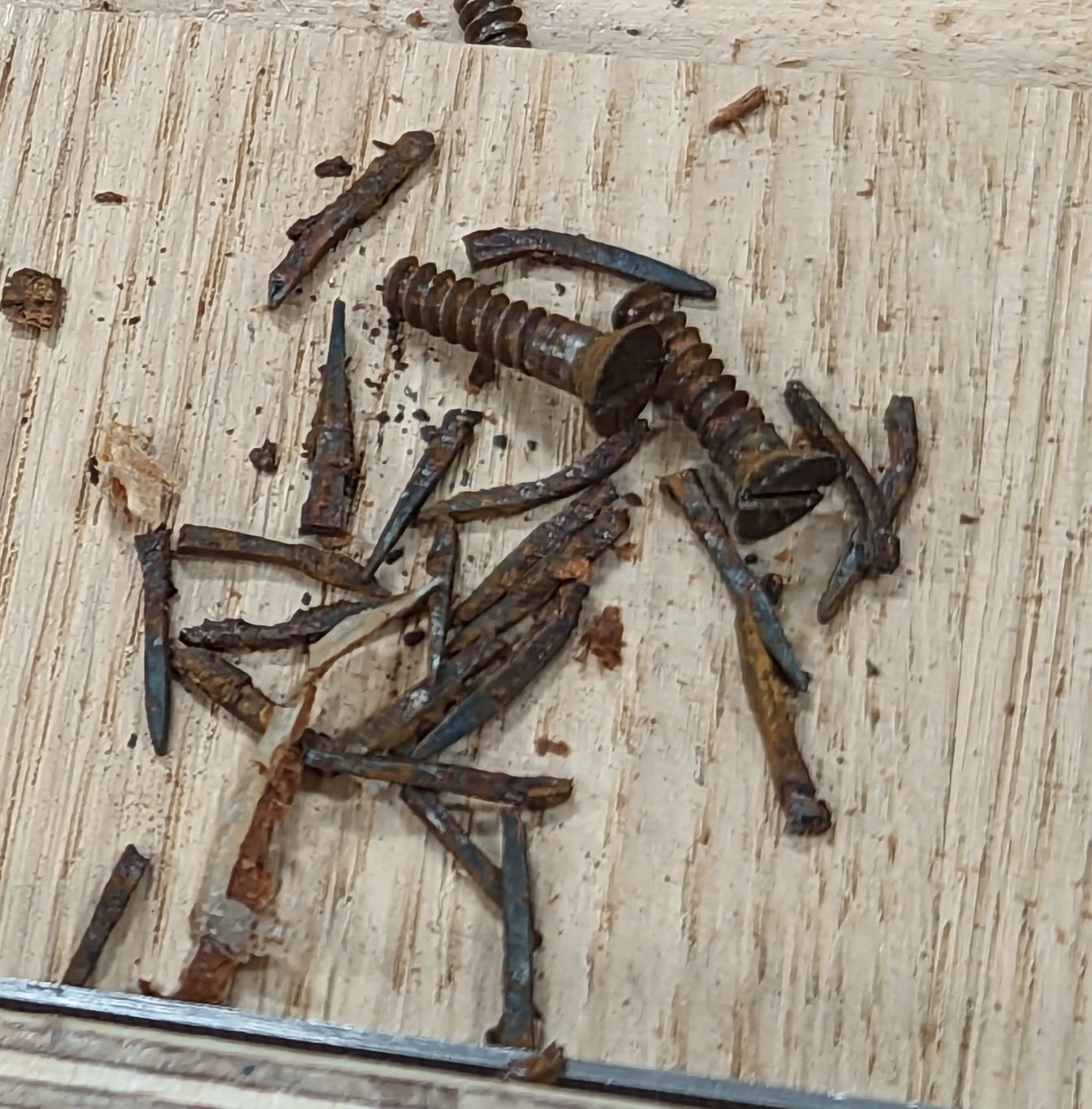
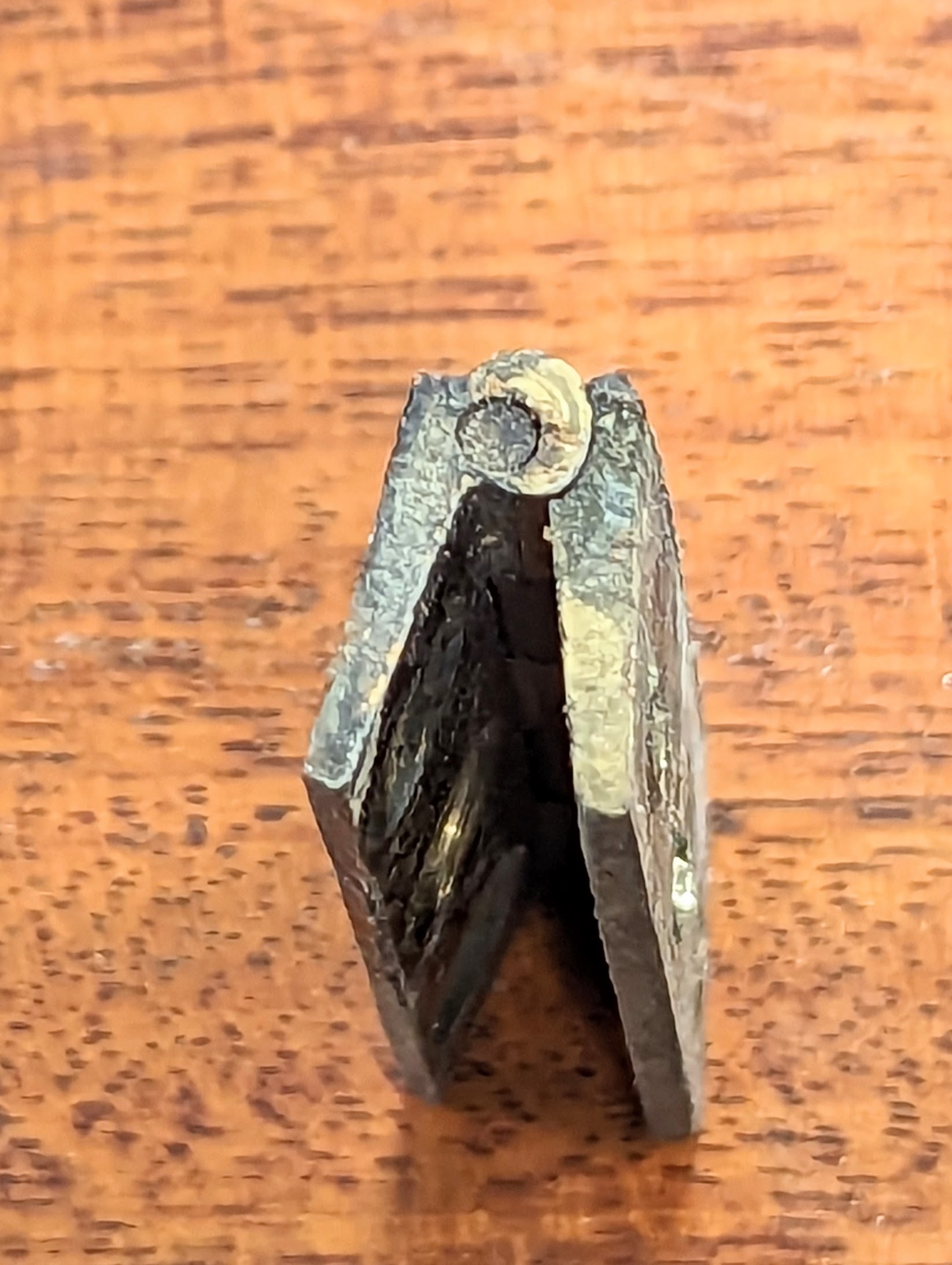
But just look at the perfect and imperfect tapers of these square nails four-sided to needle-pointedness. Yes, the points broke off in the extraction and I bent them in the pulling, but they were very difficult to pull even with a stout pair of pliers and the bead they fastened in place was held good by them for two hundred years, you know. Anyway, they were ordinary in the day of their making and are now extraordinary in our day; such to the point that they held my gaze even though I know a friend blacksmith who could make such fine nails. So why did they not split the wood as do round nails, anyway? Well, perhaps it is because they were and are still extraordinary.
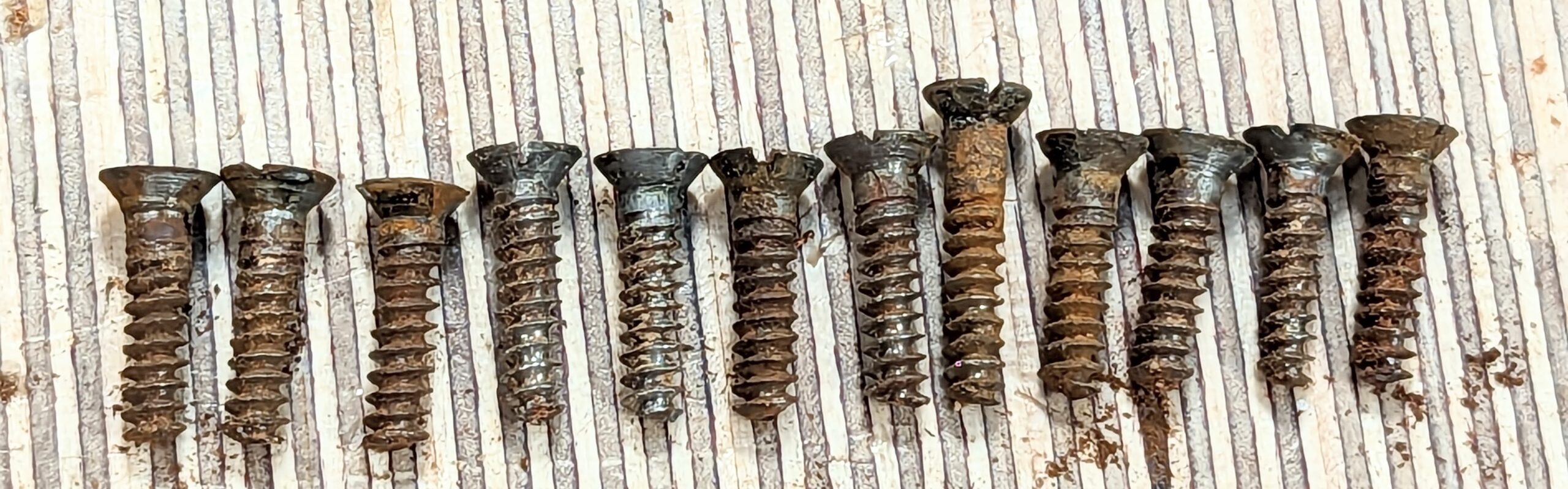
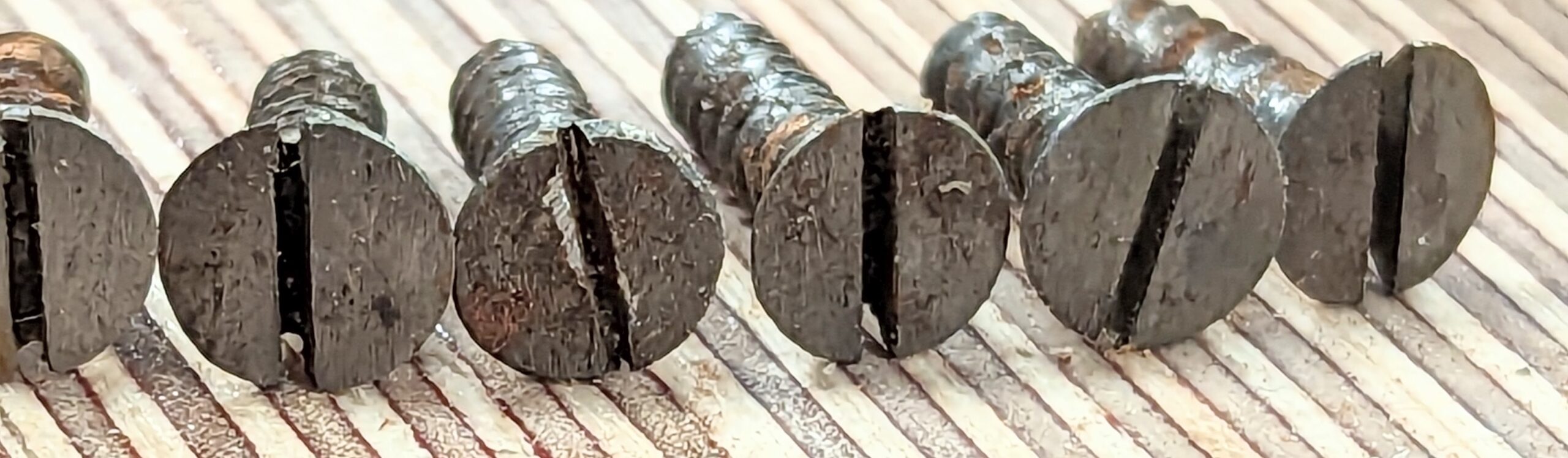
And the steel screws at first glance would be ignored if a cell phone was sat beside them even though barely any human hand touches a cell phone in the making. The screws are so plain and big by comparison with the amazing tiny micro-screws used to hold components in the handheld device. Of course, `i can be fascinated by both of the screws, the technology of 200 years ago and the technology of Chinese mass-made screws that never see a human hand even in the packaging and shipping. It was the discrepancy that held my gaze; my attention is always drawn by such things I know a human made in times past using, well, primitive methods and tools. So discrepancy drew me so to the work. All of the screws were different lengths and so too the threads in the screws varied. The slots in the screwheads were sawn in, off-centre in most and then to different depths as well. The depth from one side of the screw to the other was different too. On one side it might be 3mm deep and the other less than 1mm. So we see how the ordinary becomes extraordinary by the making and the man or the woman maker working in ways we know little of in the knowing ways of old. So tell me, who is it that you know that makes four-sided nails 10mm long to a perfect point using only their hands and a hammer?
So the doors that held these nails and screws were in a skip at a wood centre where woodworkers worked making things from MDF they veneered with surfaces of veneered wood a thousandth thick and don't you wonder when such a thing happened that good wood could be discarded so? People makers walking past the doors for several days ambivalent until I retrieved them for the wood. The man that discarded them made boats. Fine boats. But he saw no use for the wood. The panels from the doors are six feet long and half an inch thick vintage mahogany you can no longer legally buy because it was over-harvested and plundered by colonial endeavours in search of riches in the 1700-1800s. To these woodworkers, the work remained quite dull and boring and ultra-ordinary. To buy this quality of wood now, for panels of mahogany, 48 board feet of it, if it were possible, would be over £1,000. To have the doors made the way they were made with such exactness, by hand, though it no longer be possible, I think, would be four times that.
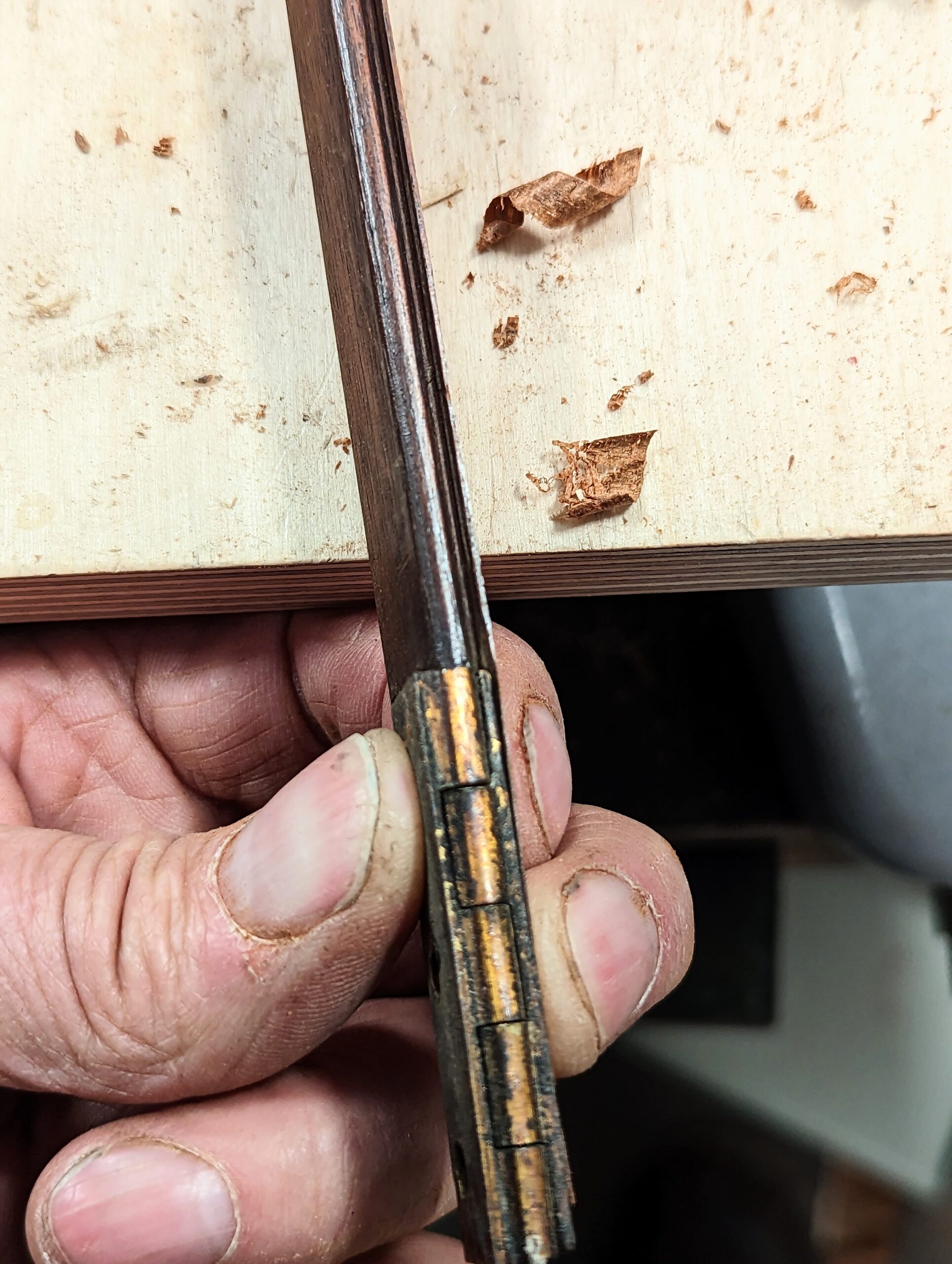
The hinges stopped at a fixed point to hold the door and stop it from folding back and the brass tapered to provide for the stop, you can see the shoulders right by the knuckle. We still make such hinges for £60 a pair of 2" but they are more finely made though less by hand than these I've come to know.
I sliced through a mortise and tenon to retrieve my wood for my picture frames and the fineness of hand-cut mortises with gapless tenons fitted neatly inside. I'm hoping when someone cuts through mine in two hundred years they too will be as gapless and someone calls another to see and says 'imagine that'.
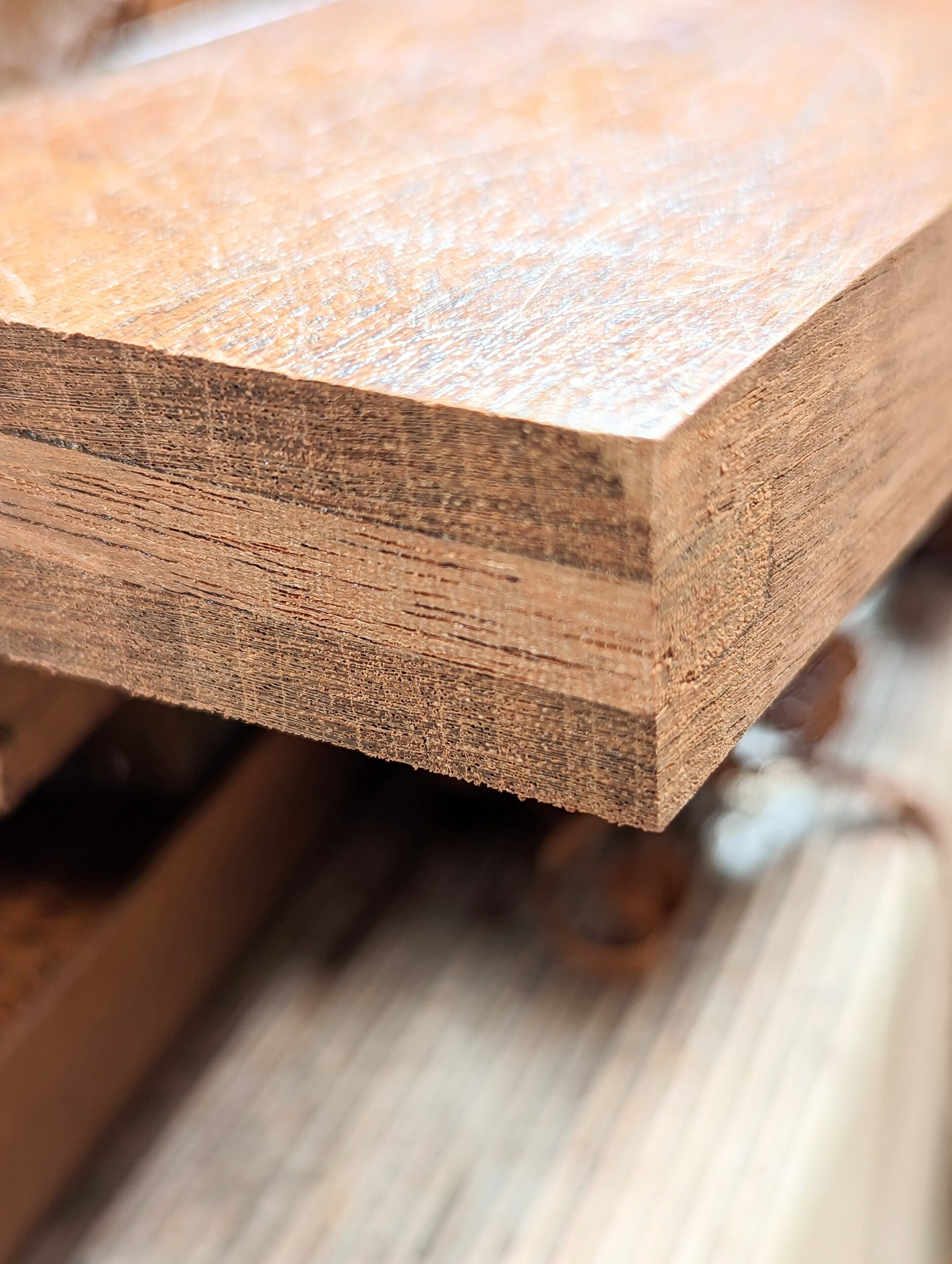
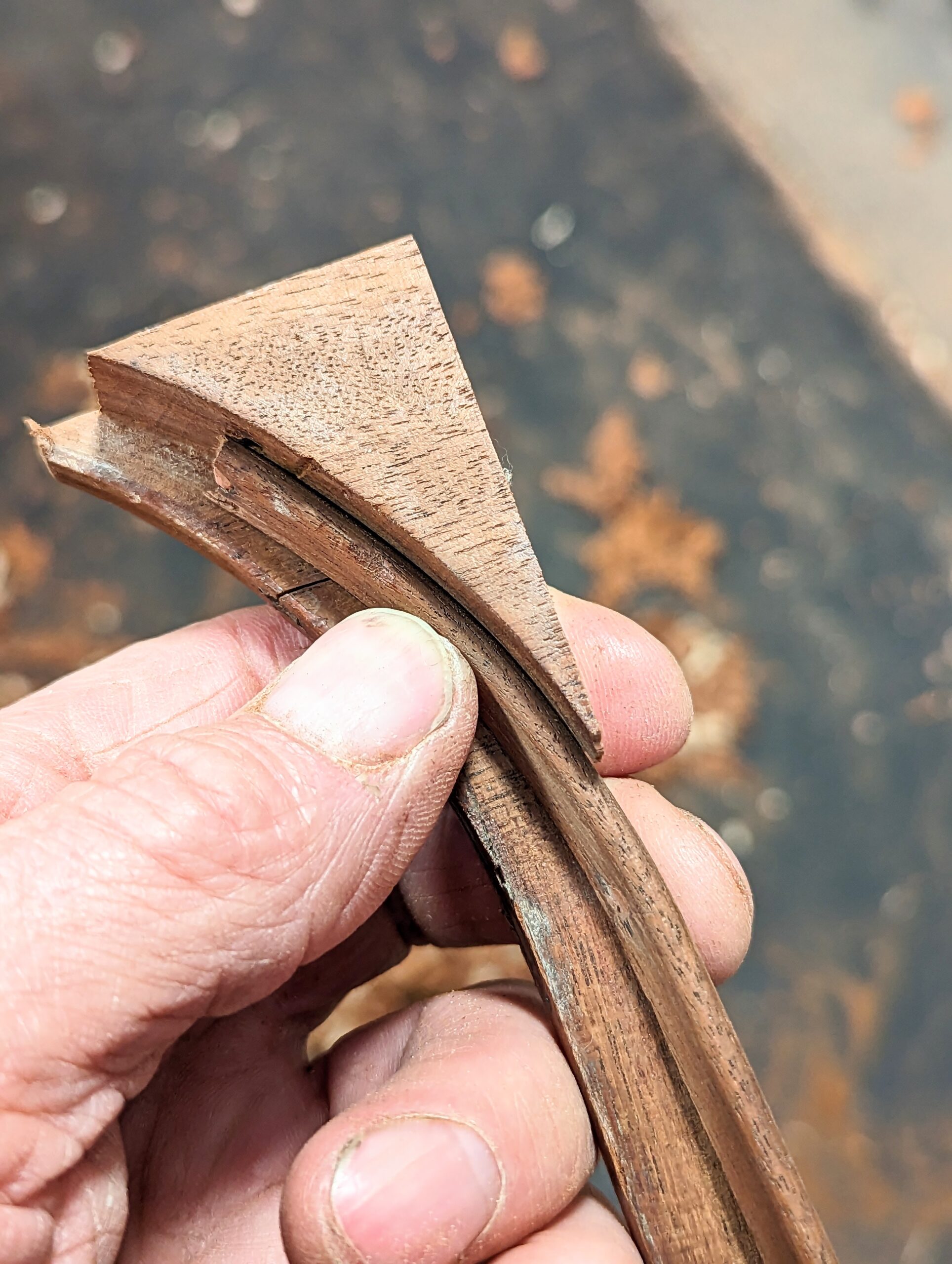
The doors with arched tops held panels and the beads were heat-bent to conform to the bend but it was the pristineness of sections of wood all planed dead square, smooth and flawless in every stick and stem and the sizing was within the smallest fractions of exactness throughout each piece. This loveliness keeps my attention in the dismantling of the ordinary of its day into the extraordinariness of mine.
I write such things lest we miss that we too can train our bodies and minds to respond to the fine-tuning of all things made.
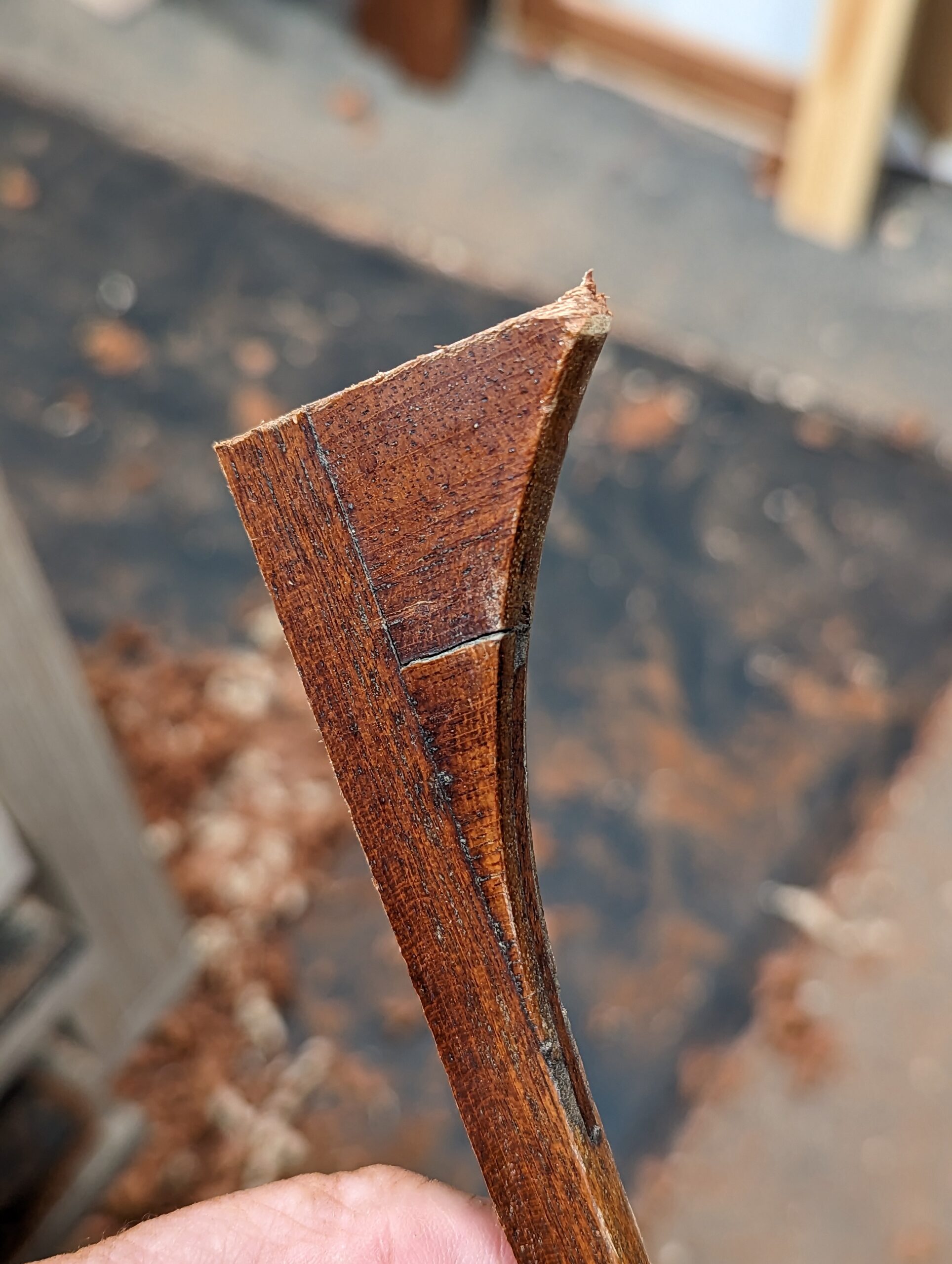
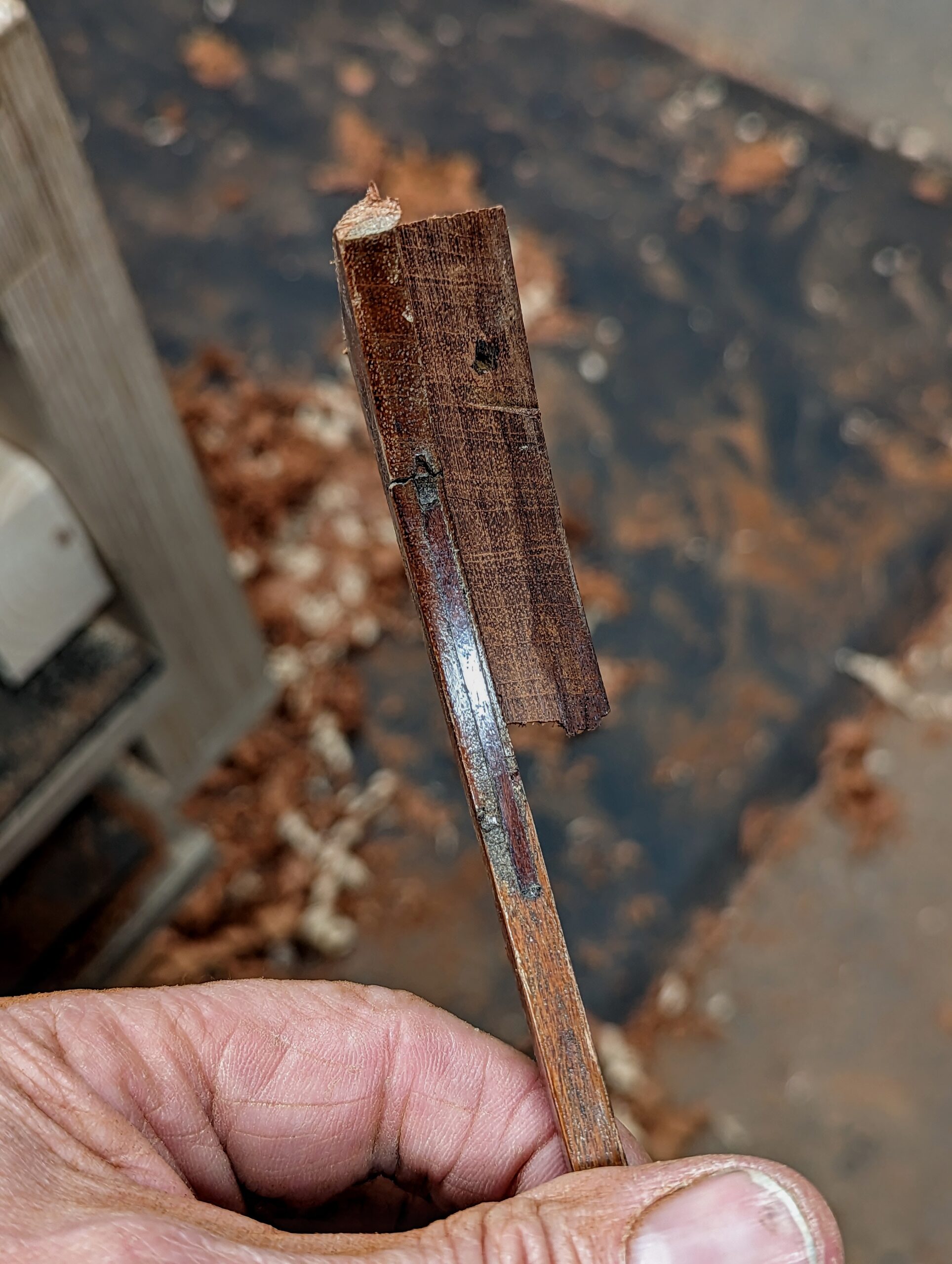
There are small details that ensure longevity beyond the lives of many generations. Here where the rail sweeps in its curve to meet the stile, a small and thin insert caught the weakness as a plying of the thinner sections. This too becomes the extraordinary for me to contemplate and dwell on. I doubt that we will ever see sauch skilled cognisence in workmanship again.
Comments ()