
Competing
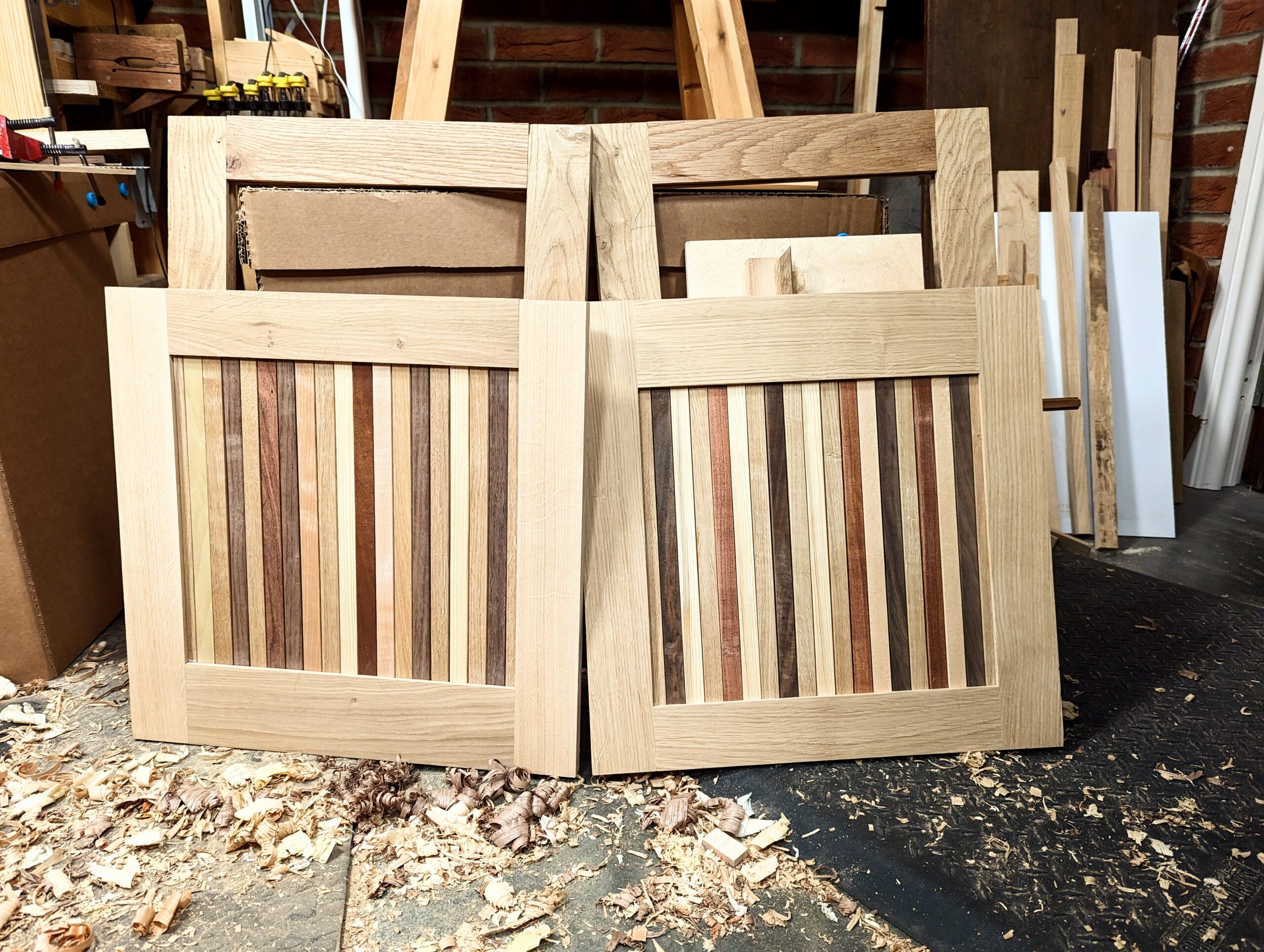
Something I always did when working on more tedious work was timing myself and seeing how I could improve production. The decades passed and coming off the conveyor belt allows you to take better control of life in a more wholesome way. Back in my mass-making days in various businesses I started, I would count the number of products made or the number of minutes and second each item or section of work took to do. It's part of my disorder I think. My first-ever walking cane took me almost two full days to make. This was a lifetime ago back in 1988; hard to believe. It was like the one shown below. You can't see the twist in the shaft. The silver inset star is of course the symbol of the Lone Star State where I lived for 23 years. These were lost-wax castings that identified the canes as being made by me.
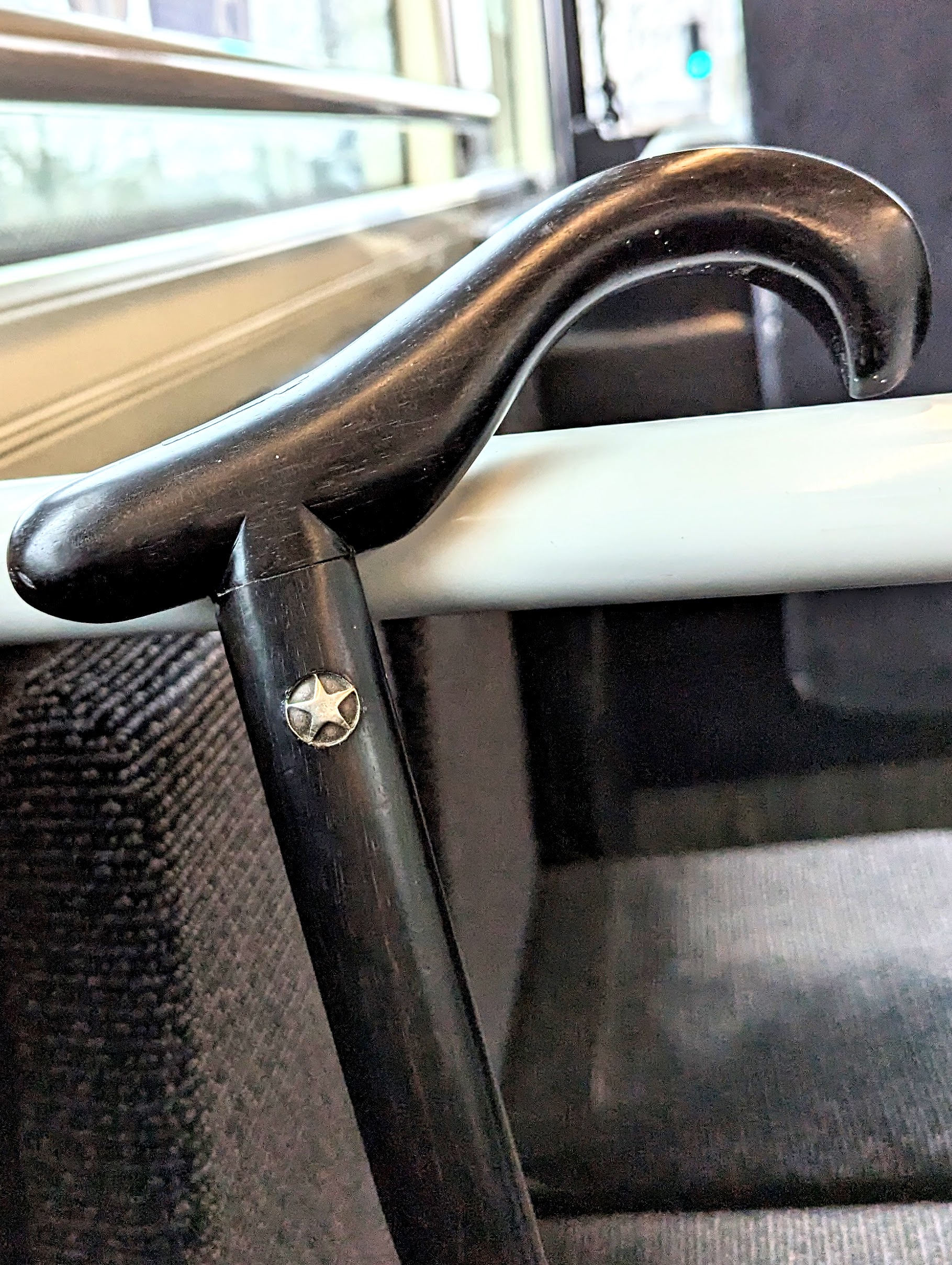
My customer, who having newly discovered she had MS, ordered a cane to be made and paid me $150; it was beautifully made by hand from cocobolo. She asked me to make it the best way possible but only by hand. I designed my first-ever walking cane, mortised the handle and tenoned the stem through. That single cane led me to start manufacturing them by the hundreds and then the thousands. In the final iteration as a mass-maker I could make a single oak walking cane in an average of just four minutes plus finishing time which was about the same using an HVLP sprayer and applying four quick successive coats of lacquer. It became a soulless enterprise and I couldn't wait to get out of it in the end. It was a choice between life and death. On the one hand, I made money, on the other I felt I was losing even more than my life. Thankfully it was just for a season. My future became fulfillingly engrossed in the conservation and preservation of a lived life immersed in real woodworking. No more machining substitutes but true craft. I went back to hand-making my walking sticks and instead of getting £10 wholesale from buyer/distributors, I charged the customer directly £36 and up for an item that took me an hour or so to make. There wasn't too much difference in the end if you take off time to pack and ship wholesale amounts via UPS. Sanity.
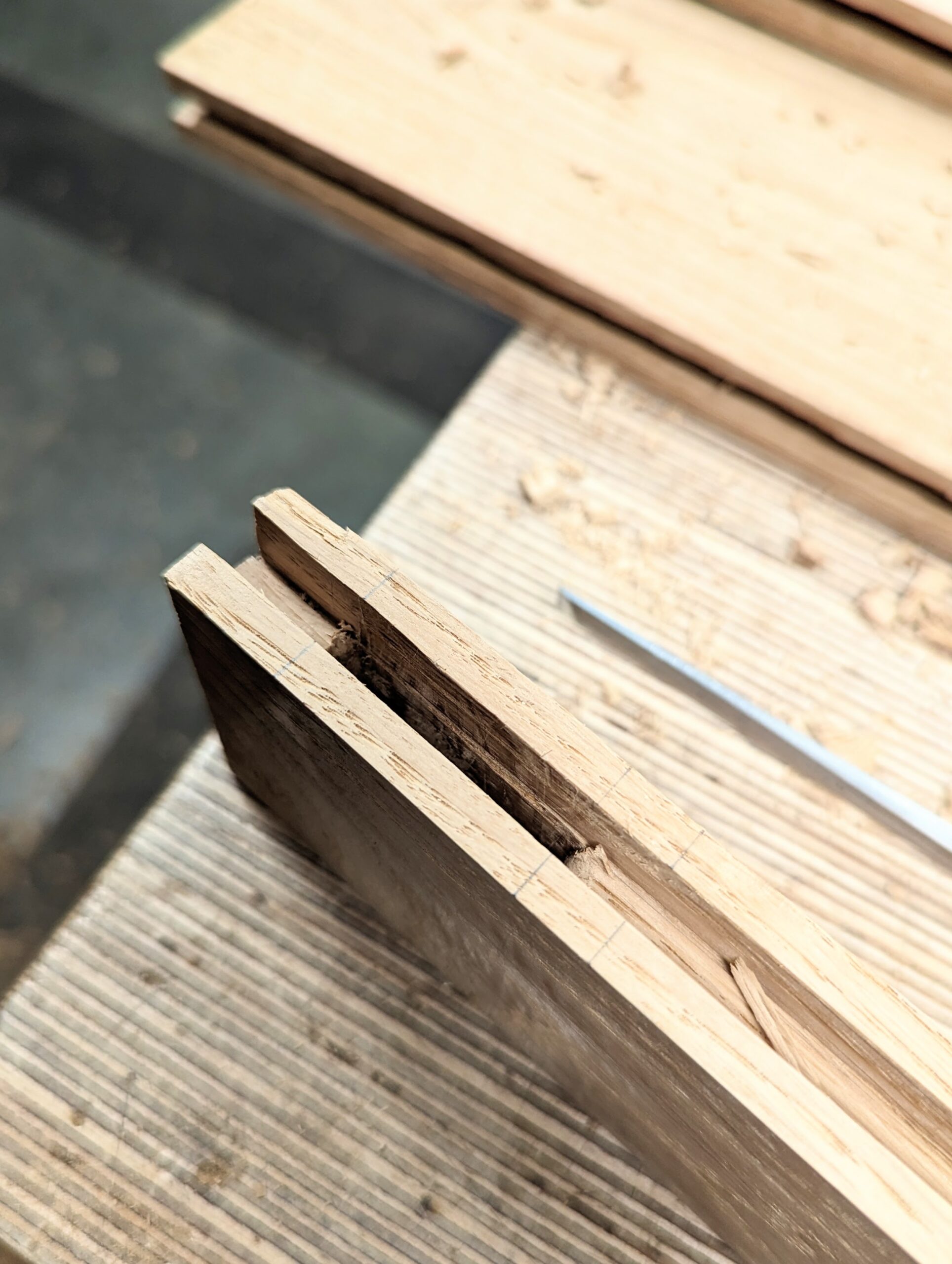
This week I had 24 mortises to chop out an inch and a quarter deep. Almost at the end with four left to do, I asked everyone if we should show the real-time it took me to cut two of them in the stile of a frame. The two took me 11 minutes and 42 seconds. I worked steadily and without rushing. We filmed it and also clocked the clock so everyone could see the reality of it for a series we are working on. Without filming, I did the last pair the same way and there was but 30 seconds difference. I wasn't surprised too much that the time seemed to pass more quickly. I worked steadily and progressively but did not rush. What I noticed though might not be apparent at all. Adding that dimension of self-timing made the time and the task go not just faster but ten times faster. Of course, it didn't mean it was a shorter passage of time but, more, it added a dimension of interest beyond the act of chopping. So, if you do follow anything I do with regards to repeat joinery many times in a project, try timing yourself with a timer. Search out different ways to apply yourself and time them as you go. It's less about competing with yourself but learning which methods are more efficient and thereby time and energy saving. I think you will find the results interesting
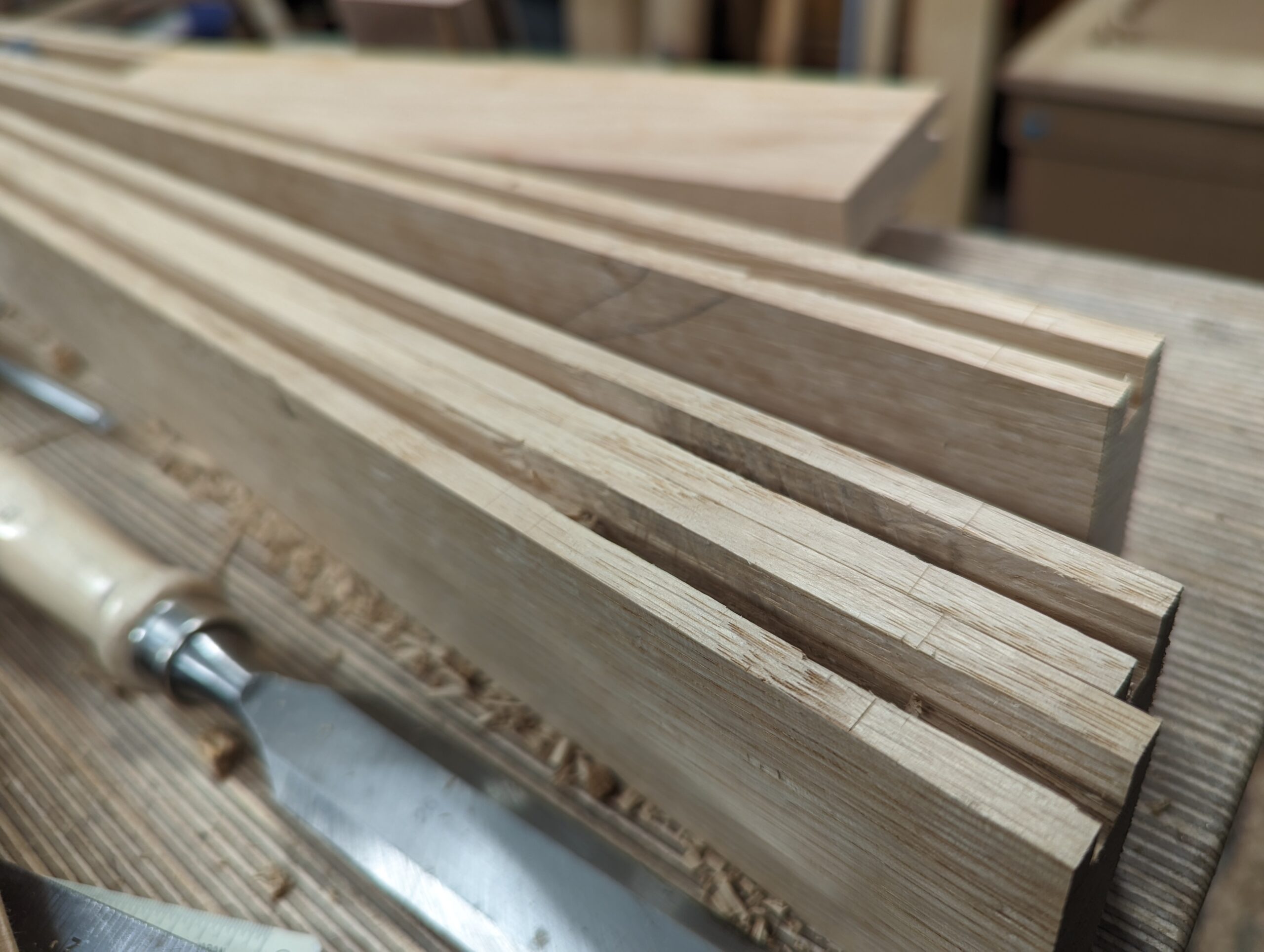
I had two mortises left to do and I set the timer on my phone again. What was interesting was that these two took me 11 minutes and 28 seconds so hardly any difference at all. Tenon cutting and fitting takes longer, much longer. I didn't time this aspect in the same way because the method of tenon cutting and fitting can be very different depending on grain issues. Split-cutting in straight grain is by far the fastest and then pare cutting is second. Sawing comes in last but I still use all three methods in my day-to-day.
Comments ()