
An Interesting Point
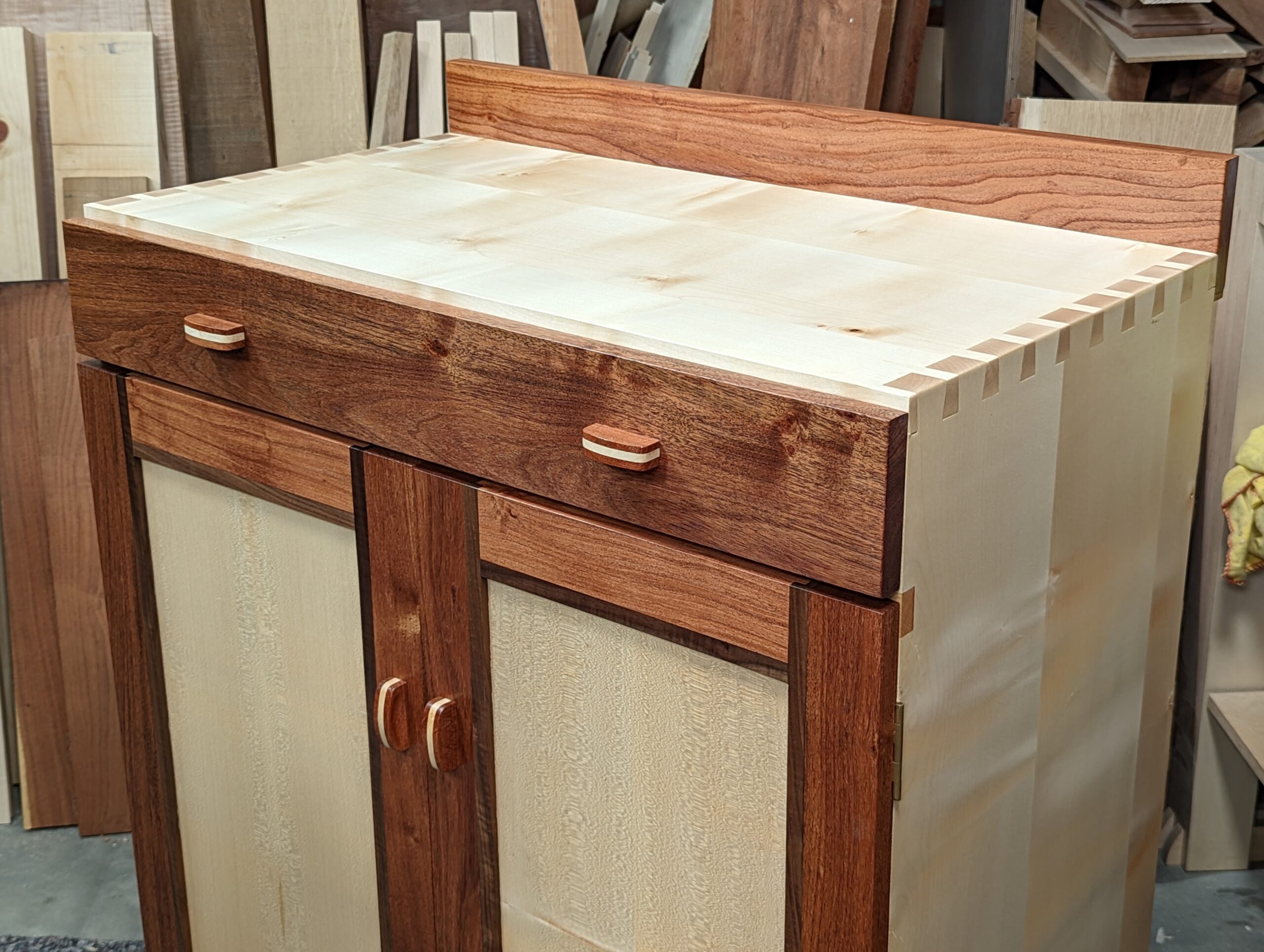
This is my prototype, though it fully mirrors my final version to a tee. This one was finished last week but it stood there as a box for three weeks glued up, planed, sanded and finished with shellac. In preparing for a final rub down ready for waxing with furniture polish I noticed a slight step around the dovetail joints but what struck me was the inconsistency.
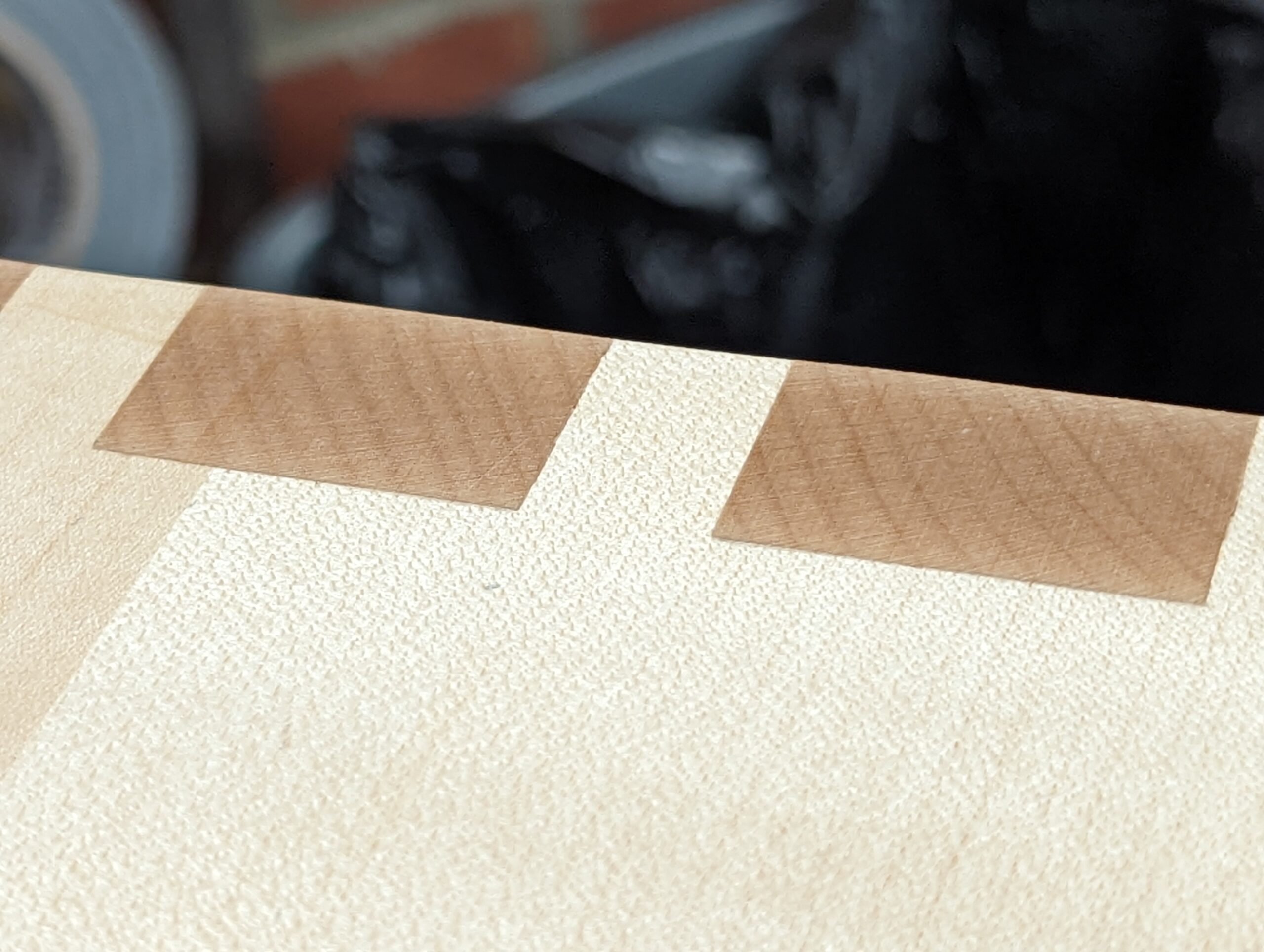
On this corner joint the tails and pins are imperceptible except by colour change. Trace your fingertips over both sides of the corner and it's flawless. On the opposite corner on the same top but a different side but cut from the same plank as the opposite side with the slight step, I noticed the slightest sign of a step. Now I am talking the most minute difference: much less than a thin paper thickness: I worked the camera to get the fine-line shadow on the image.

But it was on the side where I noticed the larger more evident discrepancy. Again, the difference is but marginal -- not as big as it looks in the enlarged image. My wood was acclimated and there was and is nothing I can or will do but this shows that some woods, though really constrained by a supremely strong and well-fitting mechanical joint combined with many square inches of interlocking surfaces, can and will still move with some wood types.
Such difference does not usually happen straight off but over a number of months or years in its final resting place or if a piece is placed near a source of heat or in a window where the sun shines through consistently. I would expect this if the piece was made in Houston, Texas and delivered to West Texas or phoenix in Arizona. Here in Britain, we don't face the same extremes in humidity. A friend made a massive conference table once and inlaid the top with a 3/8" deep by 3" wide inlay aong and across the grain. He failed to calculate the rigidity of the mesquite and the fact that orienting it that way over three feet wide would be a contradiction in the non-shrink in the long grain of the mesquite to the cross-grain of the vintage longleaf pine. The call came in that there were several cracks along the tabletop resulting in him spending many days in West Texas repairing his work. In this case, the problem should have been obvious and should never have happened. The only time this could possibly be successful is in a building with guaranteed humidity levels, not something many can guarantee: museums and galleries, possibly!
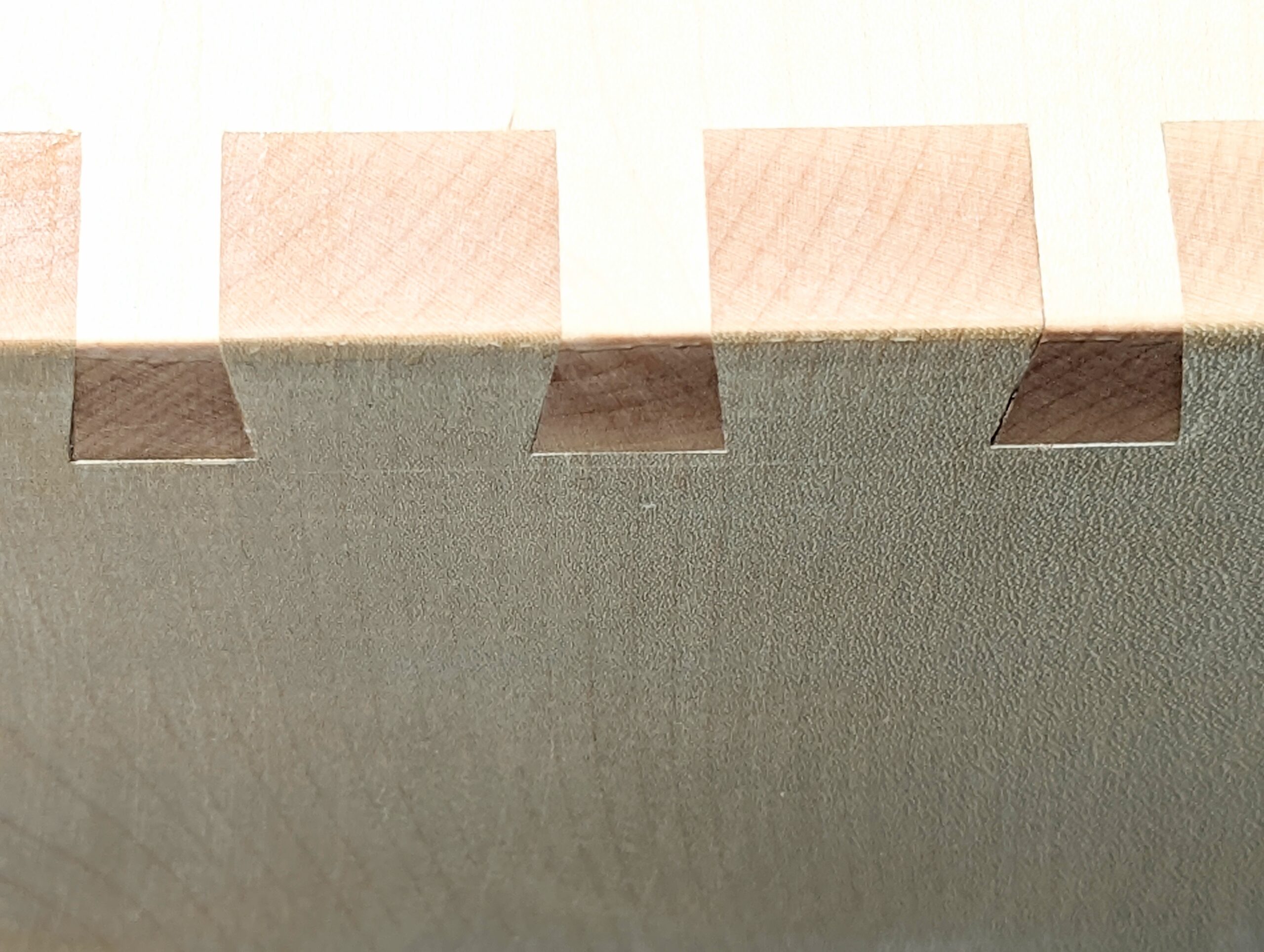
Now in my case, I will live with this. There is a good chance that when placed in its final resting place the whole will release and absorb to an acceptable equilibrium and return to being flush one with the other. That's more wishful thinking. I will live with it because it really is much less than it looks. In a year, when the wood is reacclimated to its surroundings, I could go back in and level the extremes. That's doubtful though. I like wood to be wood. Let it live!
Comments ()