
How We Work Our Rough-sawn
It's a fallacy to think that we can constrain wood indefinitely by weighting during drying but it is done in the industry. Sticker the boards and beams to allow air or steam circulation between the layers and the weight keeps the boards from over distorting. The wood comes out relatively dry and remains stickered and weighted until sold. You get it into your local environment, not usually too dry unless you live in the deserts of somewhere like west Texas, and gradually the wood absorbs moisture back into and eventually throughout its fibres and twist cups and bows reestablish themselves albeit to a lesser level than before. The only, only wood I have known to be the exception to this expectation is Mesquite.
It's not always obvious at first but worth mentioning early on. I have written about wood, the slabbing and drying of it, its stability and instability and such. We learn more from the working of it than we do from the reading of it because the truth is wood is one of the most written about materials and rarely is it ever described as being one of the most unpredictable and thereby the most impossible to actually characterise because ever slab you take from a tree stem in a board distorts a different way one way or another. Just when you think quarter-sawn boards from an oak tree will remain truly flat the board twists and cups immeasurably and you have to rethink everything you knew. Now that is jot to say that quarter-sawn wood is not more stable than flatsawn, just that vast differences occur all the time and we must master it as best we can.
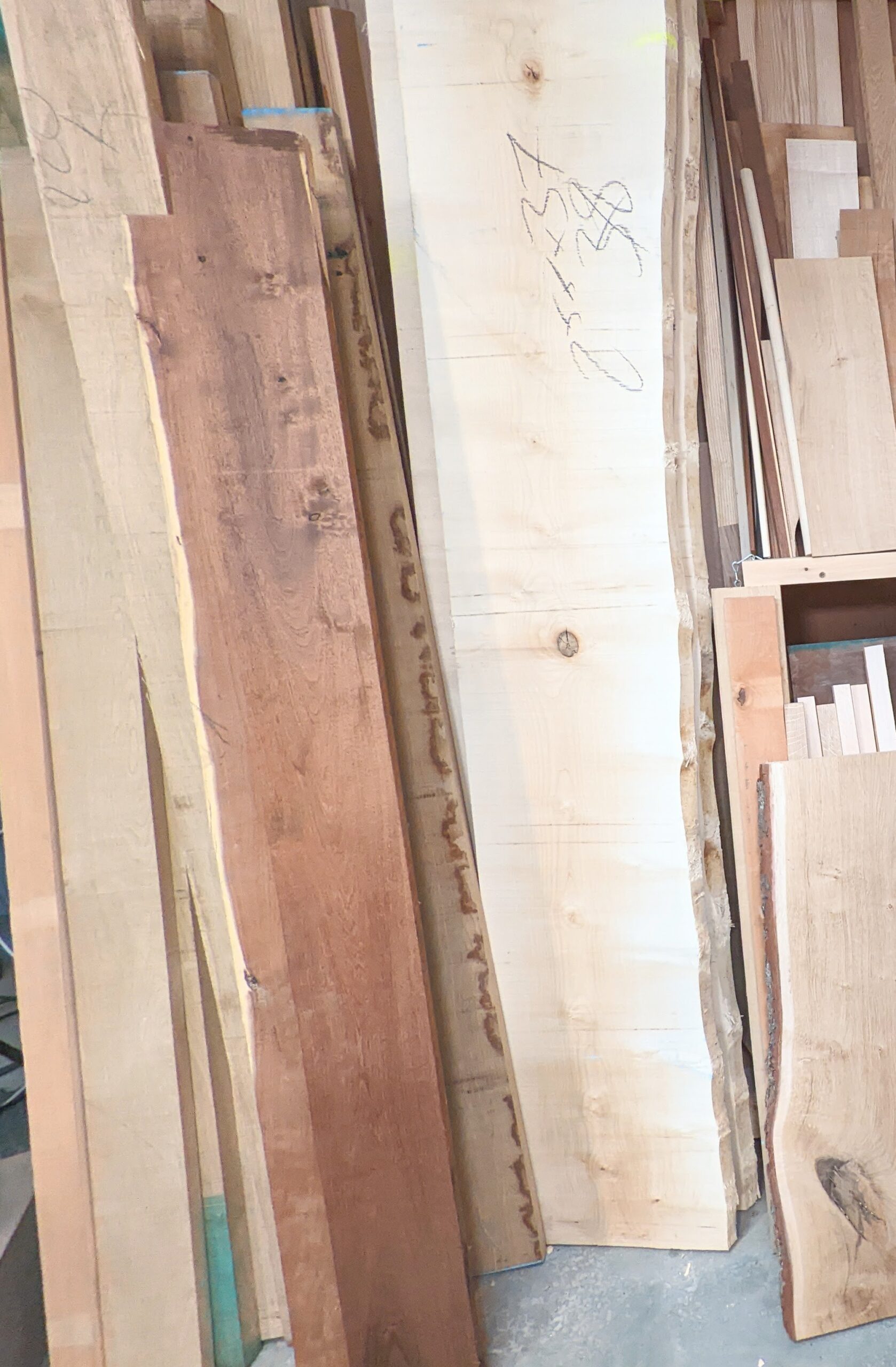
A few months ago I bought some slabs taken from the centre of a tree across its centreline or near to enough for the boards to be called quarter sawn. The half dozen boards were consistently flat when I bought them but letting them stand untethered allows the extra movement and what was flat and untwisted was no longer anywhere near flat or untwisted. I prefer allowing my new wood to stand after I have brought it in. Rarely if ever is wood stored in any kind of climate-controlled building and a thin layer of siding to a building with huge open doors slid wide throughout any given day for months and years on end ever going to give you wood with a moisture content low enough to make furniture from without getting some serious shrinkage and thereby distortion of one kind or another too.
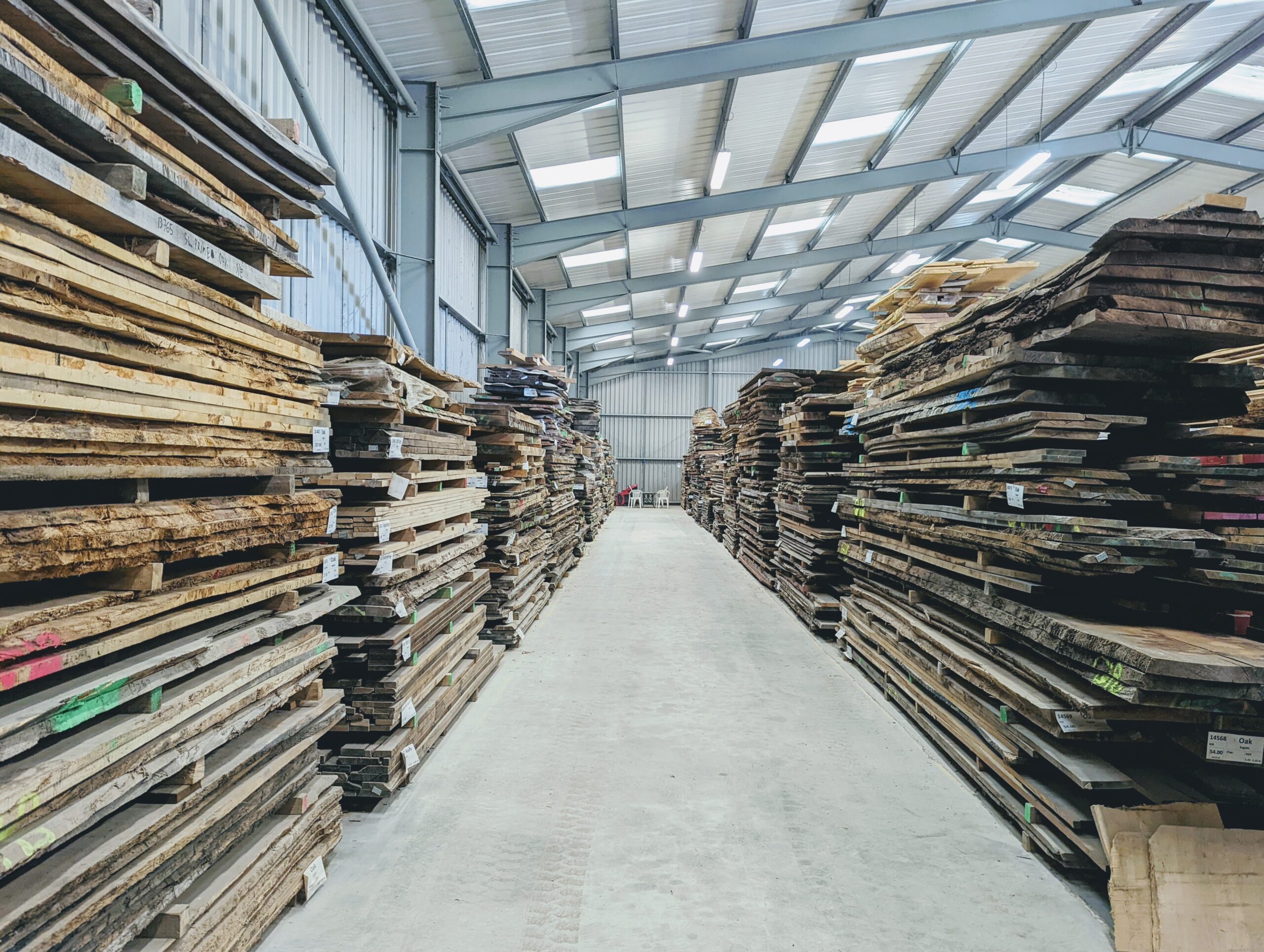
It's the moisture levels in wood that we must consider most when we are working with wood. I think we often fail to realise that most materials are affected by moisture and temperature. Steel expands and contracts according to temperature as does concrete. In our world of woodworking, the wood we work with expands and contracts similarly but whereas steel absorbs and releases heat, wood absorbs and releases moisture taken in from the atmosphere after it has been dried be that by air drying or force-drying in kilns. Many woodworkers believe that once wood has been kiln-dried it remains at that moisture level because it has somehow been 'cured' or 'seasoned'. These two terms might seem somehow more archaic in our woodworking world today and that is because wood goes from the round log into slabs and boards and on into the kiln without delay. Maybe with our current energy dilemma, the timber companies will air-dry after slabbing for a month or two but that too is costly for them so I doubt it.
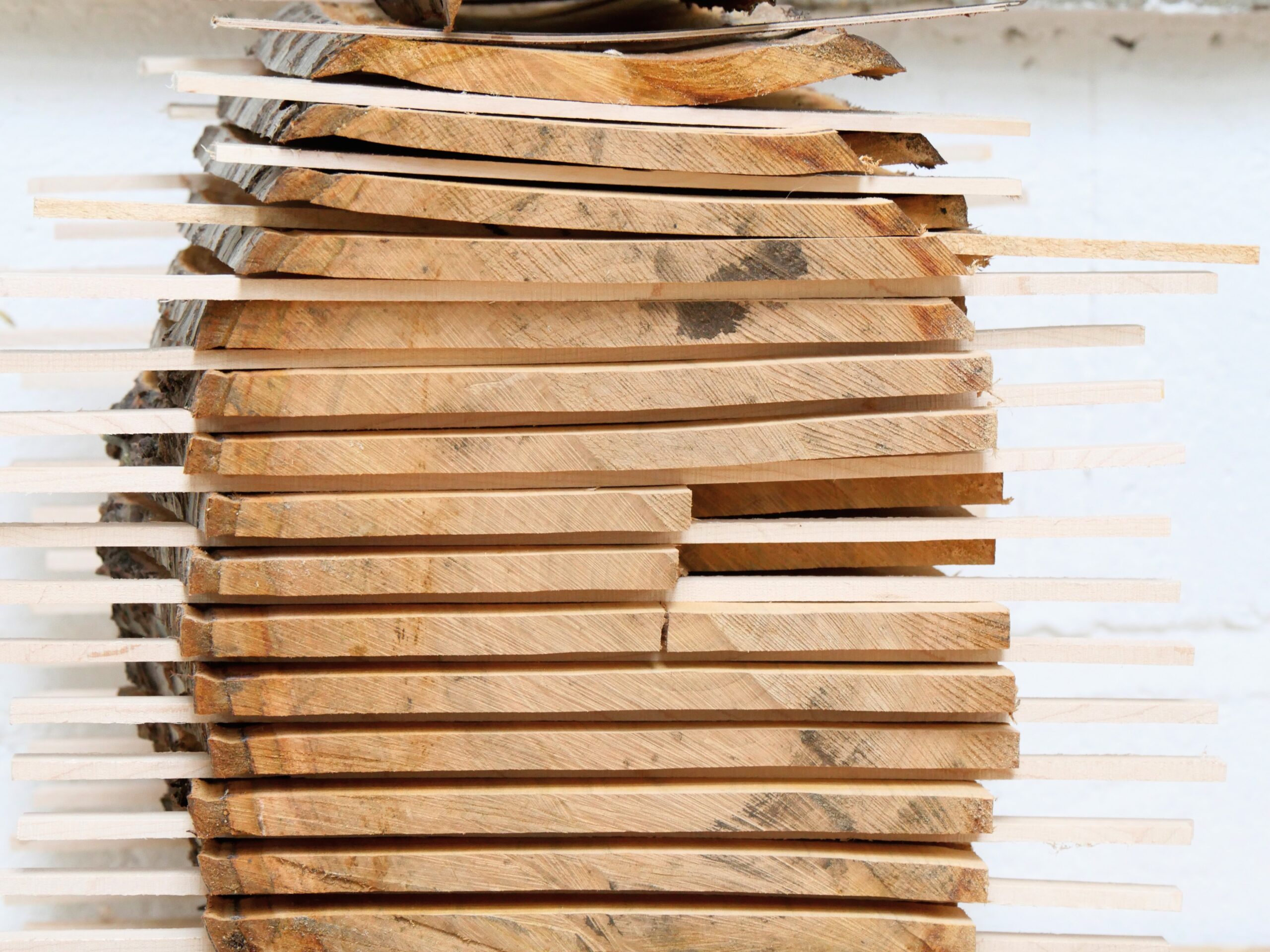
Curing and seasoning really relates to the days when wood was harvested on a smaller scale in local regions by small millers. The trees were dropped, limbed and the stem was slabbed into various thicknesses. It then went under cover of metal sheeting or a lean-to where the air could pass freely through the stickered stacks for a long period ranging from a year to ten years according to thicknesses and widths. Once the cycle was established there was a steady supply. It was the introduction of mass manufacturing that outstripped supply and we now have various methods for force-drying wood that disallows seasoning and it depends on the integrity of the merchants how fast this is done. The faster the drying process, the greater the levels of tension in the wood. In all kiln-dried wood, there is inbuilt tension. The slower the process the less the distortion after drying. That said, this gives good reason for my allowing my newly bought wood to 'float'.

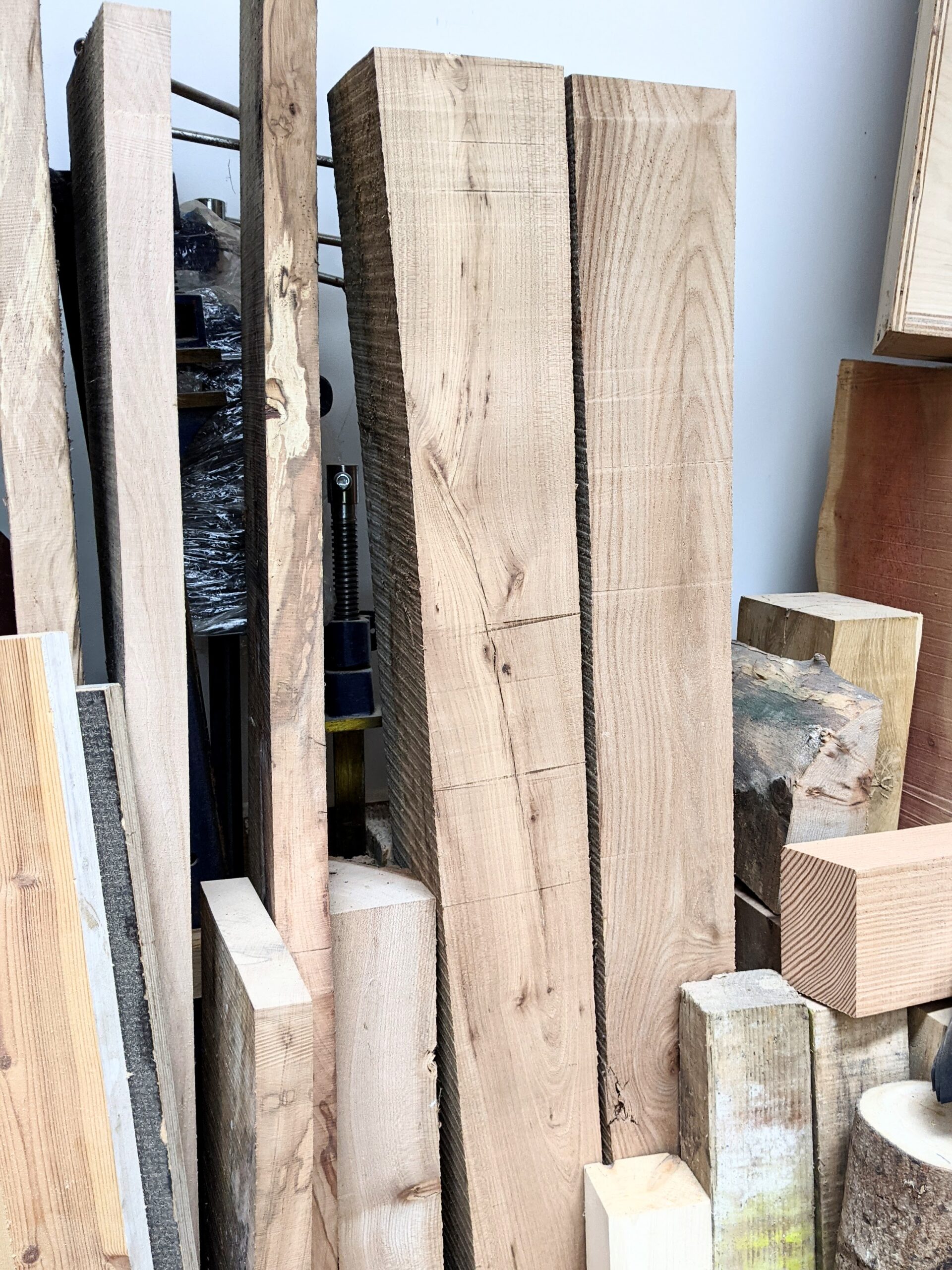
I generally stand my wood on end. Racks have never really worked too well for accessing wood and I am limited for storing wood that way. The footprint would be too great a loss of working space. This way the air circulates fairly freely. In my garage workshop, I still try to keep the wood for a month or so before I start to use it. Some I have had for many years. My home garage workshop is now well controlled with regards to heat and moisture levels. A dehumidifier works very well for keeping the humidity down as does some form of heating with venting. What I now have is a luxury to most and I am truly grateful after fighting the dampness of the UK on and off through the first half of my return to living in the UK.
Of course, it is good to remember that family homes are generally not low-humidity environments. Three kids, a dog and two adult parents generate steam in one form to another and in varying degrees according to times of day and placement in the home. Kitchens cooking veggies and showers in the bathroom in quick succession all increase humidity. Your furniture pieces will reach equilibrium according to your home. It's not always easy for a maker selling to customers to work according to the equilibrium of their individual customers. Hence, we may well have to go back because someone placed their dining table up against a heat source like a radiator or in a window facing the sun. This is why we tend to make frames to make our carcasses and never make a door from solid wood without a frame! I just moved a chest of drawers from one room to another and whereas in the one room the drawers all ran freely for five years, in the new room one of the drawers was sticking. I removed two shavings from the bottoms of the drawer sides and the drawer ran freely. I will check in a day or two to see if it is still expanding but I doubt it.
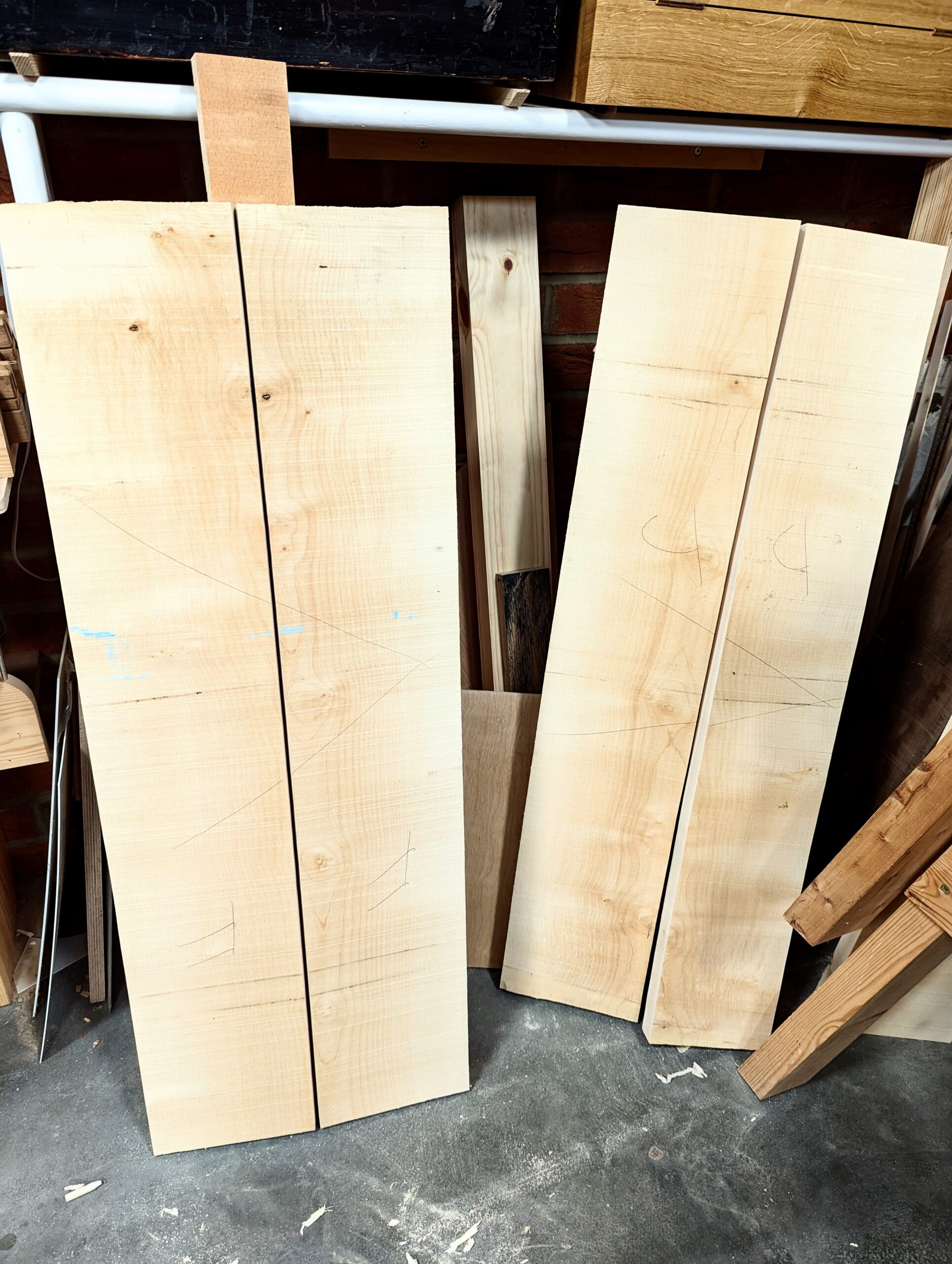
I ripped my full-width boards down somewhere near to and along the pith to part the left side from the right after first crosscutting to near length, an inch or two over, mostly. Will is videoing this work for an upcoming series for Sellers' home and though it might cramp my style just a tad it is so worth it to catch and watch what he captures with the B-roll in the videos. There is waste, of course, but this step minimises and even eliminates the risk of more distortion taking place after the cabinet is in its box form. The lighter pieces are now ready for a straightedge along the wane edge to rip and square up the length. Once planed straight I can rip parallel on the bandsaw or by hand depending on my mood and how much work I have already done.
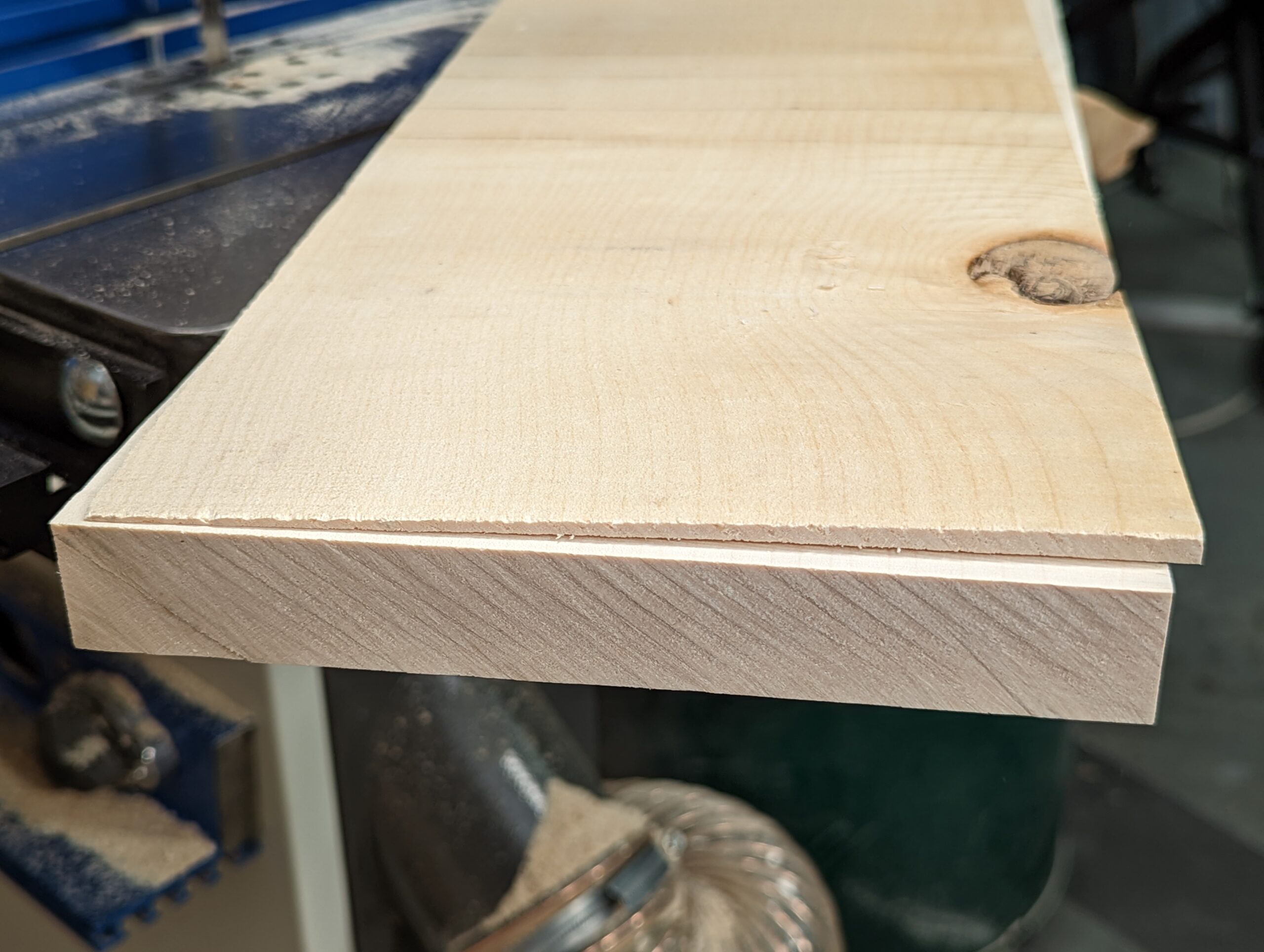
My boards are 1 1/8" thick but not dead-on parallel. I want to end up at about 7/8" The drying and then my 'airing' unrestrained has allowed the distortion to maximise itself and work itself out. In the shop, moisture exchanges take place until they reach equilibrium. Coming into the shop the MC might be 15% or higher. We are looking to lower it where possible. I would rather have my MC lower than higher. That way there will only be an increase in the home which doesn't lead to cracking and splitting, undersized panels in frames and such. Alternatively, wood taken into its final environment can be acclimated, worked into a project and returned to the final home. This is not always possible or practical but it's a good idea. Why do I say lower the MC as much as possible? Taking the moisture content down pretty much guarantees zero shrinkage. The wood can only stay the same or increase. With correctly chosen joinery the only serious problem will be expansion in certain areas. ```Framed joinery caters to this and is designed for it. In a barn, a planked door is fine. A log cabin of the 2800s was possible all that was possible for those pioneering new lands. Quick, easy and efficient for people settling after months or years on the move. Framing with mortise and tenoned frames was a solution that remains unchanged as a solution to the expansion and contraction of wood. The panels in frames 'float'. That means that they are restrained only in thickness by the grooves or ren=bates and beading. Width wise they can shrink considerably before they fall out of the rebates. That's not going to happen too often though I have known it. Wood barely shrinks in its length.
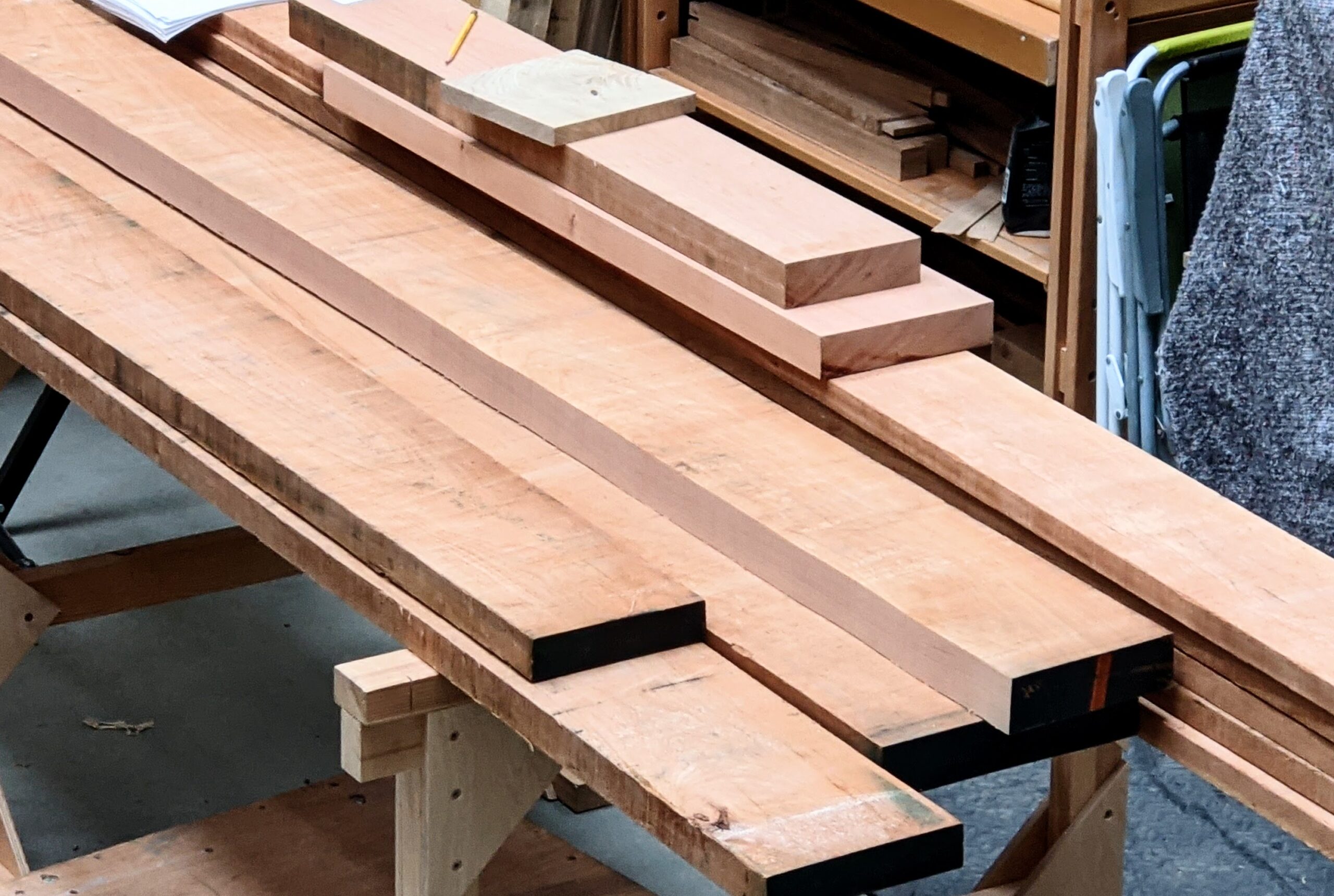
The wood acclimated to my shop is usually the best I can do for it. In some ways, sycamore has very consistent density but as with all woods, this changes around the knots and crotch grain. Sycamores tend to have spur knots where the roots of the knots stem from the very heart of the ree and radiate out to the outer reaches of the main stem. This is what makes the wood difficult to work and please, don't anyone tell me to use a 50º bevel-up or york pitch plane. It's really quite impractical. Much easier to plane across the grain altogether and then follow up with a regular #4, 4 1/2, 5, or 5 1/2 bench plane freshly sharpened and then scrape with a #80 cabinet scraper. Easy and fast!
My first ever experience of working with sycamore was back in my apprentice days in the mid to late 1960s. Back then we made sycamore draining boards for commercial kitchens. If possible we went for single-piece boards but that rarely happened. The work was to plane and scrape the boards and then run drainage grooves along the length with hollow moulding planes so that the dishes drained back into the sink. It was good experience and it was at this point that I realised books telling me about the characteristics of wood rarely measured up to the reality of working it--a bit like the descriptions of wines and foods I think.
My follow-up article in the next day or two is almost ready. It will show methods I use in my daily routine to minimise donkeywork and yet keep the practical elements in the right realms for those of us looking for excellent ways of exercising combined with the mental and physical engagement we gain in our day-to-day handworking our wood.
Comments ()