
Does and don'ts
There are dos and don'ts in all things life, rules to adhere to and rules to question. What not to do in woodworking is sometimes less obvious and often not clear at all. Questioning authority is less to do with questioning the true or lawful authority and more to do with considering the validity of ideas, practices, rules and traditions for tradition's sake. In a class one time, a woodworking student went to a woman student on an adjacent bench and told her to hold the mallet differently when in actuality she was holding it perfectly well and getting better results in her work than he was. `As she made the shift to a less effective and awkward way her malleting became awkward. As I suggested she change back to what her body told her, two things came to mind, one, her willingness to change and try and, two, his willingness to pass on what he had been advised to do.
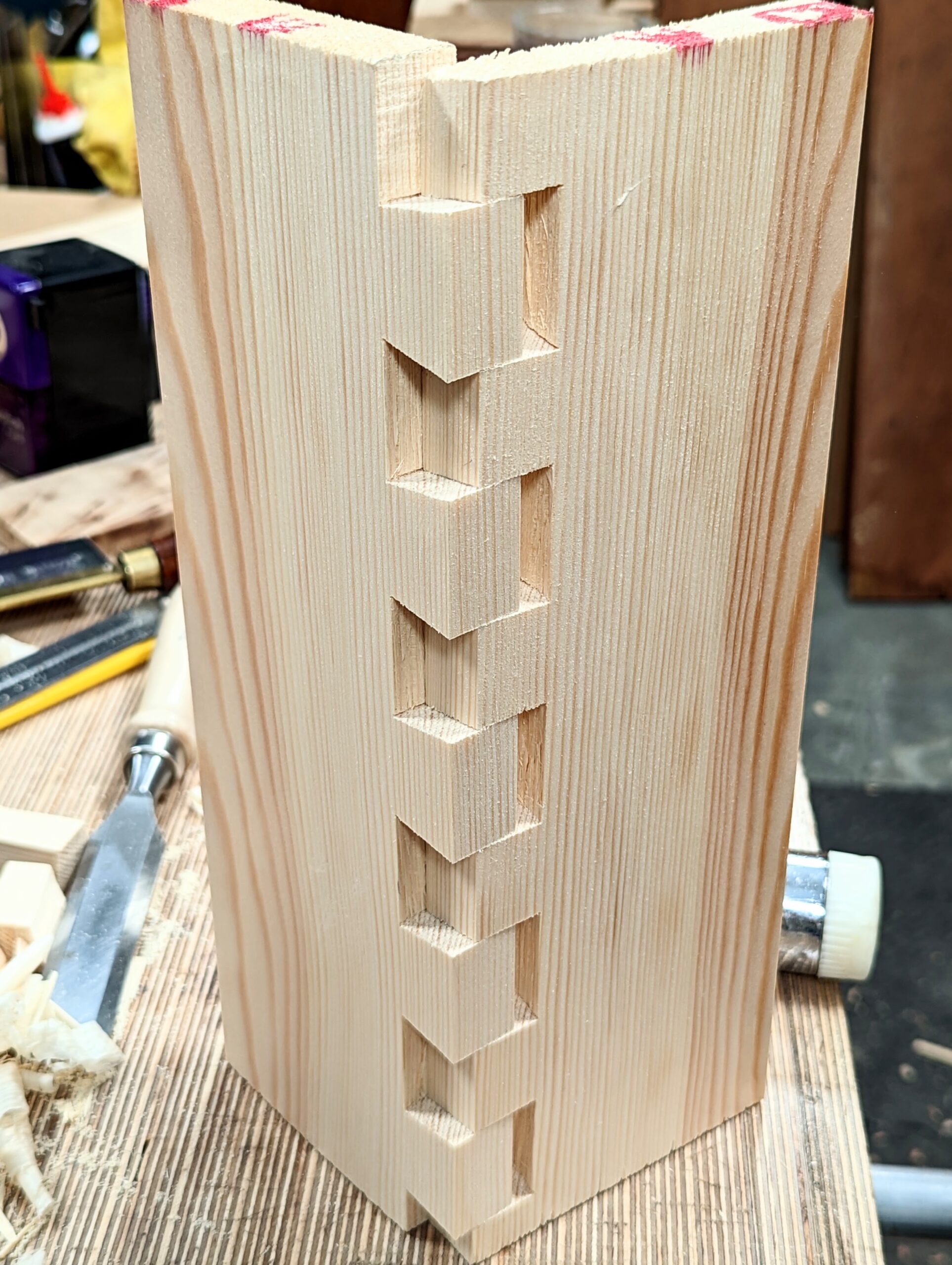
We have our fair share of dos and don'ts in woodworking. Always skew your plane, the absolutes of bevel-ups being better than bevel-downs and a dozen a minute more. I had a dozen 'professional' woodworkers let me know this week how wrong I was on saw sharpening techniques, even from one who never sharpened his own saws in fifty years as a professional carpenter. Of course, for at least 20 years we've had disposable throwaways and you would be hard-pressed to find a resharpenable version in carpentry realms. This too has led to the demise of a simple and basic skill. To me, it's the equivalent of not sharpening a plane or chisel which actually I find myself perpetually advised by carpenters that they just use their belt sander. In the face of such advice and advisers, it might well now be easy for someone relatively new to woodworking to defer to the professional adviser and the time-served joiner when it is more than likely that these two categories will be the least qualified to help and may well have never actually sharpened a saw or edge tool correctly. I think it is true with some that their 'degree' course of three years took precedence over someone with a lifetime degree of woodworking. But a five-year woodworking apprentice just gave you the grammar of the craft. It's up to you to build your knowledge and skills in the doing of it, in the trying this or that of it. Experiments that I have done have been invaluable. I once thought that dead flat chisel faces and plane cutting irons must always be dead flat right up to the very tip of the cutting edge. I think differently now. It's just something to aim for, nothing more. Why? Edge retention at dead-on 30 is what we aim for but impossible to maintain without sharpening after every stroke. I know, that is an exaggeration, but by degrees, the edge is not wearing down so much as fracturing albeit by minute amounts each time it is pushed or driven into the wood. Again, we have something to aim for and diligence pays dividends but being aware that degradation starts with the first pressure gives us the right idea about sharpening and sharpness. As Full stops (periods USA) commas, semi-colons and colons made sense of sentences, an apprenticeship is not the true qualifier, it's just the basics, the bedrock on which we build our future skills and knowledge. Grammar itself doesn't make us writers, we have yet to become creative composers. Do it is in our starting to work wood.
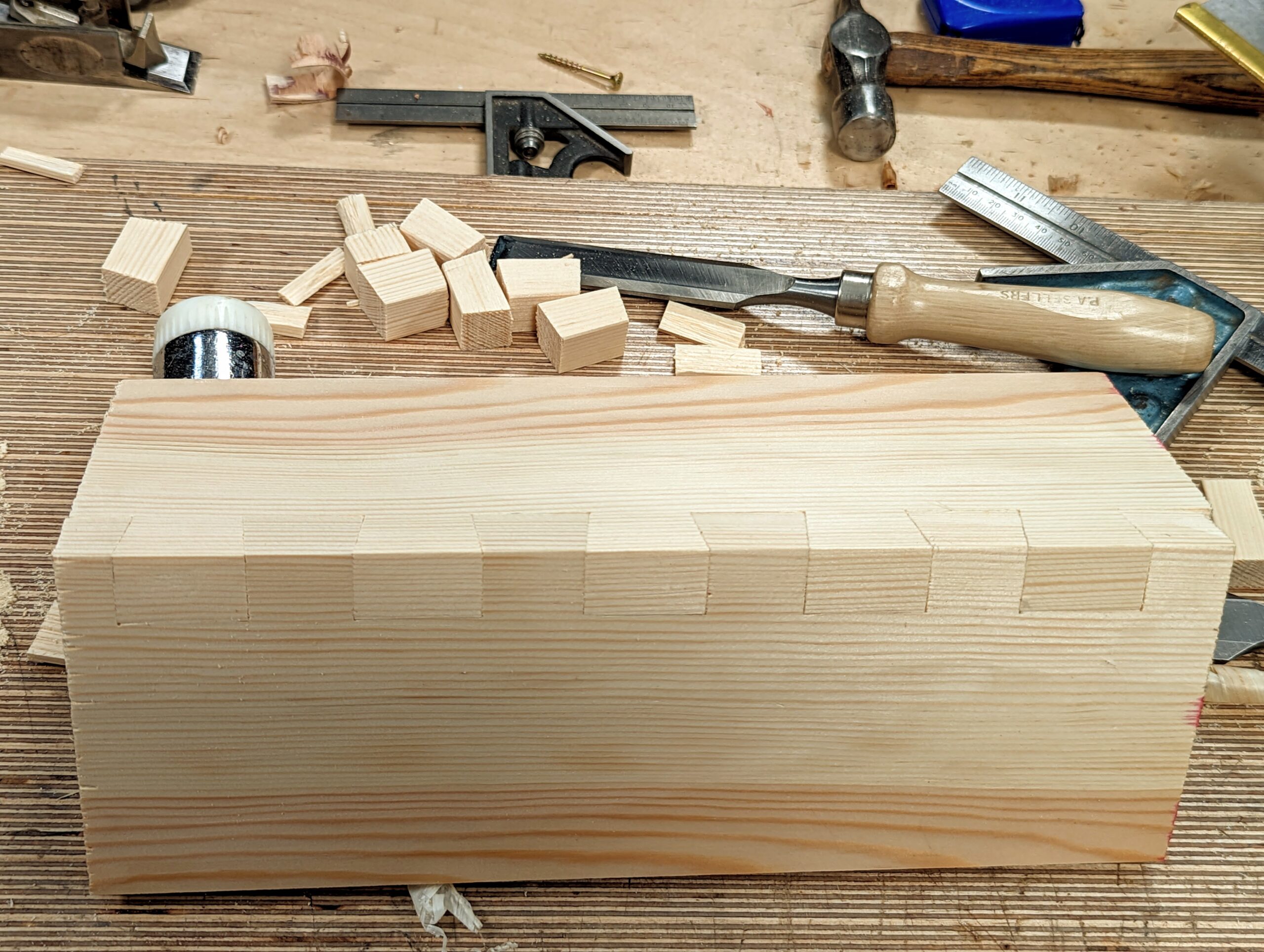
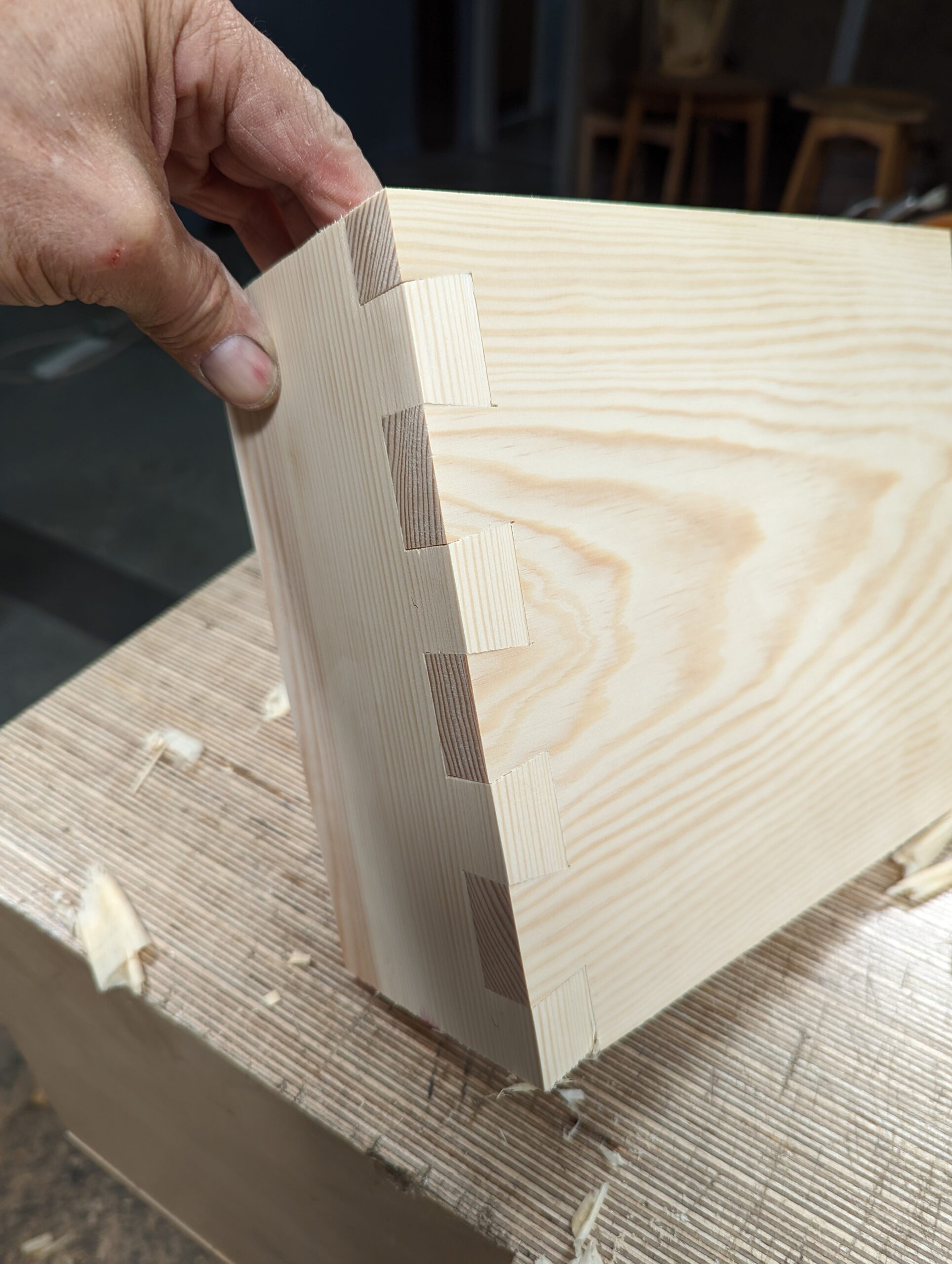
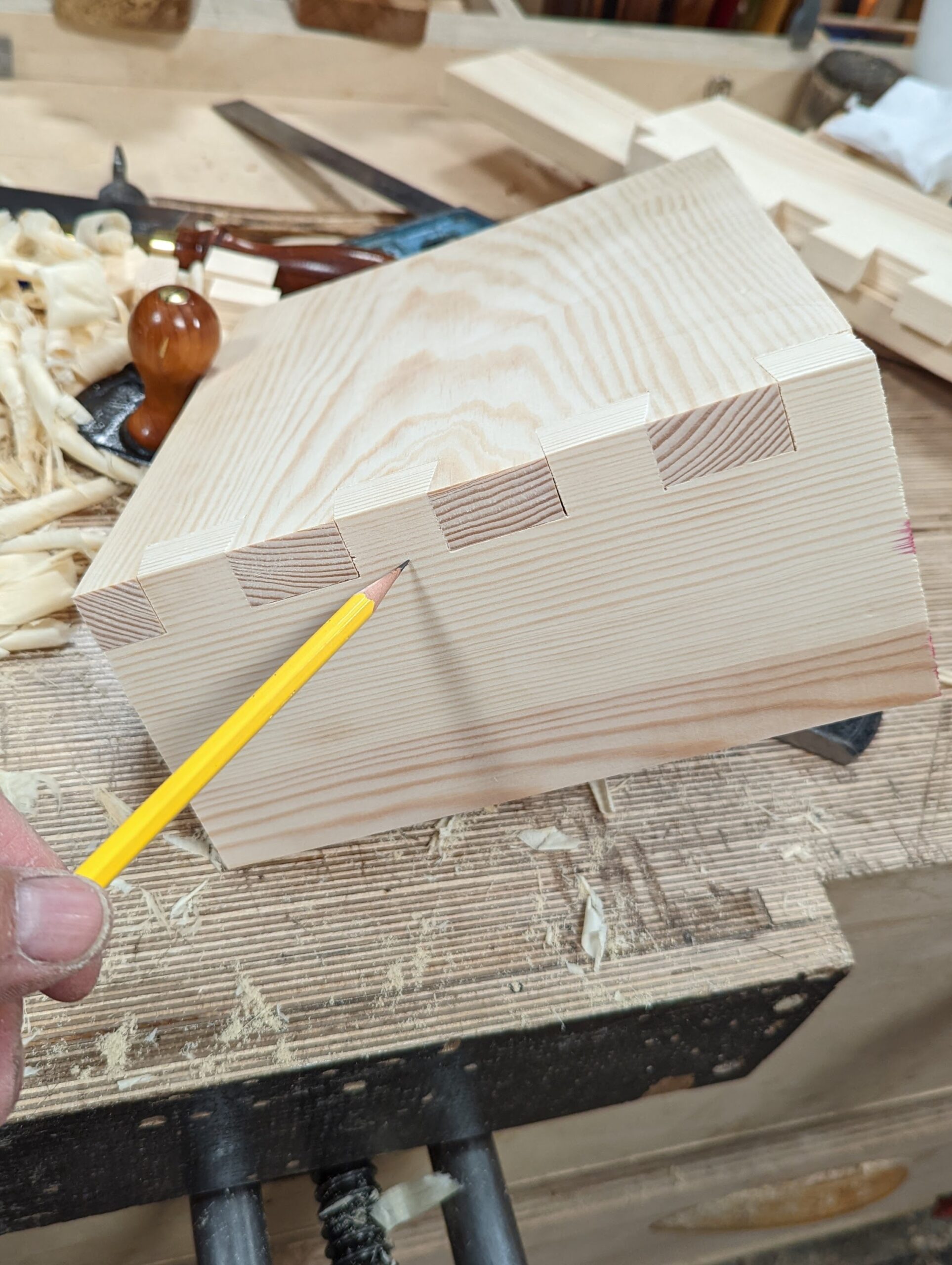
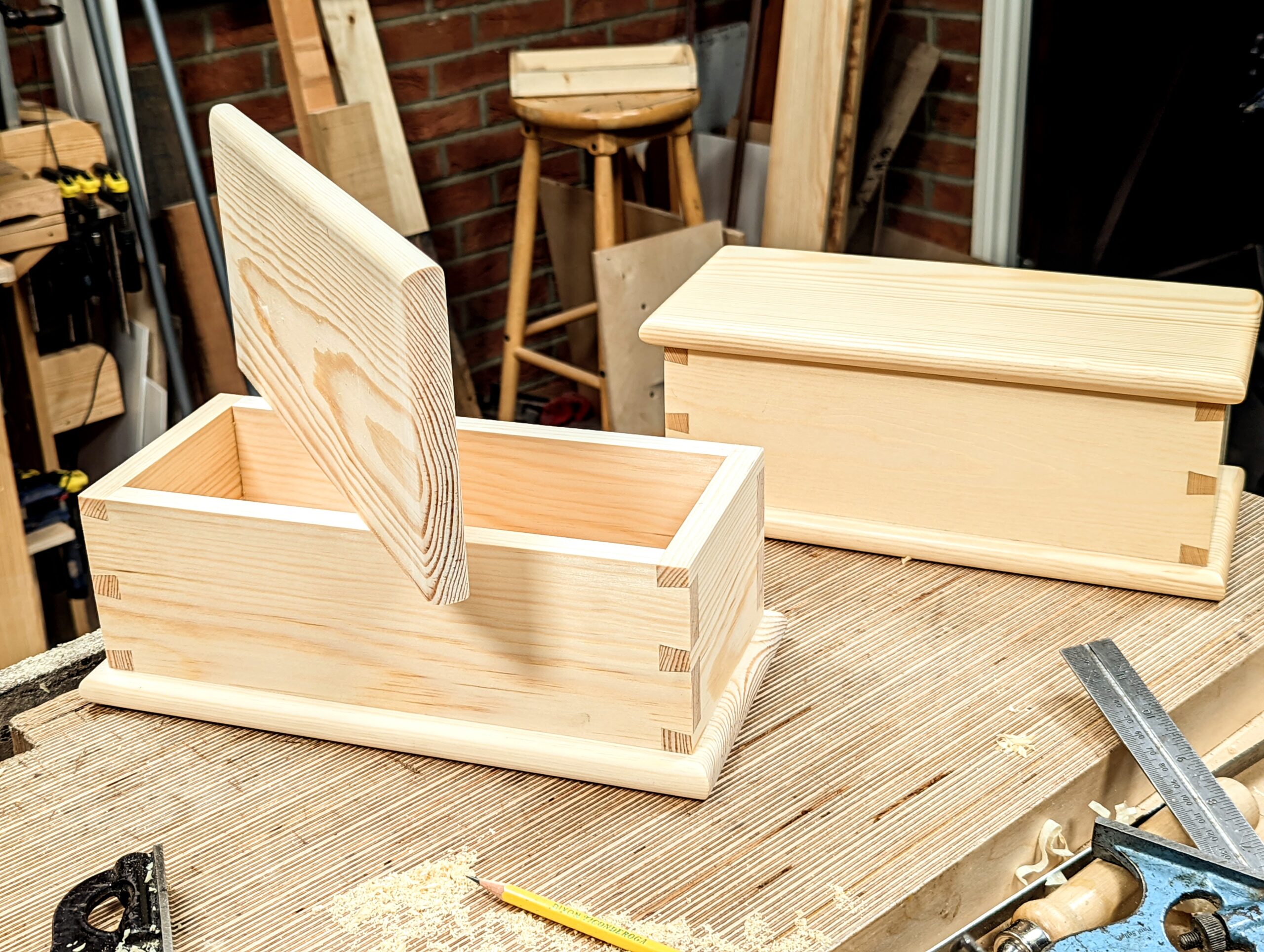
I love that sometimes new woodworkers will contradict the status quo -- they often do something that others say is not the right way and it is this that I find so refreshing. If we lose trying different options we lose the gift experiment brings together with the experience by which we learn and earn and own our future. A few years ago a man showed me a dovetailed box he had made with the dovetails and pins oriented in the non-traditional way. I say non-traditional intentionally rather than the wrong way for a reason. It was impressive to see this because the four corners of what looked like a tall vase re[resented his first, second, third and fourth attempt at dovetailing . . . something very worth keeping. As I complimented him on his accuracy and good fit, the man standing next to him, we were at a woodworking show in Mesquite, Texas, said, "Those dovetails ain't right!" Much different than saying something like, "It's unusual to orient the dovetails that way, we usually orient them differently, but your ability with the tools is exemplary." It struck me how the critic focussed on the wrongness with an unforgiving manner. In so doing he simply missed or dismissed the remarkable precision of the cuts and the fitting of what had they been in any way too tight would have split one or all of the tails or pins. Jealousy, envy, whatever can do this, make us blind to equally important elements, as can the legalism of another. Both can be demoralising and destructive. People even do that with me, quite regularly actually. "You sharpened that saw the wrong way." and then, "Look what you did laying that plane down on the sole and not on its side!" Perhaps they are right, mostly they're not, but I listen, respect, and move along. You will be surprised how often I cut the most perfect dovetail in front of an audience of 200, then cut two perfect 45º mitres and piece the two parts together with a sawn spline having first moulded the parts with a 200-year-old moulding plane, and then someone comes up to the bench and lays my plane on its side telling me it's wrong to put it down on the sole and how they got a clip round the ear doing such things. Another says, "Always cut the pins first." when that always seems such a backward thing for me to do and I don't care which prince of woodworking does it the backwards way.
I like the questions destined to trip me up. In the audience, a man baited his question: "Mr Sellers! What's the difference between using a power saw to cut a piece of wood and a handsaw? He wanted a long explanation, possibly one that would declare the power saw to result in dead squareness, ease of cut, speed, etc versus rough, struggle, need for further refinement, etc. I answered: "In my experience, using a handsaw you always stop before you get to the bone!" It was the quickness of my reply that stunned the man asking. I went on to say that we wanted a deeper engagement with the wood that is often denied by the machine. That we chose not to wear so much protective equipment, need so much space, invest so much in the equipment and then too we actually wanted the energy and effort it took in using all our own power and skill. It was simply a matter of choices.
I will be considering the dos and don'ts of woodworking in the coming weeks. If you have questions as to the whys and wherefores of woodworking and want to ask them I will be glad to answer them if I can. meanwhile, I will be considering the differences I have seen to demolish the myths and mysteries.
Comments ()