
If You blink. . .
. . . you might just miss it!
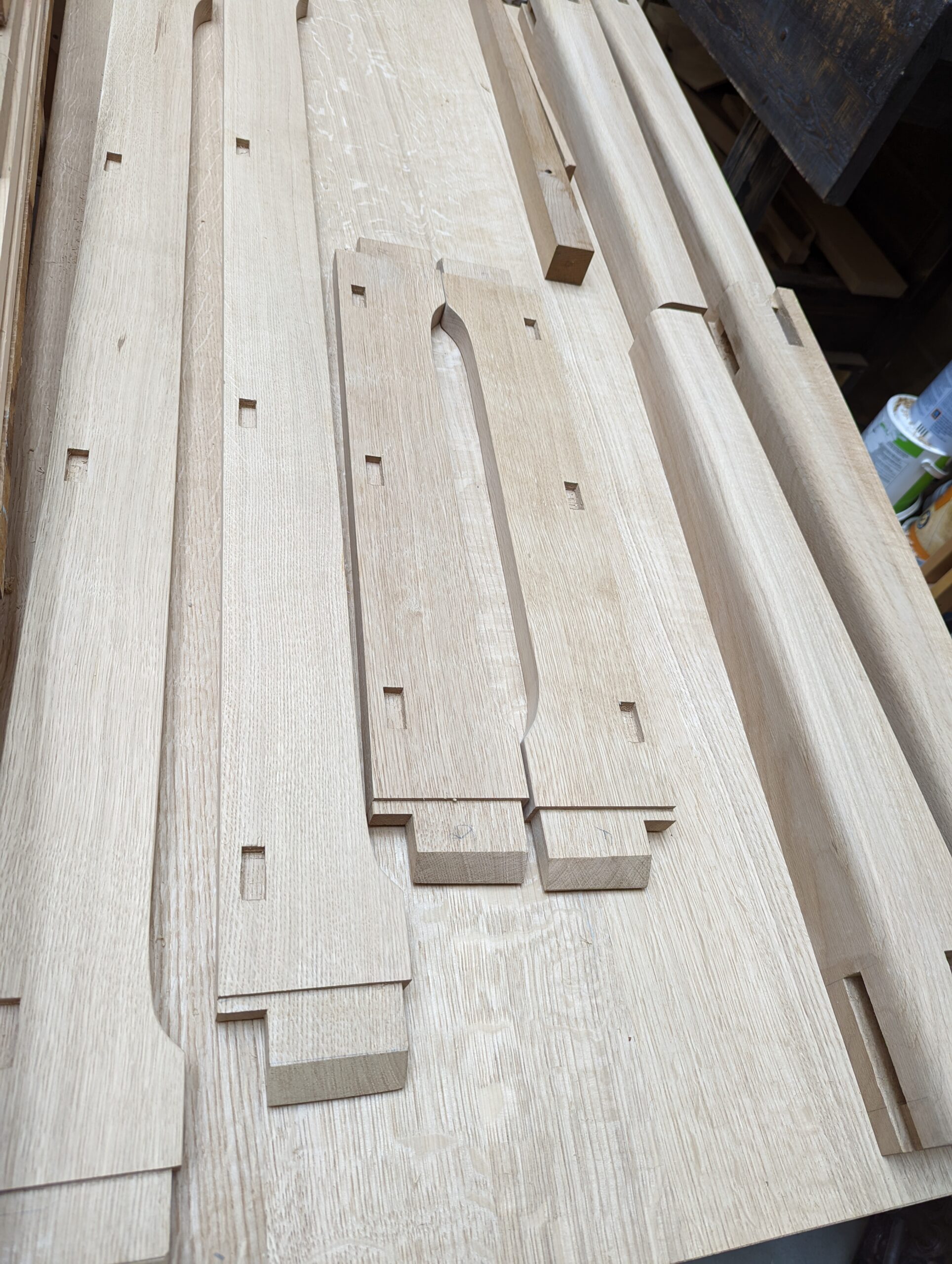
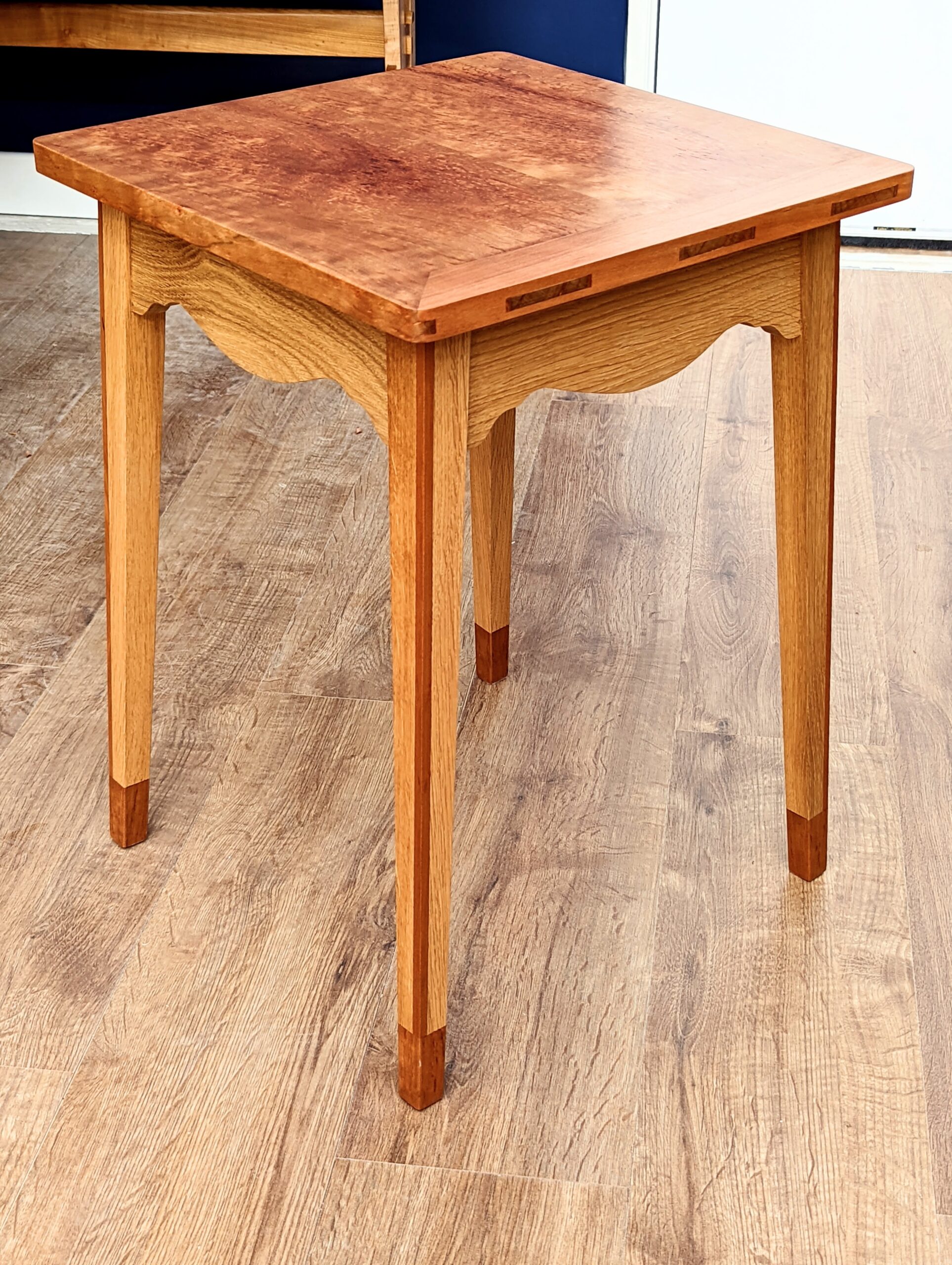
I can't even begin to tell you how many pieces Hannah makes in her workspace here at the shop. It always includes presents for friends and family, anything from turned bowls to carved dishes engraved with the names of bride and groom. Or it could be a dining table, brooches, necklaces and other things conjured up in her mind for making. She's inventively creative, empowered by skilled ability you only see rarely in a lifetime and in no more than a handful of people these days. Why do I say that? Her ideas always create an awkwardness that stretches her. She pushes herself by never accepting the ordinary knowing that because she has hand skill she is not restrained or constrained by what a machine will replace her skills with. The freedom of hand work has opened doors no other method of making can. Her inventiveness builds on this inventive and creative knowledge and takes her into realms few people can go to. She's the extraordinary I speak of that comes purely from her owning skill and skillfulness. The only rotary cut in her woodworking is when she uses the lathe -- the rest is always handwork. Why? Because she chose skill over ease. Simple! I turn around one minute and there is the most beautiful picture from angular segments of well-orchestrated wood, the next a pristine table flawlessly executed using techniques we taught in a video years ago but with the added detail only she could come up with. Look at the feet to the tapered legs, the corners neatly trimmed with a contrasting wood. She's a gifted maker and designer!
Glimpsing over the stair rail of the metal stairs as I pass the workbenches of three makers is the treat I love most. I never know what I will see. A chisel takes a series of mallet blows and a mortise chopped by a steady rhythm gapes openly as the chips clear beneath the sweep of a hand. It takes a year or two for rhythms and beats to register a synchrony made individually by a maker. From my workshop, I can tell who it is that's chopping by such rhythms and sounds. Even pare cutting gives off sounds by one maker that cannot be replicated by another. The opening and closing of a vise, the placing of the planes on the benchtop. I remember first knowing such things as a boy maker in the early days of my apprenticeship. Other apprentices seemed not to care so much for woodworking as was the case with some of the men. There was no rhythm you see. Of course, the rhythm of craftsmanship isn't formed in the first days, but you get a feel as you watch someone emerging in their working. I saw this once in an Israeli car mechanic once. His tools aligned, rarely thrown, perhaps gently tossed and never dropped. There was an exactness that somehow defied mere mechanics but elevated him above the mere nuts-and-bolts fitting of parts into the multidimensional harmony I speak of.
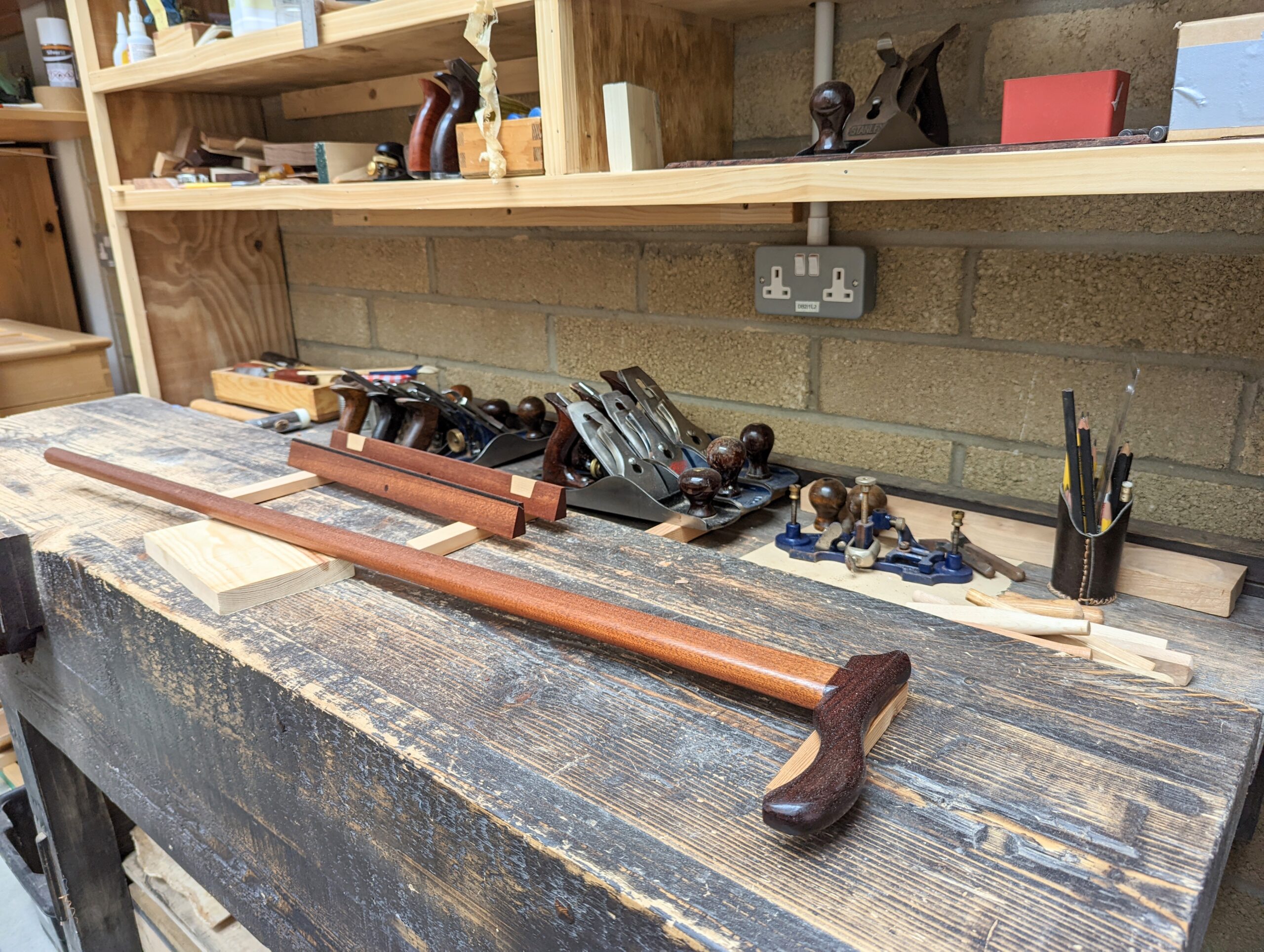
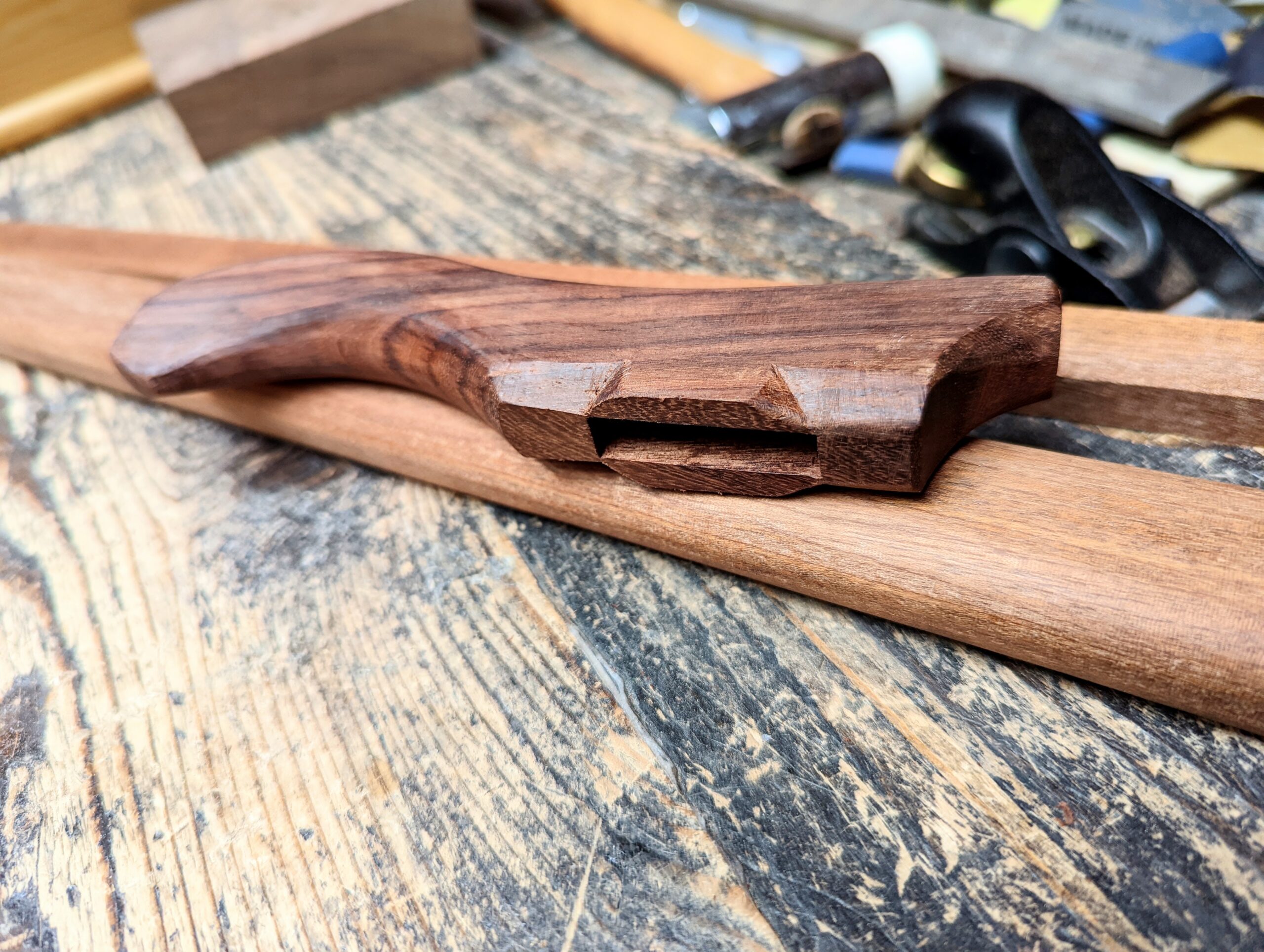
John finished his bench and restored all of the others ready for his class. He's been sharpening the saws now and that means many saws. I listen to the strokes of the file. Some longer strokes in successive lengths tell me that that saw needed more steel removing from the gullets and then two strokes in the same gullet to reduce a high or less shallow one to match the others. Finer strokes follow to barely kiss the surfaces of the teeth and I know he is refining the final strokes to a higher level of sharpness only a light stroke can give. These small things speak of a man and woman elevated to live and work in a different way. Craft, you see, working with your hands this way, is the art of work. It has meter, measured ways according to the individuals and it defies the illusion of commercialism and mass making where those pulses and rhythms I speak of have been adopted and adapted for the production line teamwork. The difference of walking along the paved streets of major cities and the unpathed of wilder places describes the difference I speak of best.
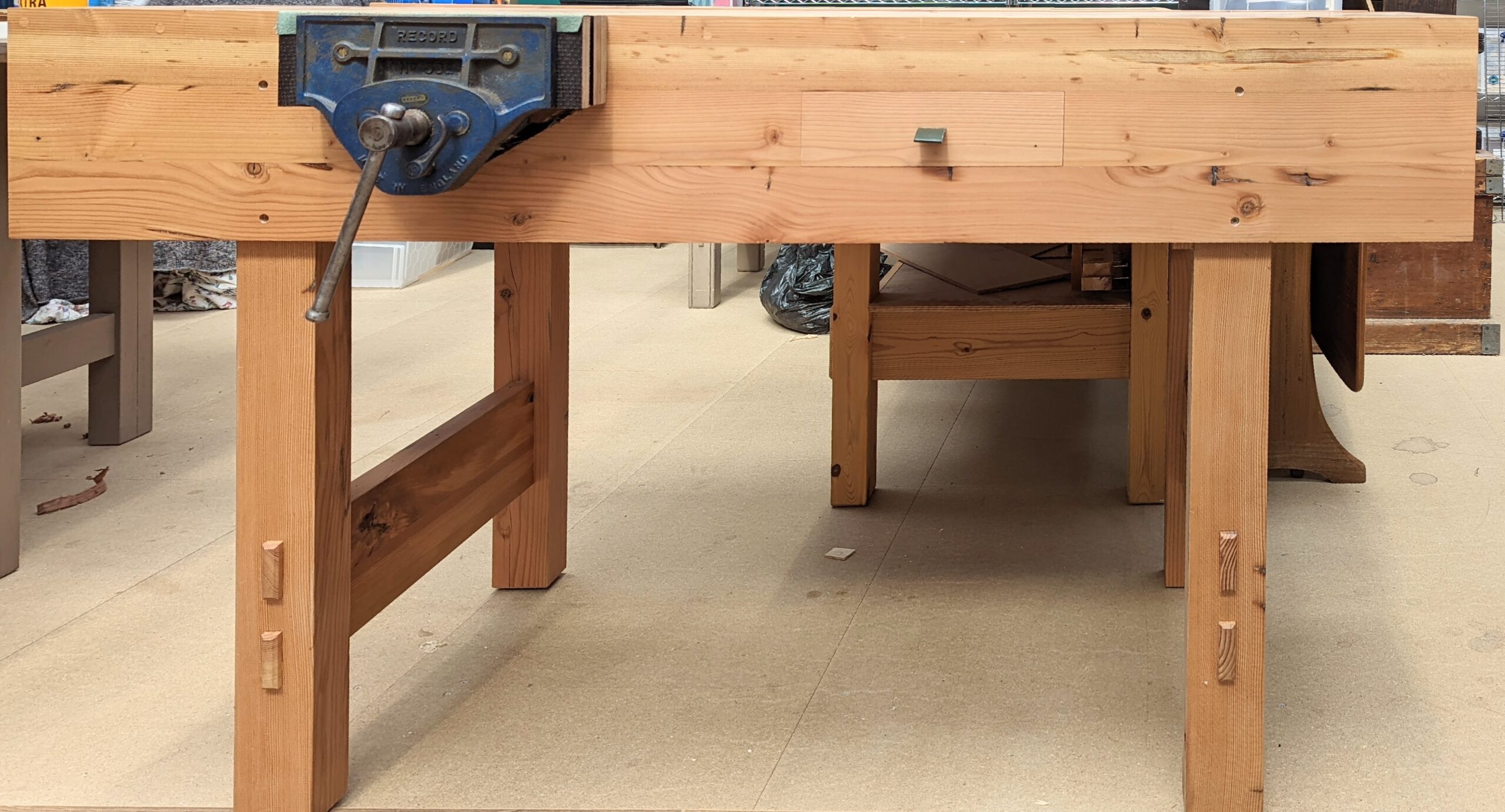
John's workbench was the simple kind I encourage everyone to work from after making their own. In woodworking, we make choices good and bad and often we make the bad choice work for us. Hand tools should be simple and uncomplicated. The Stanley #4 and 5, 4 1/2 and 5 1/2 pretty well replaced the complexities of day's making of single wooden versions of the plane to well-suit a world emerging from world warring. The craftsmen of Britain and the USA made them work as they adapted and adopted the new. Eventually, they grew to work them as well as the wooden ones despite the weight. Where and why massive workbenches came into being I will never know. Mostly an article here and another there. Woodworkers seem to like big for benches even though they are really unnecessary for 99% of woodworkers. It's a luxury most woodworkers could never afford in money, time to make, size and then the no small event of finding somewhere to keep it and work at it. I downsized from my eight-foot by 40" workbench, a two-person bench, to the ones work from now which are roughly five feet long and 24" deep. I've never had any issue in anything `i have made and it stays put even when made from lighter-weight woods like spruce or pine.
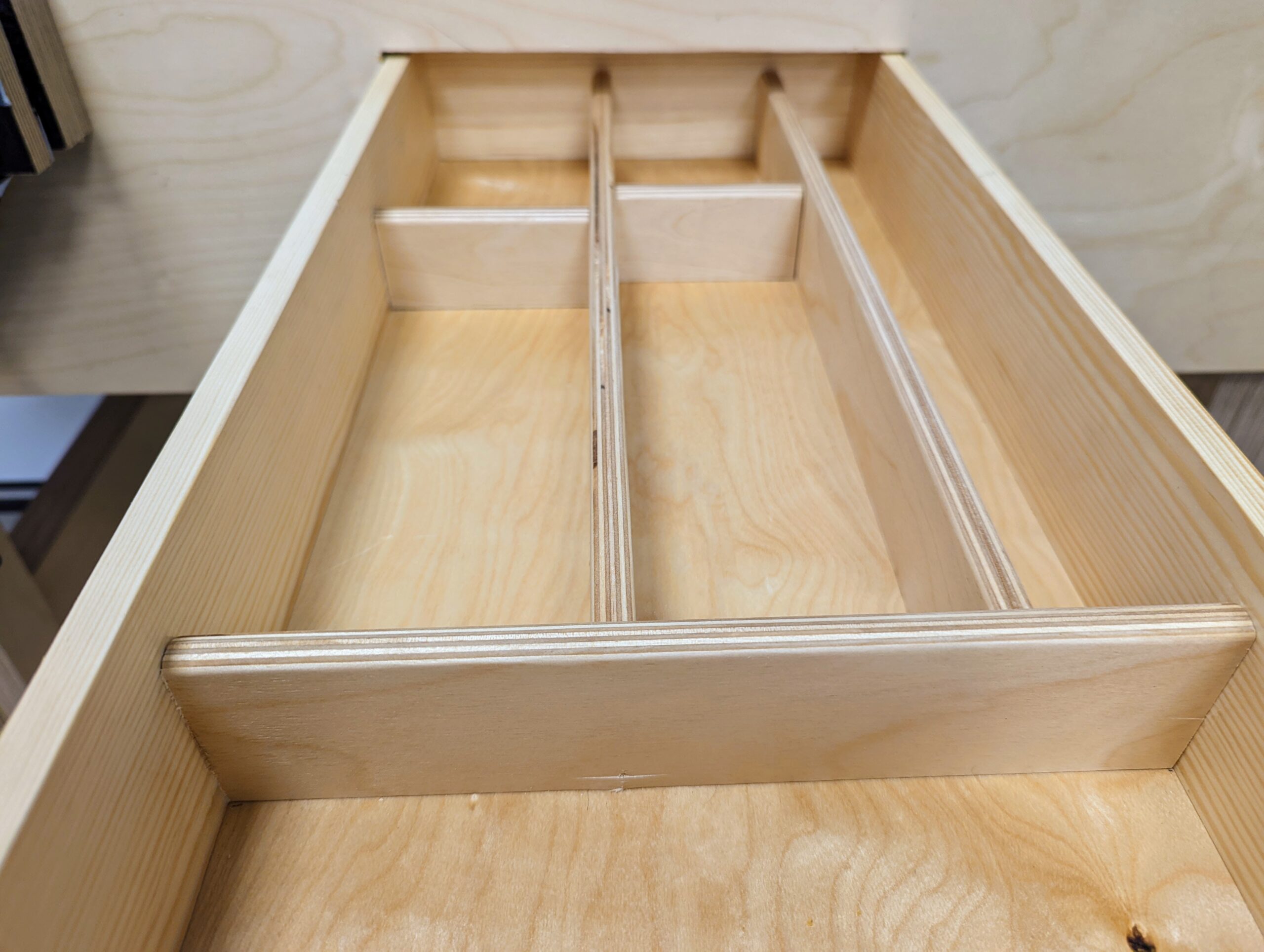

My design can be turned end for end or placed against a garage wall in a heartbeat. But, anyway, simplicity is the key to peace and I found it in a workbench everyone anywhere can build for a modest sum and I could make mine in a ten-hour day plus some extra for the vise fitting and making a drawer. The one in my plywood workbench, the drawer, took me two hours to make and another two hours to create the enclosure for. Not too shabby.
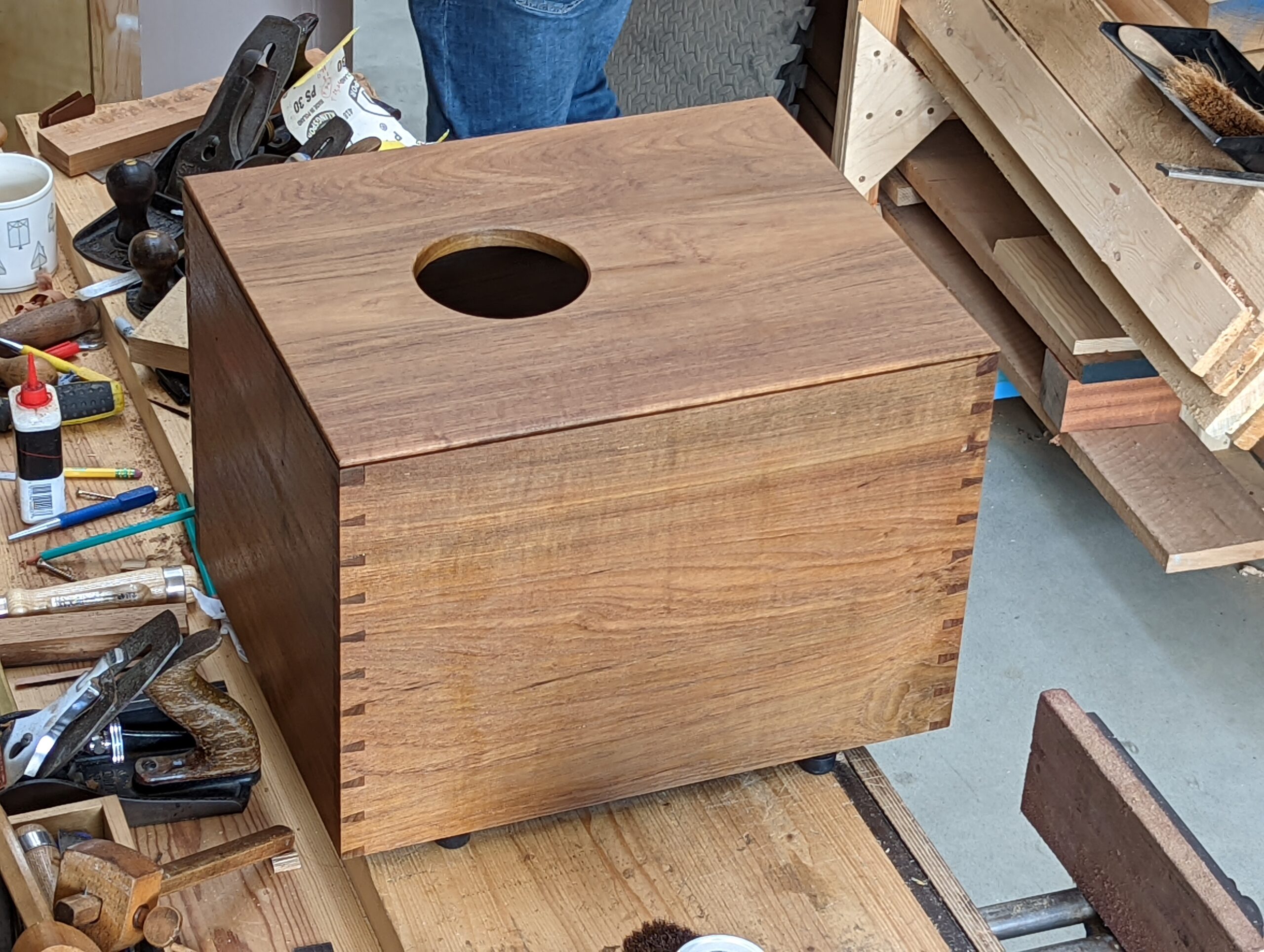
John just completed a cahon, a simple Peruvian drum slapped and tapped to a rhythm by the user who sits on it to play it. As I watched it come together from a 1950s teak desk he dismantled for the wood. As I watched him take the desk apart he showed me many things the maker had done to make the wood wider and longer and work for him. I am sure he'll blog on this at some point. He made this in celebration of his becoming an uncle to a new niece for the mother of the baby. These are things we makers do. It's nice and you can't buy it off of a conveyor belt. Watching the dovetails come together I could see myself in the making of it. The techniques passed on in simple things like multiple glue-ups of a dozen dovetails all at once so the risk of glue-freeze is minimised is my reward. The joints go together and are taken apart for good reasons. I remind myself of George asking me, "What are you doing? and me saying testing the joints to see if they fit and him saying back to me, "Why do you need to do that? meaning the joints should only go together the one time: when the glue up comes is the first and last time!
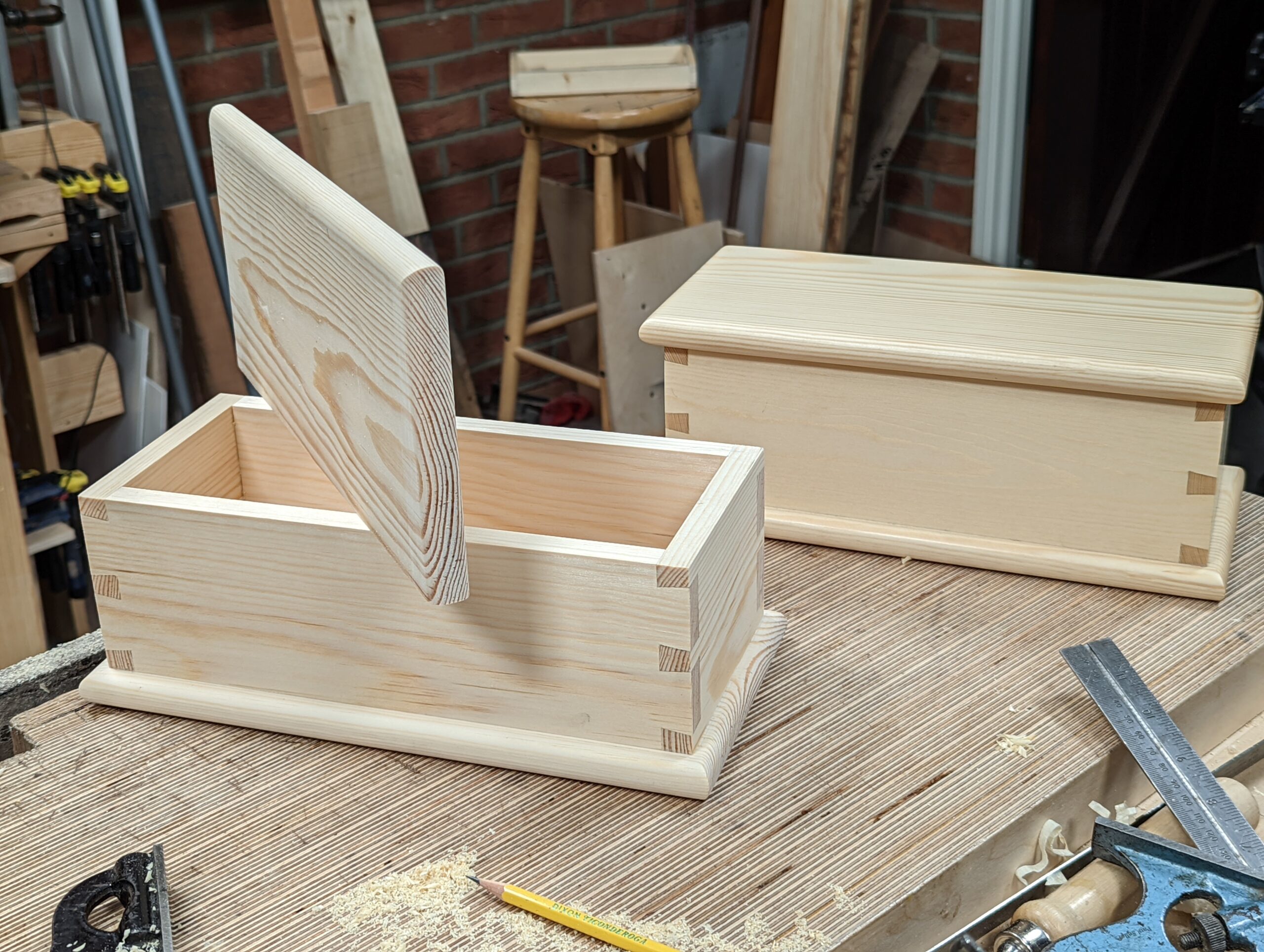
John's cahon has a couple of very unique features that give it his signature. This is what `I expect from maturing artisans that have worked at their craft for a while, signature. And I don't mean the physical one written by a pen and pencil; it's the signature of a man and woman maker, someone dedicated to individuality that can never fit the conveyor belts of life. No mass making. I think it is funny that many makers come up with the dream of designing and making and then go into something called production to make their fortune when the fortune was there all the time in the making of one or two pieces and then selling or giving them to another. Imagine Stradivarius making violins on the modern Chinese production lines that have put so many gifted makers out of business.
But there is a place for individuality -- the non-subservient who make according to their head and hands and all in between. It doesn't always happen as readily as it has for Hannah and John and Jack. I know that, but if you make it a goal it can happen. That is what woodworking masterclasses, Sellers' home, my blog, `Common woodworking is all about. I can't have everyone in my workshop with me . . . or can I?
John has been helping me with the rewrite of my first book Working Wood. Working Wood encapsulates the theory io spoke of in my previous blogpost where I spoke of my starting to teach in a simple Texas hands-on workshop for a handful of people. The three joints below and the ten hand tools undergird what was a theory to become hard fact. The greatest challenges came from those within the trades that governed the future, things like magazines and professional woodworkers, woodworking shows and publishers. Amazingly, we pushed against the goads by simply doing what we did best. We made, we taught, we took in apprentices and then we went online. What a shift the world has taken. You see, what undergirded the whole of my work was the quest to reverse many trends. I decided never to write for magazines again, never to mass make anything, to train new woodworkers locally and then globally. This took a paradigm shift. I was determined never to take sponsorship or free goods. These things always come at a cost. I didn't do what I wanted to do for money even though I do make a living from my woodworking in a different way than in days past. It still holds all the critical mass of making -- that never changed but may do when I grow too old. I do what I do for the conservation of real and true craftwork, where the hands and mind engage with the challenges. It's not sentimental, a heart issue as such, but the core of my being, yes!. I wanted the skills in the lived lives of people who cared as I do but had scant opportunity and support.

I looked down over to Jack's bench way in the corner. He just made a chair for himself. He's very much still in the training mode so most things are predetermined for him. His ability must develop into sensing more and then responding to the senses. This emerges gradually, slowly is best, and is rarely the instant the less patient almost always demand as some kind of right. Such people are always hard to deal with and is usually a result of an undisciplined life at an early age when no one said, "No!" But that is not always the case. With so many disabilities, we must be sensitive to look the deeper first. Then it takes real discernment to make the right choices for the right support. The emerging artisan is the artisan in the person training looking to bring out the potential yet unformed. I look for the small things. The placement of the tools and the placing of them. The choosing of the wood becomes instant in the eyes of the maker and changes might come with the same speed when the plane touches the wood and the chisel starts its pare-cutting. By these things, the artisan is born. There is no thrusting of wood into a machine's power-fed jaws but the steady easing of the cutting edge beneath the arms and hands, the feel for direction and the withdrawal at the wrong type of resistance. Redressing such things takes the patience of a master to engage with the trainee in a mentoring way. This takes both the master and the student out of the realms of mass-making, mass education, industrialisation and on into the deeper realms of industriousness. I wonder how many are predestined for commerce in our new world with global economies and commercialism exalted to the heights called success. So many areas now seem creditworthy but rarely craftsmanship. Craft in most realms takes second place as a lesser art to the arts that exclude them and yet I see craft as the art of work itself.
Comments ()