
Can you Handle things?
Over the years I have seen how rehandling existing handles can markedly improve the efficiency and energy of hand tools and customising them reduces the energy it takes to use them. The ultra-inexpensive Spear & Jackson 9500R traditional skew back panel saw, 22" x 10pts costing £16 with free delivery via Amazon.co.uk is the most surprising handsaw you will find for your money -- and take it from me, I am not introducing a cheap feeling handsaw but one designed and made to last for a lifetime of full time, every day, all-day use at that. Don't be put off by the incredibly low price either as it does not reflect a low-quality handsaw. Why so cheap? No, it's not cheap labour but low manpower need. As it is with 95% of making any and all tools these days, manpower for manufacturing is mostly replaced by AI and CNC so people standing at machines and controlling them is almost non-existent. Saws are one such tool and especially so. A CNC can rout out two hundred handles in a matter of minutes and spray finishes with water-based finishes takes about the same. Saw plates punch out and file teeth without a hand ever touching the blade or file so it is no surprise that a handsaw should indeed be such a low priced tool if you think about it. I doubt whether there is more than a minute's human effort in the making of a handsaw anymore and this Spear & Jackson really is a workhorse with the punchiness of the very best panel saws. I know! It sounds a bit demoralising, but there is not really too much to making handsaws. Gone are the days of uniquely shaped handsaw handles where a man stood at a vise and shaped and scraped the handle by hand.
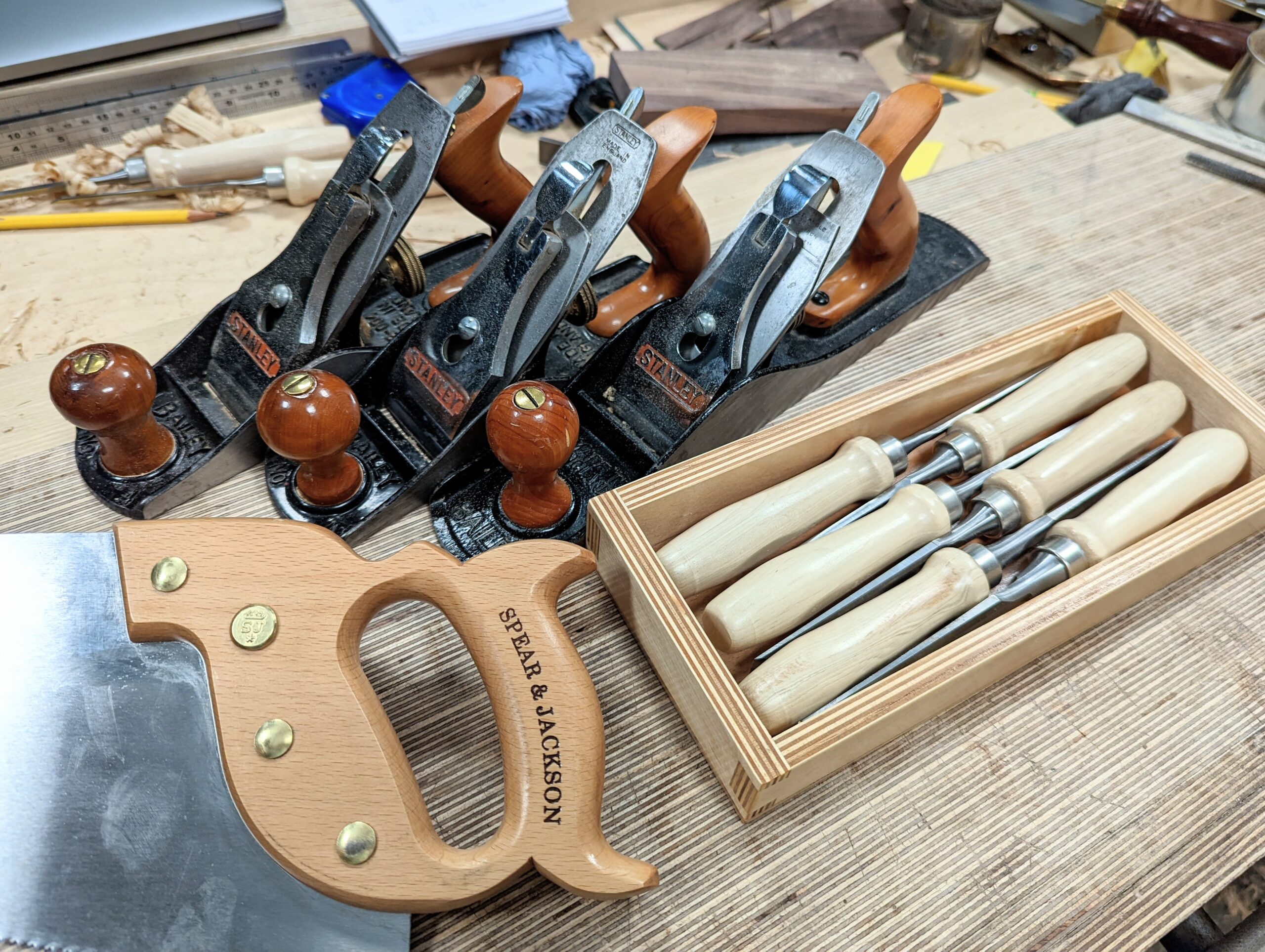
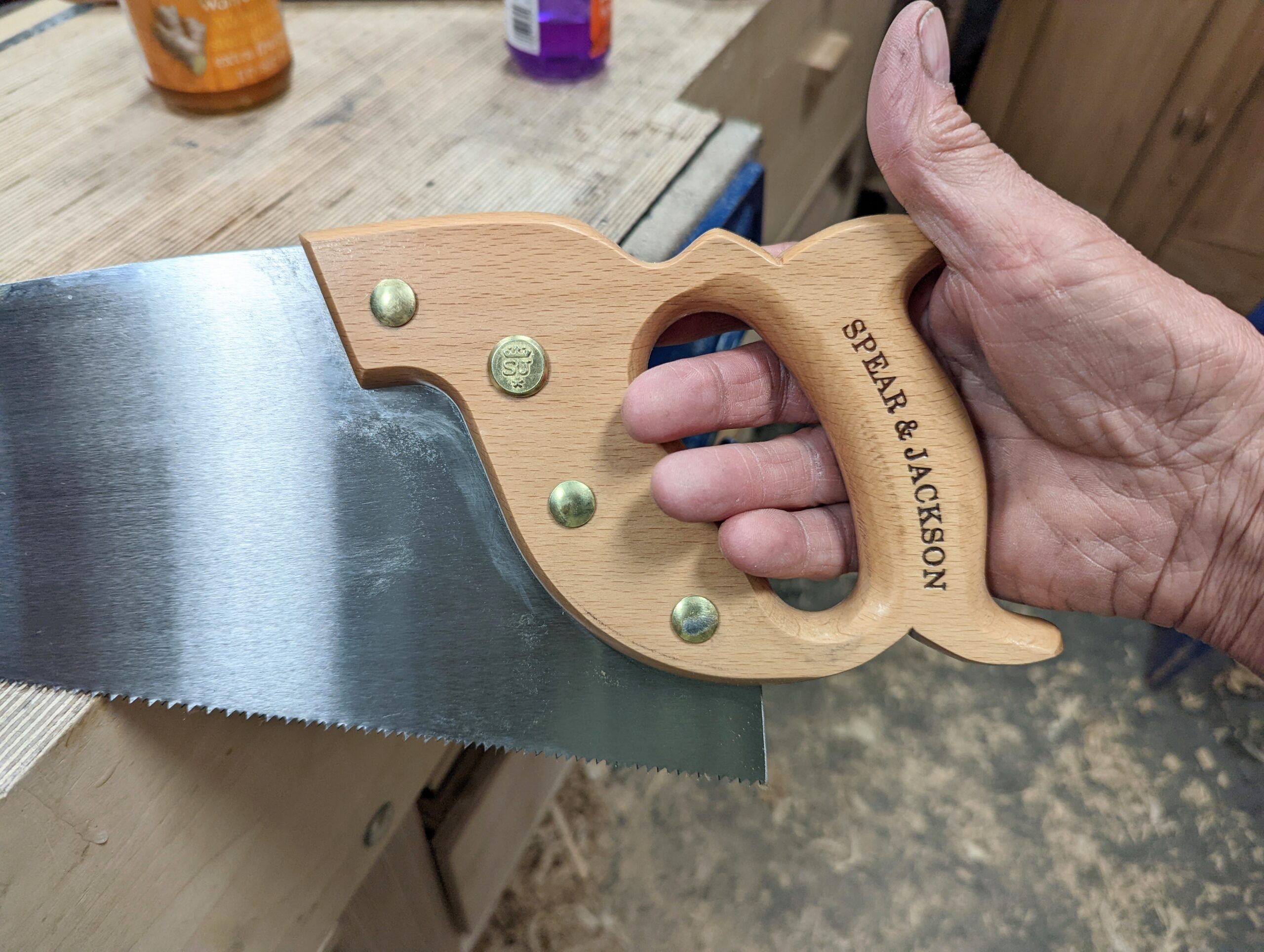
I have been using my Spear & Jackson 22" panel saw daily for several years now and it sharpens very well by hand and holds an edge like its so-called premium versions costing over £200 plus. Whether you reshape the handle or not is purely a matter of preference rather than need. Without it it feels fine, the saw is very well made, finished nicely and the teeth hold an edge as well as the best. My earlier blog post on how to transform the handle for both comfort and functionality tells you how to do it. Here's the link to that end, but . . .
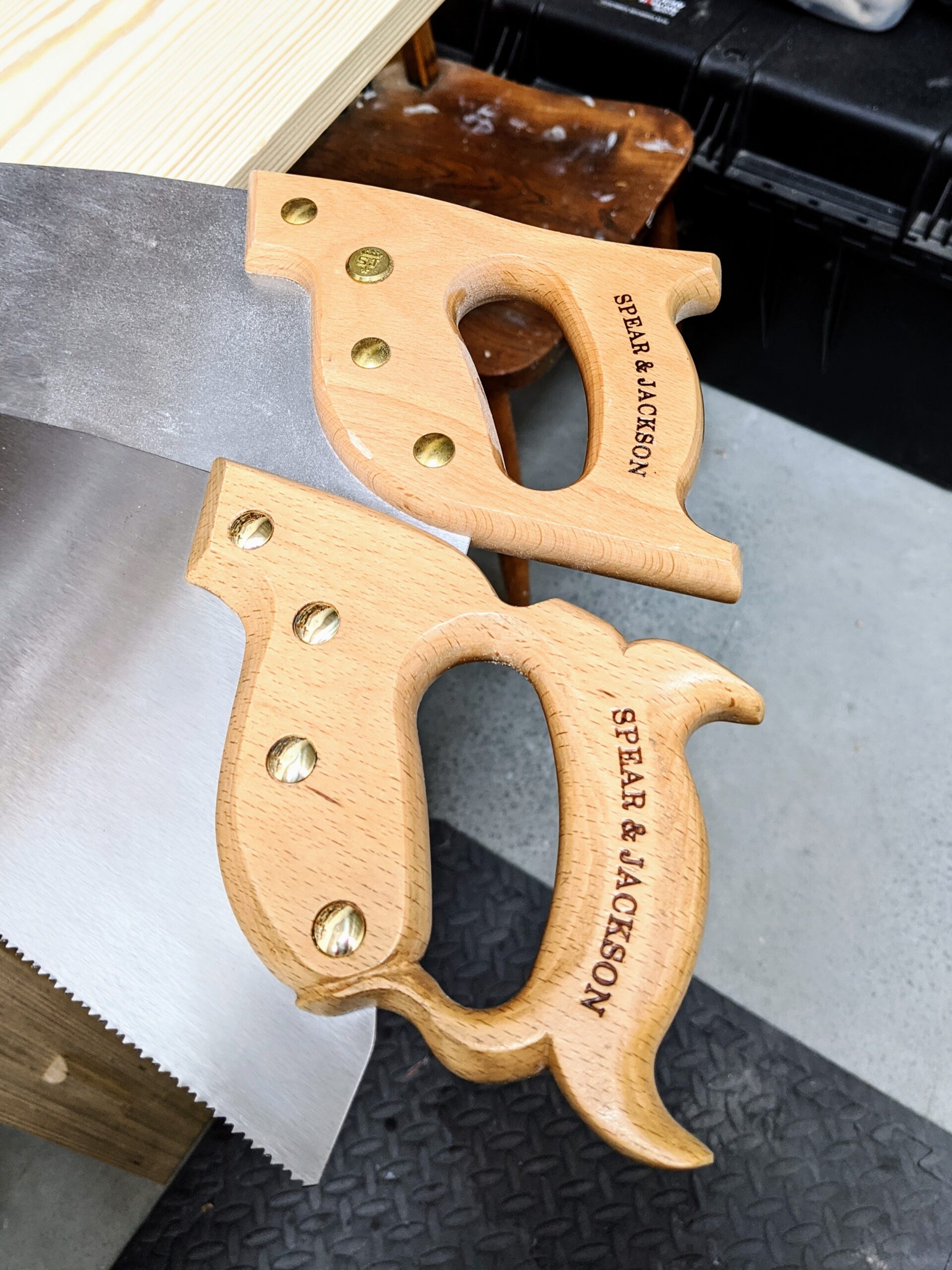
. . . I have refined a handsaw with a simpler less time-consuming profiling that is much quicker and easier to do without taking the handle off or replacing the expensive screw caps with very overpriced replacements. It looks and feels just great and before anyone tells me you can't tighten the screw caps because there's no slot, that's not true at all. The tighten just fine with the single tap of a hammer on the cap. Here is the outcome of my simpler handle change. I think it looks and feels just fine.

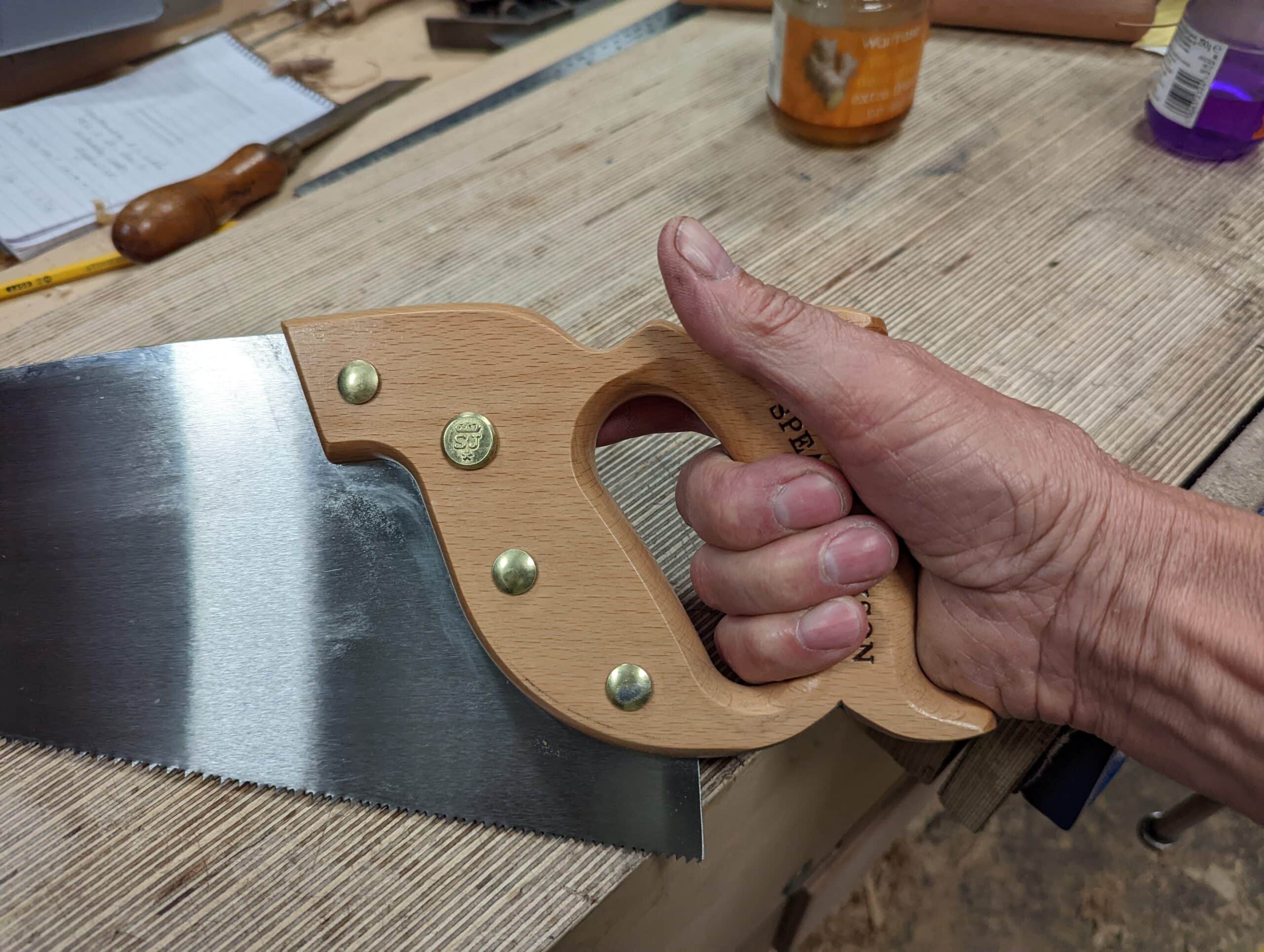
There are various other S & J saws including tenon saws of different lengths too and these are fine for reworking as well. I have different blog posts on how to refine such saws to finesse them if needed so you really do not need to spend too much on saws to get a really decent lifetime version. All you need for a good saw is decent steel and solid wood for the handle. You get both in these S&J versions and no I don't get a kickback from S&J so I am free to speak my mind always.
So why go to the trouble of developing a wooden handsaw handle further instead of just buying one with an ergonomically developed one made from plastic with rubberised inserts for grip? Well, you cannot really compare the two types because one, the wooden handled version, is designed and intended to last about a hundred years if you use it every single day of the week, week in and week out for many hours a week. The plastic handled version on the other hand has impulse-hardened teeth that cannot be resharpened once hardened and are designed to keep you coming back for more throughout that lifetime I speak of. The sharpness of these lasts four to five times longer than that of the resharpenable ones so for someone who only uses a saw every few months these will be the better choice. For serious woodworkers like us, the resharpenable ones maximise savings and quality of life. I (and you with a little practice) can sharpen a handsaw like this in just four to five minutes and a £10 saw file will sharpen saws like this about 30-35 times no problem.
Now it did take me an hour to reshape the saw handle. Factor into that that I thoroughly enjoyed doing it, I made the time to do it and I was able to watch the Queen's 70th Jubilee Celebrations while I did so, it was an utter win-win. The tools? A combination of a Shinto saw rasp, a small half-round rasp, a flat 10" file, a coping saw, a thin card scraper (Veritas), and a 1" chisel. I used abrasive paper to sand the whole and then applied three good coats of shellac before buffing out with 0000 steel wool and soft furniture polish.
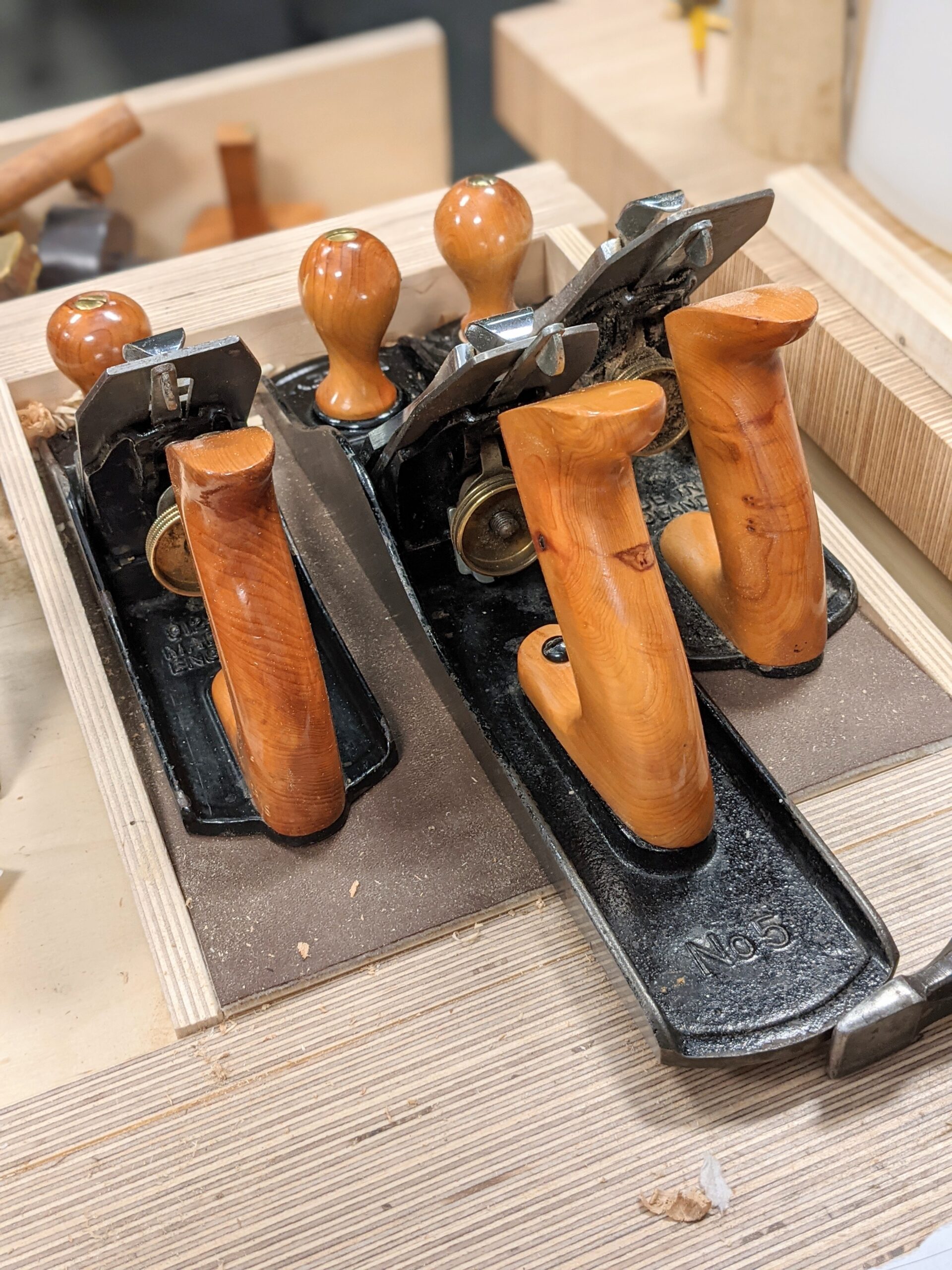
Rehandling planes without a lathe is a video you might want to catch on my YouTube channel here. Changing this will also power up your hand tools to fit you rather than rely on the generic versions that come with the plane. I also have shaped the two on my #4 planes to differentiate between one I have set up for a scrub plane and the other my regular smoothing plane. As soon as my fingers touch the plane handles `i can tell which is which. All in all I have fitted out three planes with yew handles but the wood is inconsequential so you can make them from any wood or just reshape the existing to suit your hands.
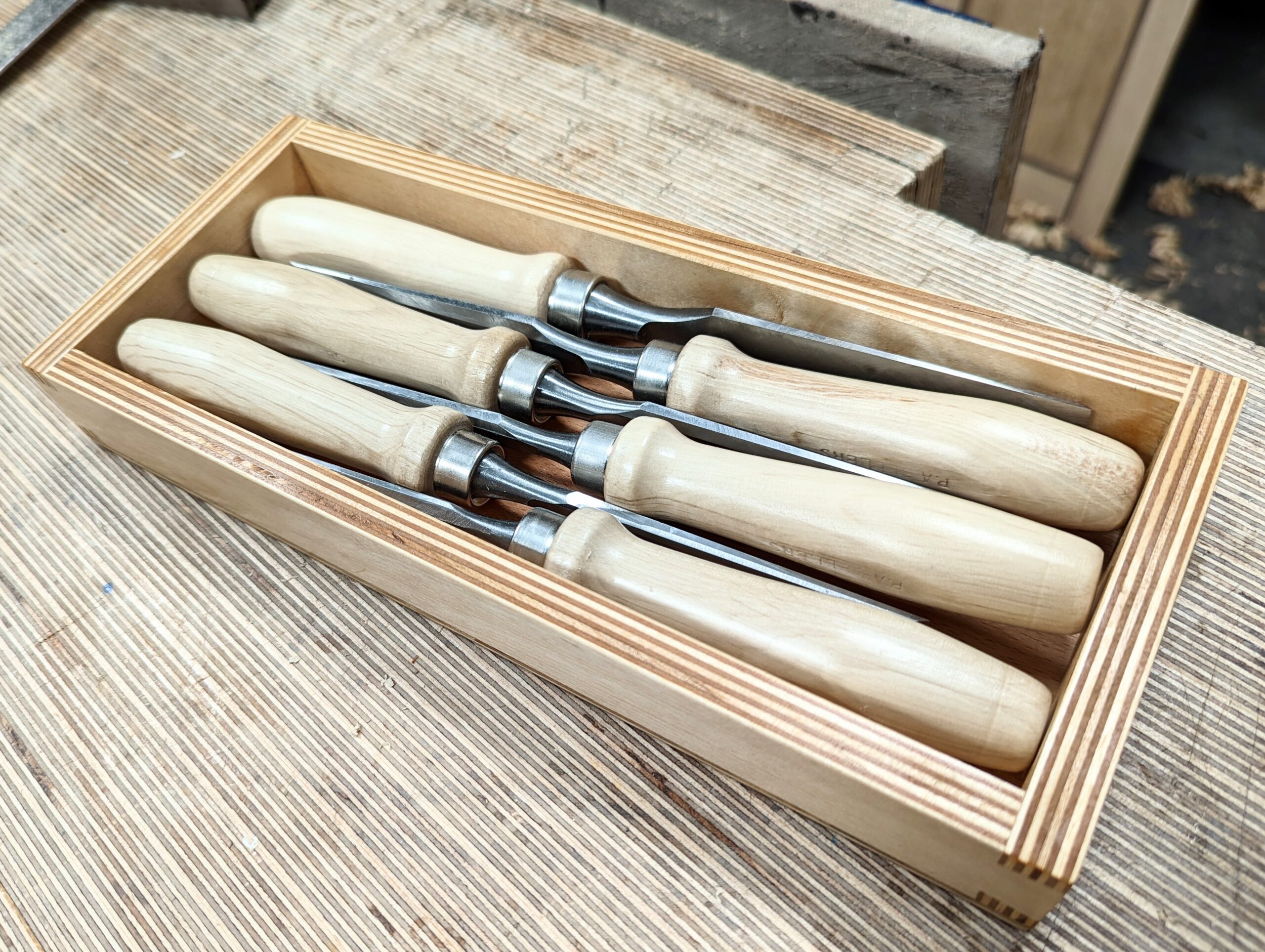
So these are my recently upgraded chisels replete with storage tray to fit my workbench and keep the chisels close to hand and in order. This is well worth doing though doing eight can take time. Just do a couple at a time and it goes fast and fills in time you might have spare in the evening for being creative.
Comments ()