
Tools of the trade
Finishing means beginning again. I take wood from stacks and racks, search the small offcuts kept in case for suitable sections that might work for this rail or that stile and soon my rough-sawn stock leans standing by my bench. I begin truing up the first face of each one, the wide face, get rid of cups, bows and twists for a good reference and registration face. Do I resent the physical work? Not at all, it's my daily exercise regime. I just do it. Working out for a day with scant intermissions keeps me healthy in body and mind and I like the tiredness at the end of day when sleep comes and I lie thinking of the wood I prepped for tomorrows joinery to begin.
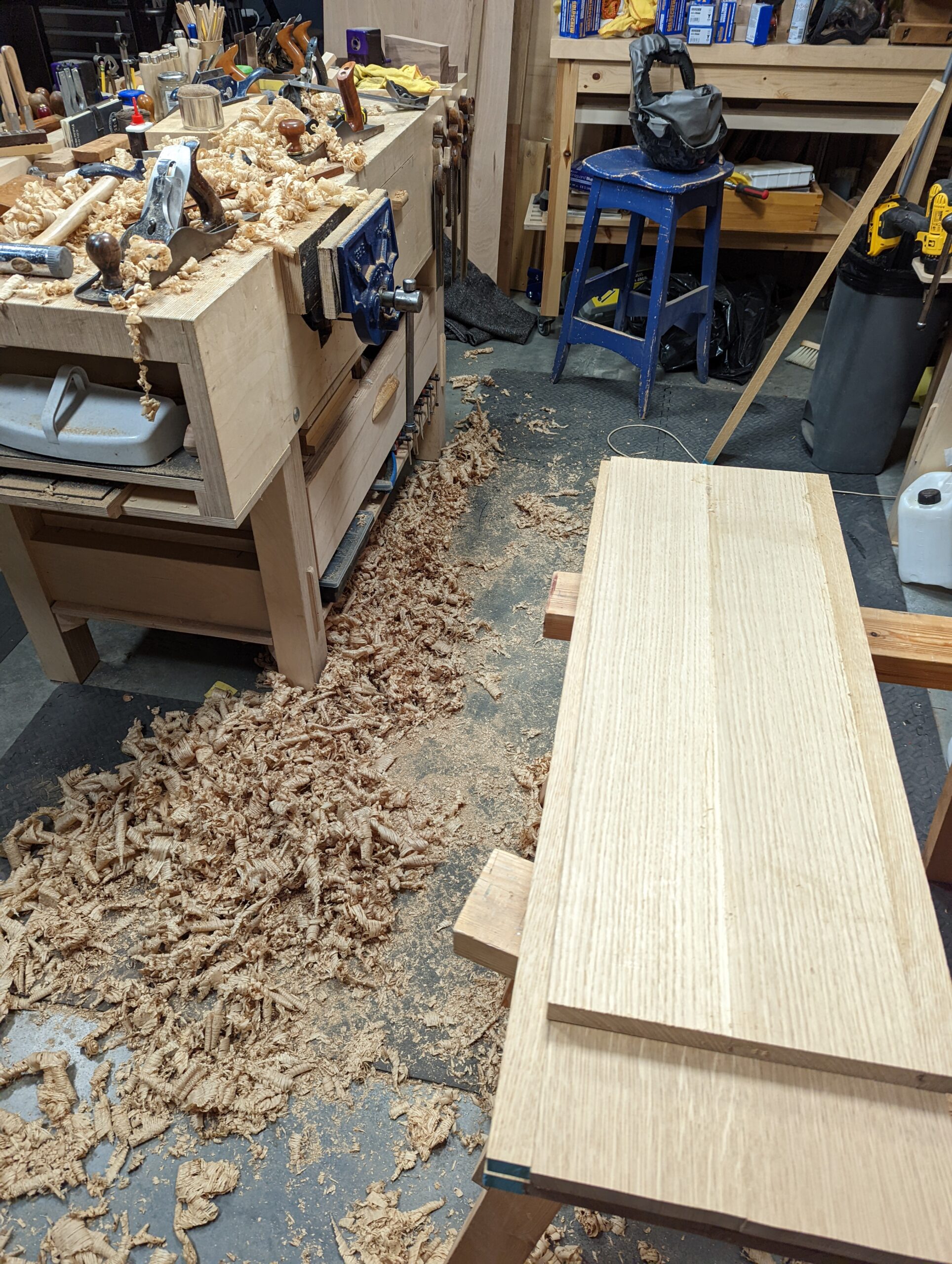
My planes are at the ready, my scrub planes, converted from a Stanley #78 and a #4; these two workhorses take down the highs and raise the lows to a level plain. Following on with a jack and a smoothing plane makes it easy to get the wood ready for joinery. I'm not saying it's always easy but mostly it is. It depends on the wood I pick. Some woods work well and some tear testily to test your patience. Some hybridize the two characteristics in a single board, side by side at that, but it question how well we read the grain to reduce the opposition. Make sure you learn to plane with the grain straight off by seeing what's in the texture of grain before the plane touches the wood. So many of techniques to draw on when we practice the art of grain-reading -- knowing when and if to plane directly across the grain, at a tangent to it and, dare I say, even belt sanding it if we own a decent belt sander. That is a last resort as there is almost no wood that cannot ultimately be planed and scraped with a card or cabinet scraper to near perfection. But should we be using belt sanders and random orbit sanders? Well, contrary to what you might think, I think that we should but that we should minimise the use of them. I see good reasons not to use them and especially if it benumbs the development of skilled workmanship. I also see why we shouldn't consider them as some kind of cheat. If we have taken the time to develop good planing skills we will minimise the dependency on abrading to get surfaces trued because no matter how good you are with a belt sander you will never get the surface as true as you can with a hand plane, even if ot looks as though it is at first glance. It's the plane that gets you within thousands of square and straight if that is what's needed and that is what is mostly needed. Best that we rely on such methods as more marginally necessary rather than the only method we reach for.
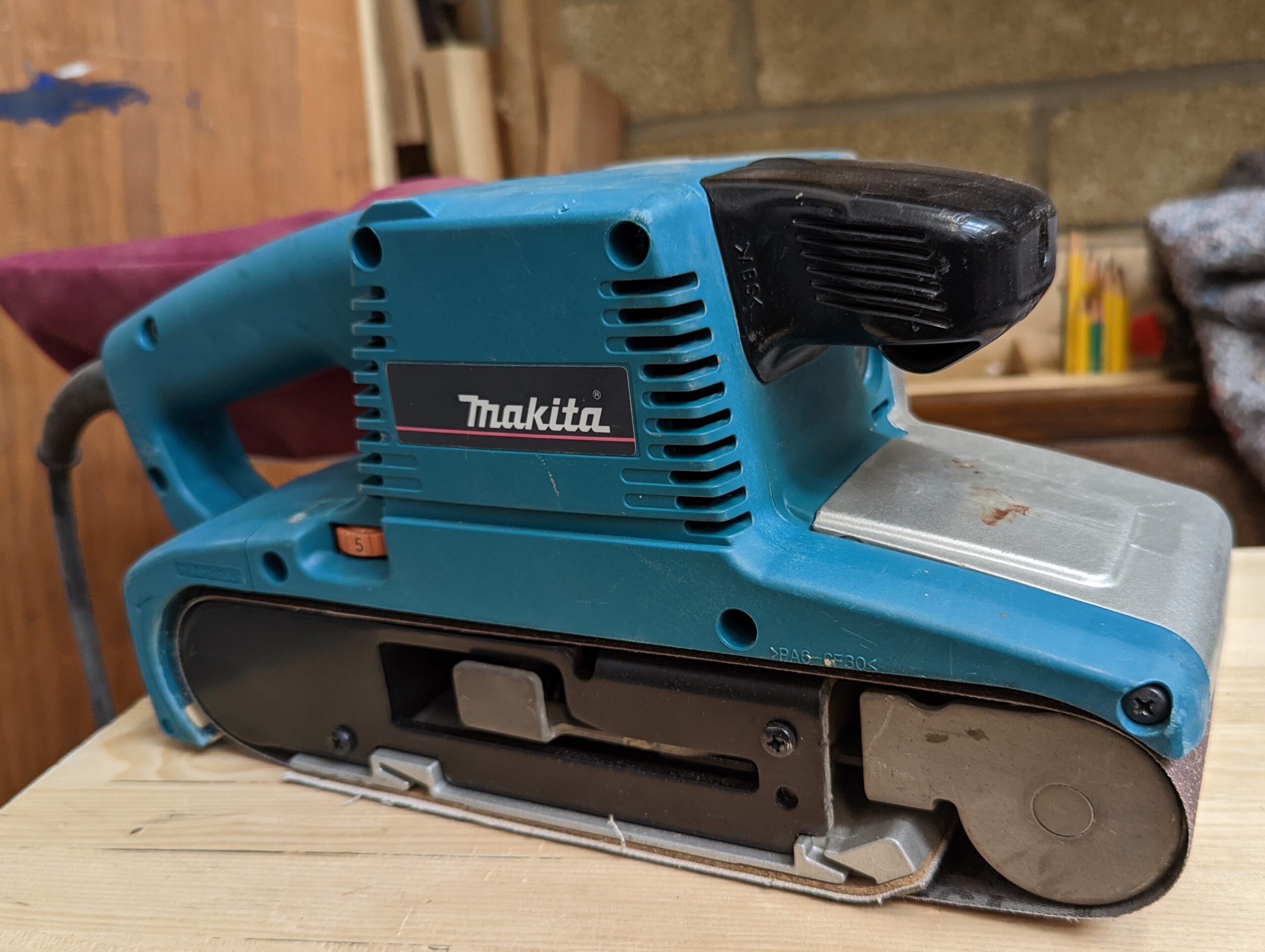
So, let's try and put some perspective on this. To do that we have to look at the history and development of woodworking through the last century. In my workshop I own Dewalt drill-drivers, a 4" Makita belt sander, a Bosch jigsaw I've had for many years, a Dewalt 5" random orbit sander, a Dewalt router and a Dewalt circular saw, that's it as far as hand power equipment goes. The router has been in its black plastic box gathering for ten years to date and it's been used twice for a total of two hours for running some moulding on something I cannot recall what. The circular saw came out for an extended period of an hour's work during a day two years ago when I downsized a glut of rough-sawn boards that were just too big and unruly to be lifted, sorted and stacked neatly. The stack was ten feet long and four feet wide by three feet high. Even with the help of the saw, it was a day's work. I like to use it for sheet materials such as plywood, OSB and so on though. It works perfectly for these materials and of course others too. I also use such a saw when I am doing carpentry. If I were to do as I have when I built the last two sheds at Sellers' home I would indeed use a circular saw and the jigsaw together with a speed square, but that doesn't mean I reach for it for every cut, I have a hardpoint handsaw for outdoor, on-the-ground working. I don't like my regular handsaws to be outdoors too much and for the amount of outdoor work that I do a hardpoint seems to last me about five years.
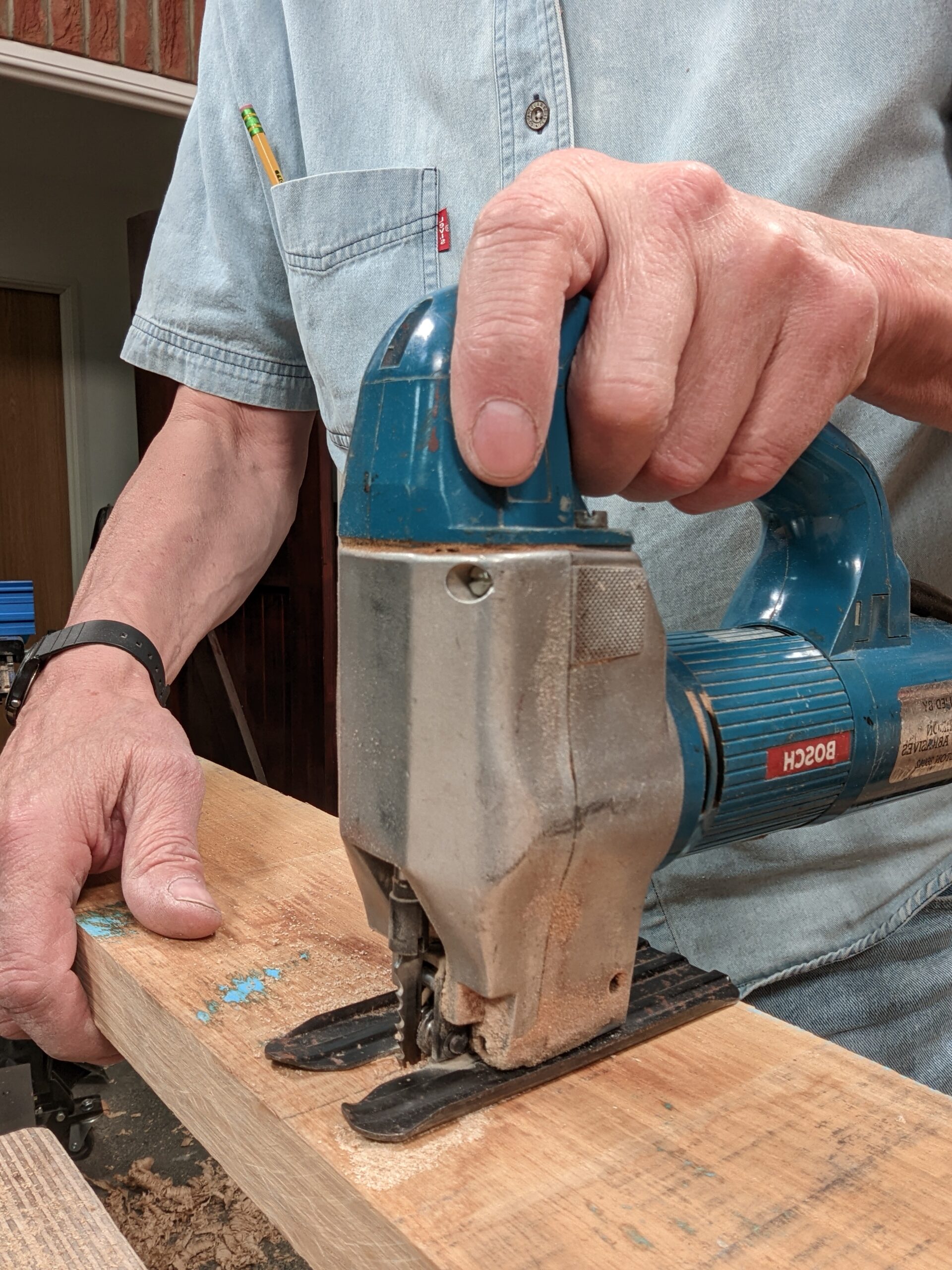
I find the Bosch jigsaw to be a very handy addition and especially when I have limited space to maneuver the wood around or set up for cutting. the jigsaw rips and crosscuts very well. It's a compact powerhouse for localised crosscutting. I might use it for tasks like recessing the vise into a bench apron but there are other places too, scribing a skirting board to an uneven meeting line at the floor, circular cuts, things like that. That said, I might not too. Producing videos takes two and three times longer to make just because to get the videos takes that extra time to set up and get the footage needed for the clarity we strive for. If I have many boards to downsize for handling I might occasionally than majorly reach for the jigsaw. I bought my first Bosch jigsaw back in the early 1980s and liked the way it worked for me, but not as much as my regular handsaws. In recent years Spear & Jackson reintroduced traditional handsaws into the world of hand tool woodworking and they really hit the mark. The saw is made in Taiwan and can currently be had from Amazon for a mere £15 including tax and free delivery but that's here in the UK. The saw plate is the perfect weight and thickness with good tensility and a perfect resharpenable hardness. It has a comfortable wooden handle in beech that can readily be reshaped to a classic when you have an odd afternoon free. Sometimes, at the end of a day, I might have been sawing and planing for six hours straight. At 72, the jigsaw gives me an extra nudge if I need it. But it gives me zero exercise and at 72 I need more and more exercise not less. It is too easy to say "At my age blah, blah, blah!" To get my work done in my usual workday means being sensible and practical. having said all of that, I think that it is fine to use corded and battery driven kit and some of us actually need it for variety of reasons. let's not pretend that these will develop the skills we need to use hand tools and gain mastery in depth. They won't.
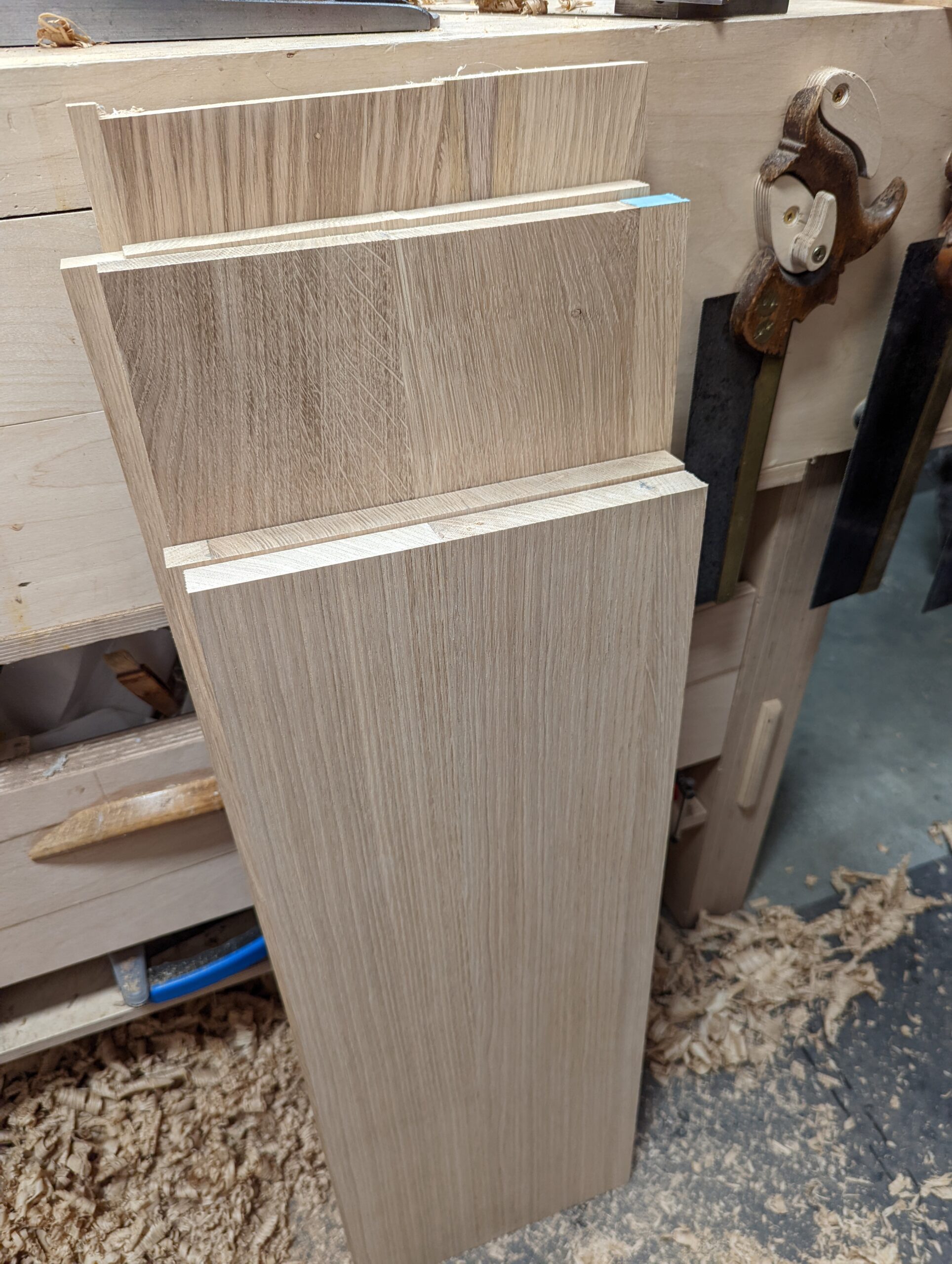
My hand planing stock for my projects didn't necessarily come easy to me. In my early days I had become reliant on machines for downsizing my stock for a production run of projects. At one time I produced thousands of walking canes a year, thousands of other products too. This was mass-making and a day came when `i said enough, no more. But then I still had the machines as part of my making and I would need to plane 500 pieces for a week-long class too. I worked full time as a maker and then additionally as a teacher at weekends and evening. It was a no-brainer. But if I were to use such power equipment to teach my now global audience online I would be telling them to go out and buy a tablesaw, a planer, thicknesser, mortise machine, chopsaw, bandsaw and more. Alongside all of that, there would be dust extraction systems and other support equipment like outfeed tables and so on. That means a dedicated building too, and justbto make a bookcase, a coffee table, a spice rack. I went back to a more positive sphere knowing that handwork would be the goal of most people wanting to muse their hands to make with. The concept of machining was more an American influence of woodworking. In my 23 years living and working full time in the USA I never met a woodworker that didn't have a fairly sophisticated setup of machines and zero hand tools. That developed over a century of time and ultimately displaced handwork almost entirely for well over half a century and more. Thankfully we have been able, more than able, to turn the tide by reminding everyone that woodworking magazines and the editors of said magazines were in the employ of machine manufacturers and still are. The internet made a huge difference even though it is getting all the more difficult to find genuine teachers and trainers living the dream and passing on their skills from their background as a maker.
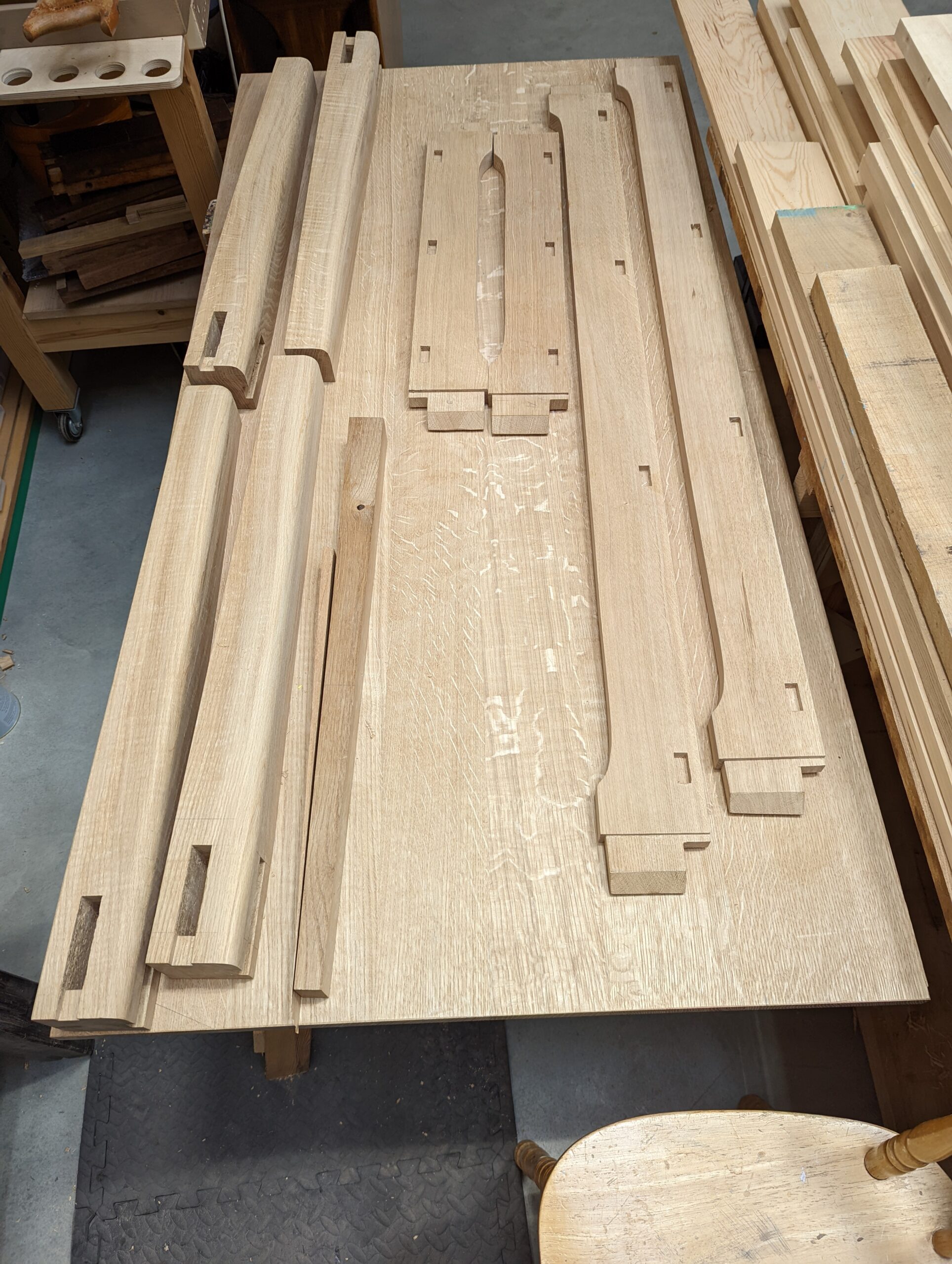
The belt sander has been around for many decades and so too the random orbit sander that leaves a swirl-free finish on your wood. You must remember that most planing machines leave a surface that looks and feels good to the touch. But it's when you apply the finish that all flaws show up (please, those of you privileged to own spiral cutterhead planers, no comment). Paint and varnish alike highlight the circular cuts achine-planed surfaces leave. With a hand-planed surface the surface is generally left clear and flawless unless, of course, you meet some rising grain opposing your strokes. 95% of my planing results in a pristine finish and especially is this so on narrow sections regardless of the wood. I usually buy wood six inches wide or less for that reason. Six inches wide (no more than 8") is a great width for hand planing and the wood is generally in better condition and less prone to post-machine-sawn, post drying distortion. It's perfect for panels such as tabletops and carcasses and also for all frame types such as doors, etc. So what does the belt sander offer me? Every surface I create is done so with a bench plane. It takes the twist, cup and bow out in a couple of minutes and especially so when I use my #78 scrub plane as the first level of distortion removal.
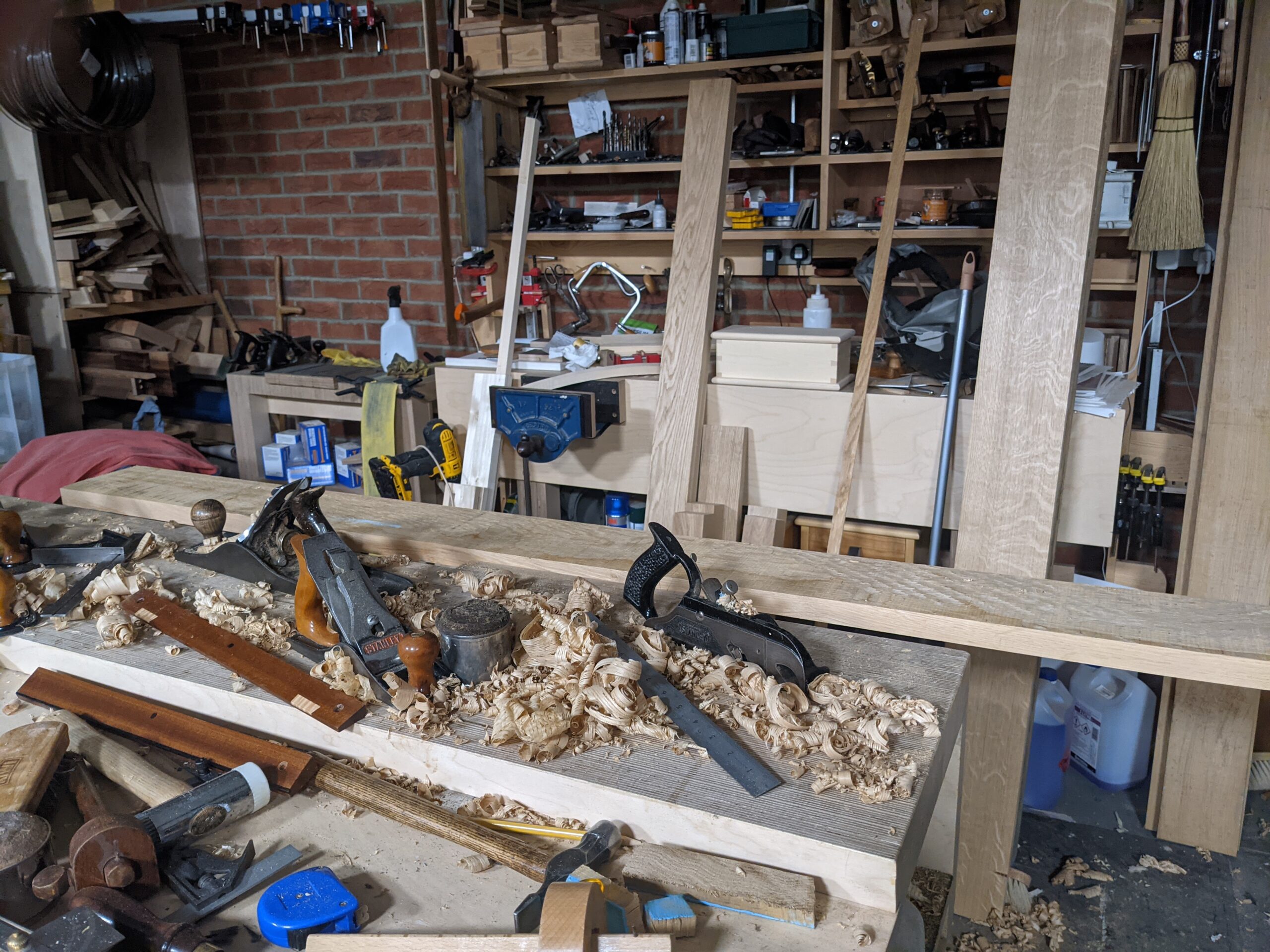
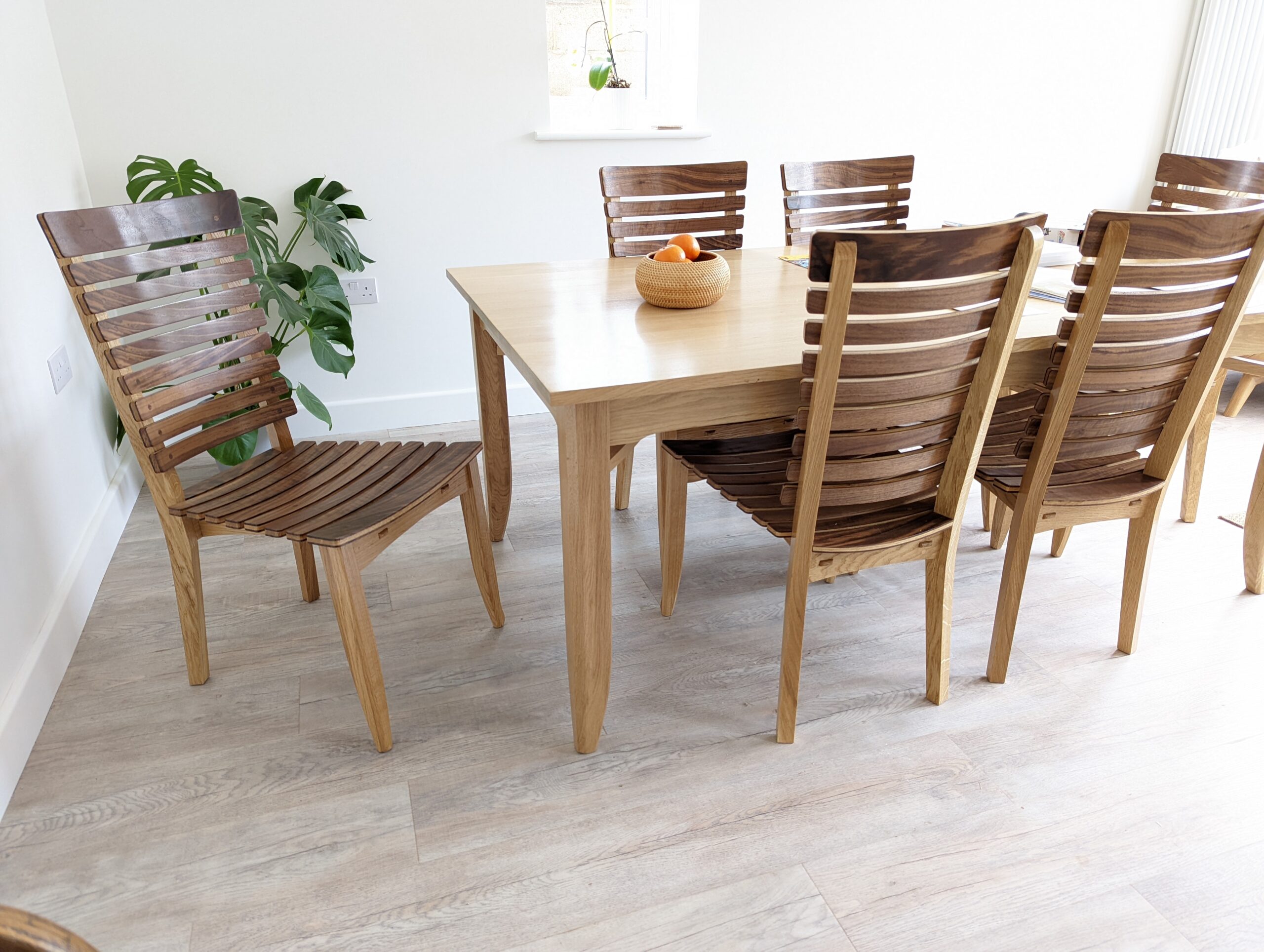
I like it for knotty areas too. less wear and tear on my second-level #4 scrub and subsequent bench planes. When I have created panels there may be a slight thickness difference along the joint lines, I am talking small fractions of a millimeter so it won't be much. Running the belt sander over the whole surface evens out the surface to a very nice evenness. Another benefit is that any sanding creates 'tooth' for the finish to cling to, hence we usually apply what we call a sanding/sealer coat thinned down that raises the grain after belt sanding and this doesn't happen with hand planing because planing is non-abrasive. Hence my use of hand sanding everything as needed anyway is rarely to smooth but to create tooth for the finish to 'cling' to. My six dining chairs were hand-sanded throughout but when time was running out I did reach for the random orbit sander on my prototype to get me ahead a little. You must remember that if I create downtime it is not just my time but the videographers and editors too.
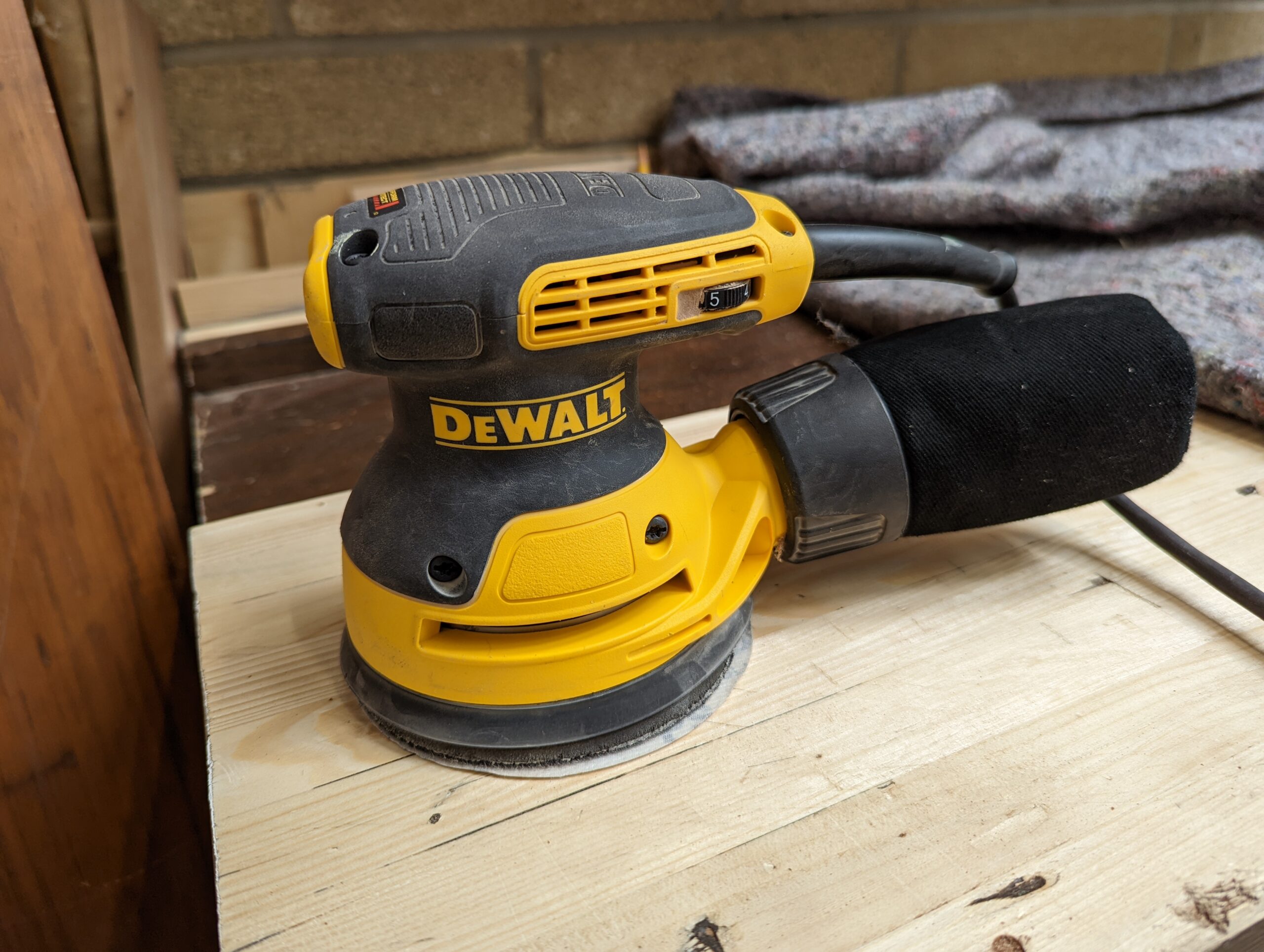
What you might notice if you know me at all is that I have choices, that I am not always looking for ease, not speed and not a substitute for skilled working. This is the key difference for me. A chisel in my pouch is not there as a just-in-case and neither is the handsaw. In my case, I want the physical work in the same way a runner runs or a weightlifter lifts. I respect the need for physical exercise, I just choose not to waste energies running or weightlifting when and if I can do it productively being creative and making. This all factors into the modern term, wellbeing. In any product I make my power sanding and using power equipment will be less then 2% with many projects having no power equipment anywhere near.
Comments ()