
EBay Works so Well
eBay is a bit like Marmite, you either love it or hate it, or so it seems. It seems such a small thing to buy a simple sliding bolt for a cabinet or the exact hinges you to hang your doors on. Then there are those now quite unique countersunk head brass screws that cost too much in a pack of five when you need 24 of them. The savvy seller of a few "new-old-stock vintage brass screws" splits the box of a 'gross' (144 or 12 times a dozen) into zippy bags of five to sell for £5 plus another £1 for shipping as an eBay seller. But I found a seller selling a bag of 50 for £5 and £2 shipping.
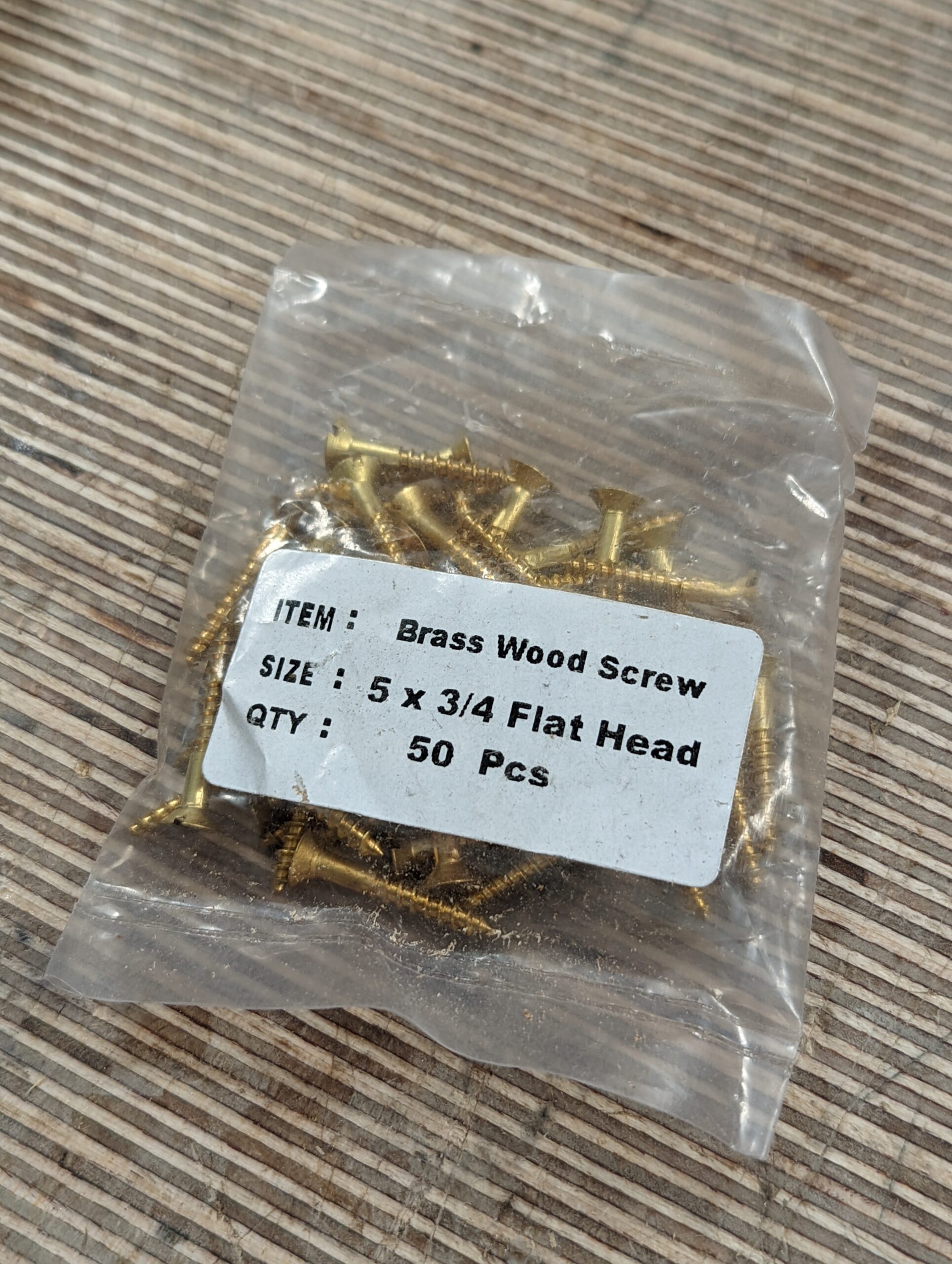
Trying a local hardware supplier on the high street is rarely if ever an option today. In times past here in the UK, I could have passed half a dozen hardware shops in the town where `i lived and even a village had one such shop. Those days are gone and the ones that remain usually sell lower-grade import tack at a price they can mark up to compete with online suppliers selling from their garage to minimise overhead. The very overpriced big box stores have very limited choices for you to pick from too although standing staring at the racks might make you think differently when in the store. Such sad demise of global supplying has maximised confusion and yet offers an only minimal solution.
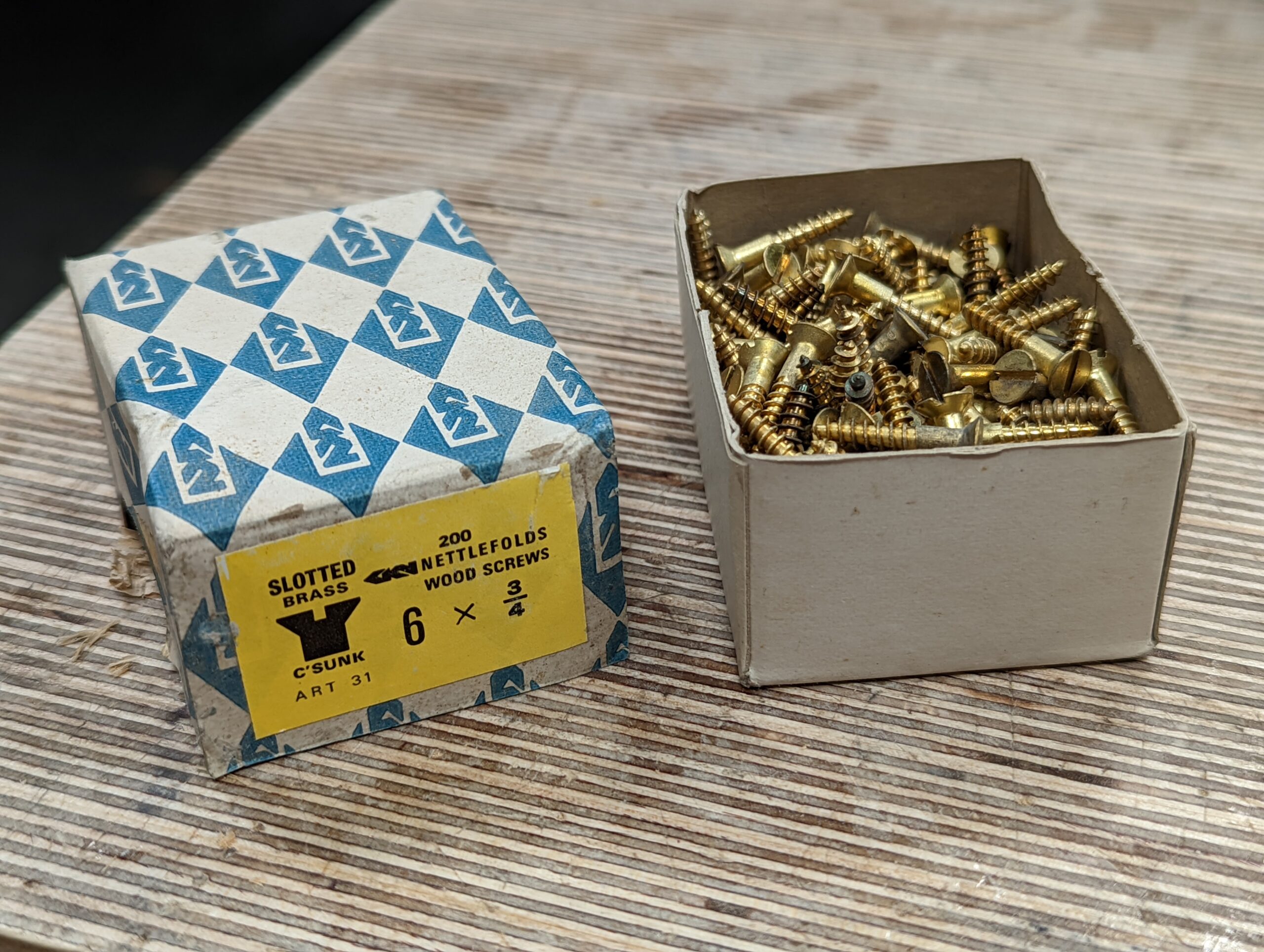
It took me just a few minutes to find hinges, a sliding door bolt and the right screws for the hinges using the right terms. 'Screws' doesn't work to well as a stand-alone term. Good screws were an old or vintage stock is a brand called Nettlefold here in the UK. I put in 'New old stock brass screws 3/4" Nettlefold" and found a full box for £12 and free delivery.
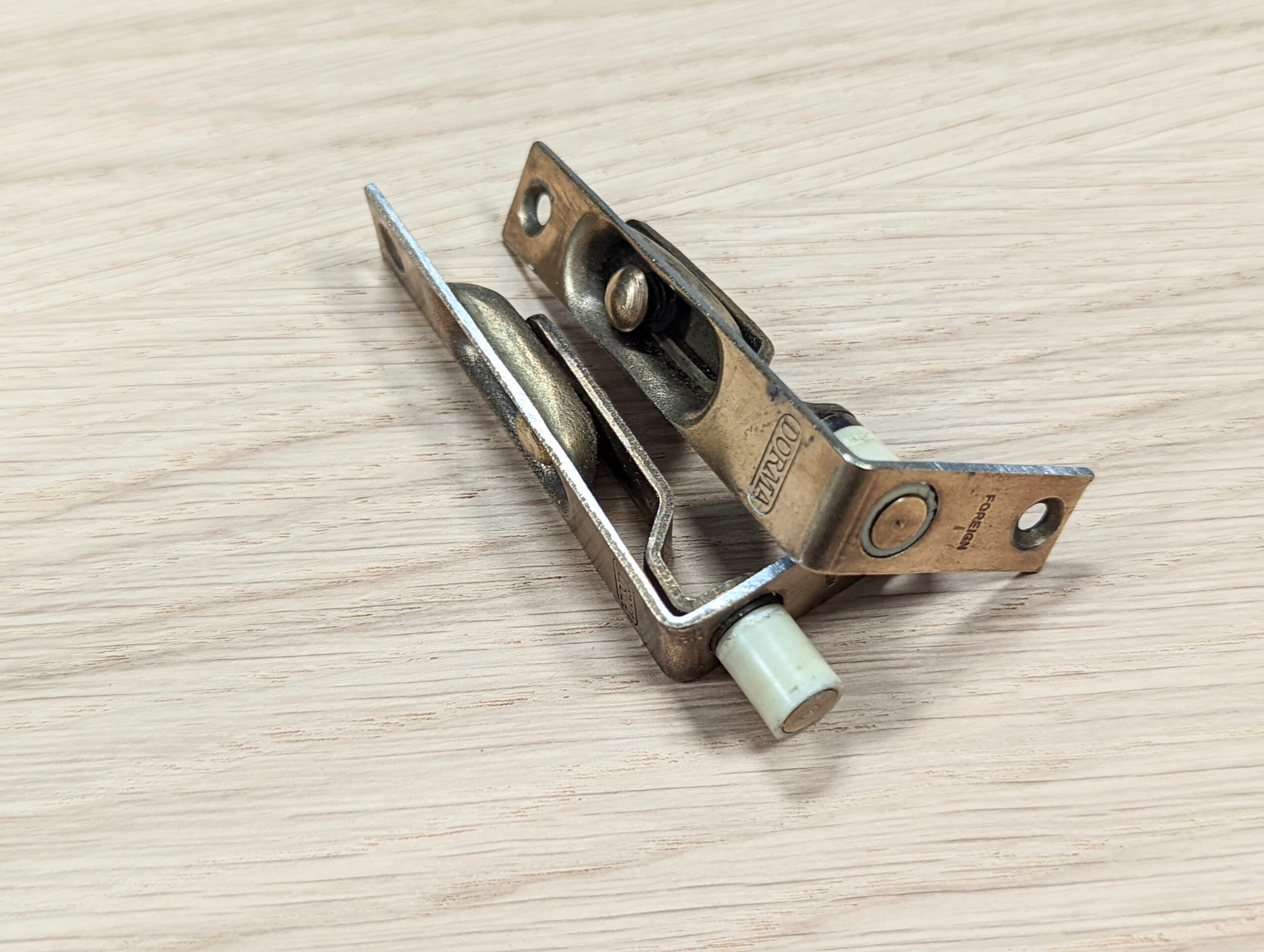
It took me longer to find the sliding bolt and I was looking for face-fixed versions because they are simpler to install but would have preferred a vintage version and even ones that were well worn if in good condition. But I came across many vintage versions that were 'let in' types and ones that were very nicely made from the days past. I ended up with some DORMA brand which is an old established supplier. In times past anything made outside of Britain would be marked 'foreign' just for clarity that the quality might be less than a made in Britain stamp. In this case, they were snazzy little bolts with nice features in that they would be barely visible when installed and had a neat little catch to them that prevented anyone from sliding a penknife in the gap to tease the bolt up to release the doors. To open the bolt you had to press the slider button in and the bolt bypassed the catch and unlocked the door. It's a nicely made unit altogether. You do have to watch for the word 'vintage' these days on eBay. Many Chinese manufacturers use the term loosely and manufacture goods to sell with vintage as the opening description in the title. I come across that all the time these days.
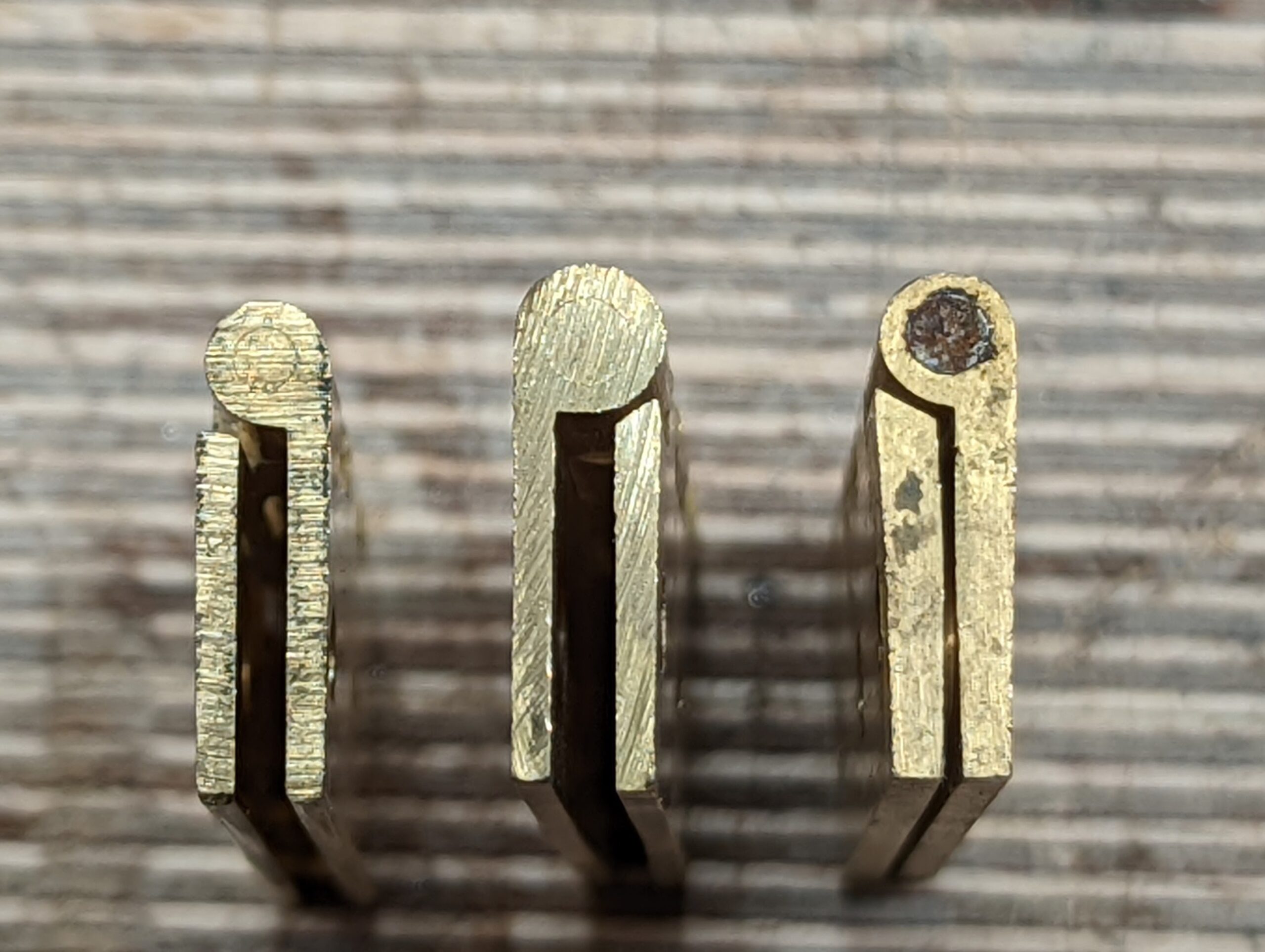
Hinges can be hit and miss without images, measurements and descriptions. Comparisons are shown below but what to look for can be difficult because sellers don't know what is critical to us makers. In the following image, you can see a comparison between one maker and another. The problem is they rarely give a maker's name because they could be made anywhere in the world. I have discussed hinges recently in another blog here but in this case, I am preparing you for the video series on making a drinks cabinet. Hardware can sometimes be problematic and eBay can be a solution.
The final purchases are the cabinet lock and trim. I wanted a lock that was recessed and had a more traditional key type with a keyhole and an escutcheon. To avoid recessing, you could also consider a face-fixed lock like the neat one below. I found a couple of nicely made ones, one that came in today and the other one comes in tomorrow. This one, a simple two-lever lock, needs a little refining to get rid of some of the machine marks but in brass that's just a few rubs on abrasive paper and buffing out on a leather strop.
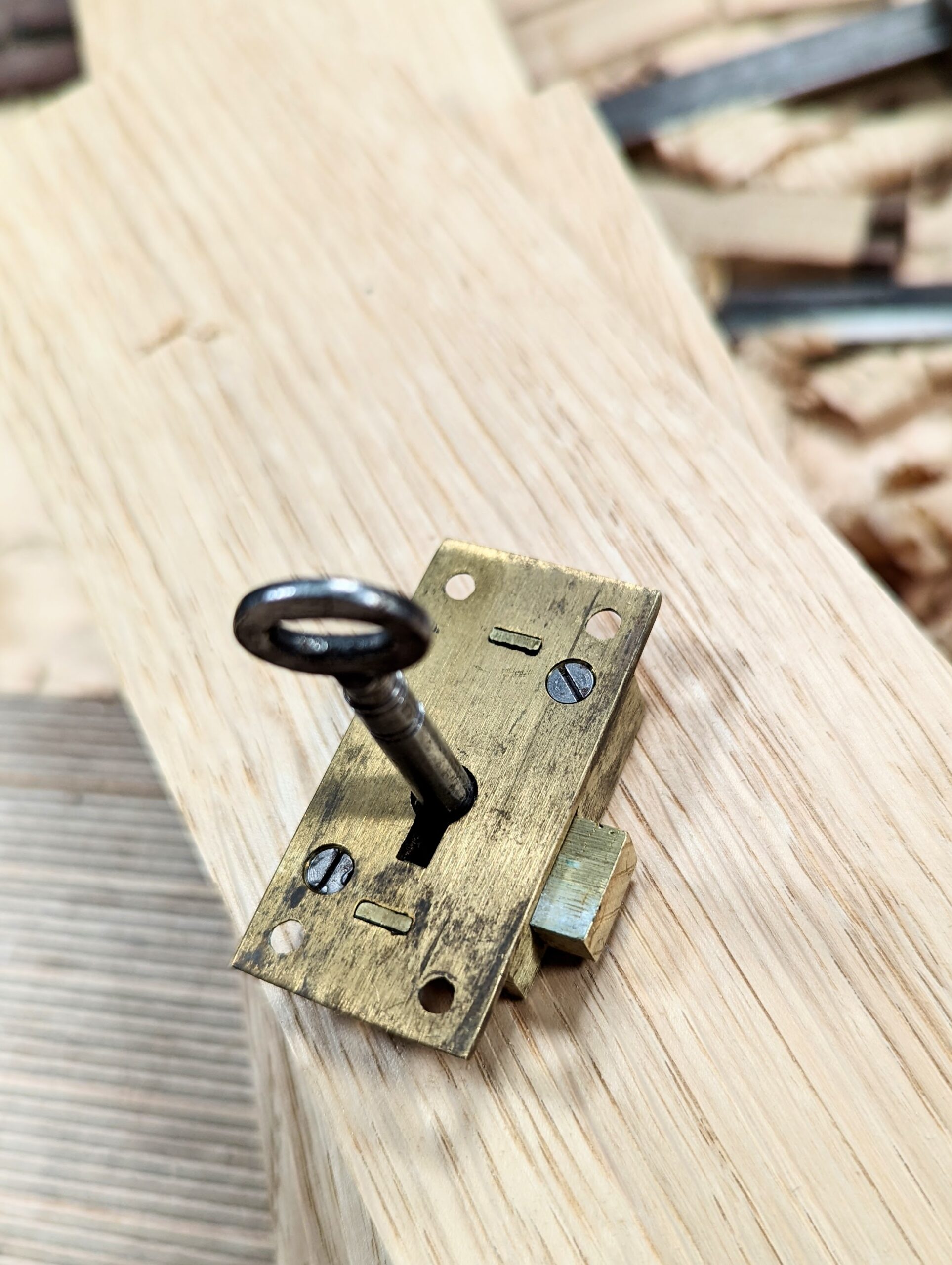
It's a new-old-stock version that was never installed and I paid £11. As in the days past, the plate is stamped 'Made in England' so made in the days before Britain yielded to its UK title, probably somewhere in the 1960s pre-EEC (European Economic Community before EU European Union) I'd guess.
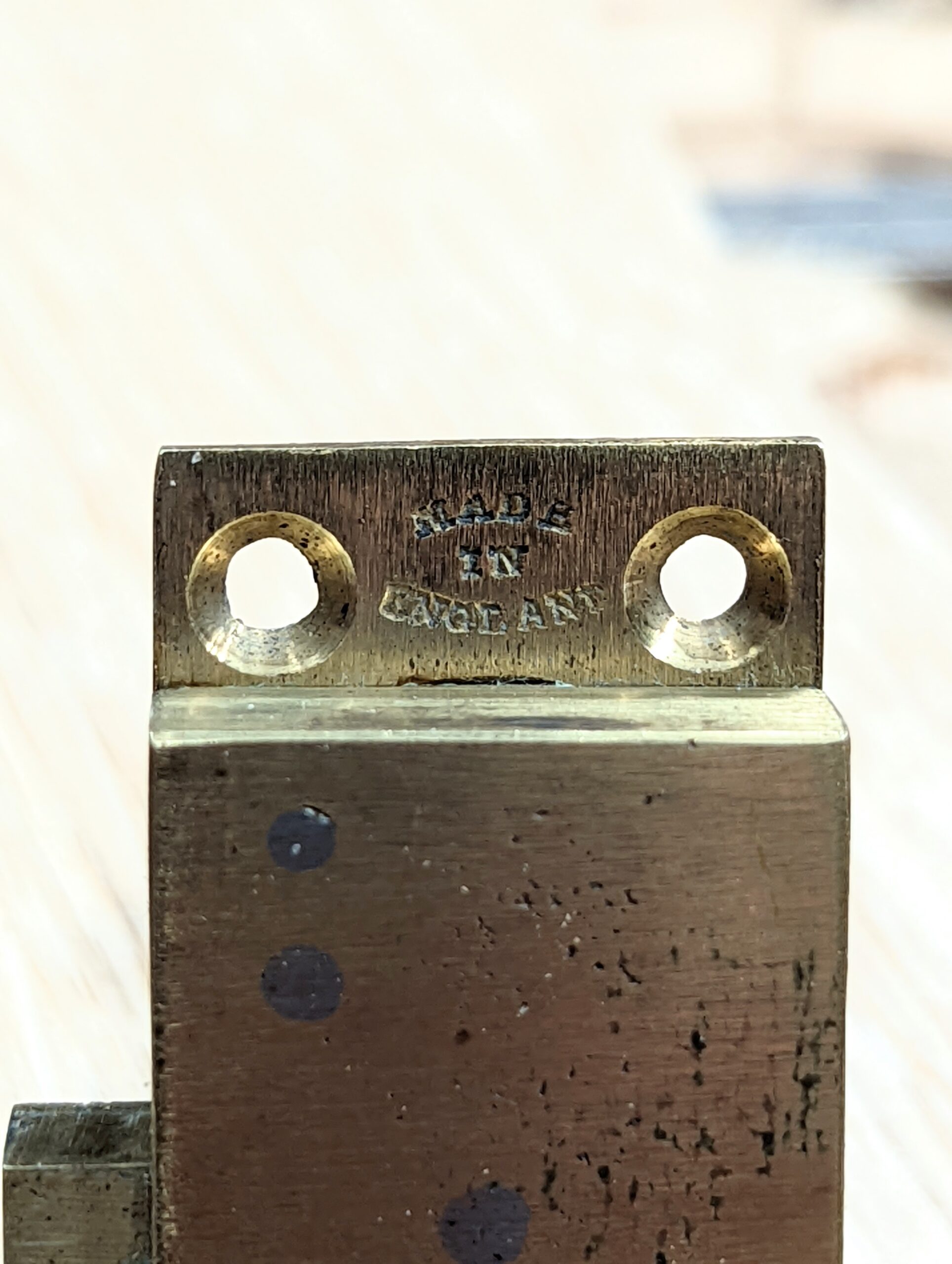
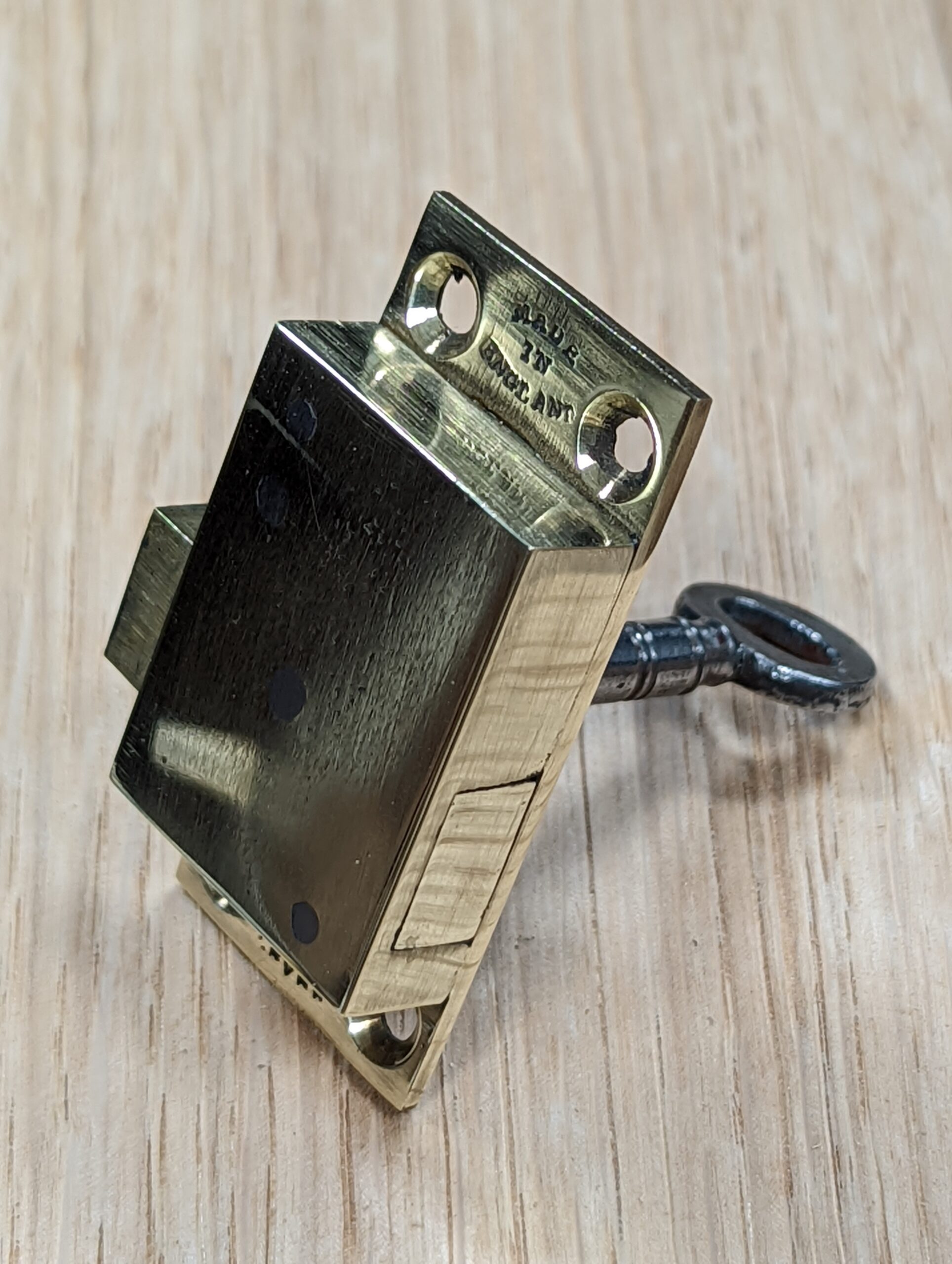
Update: Now it looks like this and it is ready for installation.
Comments ()