
1,000 homes 1,000 chair styles
Here's an experiment for you I think you might like. I have done this over many years, considered it carefully and it's never failed me yet. I wish that I had done this throughout my life but I have done it enough to know something you might not realise and may have never considered. When I am invited into someone's home, stay in a hotel, visit a cafe or a secondhand furniture shop, charity shop, flea market, etc. I make a mental note of the shape, size and styles of side chairs otherwise known as dining chairs, hall chairs, bedside chairs and so on. This led me to this simple conclusion: if you went into 1,000 different homes, places of business, etc, you would find an occasional chair looking like another you saw somewhere but, for the main part, it is more likely that you would see 1,000 different chair styles. I defy you to tell me a different story. I could raise the number to 10,000 and get 10,000 different styles. This is a remarkable phenomenon.
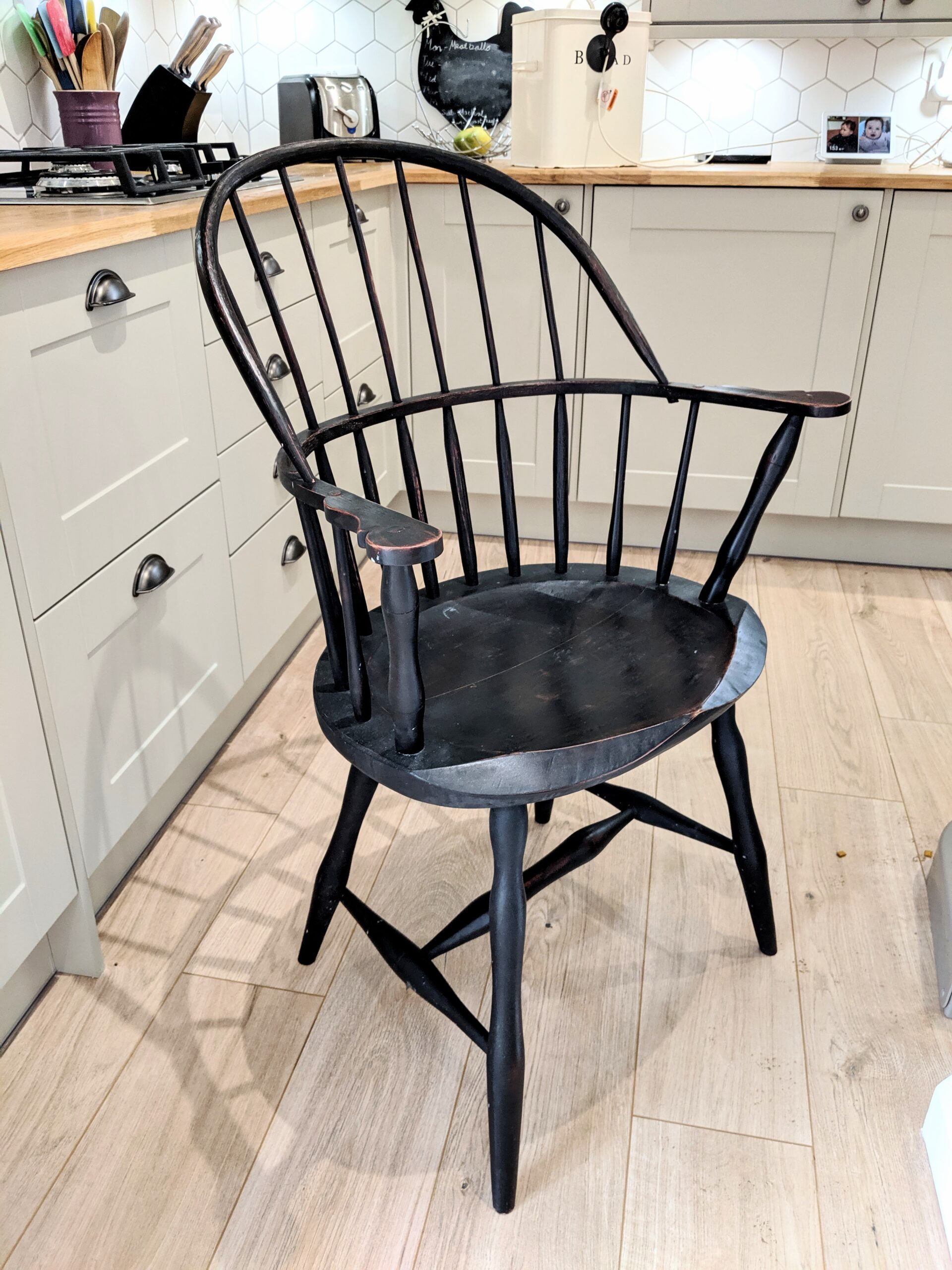
From Windsors to Clissets to Thonet's and Morris's, millions of different chairs and different styles throughout the world inspire our world of making today. Some have steam bent, heat bent, laminated, and moulded components. Metal, wood. plastic and composition materials ranging from bamboo resin bonded nutshells hybridise designs and much more. Chairs never cease to amaze me. But the one chair that does stand out from the rest and especially as a cafe chair is the world-famous Thonet chair of which I have written on and spoken of many times.
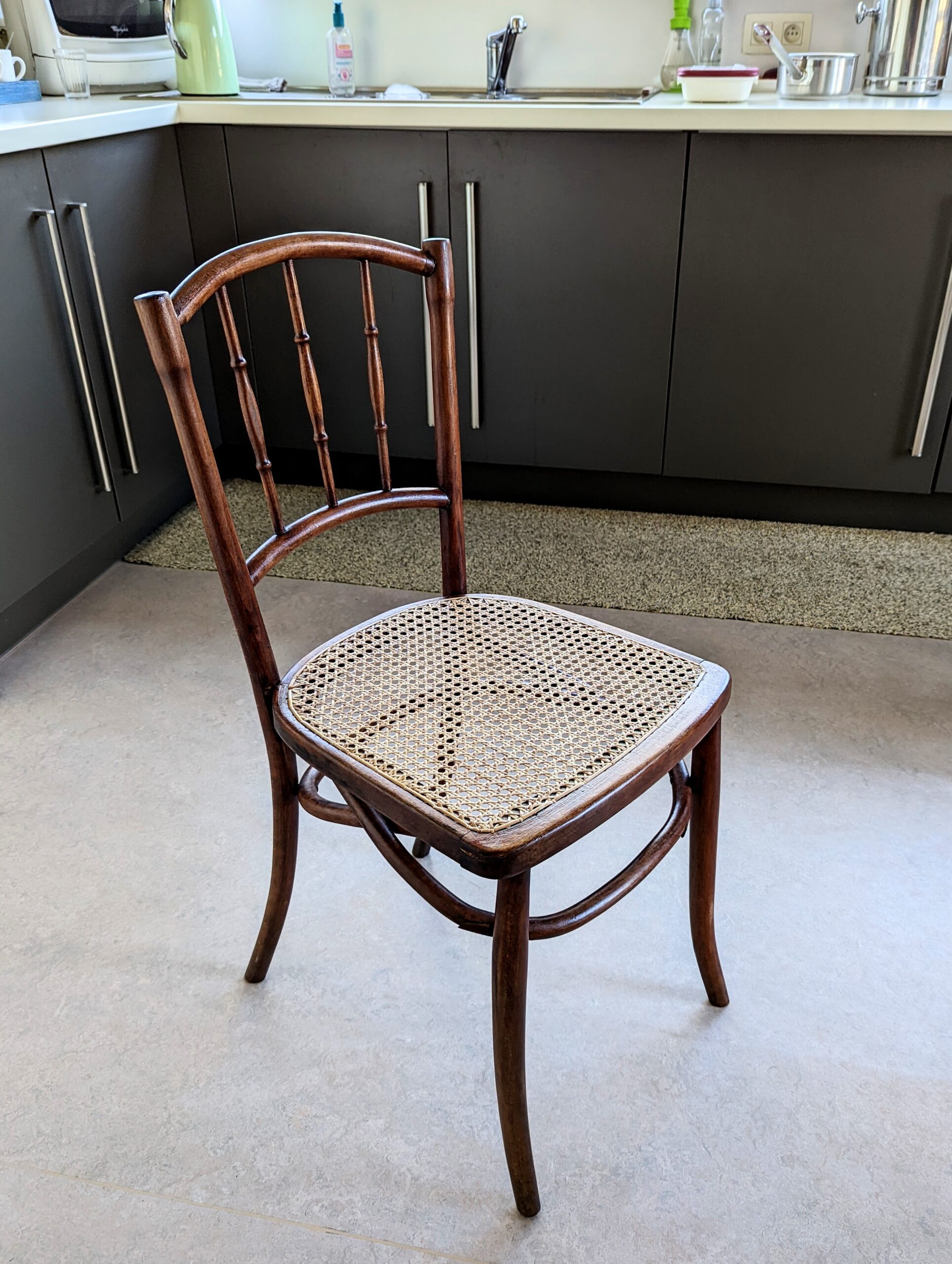
On a recent trip to visit my family in Belgium my cousin's dining chairs flowed gracefully, could be lifted singlehandedly by a young child and felt perfectly comfortable to sit in. This may seem like nothing but the woven seat had the exact amount of 'give' and no upholstered cushioning would improve the comfort.
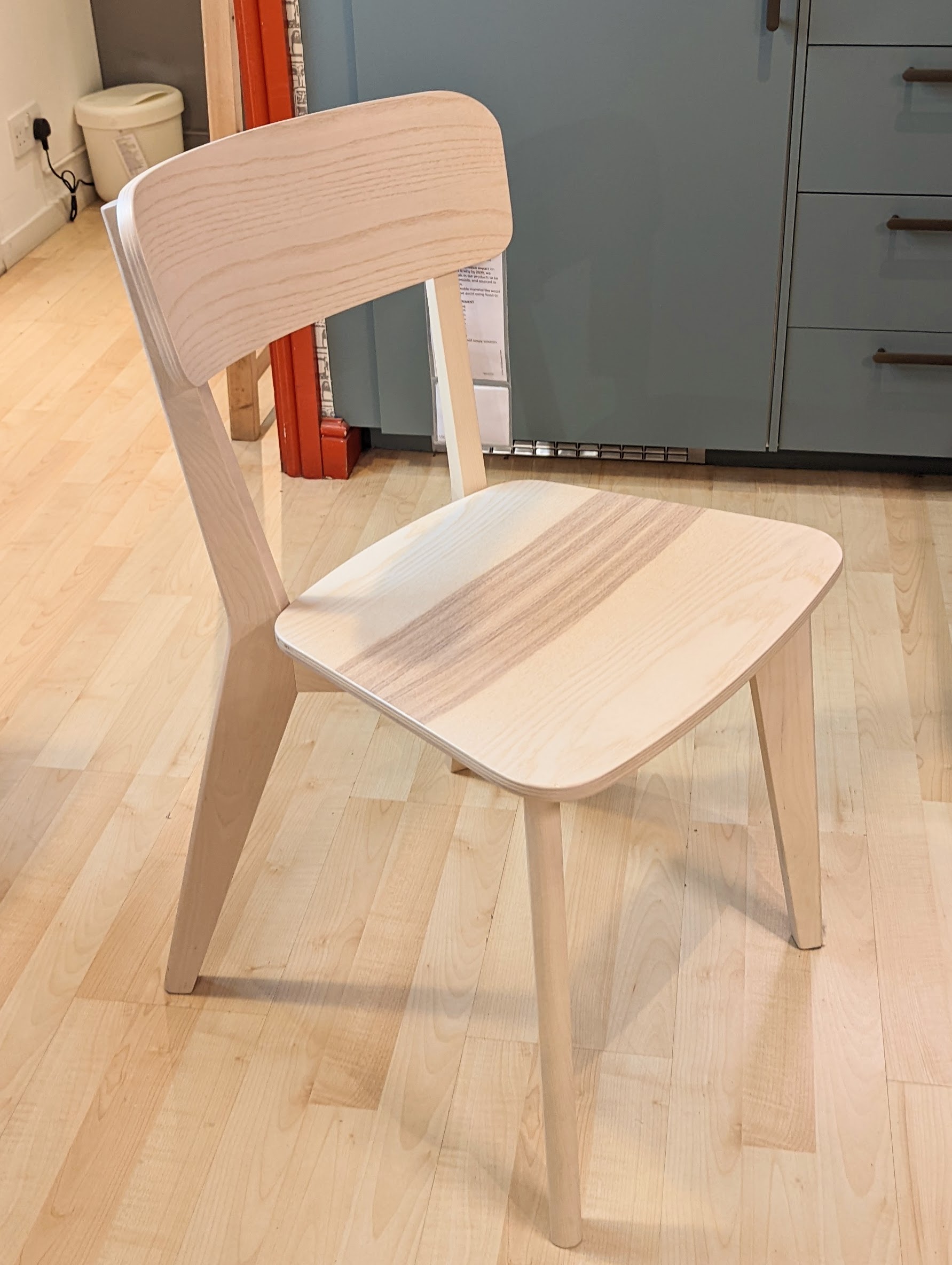
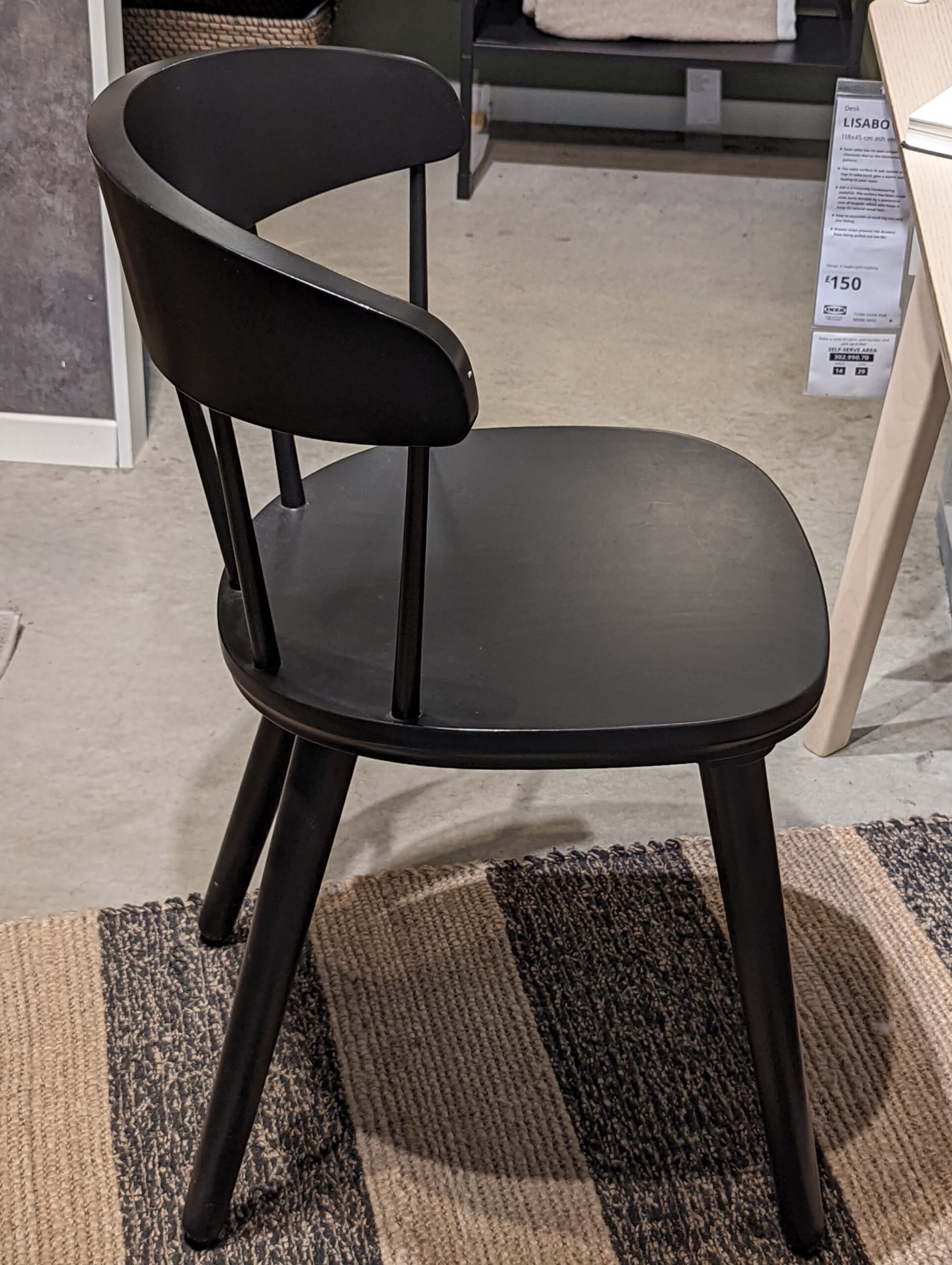
This is an IKEA chair in beech with laminated plywood for the back and seat. Hard to sit on but comfortable to lean back into. These backs to chairs are critical to comfort. Better too big a radius than too tight. It's a dining chair and not a slouch chair but it works. Below is another IKEA design. Suitable for a slighter person but not a broad-backed, wide-shouldered wide-chested one. The curve is way too tight for larger people. I felt like I was wedged in a barrel.
Below is a set of modern Thonet chairs favoured by many cafes for many a good reason. Possibly one of the most long-lasting of chairs for high-abuse settings which is cafes. Cafe chairs are pretty well occupied for eight hours a day seven days a week. They must be lightweight but extremely solid and safe, built to last, small in footprint and, dare I say it, reasonably comfortable. Michael Thonet designed the whole of it and in the face of rejection persevered to make his chair one of the single most long-lasting of chair designs through two centuries to date. Thonet chairs, old and new designs, are still being designed and made 200 years after Thonet developed his opening designs in his newly opened German-based workshops back in 1819. He premiered the designs at the first World Trade Fair or Great Exhibition at Crystal Palace here in London.
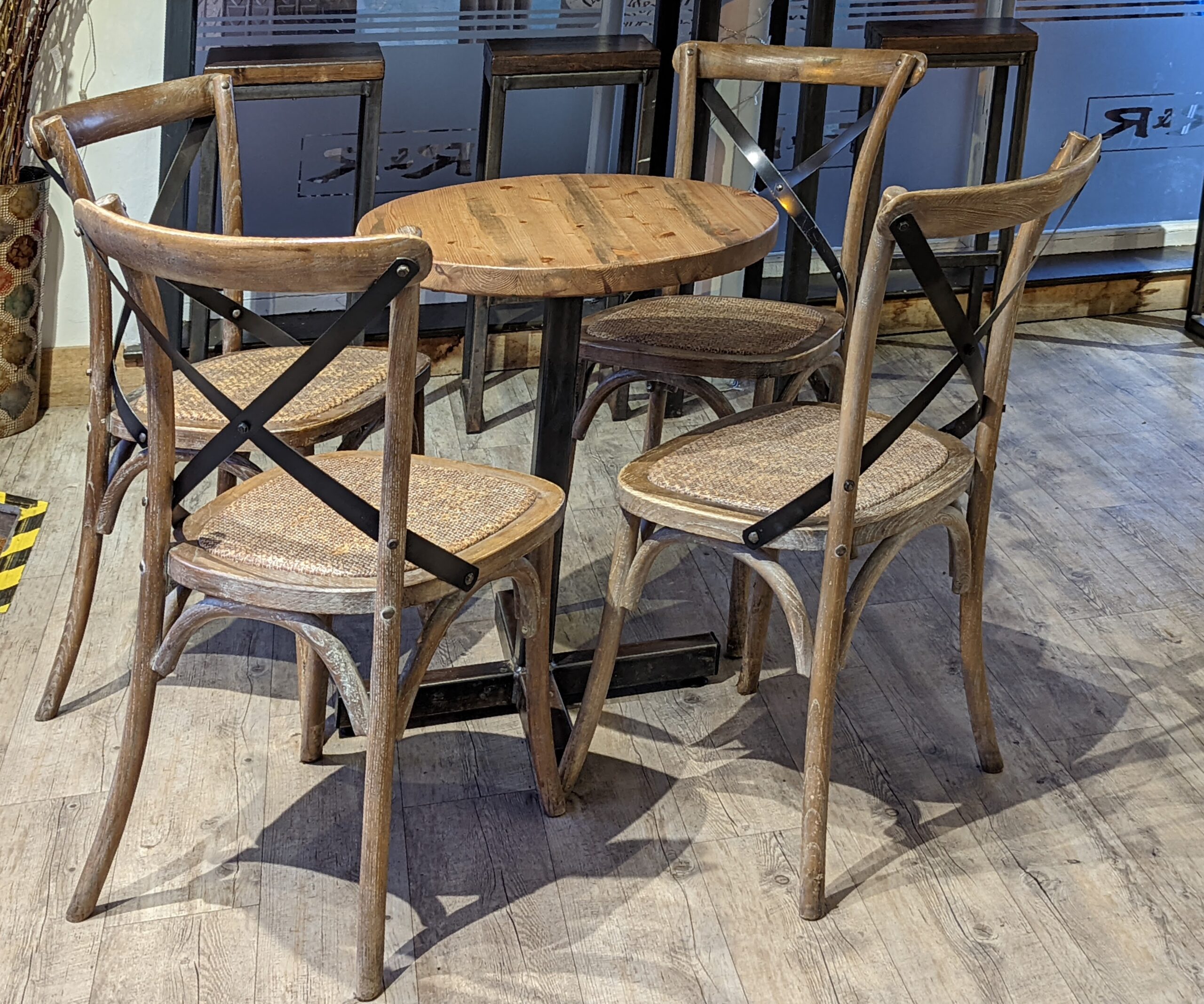


Cafe chairs host as many children as they do adults and a wider splay to the back legs reduces the risk of tipping if children kneel on the chair facing the back. this is a common design detail for cafe chairs and you will notice how often this element is repeated on different designs. Also, notice how much the back legs kick back at the base. All design safety elements built into chairs for use by the public.
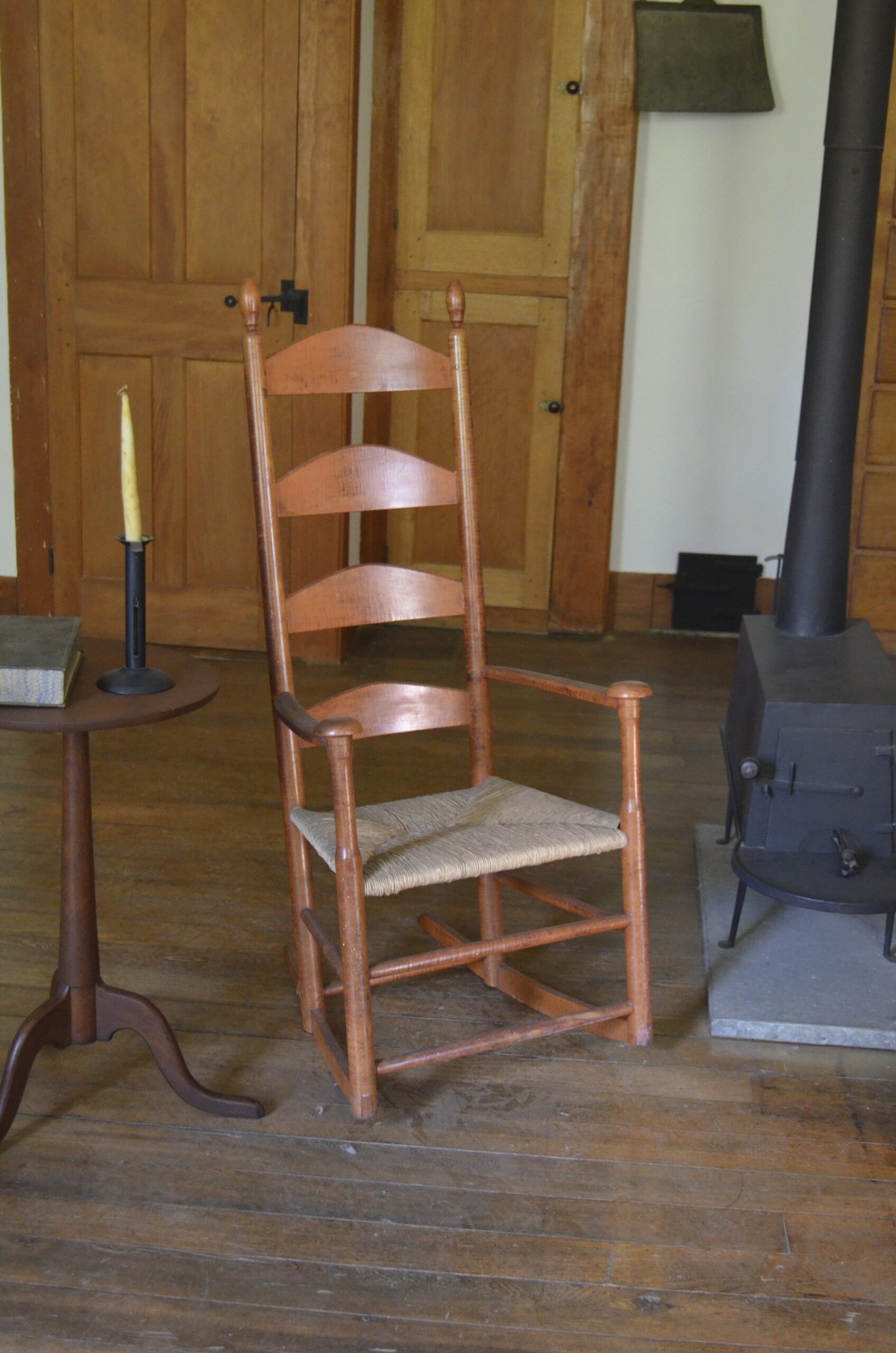
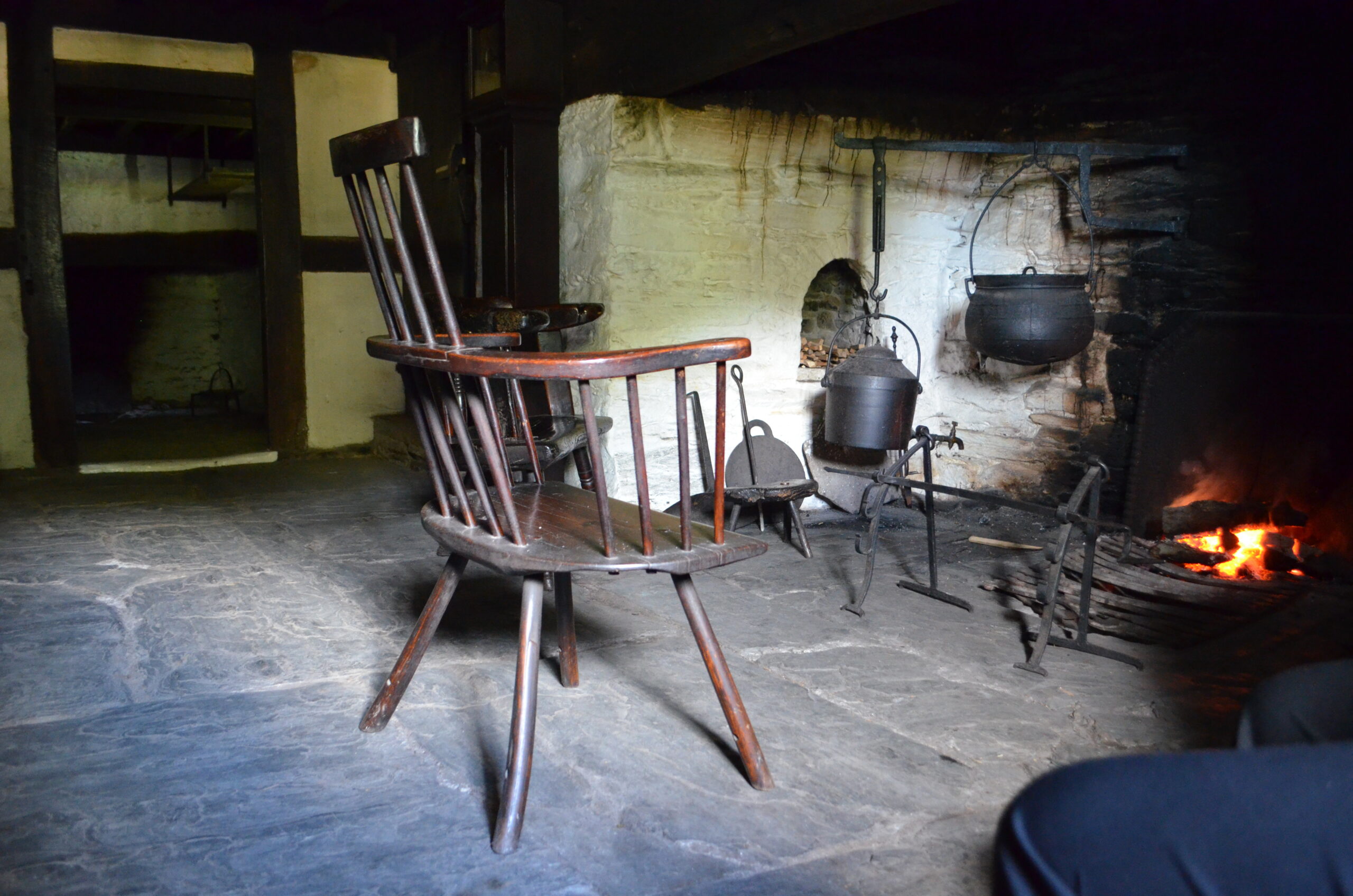
Chairs take on more shapes and connection methods than ever in the history of chairmaking. In times past chairs literally revolved around bored holes and round inserts erroneously called tenons but simple spokes and rails tapered to fit the holes and with no shoulders particularly. It was fast and efficient to make chairs this way and could be accomplished by rural makers working in woodlands, directly at the source. By heating the tenons to dry the spindle insert ends, the moisture was removed to the greatest degree and thereby minimise any shrinkage leading to loose rails. The legs being of greener stock then shrank onto the tenons and thereby tightened to them. Of course, the age of the chair bodger ultimately became redundant and chairs were imported as the Industrial Revolution created more and more specialisation. The chairmaking companies of London also yielded to imports from Eastern European makers in places such as Romania.
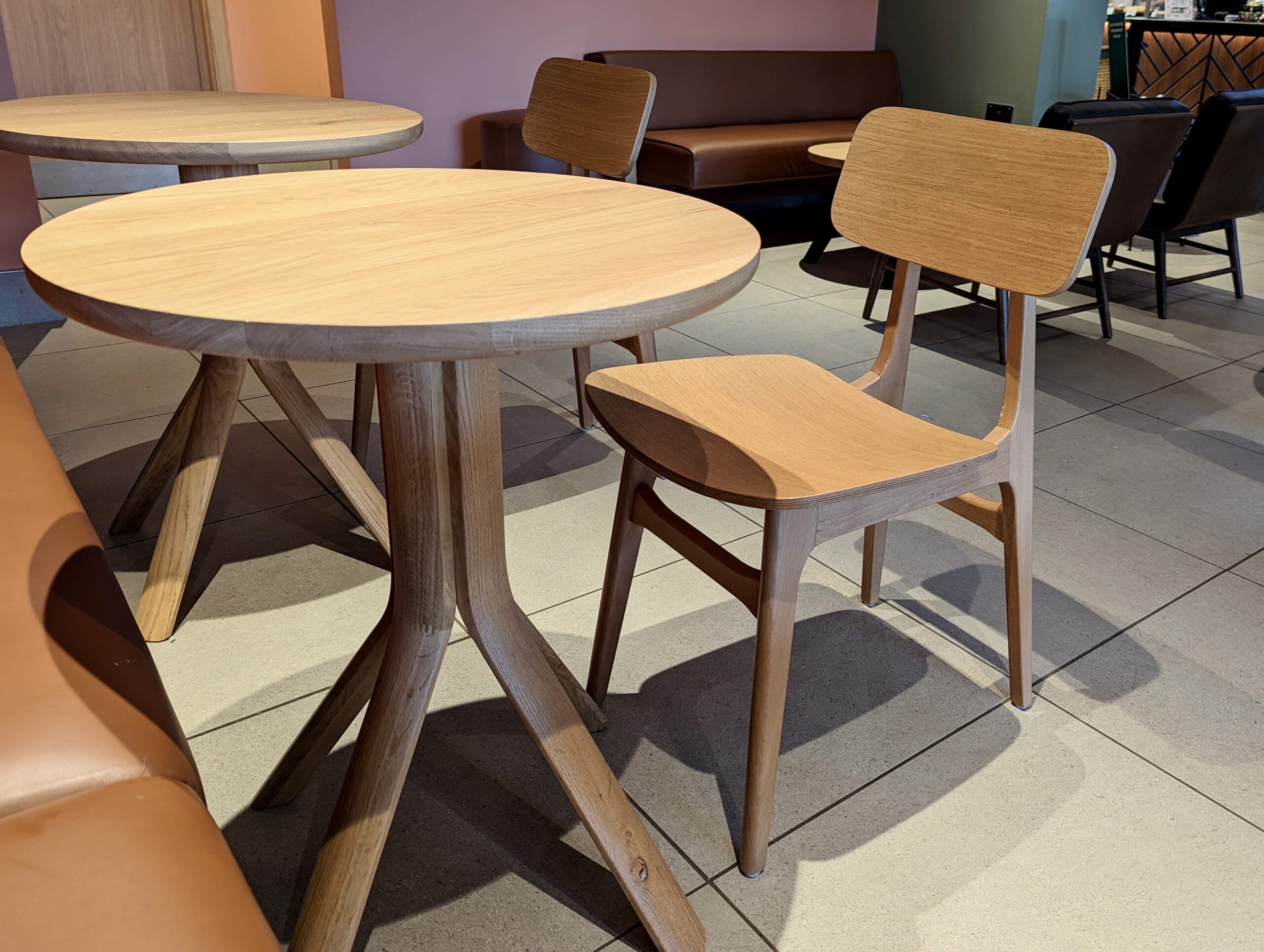
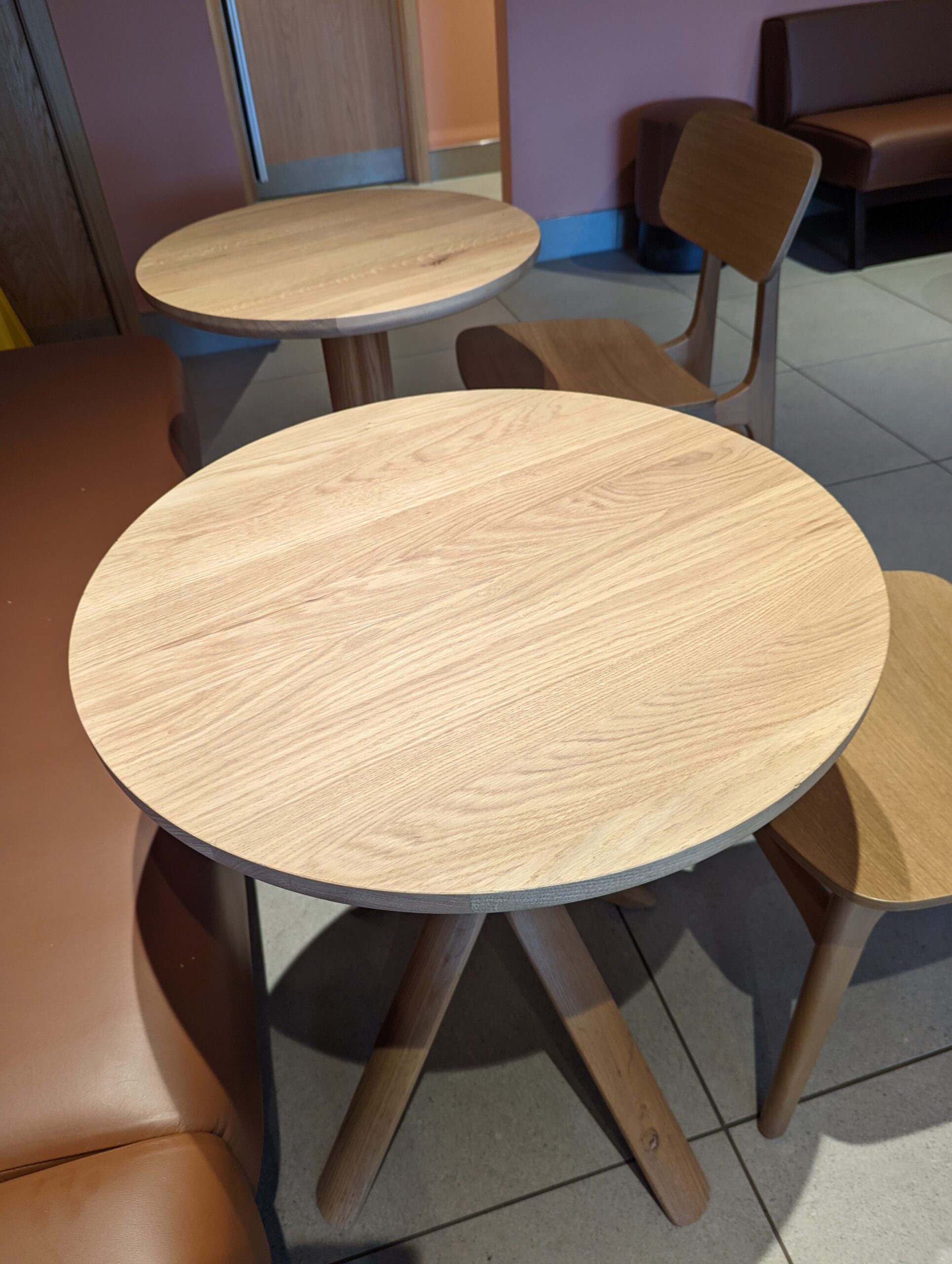
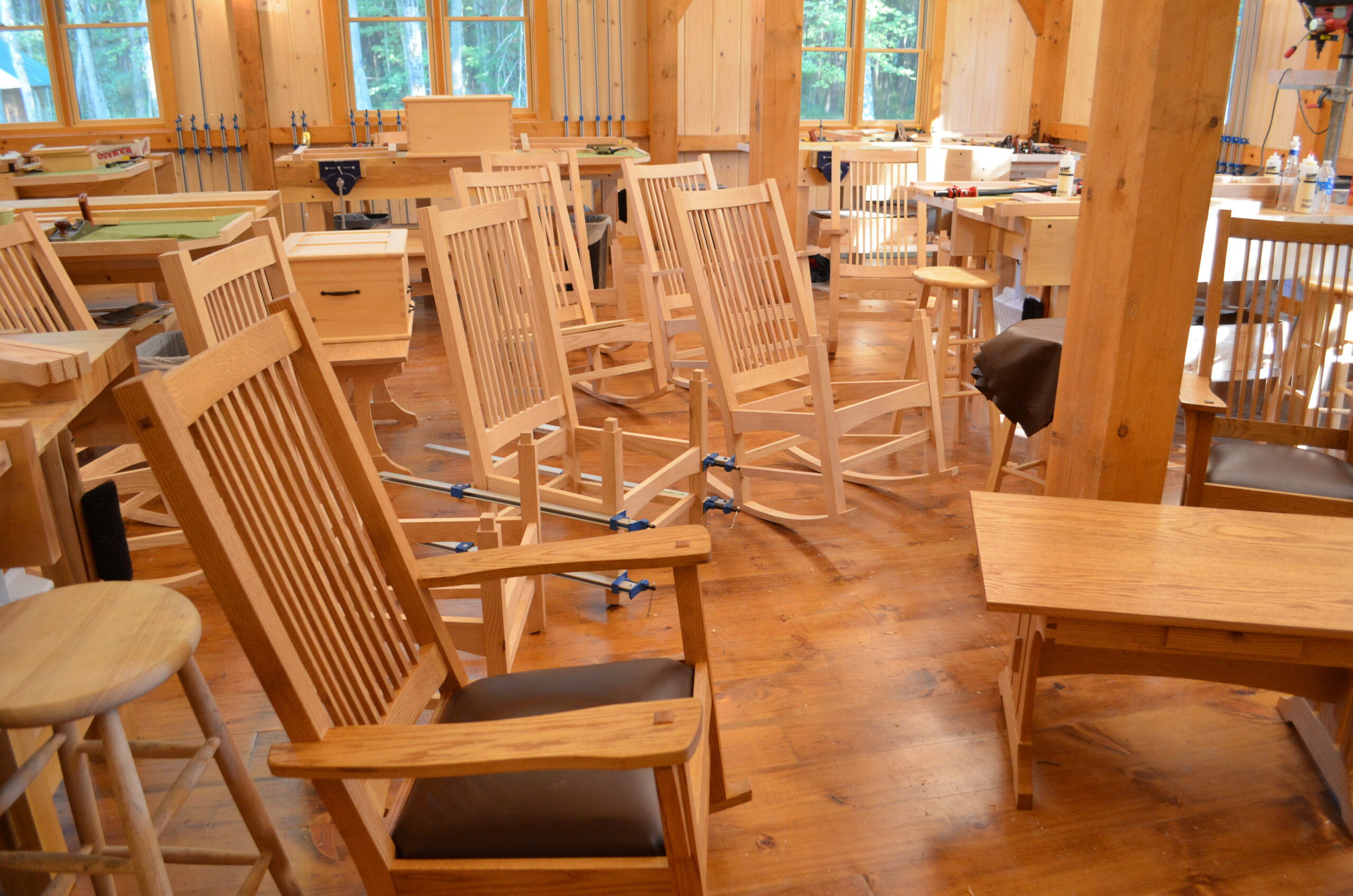
Today, chairmaking has indeed risen to new heights. Designing and then making a chair for large chain coffee houses like Starbucks and Costa can take a designer and maker and make him or her a millionaire-maker overnight. Chairs such as these can be manufactured in a matter of minutes once the sophisticated equipment is sourced to make it. Barely touched by human hand, controlled environments pump out components with the finish on and ready for robotic assembly. manufacturers can supply a finished chair with upholstery on for a fraction of the price we might buy the wood for. Yes is demoralising, but then there are still people who will buy a fairly simple design taking three days to make that will indeed pay princely some for anything handmade and especially if it is a one-of-a-kind design. My rocking chair here sold mostly for $6,500simply because it could not be found elsewhere. Studio makers with an established reputation can sell their wares for much more than I might but I never entered that arena.
The video series I recently completed for Sellers' Home was a challenge. I did not want to copy any other work but then of course we are all influenced by what we see in one way or another.
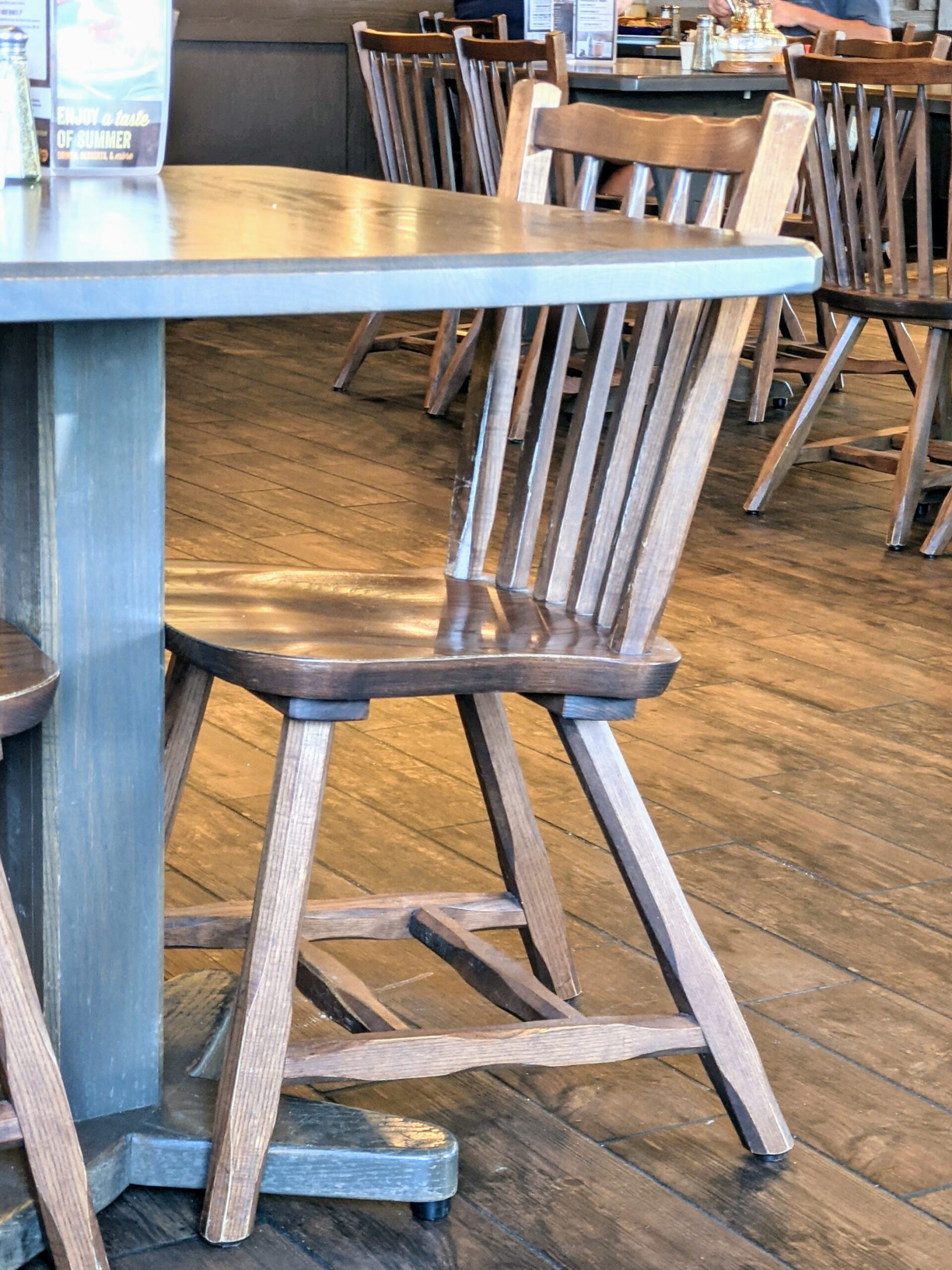
Anyone familiar with the Cracker Barrel chain of restaurants in the USA will know this dining chair that has been the mainstay of seating in their cafes for at least three decades and more. It's robust and solid as well as comfortable. "Why change what ain't broke?" It has the country appeal of Cracker Barrel, goes with the "pancakes 'n' grits" and also with the catfish suppers, iced tea or coffee and also with the wall decorations too.
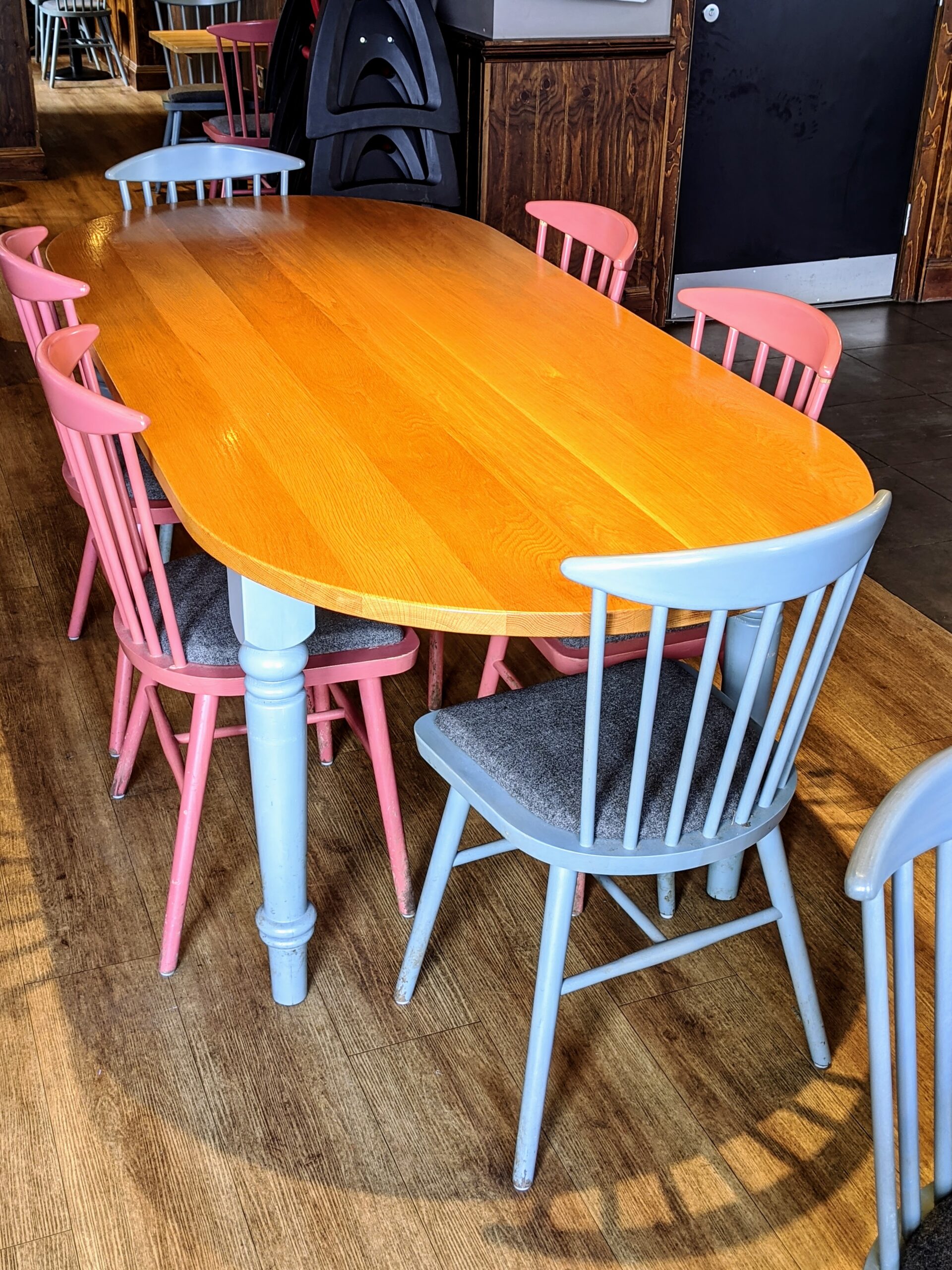
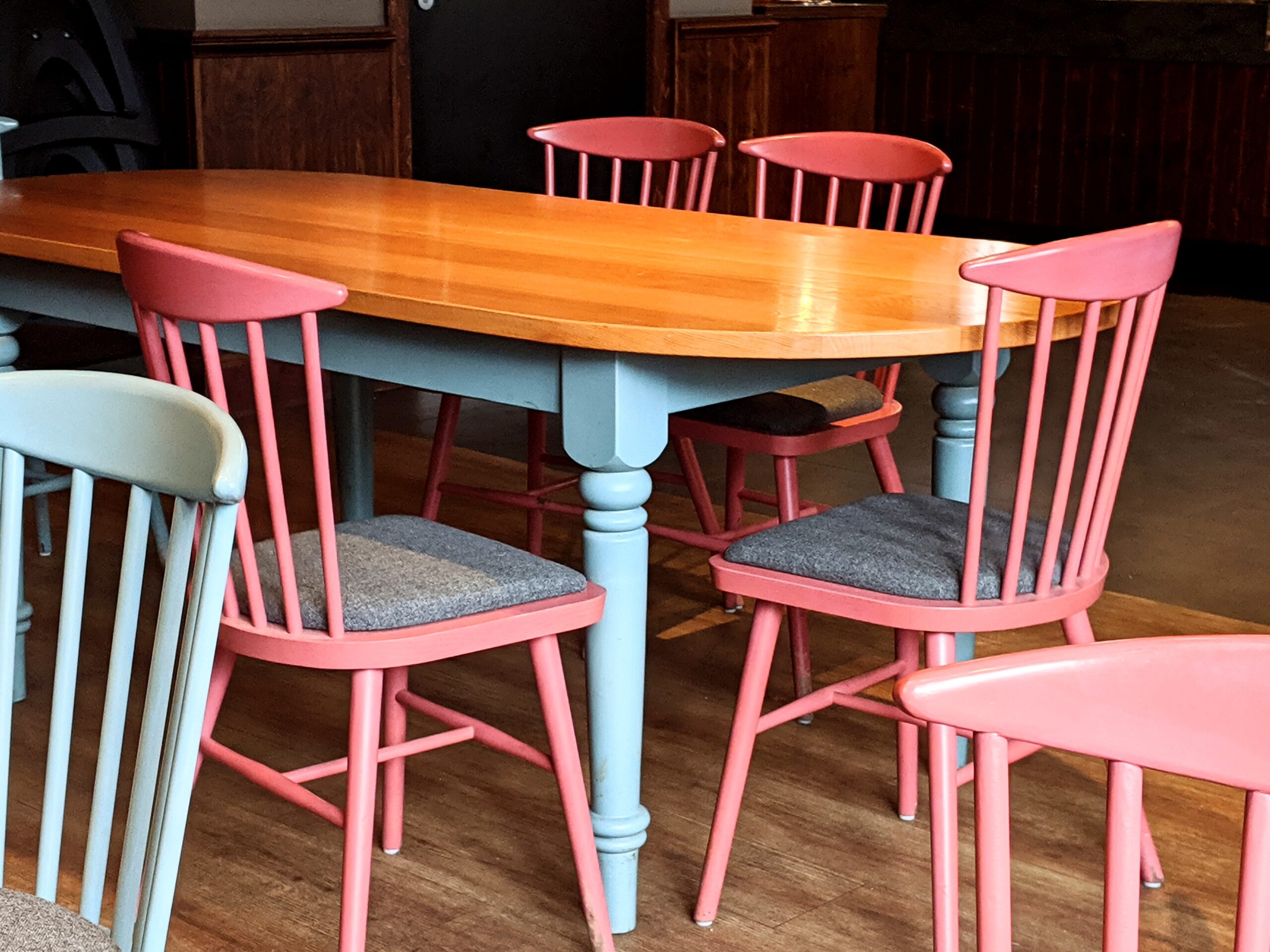
Above and below are an older style of chair design in the Costa chain of coffee houses. This design has remained unchanged for a hundred years of mass-production chairs.
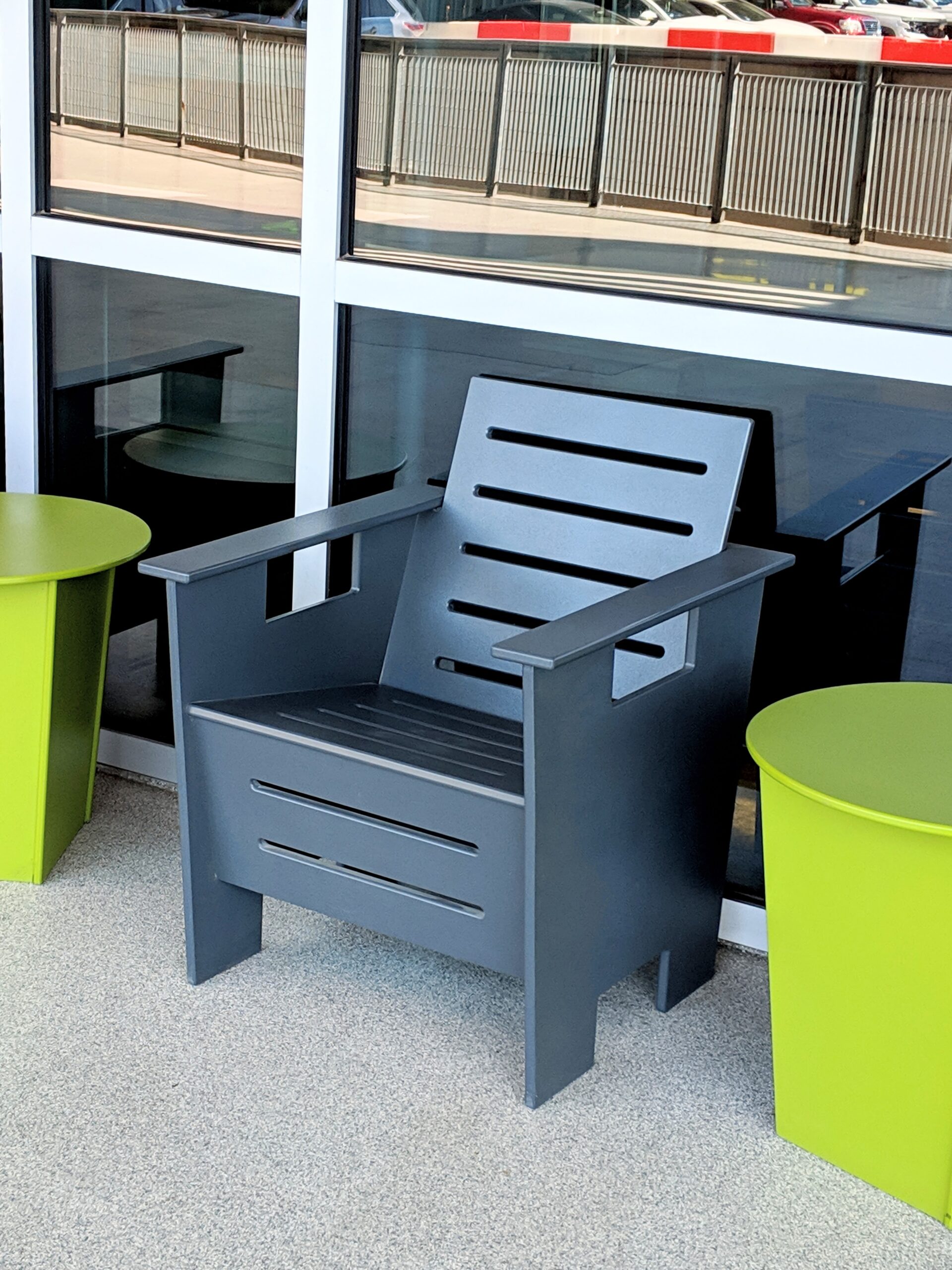
A plywood airport chair in the USA . . .
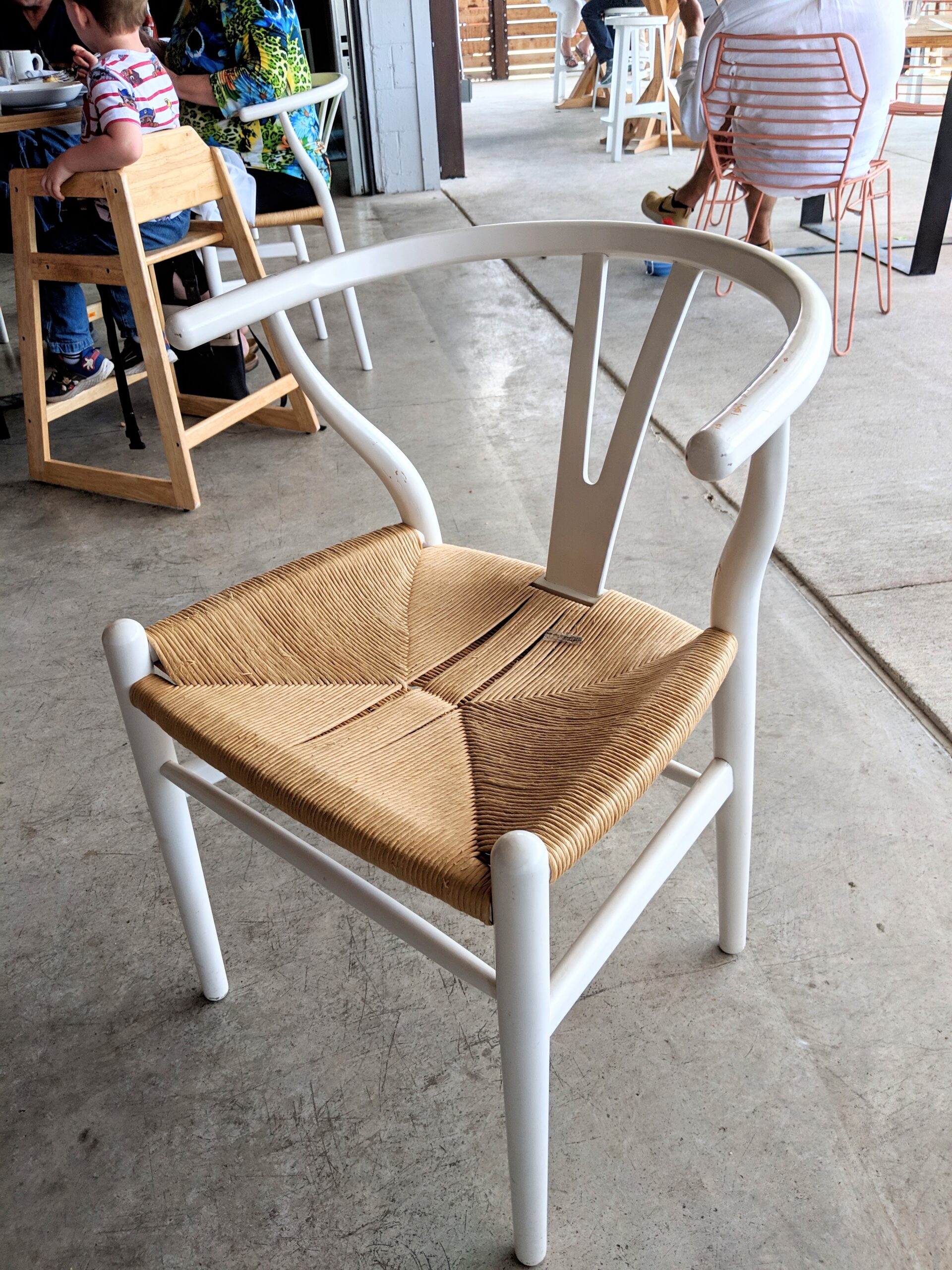
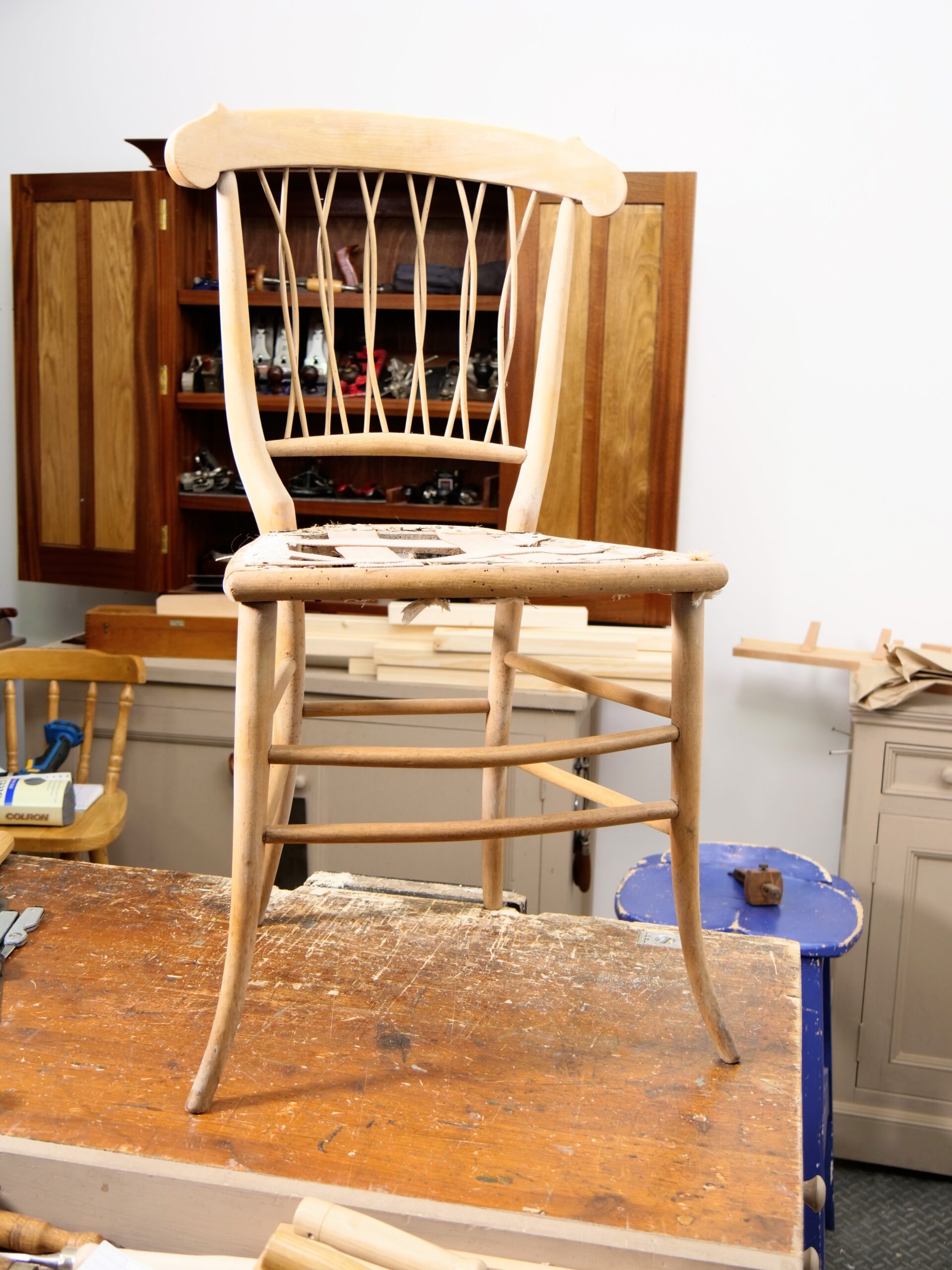
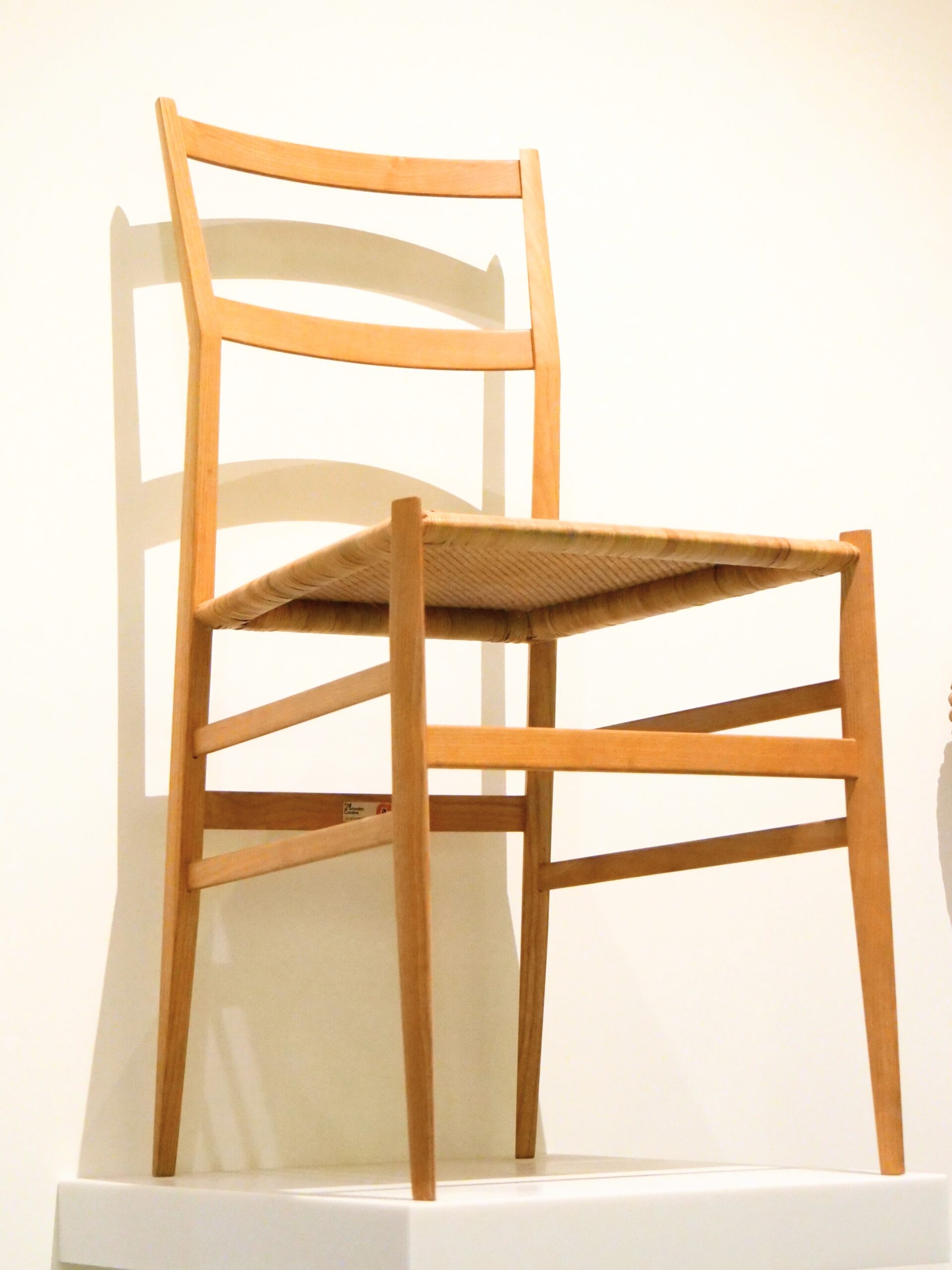
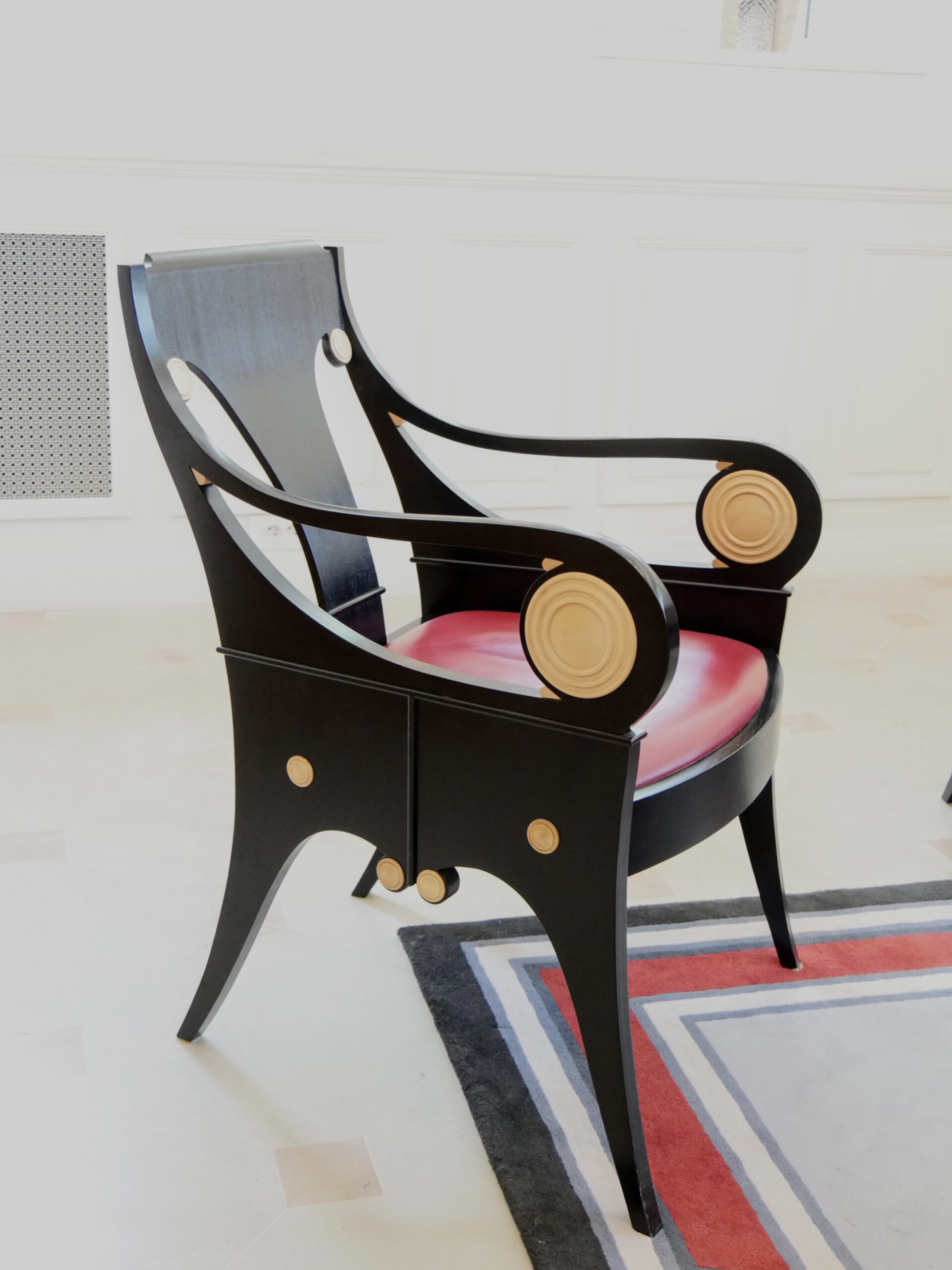
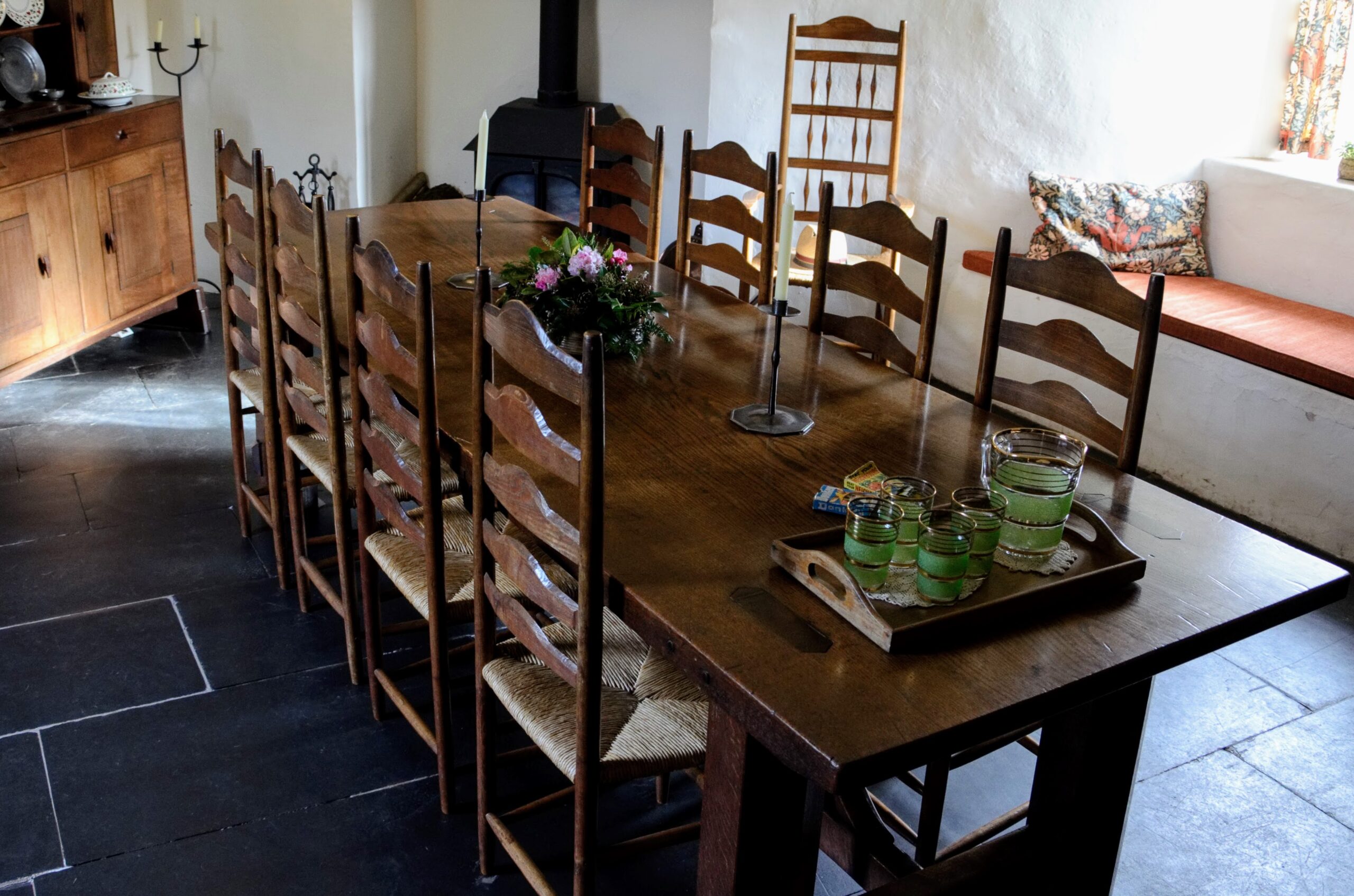
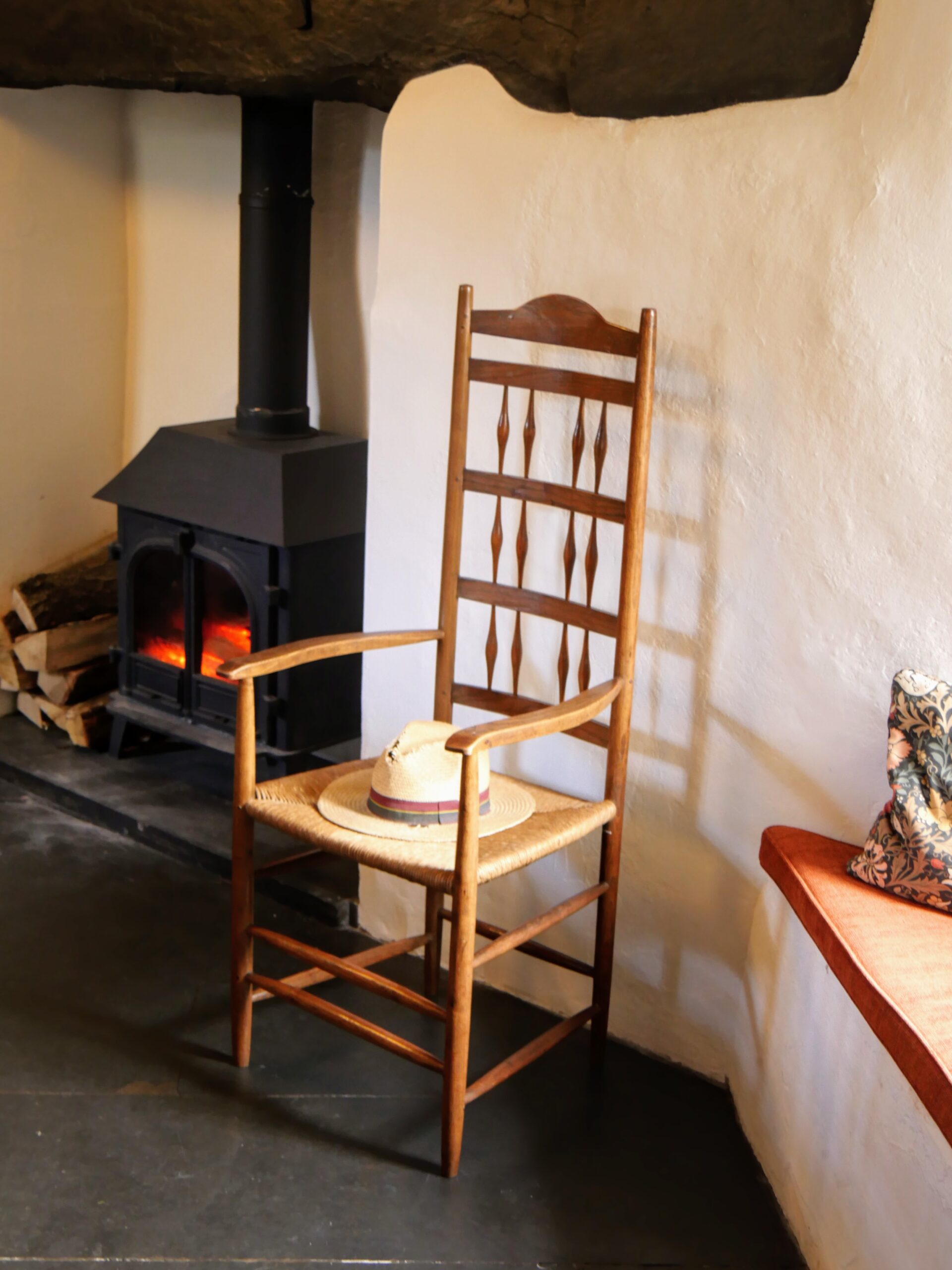
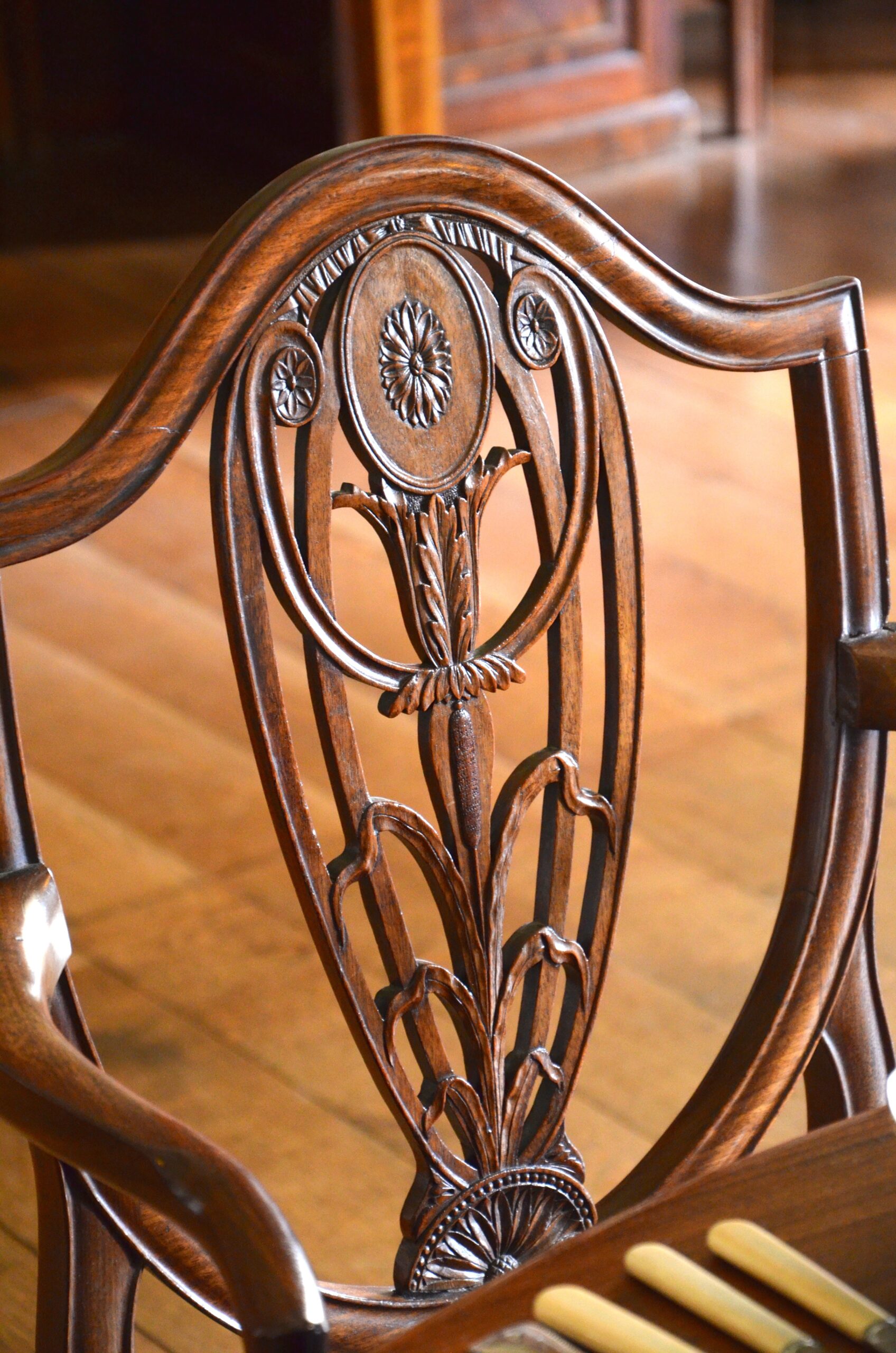
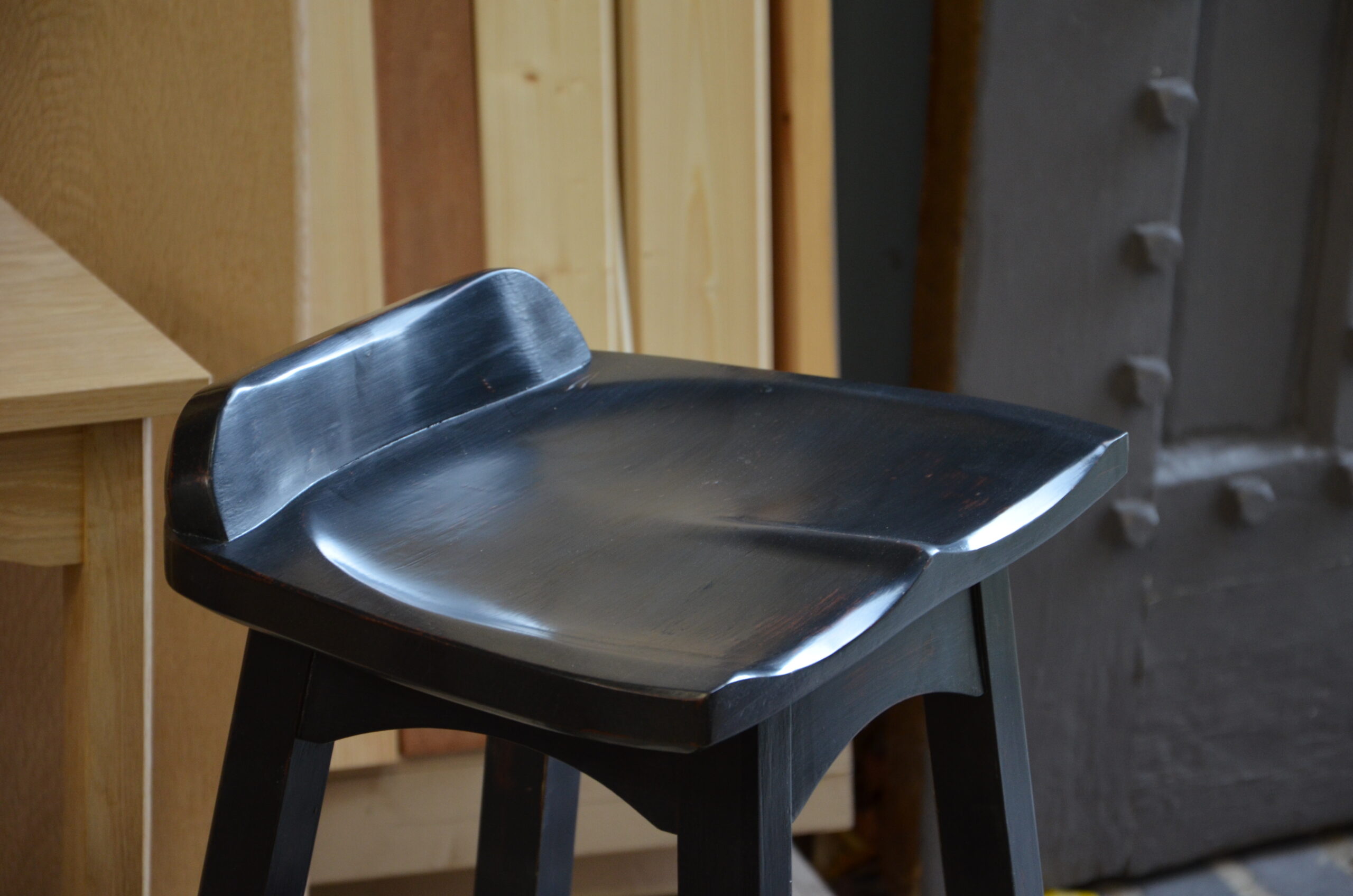
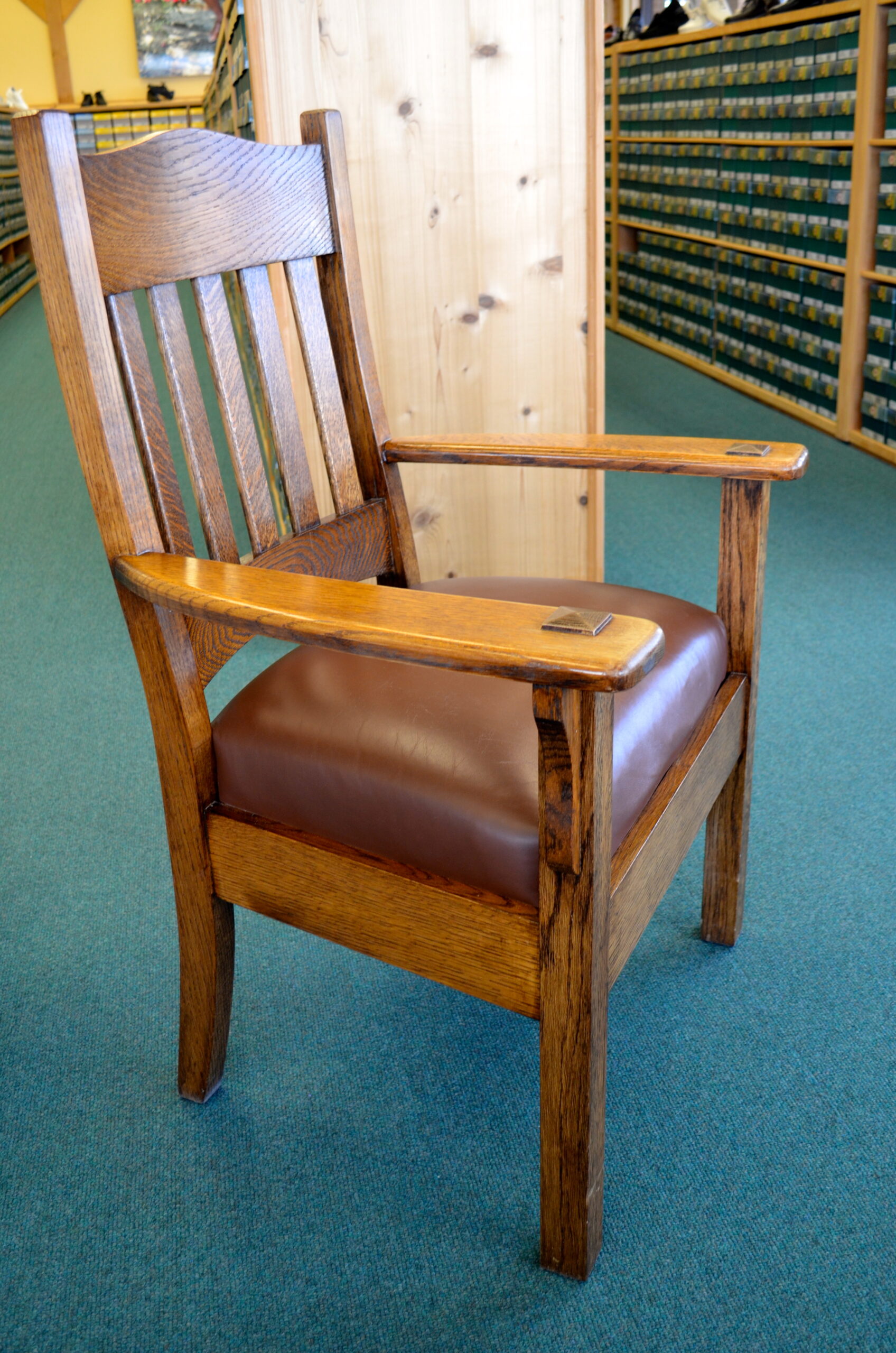
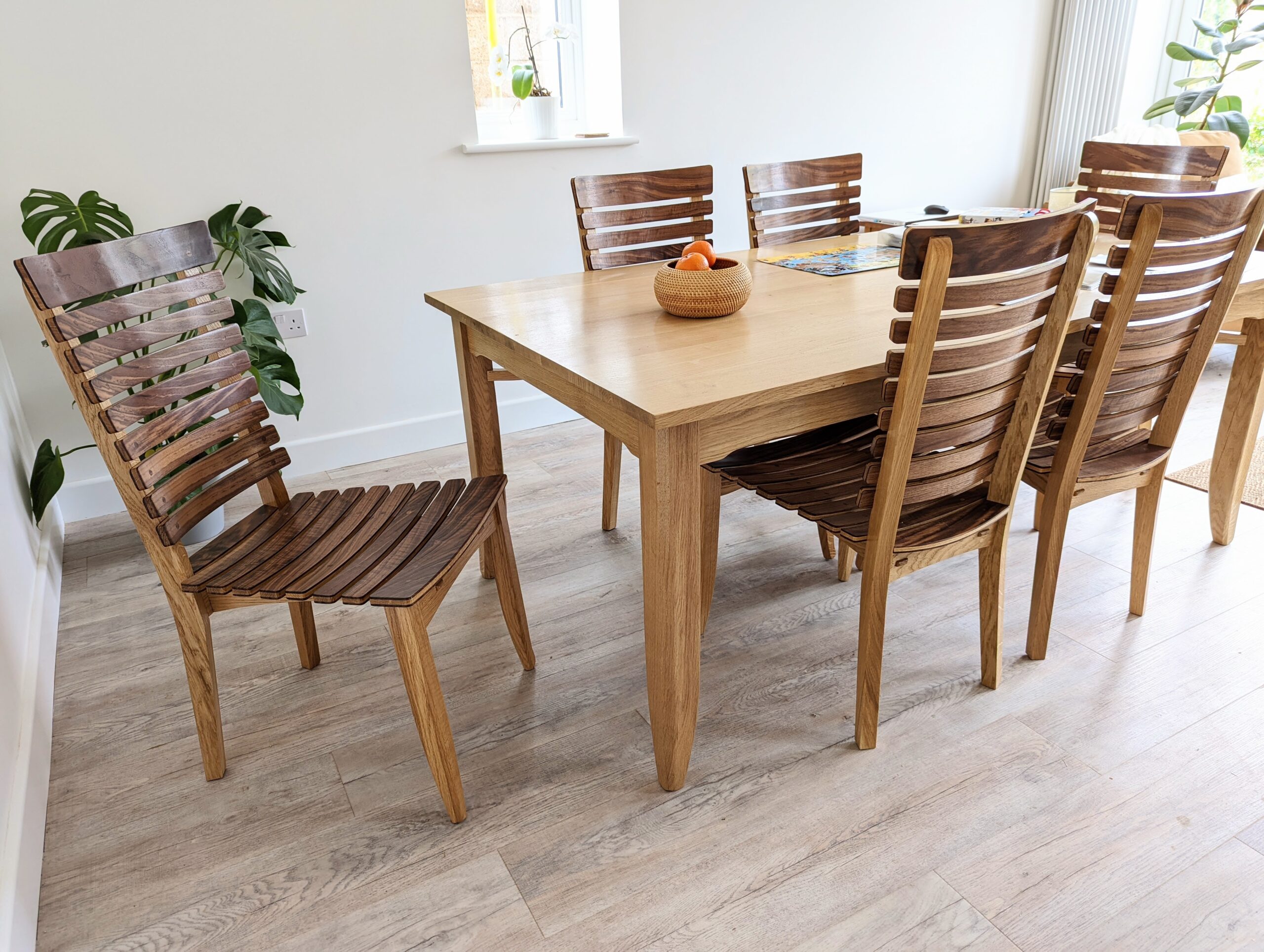
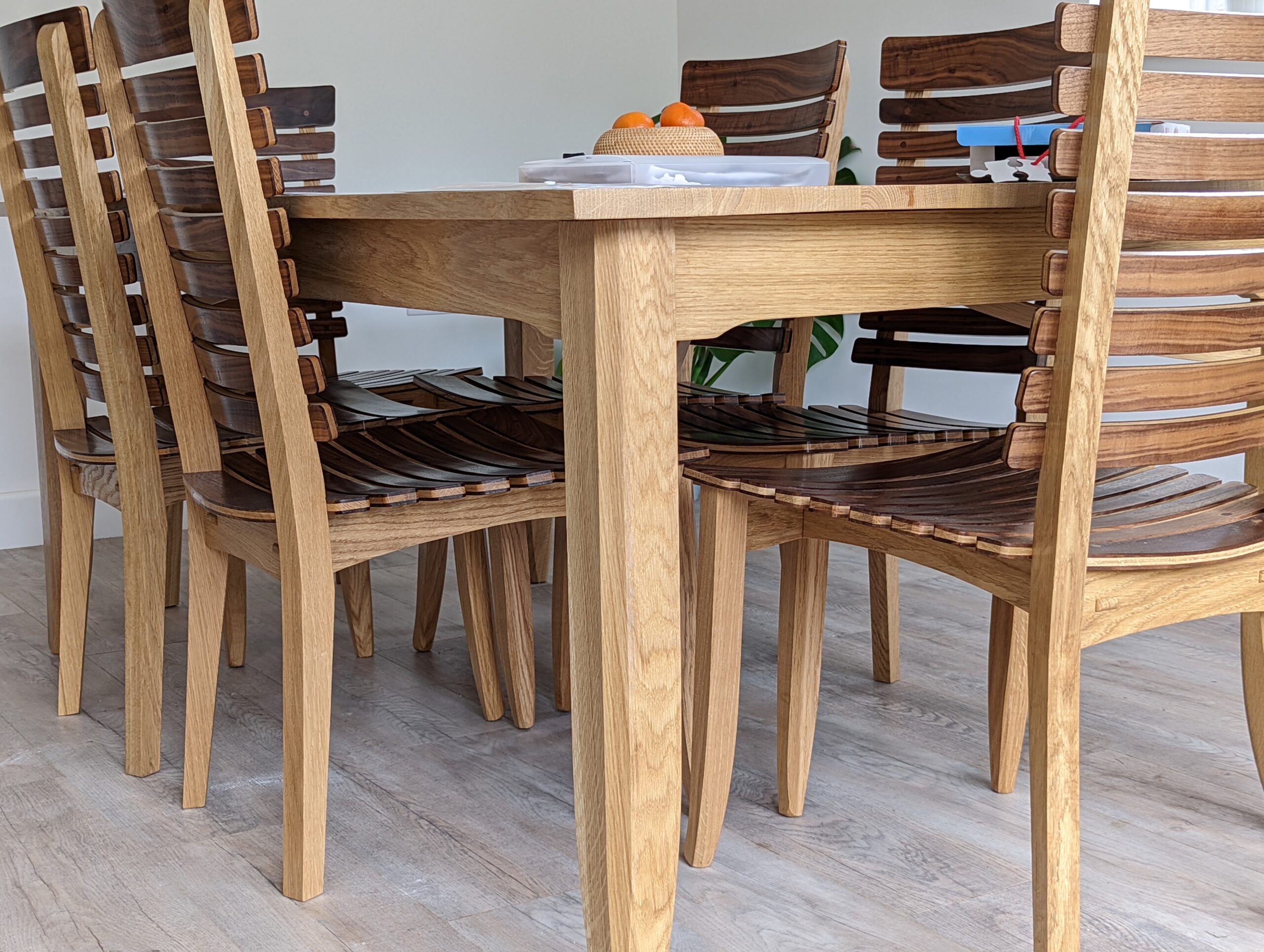
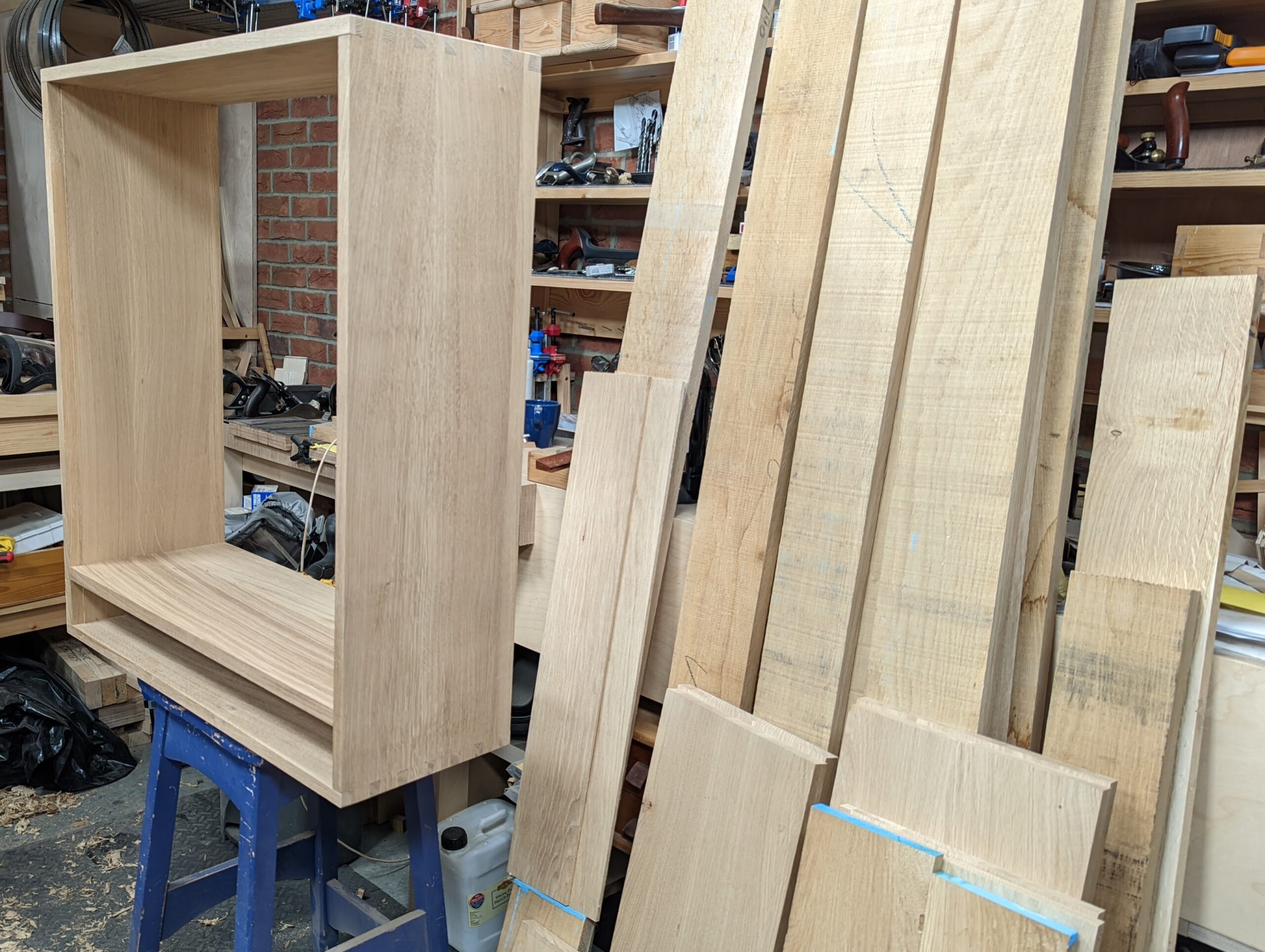
And last, but not by any means least, there is the Paul Sellers' latest design for Seller's Home dining which is currently featuring on woodworkingmasterclasses.com. The table and chairs are my designs and currently, I am working on an additional piece which is a wall-hung drinks cabinet, also in oak.
Comments ()