
Never Sure . . .
. . . But Maybe Ever-more Sure
In the beginning of my woodworking, I was never really sure in my working that the outcome would match the expectation and less so the demand of a boss. The chisel's twist from the line, an awkward blow that glanced off sideways somehow. These all gave an outcome that sometimes offered no correction. It still happens but maybe once a month rather than once a day or once a minute. I'm never really sure if it's some kind of compromise but I hear it all the more that, "It's knowing how to fix your mistakes that makes you a better woodworker." Of course, that's not true at all. We all make mistakes and one way or another a mistake almost always needs fixing, but it's more anticipating what can go wrong in the moment and then well ahead of time and taking the steps to prevent such things that maximises our competence, makes us productive and waste less time. Fixing mistakes takes time, often more time than getting it right the first time or even replacing the mistaken work and doing it over afresh, but wood splits when and where we don't want it to, and planes, spokeshaves and scrapers catch slap bang in the mid-range of what will be seen.
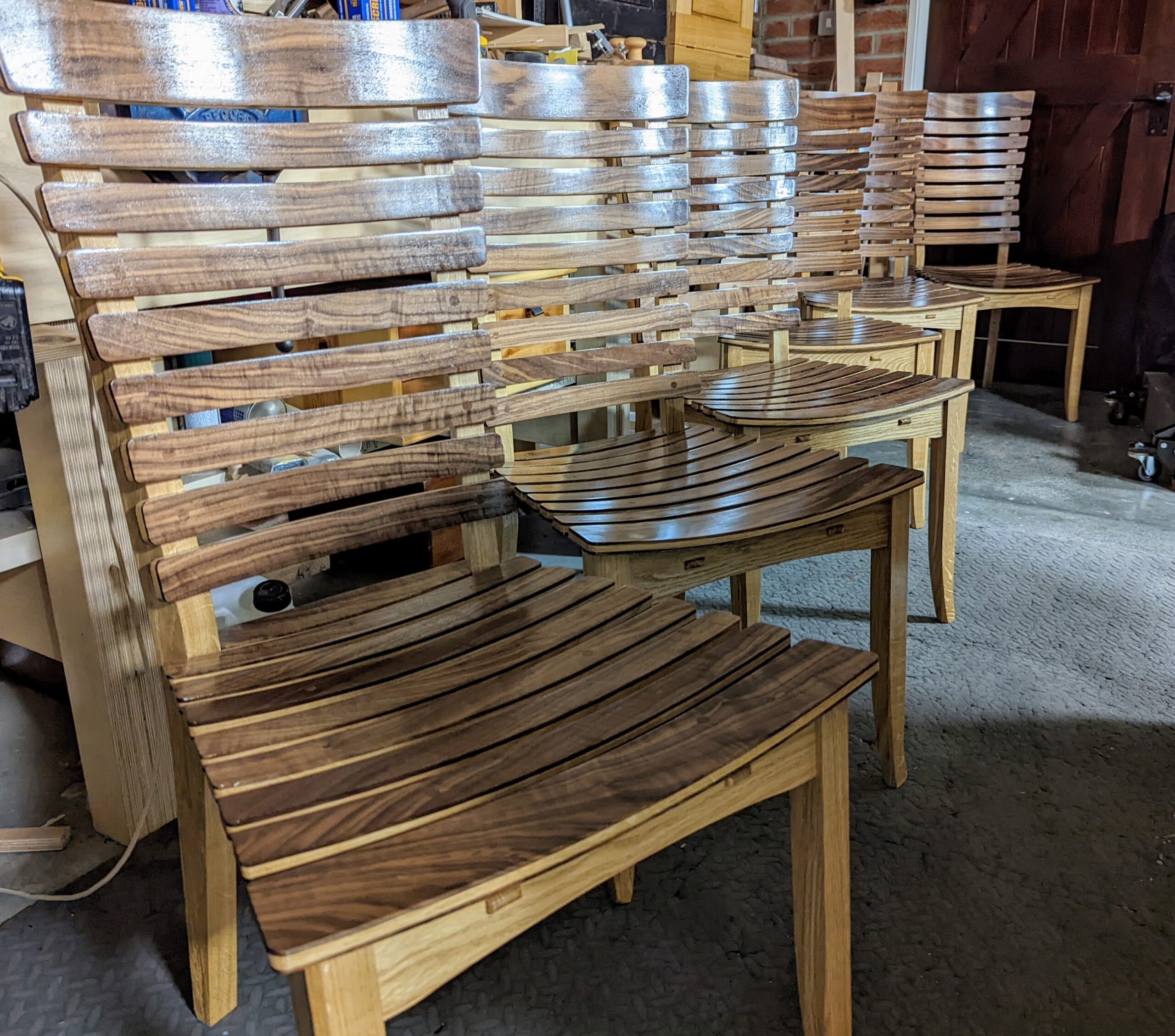
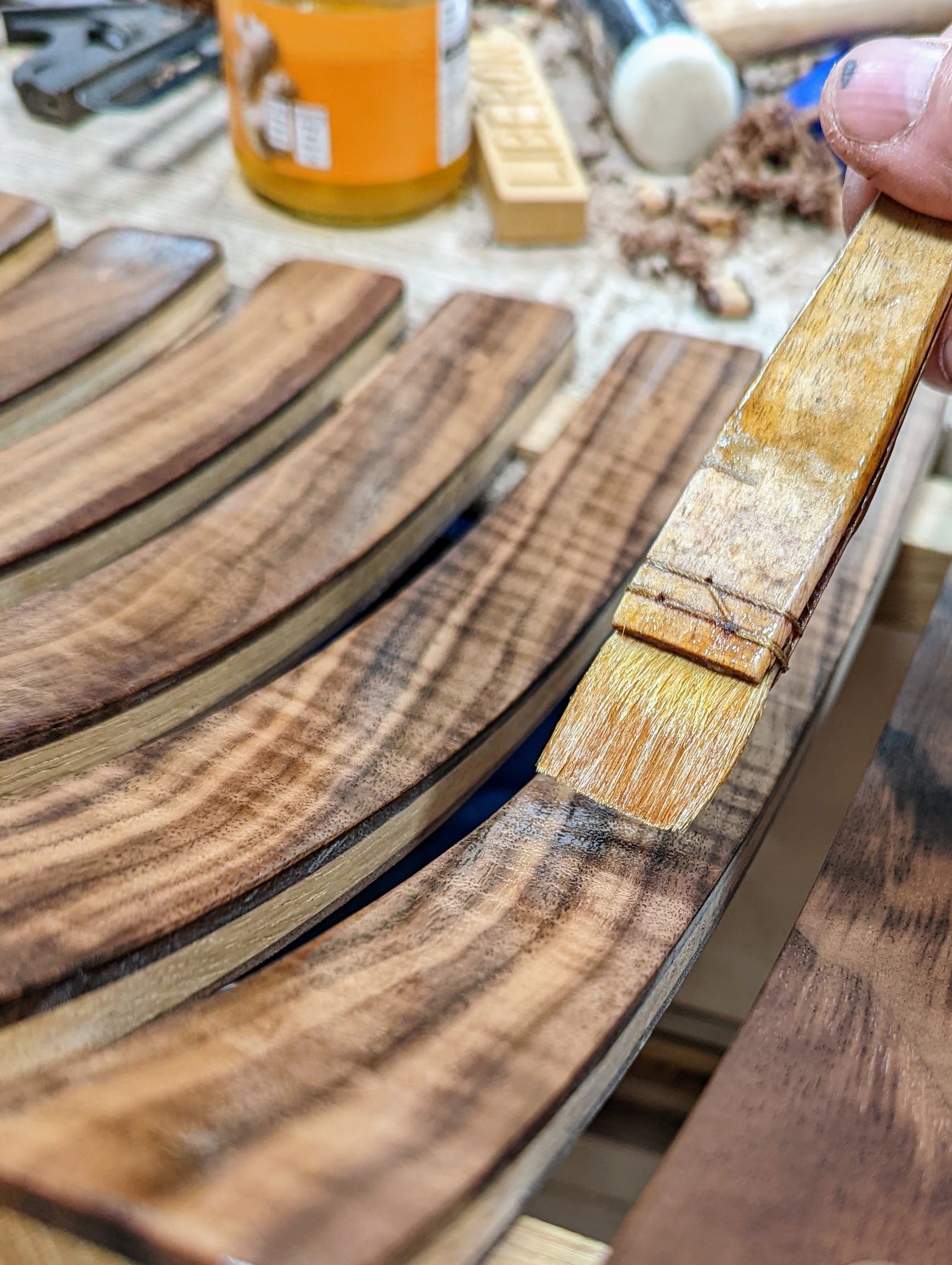
Last night I brushed on the last coats of shellac to my six dining chairs. That last brush stroke was a full brush and as I lifted off the brush I steadied myself to watch the clear and sticky fluid flow out to its perfect final level. It was mesmerising to actually see the flow reach the edges and stop as the shellac seemed to freeze along the rounded corners and the crisp edges as if there was a boundary wall there to halt everything.
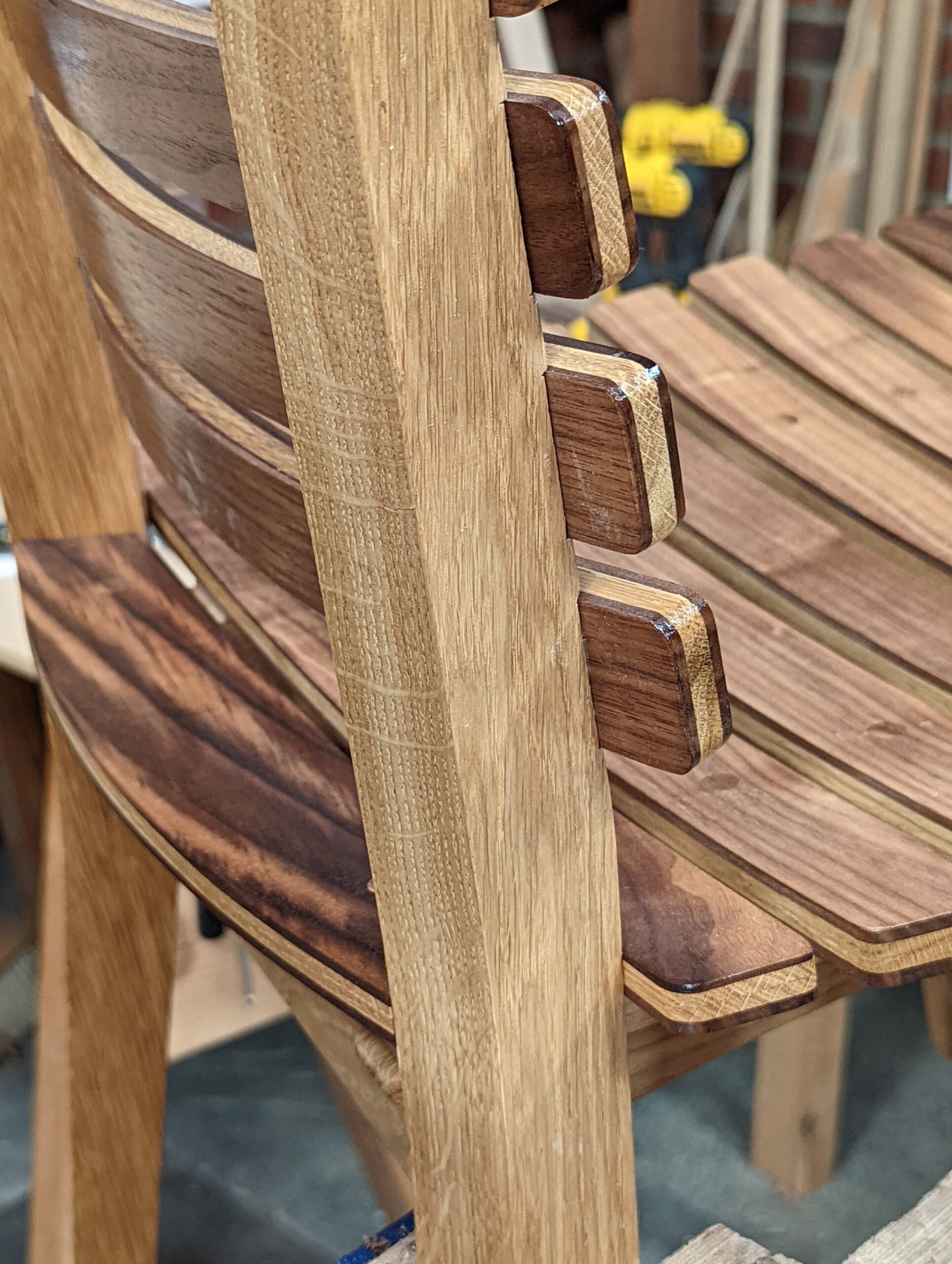
As I swept the workshop floor the unmistakable feeling of relief settled on me yet again, no different than completing my first pieces back in the mid-sixties, I felt utterly satisfied that once again, in a collection of six hand-made chairs, I had made something completely with my hands. I mean planed every stick and stem straight, square but then the shaped ones too, made every single joint with my hands and hand tools, and that's 24 joints per chair. I felt the strain of it as I might free-climbing an outcrop of Derbyshire gritstone but pushing your body against the different tides gets all the more important the more you do.
I have three iterations of the prototype it took to get here. I will finish these too. I have some ideas I want to pull together and I don't want to waste the wood in them. They will make occasional-use chairs somewhere. I have archived all of the dozens of pieces we have made for woodworkingmasterclasses.com over the past decades and seeing this new series of pieces actually take up their places in the designs of sellershome.com added a new dimension to our output and then too the input you make in tandem for your own homes. Maybe one day they will all go on exhibit somewhere in the future. The most important thing for me is that you are being trained in a way no one would have ever thought possible when I started out in the 1960s. How amazing is this new world we live in as pioneers.
Comments ()