
My Chairs
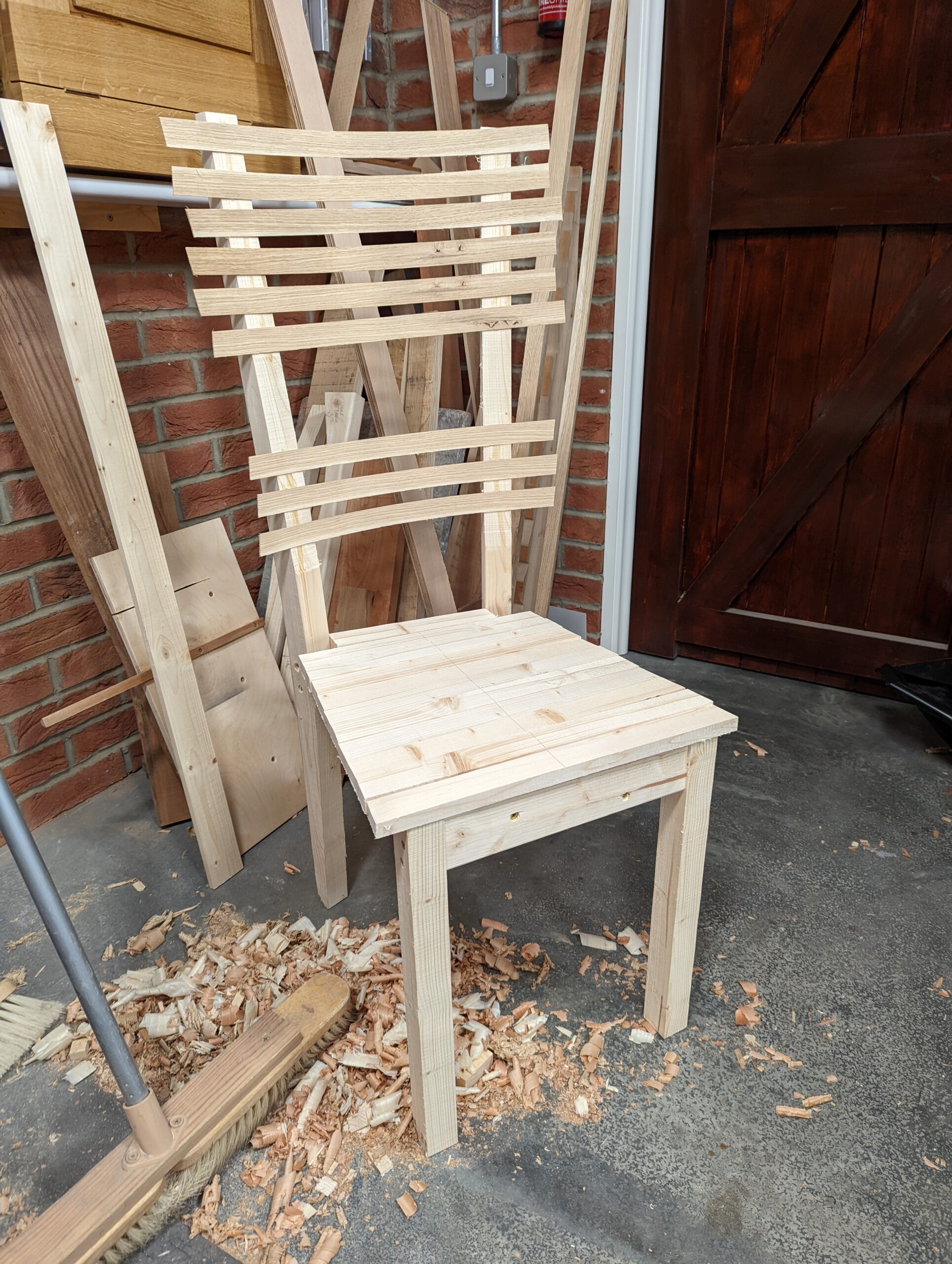
My chairs emerged one by one in quick succession, but getting there to where the joinery flows is not usually easy. I started with two framing studs 1 1/2" by 2 3/4" and some sticks of wood 1/8" thick by 1 1/4" wide bent and superglued in place to an undisclosed bend. Some said I was trying to create a new trend but it was clay on the wheel nothing more: lightweight flexing of mind and matter; inspired stretching, an embracement of possibilities, enough to get me going further anticipating that a chair would soon, in a matter of minutes, stand on four legs. When it did, I felt, 'OK' a chair, good, but not good enough, and it wasn't meant to be, it was a three-dimensional sketch that took thoughts into a placeholder. Here I am a couple of weeks later with a solid concept and several chairs underway. This is design!
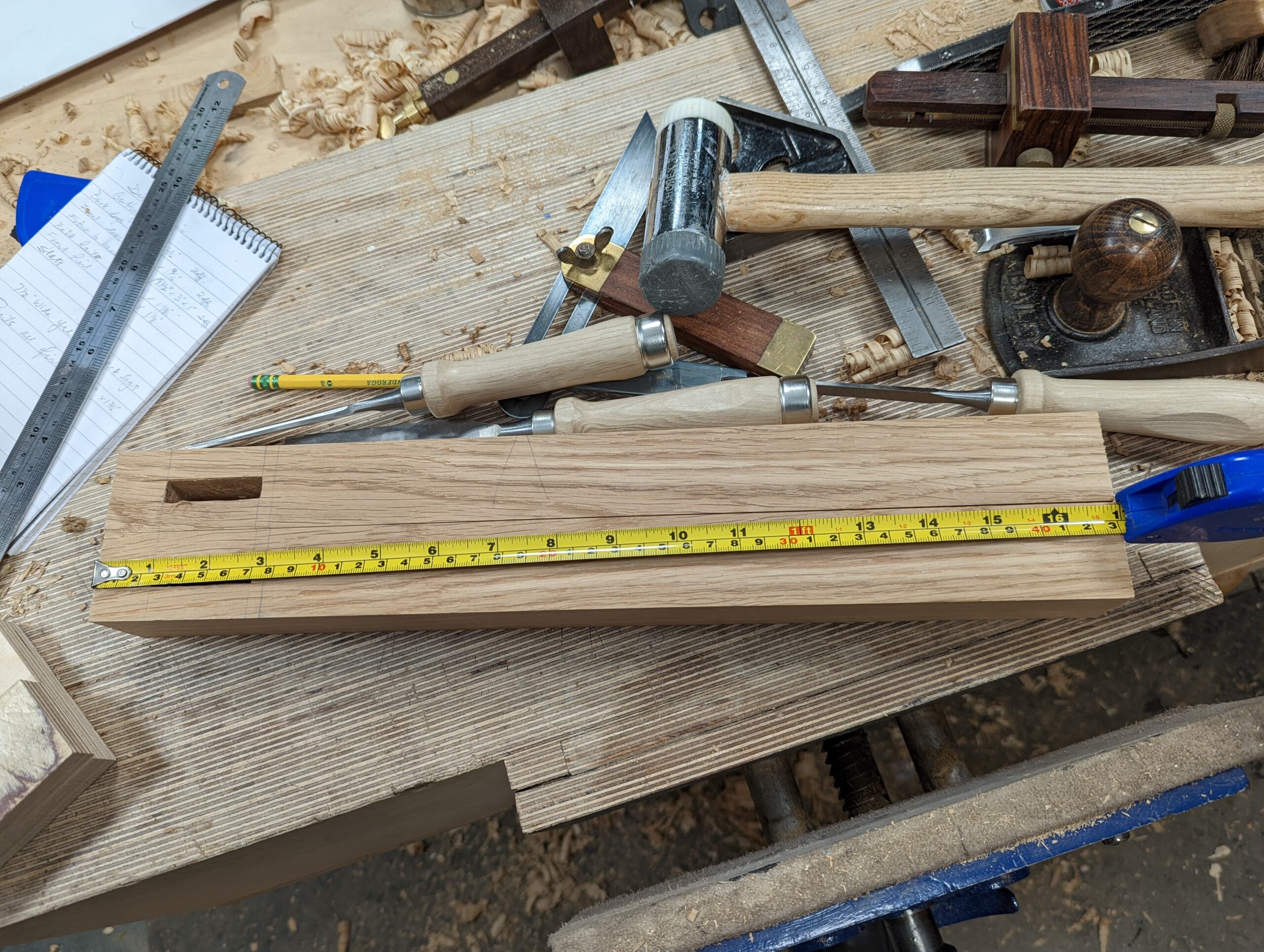
It took me about 30 minutes to have this rough draft idea fleshed out, freestanding, and even suitable enough to very cautiously sit upon for a few minutes for me to think 'height,' 'width,' 'depth,' 'angles' and a few other things. From this point I developed the idea by altering my thinking, being willing to self-criticize, adjust my attitude, shorten, lengthen, raise lower the important elements until they fit me as a Mr. Average. Chairs are never made for tall or short people. Why? It doesn't work, wouldn't work, generally, I mean. People are conditioned to a seat at 17" off the floor and no more than 18" high unless it is a bar stool. Even if people have long legs or short ones, long torsos and so on, they are conditioned as soon as they can self-sit on a chair as a child to get used to this height. It wouldn't work to have different heights of chairs in a cafe, a school, or in any institutional place and it's the same for any home too. Conditioning is mostly about standardisation so simplicity in manufacture becomes readily guaranteed. Matching this, the chair height coincides with tables and you will find tables and desks rarely ever shift from somewhere between 28" and 30" max. Once a manufacturer sets up the manufacturing system, I'm talking IKEA for domestic supply and then Asian imports for cafes where a hundred chairs are made for chain cafes with 300 hundred outlets; think Starbucks worldwide and Costa on a UK domestic level. Go ahead, pop your tape measure in your backpack and do some measuring in your local cafes. Get heights and sizes into your head, you'll find I am right. There really is not much flexibility when it comes to such things that I speak of and that is because of the impracticality of custom sizing to individuals and the reality that people of every height are conditioned from sitting age to adapt, adopt and accept the toleration of non-customised seat heights.
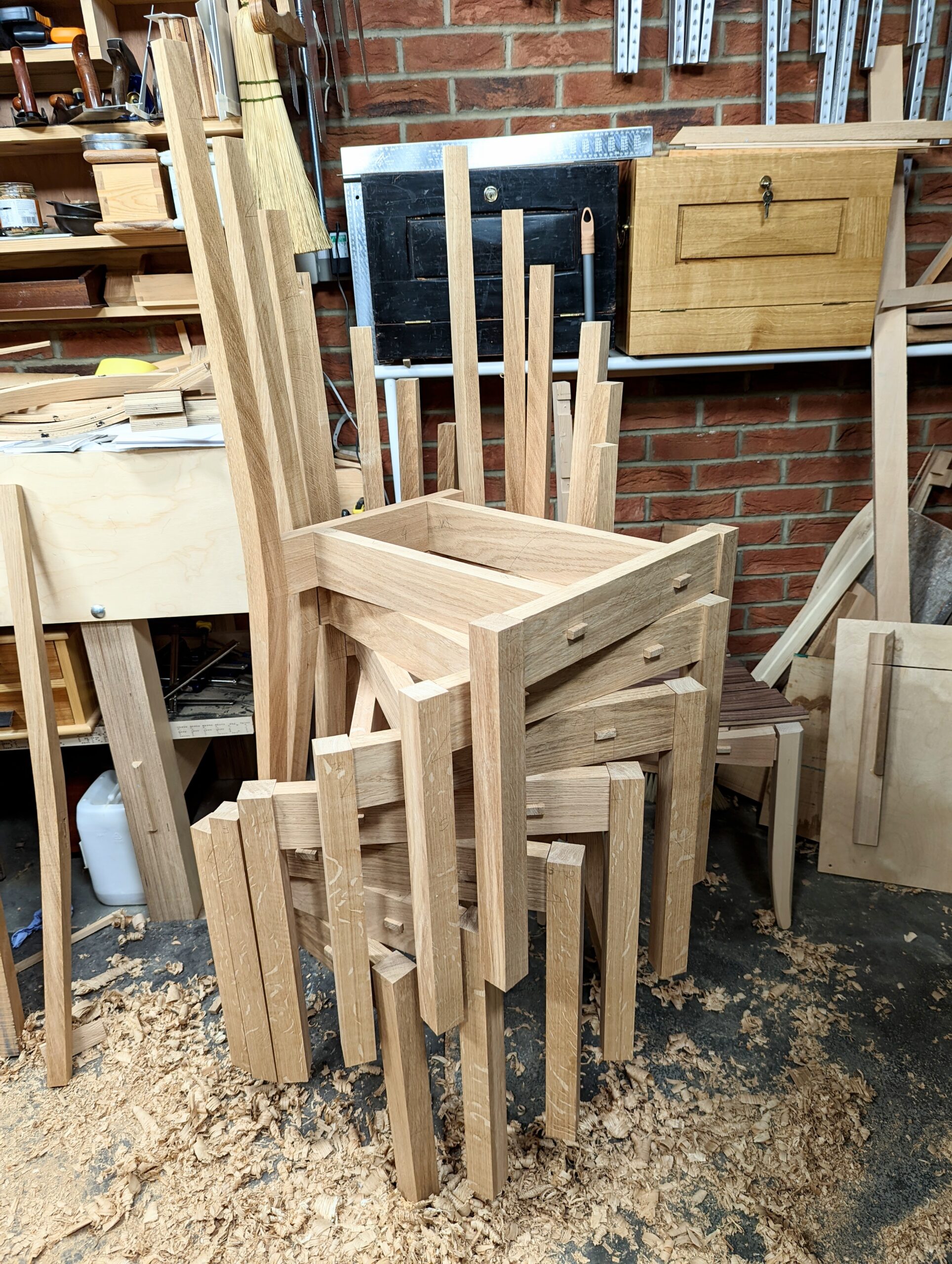
The human body is incredibly adaptable to many things. The problems that occur in posture are often unseen until the damage is done. The human body is incredibly adaptable to many things. The problems that occur in posture are often unseen until the damage is done. Take tapping on the computer keyboards as a professional in the early days before carpal tunnel syndrome became a recognised disease for people typing and using keyboards. I think it is a strange thing that after 57 years of minute-by-minute hammering with mallets and hammers I have no such damage to the disease associated with working at a keyboard. With thousands of heavy blows a day for me, you would think that to be the opposite, wouldn't you? My many blogs on woodworking bench heights and opposing spurious theories supporting low bench heights is the result of my research and looking more deeply into workbenches and trying to understand why a bench height must be customised where long-term, continuous use is intended. More than that though, more important, is my working at workbenches all of my life and then working with 6,500 students at workbenches through the years, most people are very comfortable at a bench height of 38". That's because this suits the average height of men. Better to start high and make lower in half-inch increments over a few weeks wherever possible. Some things are fixed and some things are adaptable, you just have to know which.
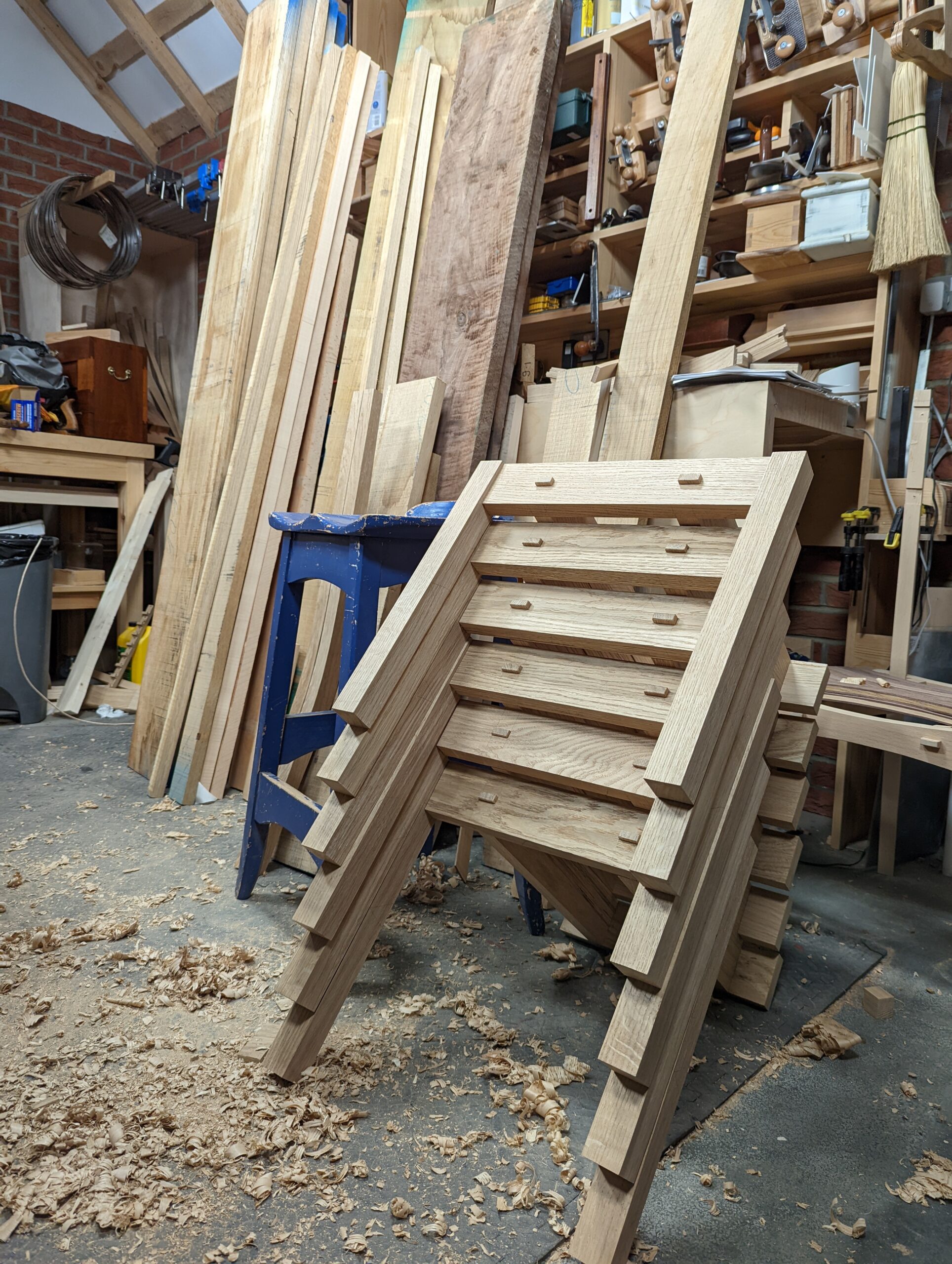
Back to my chairs. Three iterations brought me to a confident design outcome. I didn't refer to the reference manual I use from time to time where human proportions in use of pieces determine elements to designs such as tables and chairs. desks, kitchen counter heights and a thousand other useful details for designers. I used my own knowledge of almost six decades making and my own body to tell me what I needed to know. Such a thing is time-consuming, maybe two days of tweaking a prototype, but the long-term benefits will be that I have a comfortable chair that will last for decades if not even a century and more. The basic shape and the joinery is not fixed. But what intrigues me the most is that the chair design has eliminated many of the complexities associated with chair making where the joinery has many complex angles needing awkward shoulder lines with mitred tenons, twin rails, stretchers and so on. In my design, I have gone for good-sized tenons coupled with other features for combining resistance and strength. The end result is a comfortable design that is lightweight and attractive.
Comments ()