
Wood Grain
There is less written about wood than you might think. Oh, there are tomes in works by academics and organisations but what helps woodworkers should be a simple down-to-earth visual for people to see why we must plane and saw and split and pare cut wood differently according to something ambiguously called grain.
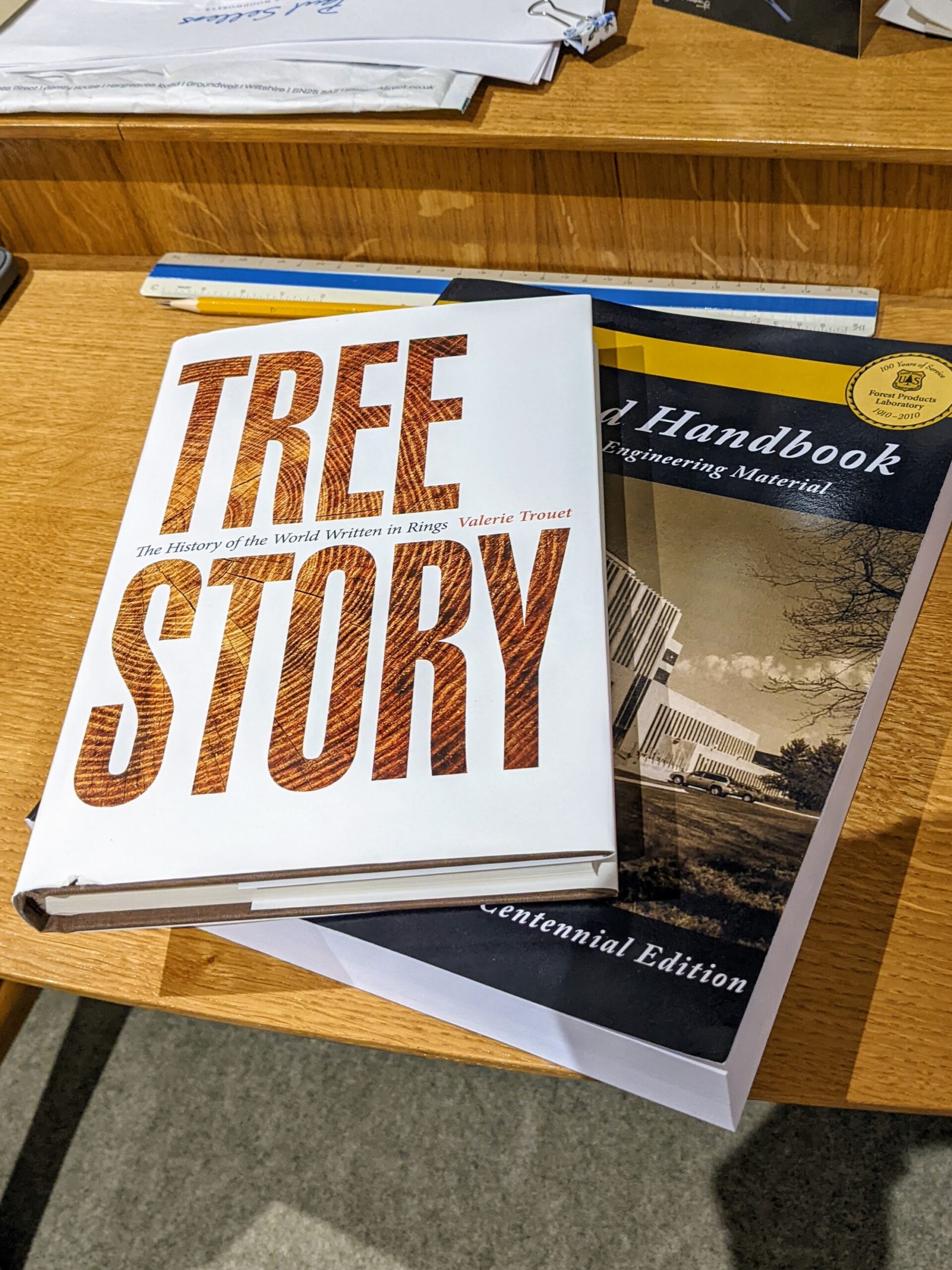
In teaching woodworking classes to adults each week, the one thing I needed to get them to understand was what grain was. Visually this was much easier than in text. Split wood in front of a group of men with a chisel and a mallet blow and you suddenly understand grain direction. Plane it with and across the grain and again on end grain or at a tangent and you see the response to the tool's passage onto and into the fibres of the wood. Magnifying wood's fibres pulled apart by massive force doesn't help too much either because, usually, the wood fibres cannot be pulled apart like a concertina but split along the fault-lines at weaker sections like medullary rays or a growth ring, an existing separation, or something else. But understanding the strands and fibres and cells of what constitutes wood is important to us as woodworkers. By understanding this we can better determine how best to effect the cuts we make minute by minute and the best way to develop a cutting strategy for each one of those cuts we make comes from recognising certain facts about wood grain.
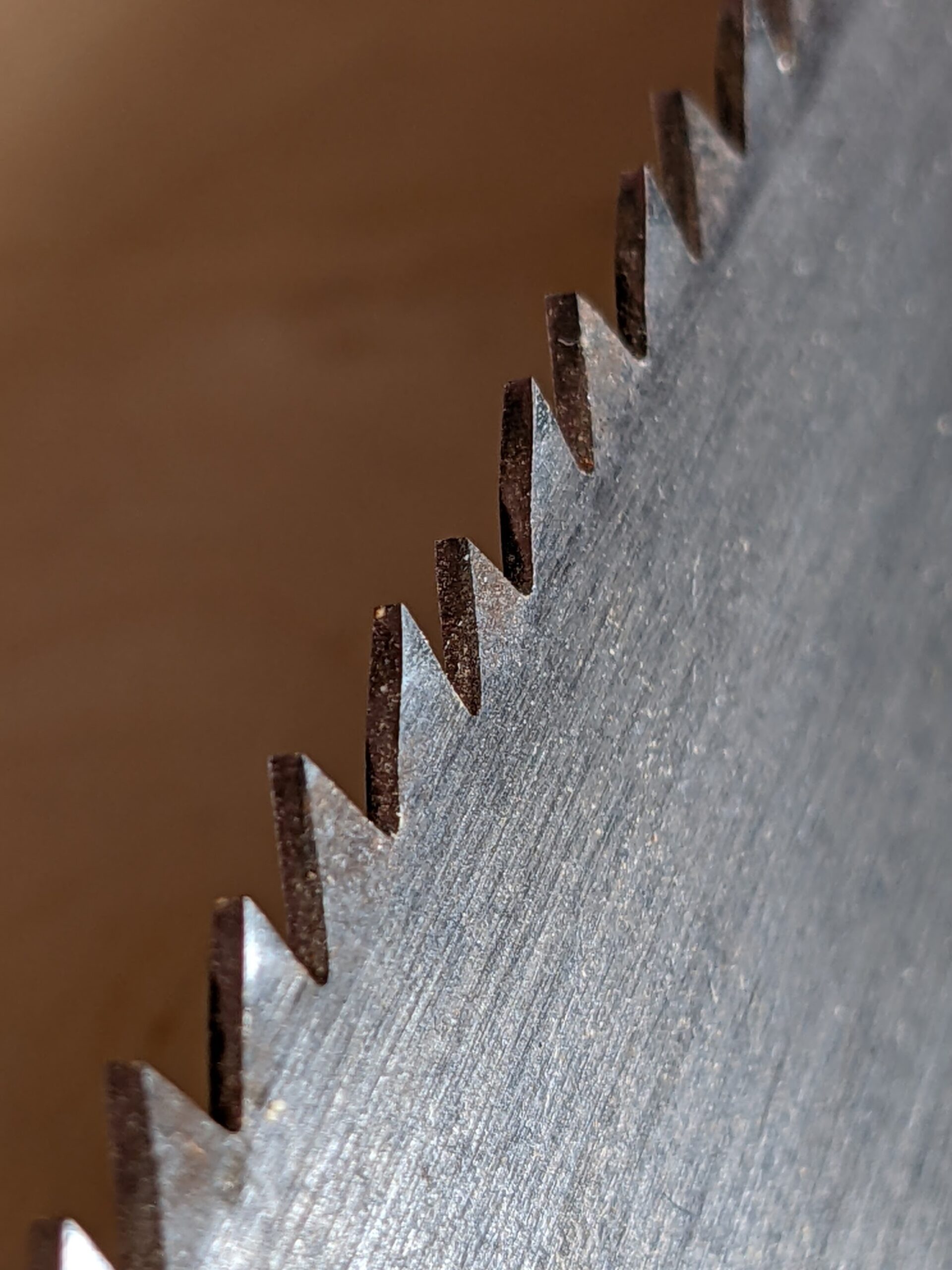
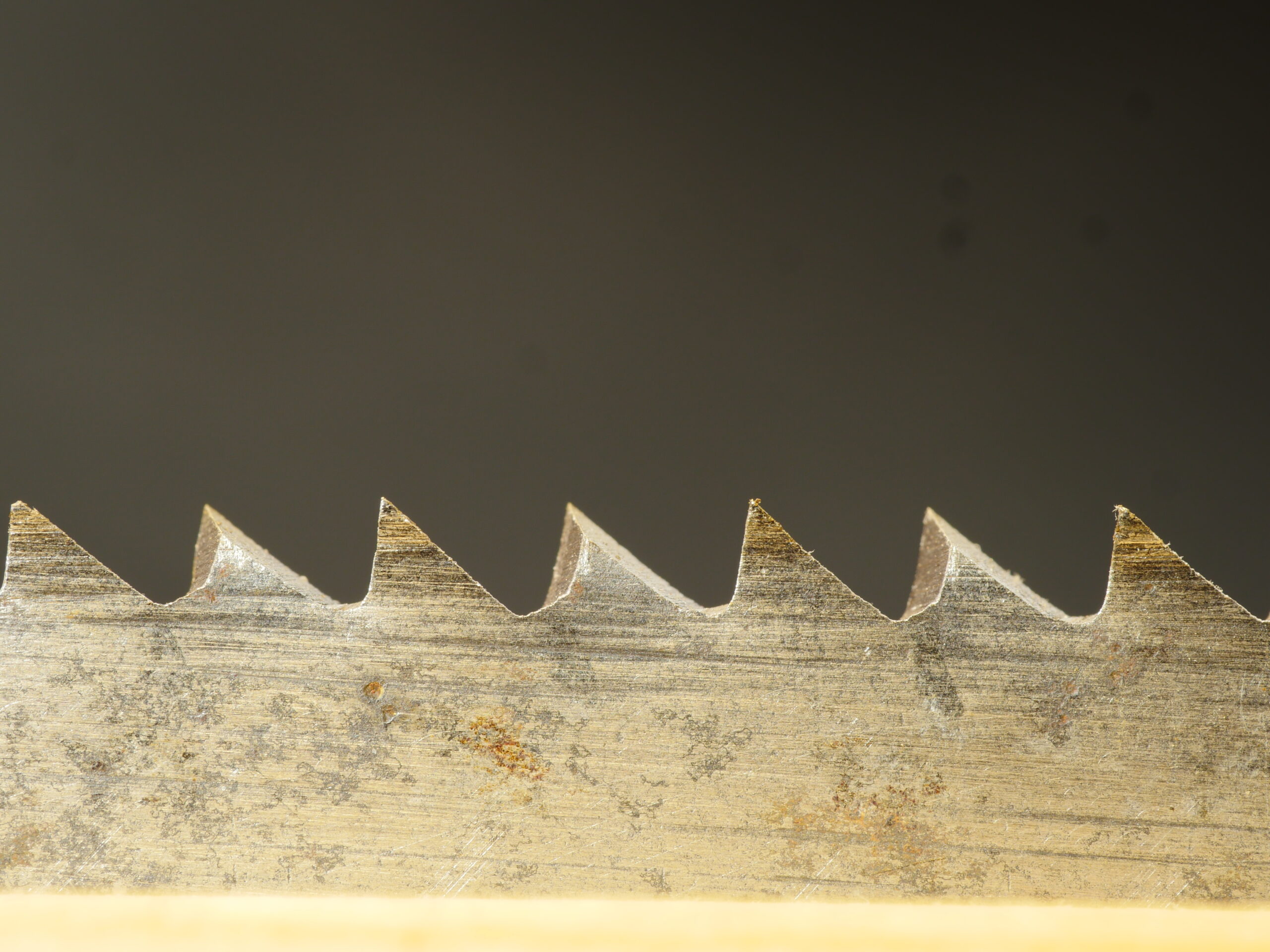
In my early days of woodworking, it was passed on to me that you split, sawed or planed wood with or across the grain and that whichever you were doing required a specific method, technique or tool or that you simply adapted the same tool to the tasks accordingly. Saws of all sizes were generally sharpened to a ripcutting or crosscutting pattern, with saws sharpened very specifically to one of the two tooth patterns accordingly. Chisels, planes and all of the other tools knew no such differences even though likewise you did cut across or with the grain according to the need throughout the day.
For the main part, everyone knows wood grain as a flat surface looking and feeling much like a photograph. In most cases, when we touch wood in the day to day of life, we rarely actually touch wood but more the finish that has been applied as a surface treatment. What we see in wood is grain colour and configuration. Workers of wood, on the other hand, see it uniquely differently because we see it multi-dimensionally from the inside where the grain becomes much more a complex and intricate material made up of interlocking strands, fibres, resins and rarely is it merely a two-dimensional surface without texture but with masses of diverse texture that differs with every cut we make.
For my woodworking classes through the years, I found it most helpful when I taped a cluster of straws together to represent the direction of tree growth in its upwards direction and thereby show the direction grain takes in its growing. Making this connection was critical to their understanding simply because the majority of students might never have any experience of actually splitting wood ever in their lives. Taking an axe to a section of pine and axing across the grain showed that the axe could only sever fibres to a certain depth but could never split to strands as it would with or along the grain. There in the US, most older men had indeed split their firewood and kindling as part of the family chores if they had in fact lived more rurally as many did. It was the city dwellers that were less likely to have ever done such a thing. That was then and this is now. Now, living as we do with gas and electricity, most people will never be exposed to such things and therefore are more unlikely to know of wood splitting beyond watching a video. When you start woodworking you soon learn that wood splits in certain ways and that we often take advantage of its splitability in working its fibres. Often, mostly, wood splits quite positively and readily, depending on the wood type and the relationship of parts of the tree to any deviations in grain according to its growth with bends, knots, roots and so on affecting it as it grew. Some woods readily split whereas others can never be split along the grain with an axe or wedges alone; I have known some wood types that had fibres comprising the weirdest configurations of interlocking grain that truly defied split-cuts while others seem to split with just a mean look.
These fibres represent my efforts to show grain in wood as more representative of grain at a magnified level. The video shows how the saws work in relation to grain and how the saws are directly affected by the grain and the direction of cut.Sawing along these grain fibres (with the grain) shows how the saw removes the fibres with the kerf with much less resistance and also how the saw slides through and along the strands. The video shows how the saws work in relation to grain without experiencing the wrenching you get using a rip-cut saw across the grain as in the previous video.
Try to imagine wood grain as long strands of string glued together with lignin that holds the cellulose fibres, fibrils (minute fibres), together in similar fashion to a more elastic type glue. In my classes, I took long lengths of string and made them into a bundle to show how a saw with chisel teeth failed to sever the fibres cleanly when cutting across the 'grain' but slid in between the strands when ripping with or along the grain. Exaggerating the size of grain this way made everything much more visible as indeed making artificial saw teeth enables me to show the difference between the shape of rip-cut teeth to cross-cut teeth.
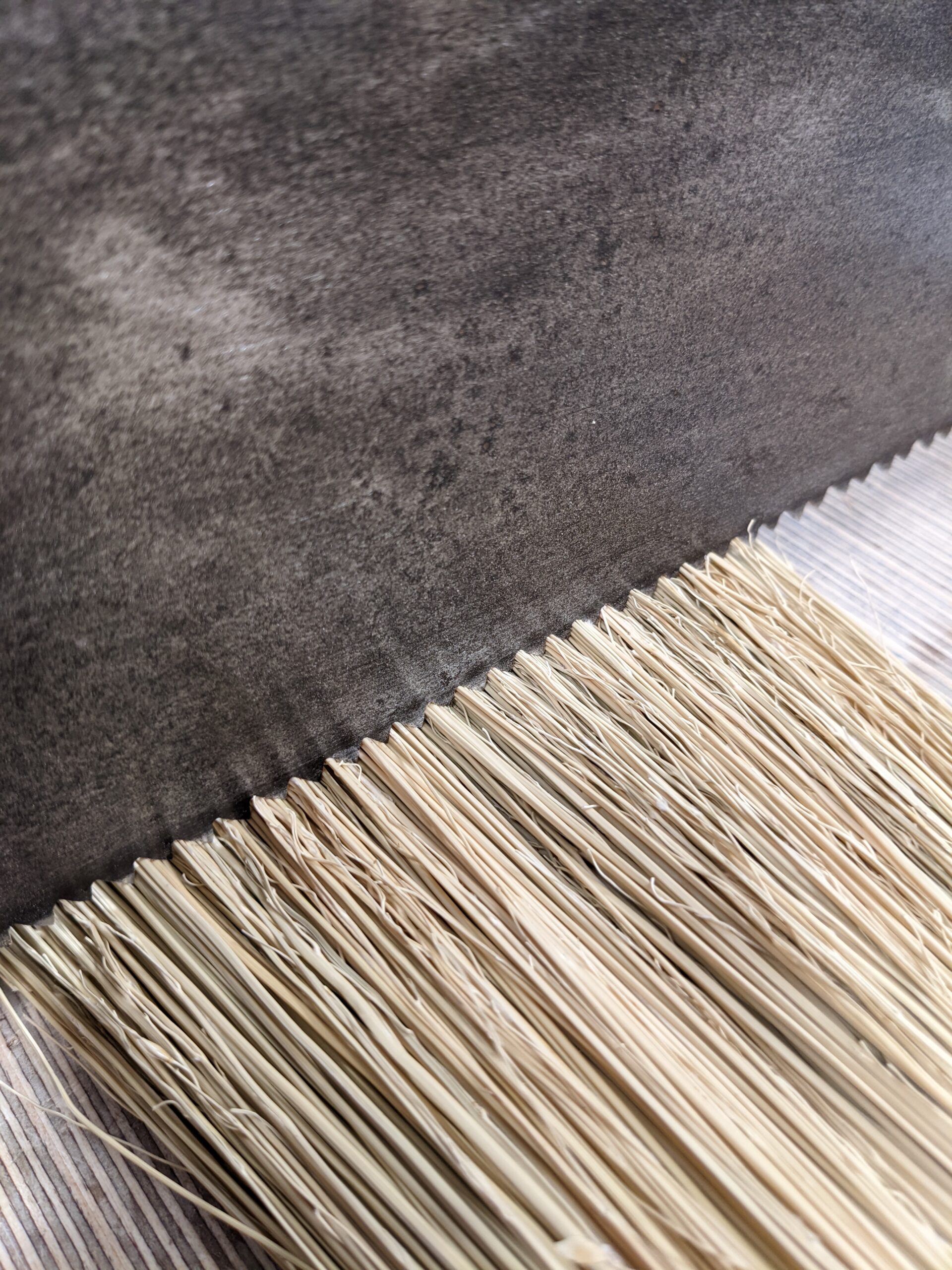
The correlation between these two tooth types and then seeing the strands of wood in long-grain fibres made the images much more clear for my students. This was how I could help them to understand visually on a macro level what was in actuality taking place at the level with wood under the saw, being split, pared and chopped with a chisel and of course, much more with other tools. We cannot generally see the micro-level of fibres as we work them. It is important to think-see them so that we can generally work our wood and tools accordingly because grain direction and type, etc determines how we do everything we do.
Comments ()